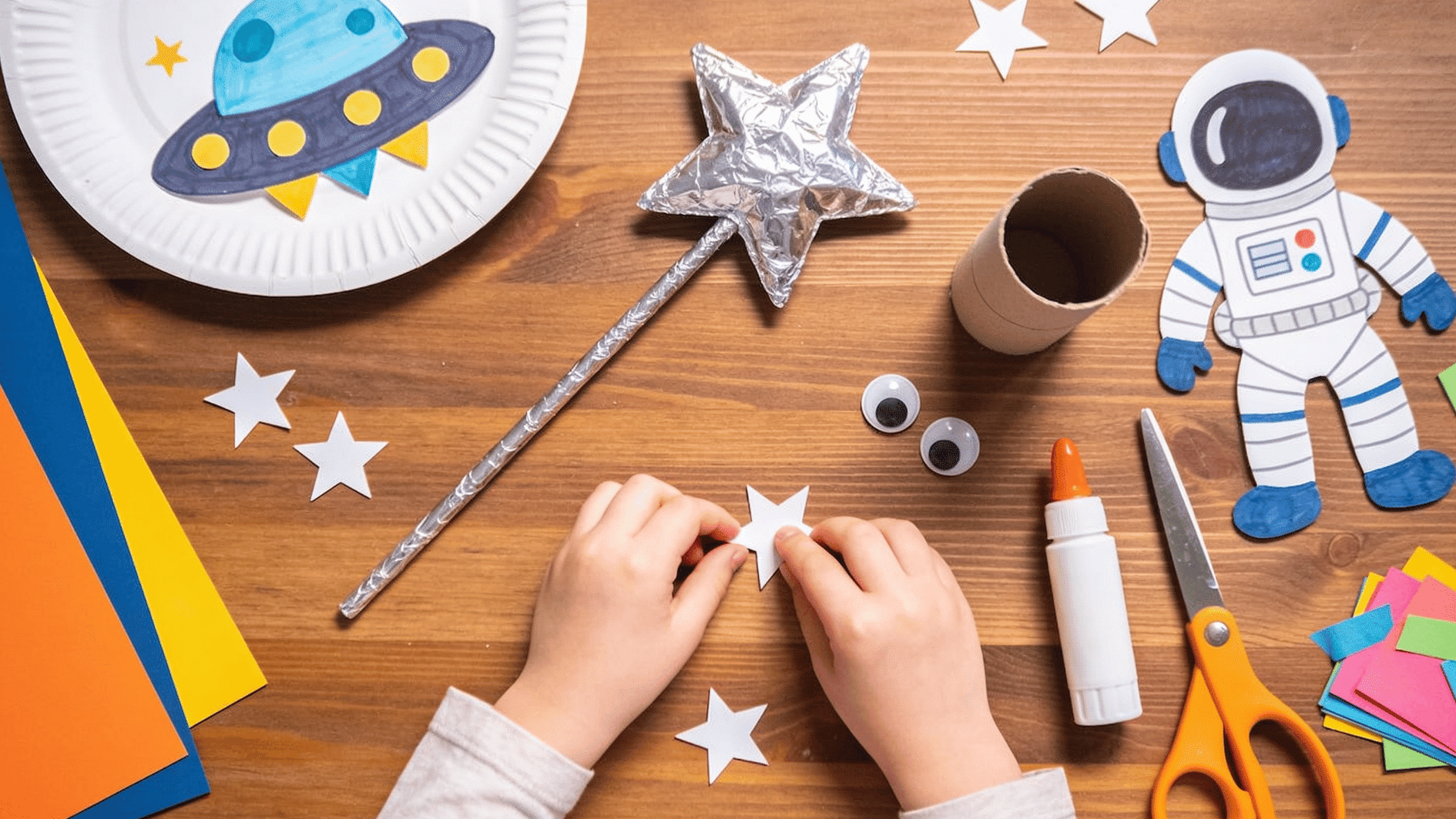
“Mom, how far away is the moon?” If that question sounds familiar, your kid is already halfway to becoming an astronaut.
The best part? You don’t need a telescope or a NASA budget to bring the galaxy home: just glue, paper plates, and a little imagination.
This guide is packed with easy space crafts for kids, complete with step-by-step instructions, printable templates, and age-friendly tips for every young space fan, from toddlers to tweens.
Let’s get started!
What Makes Space Crafts Fun and Educational?
There’s a particular kind of magic that happens the moment a kitchen table becomes Mission Control.
The napkin holder turns into a control panel, a dish towel becomes a cape, and somewhere in the middle of it all, a small commander in pajamas takes charge of the operation.
That’s the real power of space-themed crafting: it doesn’t need a fancy setup, a big budget, or a perfectly Pinterest-worthy table.
It just needs a little open floor space, a few household supplies, and permission to get a bit messy in the name of science.
Before the gluing and cutting even begin, this kind of imaginative play stretches a child’s sense of scale, distance, and possibility.
Space Craft Ideas for Every Age and Interest
Here’s where the fun really takes off. Below are fifteen tried-and-true space crafts, organized so you can pick based on your child’s age and mess tolerance.
1. Paper Plate UFO
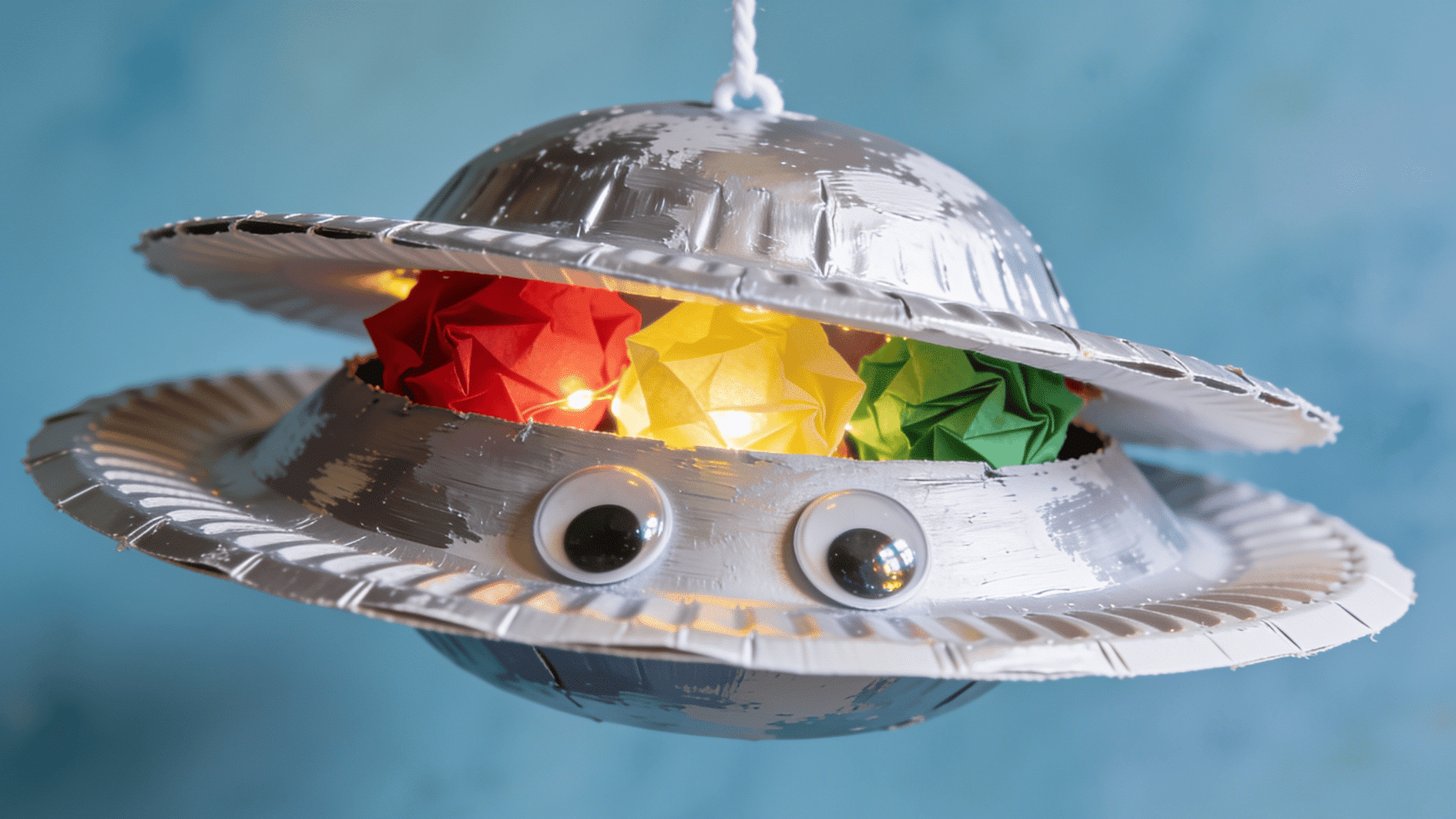
A paper plate flips into a flying saucer in minutes; perfect for younger crafters.
It only takes a couple of household basics, dries quickly, and looks impressive enough to hang somewhere kids will see it every day.
- Step 1: Glue two paper plates rim-to-rim, leaving a gap to slide in tissue paper “lights.”
- Step 2: Paint silver or metallic gray and let it dry.
- Step 3: Add googly eyes peeking out from the gap.
- Step 4: Punch a hole on top and thread string through to hang it from a doorway.
2. Toilet Paper Roll Astronaut
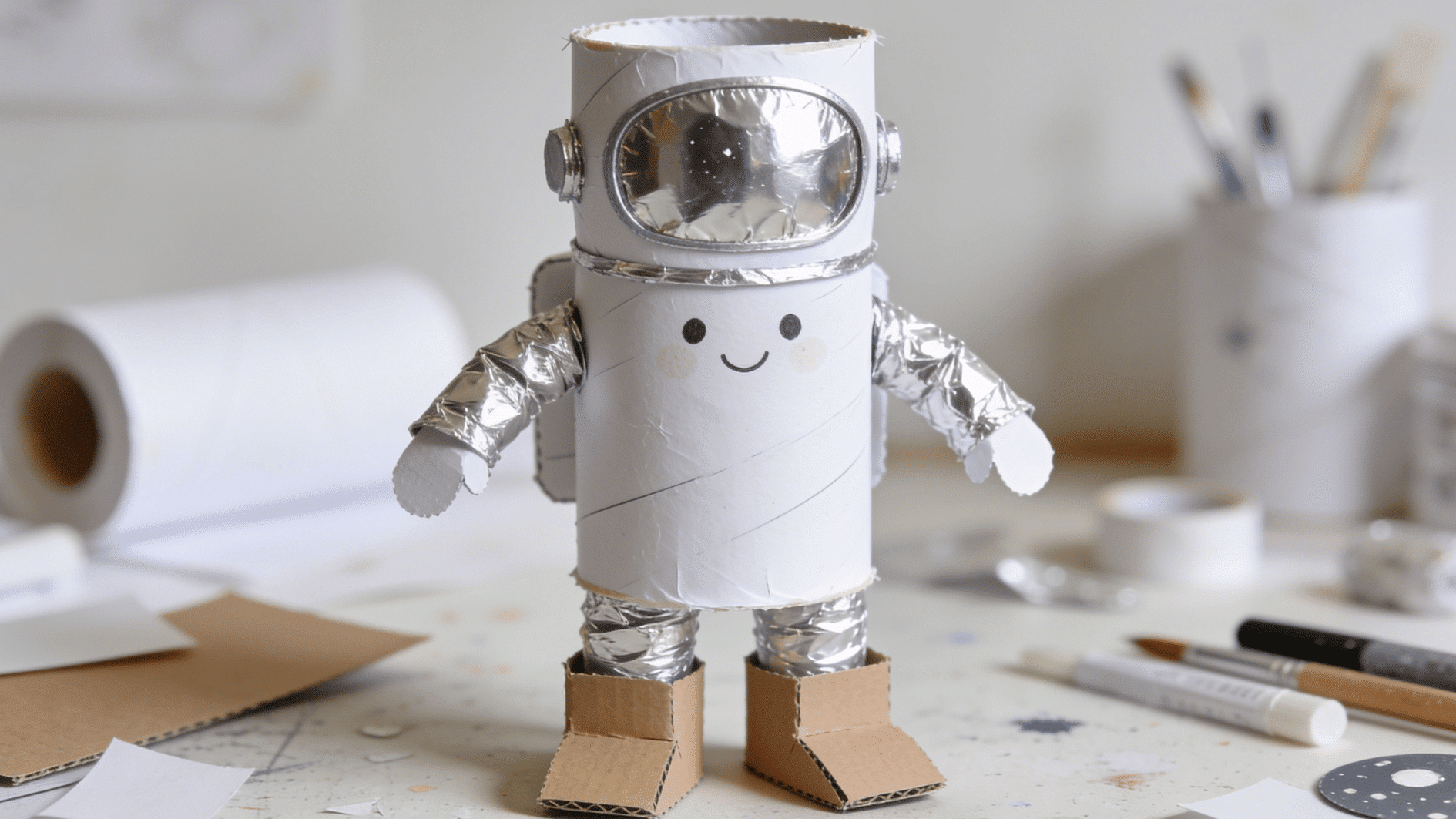
A simple cardboard roll becomes a full astronaut figure kids love to display.
It’s an easy way to repurpose something headed for the recycling bin, and the finished figure makes a fun stand-in for imaginative space missions across the living room floor.
- Step 1: Wrap a toilet paper roll in white paper or paint it white.
- Step 2: Cut a circle of foil or silver paper for the helmet visor and glue it to the front.
- Step 3: Draw a small face peeking through the visor.
- Step 4: Add foil arms and cardstock boots glued to the sides and base.
3. Balloon-Powered Rocket
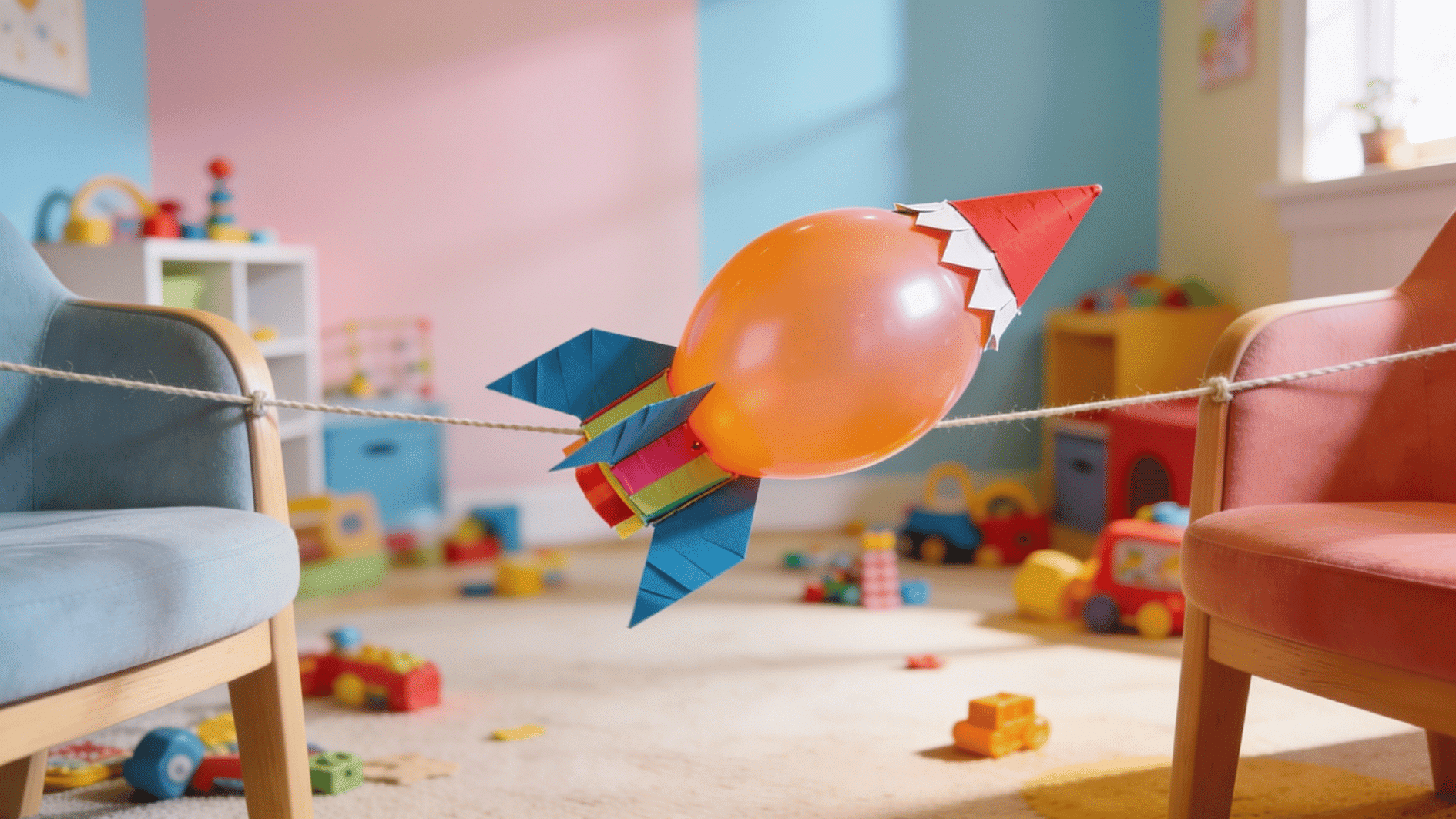
A favorite for tweens who want a little real engineering mixed into their craft.
Watching the balloon zip down the string gives an instant, visible payoff, and it’s easy to rebuild and test again for a friendly “who can launch it farthest” challenge.
- Step 1: Tape a straw lengthwise along an inflated balloon.
- Step 2: Thread string through the straw and stretch it tightly between two chairs.
- Step 3: Pull the balloon to one end, then release; watch it “launch” down the string.
- Step 4: Decorate the balloon with paper fins and a nose cone before the test flight.
4. Glow-in-the-Dark Constellation Jar
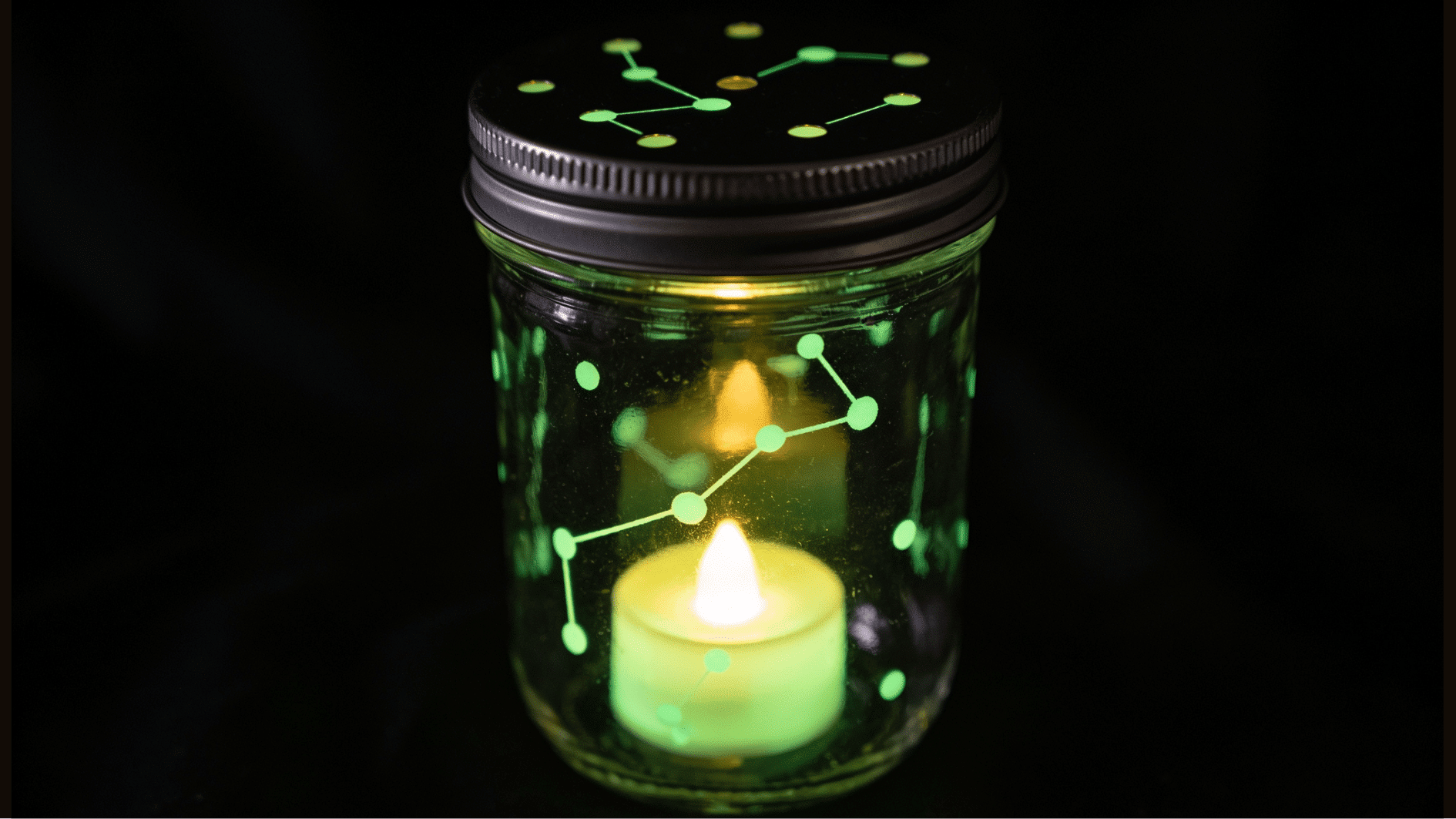
A quiet, magical craft that doubles as a nightlight.
It takes a bit more patience while the paint dries, but the reveal, flipping off the lights to see stars glowing on the ceiling, makes the wait completely worth it.
- Step 1: Poke small holes in a mason jar lid in the shape of a constellation (use a printable template as a guide).
- Step 2: Paint the inside of the jar with glow-in-the-dark paint and let it dry fully.
- Step 3: Pop in a battery-powered tea light.
- Step 4: Turn off the lights and watch the constellation glow on the ceiling.
5. Egg Carton Aliens
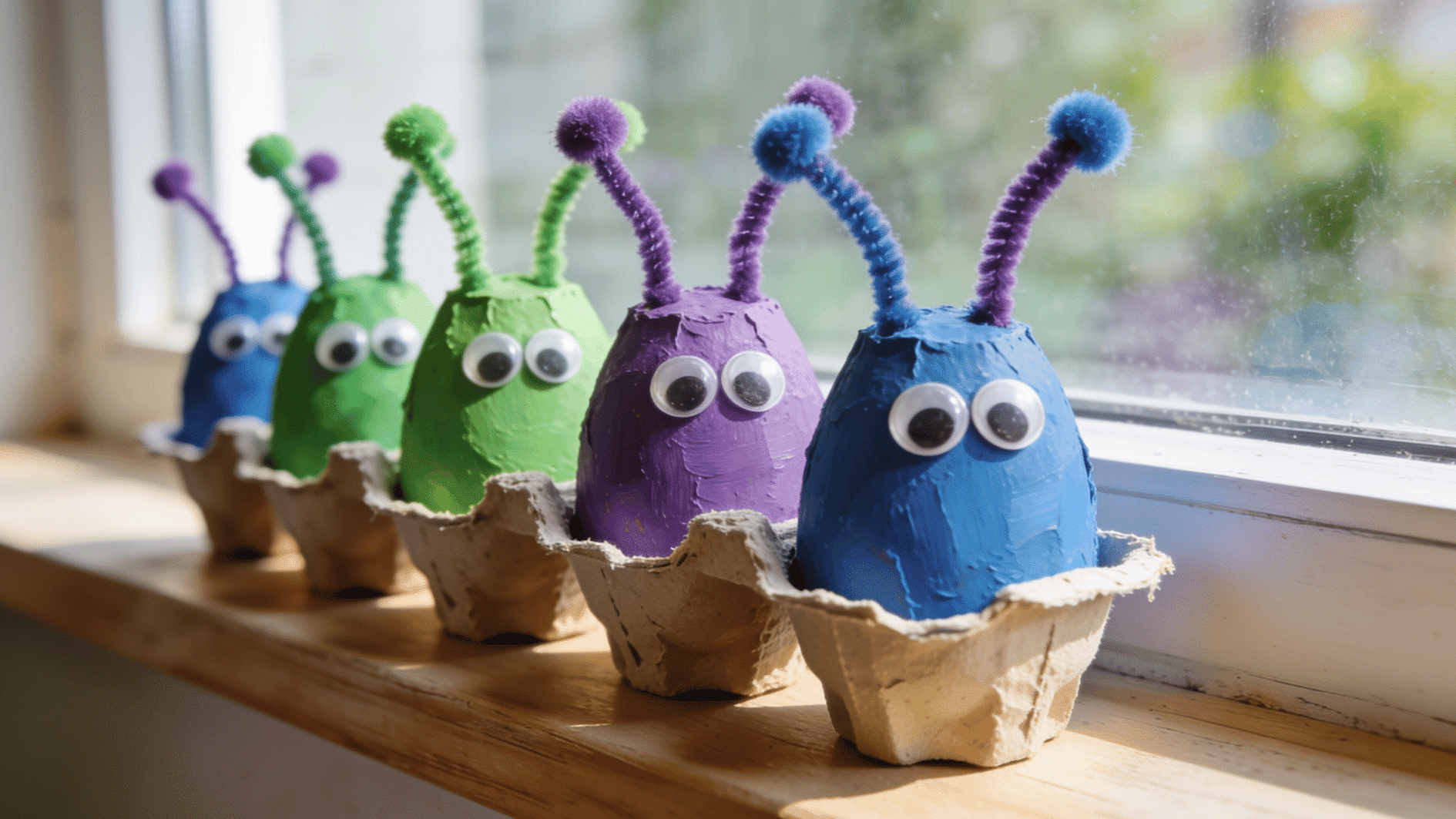
A great scrap-material craft using leftover egg cartons.
It’s low-cost, easy to personalize, and gives each child the freedom to invent a unique alien character with its own name and personality.
- Step 1: Cut individual cups from an egg carton.
- Step 2: Paint each cup a different alien color.
- Step 3: Add pipe-cleaner antennae and googly eyes.
- Step 4: Glue on small paper feet so each alien can stand on a shelf.
6. Paper Plate Solar System Mobile
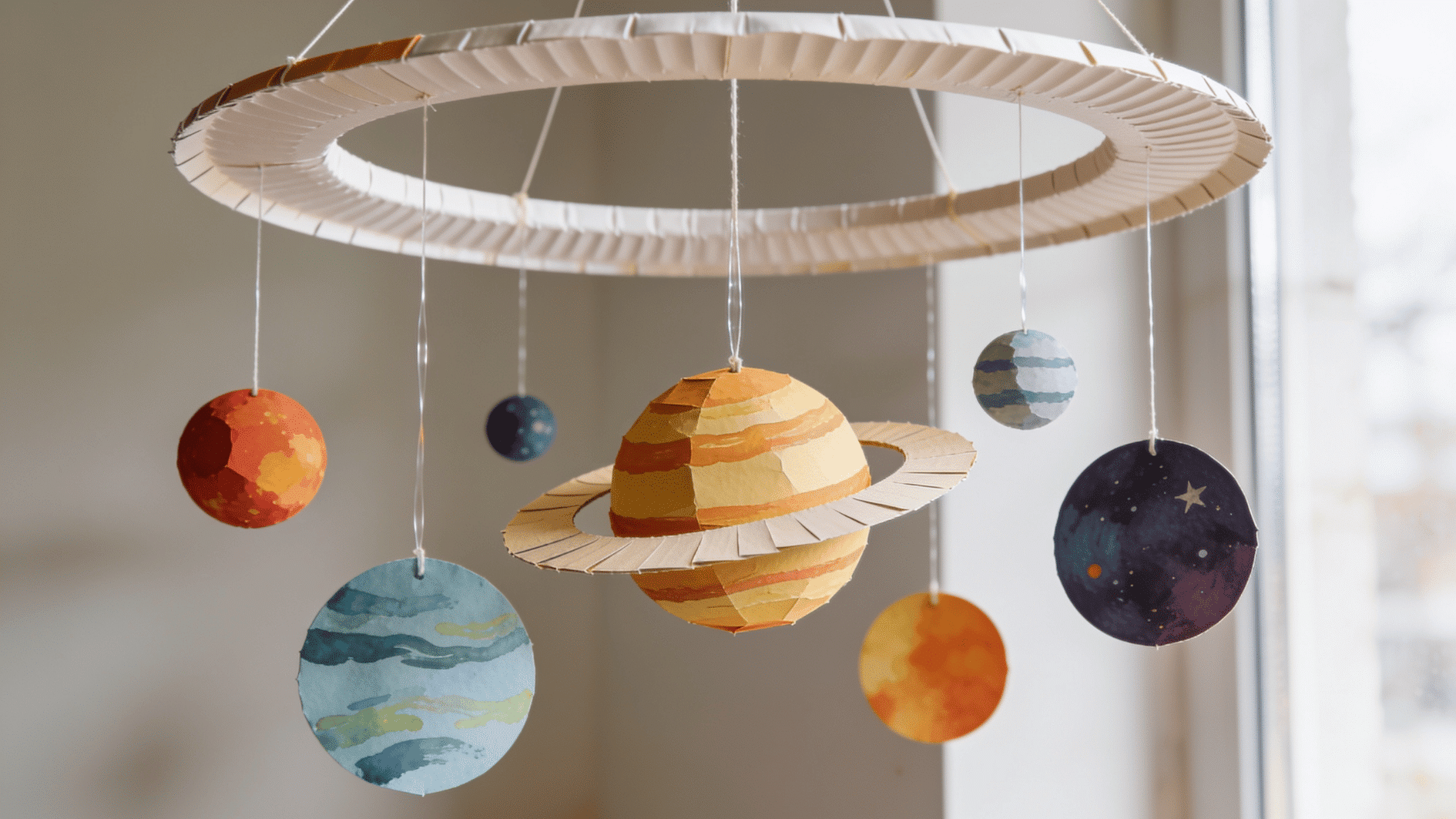
A classic that teaches planet order while it dries.
Hanging the finished mobile turns a bedroom ceiling into a tiny solar system, and it’s an easy, visual way to reinforce which planet comes before or after another.
- Step 1: Cut circles of varying sizes from construction paper for each planet.
- Step 2: Paint or color each planet (Saturn gets a ring made from a paper strip).
- Step 3: Punch a hole in each planet and tie a different length of string to each.
- Step 4: Tie all the strings to a paper plate ring with a hole cut from the center, then hang.
7. Cardboard Box Spaceship
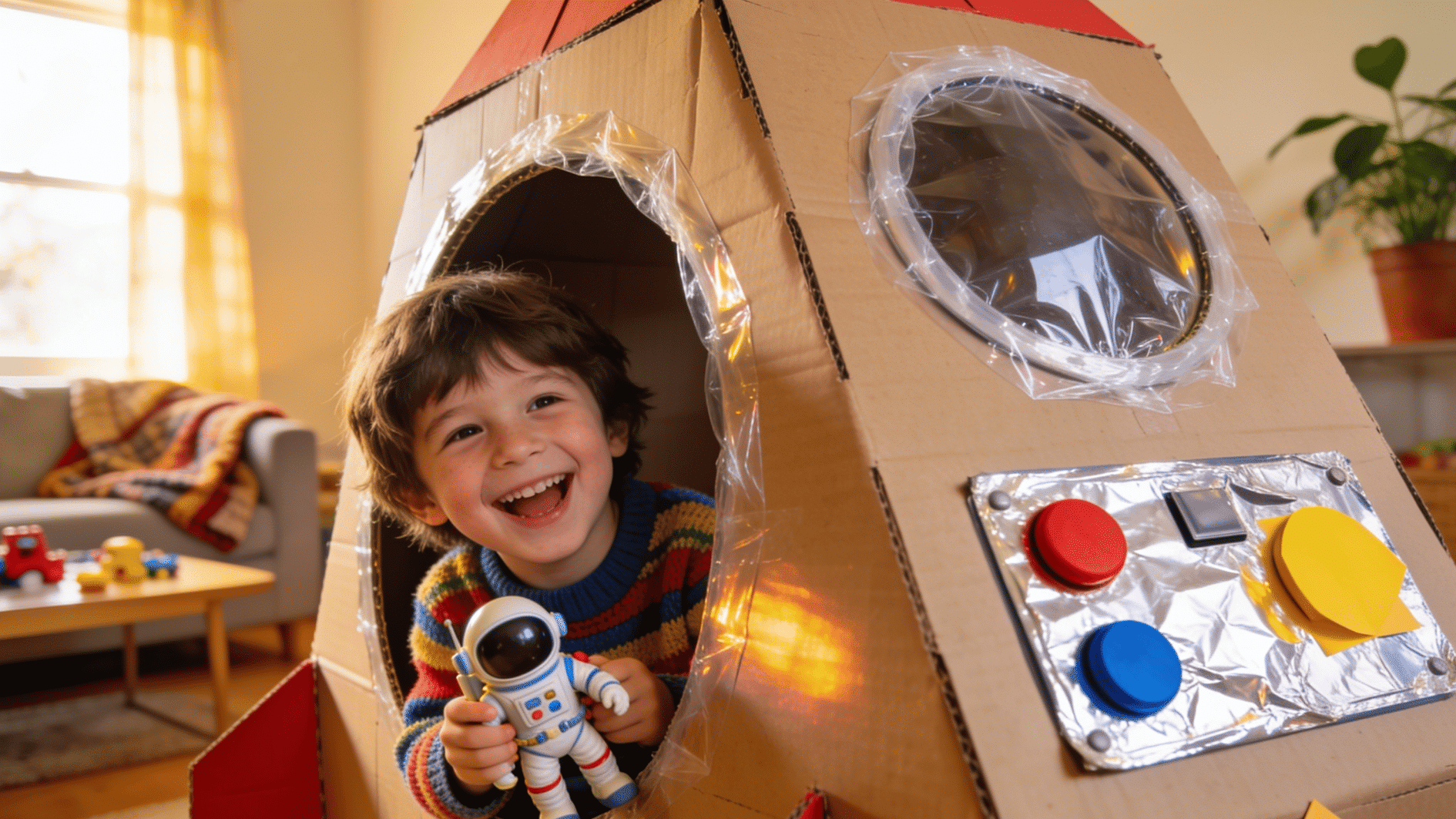
A bigger build for an afternoon with extra time and a spare box.
It takes a bit more setup than the other crafts here, but the payoff is a full-size spaceship kids can actually climb into and pilot around the house.
- Step 1: Cut a flap “door” into the side of a medium cardboard box.
- Step 2: Cut circular windows and tape clear plastic wrap behind them.
- Step 3: Add foil control panels and paper buttons on the inside walls.
- Step 4: Let kids climb in and pilot their ship across the living room.
8. Star Wand with Foil Stars

A simple sensory craft for the youngest astronauts.
It comes together in just a few minutes, making it perfect for toddlers who want to see results fast, and the foil adds a satisfying sparkle they’ll want to wave around right away.
- Step 1: Cut star shapes from cardstock using a printable star template.
- Step 2: Cover each star in foil, smoothing it down around the edges.
- Step 3: Tape or glue the star to the end of a wooden craft stick.
- Step 4: Add ribbon streamers below the star for extra sparkle.
9. Paper Bag Rocket Puppet
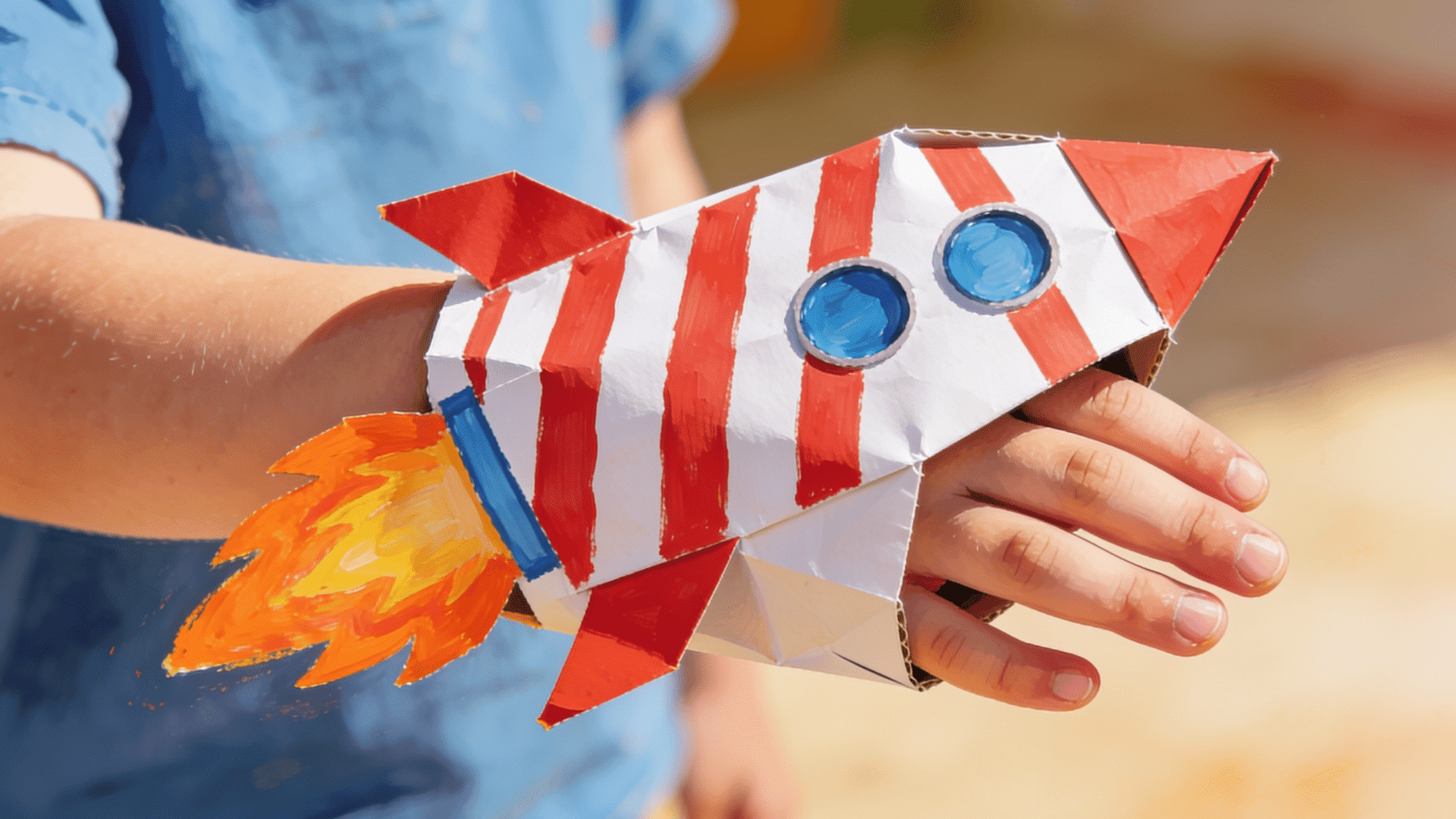
A two-in-one craft and toy that turns story time into space time.
Once it’s finished, it becomes a hands-on storytelling prop, perfect for acting out launch countdowns or inventing an entire mission narrative together.
- Step 1: Lay a paper lunch bag flat and paint the bottom flap as the rocket nose.
- Step 2: Paint the rest of the bag with stripes, windows, and flames at the open end.
- Step 3: Let the paint dry completely before handling.
- Step 4: Slide a hand inside to make the rocket “fly” and tell a launch story.
10. Cotton Ball Clouds and Rocket Scene

A soft, sensory-friendly craft great for toddlers.
The cotton balls add a gentle, tactile element that’s easy on little hands, and the finished scene makes a sweet keepsake to tape up on a bedroom wall.
- Step 1: Glue a printable rocket template onto blue or black cardstock.
- Step 2: Stretch cotton balls into cloud shapes and glue them around the rocket.
- Step 3: Add star stickers to fill the empty sky.
- Step 4: Let it dry flat, then display it as a finished “space scene.”
11. Paper Plate Sun and Solar Flares
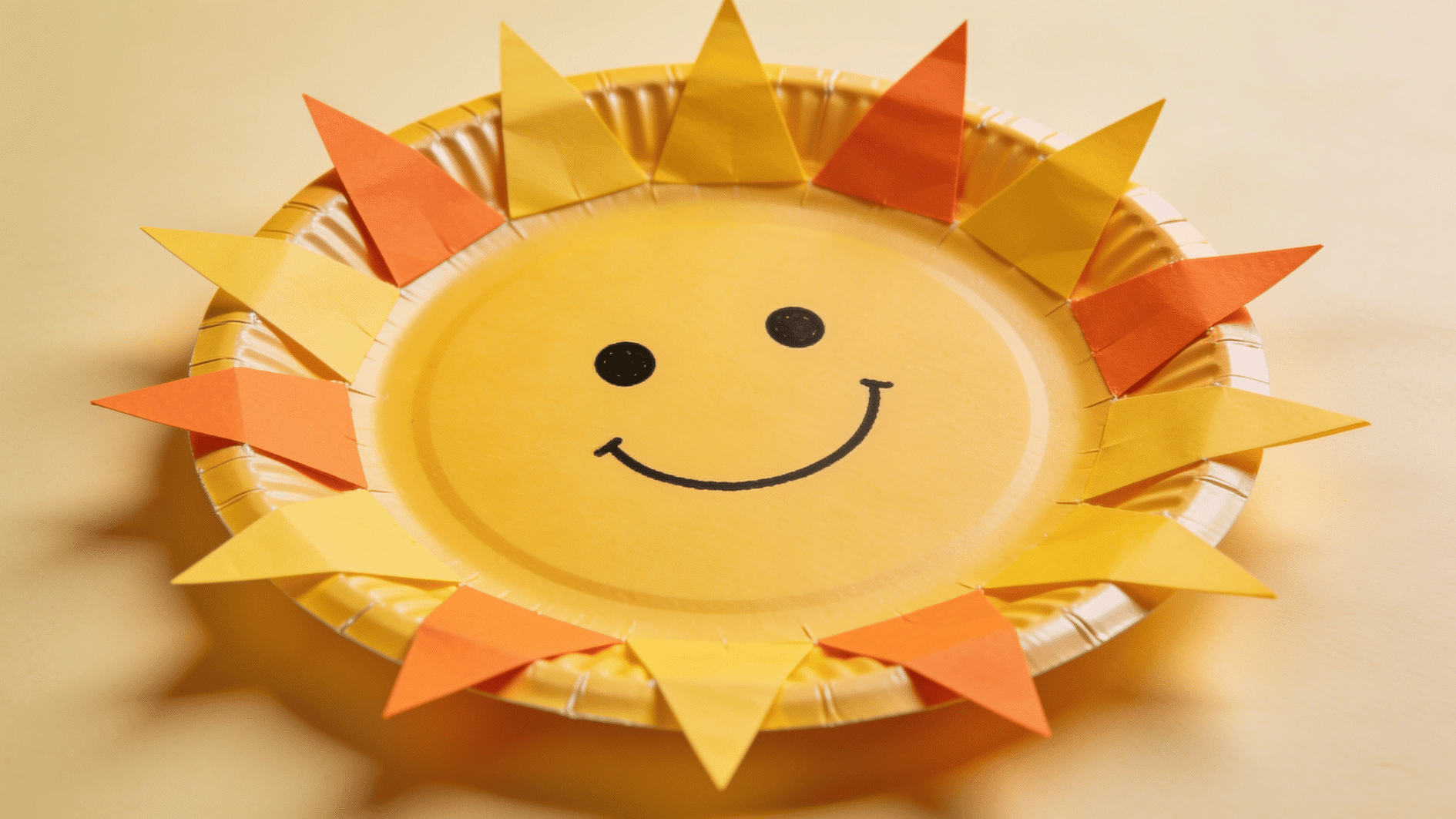
A bright, hands-on craft about our closest star.
It’s a simple way to introduce the idea that the sun is actually a star itself, and the flame-like flares give kids an easy excuse to talk about heat and light.
- Step 1: Paint a paper plate yellow and orange and let it dry.
- Step 2: Cut triangle “flare” shapes from orange and red paper.
- Step 3: Glue the flares around the back edge of the plate so they stick out like rays.
- Step 4: Add a simple smiling face to the center for a friendly sun.
12. Straw Rocket Launcher
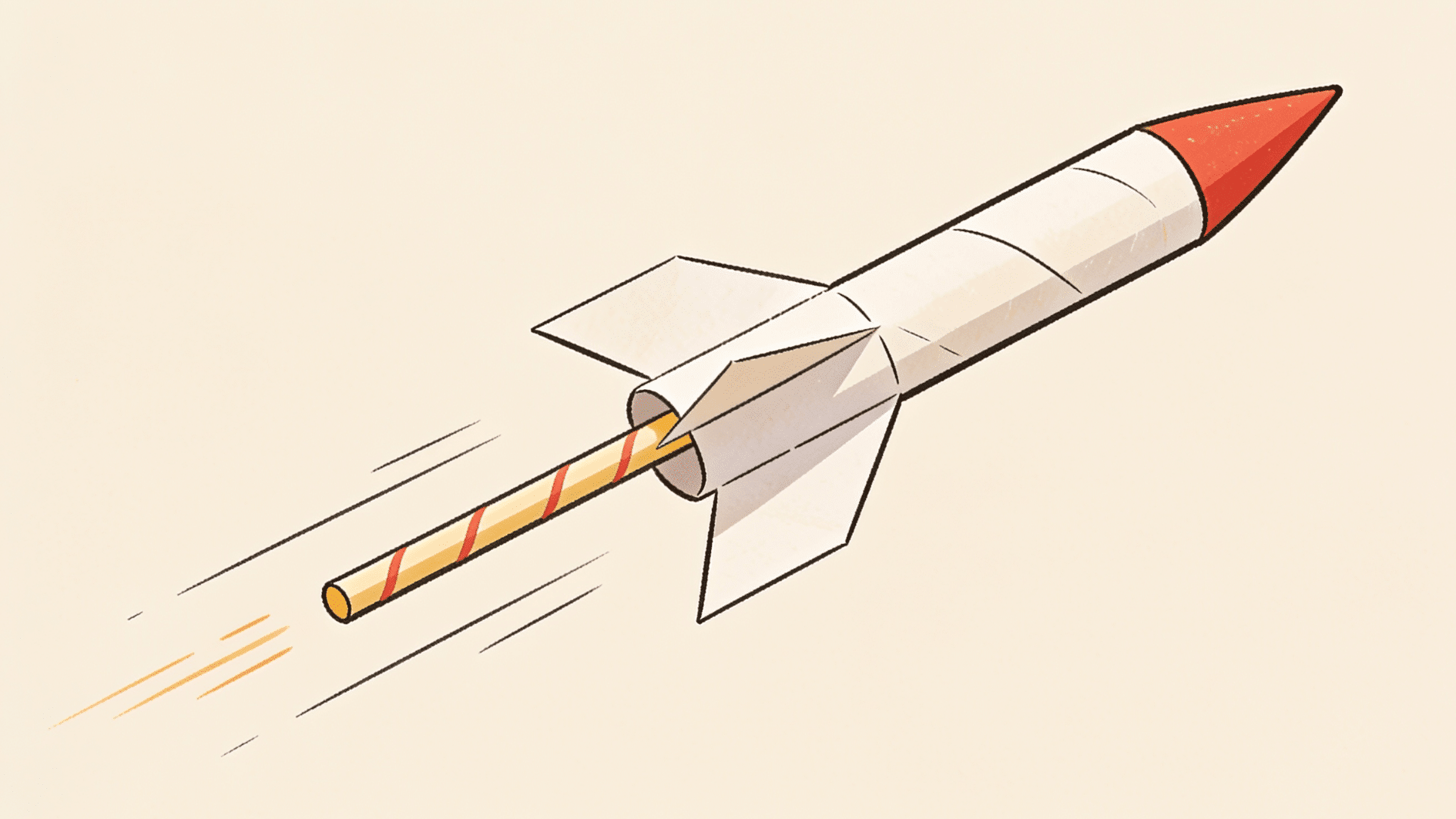
A simple, reusable toy craft tweens can build and test repeatedly.
Because it can be flown again and again, it naturally invites a bit of friendly competition over whose rocket can travel the farthest.
- Step 1: Tape one end of a straw closed to form the rocket’s nose.
- Step 2: Decorate the straw with paper fins near the open end.
- Step 3: Slide the decorated straw over a second, thinner straw used as the launch tube.
- Step 4: Blow sharply into the launch tube to send the rocket flying, then measure the distance.
13. Handprint Alien
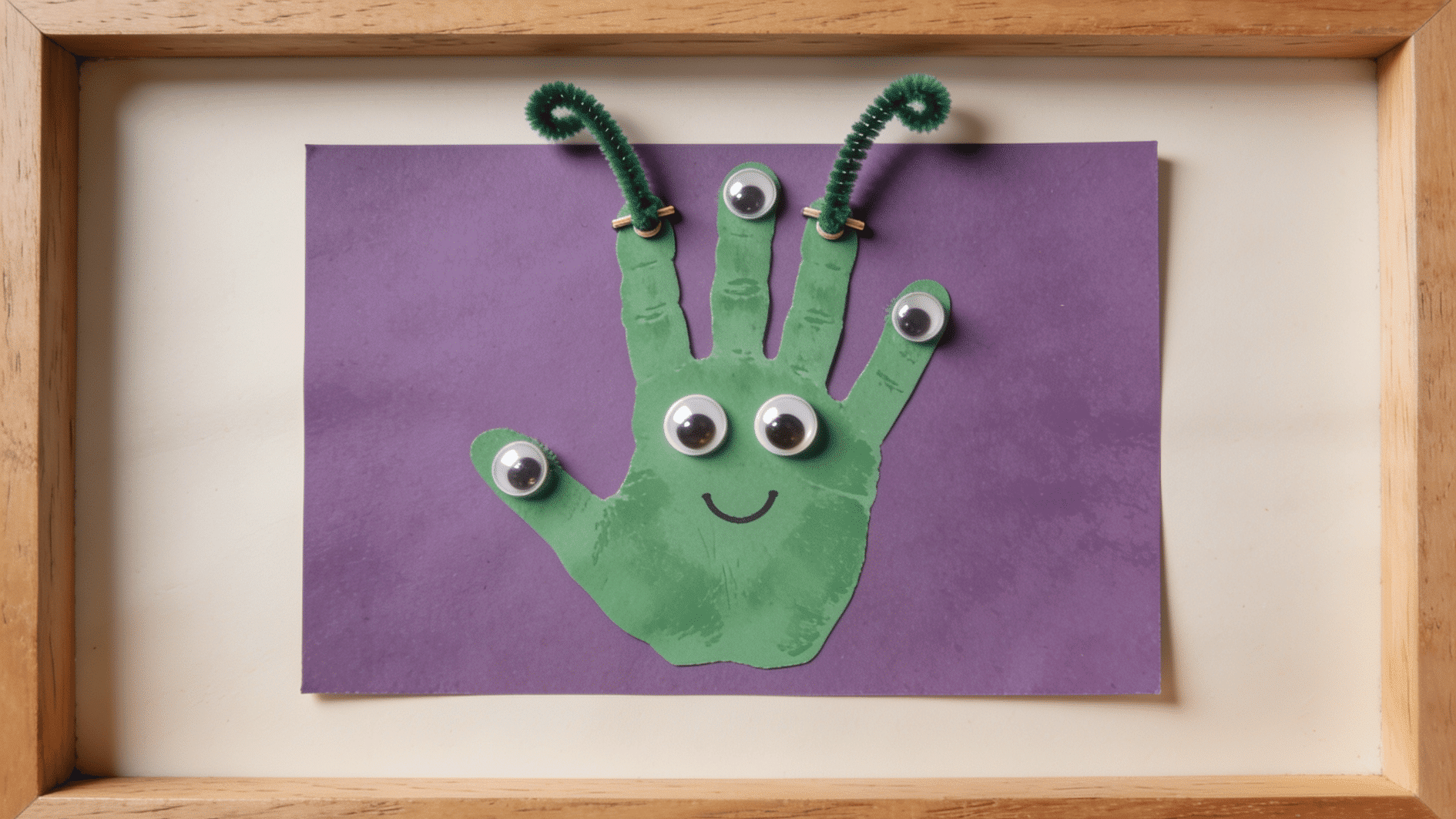
A keepsake craft that’s especially sweet for younger kids. It captures a small handprint at a single moment in time, making it a lovely one to save, date, and look back on years later.
- Step 1: Trace or paint your child’s handprint onto green or purple cardstock.
- Step 2: Once dry, cut out the handprint shape.
- Step 3: Add googly eyes near the top of the palm and a small smiling mouth.
- Step 4: Glue on pipe-cleaner antennae for the finishing touch.
14. Paper Plate Moon Phases Wheel
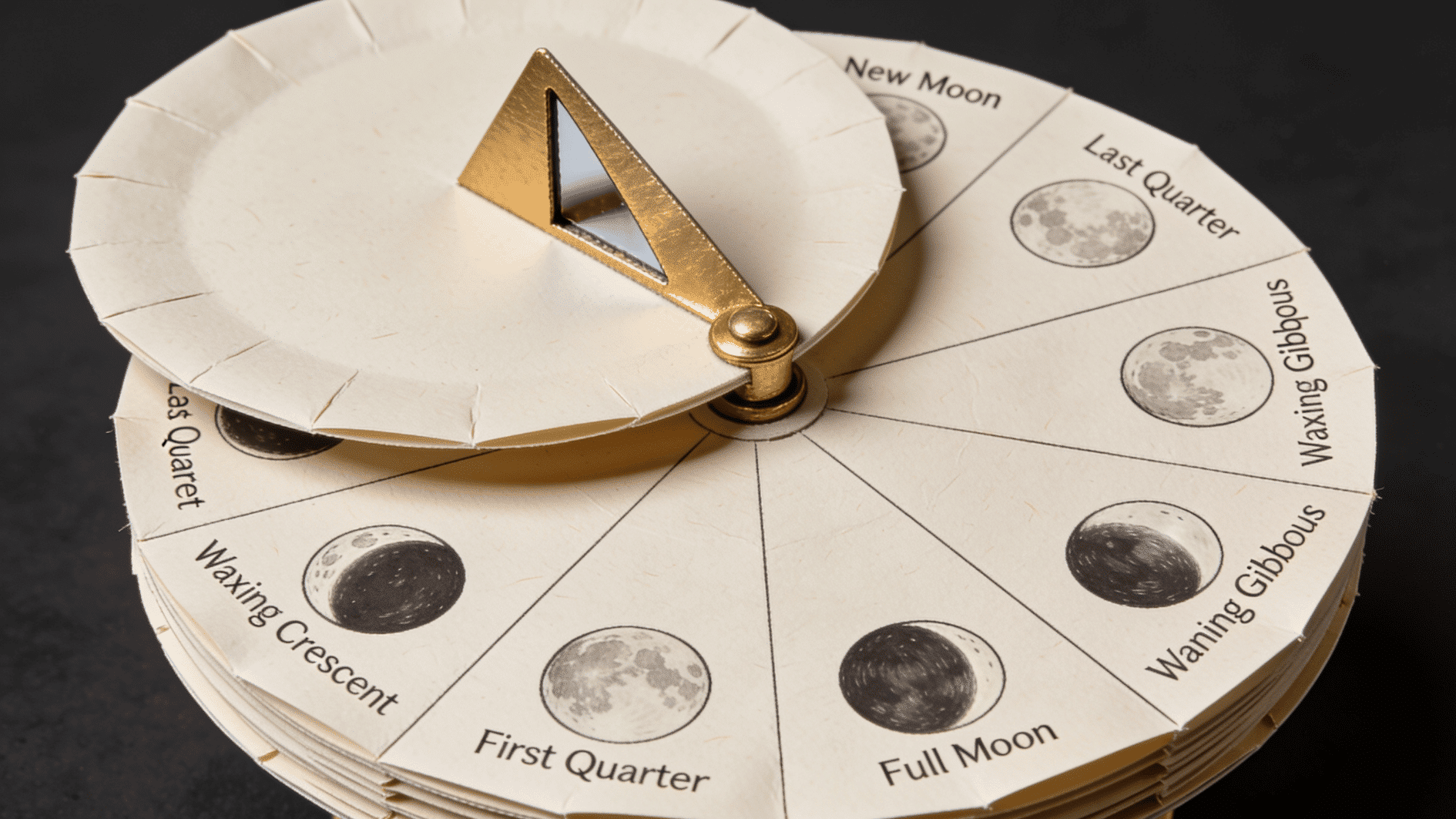
A simple spinning craft that teaches a real science concept.
As the wheel turns, kids can watch the moon move through its phases, which makes it easy to connect the craft directly to whatever phase the real moon is in that night.
- Step 1: Cut two paper plates; one slightly smaller than the other.
- Step 2: On the larger plate, draw and color the eight phases of the moon around the edge.
- Step 3: Cut a wedge-shaped window into the smaller plate to reveal one phase at a time.
- Step 4: Attach the plates at the center with a brass fastener so the window can spin around.
15. Foil Planet Sculptures
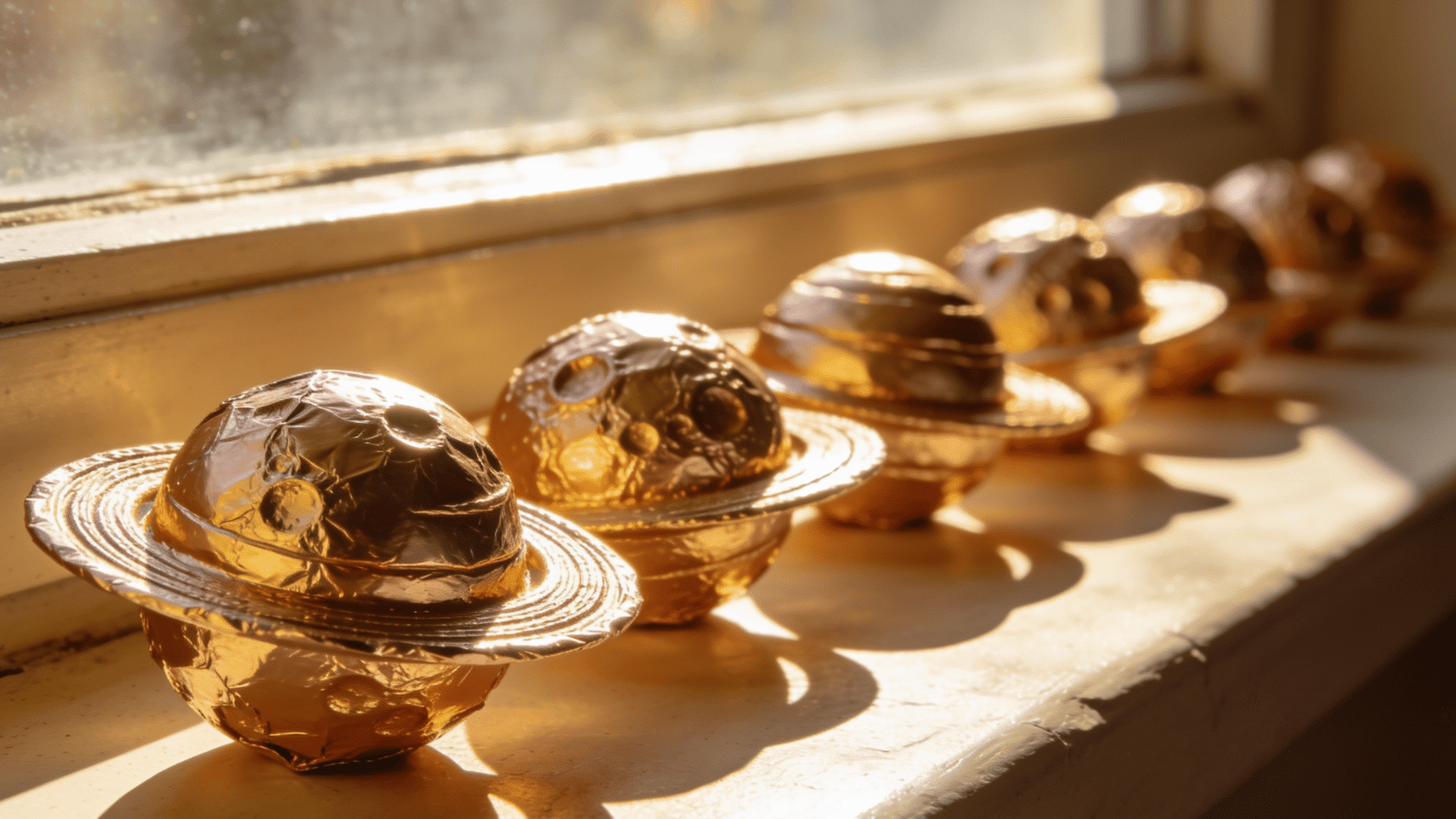
A tactile, no-mess craft using just foil and imagination.
There’s no paint or glue required, which makes it an easy grab-and-go option, and the shiny texture gives each planet a fun, otherworldly finish.
- Step 1: Tear off sheets of foil in different sizes.
- Step 2: Scrunch and shape each sheet into a ball to represent a planet.
- Step 3: Flatten slightly and add texture lines with a fingernail or craft stick for rings or craters.
- Step 4: Line up the foil planets in order from the sun on a windowsill display.
Budget Swaps & Storage Tips
You don’t need a craft store run to pull off any of these projects; most of what you need is probably already in your recycling bin or junk drawer.
| Instead of | Try | Why It Helps |
|---|---|---|
| Store-bought cardstock | Empty cereal boxes | Free, sturdy, already on hand |
| Hot glue gun | Glue dots or strong tape | Safer for younger kids, no burns |
| Loose glitter | Glitter glue | Same sparkle, far less mess |
| Buying a galaxy display board | A repurposed corkboard or wall calendar | Doubles as a rotating “mission wall” |
| Tossing old crafts | A labeled shoebox per child | Keeps finished projects safe for next time |
Learning Through Crafting
The glue doesn’t have to dry in silence; those quiet moments of waiting are perfect for slipping in a fact or story prompt.
Ask what an astronaut might pack for the Moon, imagine what aliens would think of your backyard, or explain how a balloon’s push of air mirrors real rocket propulsion.
Name the constellation together, talk about how sailors once navigated by starlight, or step outside that evening to spot the real moon’s phase.
None of it needs a script, just a little noticing, and the conversation about space keeps going long after the glue has dried.
Conclusion
Space crafts for kids aren’t just rainy-day filler: they’re a low-cost, high-imagination way to spark real curiosity about science and the cosmos, one paper plate and pipe cleaner at a time.
Whether your astronaut is gluing googly eyes onto an egg carton alien or launching a balloon rocket across the living room, every project is a small step toward a greater sense.
Pick one craft based on your child’s age, gather your supplies, and count down from five: Mission Control is ready when you are.