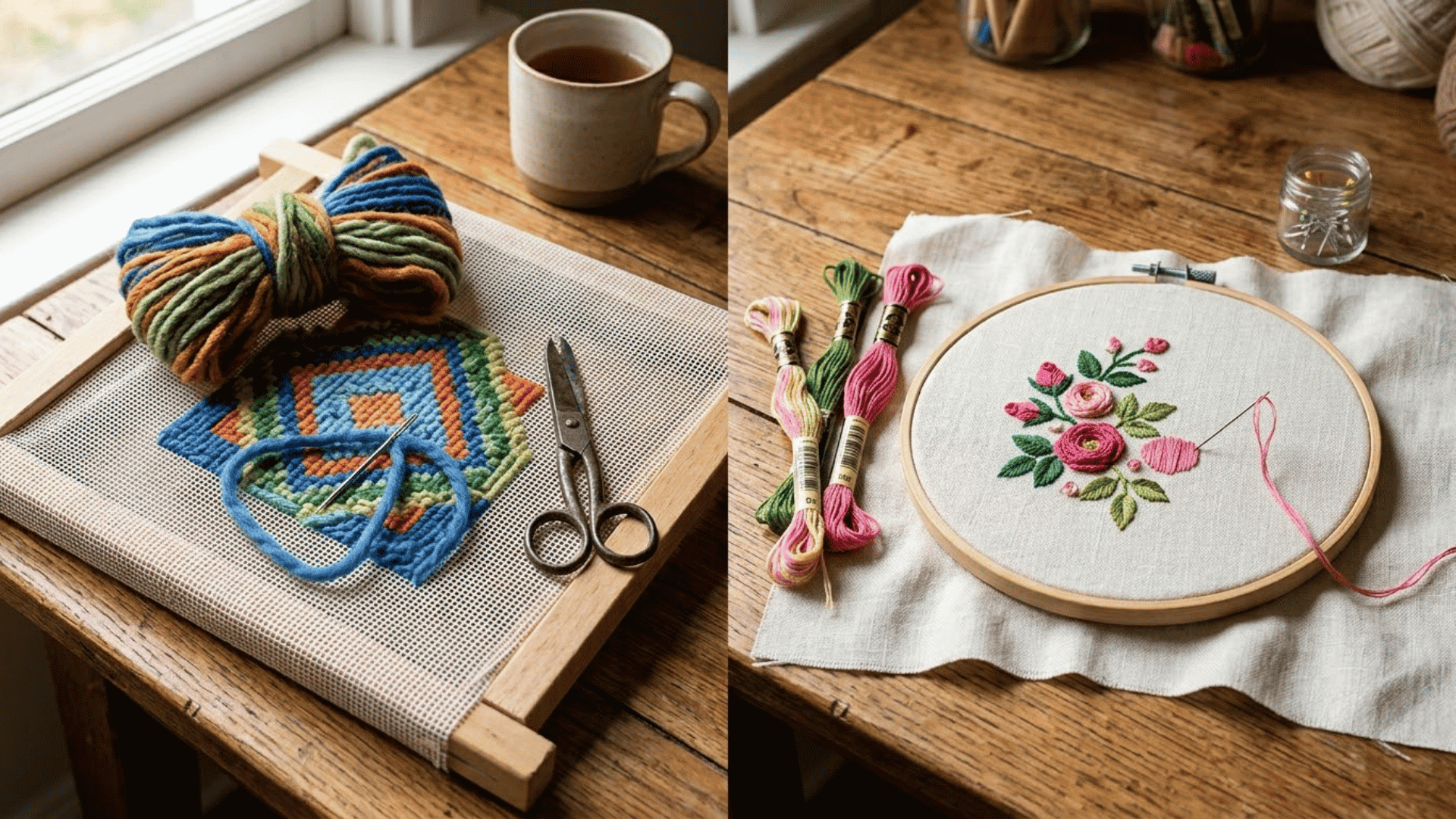
At first glance, needlepoint and embroidery can look almost interchangeable. You have thread, a needle, a design, and plenty of patient stitching ahead.
I learned sewing from my grandmother when I was still a kid and later spent more time around textile crafts, so I’ve come to notice how much the fabric, stitch placement, and thread can change the way a project feels.
That becomes especially clear with needlepoint vs. embroidery. The two belong to the same needlework family, but their materials and working methods create noticeably different stitching experiences.
Is Needlepoint the Same as Embroidery?
Needlepoint is technically a form of embroidery, but the two terms are often used separately when people talk about modern needlework.
Needlepoint is generally worked on a stiff, open-weave canvas, with stitches placed through its visible grid.
What people commonly call embroidery or surface embroidery is usually worked on softer fabric and allows much more freedom in where stitches are placed.
That distinction explains why needlepoint and embroidery can feel like separate crafts even though they belong to the same broader family.
Major Differences Between Needlepoint and Embroidery
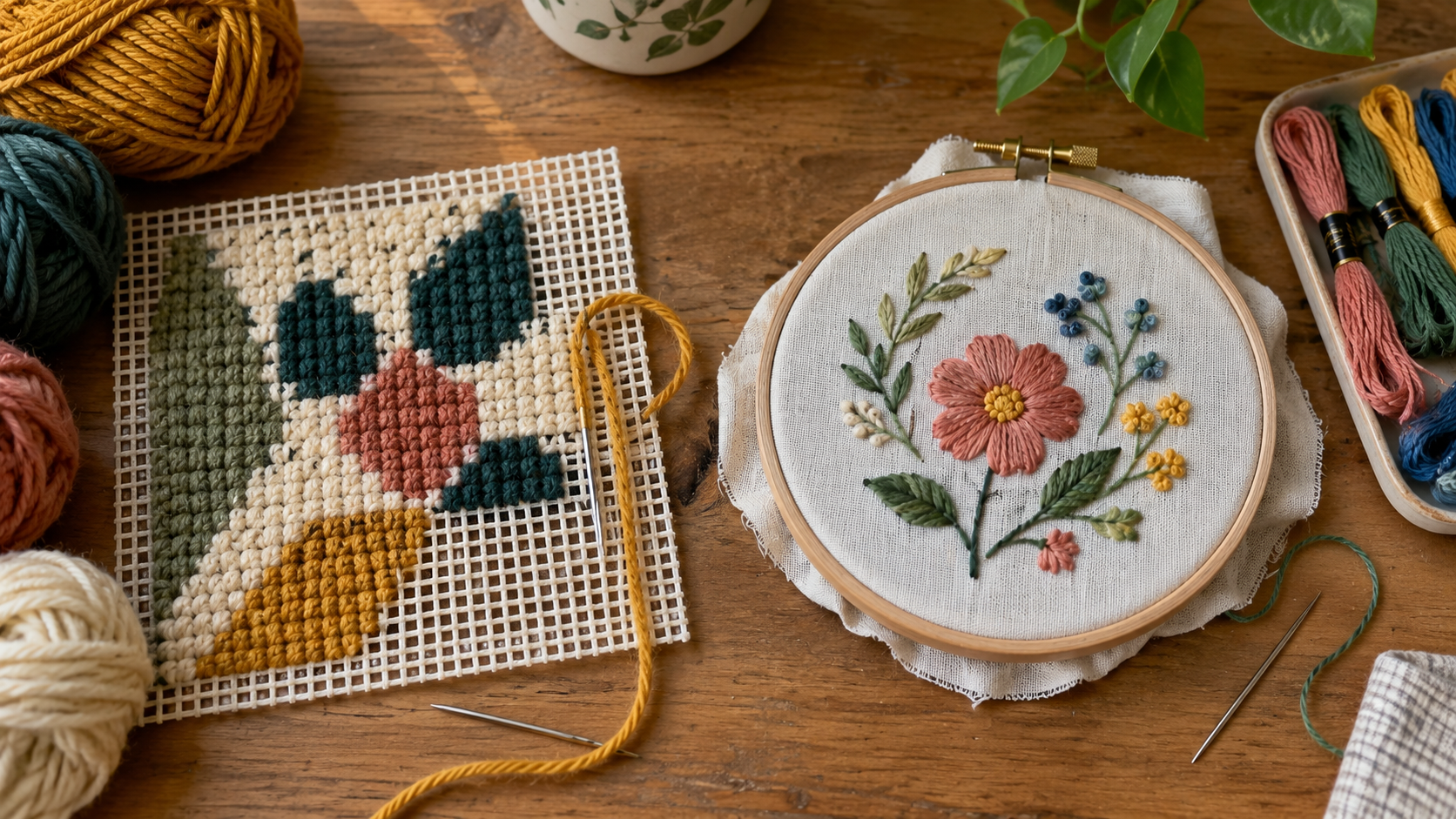
1. The Material You Use
What you stitch on shapes everything else about the project. It determines how much direction you get before you start, how forgiving mistakes are, and how much planning happens before the first stitch.
|
Aspect |
Needlepoint |
Embroidery |
|---|---|---|
|
Base material |
Stiff, open-weave canvas |
Soft fabric (cotton, linen, denim, clothing) |
|
Placement cues |
Visible holes and grid |
Fewer built-in guides |
|
Practical effect |
Easier to see where each stitch goes |
Often relies on a marked or traced pattern |
2. How Patterns Are Set
Before you start stitching, each craft asks something different of you at the planning stage. One hands you a fixed structure to follow, while the other leaves more decisions for you to make along the way.
|
Aspect |
Needlepoint |
Embroidery |
|---|---|---|
|
Stitch guide |
Canvas mesh (painted, printed, or charted) |
Drawn or traced outline |
|
Beginner feel |
Clear spot for every stitch |
Requires some judgment |
|
Structure |
Grid locked |
Freeform |
3. Stitch Types and Options
Both offer a wider range than beginners expect, especially once you move past the basics. Learning a few common embroidery stitch types can also make the differences in movement, texture, and detail easier to understand.
|
Aspect |
Needlepoint |
Embroidery |
|---|---|---|
|
Common stitches |
Tent, continental, basketweave, decorative stitches |
Backstitch, satin stitch, stem stitch, chain stitch, French knots |
|
Stitch variety |
Expanding in modern needlepoint |
Wide from the start |
|
Strength |
Texture and coverage |
Detail and line work |
Working with embroidery has taught me that small changes in tension, spacing, and stitch direction can noticeably change the finished result. That becomes useful when comparing the different stitching approaches used in needlepoint and embroidery.
4. Needles and Thread Types
The tools you pick up shape the entire stitching experience before the design even comes into play. Weight, thickness, and needle shape affect how comfortable and precise each stitch feels.
|
Aspect |
Needlepoint |
Embroidery |
|---|---|---|
|
Needle |
Tapestry needle, blunt tip |
Embroidery needle, sharp tip |
|
Thread |
Wool or thicker fiber |
Stranded cotton floss |
|
Overlap |
Some crossover exists |
Some crossover exists |
5. How Much Gets Covered
One of the quickest ways to tell needlepoint and embroidery apart has nothing to do with stitch type. It comes down to how much of the surface underneath ends up hidden once the piece is finished.
|
Aspect |
Needlepoint |
Embroidery |
|---|---|---|
|
Coverage |
Canvas fully covered |
Fabric stays visible |
|
Visual result |
Dense, woven look |
Fabric contributes to the design |
6. How Repetitive Each Feels
Beyond technique, there’s a rhythm to each craft that becomes obvious the moment you settle in. Some stitchers find comfort in repeating the same motion, while others prefer constant variation to stay engaged.
|
Aspect |
Needlepoint |
Embroidery |
|---|---|---|
|
Hand feel |
Repetitive movement |
Frequent switching |
|
Pace |
Steady, meditative |
Varied |
|
Good fit for |
Relaxed repetition |
Stitchers who like variety |
Do Needlepoint Skills Transfer to Embroidery?
If you already embroider or have experience with other hand-sewing techniques, you are not starting from zero when you pick up needlepoint. Several basic hand skills carry across, even though the canvas, stitch placement, and working rhythm take some adjustment.
- Threading a needle: The same basic motion applies regardless of which craft you’re working in.
- Controlling tension: You already know how tight or loose stitches should sit, which helps you avoid puckering in either craft.
- Reading patterns: Following a chart or symbol key transfers directly, even if the pattern format looks different.
- Starting and ending thread: Securing thread neatly is a shared skill, not a needlepoint-only habit.
- Judging color: An eye for shading and color blending works the same way on fabric as it does on canvas.
- Hand coordination: The muscle memory for smooth, even stitching carries over with practice.
- Keeping work neat: Tidy tension and clean thread ends matter in both crafts.
That said, some things don’t transfer automatically. The foundation carries over. The specifics still take practice.
What Stitchers Actually Say About the Needlepoint vs. Embroidery Debate
Technical definitions aside, real stitchers often see this differently based on their own experience. Whether needlepoint counts as “just embroidery” or its own separate craft depends less on strict definitions and more on how each stitcher experiences the process.
Needlepoint IS embroidery, just a specific type of it. This is like going to a store that specializes in running shoes & being frustrated that they don’t also sell stilettos or flip flops. – blundrland
If it is actually needlepoint with all stitches one way not crossed, look at the stitch diagram carefully. Needlepoint looks weird if you don’t make stitches properly. – k1p1coder
Needlepoint is beautiful, but because it it worked in wool threads, for an item that is designed to use it is harder to clean and maintain than cross stitch, which is cotton and can be washed. – Slight-Brush
I do both (but I was taught cross stitch as a little kid and learned embroidery in my teen years), and embroidery requires a bit more mindfulness from me. – AsynchronousWeaver
Needlepoint vs. Embroidery vs. Cross-Stitching
These three crafts get lumped together all the time, and it’s easy to see why. Needlepoint, embroidery, and cross-stitch all use a needle and thread; all three can end up framed on a wall, and all three show up in the same “beginner needlework” searches.
|
Aspect |
Needlepoint |
Embroidery |
Cross Stitch |
|---|---|---|---|
|
Base |
Canvas |
Fabric |
Aida or evenweave |
|
Main approach |
Grid-based canvas stitches |
Many free-form stitches |
Counted X-shaped stitches |
|
Typical look |
Dense and textured |
Detailed and varied |
Pixel-like |
|
Pattern style |
Painted, printed, or charted canvas |
Traced or drawn outline |
Counted chart with symbols |
|
Beginner friendliness |
Easy to follow, forgiving |
Moderate, needs some judgment |
Easy to follow, very structured |
|
Common projects |
Pillows, ornaments, coasters |
Clothing, hoop art, tote bags |
Samplers, hoop art, small gifts |
Needlepoint or Embroidery: Which One Fits You Better?
Needlepoint suits you if you enjoy repetitive stitching, like grids and structure, and prefer a design that is already mapped out. It also works well if you want dense, decorative pieces and enjoy slowly filling in defined areas.
Embroidery suits you if you want more creative freedom and enjoy learning different stitch types. It also fits if you like personalizing clothing, enjoy drawing or transferring your own designs, and prefer switching between textures and stitch styles.
Reading about the differences only tells you so much. A small starter project in each craft shows you far more than comparing finished, advanced pieces ever could.
Conclusion
Needlepoint and embroidery may sit under the same broader embroidery umbrella, but they give you two noticeably different ways to work with needle and thread. The canvas, fabric, stitch placement, and pace all shape the experience.
My background in sewing has taught me that you often understand a textile technique much faster once the materials are actually in your hands.
Start with one small beginner project, notice how the stitches behave, and then try the other. That hands-on comparison will tell you far more than finished photos alone.
Frequently Asked Questions
How Long Does It Take to Finish a Beginner Project?
A small beginner project in either craft usually takes a few evenings to a couple of weeks, depending on size and how much time you spend practicing.
Is Needlepoint or Embroidery More Expensive to Start?
Embroidery is usually cheaper to start since basic hoops, needles, and floss cost very little, while needlepoint canvas and wool thread tend to add up faster.
Can Kids Learn Needlepoint or Embroidery Easily?
Yes, both crafts work well for kids, though embroidery on soft fabric with blunt needles is often introduced first before moving to canvas work.
Are Needlepoint And Embroidery Kits Widely Available Online?
Yes, beginner kits for both crafts are widely sold online and in craft stores, usually including pre-marked fabric or canvas, thread, and basic instructions.