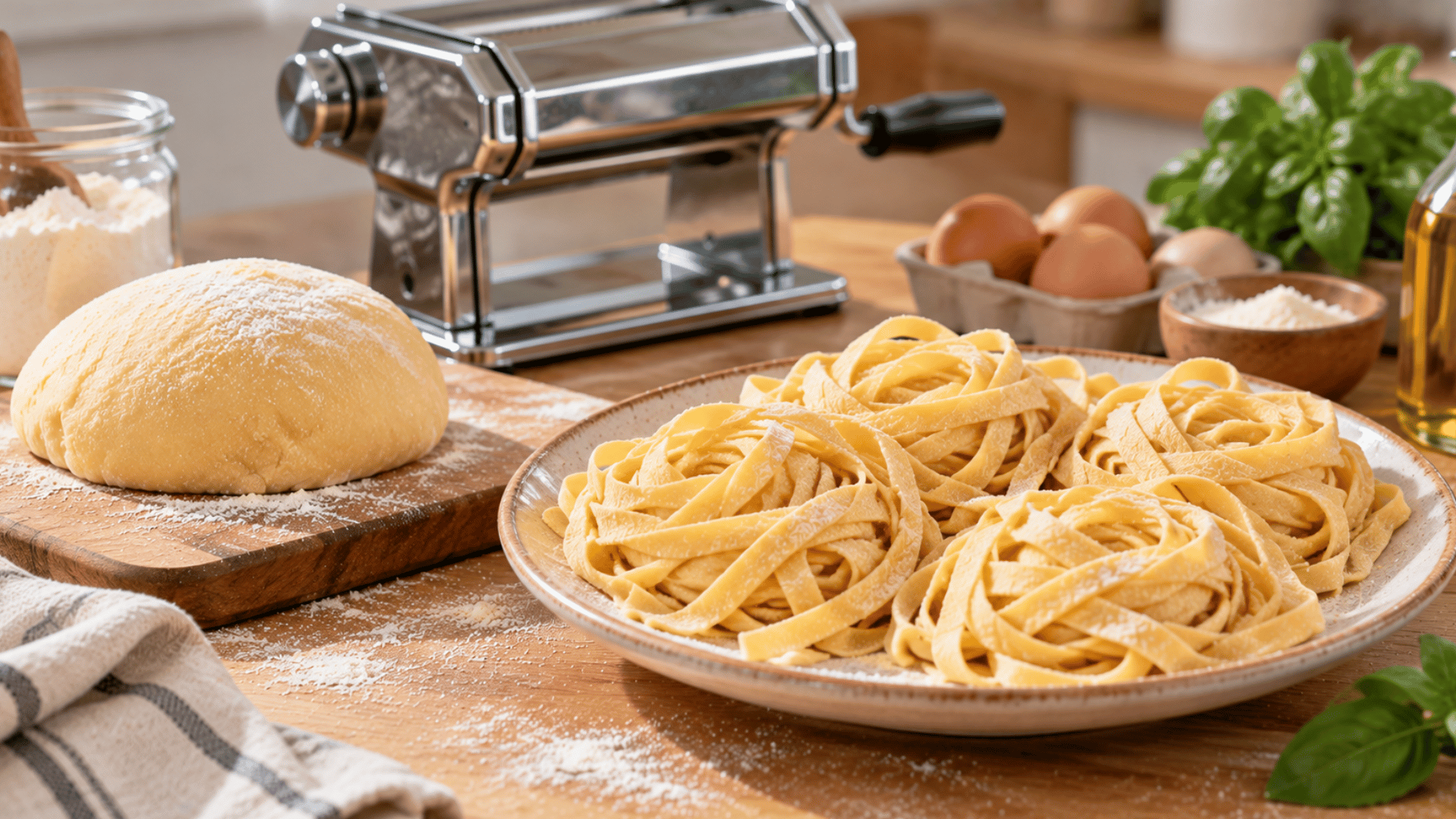
If you have been reading my recipes for a while, you probably already know how much I love pasta. I am always trying different pasta dishes, shapes, sauces, and fillings, but homemade pasta dough is the part I keep coming back to most.
I have made batches that were too dry to roll, others that stuck to everything in sight, and a few I nearly gave up on halfway through. But that trial and error is exactly what taught me what to look for.
You start noticing the dough instead of watching the clock. This pasta dough recipe is the version I now make when I want fresh pasta without overthinking every step.
Handmade Pasta Dough: Ingredients and Ratios
A simple fresh pasta recipe depends on getting a few basic ingredients into the right balance. The table below shows what each one brings to the dough and what matters most.
|
Ingredient |
Purpose |
What to Know |
|---|---|---|
|
Flour |
Gives the dough structure |
00 or all-purpose flour can both work |
|
Eggs |
Add moisture and richness |
Large eggs help keep the ratio consistent |
|
Olive oil |
Adds a little softness |
Optional depending on the recipe |
|
Salt |
Adds seasoning |
Use only a small amount |
How to Make Pasta Dough: Step-by-Step Recipe
Pasta dough changes noticeably as it moves through the process, loose and shaggy at first, then smoother, then relaxed after resting. I’ve made this pasta dough recipe enough times to know where most people go wrong. Here are the steps that actually make the difference:
1. Measure and Set Up the Ingredients
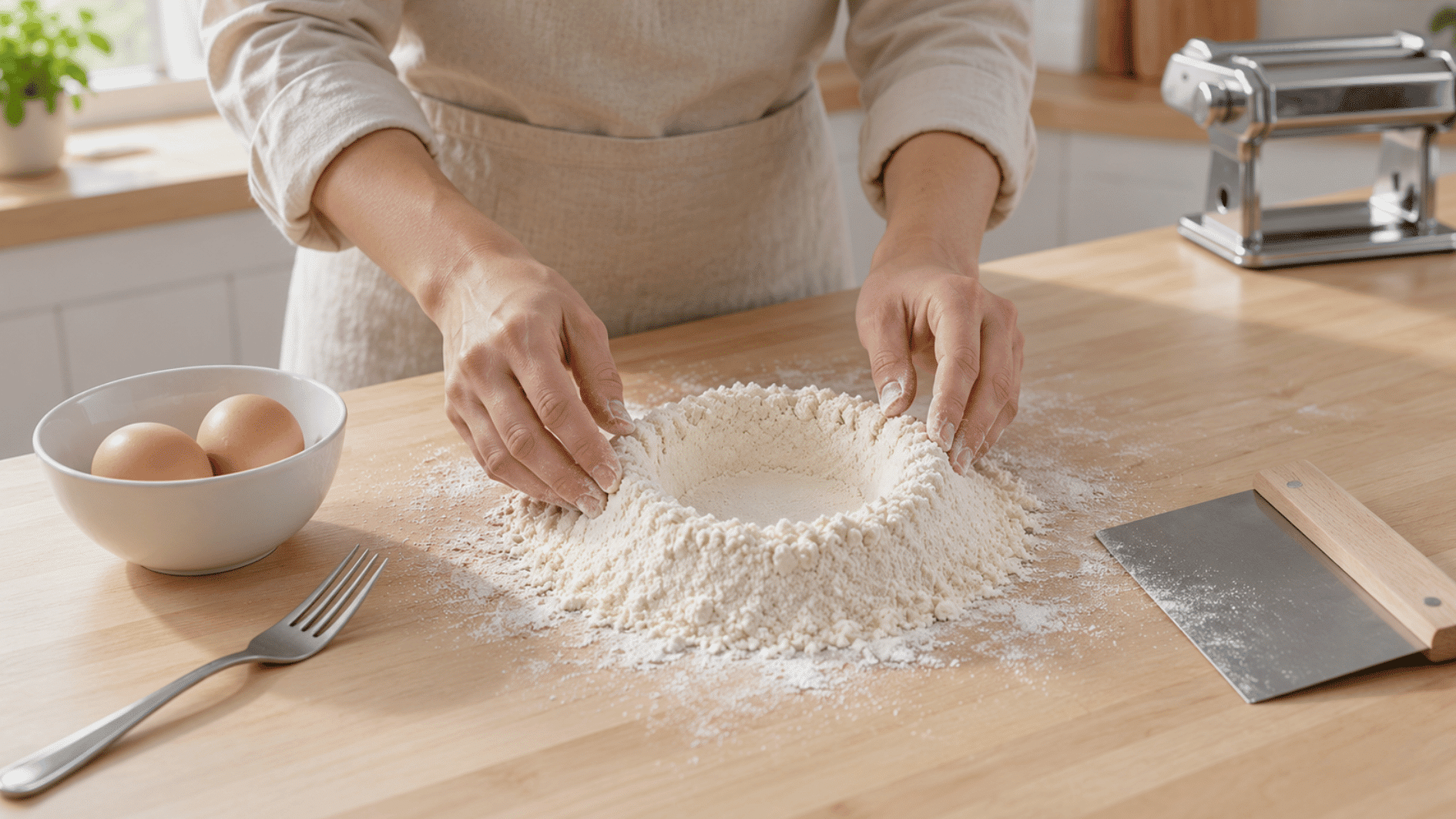
Measure the flour and eggs accurately before you start. A ratio of about 1 egg per 100g of flour is a reliable starting point. Guessing at proportions is the most common reason dough turns out too wet or too dry.
Place the flour on a clean surface or in a wide bowl. Form a well in the center deep enough to hold the eggs without spilling over. I’ve had eggs escape a shallow well more times than I’d like to admit, so make it wider than feels necessary.
- Bowl vs. Surface: A bowl contains stray flour better for beginners.
- Egg Count Check: Confirm the right number before cracking any shells.
- Well Depth: Build the walls tall enough to hold liquid without leaking.
2. Mix the Eggs Into the Flour
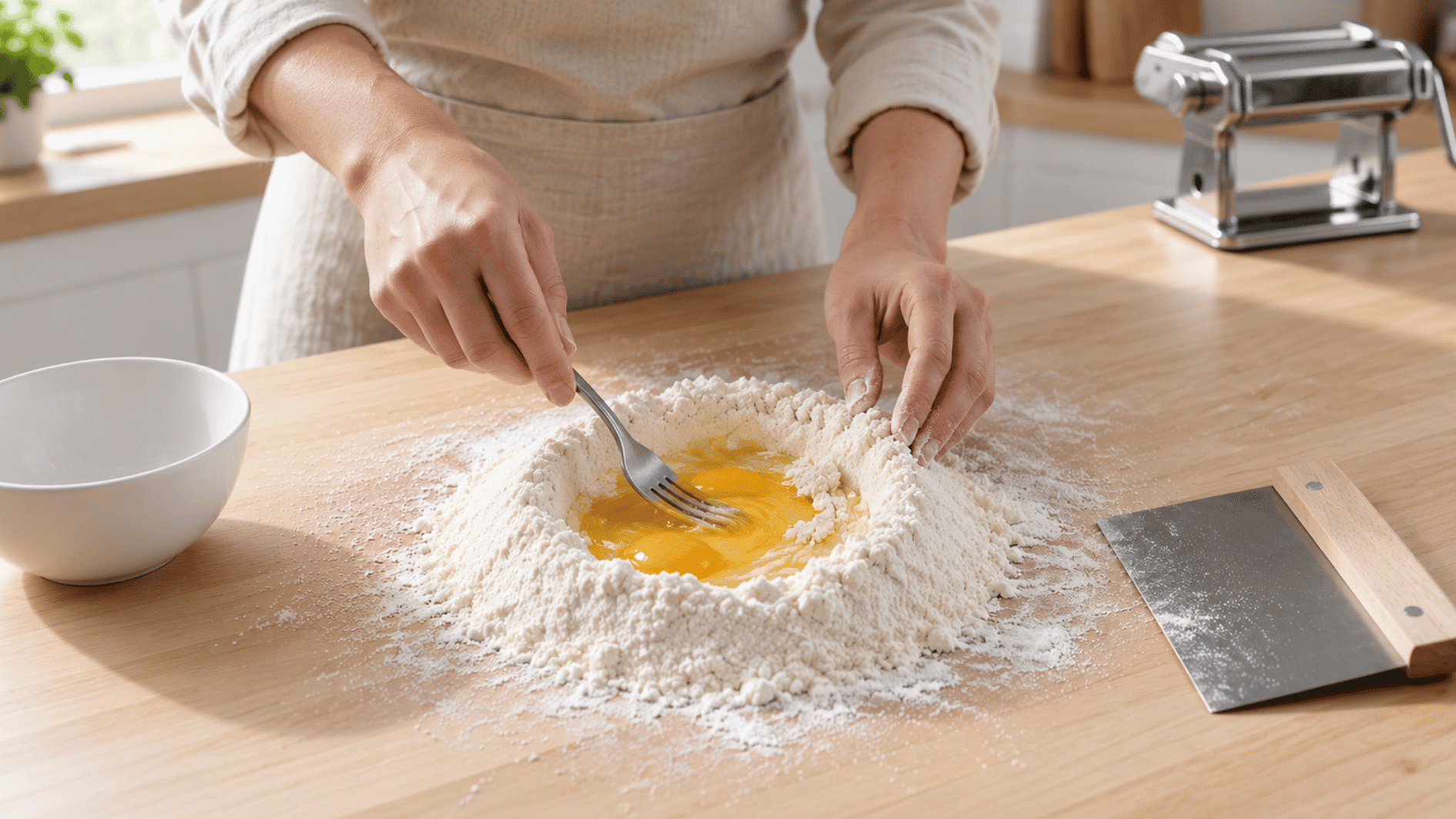
Beat the eggs gently with a fork. Keep the motion inside the well so they don’t break through the flour wall too early.
Slowly draw in flour from the inner edge, continuing until the mixture thickens into a rough paste. Don’t force in extra flour if it already feels firm. That instinct to keep adding more usually does more harm than good.
- Fork Angle: Hold it flat to avoid tearing through the flour wall.
- Mixing Speed: Slow, steady circles work better than fast stirring.
- Stopping Point: Stop once no loose flour remains visible nearby.
3. Knead Until Smooth and Elastic
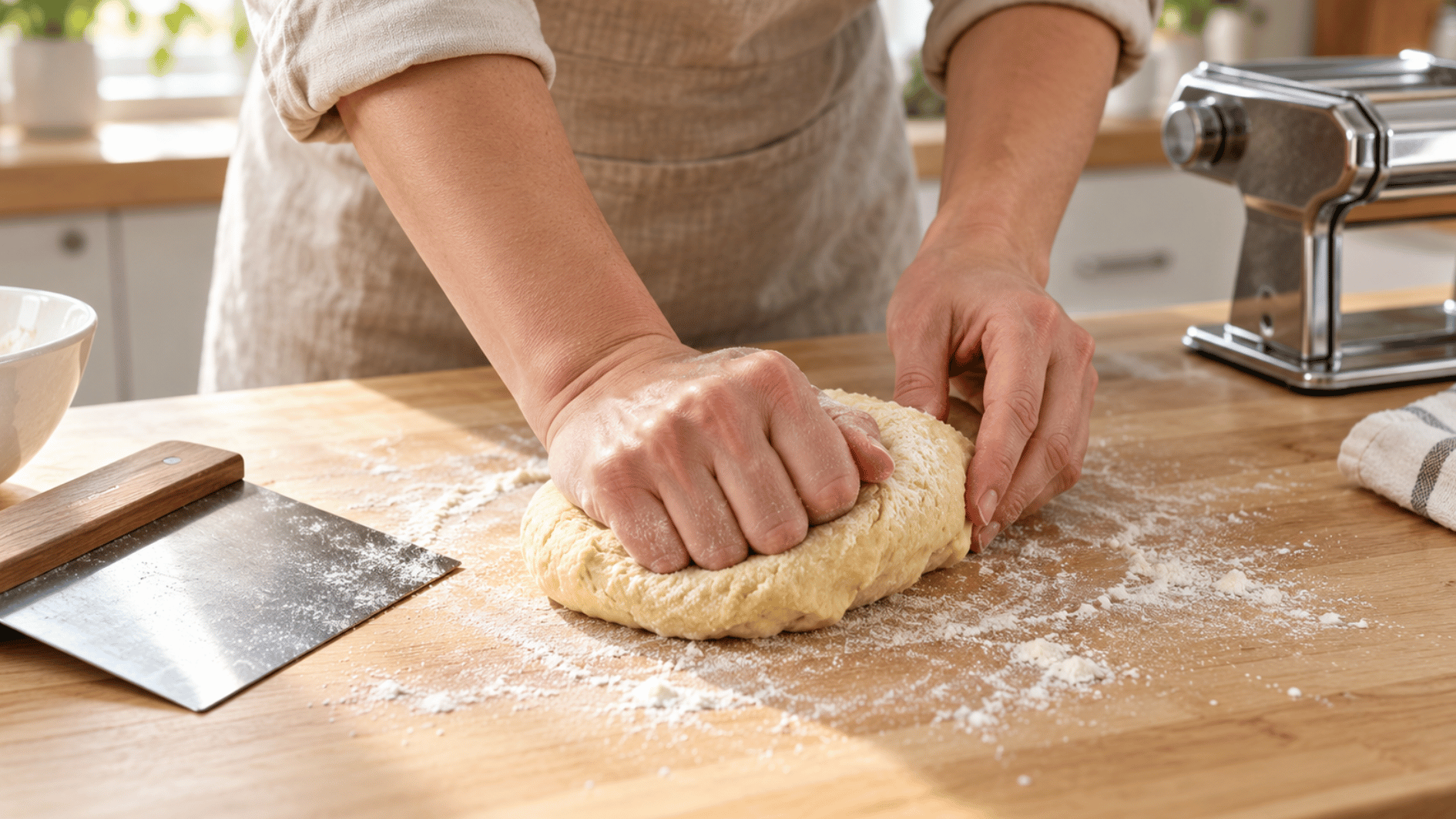
Press the dough forward with the heel of your hand. Fold it back, give it a quarter turn, and press again. If you are still getting comfortable with kneading dough by hand, the same steady press, fold, and turn motion helps build structure without tearing the dough.
Continue until the surface looks noticeably smoother. Stop once it feels firm and springs back slightly when pressed, usually after about 8 to 10 minutes. It’s more tiring than it looks on video tutorials.
- Hand Position: Use your palm’s base, not just fingertips, for real pressure.
- Surface Cleanliness: Scrape the counter occasionally to remove dried bits.
- Consistency Goal: Aim for a texture like smooth, firm playdough.
4. Rest the Dough
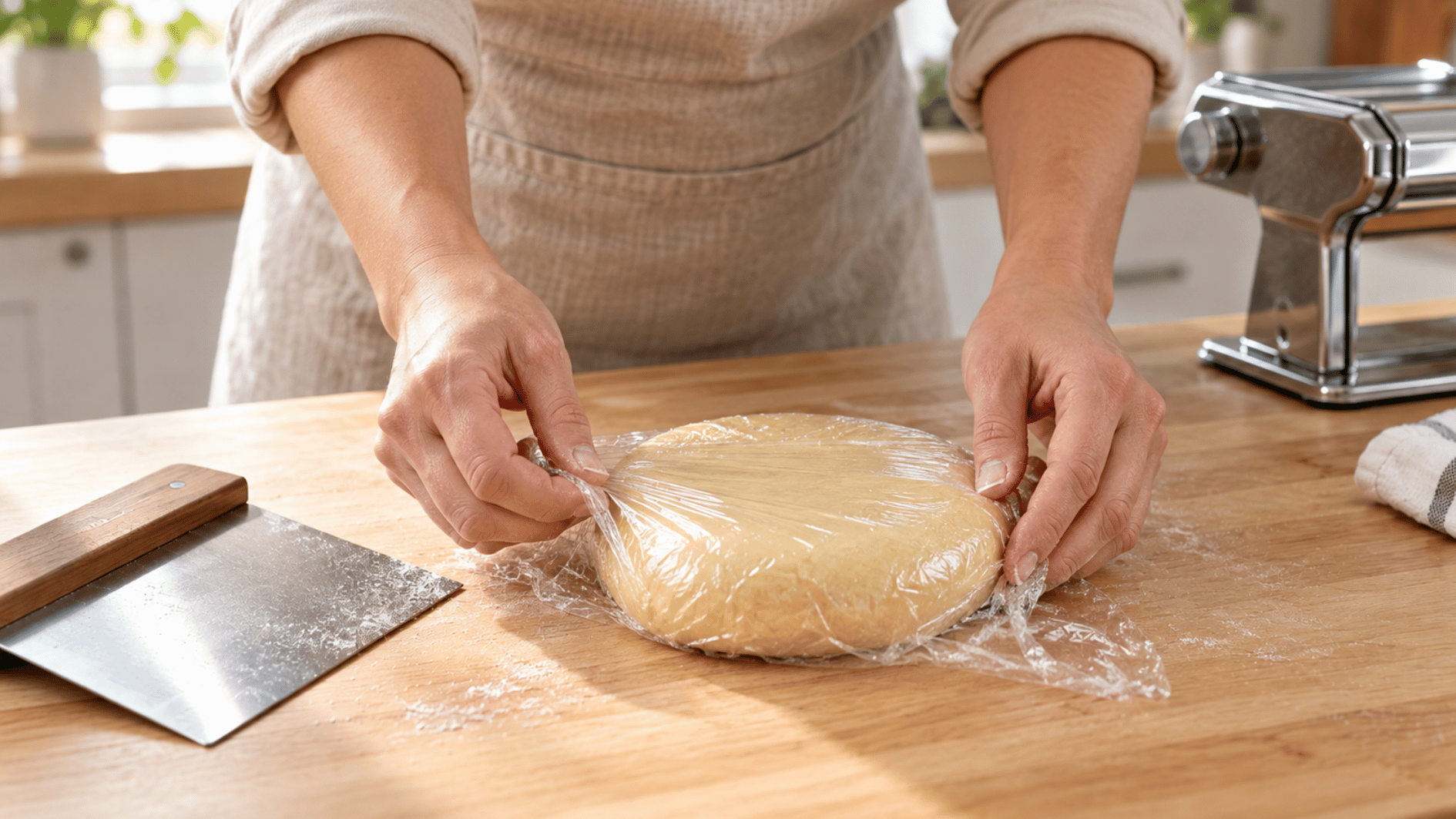
Shape the dough into a ball or disk. Wrap it tightly in plastic, or cover it well, to stop it from drying out.
Let it rest for 30 minutes to an hour. Skipping this step usually means the dough resists and shrinks back during rolling, since the gluten hasn’t relaxed. I learned that the hard way on my first attempt.
- Disk Shape Benefit: Flattening slightly speeds up even resting.
- Longer Rest Option: Refrigerating allows resting up to 24 hours if needed.
- Bring to Room Temp: Let chilled dough sit out before rolling.
5. Divide and Flatten the Dough
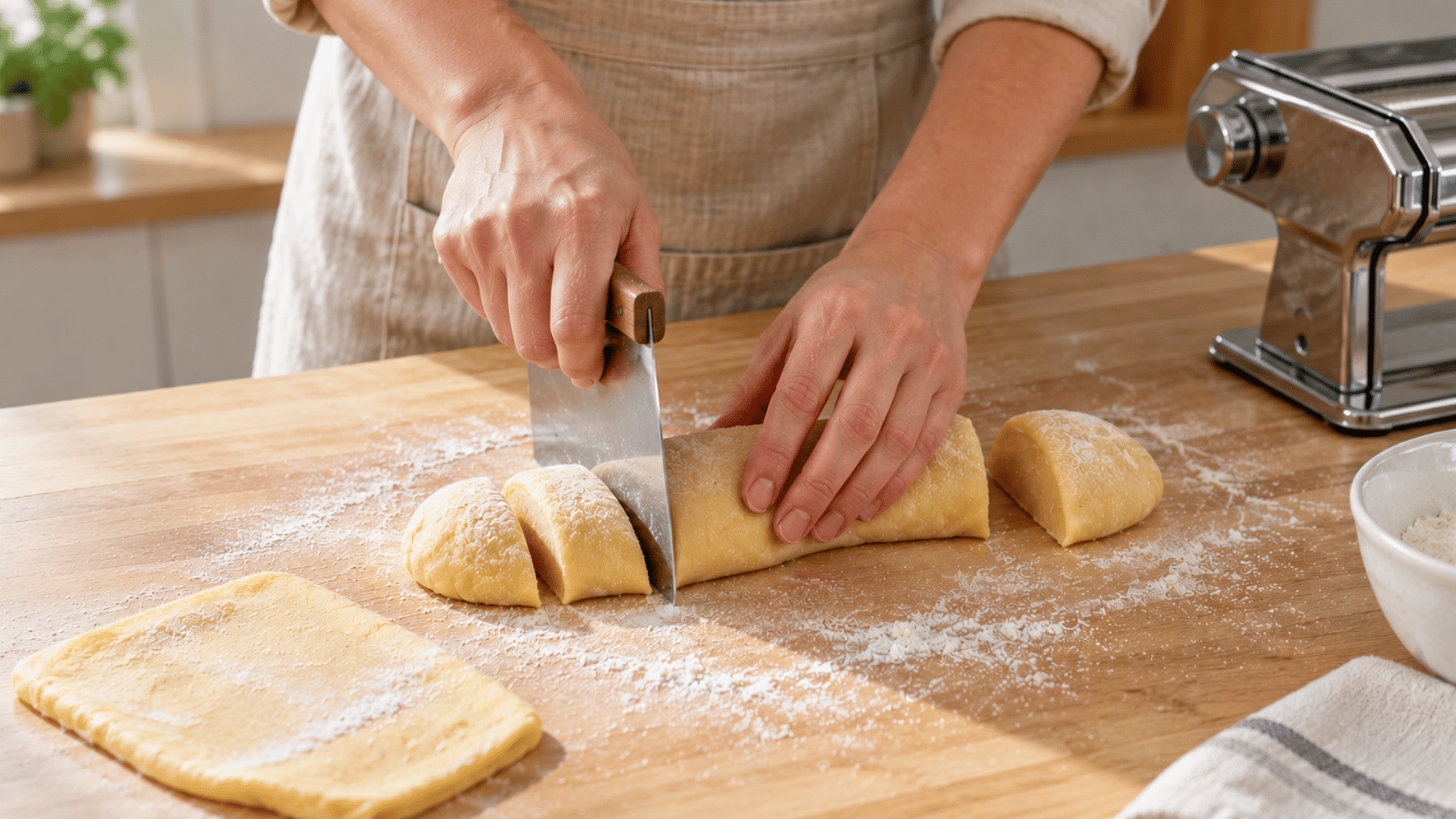
Cut the rested dough into manageable, fist-sized portions. Keep unused pieces covered so they don’t dry out while you work.
Flatten one portion at a time into a small rectangle, roughly matching the width of your pasta machine. Dust only if the dough actually starts sticking.
- Cutting Tool: A bench scraper cuts cleaner than a knife.
- Working Order: Flatten pieces in the order you’ll roll them.
- Rectangle Edges: Straight edges feed more smoothly than rounded ones.
6. Roll the Dough Into Sheets
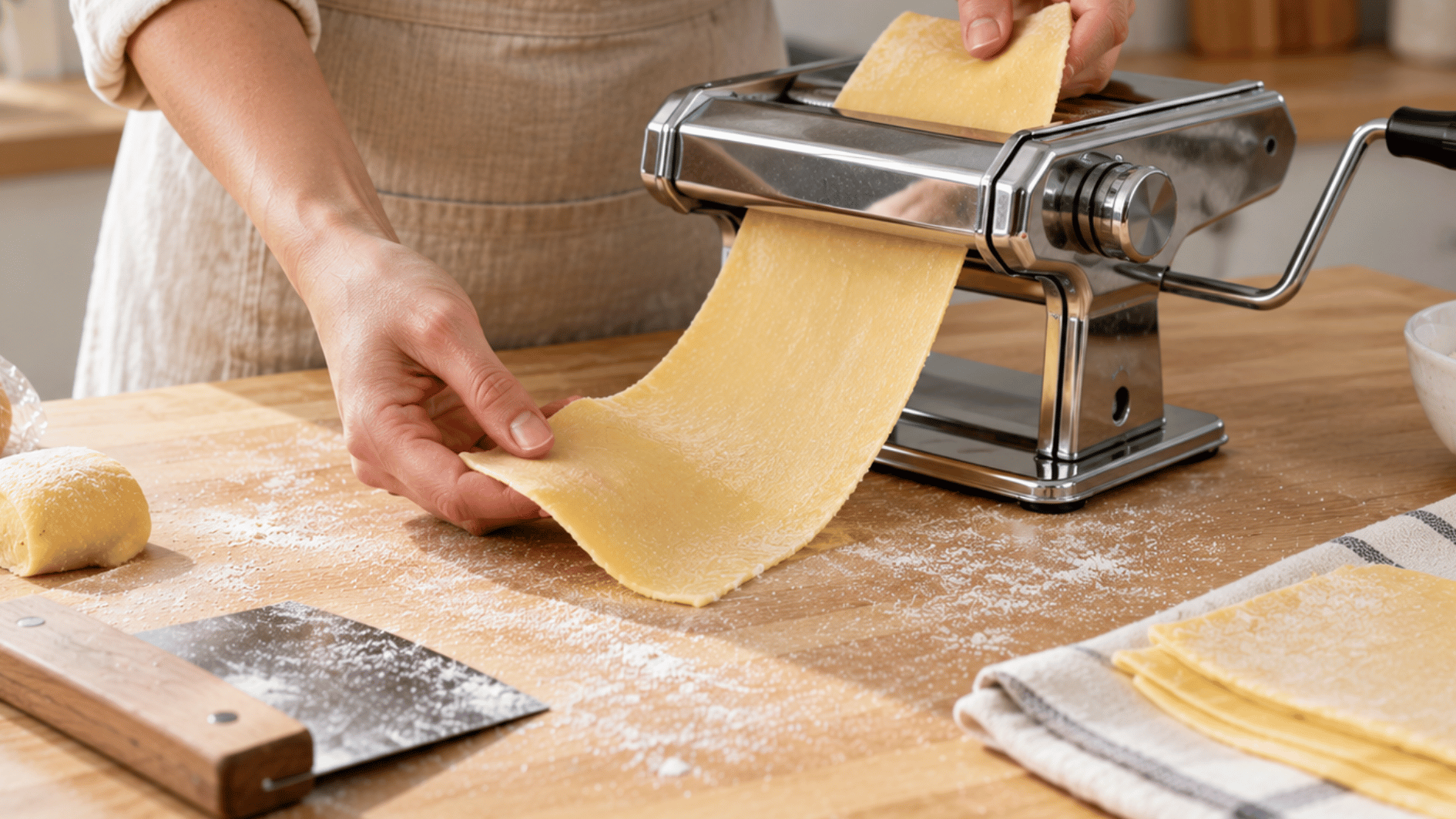
Start at the widest setting on your pasta machine. Pass the dough through once, folding it in thirds if the sheet feels uneven.
Reduce the setting gradually after each pass, stopping once the sheet is thin enough to see light through it, usually around setting 5 or 6. Without a machine, roll by hand using a long pin, working from the center outward. My arms remember every time I’ve skipped the machine.
- Setting Progression: Move down one number at a time, not skipping ahead.
- Sheet Length: Cut long sheets in half if they become hard to manage.
- Hand-Rolling Pace: Rotate the dough a quarter turn between rolls.
7. Cut and Shape the Pasta
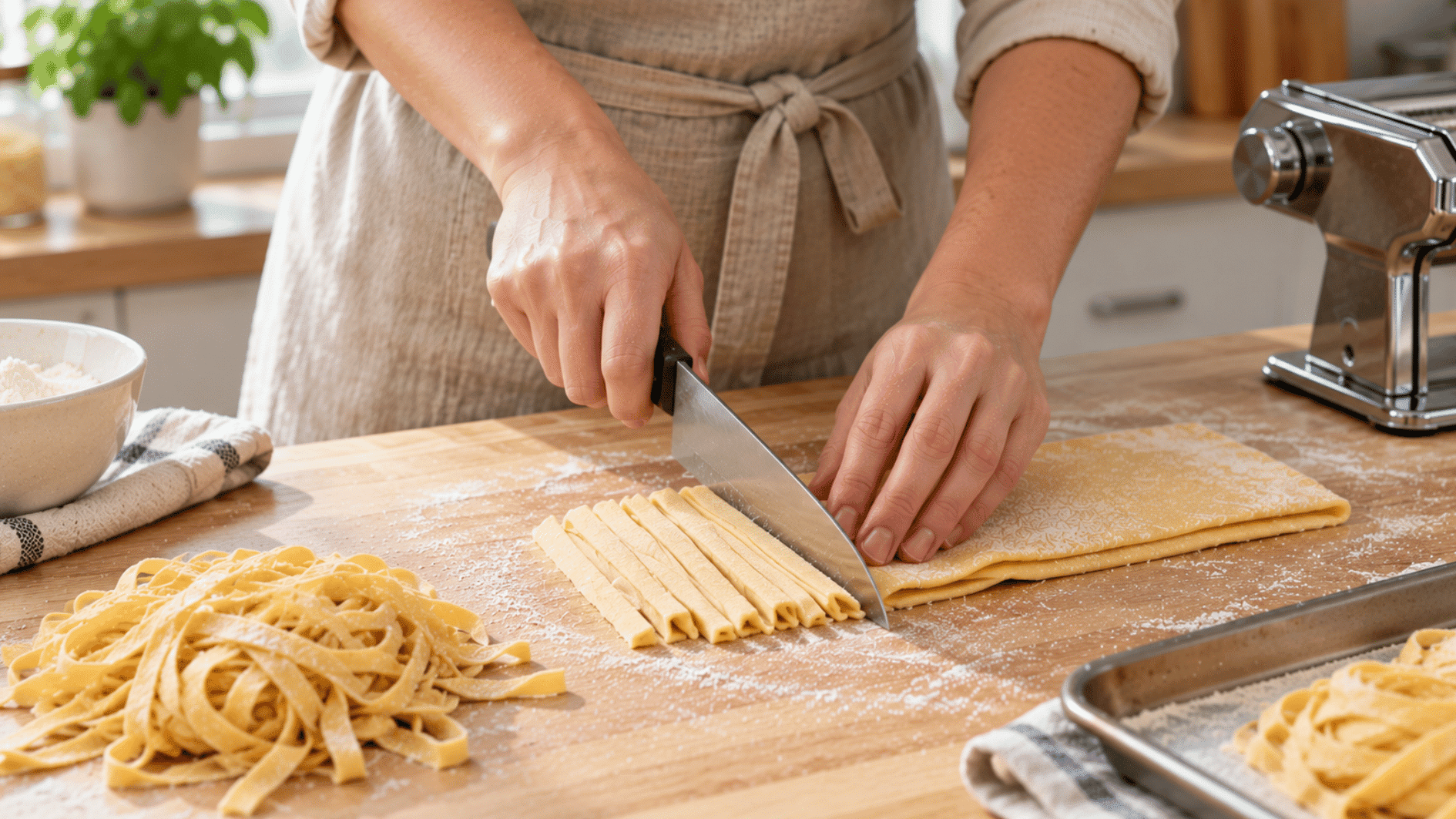
Cut rolled sheets into ribbons by hand or with a cutting attachment for more consistent widths. Leave sheets whole for lasagna. Use thinner sheets specifically for filled pasta like ravioli. Dust cut pieces lightly so they don’t stick together.
Get your sauce ready before the pasta goes in. Fresh noodles cook quickly, so I like having everything else finished first rather than trying to pull a sauce together at the last minute.
A homemade Alfredo sauce works well when you want something rich, while pesto without pine nuts keeps things lighter and lets the texture of the noodles stand out.
For something milder, a simple white sauce coats thin strands nicely. A cream sauce for pasta is another good option when you want a richer finish without overcomplicating the meal.
- Shape Options: Try fettuccine, tagliatelle, or pappardelle for different widths.
- Nesting Method: Loosely coil cut noodles into small nests for storage.
- Drying Alternative: Hang cut noodles over a rack if not cooking immediately.
What Should the Pasta Dough Feel Like?
Pasta dough changes at each stage, so texture is one of the easiest ways to tell if you are on track. These cues can help you judge what the dough needs as you work.
- Freshly Mixed: Rough, uneven, and slightly shaggy before the flour fully absorbs the moisture.
- Ready After Kneading: Smooth, firm, and elastic with a surface that springs back gently when pressed.
- After Resting: Softer and more relaxed, making it easier to flatten and roll without much resistance.
- Too Dry: Crumbly, heavily cracked, or difficult to press into a smooth, workable mass.
- Too Wet: Sticky enough to cling to your hands, counter, or rolling equipment during handling.
- Ready to Roll: Flexible and easy to flatten without quickly shrinking back into its original shape.
How to Cook Fresh Pasta at Home?
Bring a large pot of well-salted water to a full boil before adding the noodles. I use the same basic approach I follow in my guide on how to cook pasta: plenty of water, enough salt, and checking the texture before the timer tells me to.
Fresh pasta cooks much faster than dried pasta, usually in about 2 to 4 minutes. Thin strands can be ready even sooner, so I start checking them almost immediately rather than walking away from the pot.
Give the pasta a gentle stir as soon as it goes in to keep the strands from sticking together. Once it feels tender but still has a slight bite, drain it right away.
If a sauce is ready, move the hot pasta straight into the pan so it can finish cooking there and pick up the sauce while everything is still warm
Conclusion
Nobody tells you the first batch is basically a sacrifice to the pasta gods. Mine came out looking like a crime scene, cracked, dry, refusing to cooperate.
I still mess up sometimes, dough a touch too stiff, a sheet that tears when I’m rushing. The difference now is I know why, and I fix it without panicking.
That’s really the whole trick behind a good pasta dough recipe. Not perfection, just knowing what the dough’s trying to tell you.
So next time your fresh pasta recipe fights back, don’t toss it. Rest it, knead it a bit more, and let it come around.
Frequently Asked Questions
Can You Over-Knead Pasta Dough by Hand?
It’s difficult to over-knead by hand, but the dough can become too firm if flour keeps getting added while kneading.
Why Does Pasta Dough Tear When Rolling?
Tearing usually means the dough is too dry, hasn’t rested enough, or was moved through the pasta machine too quickly.
Why Does Pasta Dough Turn Gray in the Refrigerator?
Egg pasta can darken slightly as it sits, due to oxidation, especially when stored for longer periods.
Can Pasta Dough Be Flavored or Colored Naturally?
Yes. Ingredients like spinach puree, beet juice, or squid ink can be worked into the dough to add color and subtle flavor.