Ever looked at a bowl of plain pasta and thought, “This could be dinner, but it needs help”? That is exactly where a good white sauce comes in.
Once you learn how to make white sauce for pasta, you can turn simple ingredients like milk, butter, flour, garlic, and cheese into a creamy, warm, homemade meal.
The trick is not adding too much cheese or cream. It is cooking the base gently, whisking the milk in slowly, and tasting the sauce before it hits the pasta.
I have made this sauce on busy nights when the fridge looked almost empty, and it still saved dinner. This recipe keeps the process simple, smooth, and easy to follow without making the sauce feel heavy.
What is “White Sauce” for Pasta?
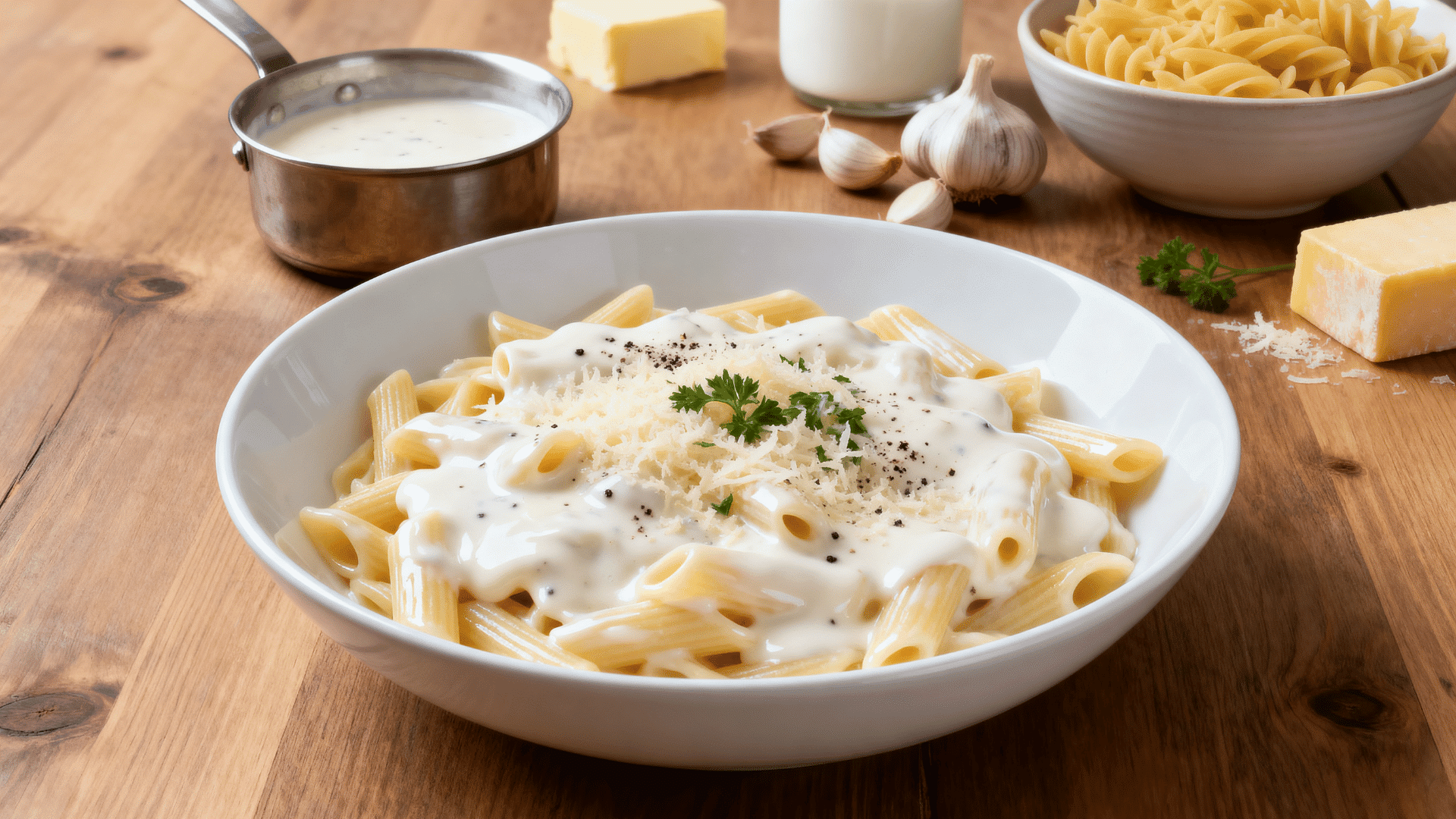
White sauce for pasta is a creamy milk-based sauce made by thickening milk with a cooked butter-and-flour base.
This base is similar to béchamel (a classic French sauce), but for pasta, it is usually finished with simple flavor-enhancing ingredients such as garlic, black pepper, herbs, or cheese.
The sauce gets its smooth texture from a roux, which is butter and flour cooked together before milk is added. This helps the sauce thicken and coat the pasta rather than turn thin or watery.
A good white sauce should coat the back of a spoon without turning heavy or gluey. From experience, the best texture is creamy enough to hold onto pasta but loose enough to toss easily in the pan.
Ingredients Required
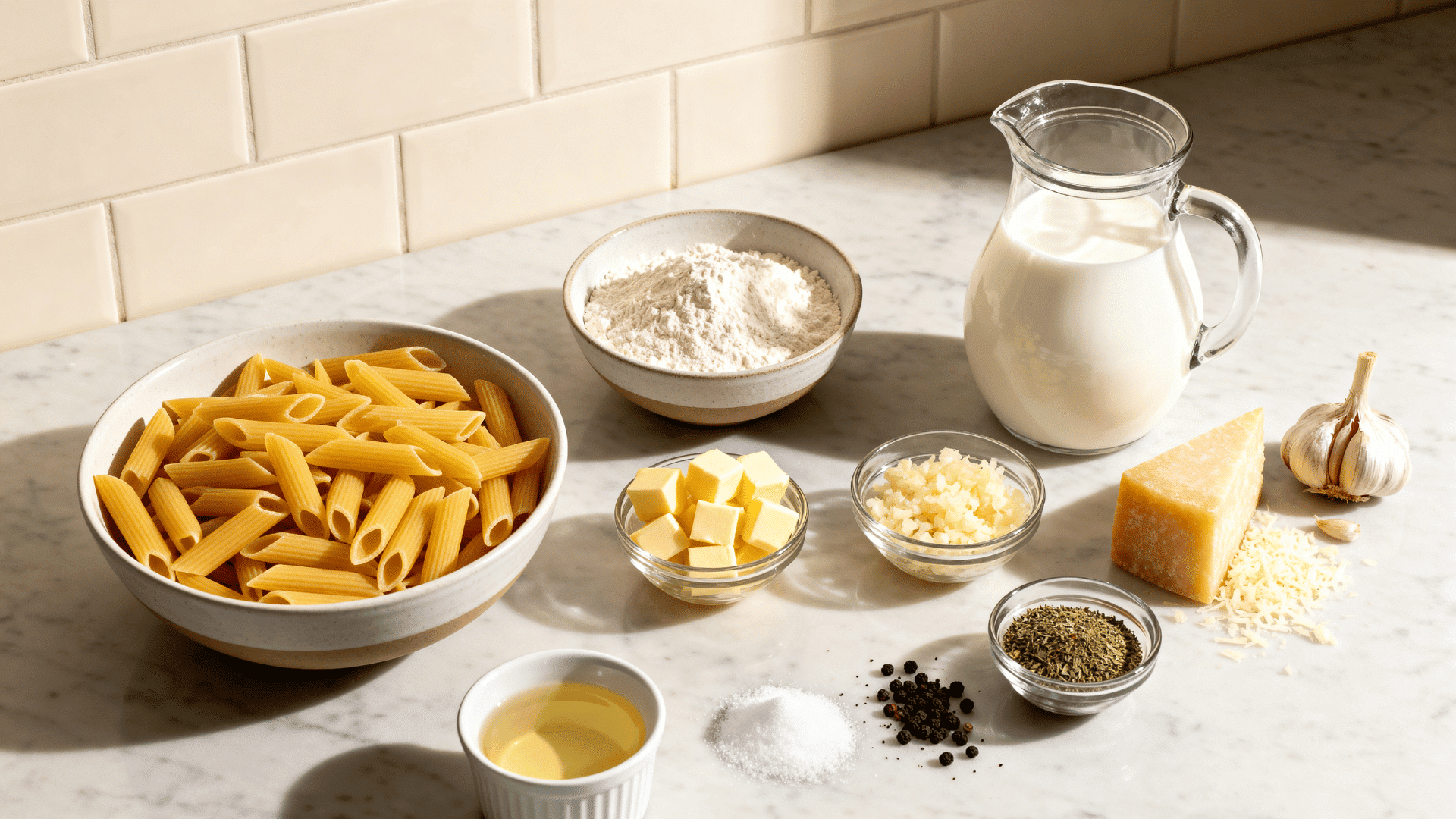
The ingredients for this recipe are simple, but each one has a clear job. When you are learning how to make white sauce for pasta, the balance of butter, flour, and milk matters most.
It decides how smooth and creamy the sauce becomes. Use fresh milk, measure the flour properly, and keep the seasoning ready before you start.
Here are the ingredients you will need for the pasta and sauce.
| Ingredient | Quantity |
|---|---|
| Pasta | 8 ounces |
| Butter | 2 tablespoons |
| All-purpose flour | 2 tablespoons |
| Whole milk | 2 cups |
| Garlic | 2 cloves, minced |
| Parmesan cheese | ½ cup, grated |
| Salt | As needed |
| Black pepper | ½ teaspoon |
| Italian seasoning | ½ teaspoon |
| Reserved pasta water | ¼ cup (optional) |
How to Make White Sauce for Pasta Step by Step
Each step focuses on building a smooth sauce without lumps, keeping the flavor balanced, and helping the sauce coat the pasta properly.
Step 1: Boil the Pasta Until Al Dente
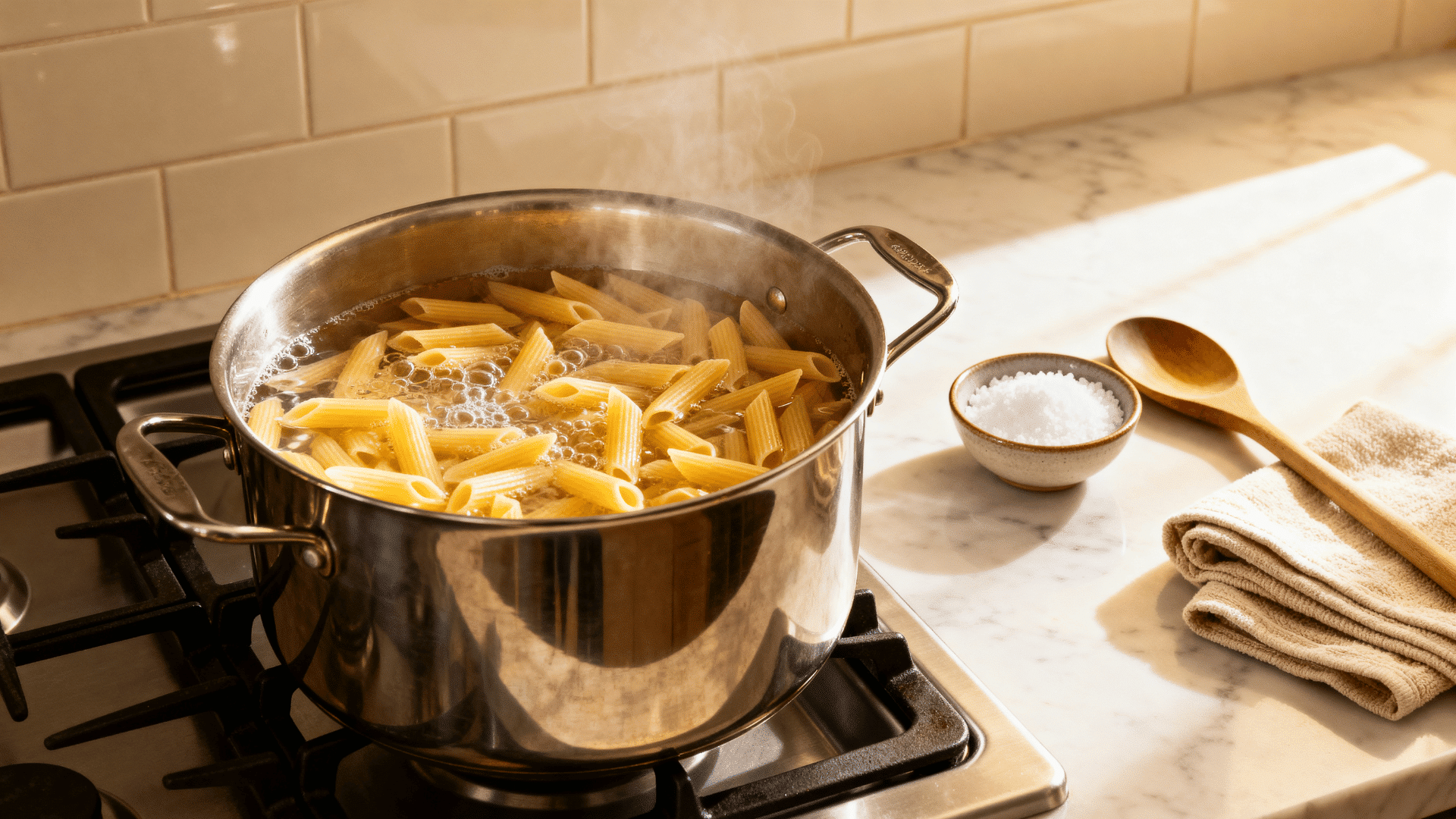
Start by bringing a large pot of water to a boil. Add salt to the water, then cook the pasta until it is al dente, using the package timing as a guide. Knowing how to cook pasta properly matters here because pasta that is too soft can break apart when tossed with the sauce.
Before draining, save about ½ cup of pasta water. This starchy water can loosen the sauce later without making it taste thin, especially when making white sauce for spaghetti, where the strands need even coating.
Step 2: Melt the Butter and Cook the Garlic
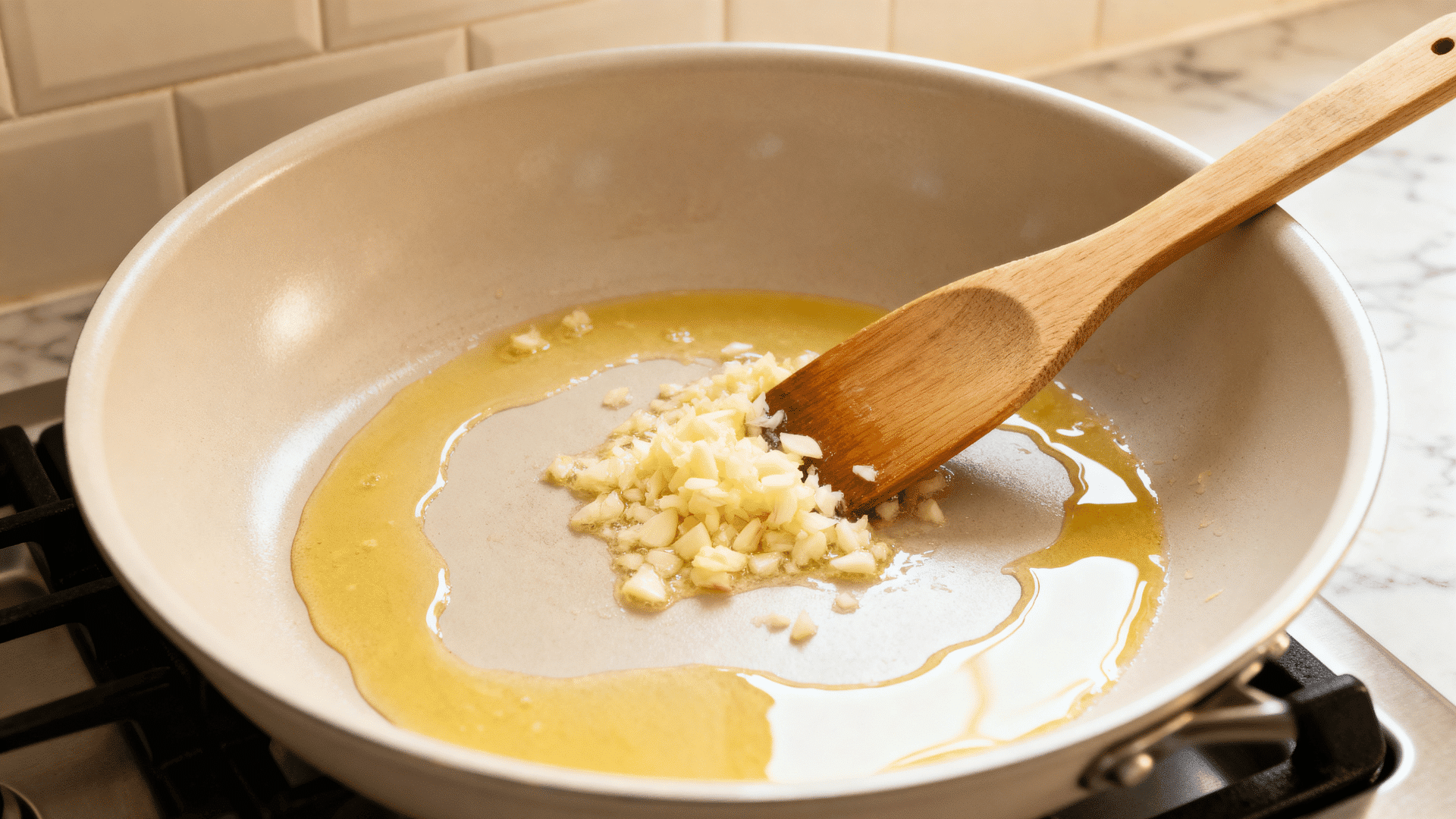
Place a wide pan over medium-low heat and add the butter. Let it melt gently without browning, because browned butter can change the mild flavor of the white sauce.
Add the minced garlic and cook it for about 30 seconds, stirring often. The garlic should smell fragrant but not turn dark. If it browns too much, it can make the sauce taste bitter.
Step 3: Add Flour to Form the Sauce Base
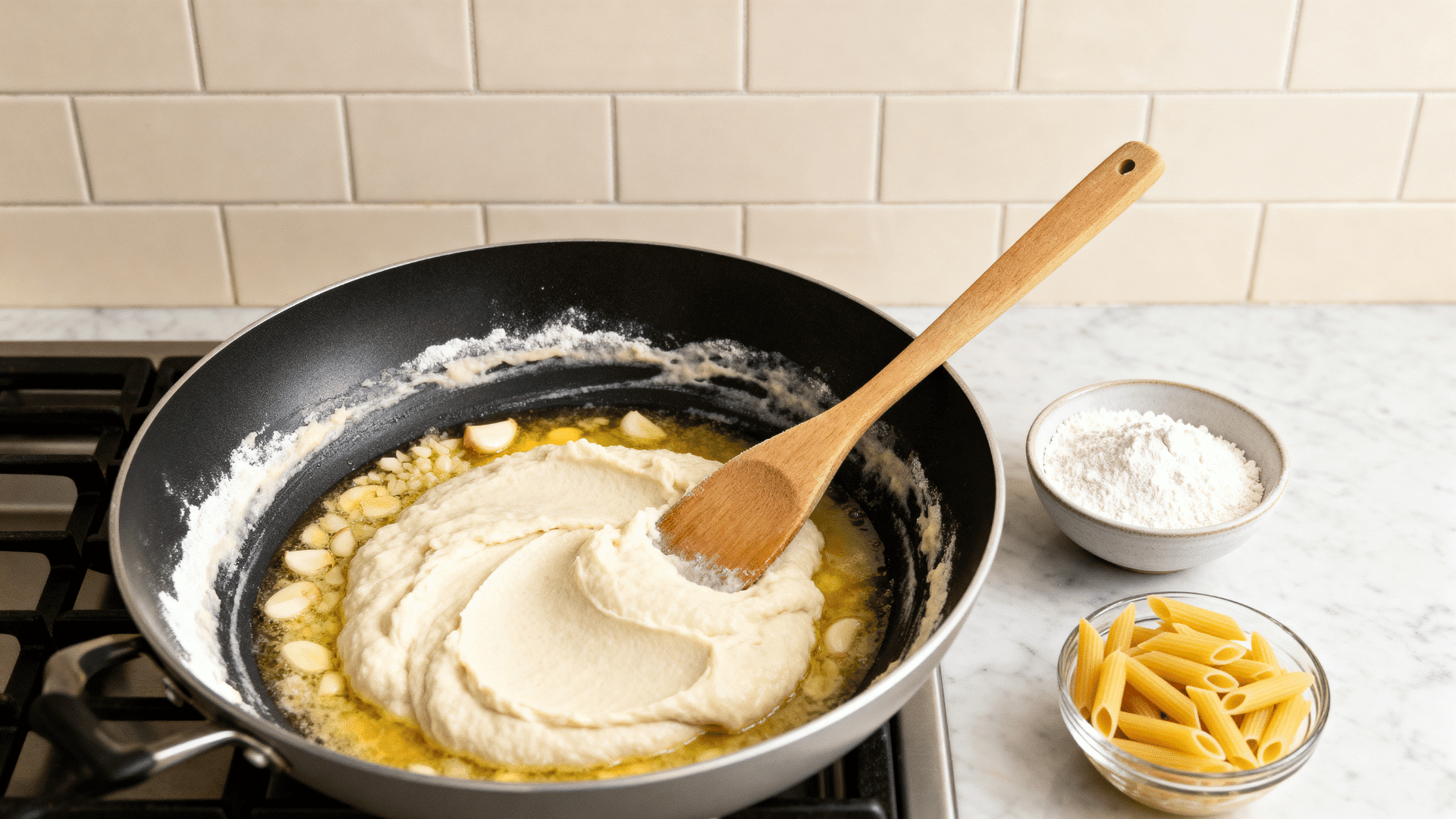
Sprinkle the flour into the melted butter and garlic. Stir continuously until the flour blends with the butter and forms a smooth paste. This butter-and-flour base helps thicken the milk into a creamy sauce.
Cook this mixture for about 1 minute. This short cooking time removes the raw flour taste and helps the sauce develop a smoother finish.
Step 4: Pour in the Milk Slowly
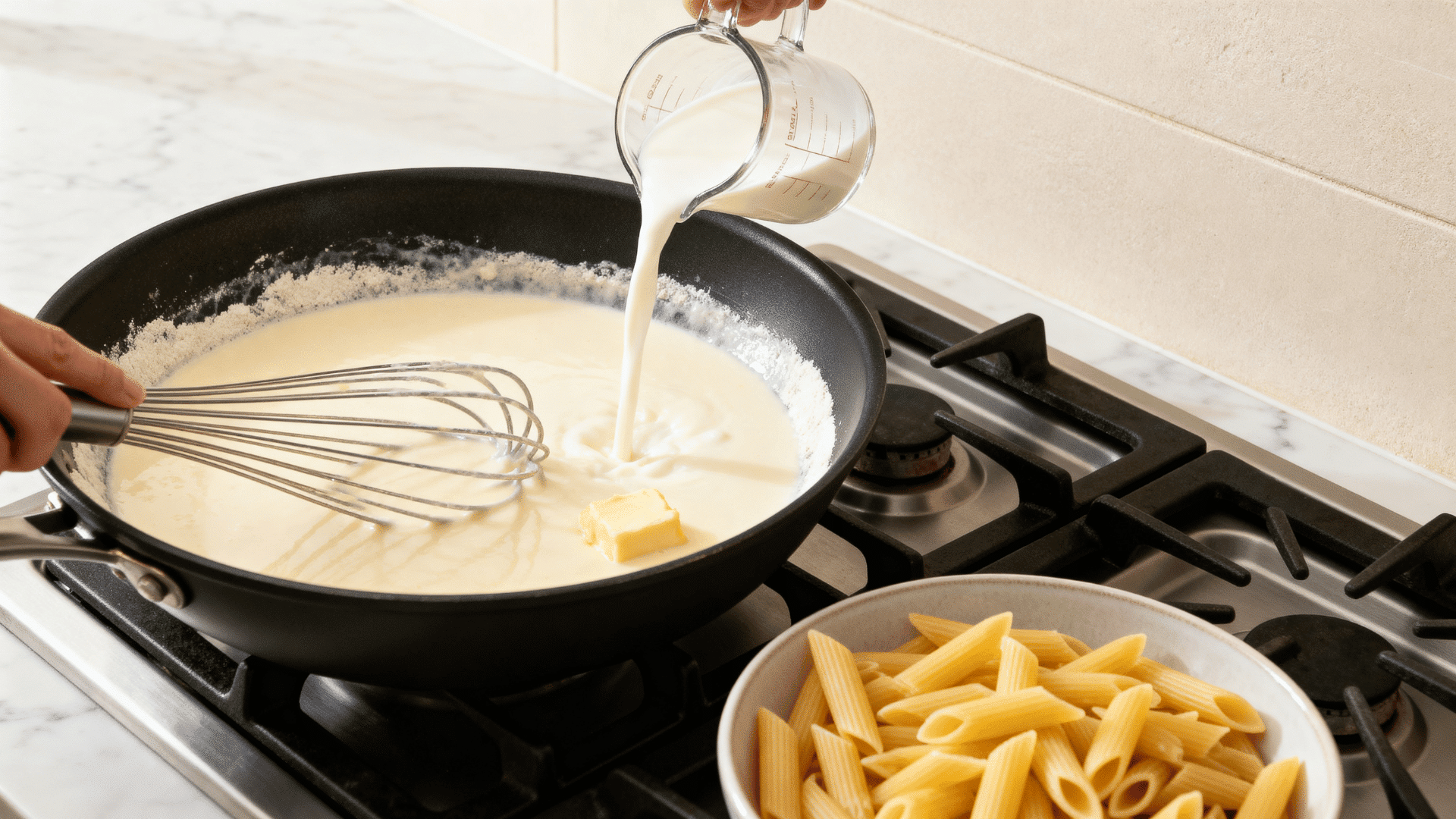
Add the milk gradually while whisking the sauce. Start with a small splash, whisk until smooth, then continue adding more milk little by little. This slow method helps the flour base blend evenly into the liquid.
This is one of the most important parts of making white sauce for pasta because adding all the milk at once can cause lumps. Keep the heat steady and continue whisking until the sauce looks smooth.
Step 5: Simmer Until the Sauce Turns Creamy
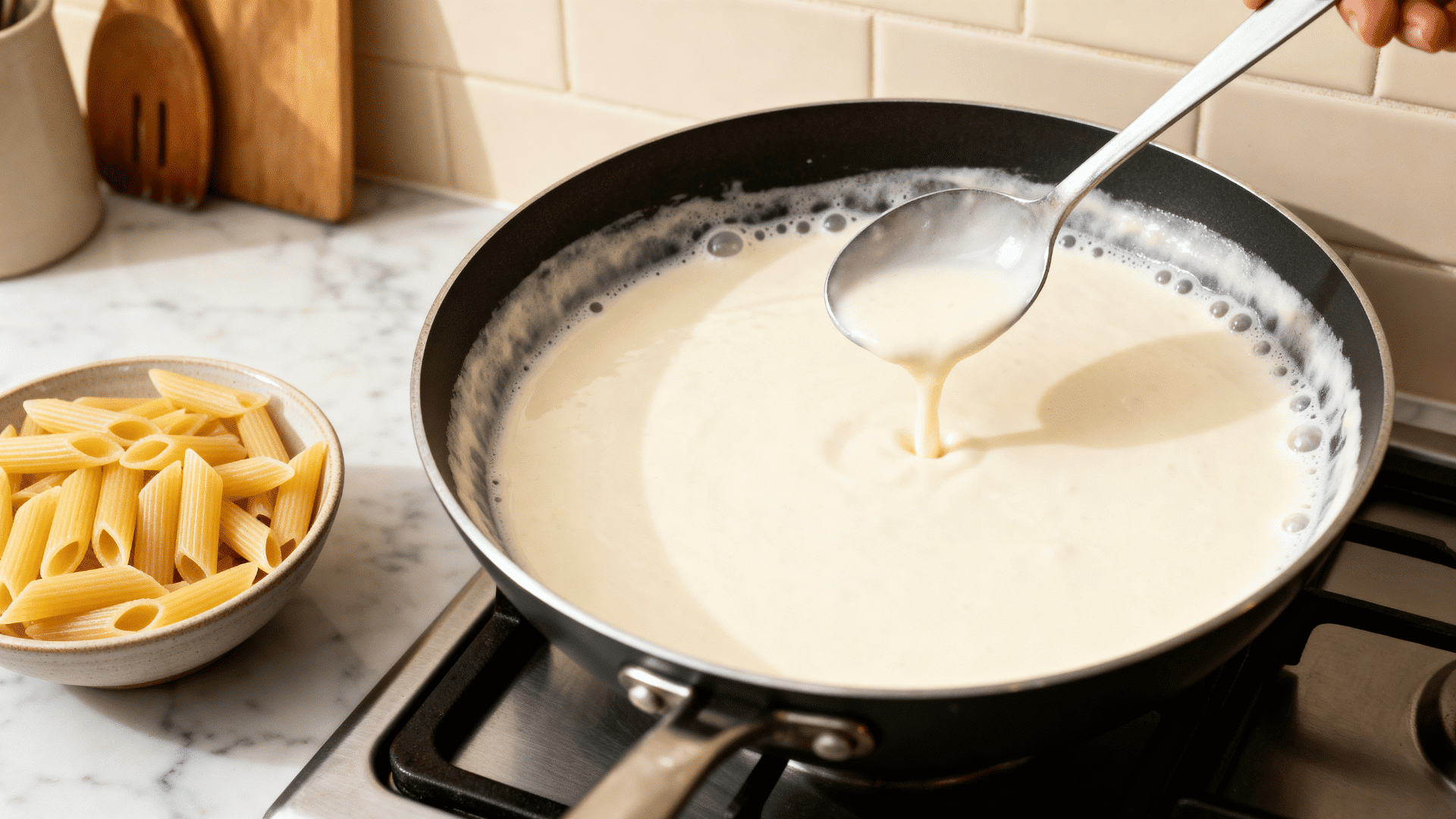
Let the sauce cook for 3 to 5 minutes over medium-low heat. Stir often so the sauce does not stick to the bottom of the pan. As it cooks, it will thicken and turn creamy.
The sauce is ready when it coats the back of a spoon but still moves easily when stirred. I usually stop before it gets too thick because the sauce continues to thicken once pasta is added.
Step 6: Add Cheese and Seasoning
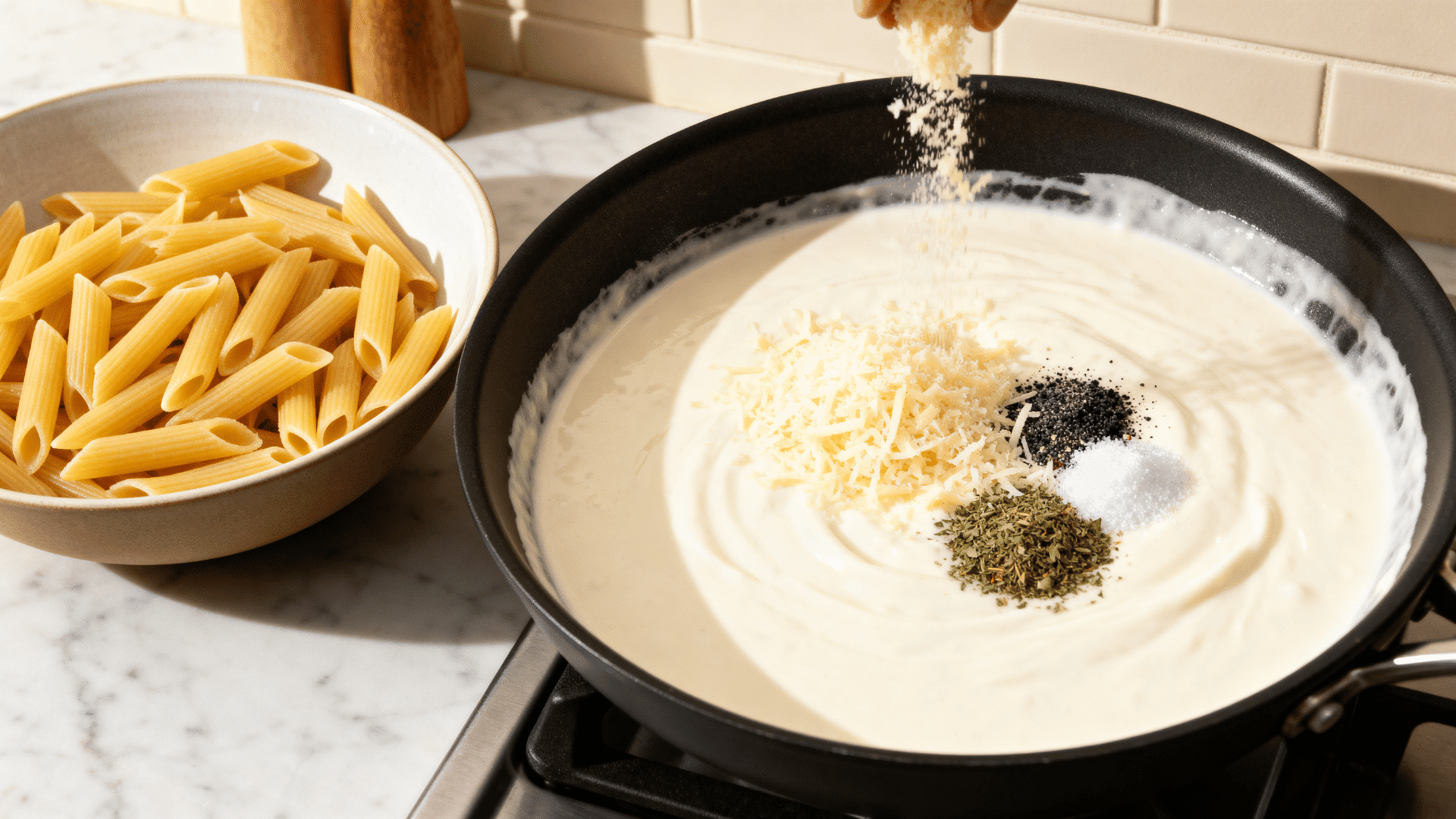
Lower the heat and stir in the Parmesan cheese, salt, black pepper, and Italian seasoning. Mix until the cheese fully melts into the sauce and the texture is smooth.
Taste the sauce before adding the pasta. From my experience, a bland white sauce usually needs a pinch of salt, more black pepper, or a little extra Parmesan before it needs more cream.
Step 7: Toss the Pasta with the White Sauce
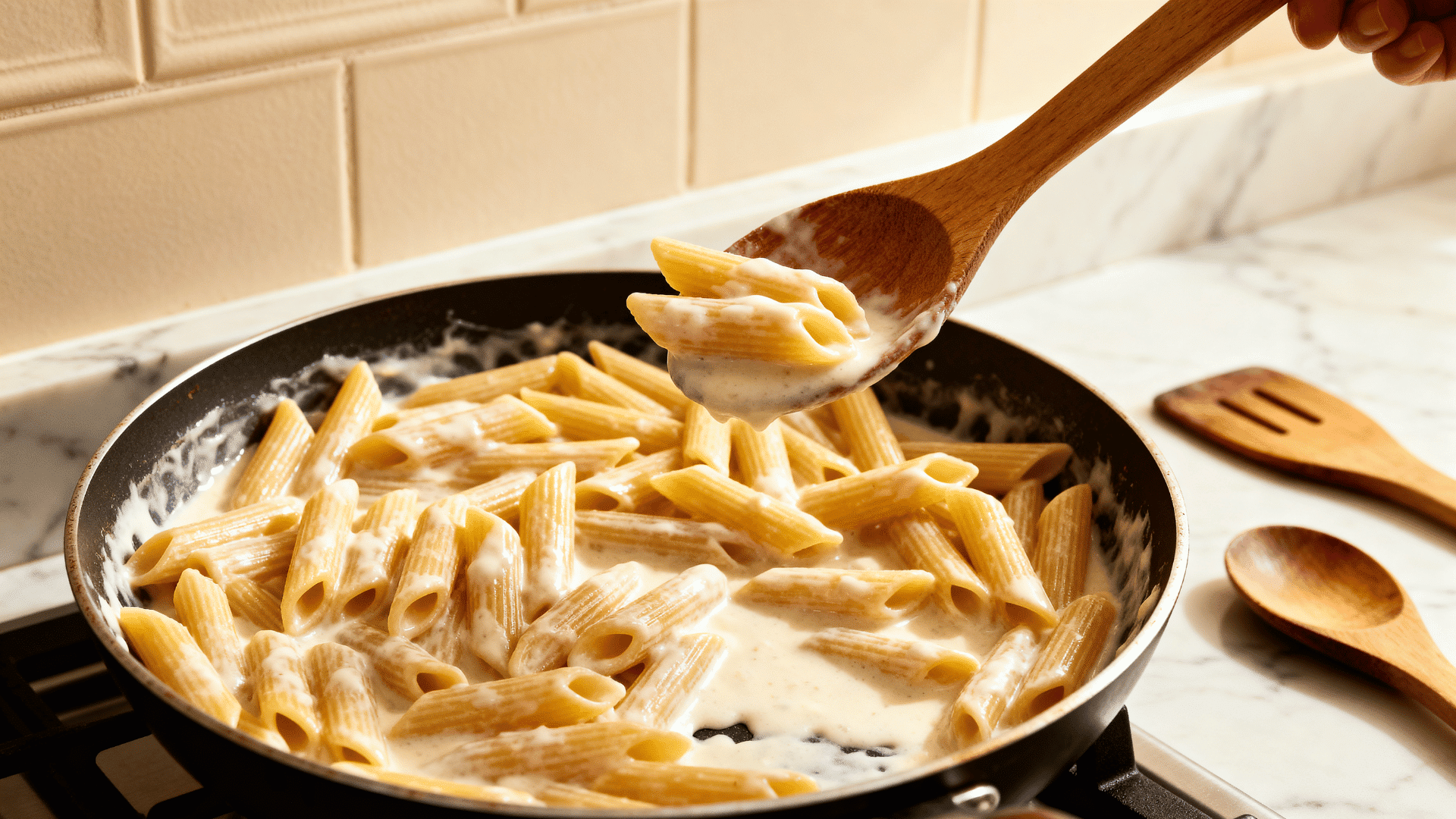
Add the drained pasta directly into the pan with the sauce. Toss gently until the sauce coats every piece evenly. If the sauce feels too thick after adding pasta, mix in a small splash of reserved pasta water.
When making white sauce for spaghetti, use tongs to lift and turn the noodles so the sauce spreads through the strands instead of clumping. Serve warm while the sauce is creamy, smooth, and freshly mixed.
How to Store and Reheat White Sauce Properly?
White sauce pasta stores well for a short time, but the sauce naturally thickens as it cools. The best way to bring it back is with low heat, regular stirring, and a small splash of liquid.
Use these storage and reheating tips to keep the pasta smooth and safe to eat:
- Store Properly: Keep leftovers in an airtight container in the fridge for up to 3 days.
- Cool Safely: Do not leave white sauce pasta at room temperature for more than 2 hours.
- Reheat gently: Warm it in a saucepan over low heat rather than high.
- Add Liquid: Stir in a splash of milk or pasta water to loosen the sauce as it reheats.
- Stir Often: Keep stirring so the sauce heats evenly and does not stick to the pan.
- Avoid Boiling: High heat can make the sauce grainy or split.
- Serve Once Creamy: Serve when the sauce looks smooth, creamy, and evenly warm.
Serving Suggestions for a Complete Pasta Meal
White sauce pasta pairs well with simple add-ons that adjust flavor, add texture, or turn it into a full meal. This table helps you quickly pick the right option based on what you want to improve in the dish.
| Addition | Best When You Want | Effect on Dish |
|---|---|---|
| Grated Parmesan | Stronger savory flavor | Deepens taste and adds richness |
| Black pepper | Simple flavor lift | Adds sharpness and balances creaminess |
| Red pepper flakes | Light heat | Cuts through heavy, creamy texture |
| Fresh parsley | Fresh note | Lightens overall flavor profile |
| Toasted breadcrumbs | Crunchy texture | Adds contrast to soft pasta |
| Garlic bread | Extra side + texture | Makes the meal more filling |
| Grilled chicken | Protein boost | Turns dish into a complete meal |
| Sautéed mushrooms | Earthy depth | Blends well with creamy sauce |
| Side salad | Light balance | Helps offset the richness of pasta |
Conclusion
A good white sauce pasta is the kind of recipe that makes a quiet weeknight feel a little more put together.
Once you learn how to make white sauce for pasta, you have an easy backup meal for busy days, picky eaters, and those fridge-is-looking-sad moments.
I like this recipe because it does not ask for much, but it still gives you a creamy, comforting plate of pasta.
Add your favorite extras, serve it warm, and do not forget to taste before the final toss. That last spoon check has saved more dinners in my kitchen than I can count.
Frequently Asked Questions
Can I Make White Sauce Pasta Without Dairy?
Yes, you can substitute whole milk with unsweetened oat or cashew milk and use a dairy-free cheese alternative. The sauce will still thicken but may be slightly lighter in texture.
Can I Use White Sauce for Spaghetti in a Lunchbox?
Yes, you can use white sauce for spaghetti in a lunchbox, but keep the sauce slightly loose so it does not dry out by lunchtime.
Can I Use White Sauce for Lasagna?
Yes, white sauce can be used in lasagna, especially in vegetable, chicken, or spinach lasagna.