
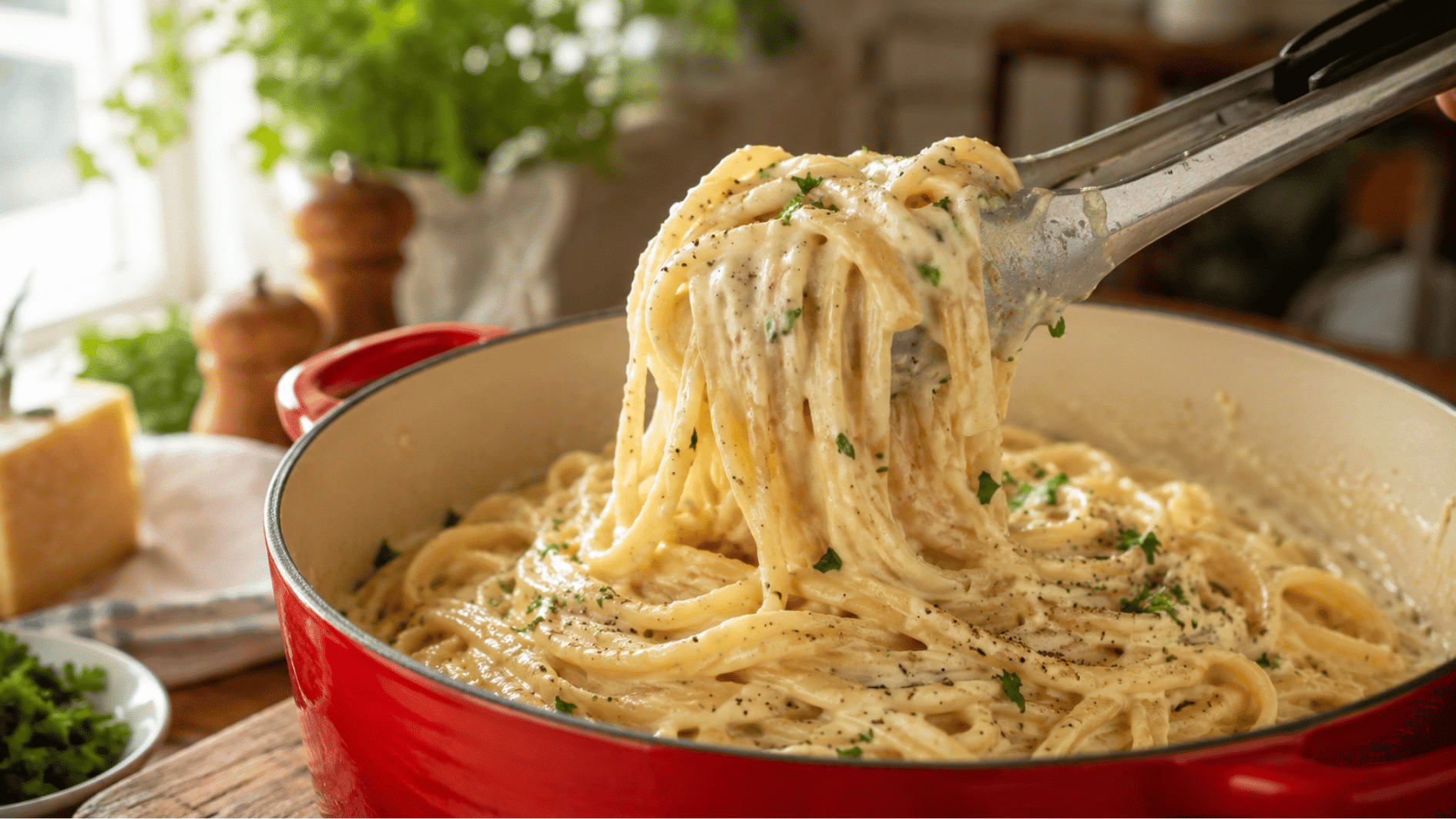
Pasta without a good sauce is just noodles, and you know it. A cream sauce for pasta fixes that fast, no fancy tools needed.
I’ve found it doesn’t even require heavy cream, just a few basics from your fridge and a little patience with the heat. Some nights you want something rich and cheesy.
Other nights, you’d rather keep it light and bright. Either way works, as long as you know what you’re going for. So before you decide what’s going in your pot tonight, here’s where to start.
Can You Make Cream Sauce for Pasta Without Heavy Cream?
Yes, that’s actually the method I have covered in recipes here, using milk and butter instead of heavy cream. Milk and butter emulsify into something close enough to cream that most people can’t tell the difference once cheese and pasta are involved.
It won’t hold quite the same thickness as a true heavy-cream base, but that gap closes fast with a splash of starchy pasta water.
For a flour-thickened option, white sauce for pasta is another milk-based sauce that pairs well with many pasta shapes.
If you’re converting an older recipe that calls for heavy cream, swap in the milk-and-butter combination at roughly a 1:1 ratio and adjust from there; it runs lighter, but it doesn’t taste like a compromise.
Basic Ingredients You Need for Any Cream Sauce
Every sauce on this list is built from the same short list of staples, just tweaked in ratio or paired with one new addition. Check the table below before you pick a recipe:
| Ingredient | Typical Amount | Why It’s There |
|---|---|---|
| Whole milk | ¾ cup | Forms the homemade cream base for every sauce |
| Unsalted butter | 3–5 tablespoons | Used in two stages: for the cream base and for cooking aromatics |
| Garlic, minced | 1–2 cloves | Builds the aromatic backbone; adjust up or down for strength |
| Parmesan cheese, grated | ¼–1 cup | Melts in for body, salt, and a cheesy finish |
| Salt & black pepper | To taste | Balances the richness of the butter and cheese |
| Cooked pasta | 8 ounces | Any shape works; long noodles suit thinner sauces |
| Reserved pasta water | ¼ cup | Loosens the sauce without diluting the flavor |
Cooking pasta to the right texture also matters because firm noodles hold cream sauce better without turning too soft.
Cream Sauce for Pasta Recipes You Can Make From Scratch
You can make cream sauce for pasta in plenty of simple ways without using anything complicated. Start with a basic creamy base, then change the flavor with cheese, herbs, vegetables, or tomatoes.
These cream sauces can also fit into a regular rotation of easy pasta recipes.
1. Basic Garlic Butter Cream Sauce Pasta
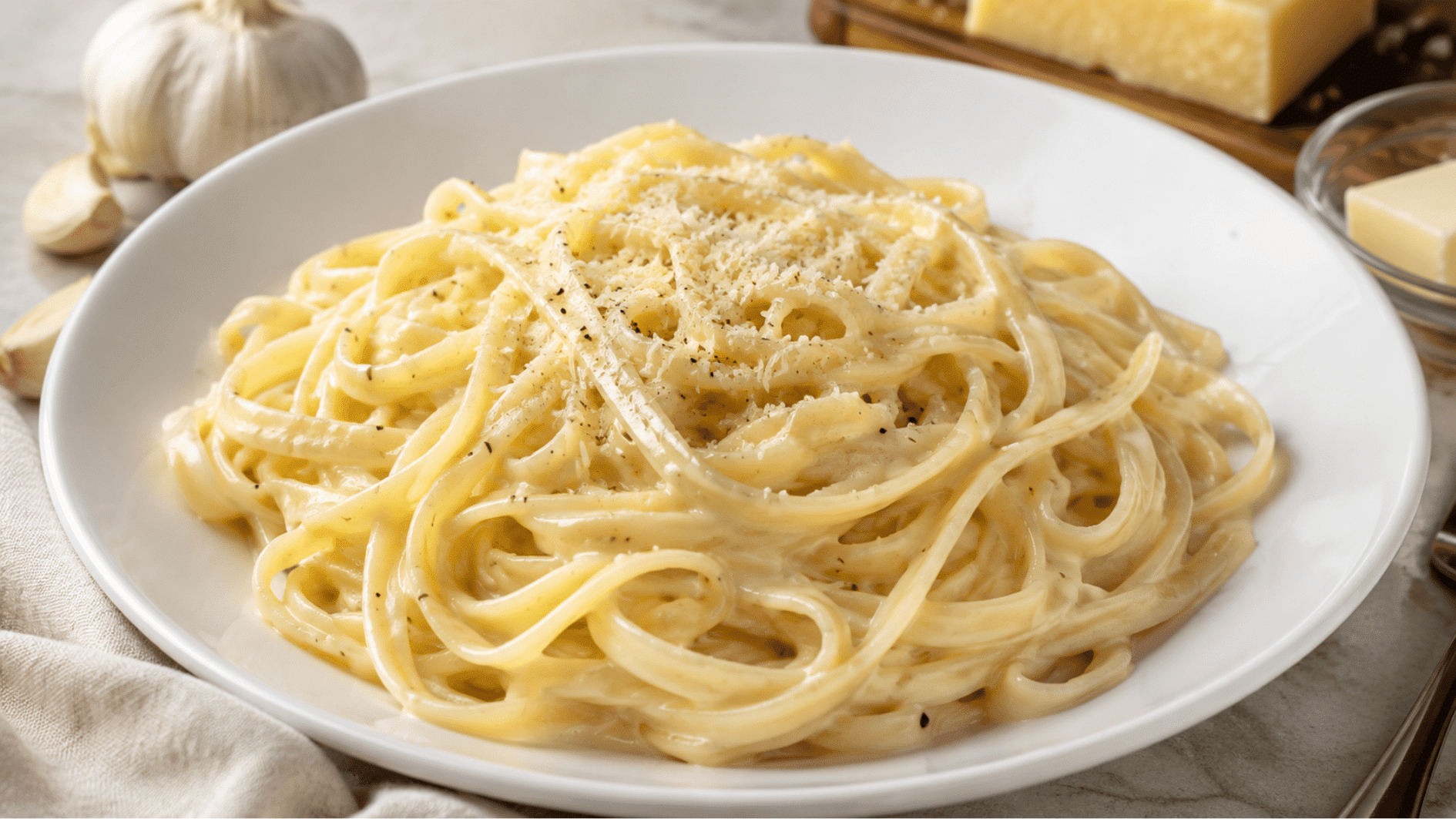
This simple sauce has a mild garlic flavor with a smooth, buttery finish. It works well when you want a quick pasta dinner made with basic ingredients you already have. A garlic butter base gives this sauce its mild garlic flavor and buttery finish.
Added ingredient: Minced garlic (2 cloves) for a gentle aromatic base.
How to Make It:
- Melt half the butter and whisk in the milk until smooth.
- Cook the remaining butter with the garlic over medium-low heat until fragrant, not browned.
- Pour in the cream mixture and warm gently for a few minutes.
- Whisk in Parmesan gradually until fully melted.
- Season with salt and pepper, then add the pasta and toss.
- Loosen with pasta water, a tablespoon at a time, until smooth.
Tip: Add reserved pasta water one tablespoon at a time so the sauce stays smooth without becoming watery.
2. Parmesan Cream Sauce Pasta
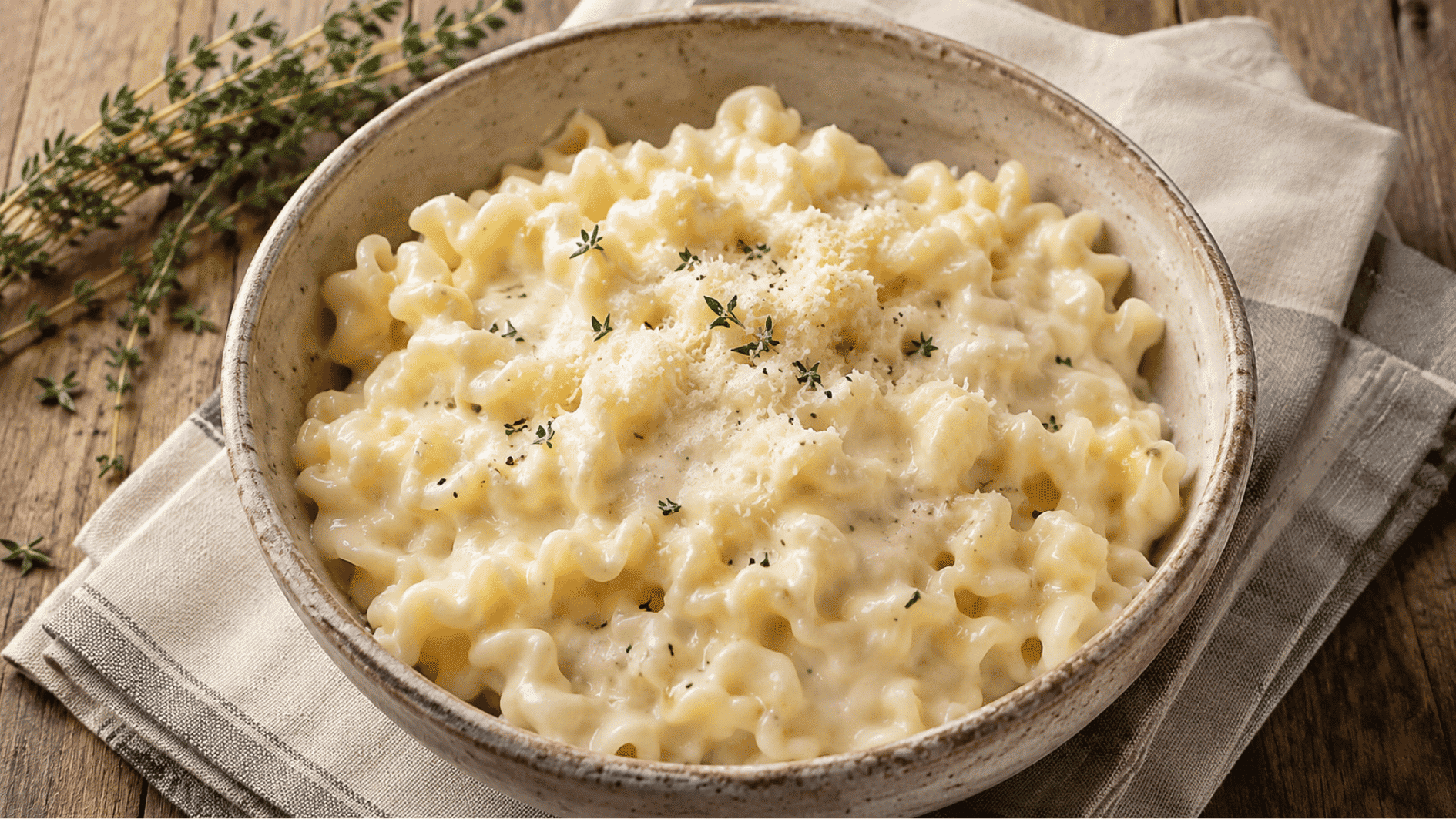
Parmesan cream sauce has a stronger cheese flavor than a basic garlic sauce. Freshly grated Parmesan melts more evenly and gives the sauce a smoother consistency.
Added ingredient: Extra Parmesan (¾ cup) for a stronger cheese flavor.
Step-by-Step Method:
- Melt half the butter and whisk in milk until smooth.
- Cook the remaining butter with garlic briefly until fragrant.
- Add the cream mixture and warm gently, stirring often.
- Remove from heat and mix in Parmesan until melted.
- Return to low heat, season with pepper, then salt to taste.
- Toss with pasta, adding pasta water as needed.
Tip: I have used Parmesan grated from a block, since pre-shredded cheese often melts less smoothly.
3. Homemade Alfredo Cream Sauce Pasta
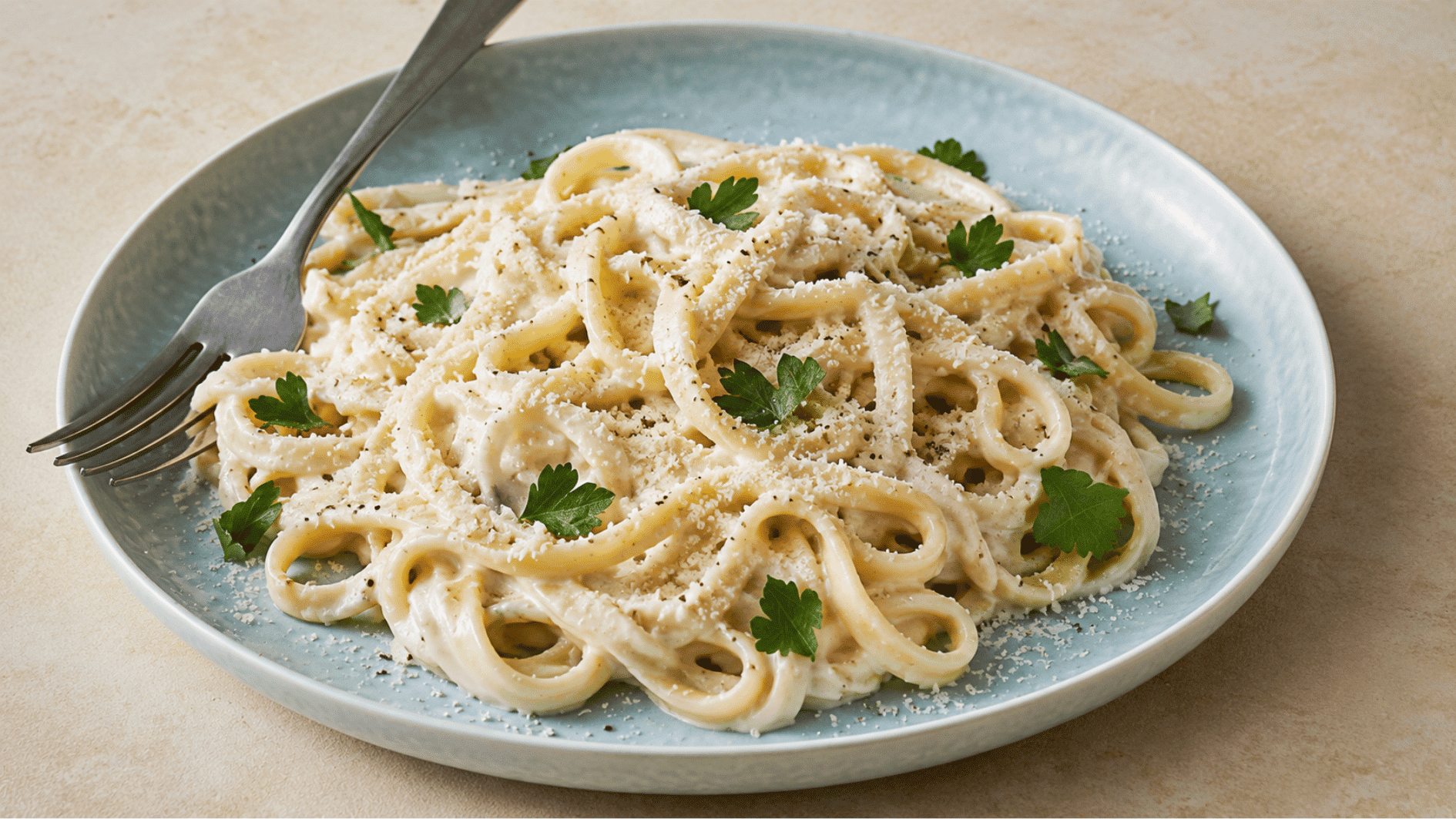
Homemade Alfredo sauce relies heavily on butter and Parmesan, giving it a fuller cheese flavor than a standard cream sauce. It is best served right away because it continues to thicken as it cools.
Added ingredients: Extra butter (5 tbsp) and a full cup of Parmesan for richness.
How to Prepare:
- Melt part of the butter and whisk in the milk to form the cream base.
- Cook the remaining butter with garlic until fragrant, without browning.
- Add the cream mixture and warm slowly over low heat.
- Off the heat, stir in Parmesan in portions until smooth.
- Season with salt and pepper before adding fettuccine.
- Toss gently and serve right away, before it thickens further.
Tip: Serve it immediately because Alfredo thickens quickly as it cools.
4. Creamy Tomato Sauce for Pasta
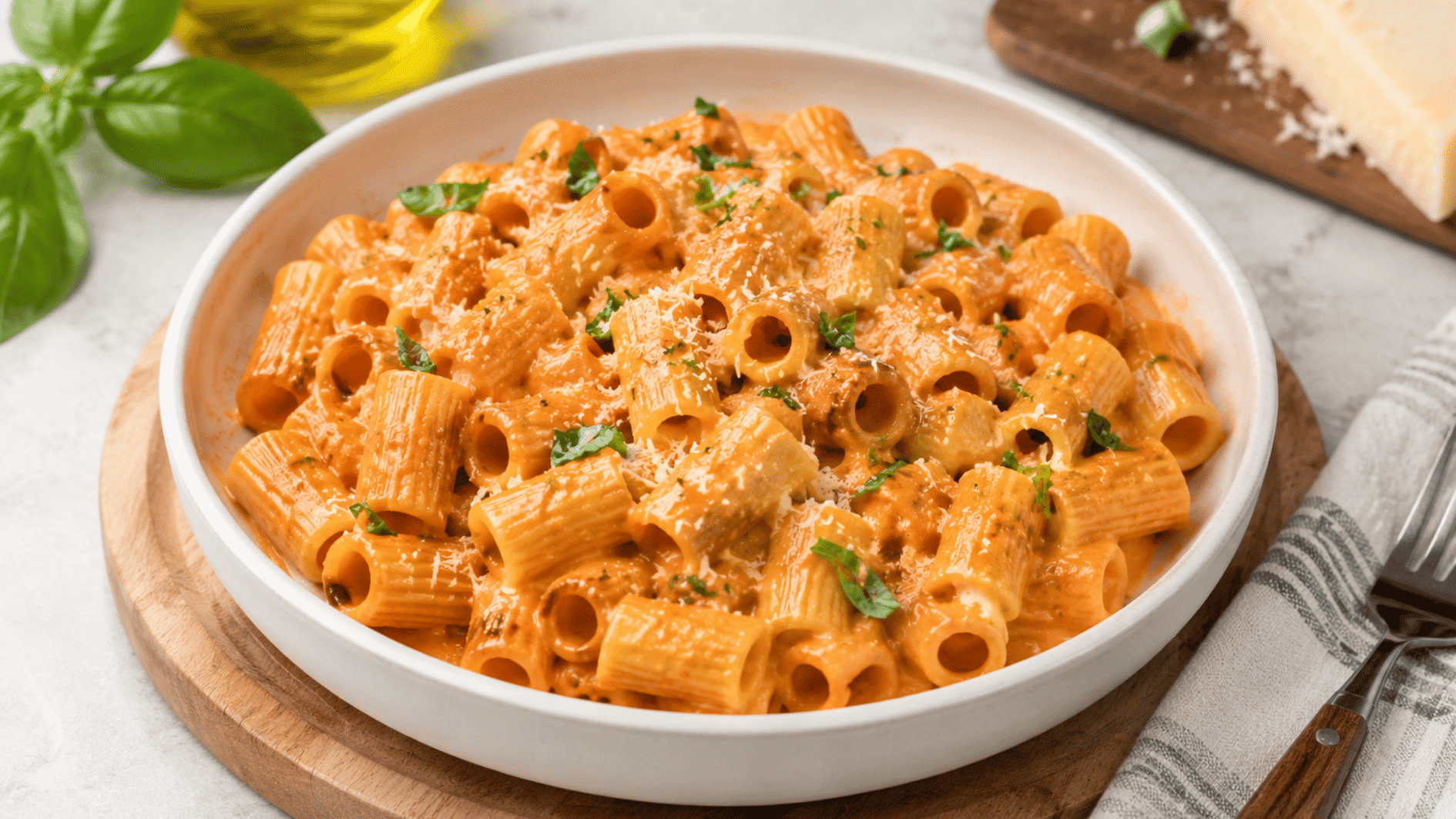
This sauce combines a mild tomato tang with a creamy finish. Cooking the tomato base before adding the cream helps soften the acidity and gives the sauce a fuller flavor.
Added ingredients: Tomato paste and crushed tomatoes for a tangy base.
How to Make It:
- Melt butter and whisk in milk to form the cream base.
- Heat the olive oil, cook the garlic briefly, then stir in the tomato paste and crushed tomatoes.
- Simmer until the tomato flavor deepens and acidity mellows.
- Lower heat and stir in the cream mixture until blended.
- Add Parmesan, seasoning, and salt while warming gently.
- Toss with pasta until coated and serve warm.
Tip: Add a small amount of butter at the end if the tomato flavor tastes too sharp.
5. Mushroom Cream Sauce Pasta
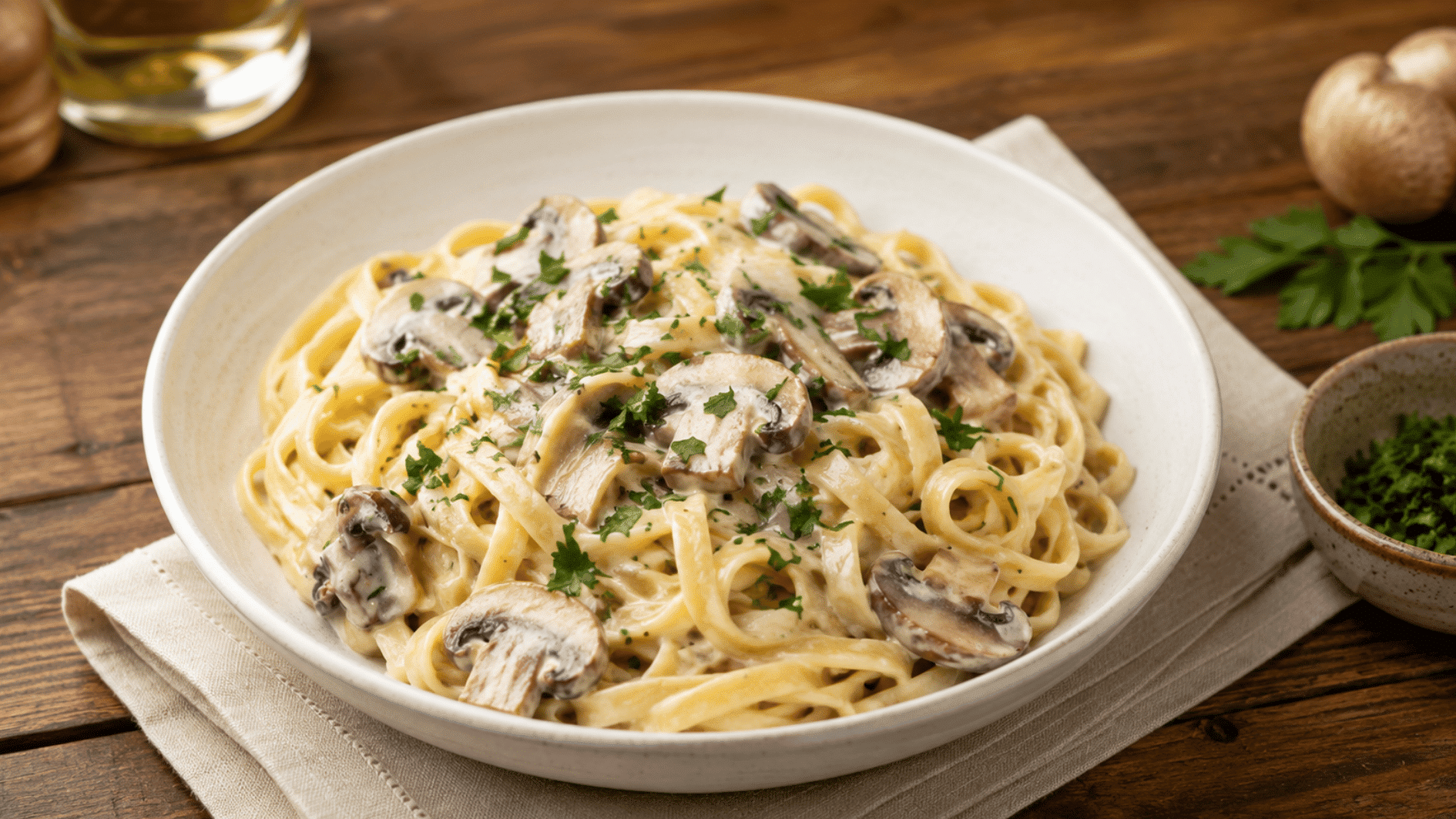
Mushroom cream sauce has a savory flavor and works well as a meat-free pasta option. Browning the mushrooms first prevents the final sauce from becoming watery.
Added ingredient: Sliced mushrooms (8 oz) for a savory, meat-free flavor.
Steps to Make It:
- Melt the butter and slowly whisk in the milk to make a smooth cream base.
- Cook mushrooms in the remaining butter until browned and their moisture has reduced.
- Add garlic and thyme, then cook briefly to release their flavors.
- Pour in the cream mixture and simmer gently until slightly thickened.
- Stir in Parmesan, salt, and pepper until the sauce becomes smooth.
- Add cooked pasta and toss until evenly covered with the mushroom sauce.
Tip: Cook the mushrooms in a wide pan without crowding them so they brown instead of steaming.
6. Spinach Cream Sauce for Pasta
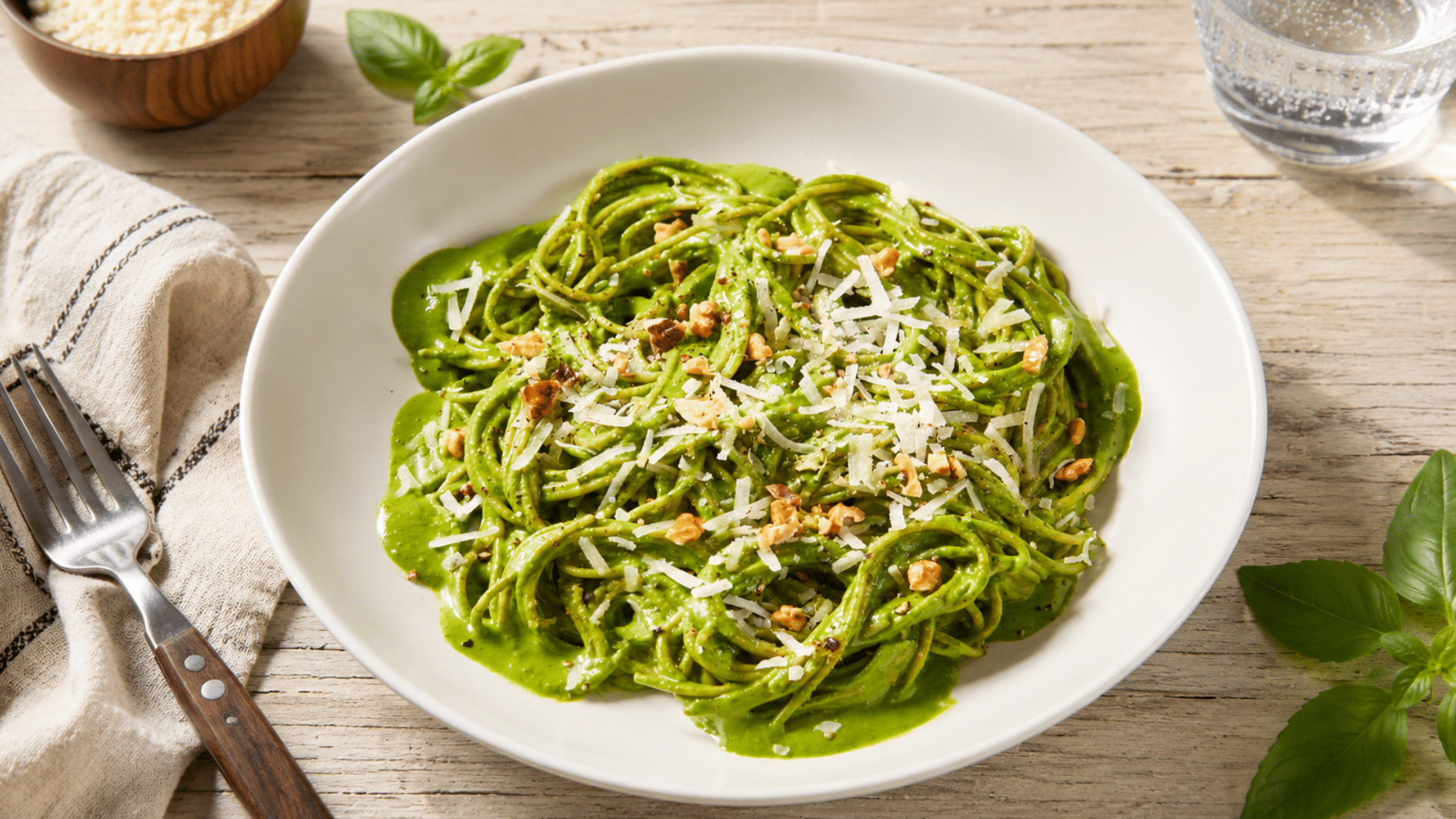
Spinach adds color and a mild vegetable flavor without making the sauce feel too heavy. Fresh spinach can go directly into the pan, while frozen spinach should be drained thoroughly first.
Added ingredient: Fresh spinach (4 cups) for color and a mild vegetable note.
Steps to Make It:
- Melt the butter and slowly whisk in the milk until the cream base is smooth.
- Cook the remaining butter with the garlic until fragrant, without browning.
- Add spinach and cook until wilted or until frozen spinach is heated through.
- Stir in the cream mixture and warm gently for several minutes.
- Add Parmesan, salt, and pepper until the sauce becomes creamy.
- Toss with pasta and adjust consistency using reserved pasta water.
Tip: I squeeze frozen spinach very well before adding it to prevent a thin, watery sauce.
7. Roasted Garlic Cream Sauce
Roasted garlic has a softer and slightly sweeter flavor than fresh garlic. It takes longer to prepare, but the finished sauce tastes mild and rich.
Added ingredient: A whole roasted garlic bulb instead of raw minced cloves.
How to Make It:
- Slice the top off the garlic bulb, drizzle with oil, wrap in foil, and roast at 400°F for 35–40 minutes.
- Melt 2 tablespoons of butter, then whisk in the milk to make the cream base.
- Cool the garlic slightly, then squeeze and mash the cloves.
- Melt the remaining butter, add the mashed garlic, and stir for a minute.
- Pour in the cream mixture with Parmesan, salt, and pepper until smooth.
- Add pasta and toss until coated.
Tip: Roast the garlic ahead of time and store it in the refrigerator to shorten the cooking time.
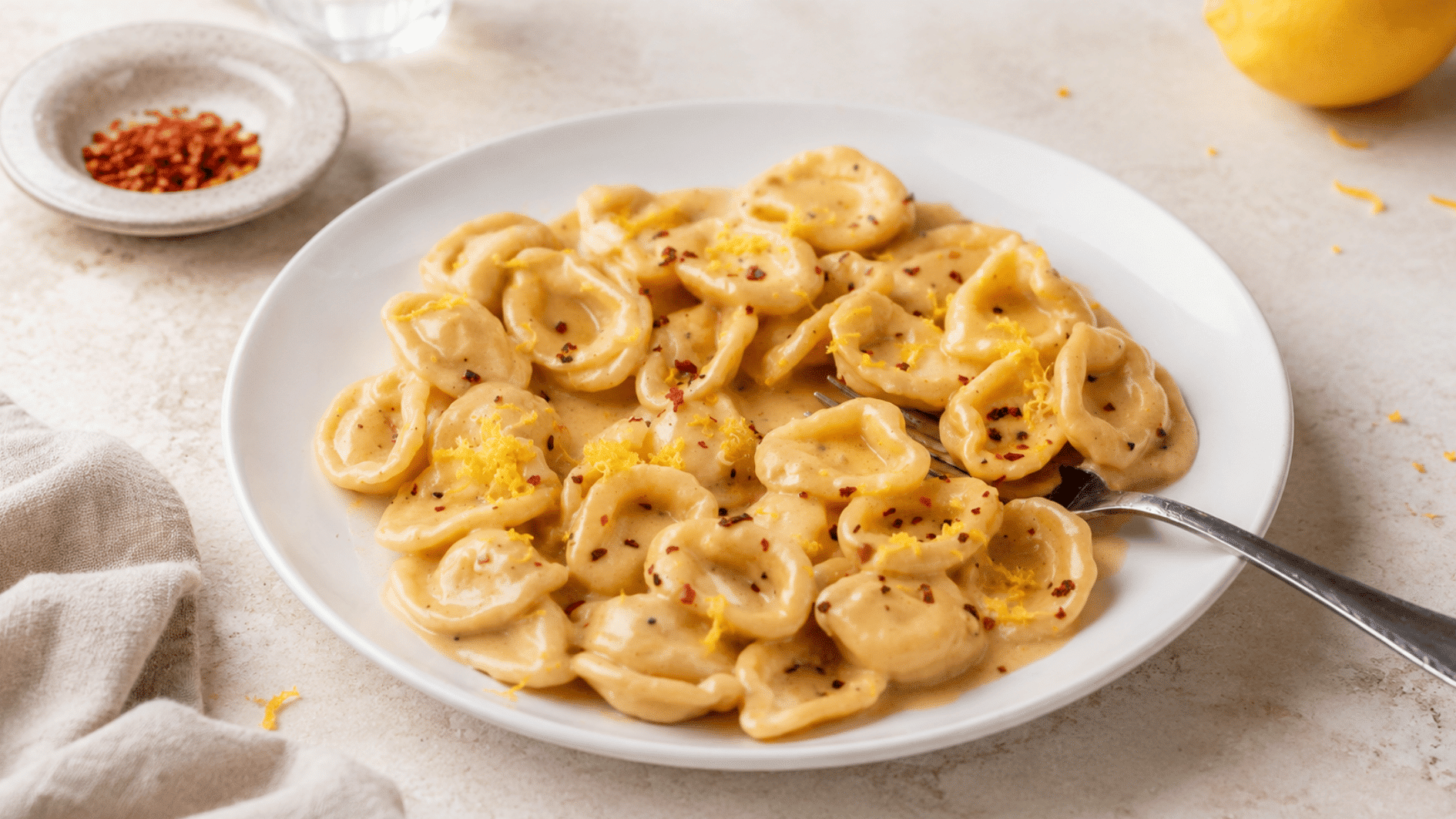
8. Lemon Cream Sauce Pasta
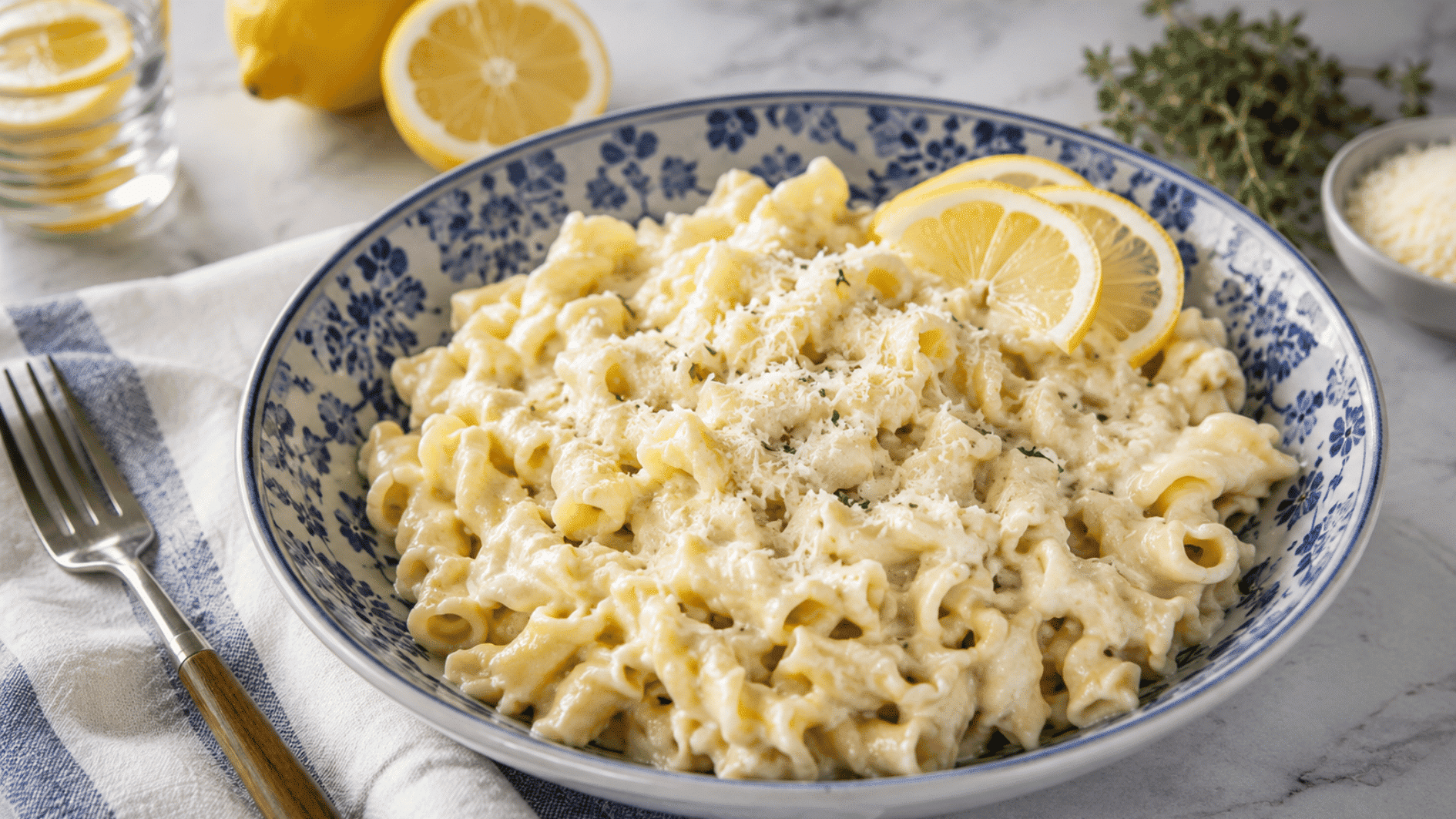
Lemon cream sauce has a fresh citrus flavor that works well with lighter pasta dishes. Adding lemon after lowering the heat helps reduce the chance of the dairy curdling.
Added ingredient: Lemon zest and juice for a fresh citrus note.
How to Make It:
- Melt 2 tablespoons of butter, then whisk in the milk to make the cream base.
- Melt the remaining butter, add garlic, and cook for 20–30 seconds.
- Pour in the cream mixture and warm gently without boiling.
- Remove from heat and stir in lemon zest, juice, and pepper.
- Add Parmesan gradually until melted and smooth.
- Toss with pasta; add shrimp, chicken, or peas if desired.
Tip: Add the lemon juice after lowering the pan or removing it from the heat to reduce curdling.
9. Cajun Cream Sauce Pasta
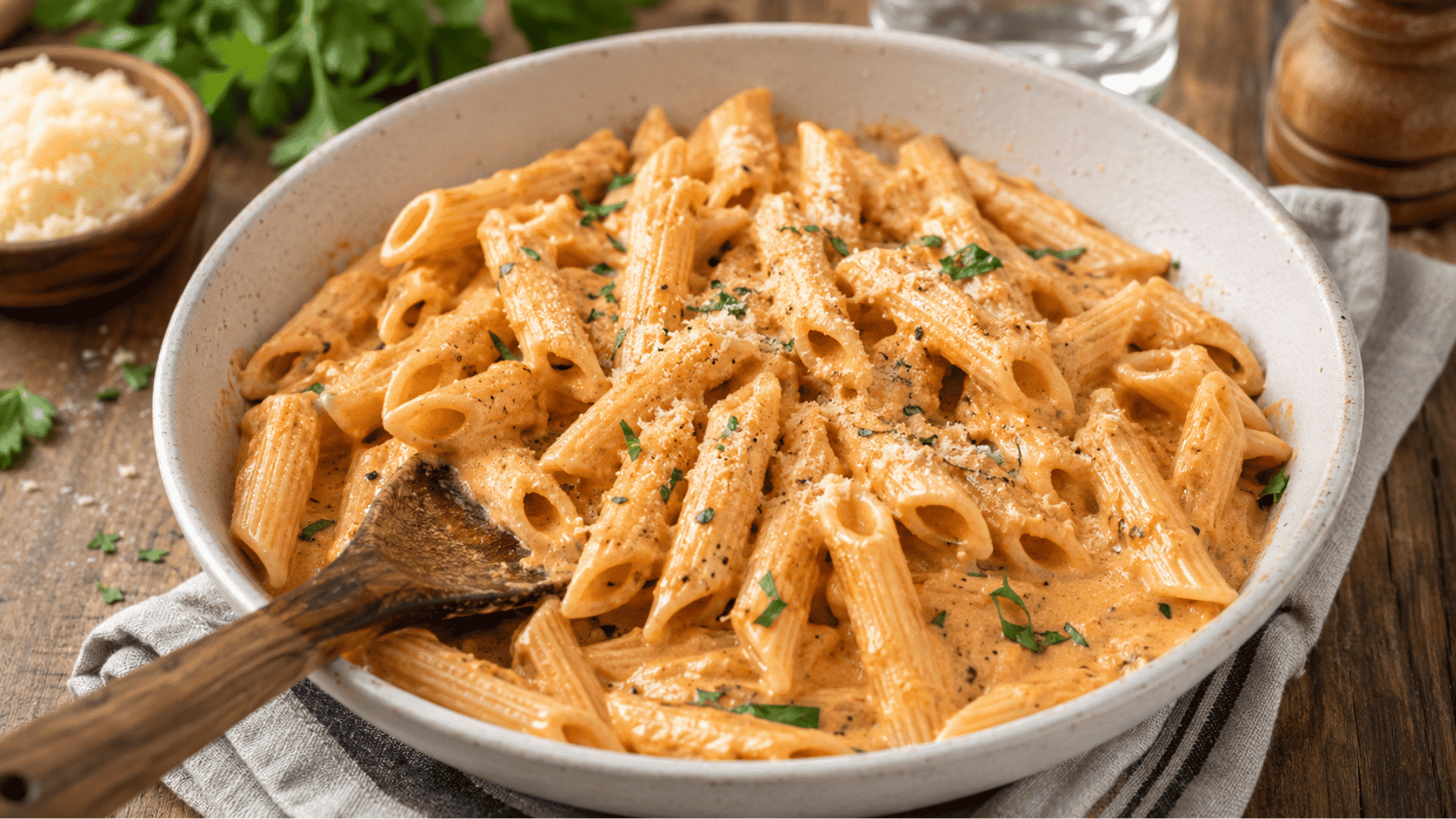
Cajun cream sauce has a warm, moderately spicy flavor. The seasoning can be adjusted easily, so it works for both mild and hotter pasta dishes.
Added ingredients: Cajun seasoning and paprika for warmth and spice.
Steps to Make It:
- Melt 2 tablespoons of butter, then whisk in milk to make the cream base.
- Melt remaining butter, add garlic, and cook until fragrant.
- Stir in 1 teaspoon Cajun seasoning and the paprika briefly.
- Pour in the cream mixture and simmer for 3 minutes, stirring often.
- Add Parmesan, then taste before adding more seasoning or salt.
- Toss with pasta; chicken, shrimp, or sausage are good additions.
Tip: I prefer starting with less Cajun seasoning and add more after tasting, since blends can vary in salt and heat.
10. Creamy Pesto Sauce for Pasta
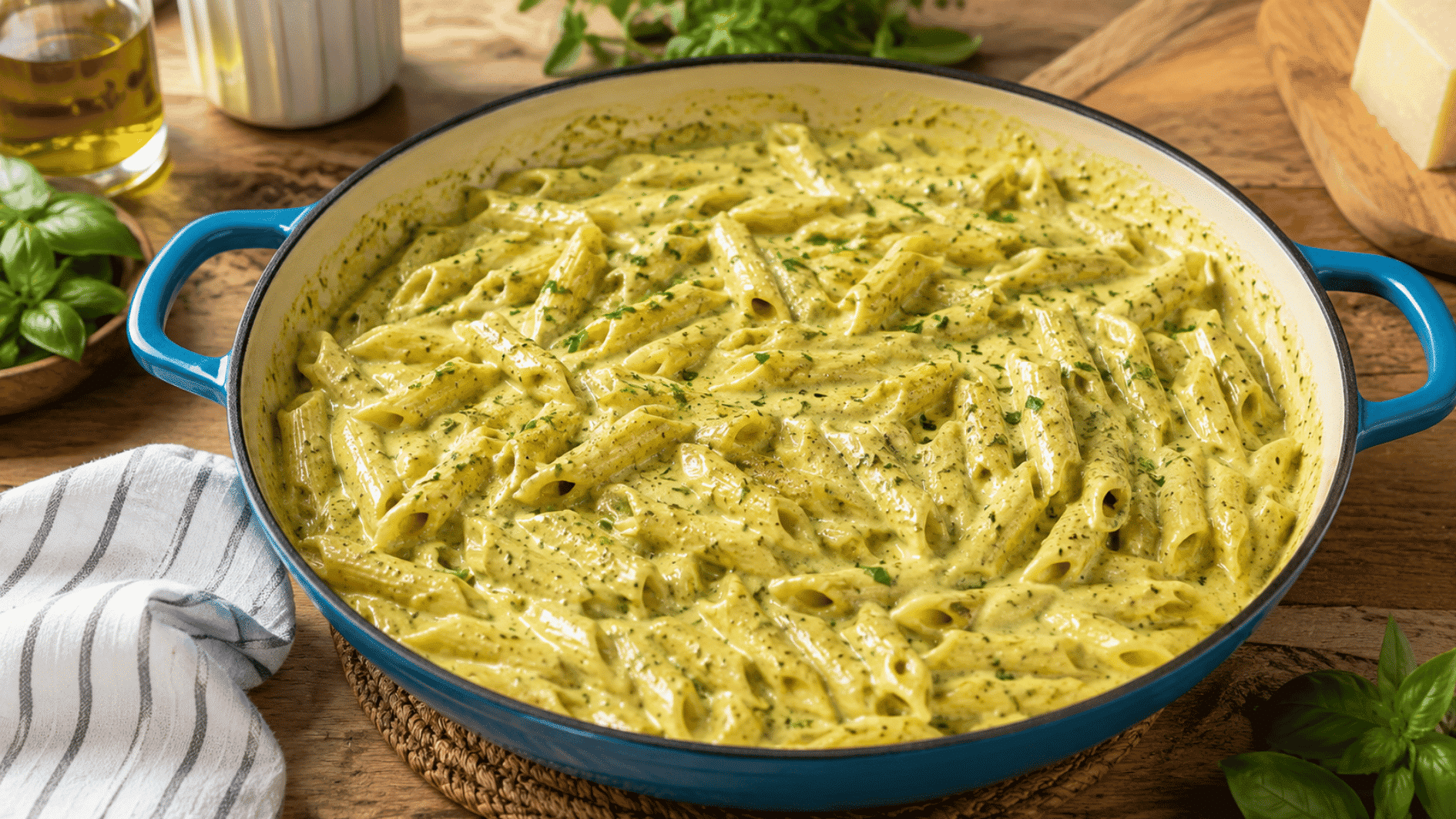
Adding cream softens the strong flavor of pesto and gives it a smoother consistency. Stirring in the pesto near the end helps keep the herb flavor fresh.
Added ingredient: Basil pesto (⅓ cup) stirred in at the end.
How It Comes Together:
- Melt 2 tablespoons of butter, then whisk in the milk to make the cream base.
- Melt remaining butter and cook garlic briefly.
- Pour in the cream mixture and warm for 2–3 minutes, stirring.
- Lower heat as much as possible and stir in the pesto.
- Add Parmesan and pepper, tasting before adding salt.
- Toss with pasta and serve immediately.
Tip: Stir in the pesto near the end and keep the heat low so the herb flavor stays fresh.
11. Three-Cheese Cream Sauce Pasta
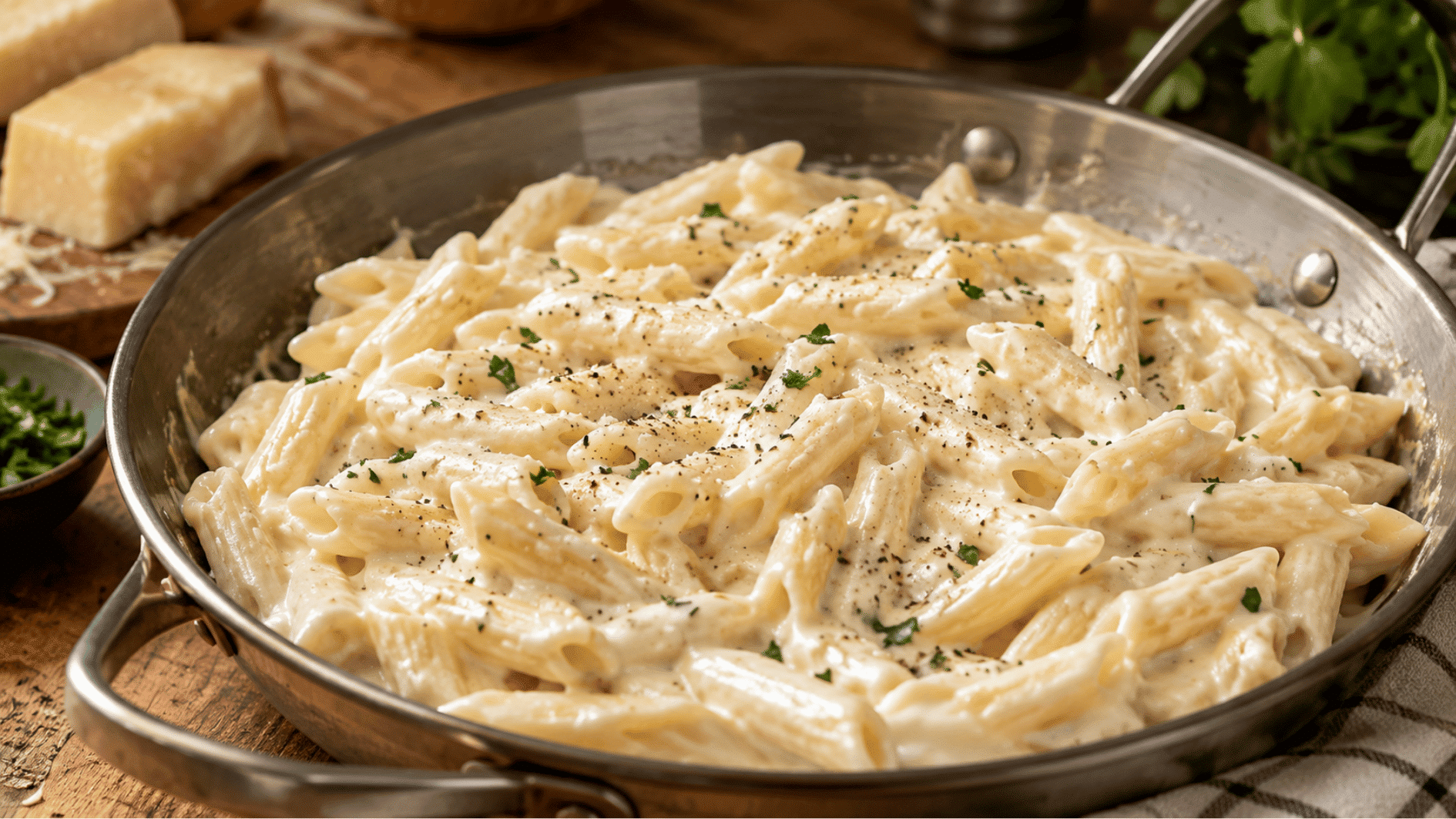
This sauce combines Parmesan, mozzarella, and cream cheese for a fuller cheese flavor. Low heat is important because high temperatures can make the sauce grainy or stringy.
Added ingredients: Cream cheese and mozzarella join the Parmesan.
How It Comes Together:
- Melt 2 tablespoons of butter, then whisk in the milk to make the cream base.
- Melt remaining butter and cook garlic for about 30 seconds.
- Add cream cheese and stir over low heat until softened.
- Slowly whisk in the cream mixture until fully blended.
- Add Parmesan, then mozzarella, stirring continuously over low heat.
- Add pepper and pasta, then toss gently to combine.
Tip: Add each cheese gradually over low heat to keep the sauce smooth rather than grainy.
12. Sun-Dried Tomato Cream Sauce for Pasta
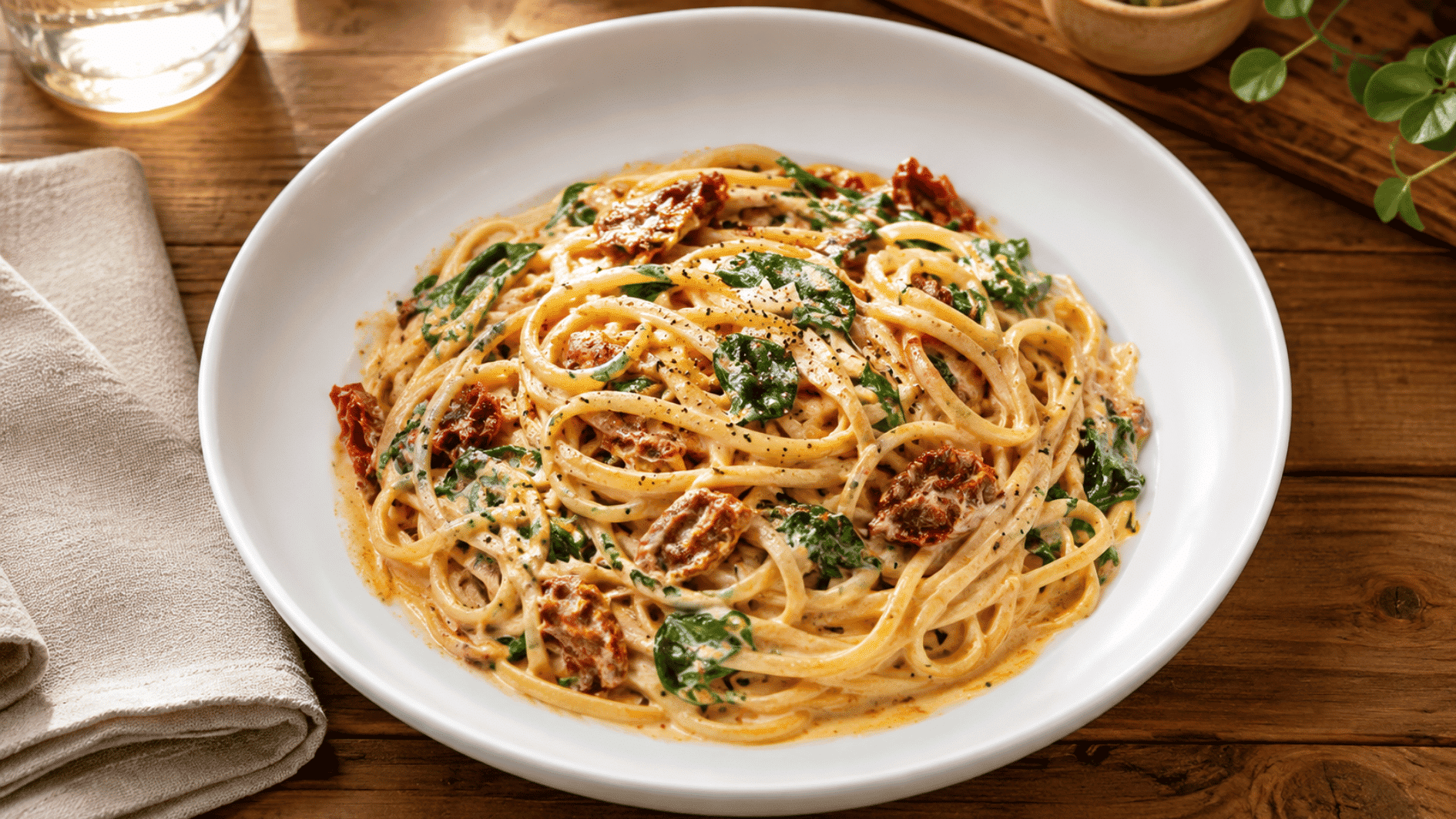
Sun-dried tomatoes give this sauce a savory, slightly sweet, and tangy flavor. Oil-packed tomatoes should be drained, while dry-packed tomatoes may need to be softened first.
Added ingredient: Chopped sun-dried tomatoes for a tangy, concentrated flavor.
Steps to Make It:
- Melt 2 tablespoons of butter, then whisk in the milk to make the cream base.
- Drain oil-packed tomatoes, or soak dry-packed ones in warm water for 10 minutes.
- Melt the remaining butter, then add garlic and chopped tomatoes.
- Cook for 2 minutes, then stir in Italian seasoning and the cream mixture.
- Simmer for 3 minutes, then add Parmesan and pepper until smooth.
- Toss with pasta until evenly coated.
Tip: Drain oil-packed tomatoes well so the finished sauce does not become greasy.
How Do You Keep Cream Sauce from Separating?
Cream sauce stays smooth when you combine the ingredients gently and cook at the right temperature. Avoid high heat or boiling, as excessive heat can cause dairy-based sauces to split and develop an oily texture.
Add the cheese slowly, stirring continuously, so it melts evenly into the sauce. Freshly grated cheese usually blends better than pre-shredded options because it contains fewer additives.
Keeping the sauce warm instead of overheated helps maintain its creamy consistency.
Ways to Store the Cream Sauce for Later Use
Proper storage keeps leftover cream sauce fresh and helps maintain its original flavor and texture. The right container and reheating method can make a big difference when enjoying it later.
| Storage Method | Best Practice | Time Frame |
|---|---|---|
| Refrigerator | Store in an airtight container after it has cooled completely. | Up to 3 days |
| Freezer | Place in a freezer-safe container with room for expansion. | Up to 2 months |
| Separate sauce | Store the sauce away from the pasta to protect its texture. | Best for leftovers |
| Sauce with pasta | Keep in a sealed container for quick meals. | Up to 3 days |
| Small portions | Divide into smaller containers before storing. | Easier reheating |
| Reheating | Warm slowly over low heat, stirring occasionally. | Helps restore consistency |
Wrapping It Up
You don’t need a long ingredient list to make a good cream sauce for pasta. Milk, butter, and a little cheese do most of the work, and everything else just builds character from there.
I’ve thrown together a version with barely anything in the fridge, and it still turned out solid. So pick one that fits tonight’s mood and give it a shot. You might end up making it on repeat.
Frequently Asked Questions
Can You Make Cream Sauce Pasta Vegan?
Yes, you can make vegan cream sauce with plant-based milk, dairy-free butter, nutritional yeast, or blended nuts to add creaminess.
Which Non-Dairy Milk Works Best for Cream Sauce?
Unsweetened oat milk or cashew milk usually works well because both have a mild flavor and a naturally creamy consistency.
Can You Use Gluten-Free Pasta with Cream Sauce?
Yes, cream sauce works with gluten-free pasta, but toss it gently because some gluten-free noodles break more easily.






One Response