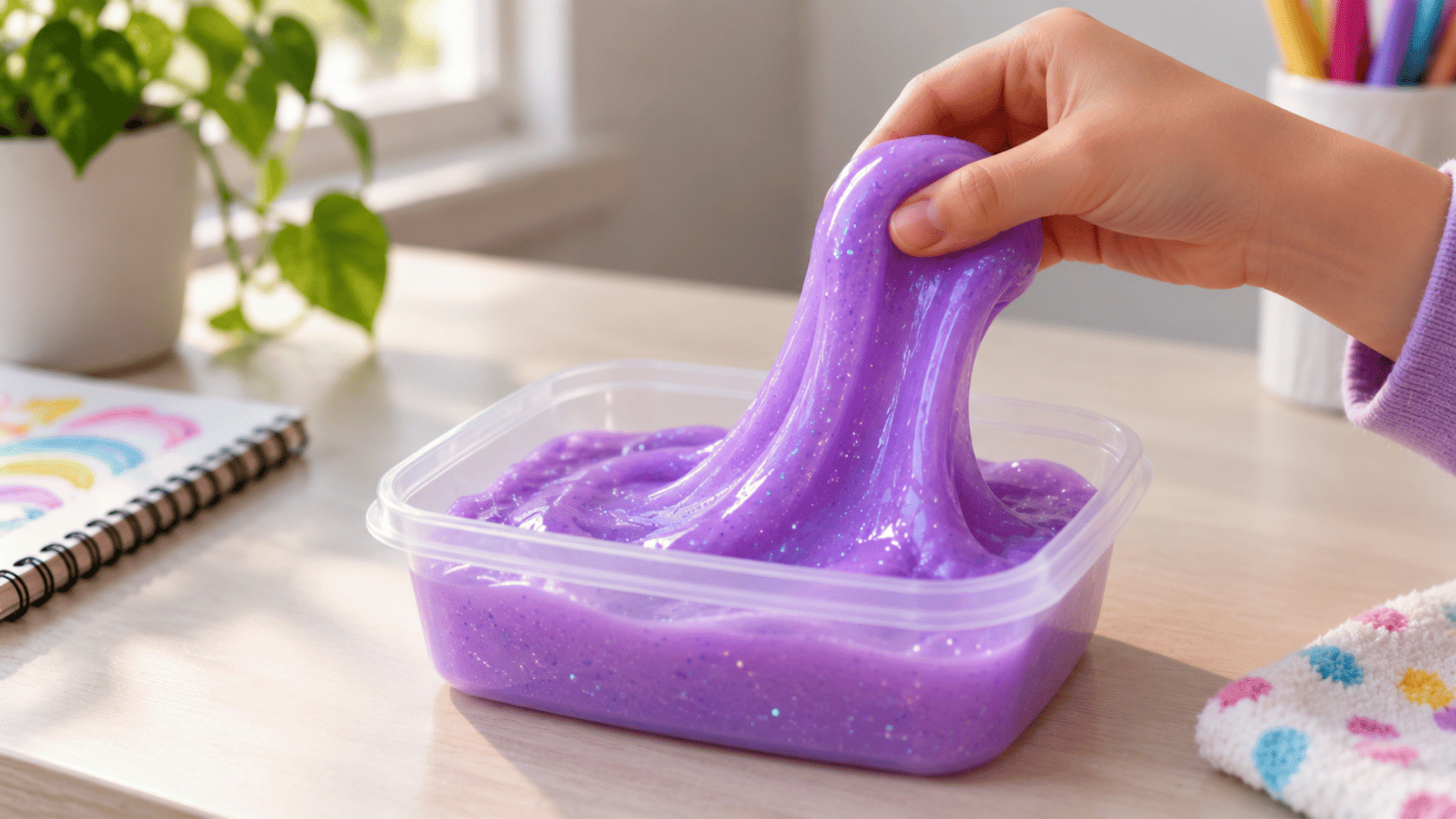
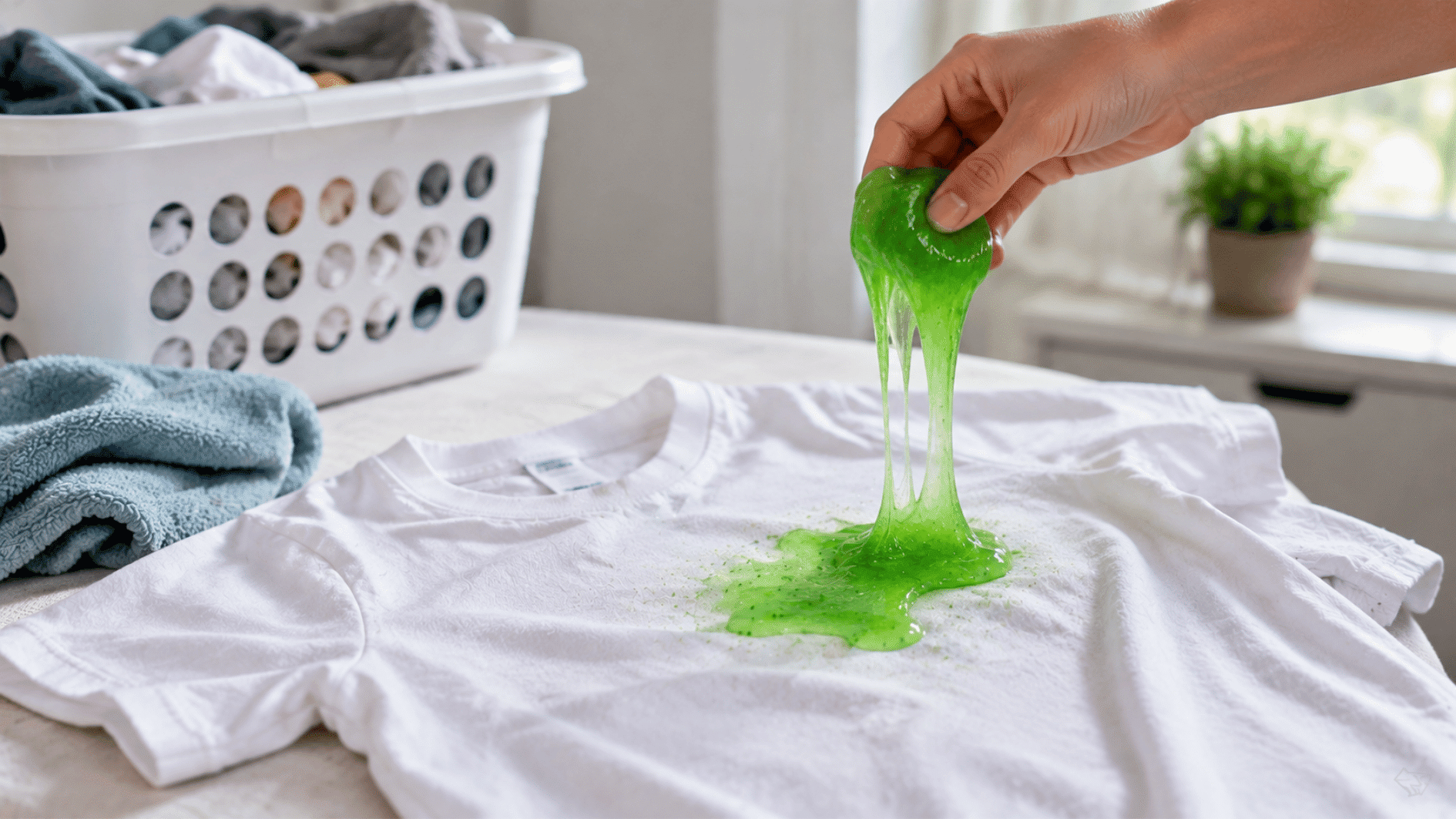
Slime is fun until it lands on a favorite shirt or gets pressed deep into the carpet. The sticky mess can look intimidating, but acting carefully makes a big difference.
I always start with the gentlest method first, because rough scrubbing or heat can make cleanup harder.
If you are trying to figure out how to get slime out of clothes, the right approach depends on the residue, fabric, and how long it has been sitting. Start here before washing.
Can Slime Permanently Stain Clothes?
No, slime usually does not permanently stain clothes if you treat it properly and avoid pushing the residue deeper into the fabric. Most homemade slime contains PVA-based glue and a borate activator.
The American Chemical Society explains that borate ions create cross-links between PVA chains, giving slime its stretchy texture. Acidic conditions can weaken these links, which helps explain why vinegar is commonly used during cleanup.
I’ve found that patience matters more than aggressive scrubbing. Fresh slime is usually easier to lift, while dried slime may need repeated gentle treatment.
Always check the garment’s care label first to avoid heat, bleach, or washing methods that could damage the fabric.
What You Need to Get Slime Out of Clothes
Gathering the right supplies before starting can make slime cleanup easier and help prevent the mess from spreading. Some materials target the sticky residue, while others protect the fabric during cleaning.
|
Material |
Amount Needed |
Notes |
|---|---|---|
|
Spoon or dull scraper |
1 piece |
Use a tool with a smooth edge to lift slime |
|
Ice cubes or ice pack |
3–5 ice cubes or 1 pack |
Keep enough to cover the stained area |
|
White vinegar |
Small amount |
Use only enough to dampen the affected spot |
|
Liquid laundry detergent |
A few drops |
Apply a small amount directly to the stain area |
|
Dish soap |
Few drops |
Use a small quantity for targeted cleaning |
|
Soft toothbrush or cleaning brush |
1 brush |
Choose a soft brush to avoid rough handling |
|
Clean cloth or paper towel |
1–2 pieces |
Keep extra pieces nearby for blotting |
|
Rubbing alcohol |
Small amount |
Use carefully and test fabric first |
|
Washing machine |
As needed |
Follow the clothing care instructions |
Important: Rubbing alcohol can fade or discolor dyed and dark fabrics. Always test it on an inside seam or hidden hem first, and skip it altogether on silk, wool, or anything labeled “dry clean only.”
How to Get Slime Out of Clothes: Step-by-Step
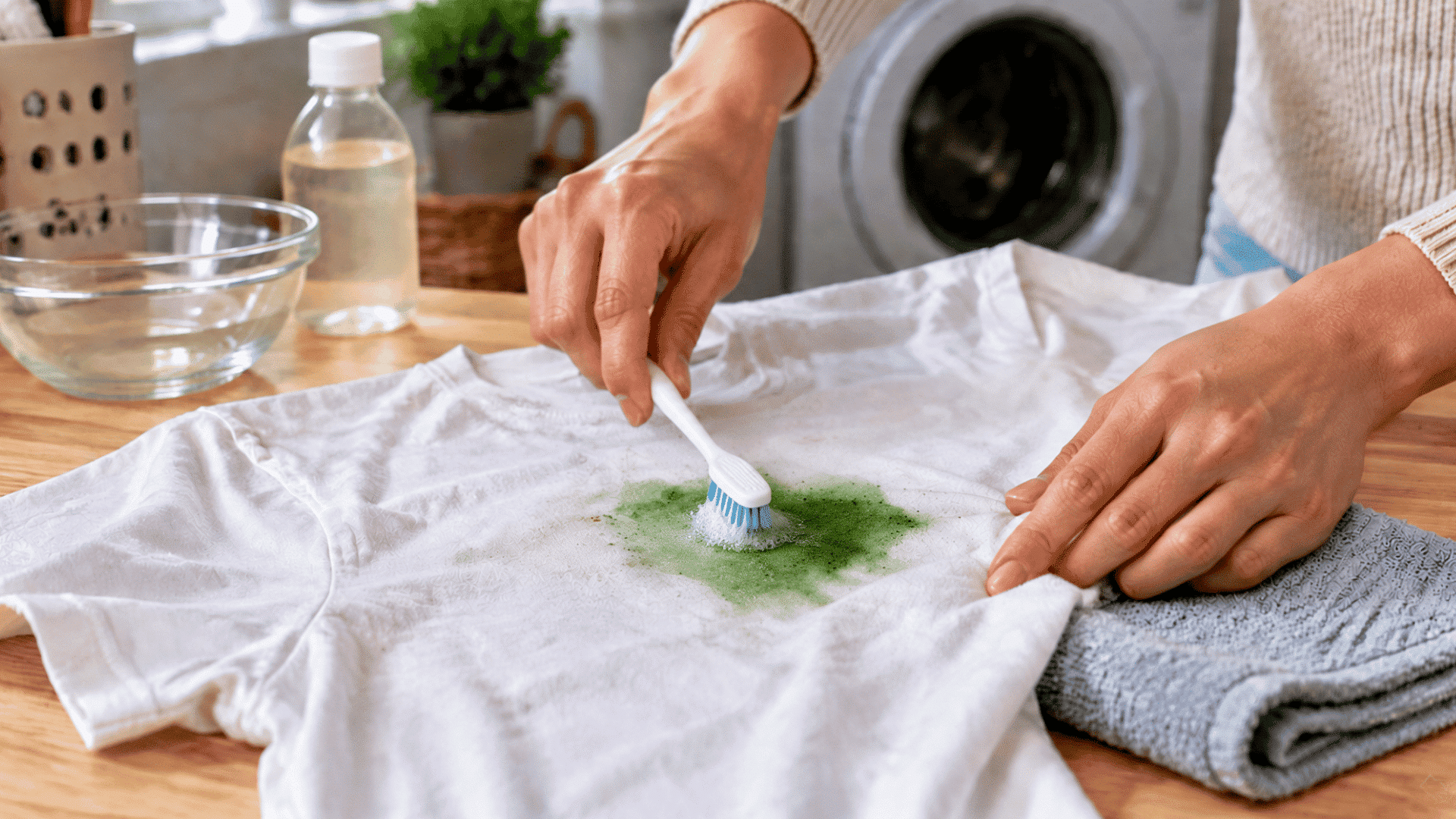
Getting slime out of clothes is easier when you treat the mess in stages instead of rushing straight to the wash. Each step helps remove a different part of the stain, from the thick slime layer to the leftover sticky residue.
Step 1: Remove Excess Slime From the Clothes
Start by removing the slime sitting on top of the fabric before trying any cleaning method. Clearing away the excess helps prevent spreading and makes the stain treatment process easier.
- Scrape gently: Use a spoon or dull tool to lift large pieces without pulling the fabric.
- Remove loose slime: Clear away as much material as possible before applying any product.
- Keep the stain contained: Work carefully around the affected area to avoid spreading it.
Step 2: Treat Fresh or Dried Slime Correctly
Dried slime can become firm and tightly attached to clothing fibers. Treating it first helps loosen the residue and makes removal easier while protecting the fabric from unnecessary damage.
- Use ice on stubborn slime: Let the area become firm before attempting removal.
- Break off hardened pieces: Gently lift away chunks instead of pulling forcefully.
- Check the fabric: Be extra careful with delicate materials that may snag easily.
Step 3: Treat Sticky Slime Residue with Vinegar
After the visible slime is gone, a sticky layer may still remain on the clothing. Treating this leftover residue helps loosen the remaining mess and prepares the fabric for a more effective clean.
- Apply a cleaning solution: Use a suitable option like diluted white vinegar on compatible fabrics.
- Give it time to work: Allow the solution to loosen the remaining stickiness; about 5 to 10 minutes is usually enough.
- Blot instead of rubbing: Lift the residue gently to avoid pushing it further into the fibers.
Step 4: Gently Work the Cleaner Into the Stain
The cleaning stage focuses on removing the final traces left behind after the slime has been lifted. Gentle movements clear residue while protecting the fabric from damage and preserving its texture.
- Use a soft brush: Work the cleaner into the stain without harsh scrubbing.
- Rinse thoroughly: Remove loosened residue and leftover cleaning products.
- Repeat if needed: Older stains may require another treatment before washing.
Step 5: Wash the Clothes and Check Before Drying
Once the slime has been treated, a regular wash can help remove any remaining marks. Check the clothing before drying to prevent heat from setting leftover stains.
- Wash as directed: Follow the care instructions listed on the clothing tag.
- Look for remaining slime: Make sure the stain is gone before using a dryer.
- Air dry when unsure: Let the fabric dry naturally if any residue is still visible.
If the stain still won’t budge: Soak the garment in warm water with an oxygen-based (color-safe) bleach for about an hour before rewashing, or hand it off to a professional cleaner rather than risking the fabric with repeated scrubbing or a hot dryer.
Special Cases: Glitter, Colored, and Thick Slime
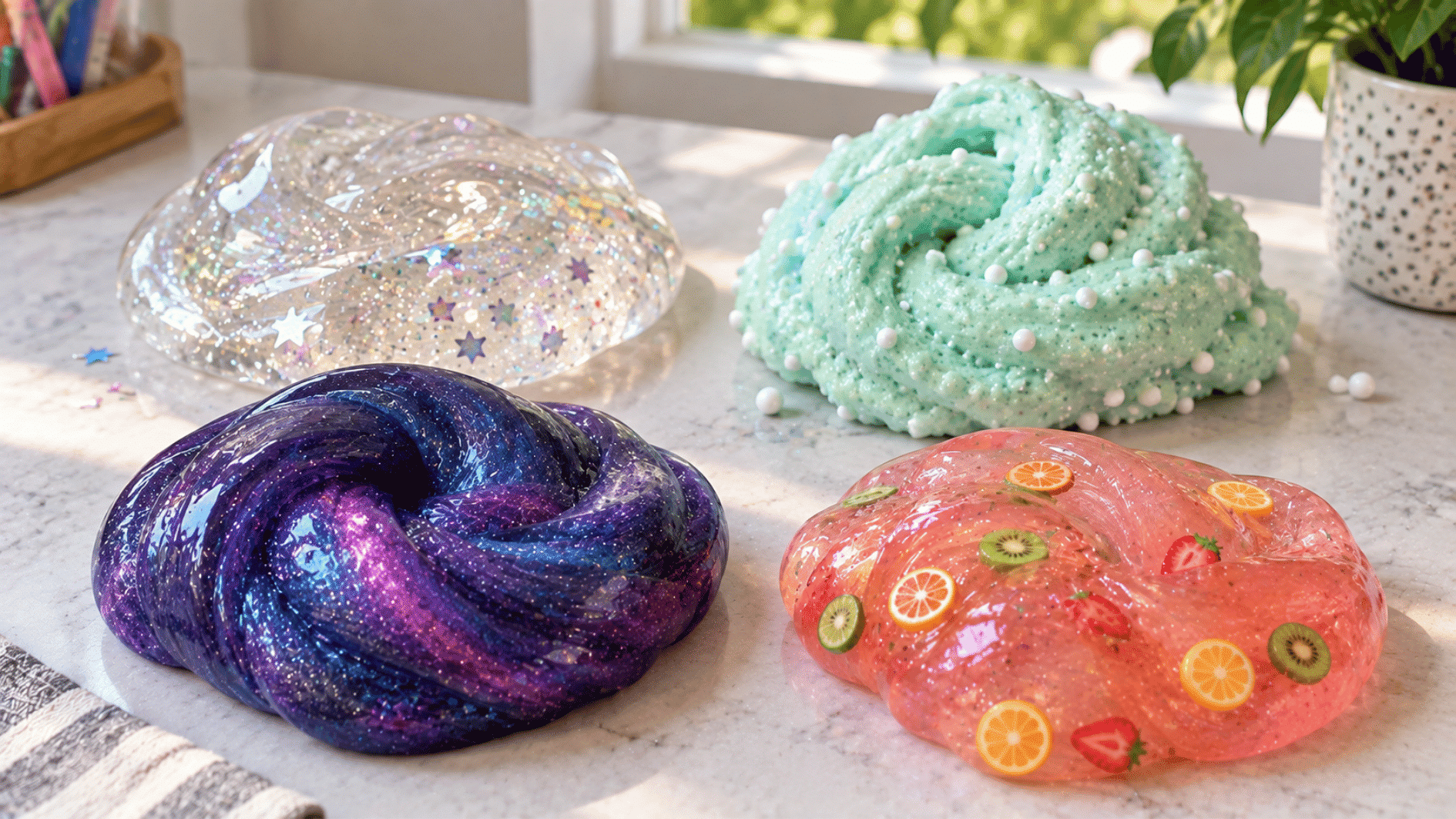
The different types of slime can leave different kinds of residue behind. Glitter, strong dyes, foam beads, and other add-ins may need extra attention even after the main slime has been removed.
|
Slime Type |
Main Problem |
What to Do |
|---|---|---|
|
Glitter slime |
Loose glitter remains |
Lift slime, then use tape or a lint roller |
|
Colored slime |
Dye may stain fabric |
Remove slime, then treat the color stain separately |
|
Foam or floam slime |
Beads get trapped in fibers |
Pick out loose beads before rinsing |
|
Slime with beads or confetti |
Add-ins stick to fabric |
Remove pieces by hand or tweezers before cleaning |
Tip: Do not scrub glitter, foam beads, or other slime add-ins into the fabric. Remove loose pieces first so they do not spread or become trapped deeper in the fibers.
How to Get Slime Out of Different Fabric Types
Different fabrics need slightly different treatment, so adjust your cleaning method based on fiber strength, sensitivity, and how the material reacts to moisture.
- Cotton and denim: Follow the standard steps above because these sturdy fibers have a low snag risk.
- Wool and silk: Skip liquid detergent; use mild soap and cool water because heat and detergent can shrink or felt delicate fibers.
- Synthetic fabrics: Standard steps usually work; use an oxygen-based bleach soak if needed since polyester and nylon tolerate stronger treatment.
- Leather or faux leather: Never submerge; wipe gently with a soft cloth barely dampened with soapy water to prevent warping, cracking, or staining.
- Delicate knits or textured weaves: Work slowly and test rubbing alcohol on a hidden seam first because these fabrics can snag or fade easily.
How to Get Slime Out of Carpet Without Spreading It
Slime on carpet behaves differently than slime on clothing — carpet fibers are deeper and denser, so slime settles in rather than sitting on the surface. The same rule applies, though: lift first, treat second, and never scrub in circles that grind it further down.
- Freeze it: Press an ice cube or a bagged ice pack directly onto the slime for 10 to 15 minutes until it hardens. Frozen slime lifts out in one piece instead of smearing.
- Scrape gently: Use a dull knife or plastic scraper to lift the hardened slime up and off, working from the outside of the stain inward so you don’t spread it.
- Treat the residue: Mix two parts white vinegar to one part warm water and apply it to what’s left with a spray bottle or cloth. Let it sit for 5 to 10 minutes, then work it loose with a soft brush.
- Blot, don’t rub: Press a clean, dry towel into the spot to lift the moisture and remaining residue. Rubbing pushes slime and vinegar deeper into the padding underneath.
- Rinse and dry: Dab the area with plain water to clear any leftover vinegar smell, then let it air-dry fully before walking on it or vacuuming.
If the stain has fully bonded to the carpet fibers or the padding underneath is affected, professional carpet cleaning is worth the cost rather than risking permanent matting or discoloration.
How to Prevent Slime Stains on Clothes and Carpet
Slime messes are easier to manage when you build a few simple habits into playtime. Have kids wear an old play shirt or clothes you do not mind getting messy, especially during longer slime activities.
Set up play on a table, tray, or other easy-to-clean surface instead of near couches, blankets, or piles of clothing. When playtime is over, place slime in a tightly sealed container to reduce spills and leaks.
If you regularly make slime at home, set up play on a table, tray, or other easy-to-clean surface instead of near couches, blankets, or piles of clothing. When playtime is over, place slime in a tightly sealed container to reduce spills and leaks.
Tip: I keep a designated “slime shirt” in my craft closet for this reason; it’s an easy habit that saves the good clothes without adding extra steps to playtime.
What Parents Say Actually Helped With Slime Messes
Beyond any single method, parents and cleaning communities online have their own hard-won tricks for slime disasters — and their results are worth passing along, even when the fixes get a little unconventional.
Vinegar. Useless for everything else in the laundry, but in a 50-50 dilution with water it’ll dissolve slime. I was skeptical, tried it, and it worked perfectly. I just used regular white vinegar.- Reddit User
Use saline solution from contracts to break down the slime (overactivate it) then dilute and scrub with hit water.- Reddit User
Get a wet vac carpet cleaner. Amazing for everything from barfing in the car to potty training accidents to slime in the rug.- Reddit User
Best tip my 90+ year old grandma has ever given me, Baking soda + cleaning vinegar fixes everything. I even use it to clean shower/sink drains when they’re backed up.- Reddit User
Final Thoughts
Slime spills do not have to turn into a long cleanup battle. Once you know how to get slime out of clothes and how to get slime out of carpet, it becomes easier to choose the right method for the surface and the type of mess.
I always prefer starting gently, then moving to stronger treatment only when the stain needs it. Check fabric labels, test cleaners first, and avoid heat until the residue is gone.
Save this for the next slime accident, and tackle the mess before it settles.
Frequently Asked Questions
How Do You Get Slime out of Clothes Without Vinegar?
Use mild dish soap and cool water, blot gently, rinse well, then wash according to the garment care label.
What Should You Do if Slime Went Through the Dryer?
Rehydrate the hardened residue with cool or lukewarm water, loosen it gently, then pretreat before washing the garment again.
Can Baking Soda Remove Slime from Clothes?
Baking soda may help with odor or residue, but it should not replace careful scraping, pretreating, and proper washing.