Standing in a flooring store, stuck between carpet and a rug, unsure which one actually fits your space?
That confusion is more common than you’d think, since both look similar but behave completely differently once they’re down. One covers your whole room and stays put for years.
The other moves, rolls up, and adapts as your style changes. Pick wrong, and you end up stuck with something too permanent or something that never quite works the way you wanted.
I’ve weighed this carpet vs. rug decision more than once in my own home. Here’s how the two really compare.
Are Carpet and Rug the Same?
No, carpet and rug are not the same. Both are floor coverings, but they are used differently inside a home.
Carpet is usually fitted across a full room and remains in place for a long time. It often becomes a fixed part of the flooring.
A rug is placed over the floor in one area. It can sit under furniture, beside a bed, or in the center of a room, and placing a rug around the bed correctly can help the room feel more put together.
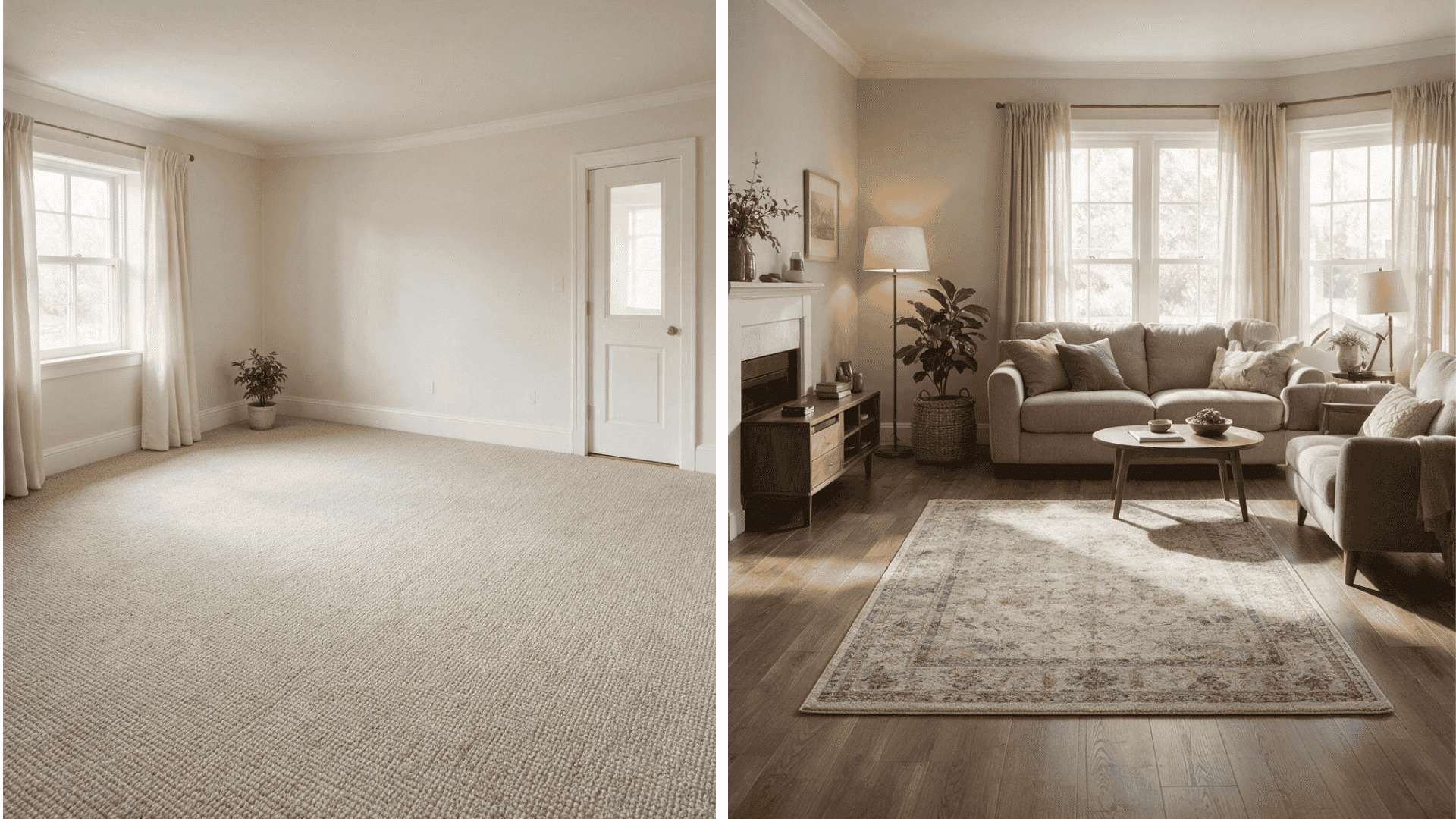
The main difference comes down to size, placement, and movement. Carpet covers the whole floor, while a rug adds softness and color to one part of the room.
Common Materials Used for Both
The right material can make a noticeable difference in how well your floor covering works in a particular space. Each fiber brings its own qualities and ideal uses.
| Material | Key Characteristics | Where It Works Well |
|---|---|---|
| Wool | Soft, warm, and durable | Bedrooms and living rooms |
| Nylon | Strong and suited to frequent use | Stairs, hallways, and family rooms |
| Polyester | Soft and stain-resistant | Guest rooms and quieter areas |
| Polypropylene | Moisture-resistant and practical | Entryways, playrooms, and patios |
| Cotton | Lightweight and often washable | Small rugs and casual spaces |
| Jute | Firm with a natural texture; less suited to moisture | Dry living spaces and low-moisture areas |
| Sisal | Tough and suitable for regular foot traffic | Offices, hallways, and busy rooms |
| Acrylic | Soft with a wool-like feel | Bedrooms and sitting rooms |
Carpets vs. Rugs: Let’s Understand the Main Difference
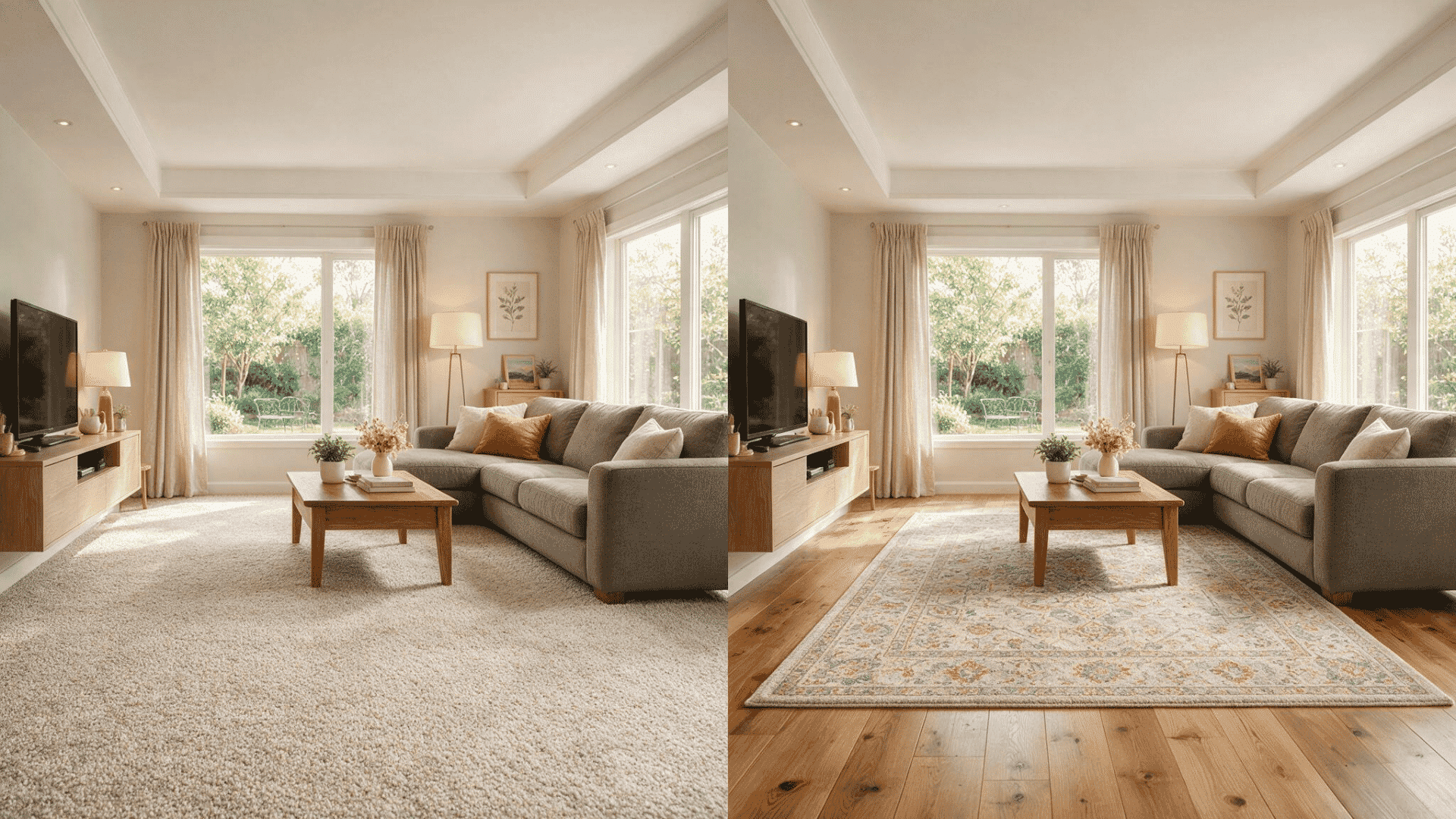
Carpet and rugs can shape how a room looks and functions, but their differences go well beyond appearance. Understanding those distinctions makes it easier to see which suits your home.
1. Size and Floor Coverage
The amount of flooring you want to cover can influence the overall feel and appearance of your room. Both options approach that goal differently.
| Factor | Carpet | Rug |
|---|---|---|
| Coverage | Reaches across most or all of the room | Covers one selected area |
| Sizing | Cut to match the room | Sold in set or custom sizes |
| Floor visibility | Hides nearly all of the floor below | Keeps much of the main floor visible |
| Room effect | Creates one steady surface | Helps separate seating or dining areas |
| Placement | Follows the shape of the room | Can sit under furniture or in open spaces |
An area rug can also help define seating zones within a living room setup while leaving part of the main flooring visible.
2. Installation and Setup
Before enjoying the finished look, it helps to know what it takes to get each option into place. Some choices require more planning than others. See how the setup experience differs between carpet and rugs:
| Feature | Carpet | Rug |
|---|---|---|
| Setup | Measured and cut for the room | Placed over the existing floor |
| Professional help | Often needed for a neat and secure fit | Usually not required |
| Floor preparation | The base should be clean, dry, and even | The area only needs basic cleaning |
| Extra layer | Commonly fitted over padding | May use a rug pad underneath |
| Time needed | Can take several hours or longer | Usually takes only a few minutes |
3. Cleaning and Daily Care
Cleaning needs can make a real difference when you’re choosing something you’ll live with every day. A manageable routine can save effort down the road.
I compare what everyday care looks like for both options before choosing either.
| Feature | Carpet | Rug |
|---|---|---|
| Regular care | Needs vacuuming across the full room | Needs cleaning only in the covered area |
| Spill cleanup | Stains may spread into the fibers and padding | Small rugs can often be lifted for cleaning |
| Deep cleaning | May need special equipment or professional service | Depends on size, fiber, and instructions |
| Dust removal | Dust can settle across a wide surface | Can be shaken, vacuumed, or cleaned separately |
| Drying time | May take longer after deep cleaning | Smaller rugs often dry more quickly |
4. Movement and Room Changes
Rooms don’t always stay the same as furniture, needs, and personal style change. Your flooring choice can determine how easily you adapt as they change.
These differences show which option offers greater flexibility:
| Feature | Carpet | Rug |
|---|---|---|
| Moving | Stays fixed after fitting | Can be rolled up and moved |
| Layout changes | May limit major room updates | Works well with new furniture plans |
| Use in rentals | Usually left behind | Can move to a new home |
| Storage | Cannot be stored without removal | Can be folded or rolled for storage |
| Replacement | Takes more time and labor | Can be changed with less effort |
5. Price and Long-Term Cost
What you pay upfront is only one part of the overall expense. Considering costs over time can give you a clearer picture before you commit.
| Price Factor | Carpet | Rug |
|---|---|---|
| Purchase and setup | $3–$11 per sq. ft. | $60–$600 |
| Underlayer | $0.75–$3.75 per sq. ft. | $6–$92 |
| Cleaning | $40–$125 per room | $80–$400 per rug |
| Repair | $140–$400 | $50–$500 |
| Removal | $120–$720 | $0 |
6. Maintenance
Ongoing upkeep is worth considering before making a final choice. The best option is one whose care requirements fit comfortably into your household routine. Take a look at what maintaining carpet and rugs can involve:
| Care Task | Carpet | Rug |
|---|---|---|
| Vacuuming | Clean busy areas two or three times a week | Vacuum the top and back when possible |
| Spills | Blot at once with a clean cloth | Follow the care label before cleaning |
| Deep cleaning | Use proper equipment or hire a cleaner | Wash or clean based on the fiber |
| Moisture | Dry the carpet and padding fully | Let the rug dry fully before storing |
| Furniture marks | Use cups under heavy furniture | Rotate often and flatten dents |
| Storage | Roll removed carpet loosely | Roll the rug instead of folding it |
| Storage place | Keep in a clean and dry area | Store away from sunlight and moisture |
| Pest care | Clean before rolling or storing | Wrap in breathable fabric and check often |
Can a Carpet Be Used as a Rug?
Yes, you can use carpet as a rug if you cut a leftover piece to the right size and finish the edges. Carpet remnants are often used to make simple area rugs at a lower cost, much like a rag rug made from scraps.
Edge binding is important because it keeps the sides from fraying and gives the piece a cleaner finish. A carpet store or flooring professional can usually cut and bind the edges.
Finished carpet pieces can work well in bedrooms, offices, playrooms, and utility areas. Unfinished pieces may shed fibers, curl at the edges, and wear out faster.
Pros and Cons of Carpets vs. Rugs
Carpet and rugs each come with practical strengths and trade-offs that can affect how well they work in your space. The better fit depends on your needs, lifestyle, and priorities.
Is Carpet the Right Fit for Your Home?
Carpet can make a room feel softer, warmer, and quieter, but it also needs regular care. Looking at both sides can help you decide if it suits your home and daily routine.
Benefits of Carpet
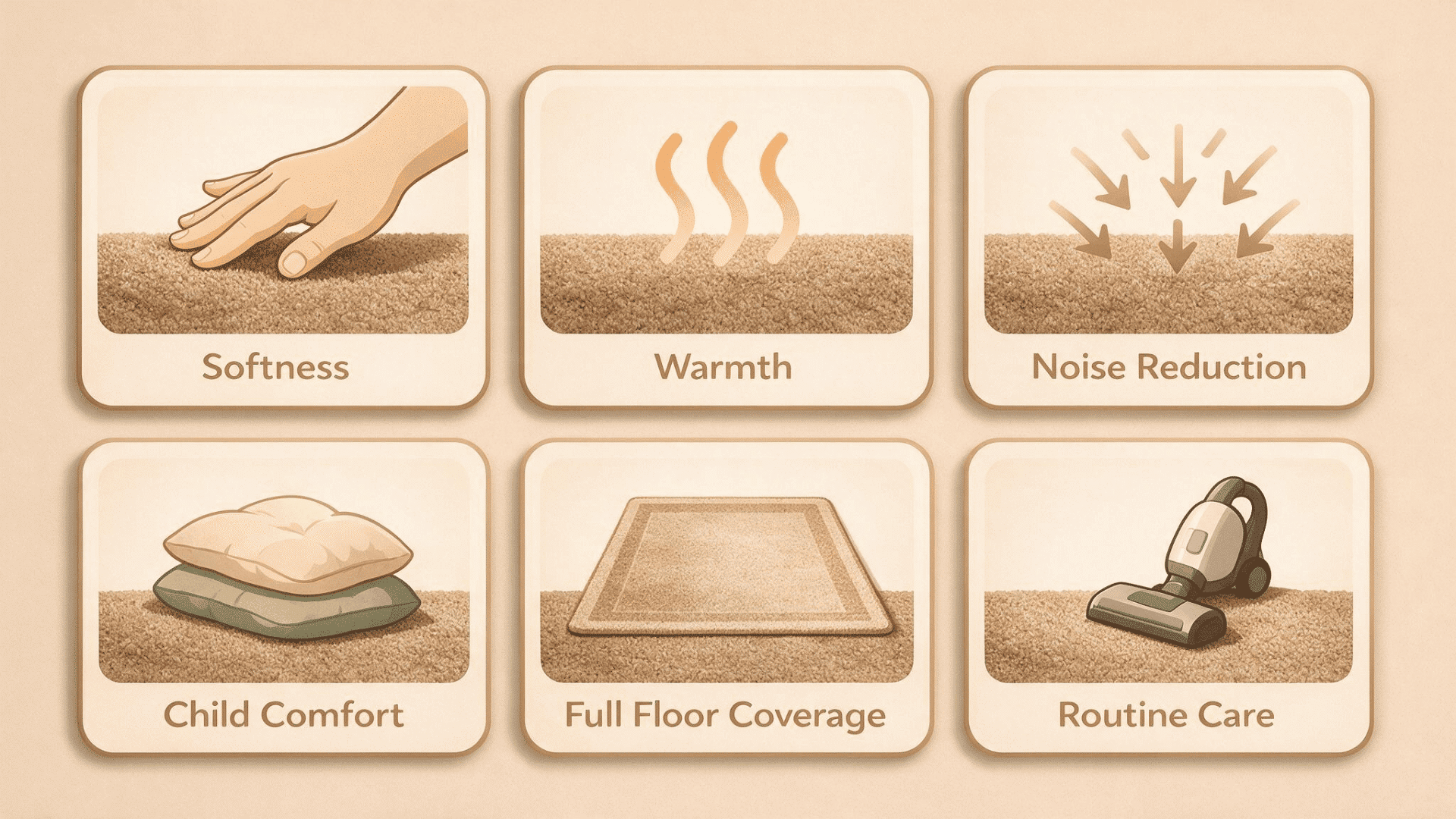
Carpet remains a popular flooring choice for several reasons, especially in spaces designed for relaxation and everyday living. Here are some of the advantages I believe it can bring to your home:
- Feels soft and comfortable underfoot
- Helps the floor stay warm in cold weather
- Reduces footsteps, echoes, and room noise
- Gives children a cushioned place to sit and play
- Creates an even surface from wall to wall
- Stays fresh with regular vacuuming
Where Carpet Can Fall Short
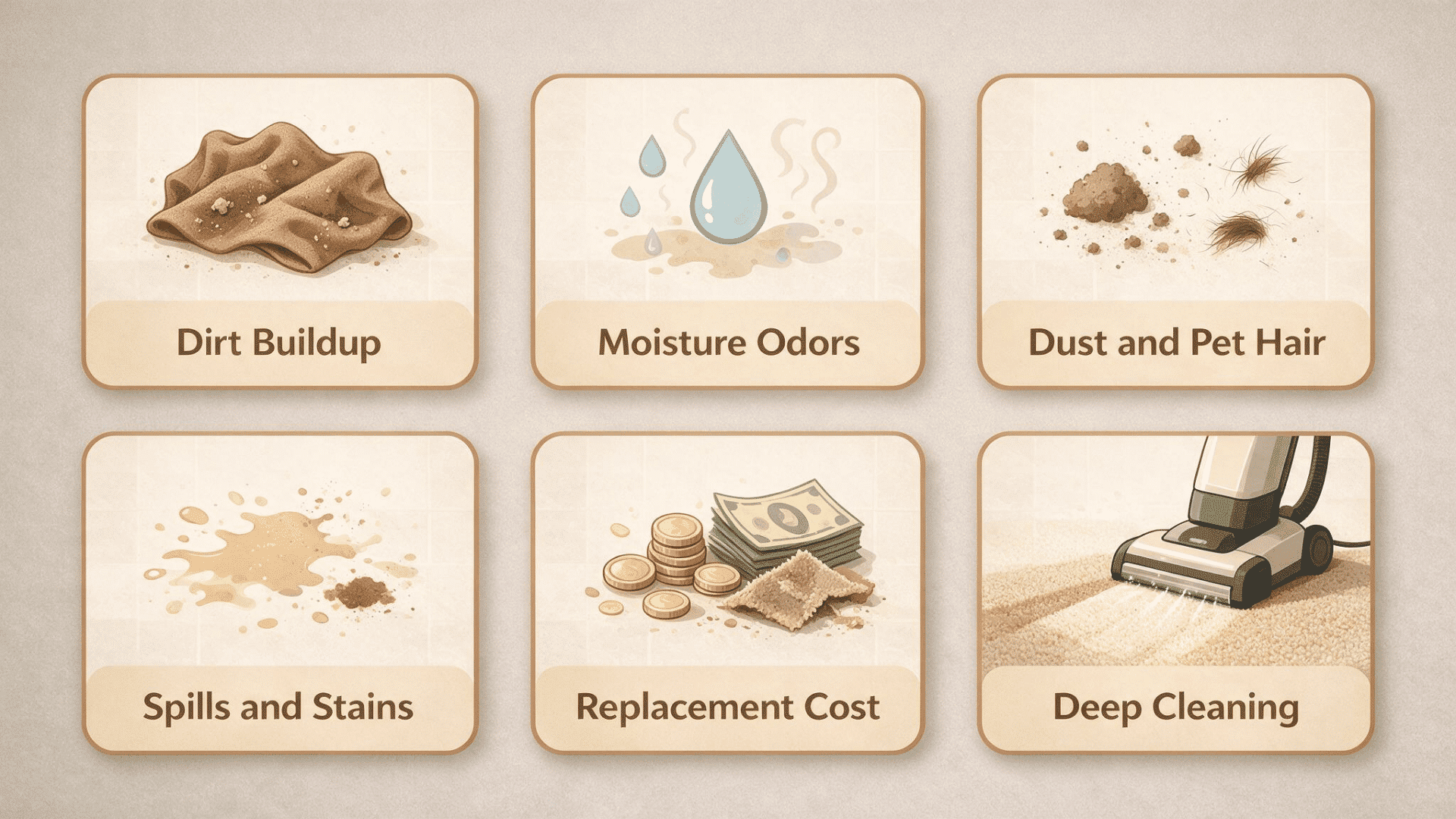
That wall-to-wall coverage also comes with a few practical considerations. Your household habits and maintenance preferences can make these factors more or less important.
- May feel less fresh when dirt collects
- Can develop odors when the padding stays damp
- May hold dust, pet hair, and allergens
- Can be difficult to clean after spills and stains
- Costs more to remove and replace
- May need machine or professional deep cleaning
Do Rugs Make More Sense for Your Space?
Rugs offer a more flexible approach to covering a floor, making them easy to work into different rooms and layouts. But that flexibility comes with its own trade-offs. Here’s what I consider before choosing rugs for my space:
Why Rugs are Worth Considering
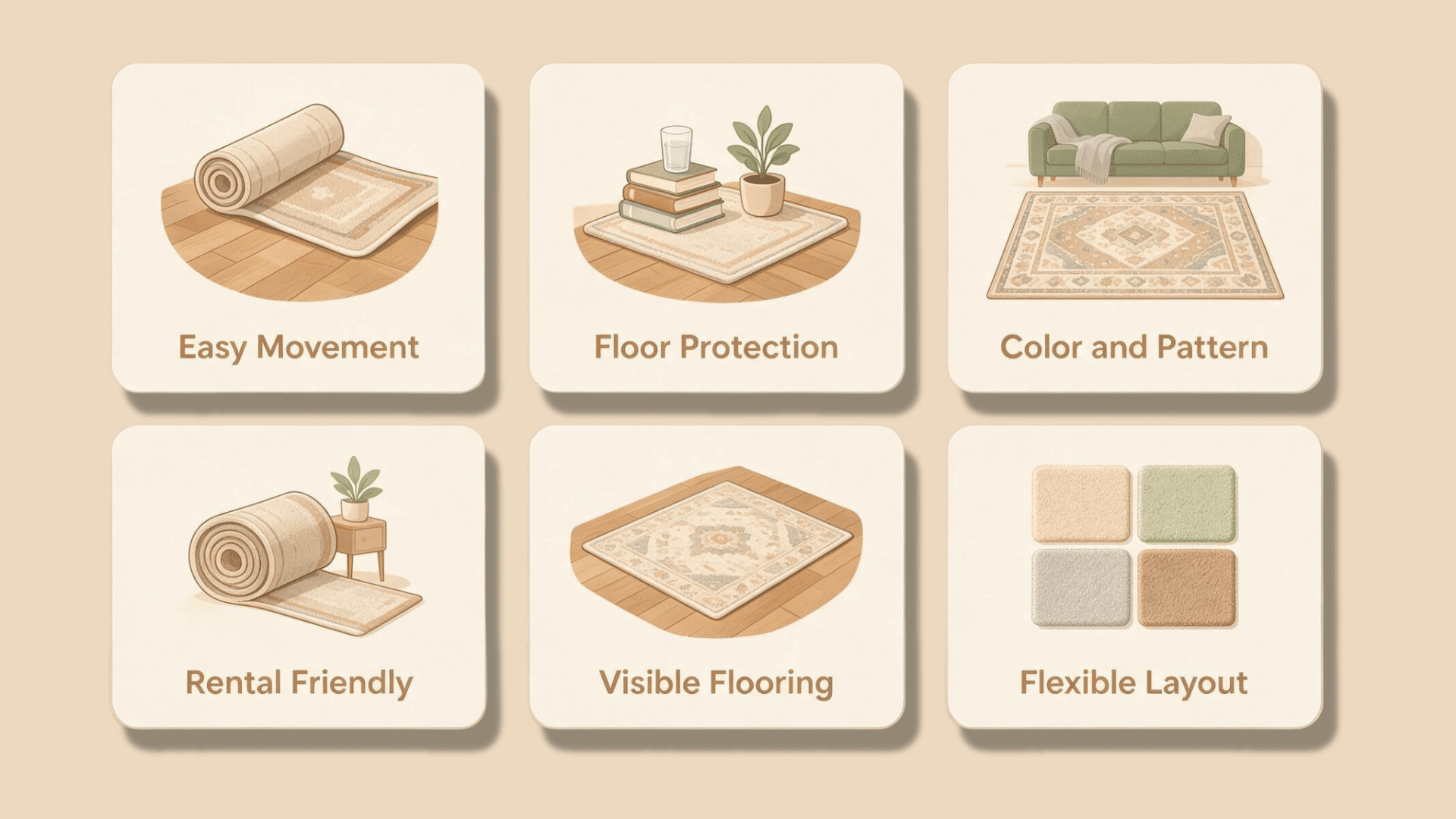
A well-chosen rug can serve both practical and decorative purposes without becoming a permanent part of the room. That makes it a versatile option for changing needs.
- Easy to move, roll, store, or place in another room
- Helps protect busy areas from scratches and wear
- Adds color and pattern to a chosen space
- Works well in rental homes
- Keeps much of the floor below visible
- Can be moved when the furniture layout changes
Where Rugs May Cause Trouble
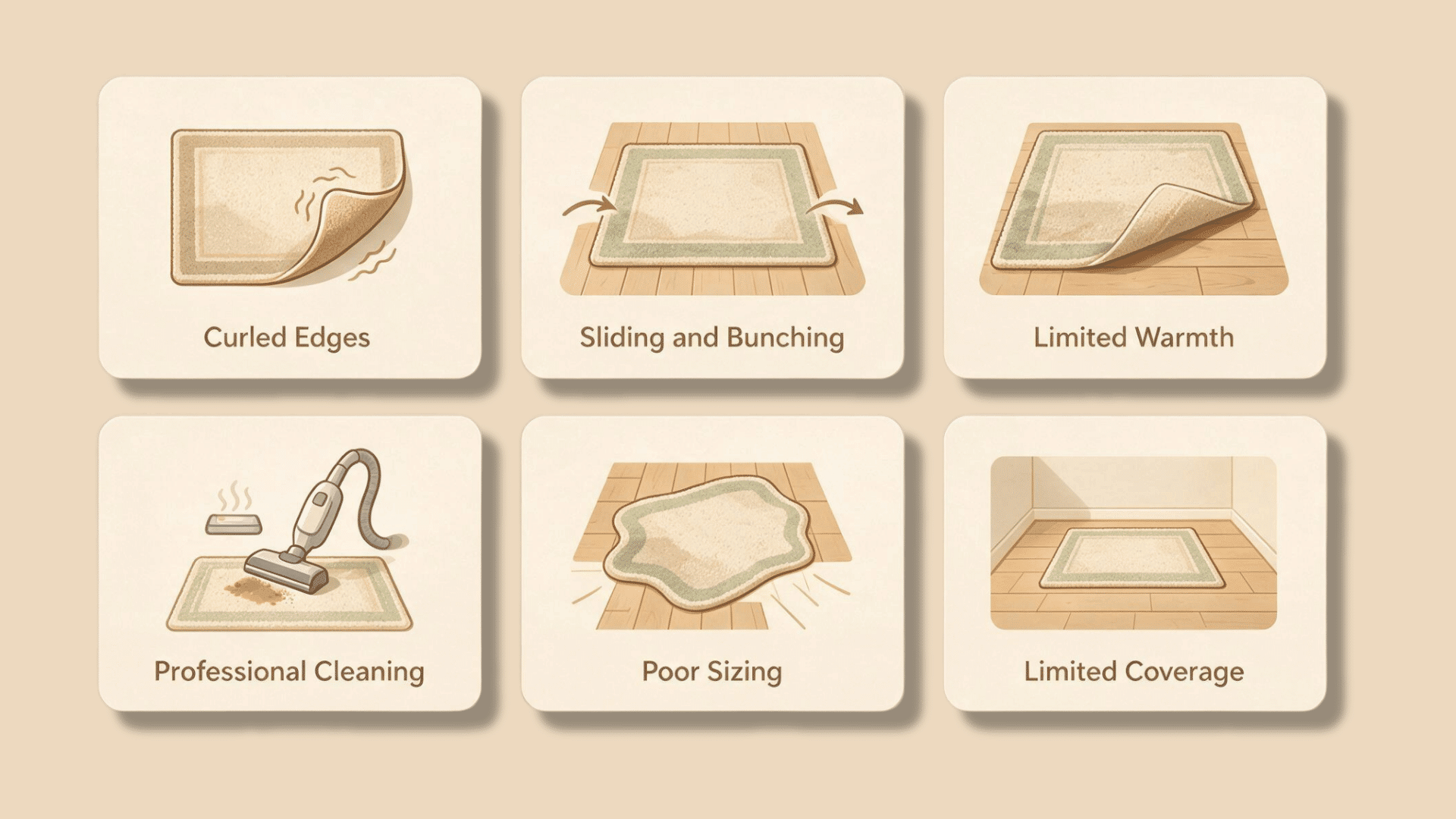
Rugs aren’t always as effortless as they appear. How well one works can depend on the room, placement, and how it is secured and maintained. Consider these possible limitations before deciding:
- Curled edges may create a tripping risk
- May slide or bunch without a suitable rug pad
- Adds warmth only to the area it covers
- Some fibers may need professional cleaning
- Poor sizing can make furniture placement feel uneven
- Does not protect the entire floor
Choosing Between Carpet and Rugs for Homes with Pets
For homes with pets, rugs are often the more flexible choice because you can remove, clean, or replace them when accidents happen. Washable rugs work especially well around food bowls, entryways, pet beds, and litter boxes.
Carpet provides full-floor comfort, but pet hair, dirt, odors, and stains can settle into its fibers. If you prefer carpet, a low-pile, stain-resistant option is generally easier to maintain.
For either choice, select durable materials that can handle regular cleaning and everyday wear. With rugs, add a non-slip pad to help prevent movement when pets run or play.
Note: Use a nonslip pad to keep rugs steady when pets run across them. For larger areas, carpet tiles are practical because damaged pieces can be replaced for me, one at a time.
Key Things to Consider Before Picking Carpet or a Rug
Choosing between the two becomes easier when you look beyond appearance and think about how the option will work long term. Small practical details can make a big difference.
- Match the floor covering to the room’s main use
- Check for uneven spots, stains, or moisture below
- Consider how often spills, dirt, and pet hair appear
- Choose low-pile fibers if allergies are a concern
- Add fitting, padding, cleaning, and replacement to the total cost
- Decide if the floor covering should stay fixed or move easily
- Keep hardwood or tile visible if it adds character to the room
- Select fibers that can handle the room’s level of foot traffic
I bring home a sample first and view it in daylight and at night, since texture and color can look different under room lighting.
Final Thoughts
So which one wins, carpet or a rug? It depends on what your space actually needs and how much flexibility matters most to you.
I’ve gone back and forth on this carpet vs. rug question plenty of times myself, and the right answer always came down to your lifestyle, not just looks.
Think about how your room gets used day to day, then let that steer your choice. Your floor is about to make a lot more sense.
Frequently Asked Questions
How Long Do Carpets and Rugs Usually Last?
Carpet may last 5 to 15 years, depending on its fiber, quality, foot traffic, and care. A well-made rug can last for decades when it is cleaned and rotated regularly.
Can You Place a Rug Over Carpet?
Yes, you can place a rug over carpet to define an area or cover a worn spot. Use a pad made for carpeted floors to reduce movement and bunching.
Which Works Better with Heated Floors?
Low-pile rugs and thinner carpets usually allow heat to pass through more easily. Always check the flooring label and heating system instructions before use.
Why Do Carpet Seams Become Visible?
Seams may show because of poor fitting, wear, lighting, or changes in the fibers. Skilled installation and proper placement can make them less noticeable.
Are Natural Fiber Rugs Good for Damp Rooms?
Jute and sisal are usually better for dry rooms because moisture can stain or weaken them. Synthetic fibers are often easier to manage near damp areas.