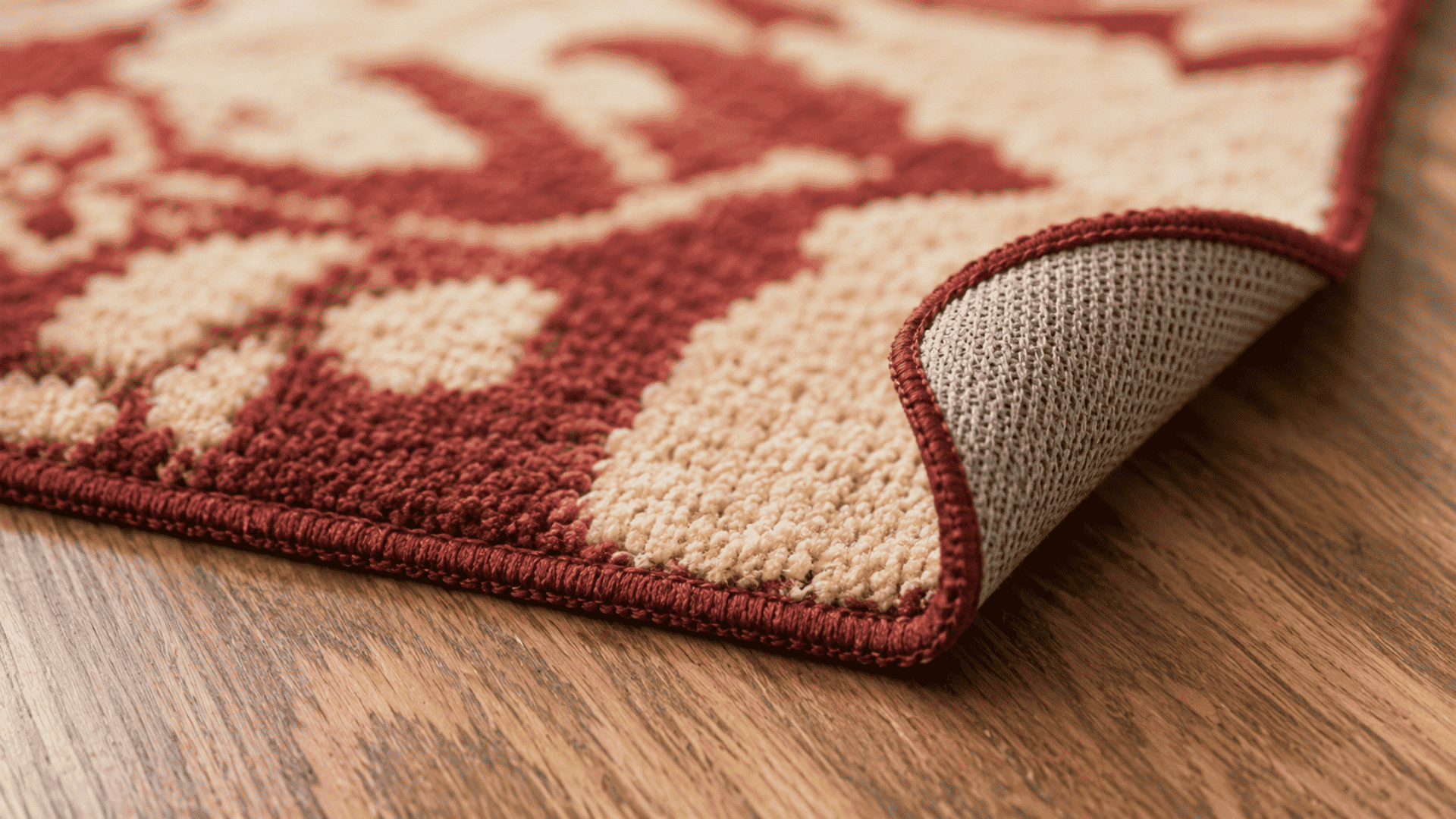
Just unrolled a new rug and noticed it won’t lie flat no matter what you do? That happens more than you’d think, especially with rugs fresh out of shipping or storage.
Those stubborn curls and creases aren’t a sign something’s wrong, but they can make your room look messy fast. You don’t need to replace the rug or call in a pro right away.
A little time, some pressure, and the right trick usually does the job. I’ve dealt with plenty of curled corners myself over the years. I have covered exactly how to flatten a rug, once and for all.
Can a Rug Flatten on Its Own?
Yes, some rugs can flatten on their own after you unroll them and leave them in place for several days. Light waves and soft curls often settle as the fibers and backing relax.
Thicker rugs, deep fold lines, and tightly curled corners may take longer or may not improve without added pressure; room temperature, rug material, and storage time can also affect the result.
Let the rug rest on a clean, dry floor before trying stronger methods. If raised areas remain after several days, you may need a more direct fix.
Getting the rug flat is especially useful when it forms part of a living room rug setup where raised corners can interfere with the rest of the room arrangement.
How to Flatten a Rug with Simple at-Home Methods
Different rug problems may need different fixes. I start with gentler methods, and always check the care label before using moisture or heat on the rug.
The methods below can help tackle everything from curled corners to stubborn ripples.
1. Use Ice Cubes and Weight on Curled Corners
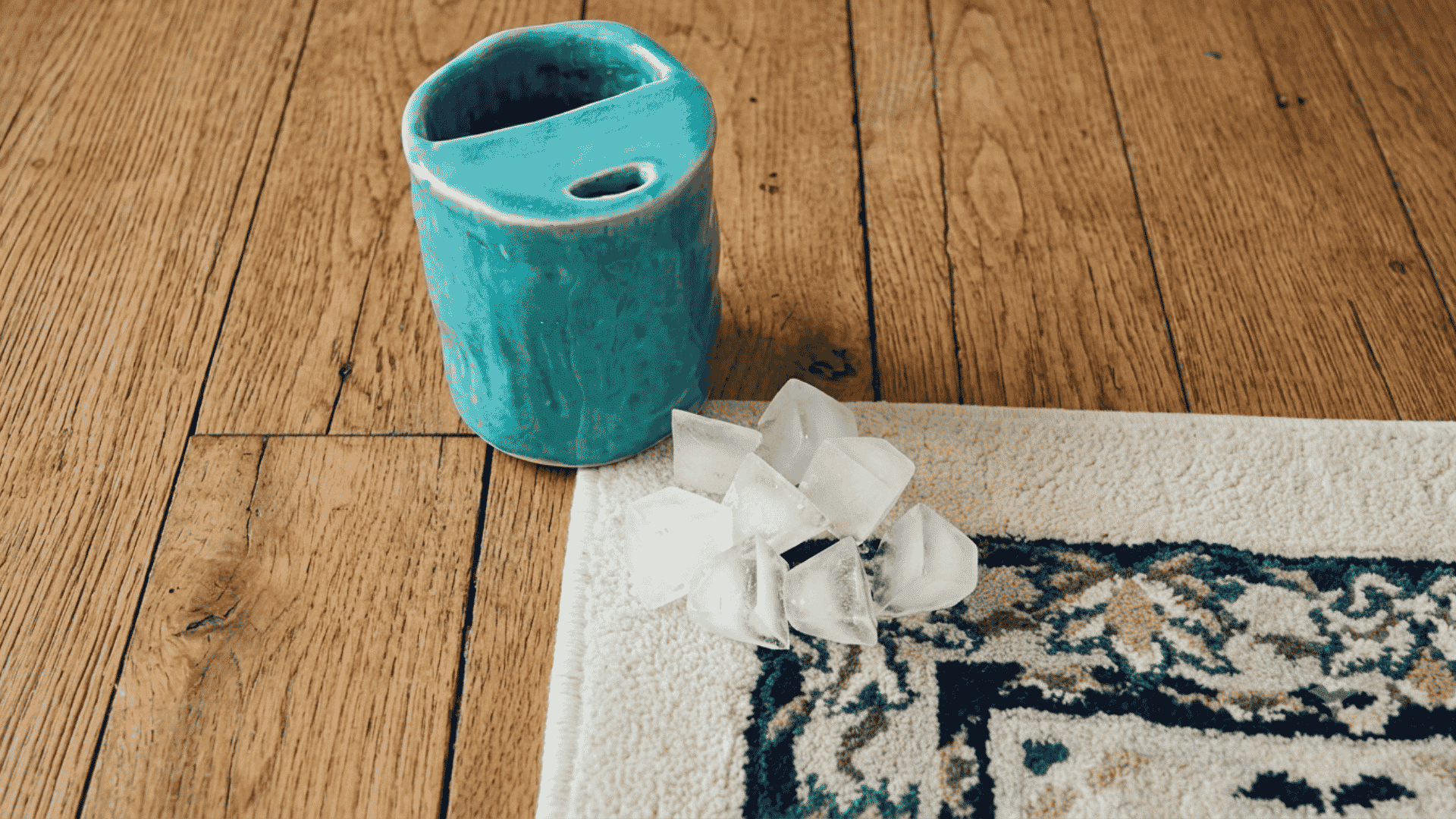
Raised corners can be stubborn, especially after a rug has spent time rolled or folded. This method combines light moisture with steady pressure to encourage the area to settle.
- Hold the corner down: Place a flat, heavy object over the curled section.
- Add a little moisture: Let a few ice cubes melt slowly near the raised area.
- Protect the floor: Place a waterproof barrier underneath if the flooring is sensitive to moisture.
- Allow it to dry: Leave the weight in place until the rug is completely dry.
- Check the result: Repeat only if the rug material handles the first attempt well.
Advice from the community:
“Place a mug or heavy cup on the corner of the rug. Place a few ice cubes beside the mug and let it melt. Once it dries it should be sitting flat once you remove the mug.” – stonesinger, Reddit
“Put an ice cube on the curled part after you pull it tight. You can use something heavy to hold it down and leave it until the ice cube melts and dries.” – Heather Neves, Facebook Discussion
2. Use a Clothing Steamer for Stubborn Curls
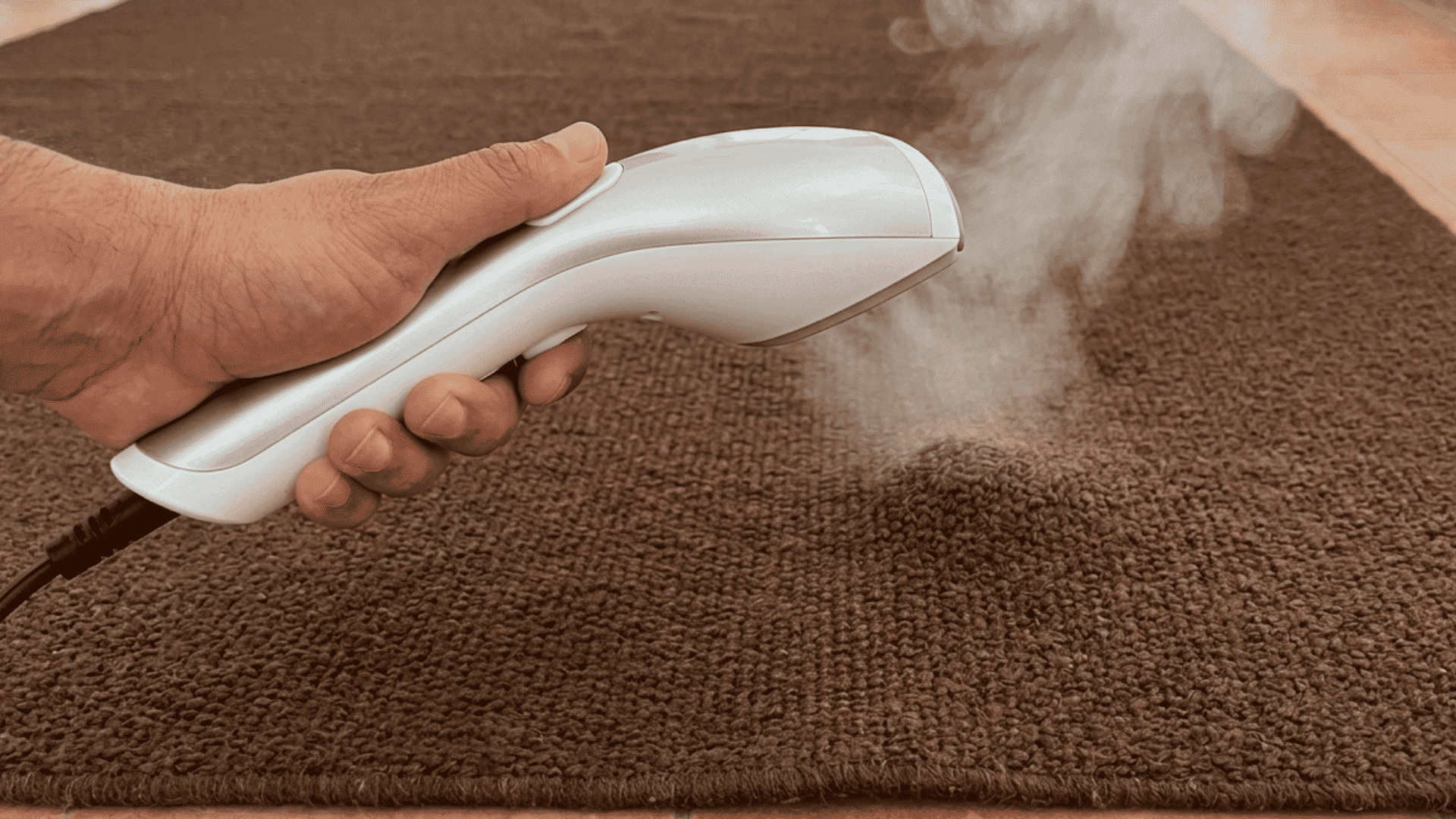
Some curls remain even after a rug has had time to settle. Gentle steam may make certain materials more flexible, but too much heat or moisture can cause damage.
If the rug manufacturer allows steaming, I use this approach with care:
- Check the care label: Make sure the rug material and backing can safely handle steam.
- Steam carefully: Keep the steamer moving instead of concentrating heat on one area.
- Reshape the curl: Gently guide the warmed section in the opposite direction.
- Hold the new shape: Keep the area flat while it cools and dries completely.
- Repeat gradually: Use another short treatment rather than applying intense heat at once.
What worked for other rug owners:
“Look at how sick the right side is. Looks like the fabric got loose. If you’re not, use tack strip instead of staples so you can retighten as you go. Also always make sure you’re using consistent pressure.” – Reddit
“Use a clothing steamer and bend it by hand when it’s warm. Or place it on any curved edge (couch, for example) while steaming the curled side down” – Reddit
3. Add Weight or Secure Loose Edges
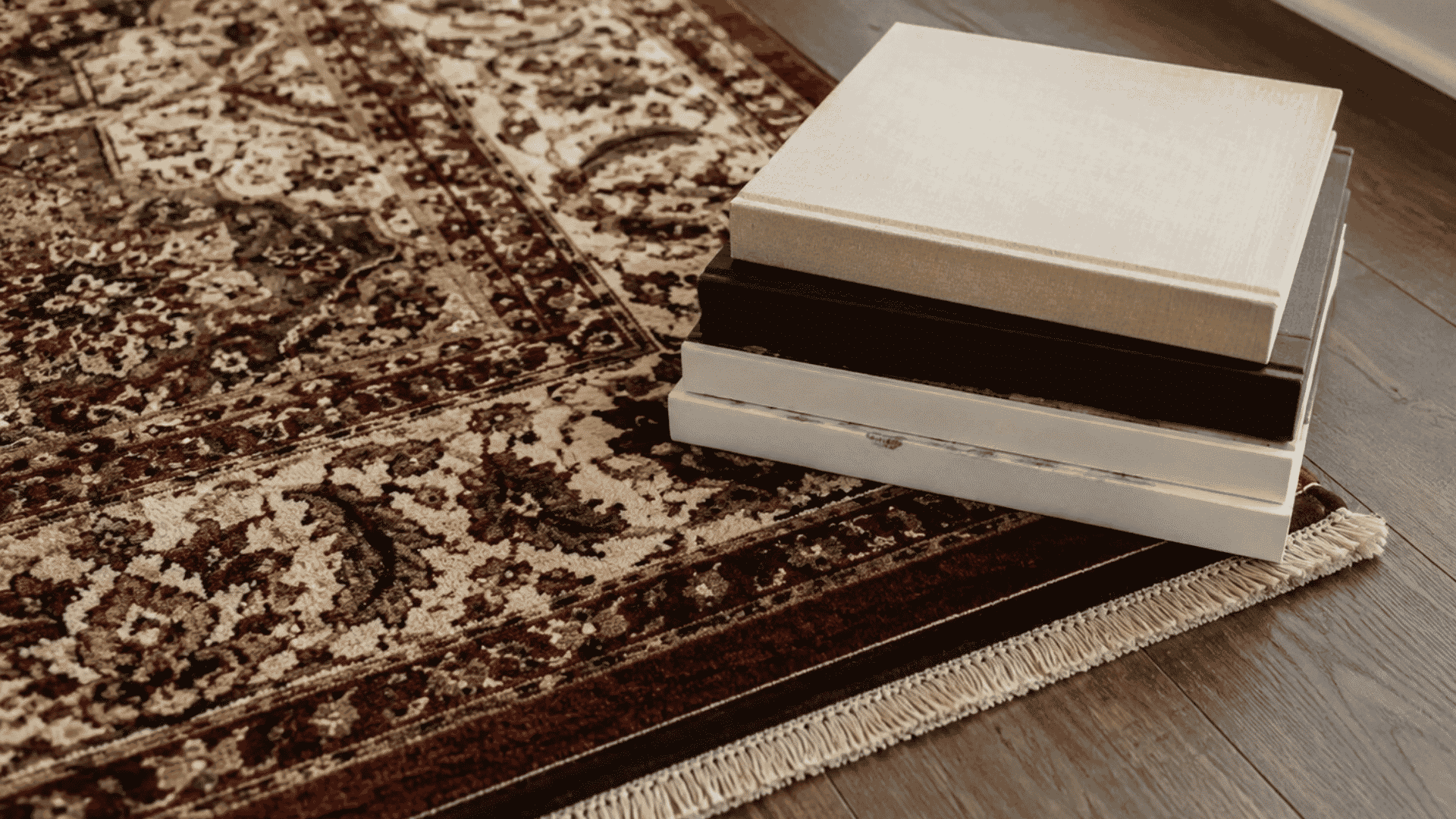
Sometimes a rug simply needs steady pressure and enough time to lose its rolled shape. This is one of the simplest options because it does not require heat or moisture.
Once the rug lies flat, correct bedroom rug placement can also help keep the edges positioned properly around the bed and nearby furniture.
- Smooth the rug first: Gently flatten the raised section before placing anything on top.
- Add flat weights: Place books or other heavy, flat objects over the problem area.
- Distribute the pressure: Cover the entire raised section instead of pressing one small spot.
- Give it time: Leave the weights undisturbed before checking if the rug has settled.
- Reposition if needed: Move the weights to any remaining raised areas and repeat the process.
Advice from the community:
“I’ve heard that if you apply the glue while the rug is still on the frame, then let it dry before removing it, the rug will lie flat once removed from the frame. (I’m still gathering my supplies and watching YT videos on how to tuft.)” – TheFluffyRedhead, Reddit
“Its gorgeous. Heavy stuff for a bit. A few books worked for me when my carpet was rolled up. Also you can buy carpet tape for the ends if you want too” – Kristi Plastino, Facebook Discussion
4. Try Gentle Heat or Rug Fasteners
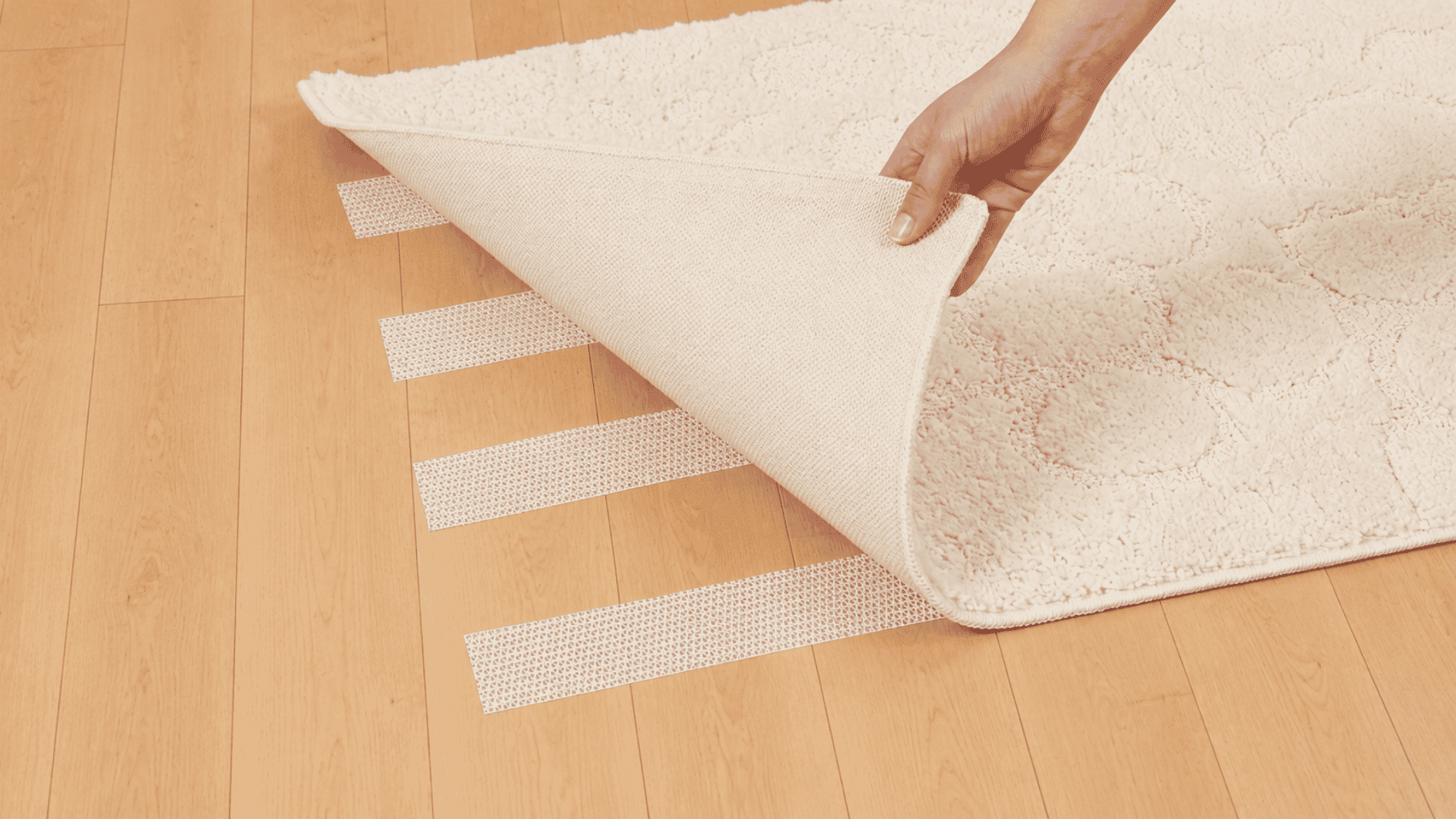
A rug may flatten successfully but start lifting again as people walk across it. Securing problem areas can provide extra stability once the rug is positioned correctly.
Consider these options when repeated movement is causing the edges to rise:
- Clean underneath: Remove dust from the floor so the rug or gripping product can sit properly.
- Choose rug-safe grippers: Use products designed for your rug material and flooring type.
- Secure problem areas: Position grippers beneath corners or edges that repeatedly lift.
- Check the floor finish: Confirm that adhesives are safe before attaching anything to the floor.
- Inspect them regularly: Replace or reposition grippers if they loosen or stop holding securely.
Tips from the Community:
“What if you ran an iron over the rug slowly, with a thin piece of fabric (like a sheet) in between the iron and the rug. And make the iron at its hottest. Just a thought.” – Carol Bexter, Facebook
“They make velcro straps to hold rugs in place. I suppose you could put one on the ground underneath the bump and put the opposing Velcro piece above it to make the rug stick to the ground more. That’s what I would try first if you’re not getting anywhere with the folding/rolling technique. Hope it works out!” – spr8, Reddit
5. Rolling Back the Rug Over or Lightly Dampen the Backing
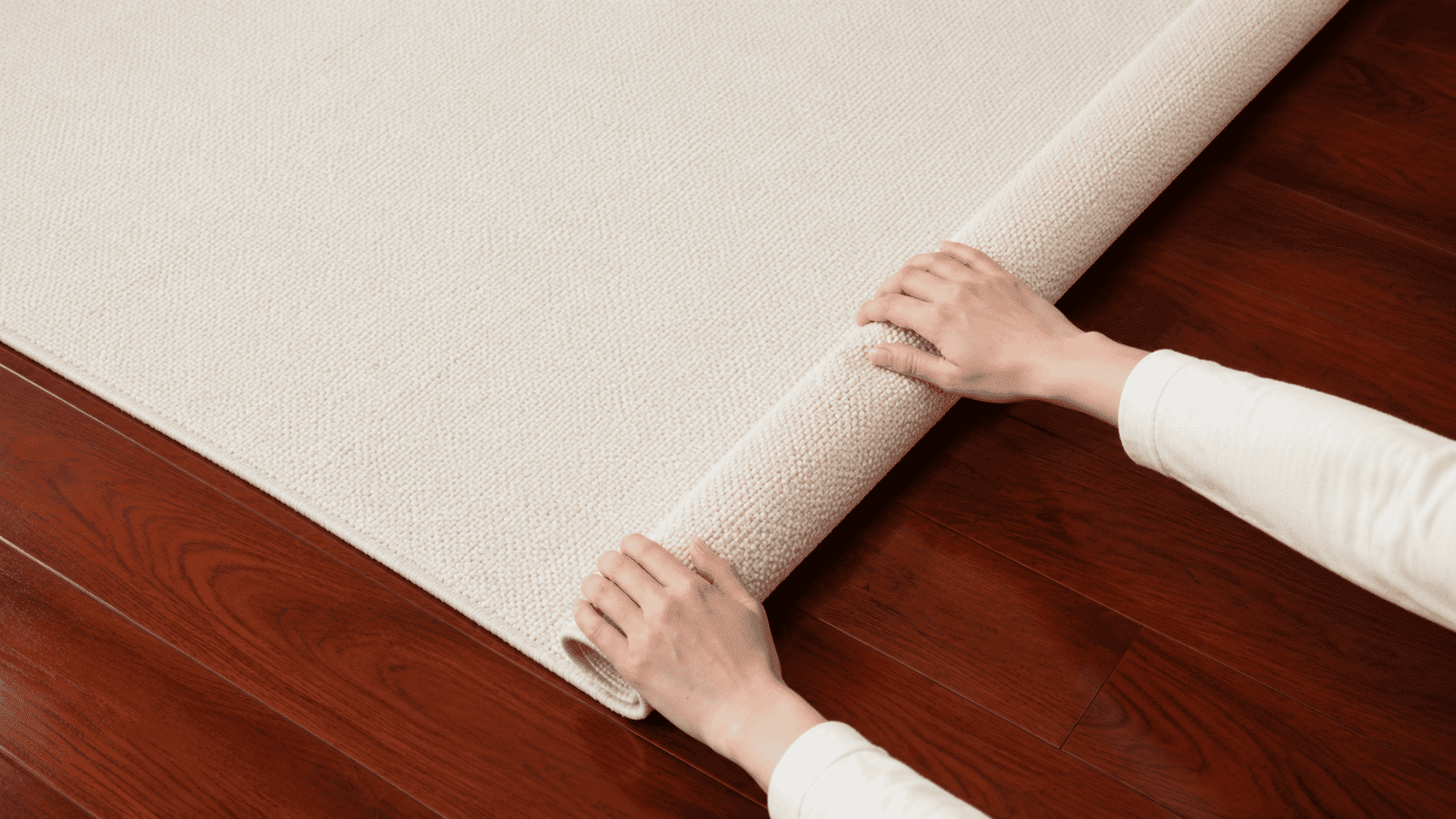
A rug often holds the curved shape created during shipping or storage. Rolling it gently in the opposite direction can help counter that tension without adding heat.
- Check the backing: Make sure it is flexible enough to roll without cracking or separating.
- Reverse the direction: Loosely roll the rug against its existing curl.
- Secure it gently: Hold the roll in place without creating tight bends or folds.
- Let it rest: Leave it rolled for a while before opening it and checking the result.
- Lay it flat afterward: Smooth the rug out and give the fibers time to settle naturally.
What worked for other rug owners:
“I would either iron this out or just fold the corner going under the carpet and wait till the corner adjusts itself to the new fold. Better a downward fold than an upward fold if the fold goes too much.” – Lumierific, Reddit
“Roll up opposite, rubber band the ends and let sit for a few days. Has worked many times for me.” – Tammie Cooper, Facebook Discussion
6. Use a Vacuum to Smooth the Rug
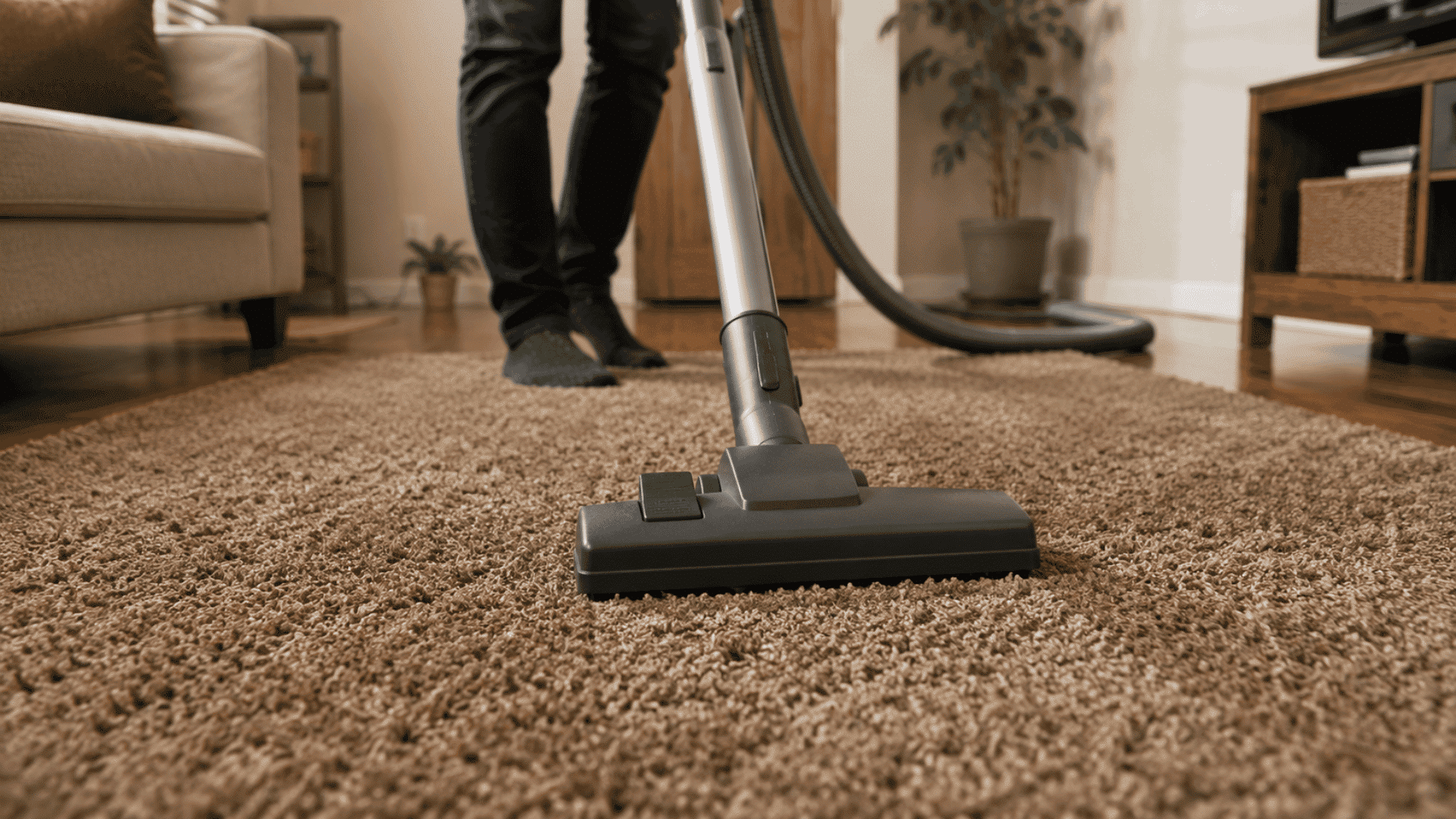
Vacuuming is unlikely to fix a deep shipping crease on its own, but it can remove debris underneath and help you smooth minor surface irregularities. It is also an easy first step.
This is my go to approach when the rug only needs a little adjustment:
- Check underneath: Lift the rug and remove debris that could be creating small bumps.
- Vacuum slowly: Clean the rug and remove dirt that could interfere with an even surface.
- Change directions: Vacuum from several angles to work across the entire problem area.
- Smooth outward: Gently guide the rug toward its edges while checking for remaining ripples.
- Finish with pressure: Place a flat weight over any remaining minor raised areas.
Advice from the community:
“Vacuum to get it flat and then put double sided carpet tape on all four corners (about 24″ along each corner edge). Start at the top and stretch it out to lay flat as you work toward the bottom. I have this method on three rugs in my house.” – Kimbrell Family, Facebook Discussion
How Long Does It Take for a Rug to Flatten?
Most rugs need anywhere from a few hours to several days to settle, while thicker rugs or deep creases may take longer. The exact timing depends on the rug’s material, backing, and how it was stored.
| Rug Condition | Typical Time to Flatten | What Affects the Timing |
|---|---|---|
| Light rolling ripples | 1–3 days | Usually relax faster after unpacking |
| Curled corners | A few hours–2 days | Tighter curls may need more time |
| Deep fold marks | 3–7+ days | Long storage can create stubborn creases |
| Thick wool rug | Several days–2 weeks | Dense fibers may settle more slowly |
| Stiff synthetic rug | 1–5 days | Backing and room temperature can affect flexibility |
Reasons a Rug Won’t Lie Flat
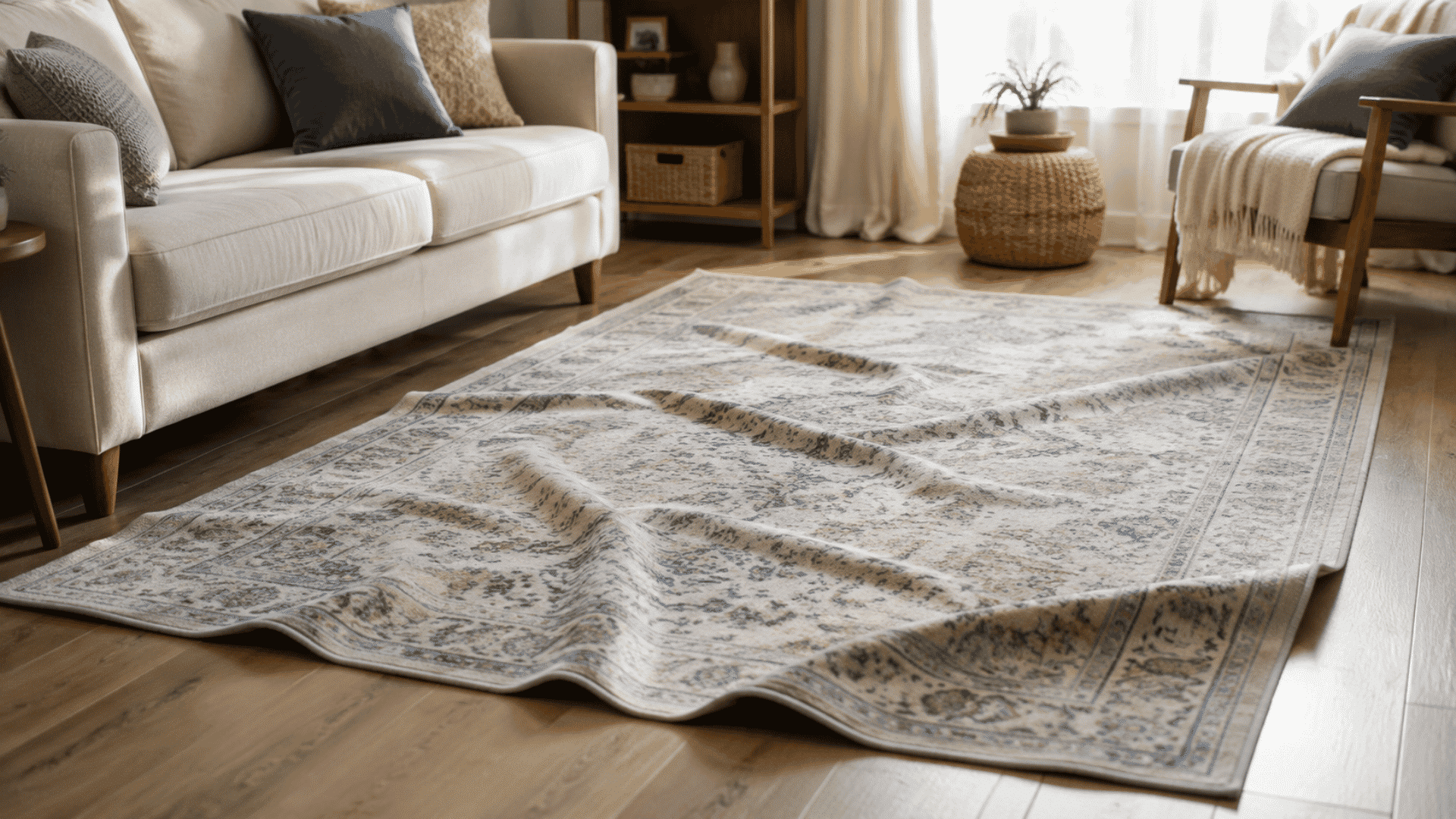
An uneven rug is not always caused by the rug itself. Storage, materials, and the surface underneath can all affect how smoothly it settles. Several common issues, some of which even I have faced, may be keeping your rug from lying flat:
- Tight rolling: Shipping can leave the rug with curled edges or waves.
- Folded storage: Long-term folding can leave deep creases in the rug.
- Stiff backing: Firm backing may hold a curved shape after unpacking.
- Uneven rug pad: A wrinkled or poorly fitted pad can create bumps.
- Uneven floor: Debris or raised surfaces can keep the rug from lying flat.
- Recent unpacking: A new rug may need time to relax after being opened.
- Heavy furniture: Uneven pressure can leave dents or raised areas in the rug.
- Wrong pad size: An oversized pad can bunch up beneath the rug.
- High humidity: Moisture in the air can affect some natural rug fibers.
- Temperature changes: Cold conditions can make certain rug backings less flexible.
- Poor placement: Partly resting on different floor surfaces can make a rug sit unevenly.
- Damaged backing: Cracks or worn areas underneath may prevent the rug from settling evenly.
Choosing the Right Method for Your Rug Material
Rug fibers and backings react differently to pressure, moisture, and heat. Using a suitable approach can help you tackle curls and creases without creating another problem.
| Rug Material | Start With | Use Caution With |
|---|---|---|
| Wool | Rest flat or reverse roll gently | High heat, excess moisture, pulling |
| Cotton | Flat resting with even pressure | Soaking unless care instructions allow it |
| Polypropylene | Reverse rolling | Irons, heaters, and direct heat |
| Polyester | Flat resting or broad weights | Concentrated heat |
| Jute or sisal | Natural settling in a dry room | Water, steam, and damp surfaces |
| Shag | Lay face down to relax the backing | Heavy weights that crush the pile |
| Vintage or handmade | Consult a rug specialist | Heat, steam, moisture, and adhesives |
Tips to Prevent New Curls and Creases in Your Rug Over Time
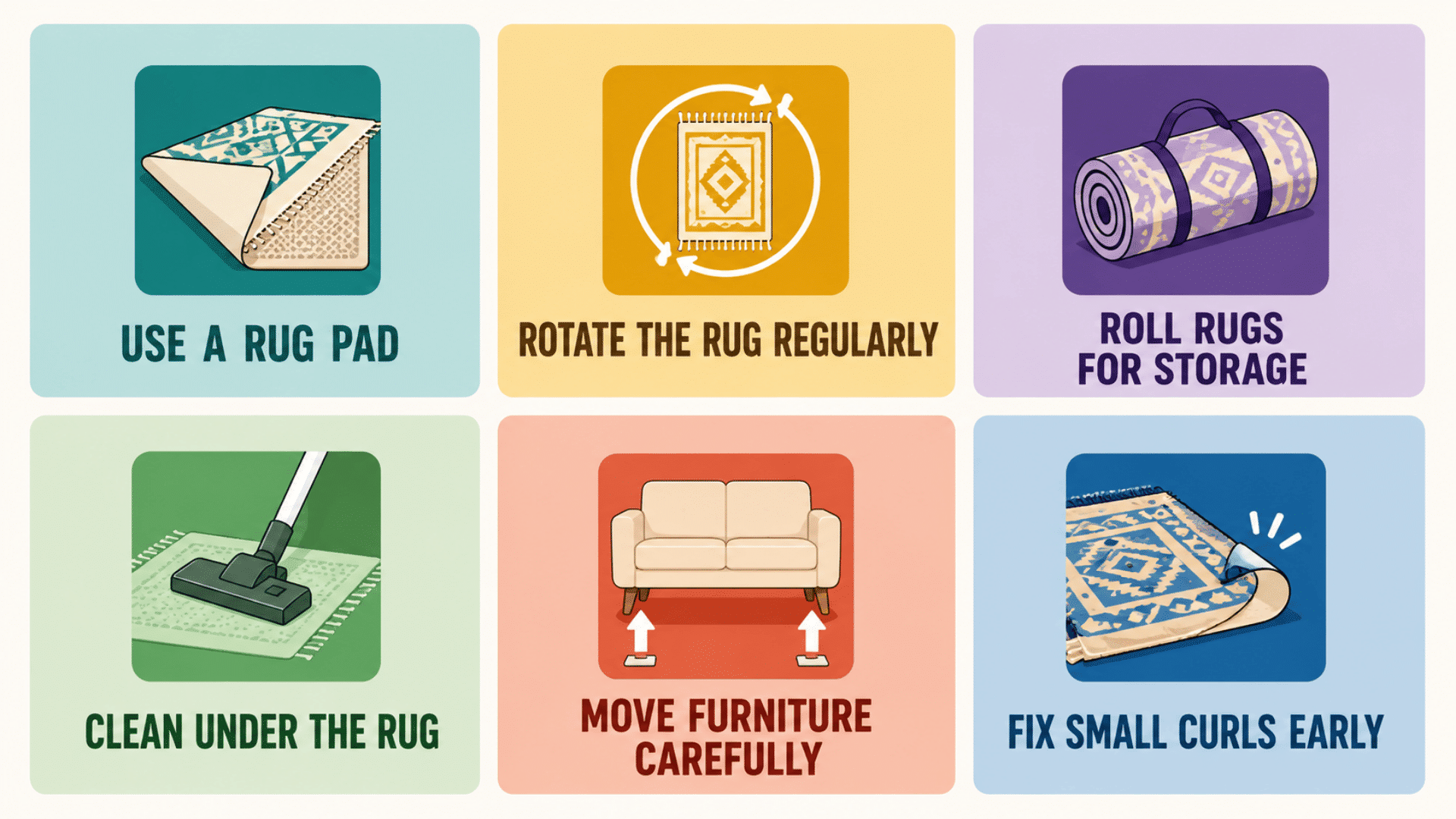
Once your rug lies flat, the right care can help stop corners, edges, and ripples from returning. Storage and everyday use can all affect how well it holds its shape.
Follow these practical tips to keep your rug smooth and secure over time:
- Use the right rug pad: Choose a properly sized pad to reduce shifting and bunching.
- Rotate the rug regularly: Turn it every few months to help distribute wear more evenly.
- Roll it for storage: Store the rug rolled rather than folded to help prevent deep creases.
- Clean underneath often: Remove dirt and debris that could create bumps beneath the rug.
- Lift heavy furniture: Avoid dragging furniture because it can pull or distort the rug.
- Treat curls early: Flatten raised corners before they become harder to correct.
- Keep the rug dry: Address spills quickly and follow its care instructions for drying.
- Check rug grippers: Reposition or replace loose grippers that no longer hold the edges securely.
- Avoid uneven surfaces: Place the rug on a clean and level floor whenever possible.
How to Get Creases Out of a New Rug?
New rugs often develop creases after being rolled, folded, or packed for shipping. Start by laying the rug flat on a clean, dry floor and gently smoothing it from the center toward the edges.
Give it a few days to relax naturally. For stubborn creases, roll the rug loosely in the opposite direction or place flat, heavy objects over the affected areas. Avoid sharp folds that could damage the backing.
If the creases remain, check the rug’s care instructions before using heat or steam. Some synthetic and natural fibers can react poorly to high temperatures or excess moisture.
Signs Your Rug Needs Professional Flattening
Some rug problems need more than extra time or another DIY trick. Continuing to use heat, moisture, or pressure can worsen existing damage.
Watch for these signs that it may be time to contact a rug professional:
- Deep creases remain: Stubborn folds stay visible after several gentle flattening attempts.
- Backing looks damaged: Cracks, peeling, or separation may require professional repair.
- Colors start bleeding: Moisture causes dyes to run or transfer onto other areas.
- Fibers become loose: Threads begin pulling, shedding, or separating during treatment.
- Edges keep curling: Corners quickly lift again after being flattened.
- The rug looks stretched: Parts of the rug become uneven or lose their original shape.
- Heat causes changes: Fibers or backing become stiff, shiny, warped, or discolored.
- The rug is valuable: Antique, handmade, or delicate rugs are safer with specialist care.
- Damage keeps spreading: Small problem areas become larger after DIY treatments.
- Manufacturer methods fail: A new rug stays uneven after following its recommended care instructions.
Wrapping It Up
So there you have it, a flat rug is closer than you think. No need to stress over curls, creases, or corners that just won’t behave.
I’ve leaned on this same handful of tricks for years, and between ice, weight, or a little reverse rolling, something on this list always comes through.
Match the method to your rug, stay patient, and skip the shortcuts that risk damage. Keep at it, and you’ll notice fewer curls popping back up over time.
Your rug’s finally about to lie the way it was always meant to.
Frequently Asked Questions
Why Does Rug Smell After Being Unrolled?
New rugs can have temporary odors from packaging materials, dyes, or manufacturing processes.
Can a Rug Lose Its Color Over Time?
Yes, prolonged exposure to direct sunlight can gradually fade some rug colors.
Can Pets Damage a Rug’s Shape?
Yes, repeated scratching, pulling, or digging can affect the fibers and edges of some rugs.