A simple circle can carry more meaning than you might expect. Wreaths appear on doors, tables, celebrations, and memorials, each setting giving them a slightly different purpose.
I’ve always liked how easy handmade projects can feel welcoming, seasonal, or deeply personal, and a wreath is a good example of that.
This blog covers wreath meanings, uses, types, bases, and simple DIY steps.
What Is a Wreath, Its Use & Symbolism?
A wreath is a circular arrangement made from flowers, leaves, branches, or other decorative materials around a ring-shaped base. Wreaths have a long history, with ancient Greeks and Romans using laurel and olive wreaths as symbols of victory, honor, and achievement.
Over time, wreaths became connected with different traditions, emotions, and cultural meanings. Today, they can be made from natural or artificial materials, but the circular shape remains their most recognizable feature.
What Are Wreaths Used for?
Wreaths can suit everyday decor, seasonal displays, and meaningful occasions. Their style and message usually change with the setting.
|
Use |
Common Type |
Meaning |
|---|---|---|
|
Front doors |
Evergreen or floral |
Welcome |
|
Holidays |
Pinecone or themed |
Celebration |
|
Weddings |
Fresh flowers |
Love and union |
|
Memorials |
Floral |
Remembrance |
|
Indoors |
Dried or fabric |
Decoration |
|
Tables |
Grapevine or greenery |
Centerpiece |
What Do Wreaths Symbolize?
Wreaths can symbolize eternity, welcome, celebration, love, remembrance, renewal, peace, and tradition. Their circular shape often represents continuity, while greenery and flowers can suggest growth or new beginnings.
Depending on the occasion, a wreath may also express hospitality, honor, shared memories, or cultural heritage.
Note: Plants can shift a wreath’s meaning. Laurel suggests victory, pine and holly endurance, and roses love. What’s woven into the wreath can subtly change what it represents.
Common Types of Wreaths
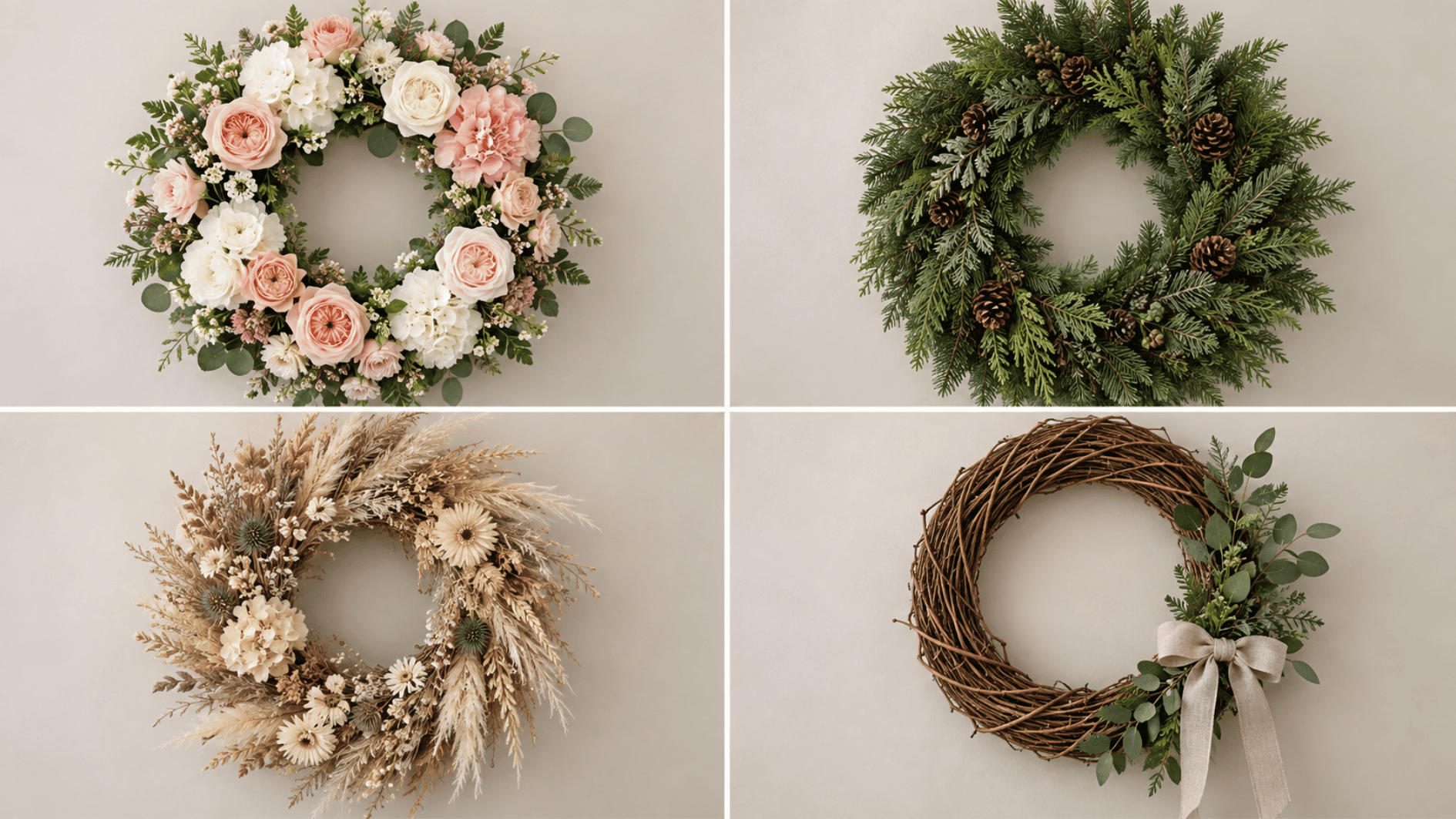
1. Fresh Flower Wreaths
Fresh flower wreaths use seasonal blooms arranged around a circular base to create a natural and colorful display. People often use them for celebrations, gatherings, and indoor decor.
These wreaths bring a soft, organic touch to a space but usually need more care because fresh flowers have a shorter lifespan. They work well when you want a temporary decorative piece.
2. Evergreen Wreaths
Evergreen wreaths are made using branches from plants like pine, cedar, or fir. Their rich green color makes them a popular choice for winter displays and holiday decorations.
With proper care, these wreaths can last longer than fresh flower designs. They add a natural feel and bring seasonal charm to entrances and rooms.
3. Dried Flower Wreaths
Dried flower wreaths are made with preserved flowers, grasses, and herbs that maintain their texture and color over time. They are a practical choice for long-lasting decorations.
Their natural appearance makes them suitable for different home styles and spaces. You can use them indoors to add a simple handmade touch without frequent replacement.
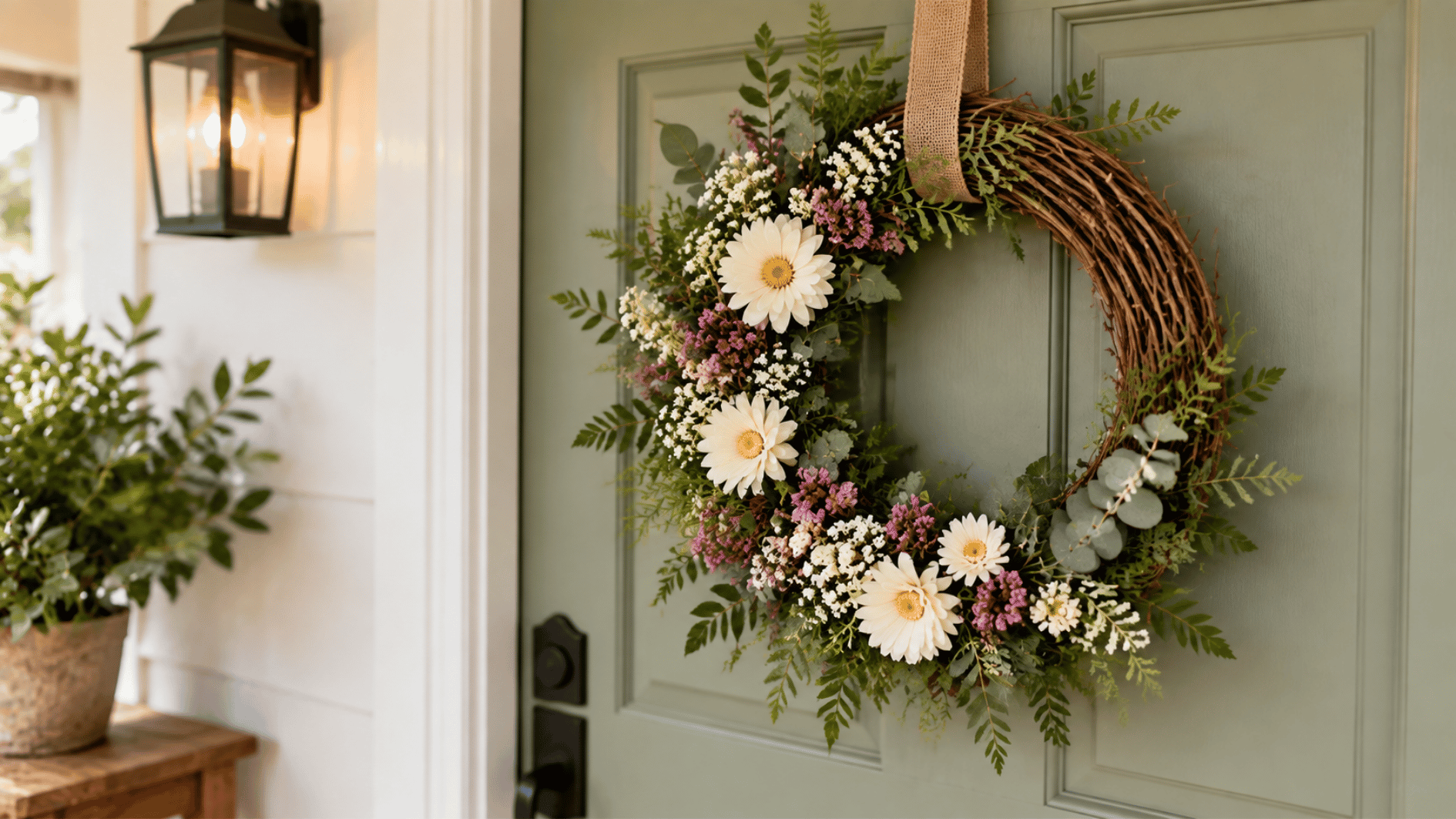
4. Grapevine Wreaths
Their earthy texture works especially well with rustic, farmhouse, and other home decor styles that use natural materials and handmade details.
You can decorate them with flowers, ribbons, or seasonal pieces to match different occasions. The simple design also works well on its own.
How to Make a Wreath at Home
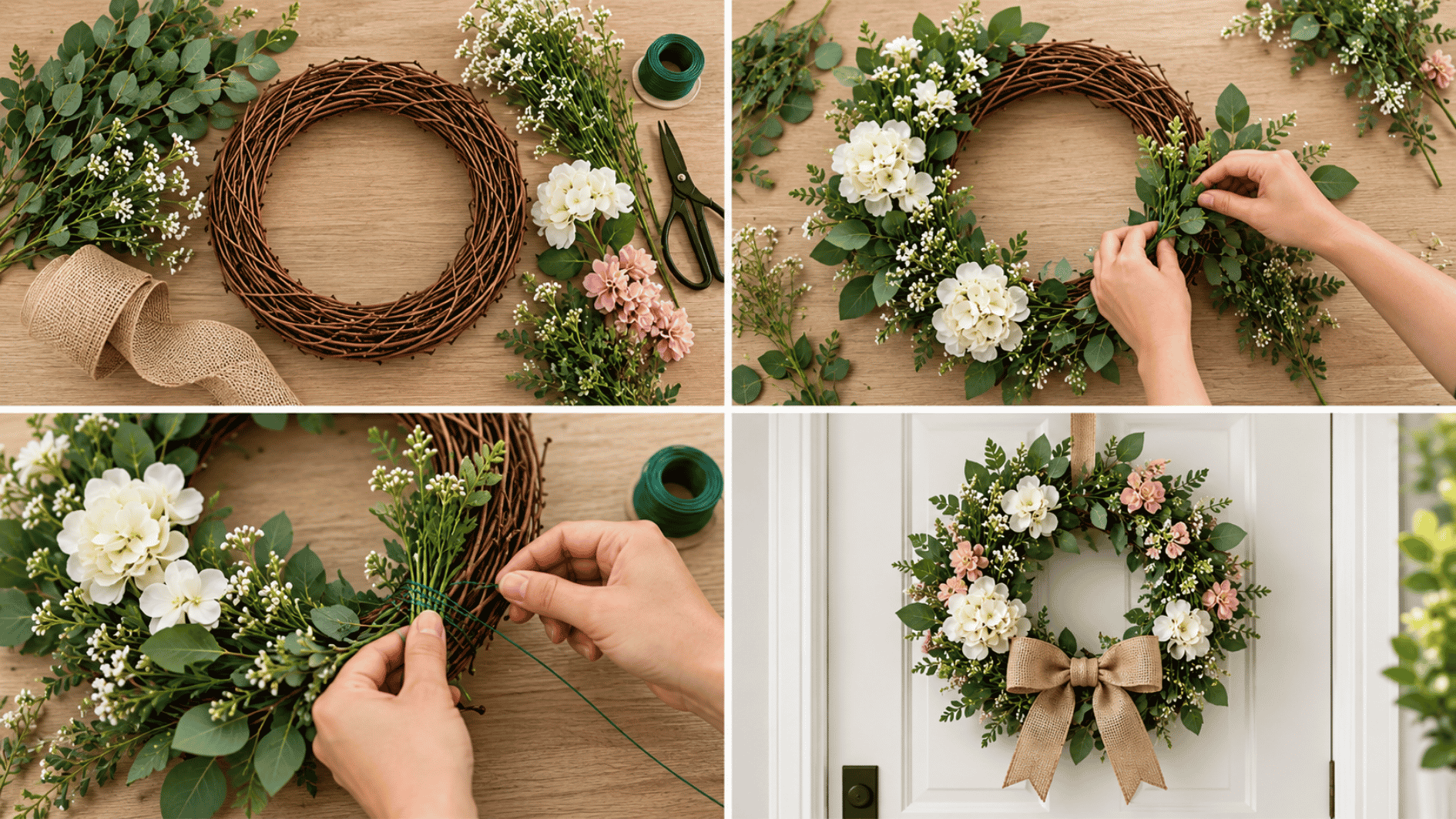
Making a wreath at home starts with a sturdy base and a simple plan for arranging your materials. Once everything is prepared, the process becomes much easier to manage and adjust as you work.
Step 1: Choose a Base and Gather Materials
Start by selecting a wreath base that fits your design idea, such as a wire frame, foam ring, or grapevine base. Gather the decorations and tools you need before you start.
- Choose your materials: Pick flowers, greenery, ribbons, or seasonal pieces that work well together.
- Prepare your tools: Keep floral wire, scissors, glue, or cutters nearby for easy assembly.
- Plan your design: Arrange your materials loosely first to see how they look.
Step 2: Arrange Flowers, Greenery, and Decorations
Start by placing larger pieces around the base, then fill the gaps with smaller details to balance the design. This creates a fuller look without making the wreath look too crowded.
- Start with focal pieces: Add the biggest flowers, branches, or decorations first.
- Spread materials evenly: Avoid placing all details on one side unless creating an asymmetrical design.
- Mix textures: Combine different shapes and sizes for more depth.
Tip: Step back occasionally to check the overall shape before securing everything.
Step 3: Secure the Decorations
Once your arrangement looks balanced, secure each piece firmly to the wreath base. The method you choose depends on the materials used in your design.
- Use floral wire: Secure heavier branches and natural elements tightly.
- Add glue carefully: Use adhesive for lightweight decorations like ribbons or small accents.
- Check loose areas: Make sure every section stays in place after hanging.
Tip: Attach decorations in small sections instead of fixing everything at once.
Step 4: Add Final Details and Hang Your Wreath
Finish your wreath by adding small touches that complete the design and make it feel personal. Then, prepare it for display by choosing a suitable spot and securing it properly for hanging.
- Add finishing accents: Include bows, small ornaments, or extra greenery if needed.
- Create a hanging loop: Attach a strong hook or ribbon for easy placement.
- Protect your wreath: Keep delicate materials away from harsh weather conditions.
Tip: Take a photo before hanging it to see if any areas need small adjustments.
Wreath Ideas for Different Spaces In Your Home
The best wreath design often depends on its size, placement, and surrounding conditions. Considering these details helps you choose materials that fit the space and stay easy to maintain.
|
Space or Setting |
Best Wreath Idea |
Quick Tip |
|---|---|---|
|
Small entryway |
Slim grapevine with greenery |
Keep the design light and compact |
|
Living room mantel |
Dried flowers or fabric |
Match the size to nearby decor |
|
Dining table |
Small greenery or grapevine |
Lay it flat as a centerpiece |
|
Covered porch |
Grapevine or artificial greenery |
Choose moisture-resistant materials |
|
Party backdrop |
Floral, paper, or fabric |
Use lightweight, easy-to-hang materials |
|
Apartment wall |
Fabric or dried wreath |
Use a removable hook for hanging |
Final Thoughts
Wreaths can be decorative, meaningful, and surprisingly easy to personalize for different spaces or occasions. I like how changing the materials, colors, or small details can give the same basic form a completely different feel.
Now that you understand what a wreath is, what a wreath symbolizes, and how to make a wreath, you can choose or create one with more confidence. Pick a style you like, gather your materials, and start making your own wreath.
Frequently Asked Questions
How Long Does a Wreath Typically Last?
The lifespan of a wreath depends on its materials. Fresh wreaths may last days or weeks, while dried and artificial ones can last much longer.
What Is the Best Way to Store a Wreath?
Store a wreath in a cool, dry place away from direct sunlight and moisture to help protect its shape and materials.
Do Wreaths Have to Be Perfectly Round?
No, traditional wreaths are circular, but modern designs can be oval, square, heart-shaped, or intentionally asymmetrical.
How Can You Keep a Fresh Wreath From Drying Out?
Keep it away from strong heat and direct sun, and lightly mist suitable greenery when the materials allow it.