Moving furniture is already a lot to deal with. Add unpredictable weather, and suddenly the whole day can feel a little more complicated than expected.
If you are figuring out how to move furniture during bad weather, you may be wondering how much the weather can actually affect the process. I’d say it is worth thinking about before moving day arrives, especially when conditions can change quickly.
The good part is that a bad forecast does not always have to derail your plans. Knowing what to expect can make the entire experience feel far less overwhelming.
When Is It Safe to Move Furniture In Bad Weather?
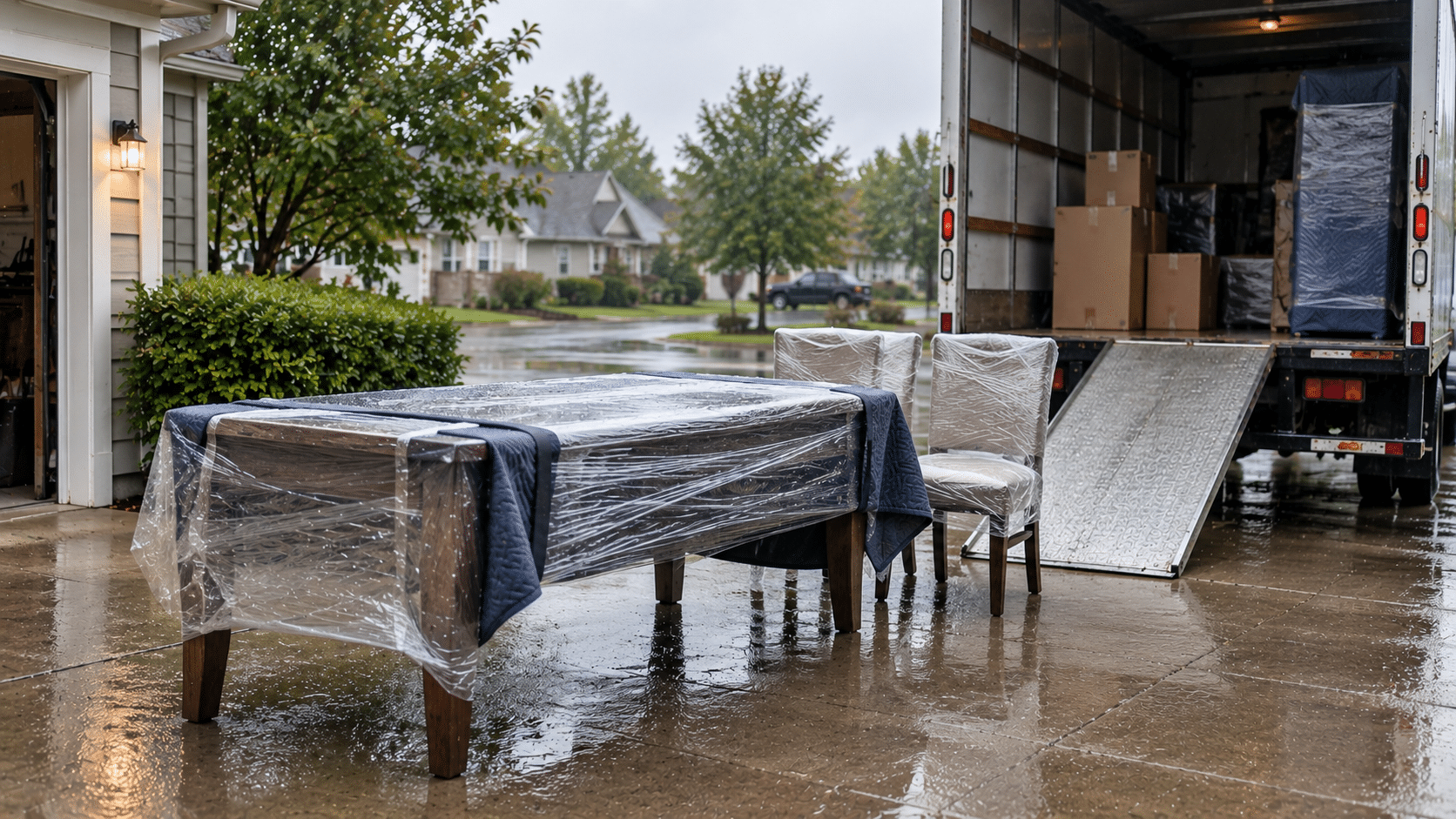
Moving furniture in bad weather is usually manageable when conditions are mild, the route stays clear, and everyone can carry bulky pieces without losing balance or grip.
The move becomes riskier once visibility, traction, or control starts to drop.
The National Weather Service says there is no safe place outdoors during a thunderstorm and recommends postponing outdoor activity and going inside when thunder is heard.
Check both the forecast and the carrying route before starting. Wet steps, unstable footing, poor visibility, or difficulty controlling a large piece are good reasons to postpone the move.
Set Up a Safer Moving Route Before You Start
A clear route makes it easier to carry heavy furniture when the ground is wet or slippery. Focus on removing anything that could slow you down or affect your footing.
- Clear the walkway: Remove snow, puddles, leaves, mud, and loose debris.
- Keep the truck close: Shorten the distance between the entrance and the moving vehicle.
- Protect entryways: Use mats, towels, or floor runners to reduce water and dirt indoors.
- Open doors in advance: Keep the path clear so no one has to stop while carrying furniture.
- Improve visibility: Make sure steps, ramps, and walkways are well lit.
- Remove loose obstacles: Keep boxes, cords, tools, and other items away from the main route.
How to Keep Furniture Dry During a Move?
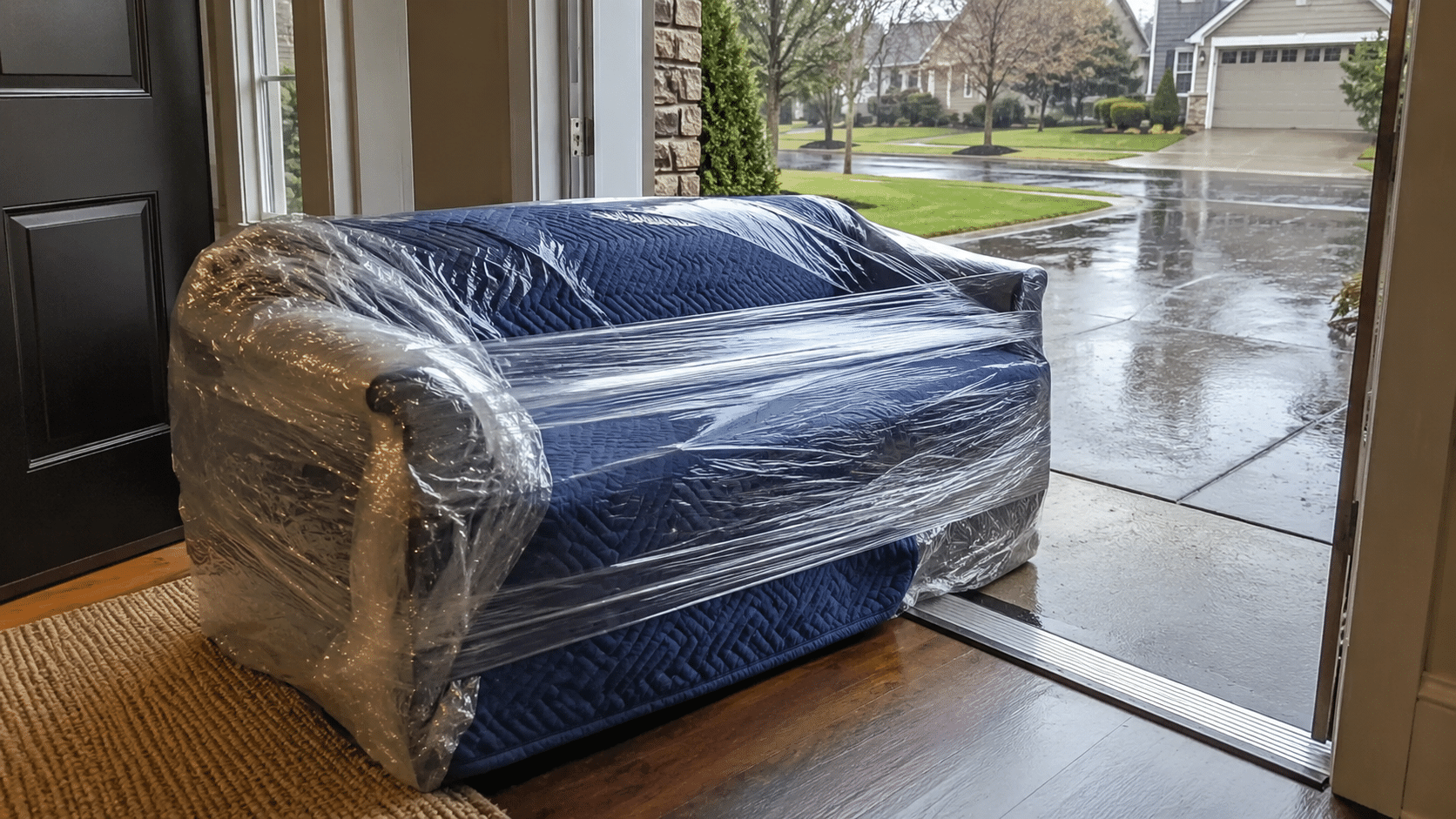
Moisture can reach furniture quickly during loading and unloading, especially when pieces sit near open doors or wet ground. The right covering depends on the material you are moving.
1. Protect Upholstered Furniture
Sofas, padded chairs, and fabric headboards can absorb water fast, especially during rain or snow. Cover each piece completely before carrying it outside so the fabric stays dry during loading.
- Use moving blankets first: Add a soft layer around the fabric before covering it.
- Add plastic protection: Wrap the piece with stretch wrap or a fitted furniture cover.
- Cover the bottom: Keep exposed fabric away from wet pavement, snow, and puddles.
- Secure loose edges: Tape or fasten the outer covering so it does not shift during carrying.
Tip: I prefer covering upholstered pieces completely before they reach the doorway. It is much easier than trying to fix the wrap once rain starts hitting the fabric.
2. Cover Wood Furniture Properly
Wood can react poorly to prolonged moisture, especially around joints, unfinished areas, and damaged finishes. Keep water from sitting directly on the surface.
- Start with padding: Use moving blankets to protect corners and finished surfaces.
- Add a moisture barrier: Place plastic wrap or a waterproof cover over the padded piece.
- Keep drawers closed: Secure them so they do not slide open while moving.
- Avoid wrapping wet wood: Dry the surface first so moisture is not trapped underneath.
3. Keep Mattresses Fully Covered
Mattresses and box springs are difficult to dry once water reaches the inner layers. Moisture damage can also affect how long a mattress lasts, especially when dampness reaches deeper materials. They should be completely enclosed before leaving a dry space.
- Use a mattress bag: Choose one large enough to cover the full mattress.
- Seal open ends: Close exposed areas with strong tape.
- Keep it off the ground: Never rest an uncovered mattress on wet pavement or snow.
- Check for tears: Repair holes in the cover before carrying it outside.
Tip: I would keep a spare mattress bag or roll of plastic nearby. One small tear can expose a surprisingly large area during heavy rain.
4. Protect Glass and Delicate Surfaces
Glass tops, mirrors, polished finishes, and fragile furniture need protection from both moisture and impact. Waterproofing alone is not enough.
- Pad the surface first: Use blankets, foam, or suitable protective material around fragile areas.
- Cover the outer layer: Add plastic after the padding is secure.
- Protect corners: Give extra attention to exposed edges and sharp corners.
- Carry pieces upright when suitable: This can make some fragile items easier to control.
5. Protect Removable Parts Separately
Drawers, cushions, shelves, and detachable pieces are often easier to protect when removed from the main furniture. This can also make bulky items lighter to carry.
- Remove loose cushions: Place them in clean plastic bags or waterproof covers.
- Pack hardware separately: Keep screws, bolts, and fittings in sealed bags.
- Wrap shelves individually: Protect glass or finished shelves before loading.
- Label the parts: Keep pieces grouped with the furniture they belong to.
See How Different Weather Conditions Affect a Furniture Move
Rain, snow, ice, and slush create different problems during a move. Adjusting your pace and route to match the conditions can make bulky furniture easier to control.
|
Weather Condition |
Main Concern |
What to Do |
|---|---|---|
|
Light Rain |
Slippery steps and weaker grip |
Move slowly, wear shoes with good traction, and keep the carrying path clear. |
|
Heavy Rain |
Poor visibility and soaked surfaces |
Pause the move if you cannot see clearly or keep a firm hold on the furniture. |
|
Snow |
Hidden steps, curbs, and uneven ground |
Shovel the full route and remove packed snow before carrying large pieces. |
|
Ice |
Sudden slips and loss of balance |
Treat or clear icy areas first. Do not carry heavy furniture across untreated ice. |
|
Slush |
Wet, unstable footing |
Clear deep slush from walkways and loading areas before moving furniture through them. |
How to Secure Outdoor Furniture From Strong Wind?
Secure or move outdoor furniture before strong winds arrive. Once winds become severe or a thunderstorm reaches the area, go indoors rather than trying to control loose furniture outside. The NWS specifically recommends postponing outdoor activities during severe thunderstorms and securing loose objects beforehand
1. Move Lightweight Pieces First
Start with folding chairs, small tables, cushions, umbrellas, planters, and loose décor. These pieces can move quickly once the wind becomes stronger.
Store them in a garage, shed, or another enclosed space. Avoid leaving them near fences, doors, or walkways where they could be pushed around.
2. Anchor Larger Furniture
Heavy tables, benches, and seating may be difficult to move inside. In that case, secure them with sturdy straps, anchors, or weighted supports suited to the furniture.
Attach straps to stable points rather than delicate arms or trim. Check the furniture afterward to make sure it cannot easily slide, rock, or tip.
3. Remove Cushions and Loose Covers
Cushions, pillows, and loosely fitted covers can catch wind like sails. They may tear, blow away, or pull against the furniture underneath.
Take removable fabric pieces inside before conditions worsen. Store them somewhere dry so they are ready to use again once the weather clears.
4. Close and Secure Umbrellas
Patio umbrellas should be fully closed whenever strong wind is expected. An open canopy catches a large amount of wind and can damage the pole, frame, or base.
For stronger conditions, remove the umbrella from its stand and store it flat. A closed umbrella can still shift if the base is not secure.
5. Keep Furniture Grouped
Larger furniture may be easier to manage when stable pieces are positioned closer together. This can reduce the amount of open space around individual items.
Keep the group away from deck edges, glass doors, vehicles, and other areas where movement could cause damage. Make sure every piece remains stable on its own.
What to Do If Your Furniture Gets Wet: Simple Tips to Follow
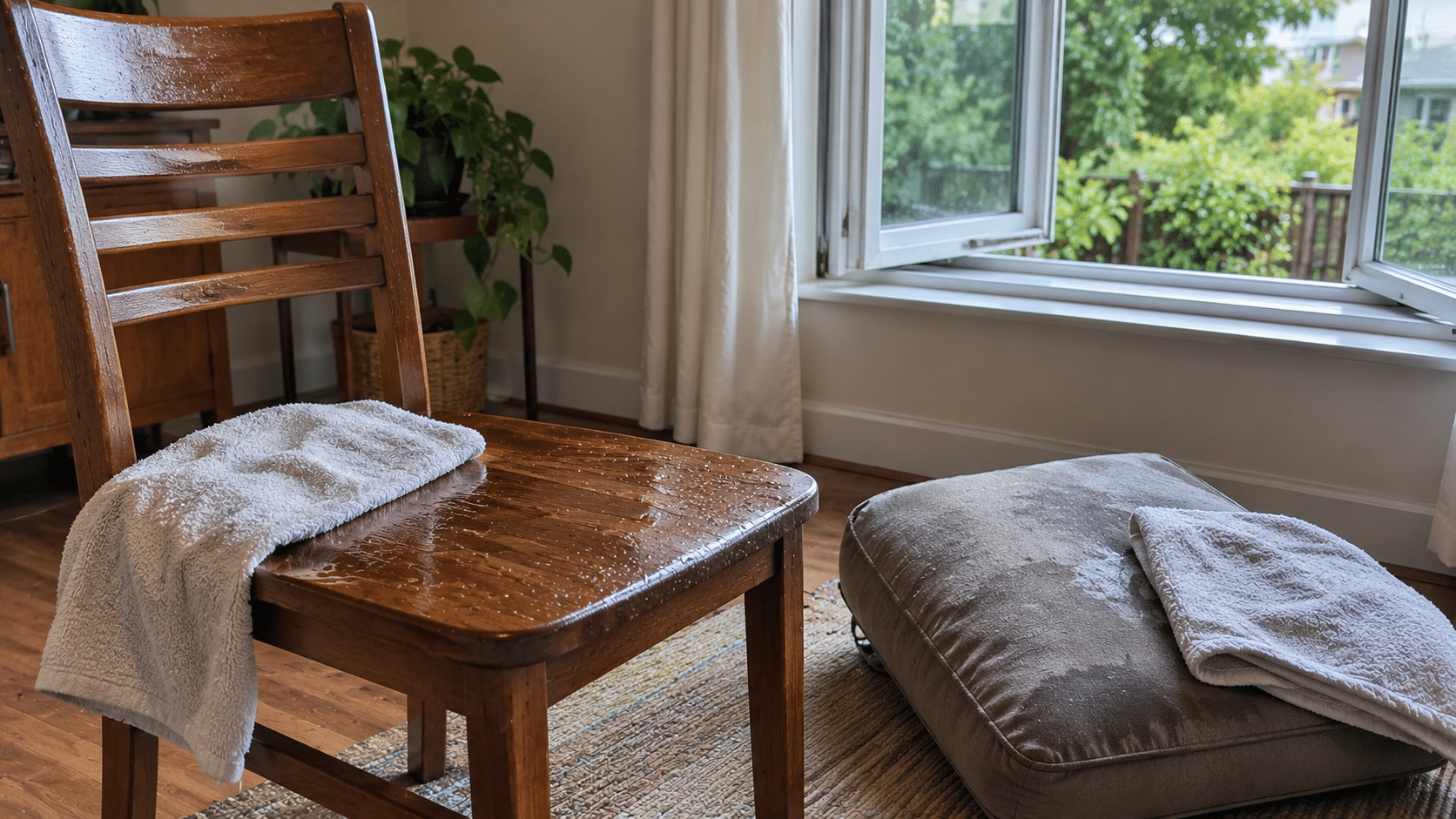
Wet furniture does not always mean permanent damage, but moisture should be handled quickly. The right response depends on the material and how much water has reached the piece.
- Remove wet coverings: Take off damp blankets, plastic, or padding so moisture is not trapped against the surface.
- Blot away excess water: Use clean, absorbent towels rather than rubbing fabric or finished wood.
- Separate removable parts: Take off cushions, drawers, shelves, or other pieces so air can reach more surfaces.
- Increase airflow: Place furniture in a dry, ventilated area and leave enough space around it for air to circulate.
- Check hidden areas: Look underneath furniture, along seams, inside drawers, and around joints where water can collect unnoticed.
- Watch for changes: Pay attention to swelling, stains, odors, rust, or fabric that remains damp after the surface feels dry.
Final Thoughts
Knowing how to move furniture during bad weather comes down to staying aware of the conditions and making careful choices throughout the day. A smooth move matters, but safety should always come first.
I’d rather give a move more time than rush a heavy piece across a wet or slippery path.
Bad weather may change the pace, but it does not have to ruin the day. Stay flexible, protect what you can, and adjust when the conditions call for it.
Frequently Asked Questions
Can Furniture Stay Wrapped In Plastic Overnight?
It can for a short time if the furniture is completely dry, but trapped moisture can become a problem if it stays sealed too long.
Should You Put Cardboard Under Furniture In Wet Weather?
Cardboard can soften quickly when wet, so plastic sheeting, rubber mats, or another moisture-resistant barrier is usually a better choice.
Can Cold Weather Damage Wood Furniture During a Move?
Very cold conditions can affect some finishes and joints, especially when furniture moves quickly between cold and warm spaces.
Can You Use Moving Straps In the Rain?
Yes, but wet straps and handles can become harder to grip. Check them often and stop using any strap that feels unstable or damaged.
Where Should Furniture Go Inside the Moving Truck During Bad Weather?
Keep furniture away from areas where water may enter, and place heavier pieces securely so they cannot shift while the truck is moving.