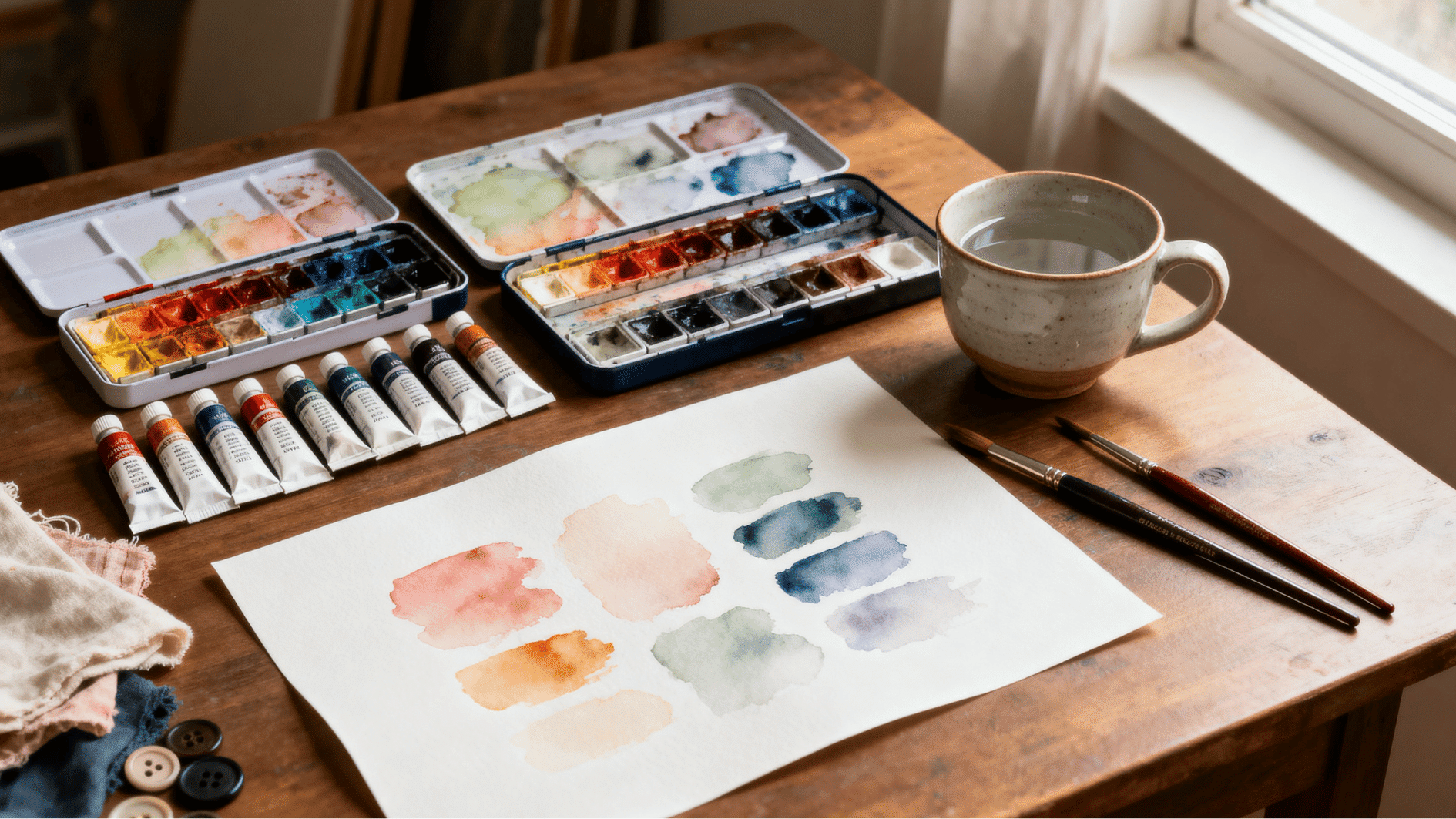
Picking the best watercolor paints can feel like sorting through a basket of bright threads, tiny buttons, and half-finished craft ideas.
Every set looks pretty, but not every set delivers smooth color, easy mixing, or good value.
Here, top watercolor brands are compared by pigment strength, price, ease of use, portability, and real user feedback from review sites and art discussion spaces.
I’ve personally used and tested different watercolor paints to compare how they actually perform in real painting use. By the end, you will know which paints fit practice, travel, crafts, and more polished artwork.
What Makes a Paint Set Feel Worth It?
Choosing the right watercolor set goes beyond pretty packaging. Look for colors that stay vibrant after drying and paints that rewet easily without becoming muddy.
Smooth mixing ensures that shades blend naturally, while clear pigment labels and lightfastness ratings help predict how long your artwork will last.
Consider the size of the set: too many pans can feel overwhelming, while too few may limit your mixing options.
Price should match the painter’s experience and goals—a beginner doesn’t need a premium artist-grade kit, while a more serious painter may benefit from investing in richer pigments.
These factors make painting easier and more enjoyable.
Best Watercolor Paints Compared at a Glance
These comparisons are based on my personal experience using different watercolor sets, along with real feedback from painters in public art communities.
Each brand is judged based on how it actually performs in painting practice- not just product descriptions.
1. Winsor & Newton Cotman
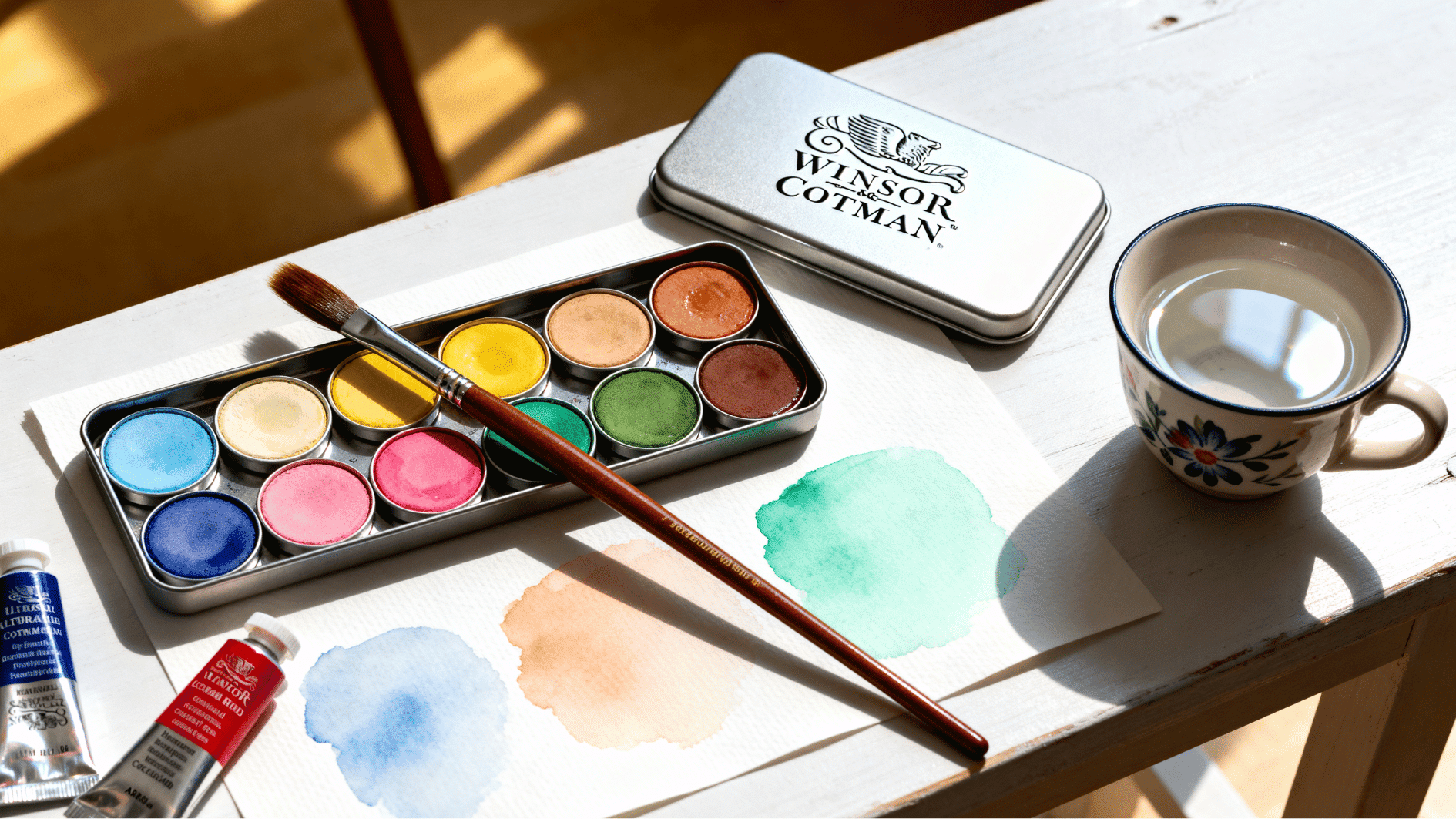
Winsor & Newton Cotman watercolor range is often the first upgrade beginners move to after basic paint sets.
Price Range: $12 – $45
Product Range: 12–48 color pans and tubes
This set is often described as a stable starting point for learning watercolor control.
- Colors stay consistent in light washes
- Works well for practice without wasting paint
- Easy water control on standard watercolor paper
- Common first “serious” watercolor set
“Cotman is a great place to start… it teaches you how to control water instead of fighting the paint.” – Reddit
2. Van Gogh Watercolors
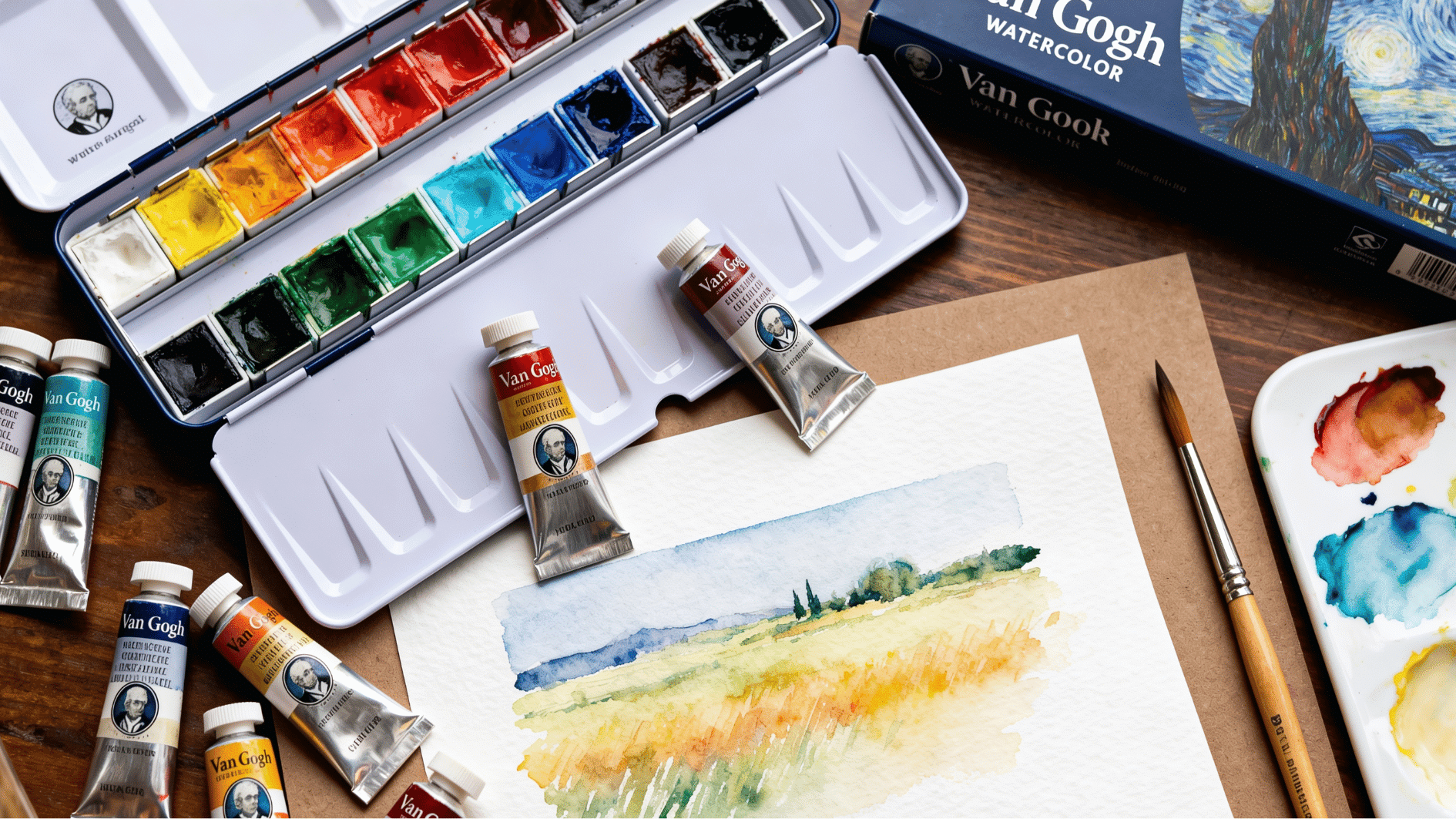
Van Gogh Watercolors set is often chosen when beginners want richer color without going fully professional.
Price Range: $15 – $60
Product Range: 8–36 color pans and tubes
This set is usually seen as a step up from basic student paints.
- More saturated color than entry-level sets
- Rewets easily in pans after drying
- Good for layering practice
- Balanced control and vibrancy
“Van Gogh is surprisingly good for the price compared to other student sets.” – Reddit
3. Daniel Smith Extra Fine
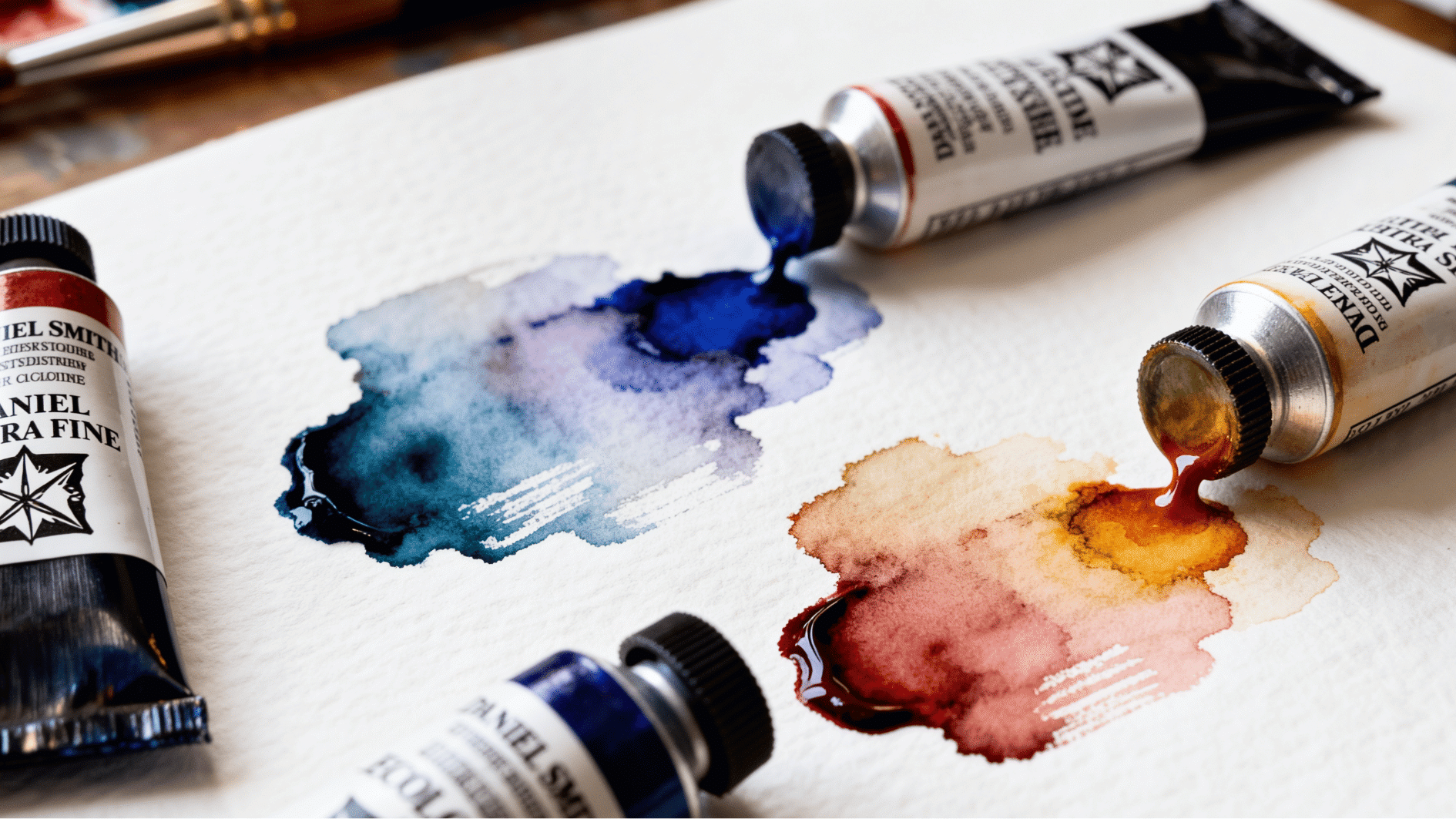
Daniel Smith Extra Fine watercolor range is widely discussed for strong pigment quality and expressive painting behavior.
Price Range: $7 – $15 per tube (sets $30 – $120+)
Product Range: 200+ tube colors
This brand is frequently brought up when painters talk about upgrading pigment strength.
- Strong pigment even in small amounts
- Granulation creates natural texture effects
- Excellent wet-on-wet response
- Wide range of unique colors
“Once you try Daniel Smith, it’s hard to go back to cheaper paints.” – Reddit
4. Schmincke Horadam
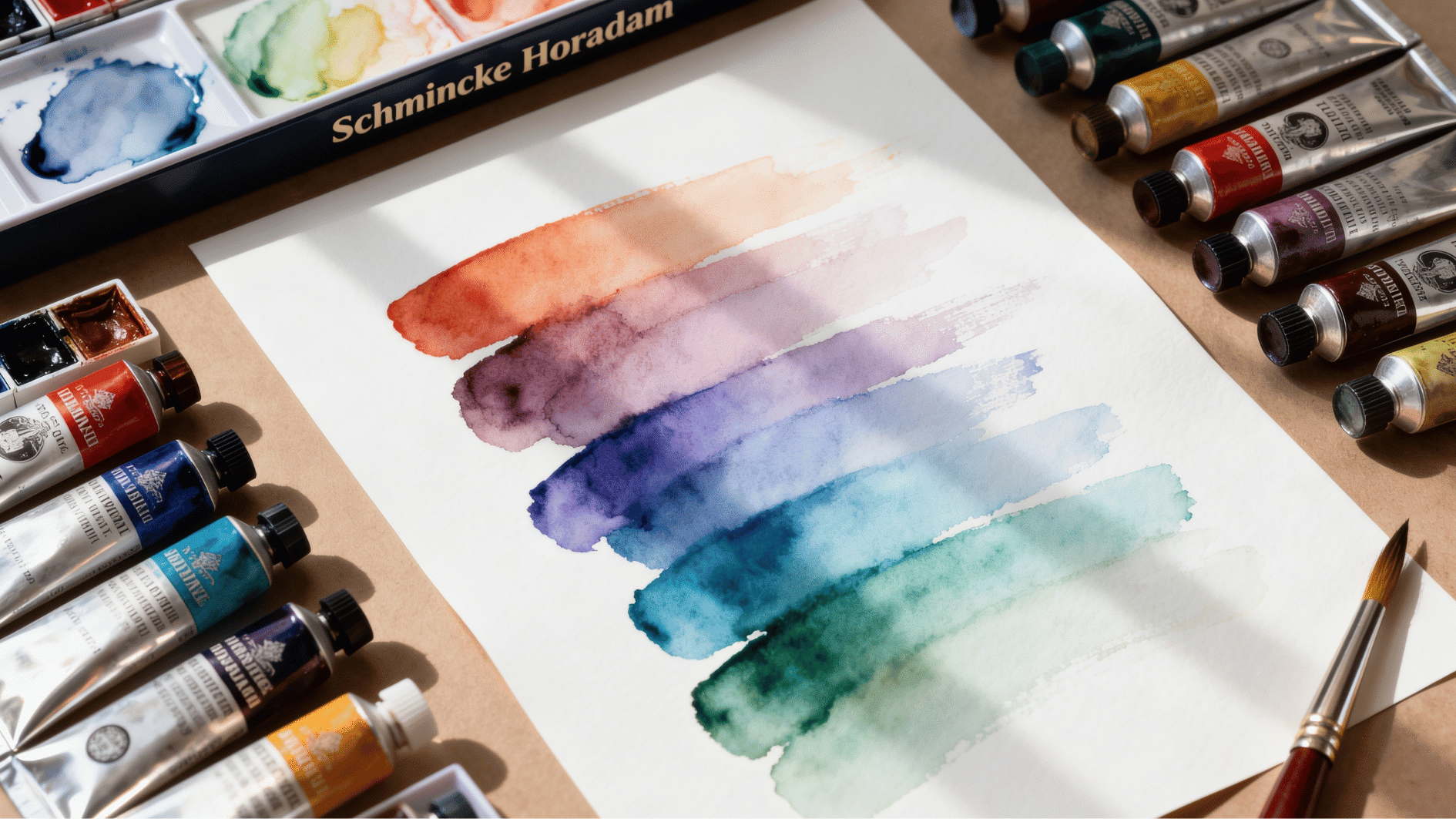
Schmincke Horadam watercolor line is known for smooth flow and controlled layering performance.
Price Range: $8 – $18 per pan/tube (sets $60 – $200+)
Product Range: 100+ professional shades
This set is often discussed in professional watercolor circles.
- Reactivates evenly after drying
- Clean layering without muddy tones
- Consistent color across palette
- Preferred for detailed work
“Finally got to try Schmincke Horadam gouache. Oh my, they’re so soft and creamy.” – Reddit
5. Sakura Koi
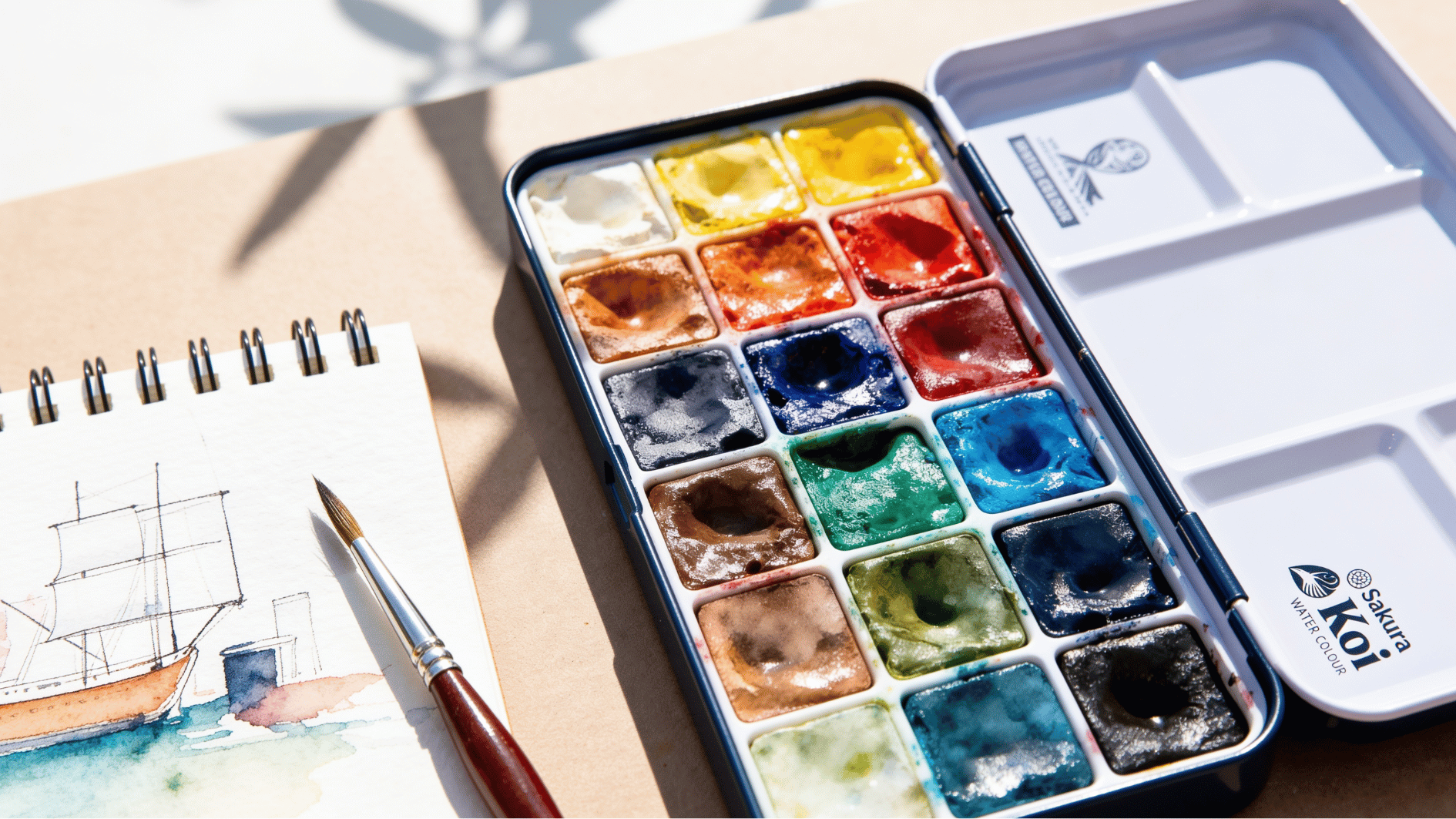
Sakura Koi watercolor travel set is designed for quick sketching and painting on the go.
Price Range: $10 – $35
Product Range: Travel sets (18–72 colors)
This set is often mentioned in travel sketching communities.
- Quick setup for outdoor painting
- Compact and easy to carry
- Best for light sketch-style work
- Simple pan design for quick use
“Sakura Koi is perfect for quick sketching when I’m outside.” – Reddit
6. M. Graham Watercolors
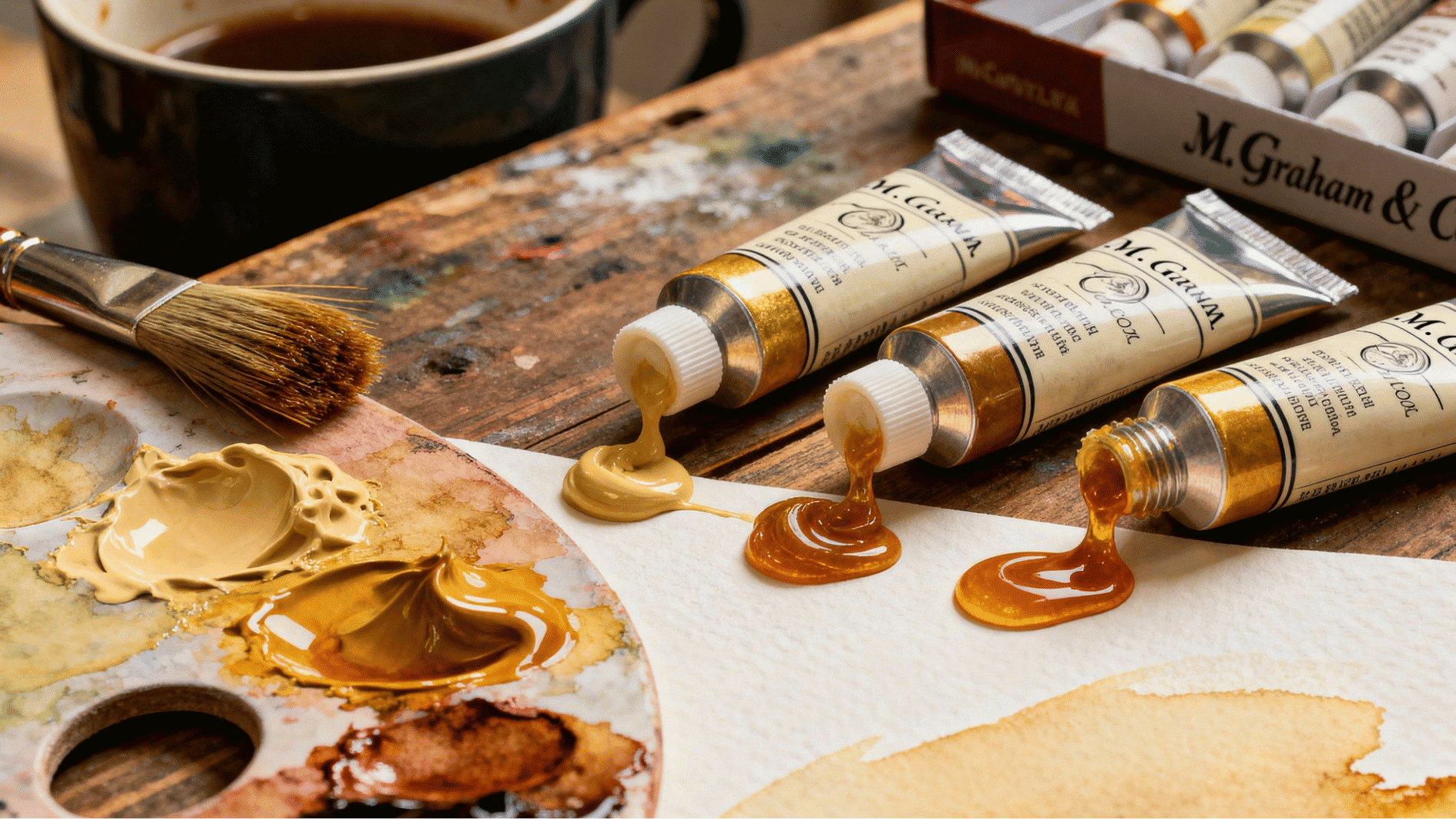
M. Graham watercolor tubes are known for their honey-based formula and smooth working texture.
Price Range: $10 – $20 per tube (sets $50 – $140+)
Product Range: Tube-focused professional range
This paint is often talked about for its slow-drying, flexible behavior.
- Paint stays workable longer on palette
- Strong color payoff with small amounts
- Smooth blending over time
- Ideal for layered painting
“I really like M. Graham paints. The honey base keeps them wet on the palette much longer than other brands, which makes blending easier for me.” – Reddit
7. Prima Watercolor Confections
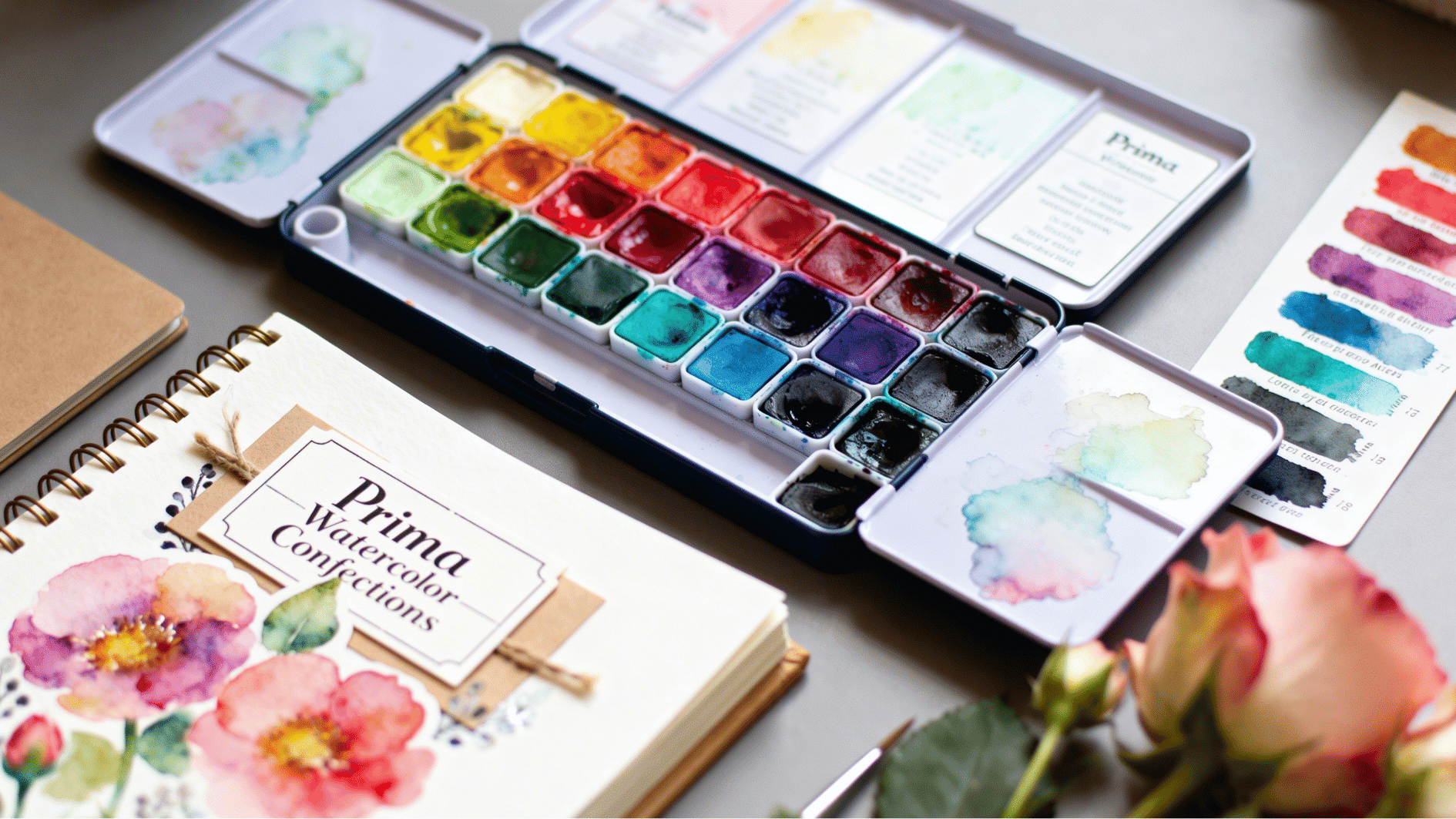
Prima Watercolor Confections sets are often used for journaling, crafts, and light creative painting.
Price Range: $12 – $45
Product Range: Themed pan sets (6–40 colors)
This set is commonly discussed in hobby and craft painting groups.
- Themed color palettes for creative use
- Easy pan-based painting setup
- Works well for casual artwork
- Less focused on fine-art precision
“It’s more fun than technical, perfect for journals and casual painting.” – Reddit
Pan vs. Tube Watercolors: Which One Should You Pick?
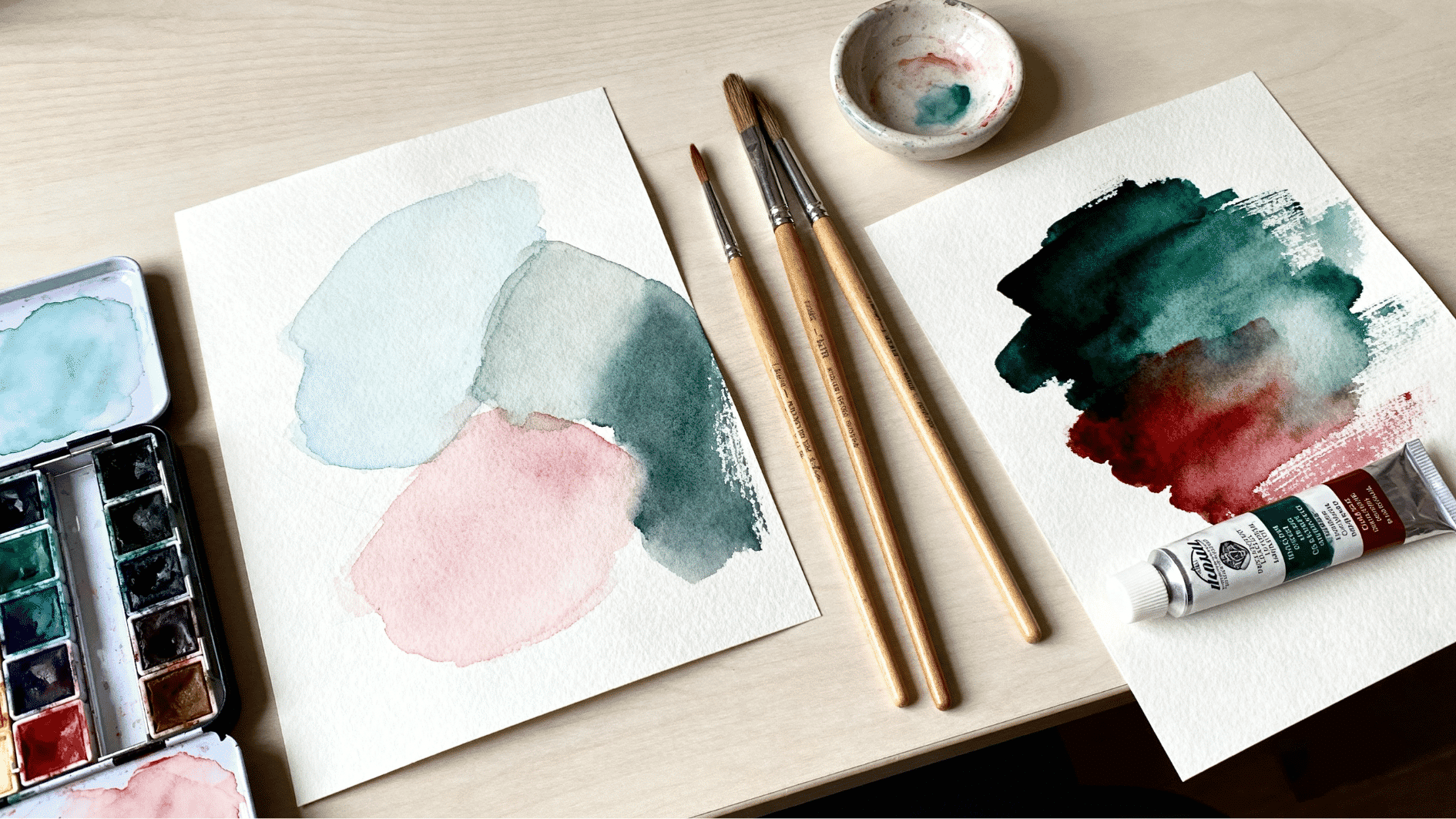
Pans and tubes can both make beautiful watercolor art, but they suit different painting habits. For beginners, pans usually feel easier because they are neat, compact, and ready to use.
Tubes are better when you want stronger mixes or need more paint for larger washes.
| Feature | Pan Watercolors | Tube Watercolors |
|---|---|---|
| Best For | Beginners, travel, sketchbooks | Larger paintings, rich mixes |
| Setup | Quick and tidy | Needs a palette |
| Paint Amount | Smaller amount per use | More paint at once |
| Mixing | Good for light washes | Better for bold color mixes |
| Storage | Easy to store and carry | Needs more care after opening |
| Beginner Friendly? | Yes, very easy to start | Better after some practice |
Quick Pick: Choose pans for simple practice and travel. Choose tubes when you want stronger color, bigger washes, or more room to mix.
Common Buying Mistakes to Avoid
Buying watercolor paints can get confusing fast, especially when every set looks bright and promising. A few small mistakes can leave beginners with chalky colors, muddy mixes, or a palette they barely use.
- Choosing the Biggest Set First: A large set may look exciting, but too many colors can make mixing harder. A smaller set with useful shades is often better.
- Ignoring Paper Quality: Even the best watercolor paints can look dull on thin or rough craft paper.
- Buying Only by Price: Cheap paints may work for playful crafts, but weak pigment can make learning harder.
- Skipping Reviews: Real reviews help show how the paints behave after drying, mixing, and repeated use.
- Picking Pro Paints Too Soon: Artist-grade sets are great, but beginners can learn a lot from good student-grade paints first.
How to Test Watercolor Paints Before You Buy
Before trusting any paint set, do a quick test on real watercolor paper.
Start with a light wash, then add a darker stroke once it dries. Good watercolor paints should keep some color strength after drying and should not look overly chalky.
Next, mix two basic colors, like yellow with blue or red with blue. If the mix turns muddy too fast, the set may feel harder for beginners. You can also lift a dry stroke with a damp brush to see how easy the paint is to correct.
This small test helps readers understand if a set truly matches the reviews, ratings, and brand claims.
Conclusion
The best watercolor paints are not always the most expensive ones. The right set depends on how someone paints, where they paint, and how much they want to spend.
Winsor & Newton Cotman is the safest beginner pick; Van Gogh gives great value; Sakura Koi is easy to carry; and Daniel Smith or Schmincke works better for richer color and advanced work.
For the best watercolors for beginners, start with a small set that rewets well, mixes smoothly, and feels fun to use.
A good paint set should make practice feel simple, colorful, and worth coming back to.
Frequently Asked Questions
Can I mix different watercolor brands in one painting?
Yes, most watercolor brands mix well together as long as they are all water-based.
Why do some watercolor sets have fewer colors but cost more?
Higher pigment concentration and quality ingredients make fewer colors more powerful and expensive.
What is the best way to store watercolor paints?
Keep them sealed and dry to prevent dust buildup and avoid cracking in pans or drying in tubes.
Are expensive watercolor paints better than student-grade ones?
Not always, but they usually have stronger pigments and better lightfastness.