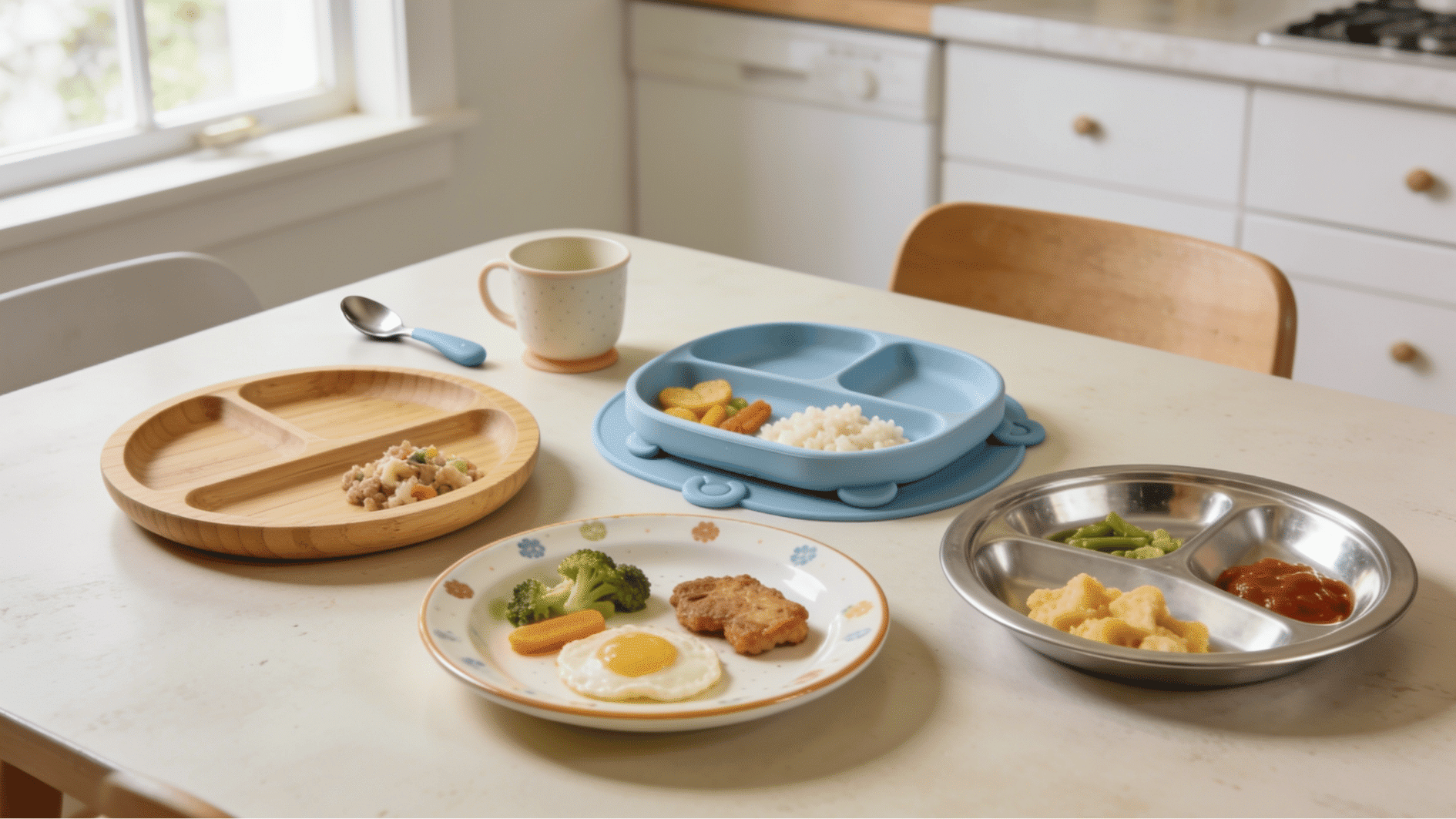
Mealtime with a toddler can feel less like eating and more like a physics experiment. Plates flying. Food is landing everywhere except the mouth.
The plate itself is often the culprit. Some are basically built to be thrown. Others make a toddler actually want to sit and scoop.
I learned this after replacing the same cracked plastic plate three times in a year before checking what it was made of.
Here’s what actually separates disaster from a peaceful dinner.
What Makes a Toddler Plate Safe and Non-Toxic?
Check the material before the color. Look for food-grade, chemical-free construction, free of BPA, phthalates, PVC, lead, or melamine. A third-party certification beats a “non-toxic” label on the box.
Watch for hidden composites: many “bamboo” plates are really bamboo fiber bound with melamine resin, which can leach when heated.
Design matters too. A shallow, raised-edge curve helps toddlers scoop instead of chase, and non-slip or suction bases make self-feeding less messy.
Last, be realistic about care. Some non-toxic materials, like real bamboo and wood, need handwashing rather than the dishwasher.
Types of Toddler Plates for Every Mealtime
Material matters, but design matters just as much. Home breakfast, daycare, and eating out all call for a different plate.
1. Divided Plates
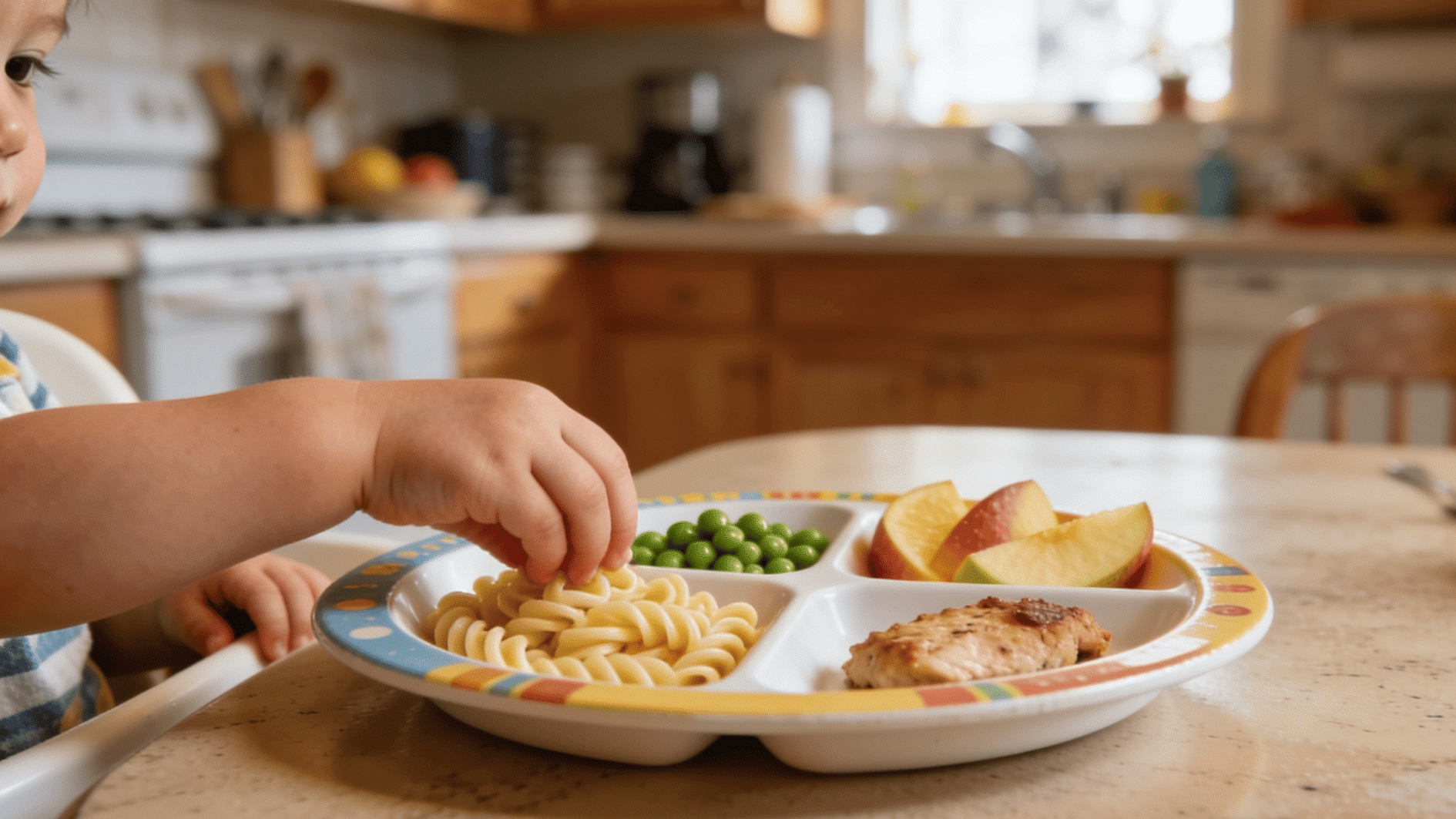
If your toddler treats touching foods like a personal insult, a divided plate solves that fast. The compartments keep the peas away from the pasta; no negotiating required.
They’re also a quiet win for parents. Seeing a filled-in compartment for protein, veggies, and a carb makes it easy to check that a meal is actually balanced.
Best for: picky eaters, home dinners, introducing a new food without it touching anything familiar.
“Separated compartments can feel less overwhelming to toddlers who are struggling with picky eating.”- Paige Balluck, RD, My Little Eater
My Top Picks:
- Avanchy Bamboo Divided Toddler Plate
- Re-Play 3-Pack Divided Plates
- WeeSprout Silicone Divided Dishes, 3-Pack
2. Suction Plates

Every parent hits the “watch mommy pick this up off the floor” stage. Suction plates are built for exactly that.
They stick firmly to a tray or table, so a toddler can push and scoop without launching the whole plate. Most parents phase them out once self-feeding gets steadier
Best for: the early self-feeding stage, before your toddler can keep a plate steady on their own.
“Do They Work? Yes, and sometimes maybe… It will move on the table so it is possible for a child to move it off of the table. A child can also grab at the edge and peel it up.”- Pretty in Baby Food, ezpz Mini Mat
My Top Picks:
- WeeSprout Suction Plates with Lids, 3-Pack
- Bumkins Silicone Grip Dish
- NUK First Choice Suction Plates and Lids, 2-Pack
3. All-in-One Placemat Plates
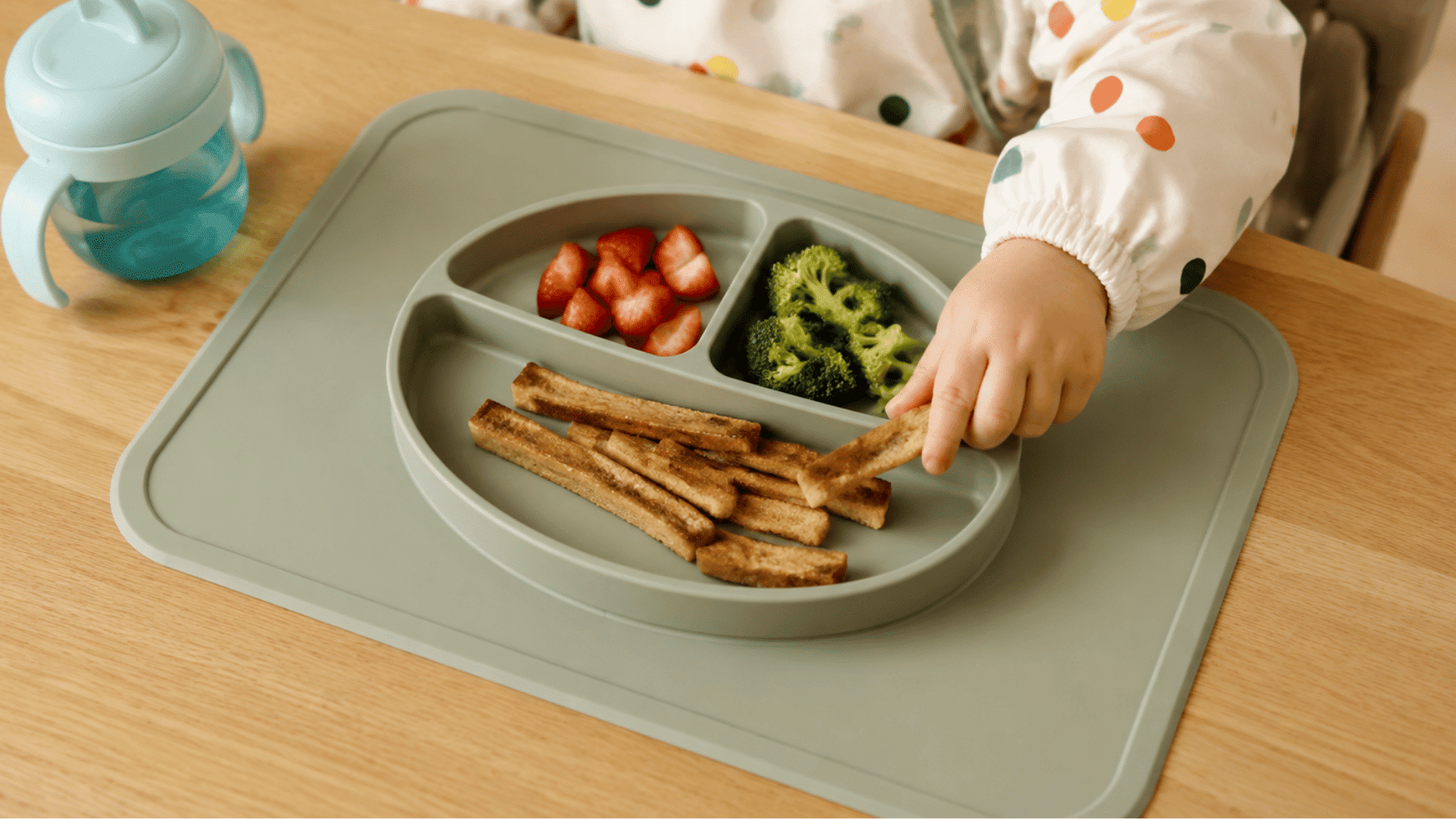
Some toddlers can peel a suction plate off a table in seconds flat. An all-in-one placemat plate covers more surface area, which makes that trick a lot harder to pull off.
The mat and plate are molded as a single piece, so there’s no separate placemat sliding around underneath.
It also doubles as a stable base for baby-led weaning, when a toddler is still working on their pincer grasp.
Best for: determined plate-flippers, baby-led weaning, families who want one less item to wash.
“The Mini Mat is ezpz’s top-selling mat… the mat’s stable base reduces tipped bowls and plates and helps toddlers learn to self-feed.”- ezpz, Mini Mat
Our Picks:
4. Ceramic Plates
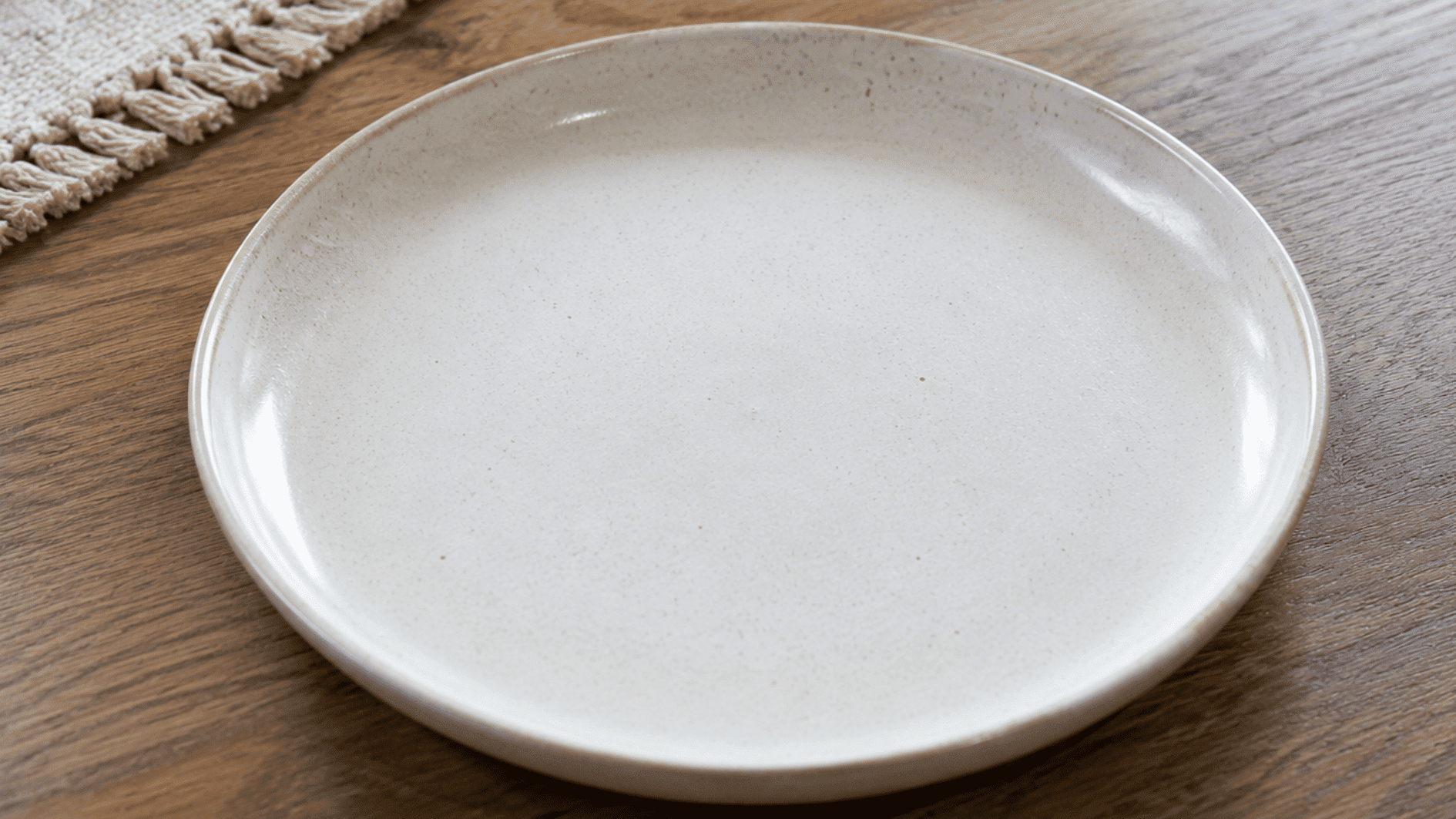
Ceramic feels like a small milestone, usually once a toddler’s past the throwing phase. Eating off it teaches kids to handle dishware carefully, easing the switch to “grown-up” plates.
Just double-check the glaze, especially on painted or vintage pieces, since older ceramics can carry lead. A newer, certified lead-free plate skips that risk entirely.
Best for: toddlers past the plate-throwing stage, family-style meals, a more “grown-up” table setting.
“For older kids and family meals, we use porcelain or ceramic… always make sure it’s labeled lead-free and cadmium-free.”- Lia, Latching With Grace
My Top Picks:
- Childish Plates Ceramic Dinnerware
- Corelle Dinner Plates (Vitrelle glass, chip-resistant)
- Mainstays Stoneware Dinner Plate
5. Bamboo Plates
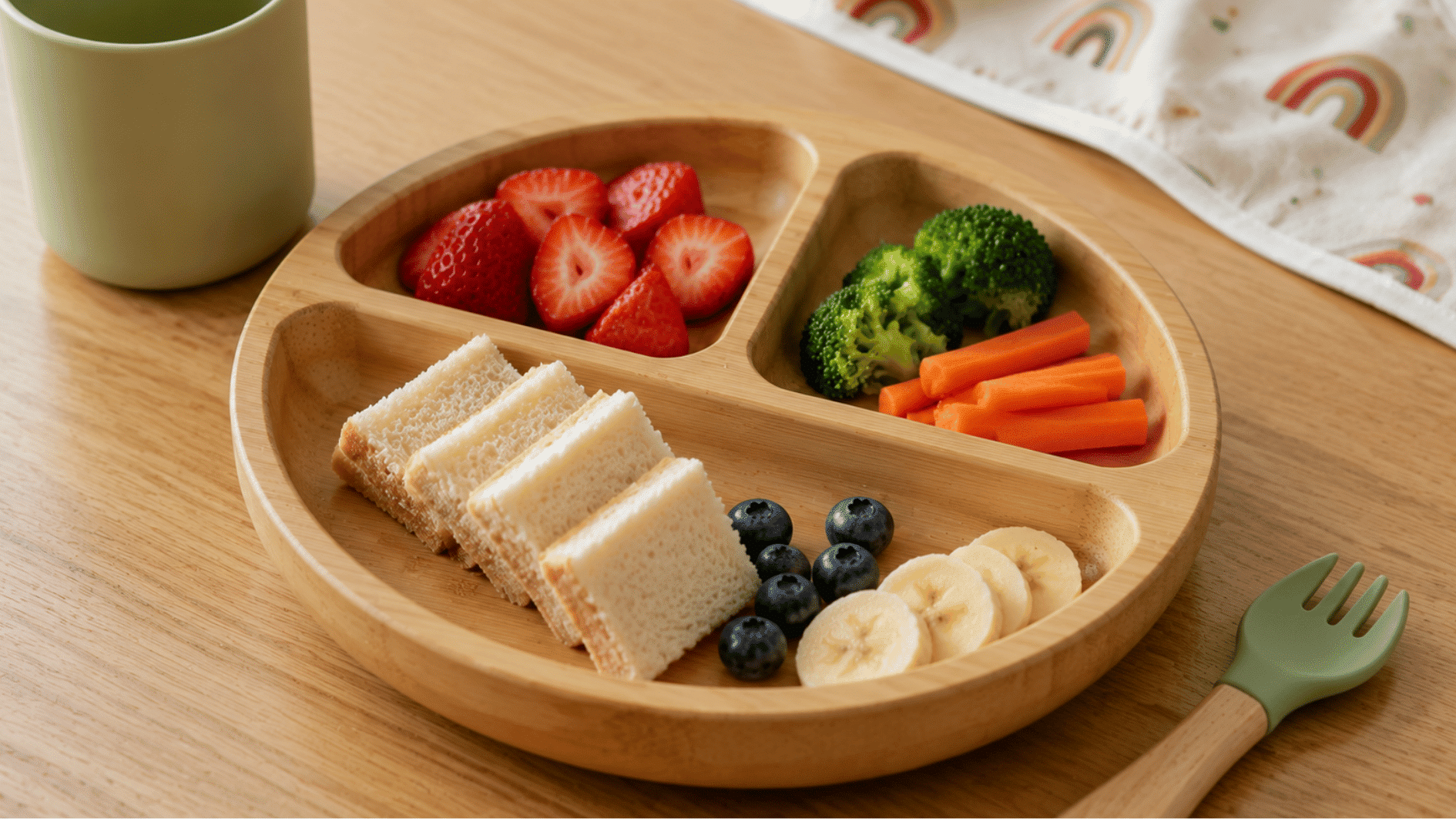
Bamboo brings a warmer look to the table and holds up well to daily stacking and light drops. It’s also naturally antimicrobial, a nice bonus for a toddler who chews on everything.
One catch: confirm it’s solid bamboo, not a melamine-bound composite. Real bamboo shows visible grain and feels a little rough, not glossy-smooth.
Best for: eco-conscious families, daily home use, older toddlers who’ve eased up on the throwing.
“Many experts recommend avoiding [melamine] for children, especially when it comes to dishes that may come in contact with hot food or drinks.”- Andrew, Childish Plates
My Top Picks:
6. Plant-Based Plates
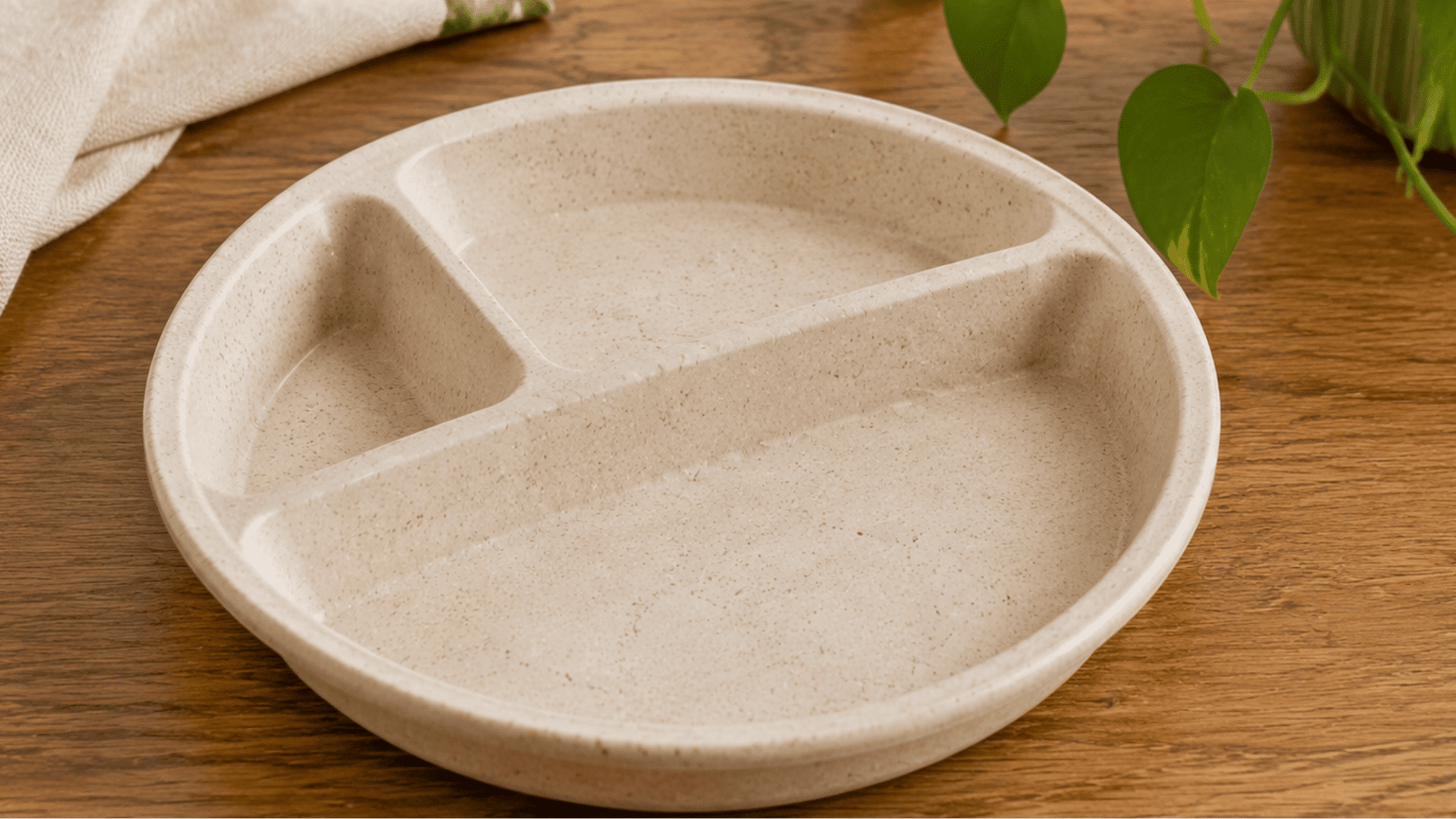
Plant-based plates are pressed from corn, wheat straw, or sugar beets into a solid, shatterproof shape. They’re free of BPA and phthalates and biodegrade faster than plastic.
One thing to watch: the exact plant blend isn’t always disclosed, so stick with brands that publish it.
Best for: families prioritizing sustainability, everyday use, picnics and parties.
“I found these bento plates to be very hardy and good quality, sure to survive being thrown around by a 1 year old!”- Chloe Pacey, Clean + Conscious Awards
My Top Picks:
7. Stainless Steel Plates
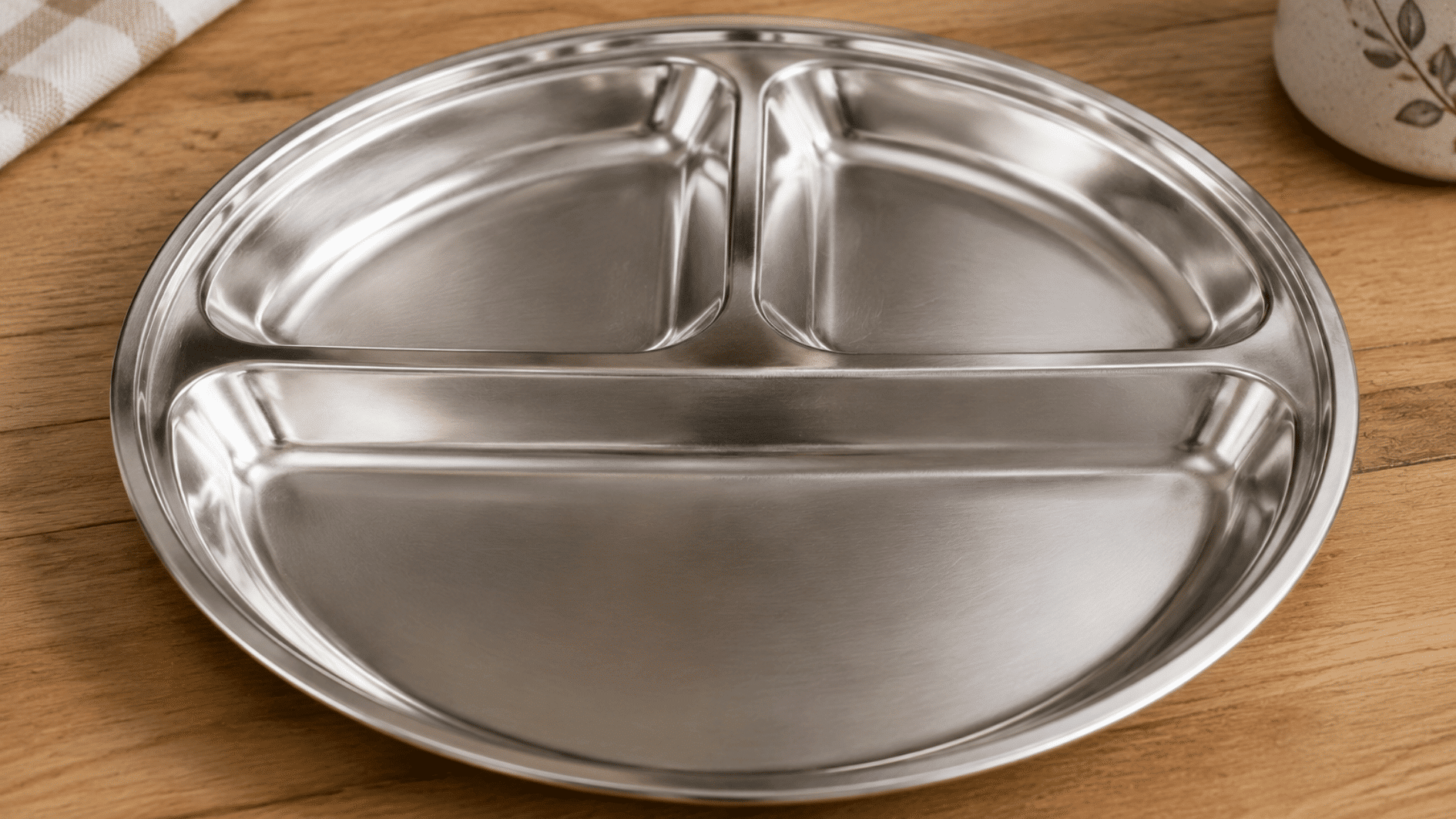
Stainless steel is nearly indestructible, a favorite among families tired of cracked plastic plates. It shrugs off drops, won’t stain, and doesn’t hold onto smells.
The only downside is noise, since a dropped steel plate is loud. For daycare or multi-kid households, that durability wins out.
Best for: daily use, daycare, siblings sharing dishes, determined plate-throwers.
With Ahimsa stainless steel children’s plates, there’s no chemical leaching, just peace of mind for parents and safety for kids.”- Ahimsa
My Top Picks:
- Ahimsa Stainless Steel Kids Plate
- WeeSprout Stainless Steel Products
- Vesteel Stainless Steel Toddler Plate with Suction Sleeve
8. Recycled Plastic Plates
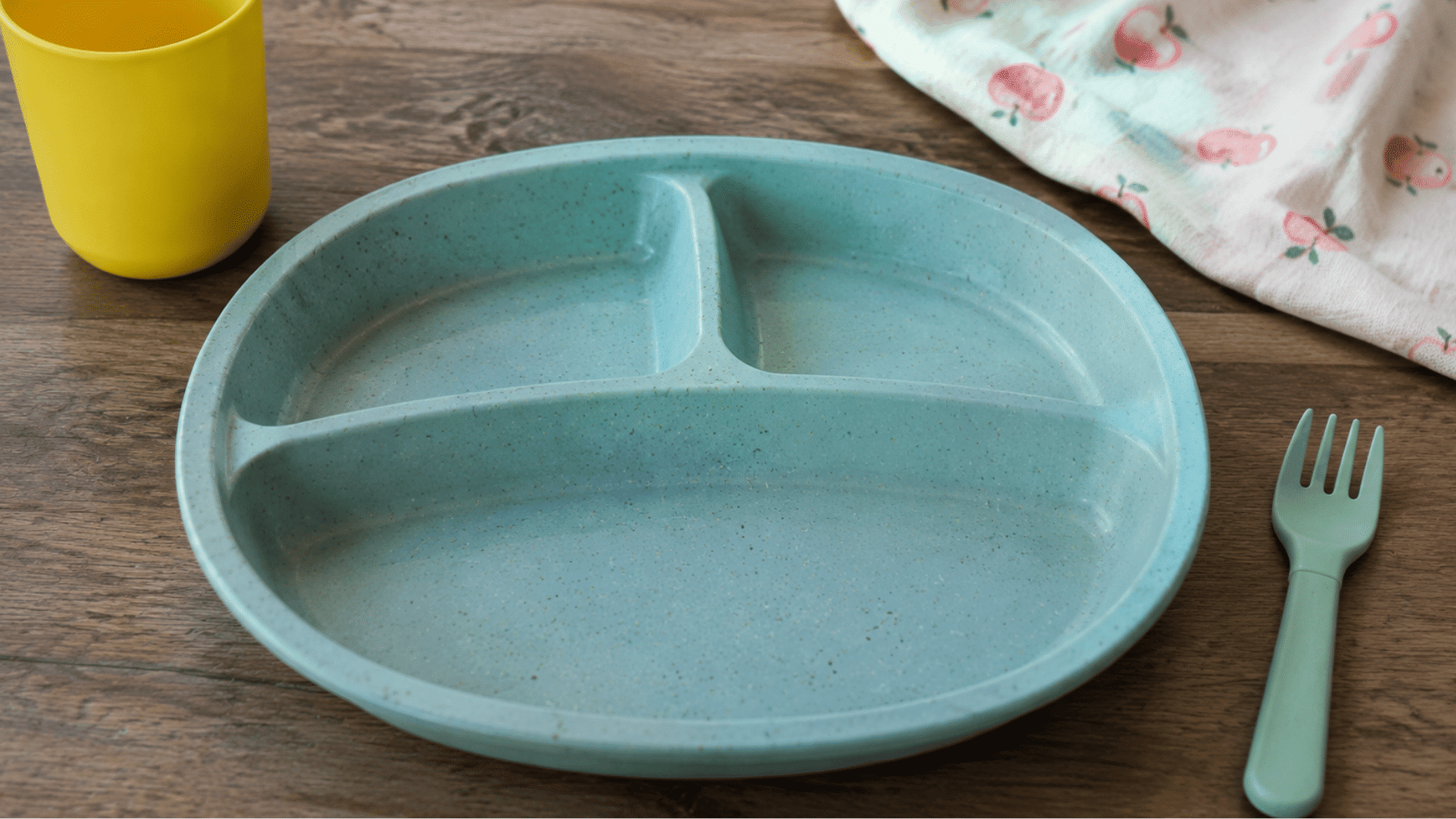
If plastic feels unavoidable for now, recycled plastic is a meaningfully better version of it. Brands like Re-Play mold their plates from recycled milk jugs instead of virgin plastic.
They’re not chemical-free the way ceramic or stainless steel are, but reputable brands test for BPA, PVC, and phthalates and publish the results. It’s a fair middle ground for families easing off plastic gradually.
Best for: budget-conscious families, a transition step away from virgin plastic, picnics and parties.
“Made from FDA approved Recycled Milk Jugs. BPA, Phthalate, PVC and Melamine FREE.”- Re-Play product listing
My Top Picks:
9. Travel Plates
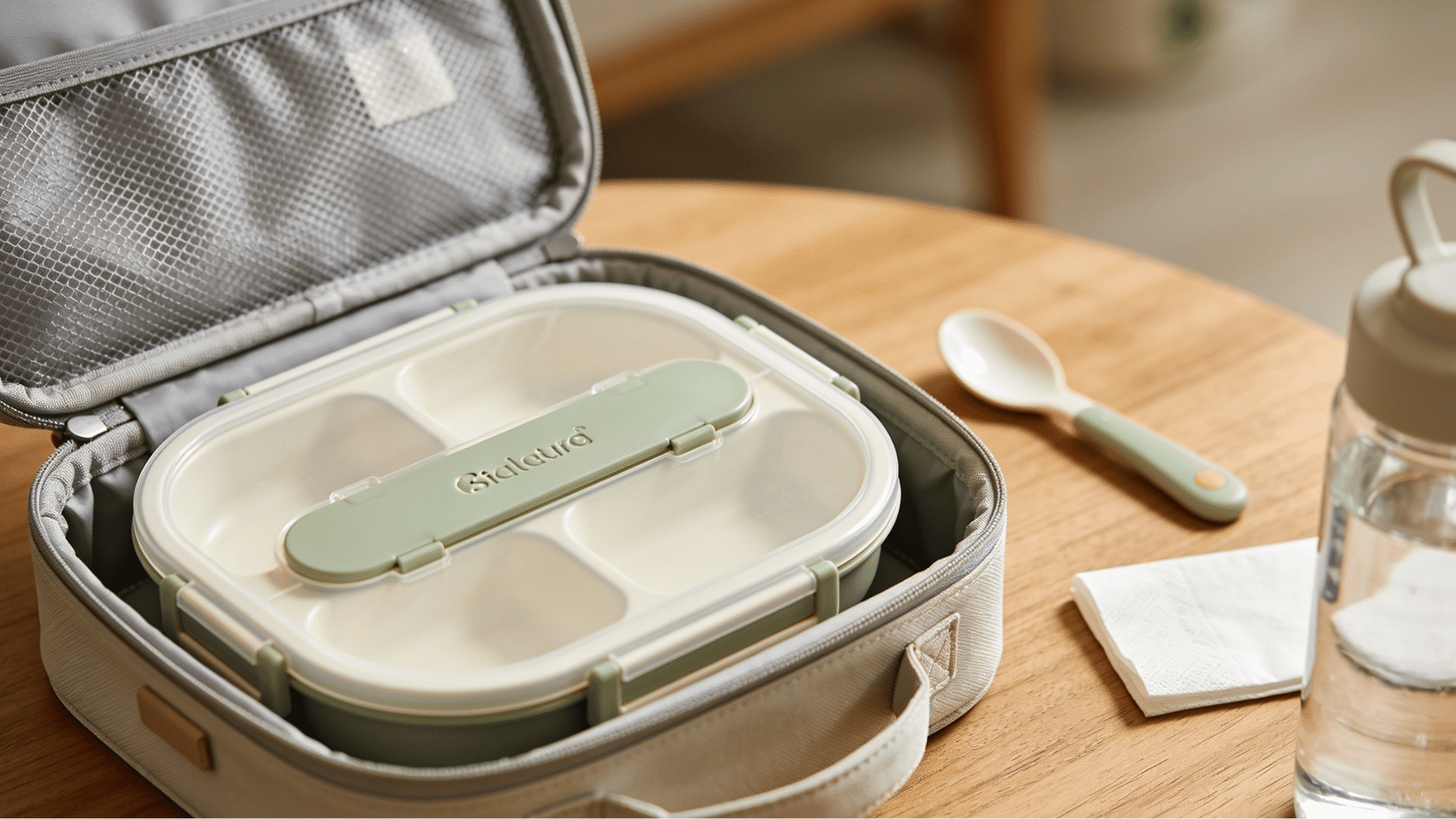
Life outside your kitchen table needs its own gear. Daycare drop-offs, restaurant outings, and road trips all call for something that can survive a diaper bag.
A locking lid is the real feature to look for here. It means leftovers can go straight from the table into the fridge or bag, no extra containers needed.
A compact, stackable shape also makes packing one a lot less stressful on a rushed morning.
Best for: daycare, eating out, road trips, anywhere mealtime happens outside your own kitchen.
“I like bringing my own tableware for babies and toddlers so they don’t accidentally break a ceramic plate… no need to worry about a mess from the restaurant, you can just put the lid on and clean up at home.”- RodrigoLan, Eat Play Say
My Top Picks:
- WeeSprout Stainless Steel Bento Box
- ZoLi Matties Reusable Silicone Placemat
- WeeSprout Silicone Suction Placemat
How to Verify If a Toddler Plate is Actually Non-Toxic
Check the material label, safety certifications, manufacturer testing, and care instructions before buying a toddler plate.
| Material | What to Check | Red Flag | Trusted Certification |
|---|---|---|---|
| Stainless Steel | Look for 304-grade (18/8) steel | Unmarked or 201-grade steel can rust and leach trace metals | MADE SAFE® |
| Bamboo | Real bamboo shows visible grain and feels slightly rough | Shiny, perfectly smooth “bamboo” is usually a melamine composite | FDA food-grade, melamine-free labeling |
| Ceramic | Ask for lead-testing results, especially on painted pieces | Bright, hand-painted, or vintage glazes can contain lead | Lead-free glaze certification, at-home lead swab test |
| Tempered Glass | Confirm it’s labeled borosilicate or tempered, not standard glass | Standard glass chips into sharp shards; best kept to age 3+ with supervision | FDA food-grade, third-party impact testing |
| Solid Wood | Look for a single-piece build with a natural oil finish, not lacquer | Multi-piece wood glued together can crack apart with heavy use | FSC® certified, food-safe oil finish |
| Melamine (Avoid) | Check if a “durable plastic” plate is actually melamine underneath | Leaches formaldehyde and melamine into food when microwaved or used with hot/acidic food | No trusted certification exists; skip this material entirely |
Note: Look for third-party certifications like MADE SAFE® over a brand’s own “non-toxic” claim on the packaging. A certification means an outside lab verified the material, not just the marketing copy.
Are Plastic Plates Safe for Toddlers?
Yes, plastic plates can be safe for toddlers when they are made from food-grade materials and used correctly.
Look for plates clearly labeled BPA-free and phthalate-free, with polypropylene often used as a more suitable plastic option for children’s tableware.
Avoid heating plastic unless the manufacturer confirms it is microwave-safe, since heat can increase chemical migration.
Replace plates that develop deep scratches, cracks, warping, or cloudy discoloration, as damaged surfaces can hold bacteria and may indicate material breakdown.
A well-made, certified plastic plate remains a lightweight, affordable choice for everyday toddler meals.
Toddler Plate Buying Mistakes Parents Should Watch For
Even the most well-researched parents fall into a few common traps. Watch out for these:
- Design over safety: Falling for cute prints without checking certifications first.
- Wrong size: Picking a plate too big or too deep for small hands to manage.
- Skipping the fine print: assuming a plate is microwave- or dishwasher-safe without actually checking.
- False sense of safety: Thinking “BPA-free” means free of every chemical of concern.
- Holding on too long: Sticking with a suction plate long after your toddler is ready for more independence.
- Ignoring stability: Overlooking how well the plate grips the tray or table, resulting in constant spills.
Final Thoughts
At the end of the day, picking a toddler plate comes down to three things: safety, fit, and your daily routine. It’s less about finding the “perfect” plate and more about finding the right one for where your toddler is right now.
Stick to food-grade, chemical-free materials; that’s non-negotiable. Match the design to their stage, whether that’s a suction plate for a beginner or a standalone one once they’ve mastered self-feeding.
And pick something that actually fits your life, whether that’s daycare-proof, travel-friendly, or just easy to clean daily.
Get those three right, and mealtime stops feeling like a battle.
Frequently Asked Questions
How Often Should You Replace a Toddler’s Plate?
Replace it once you notice cracks, deep scratches, warping, or stubborn stains usually every 6 to 12 months with daily use.
Should You Buy One Plate or a Full Set?
A full set of 2-3 plates works best, so you always have a backup ready while one’s in the wash.
Can a Toddler Plate Double As a Snack Container?
Many travel and silicone plates come with snap-on lids, making them perfectly suited for storing snacks or leftovers on the go.
Do Character-Themed Plates Affect Picky Eating?
Fun designs can encourage reluctant eaters to engage with mealtime, but they work best alongside not instead of a practical, well-fitted plate.