
Stand in front of your window for a second. Now imagine those curtains hemmed two inches too short; suddenly the whole room looks unfinished, like a half-tucked shirt.
Curtain length is one of those tiny details that quietly makes or breaks a space, and most people get it wrong simply because nobody ever explained the rules.
So, should curtains touch the floor? The short answer: it depends on the room, the look you’re after, and a few measurement basics most homeowners skip. Let’s fix that.
Should Curtains Touch the Floor?
In most rooms, yes, or come within half an inch of it.
Walk into almost any professionally designed room, and you’ll notice the curtains do one of two things: they touch the floor, or they come so close you can’t tell the difference.
That’s not a coincidence; it’s one of the most consistent rules in interior design.
Yet most ready-made panels end up hovering awkwardly somewhere above the baseboard, making ceilings feel lower and windows feel smaller.
But there are real exceptions, and getting the length right depends on your room, your lifestyle, and the look you’re after.
The Standard Curtain Lengths
Designers generally work with four floor-length variations. Each creates a slightly different look and comes with its own maintenance trade-offs.
1. The Kiss: Floor-Grazing Rule
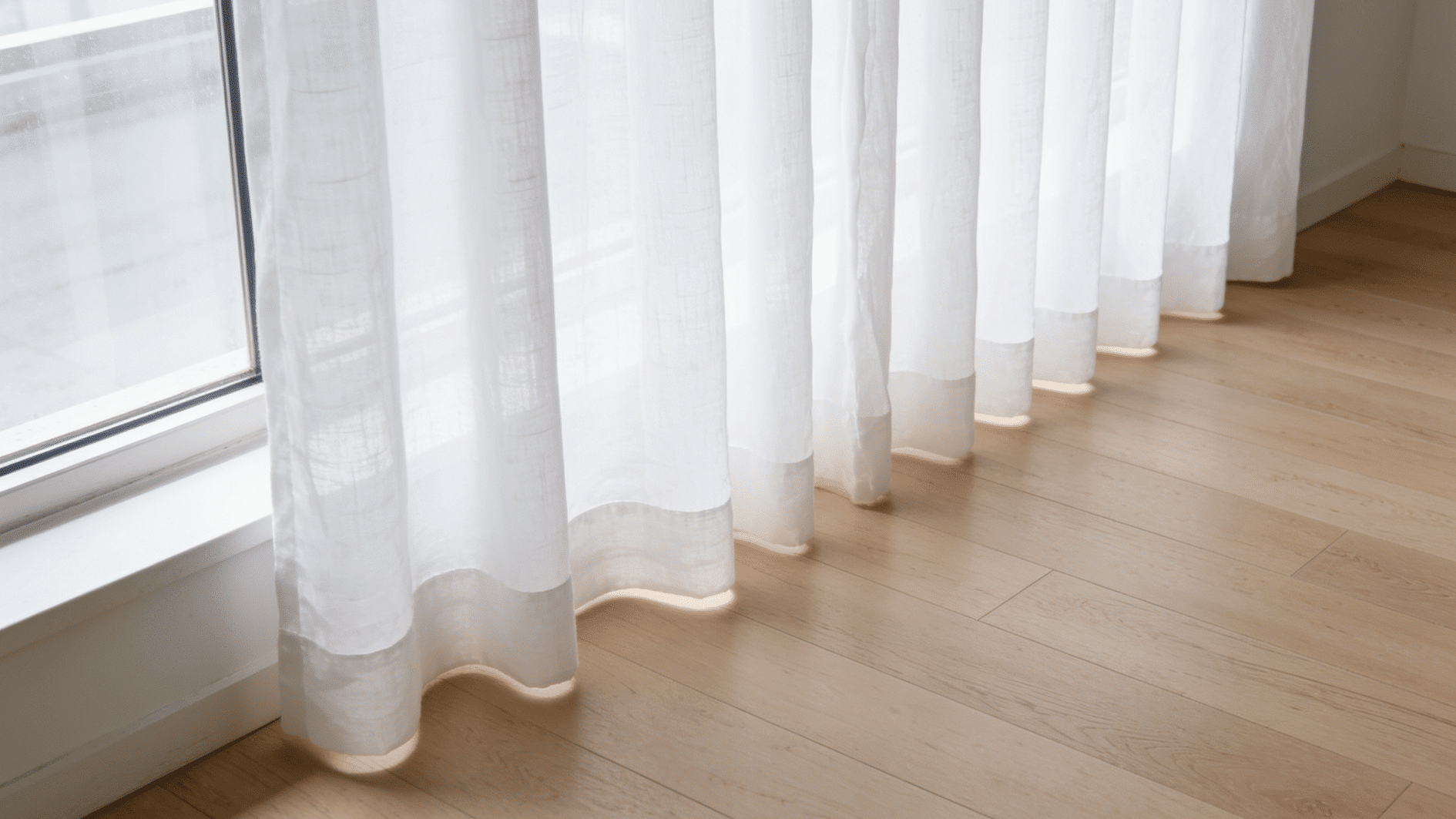
This is the go-to standard for most homes: the hem just barely touches the floor, with zero gap and no fabric pooling underneath.
- Looks clean, intentional, and tailored without feeling overly formal, and fits almost any room style, from modern minimalist to traditional.
- It’s the safest choice for a space you’re decorating to sell or rent.
- Achieving it precisely usually means measuring from the rod.
- Accounting for things like flooring height differences in older homes, where floors aren’t perfectly level.
2. The Puddle: Pooled Fabric
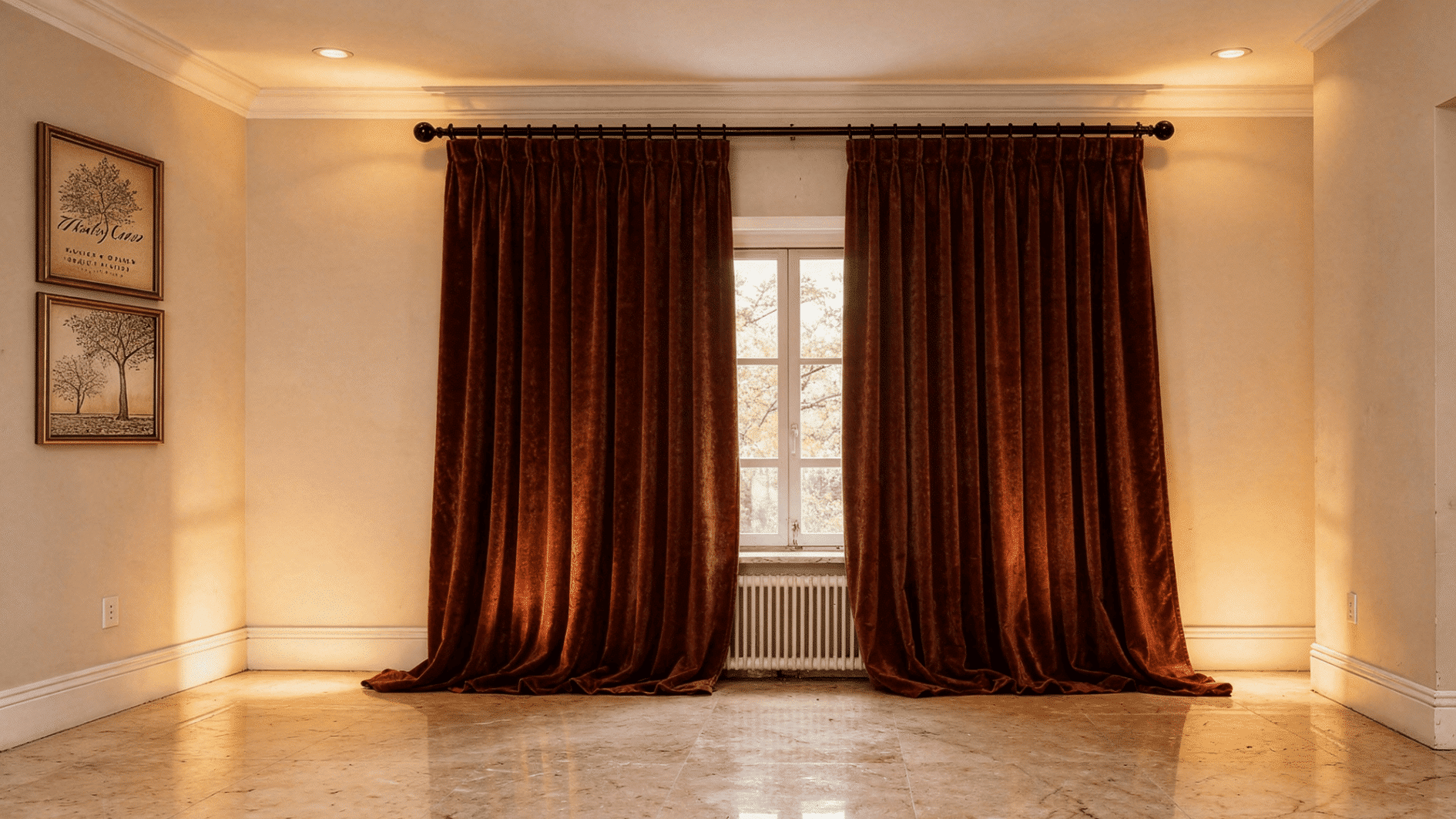
For a dramatic, luxurious look, curtains are hemmed 2 to 6 inches longer than the floor, so the extra fabric “puddles” softly at the base like the train of a gown.
- Works beautifully in formal living rooms and dining rooms.
- The trade-off is upkeep: puddled fabric collects dust faster and isn’t practical for high-traffic spaces or homes with pets and small children running through them.
- Heavier fabrics like velvet or silk-blend hold a puddle shape more elegantly than lightweight linen or sheers.
- This style generally needs more fabric overall, which can add noticeably to the cost, especially with wide windows.
3. The Float: Half-Inch Gap
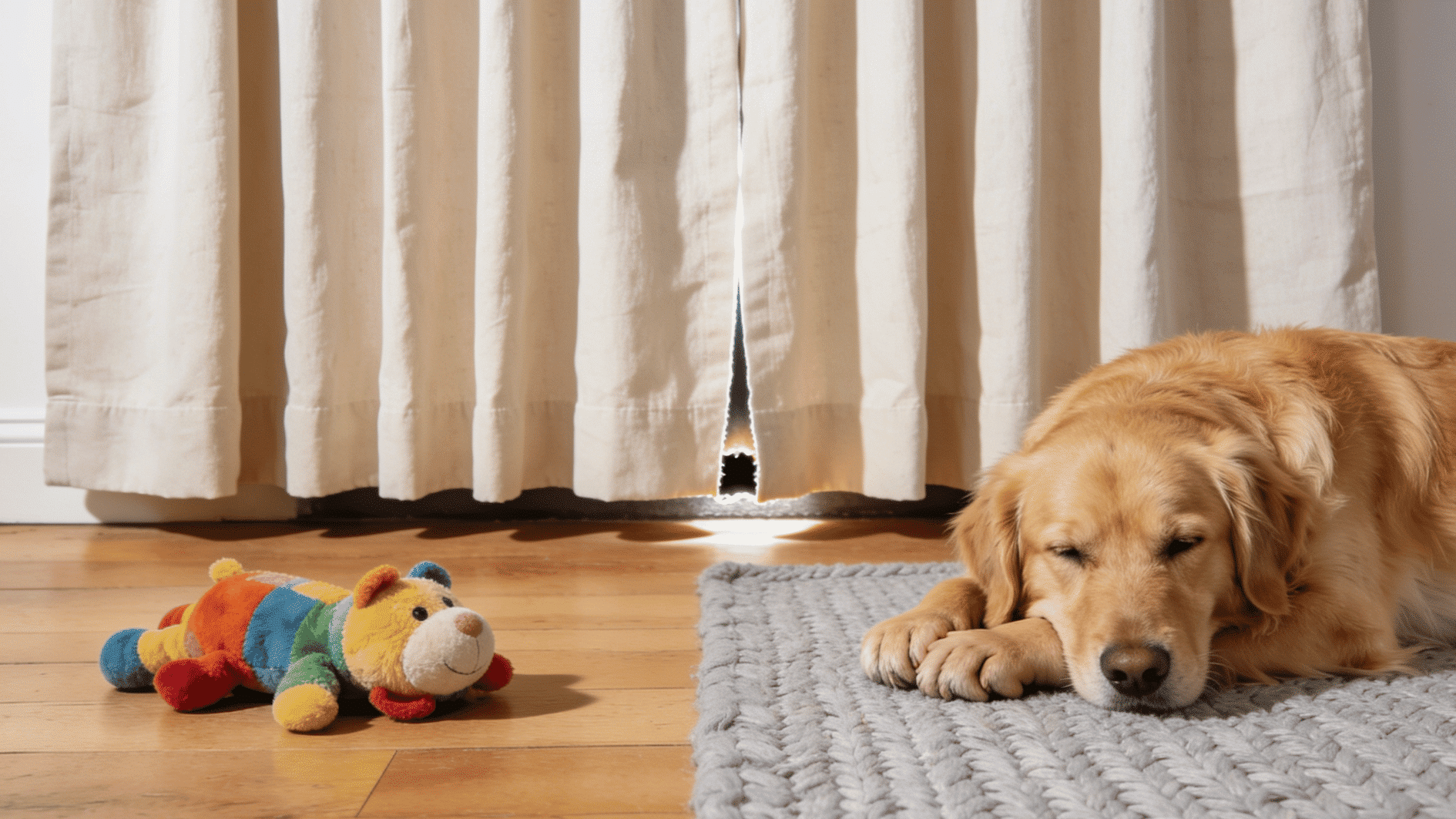
Curtains hung with a small gap, about half an inch above the floor, are the practical choice for busy households that still want a tailored look.
- They avoid dragging on the ground, collecting dust, or tripping pets and kids.
- Many designers consider this the modern default for everyday living spaces where function matters as much as appearance.
- It’s also a forgiving option if a home’s flooring isn’t perfectly even.
4. The Break: Extra Fabric
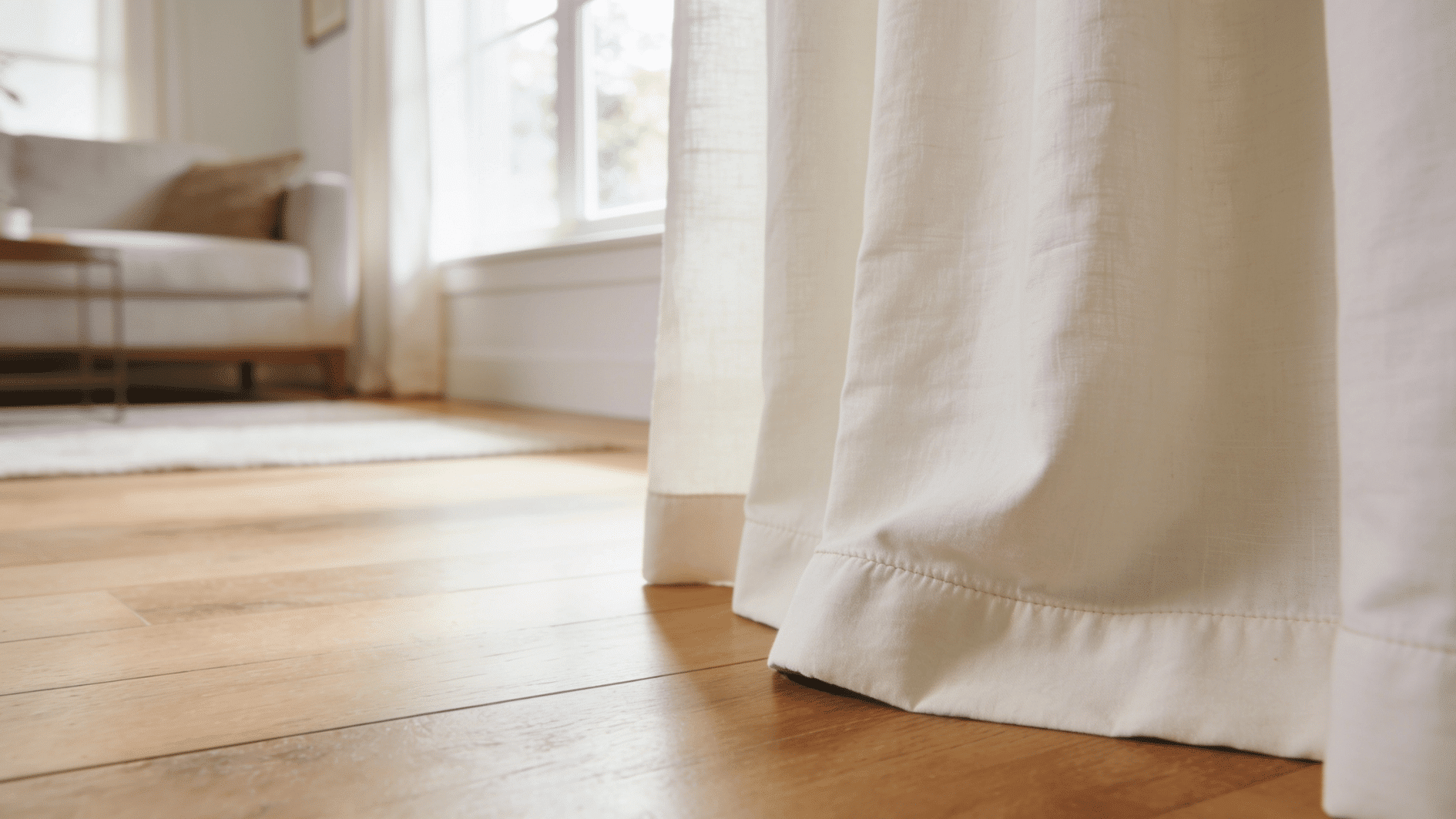
The panel is slightly longer than the floor drop, so the hem “breaks” with a small fold, the way suit trousers break over a shoe.
It looks relaxed and generous, and it’s forgiving of uneven floors, a real advantage in older homes where the floor-to-rod distance varies across the window.
- It’s also the most beginner-friendly length because the hem is meant to fold.
- Mid-weight fabrics like cotton, linen blends, and soft polyester drape into the fold.
- The trade-off is that the hem rests on the floor, so it picks up more dust than a float.
Best Curtain Length by Room
Room function decides the length more than style does. High-traffic and hardworking rooms call for practical lengths, while formal, low-traffic spaces can afford a more dramatic drop.
Use this quick-reference guide to match each room to its ideal curtain length:
| Room | Best length | Why it works |
|---|---|---|
| Living room | Kiss or subtle break | Most-seen room in the house, a tailored, full-length look pays off |
| Bedroom | Float (½” above floor) | Blocks light at the edges but survives daily opening and closing |
| Dining room | Puddle (4–6″) | Formal, low-traffic space where dramatic pooling in linen or velvet earns its keep |
| Kitchen | Café or sill-length | Stays clear of counters, splashes, and food prep |
| Bathroom | Sill-length | Handles moisture best in a quick-drying fabric, or skip curtains for a blind |
| Home office | Float | Keeps the video-call backdrop clean without fabric bunching behind your chair |
When Curtains Should NOT Touch the Floor
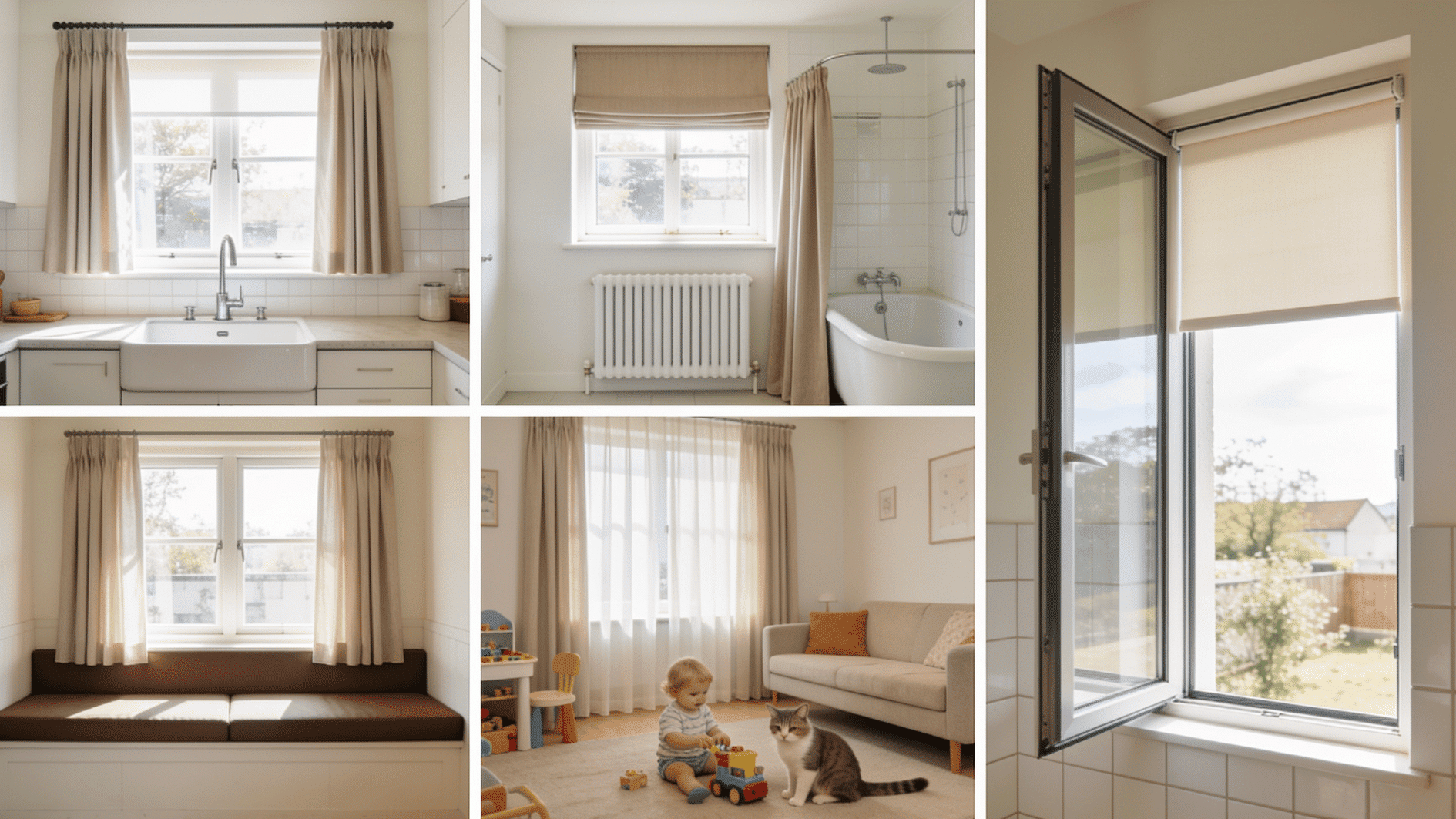
Floor-length is the rule, but these situations are the legitimate exceptions:
Kitchens and Bathrooms
Moisture, splashes, and food prep make long fabric impractical and harder to keep hygienic in kitchen or utility areas.
Curtains in these spaces are more exposed to spills, grease, and frequent cleaning, so shorter lengths, such as sill-length or apron-length, work better. These styles keep fabric away from messy surfaces while still allowing light control and ventilation without constant maintenance issues.
Radiators and Baseboard Heaters
Fabric that hangs over or sits too close to heat sources can block warm air from circulating properly and may even become a fire risk in some setups. Curtains should always stay clear of radiators and heaters to ensure safe airflow and efficient room heating.
A practical approach is to end curtains just above the heater or switch to blinds or Roman shades that do not interfere with heat distribution.
Deep Windowsills and Window Seats
When a windowsill extends outward or forms a seating ledge, long curtains can bunch up awkwardly and lose their clean shape.
This not only looks messy but also affects how smoothly the fabric hangs. In such cases, ending curtains at the sill keeps the design neat and ensures the window feature remains functional and visually balanced.
Homes with Pets and Small Children
Long curtain panels often become an easy target for pulling, climbing, or playful tugging, especially in homes with pets and toddlers.
Over time, this can damage fabric and create safety concerns. A slightly floating curtain length – just above the floor – keeps hems out of reach while still maintaining a clean and intentional look in the room.
Getting the Height and Length Right
Hang the rod higher than you think. Mounting it directly on the window frame is the most common hanging mistake; it visually caps the window and makes ceilings feel lower.
Place the rod 4–6 inches above the top of the frame, or mount it halfway between the frame and the ceiling. In rooms with 8-foot ceilings, a couple of inches of the ceiling look best.
Extend the rod 8–12 inches past the frame on each side so that open curtains stack against the wall rather than blocking the glass.
Once the rod is up, measure from the top of the rod down to the floor, then fine-tune that number for the look you want:
- For a float, subtract half an inch from the rod-to-floor measurement so the hem hovers just off the ground.
- For a kiss, use the exact rod-to-floor measurement so the hem barely grazes the floor.
- For a break, add 1–2 inches to the measurement so the hem folds softly where it lands.
- For a puddle, add 4–6 inches so the fabric pools generously on the floor.
- Measure in three spots, both ends of the window and the middle, because floors are rarely level; let the shortest measurement guide a float or kiss.
- If ready-made panels run long, hem them, use iron-on hem tape, or have a tailor take them up; it’s a small cost for a big visual upgrade.
Curtain Length Mistakes That Make a Room Look Off
Even good curtains can sabotage a room when the length or hanging height is wrong. Watch for these:
- The “high-water” curtain. Panels floating 3+ inches above the floor visually shrink the room. If you can see a clear band of wall below the hem, they’re too short.
- Hanging the rod too low. Mounting the rod directly on the window frame chops the wall in half. Go higher – the extra inches make ceilings feel taller.
- Unintentional puddling. An inch or two of accidental pooling in a hallway or living room reads as “wrong size,” not “romantic.” Puddles should look deliberate and generous.
- Mismatched lengths in one room. If two windows share a wall, their curtains should hit the floor at the same height. Inconsistent hems are instantly noticeable.
- Ignoring the hardware. Rings and clips add 1–2 inches of drop. Forgetting them is the most common reason a planned kiss ends up a break.
- Buying before measuring. Standard 84-inch panels are too short for most rooms once the rod is hung properly. Measure first; 96- or 108-inch panels are usually the better buy.
Conclusion
Should curtains touch the floor? Usually, yes, but how matters more than whether.
Floor-grazing brings timeless polish, puddling adds drama to formal rooms, and a half-inch gap keeps busy households tidy and practical.
There’s no one rule, just the right length for your room and your life. Measure with intention, and your curtains will finally look styled, not just hung and hoped for.
Frequently Asked Questions
Do Curtain Rods Affect How I Measure for the Right Length?
Absolutely, the height and style of your rod affect the total drop, so always measure from the rod’s rings or hooks rather than the top of the window.
Can Curtain Length Make a Room Look Taller or Shorter?
Yes, hanging curtains higher above the window frame and letting them run closer to the floor creates a visual stretch that makes ceilings appear taller.
Is It Better to Have Curtains Tailored or Buy Them Pre-Made?
Tailoring is usually worth it for an exact fit, since pre-made curtains rarely match standard window heights perfectly and often need hemming anyway.
Should Curtain Length Change Between Seasons?
Some homeowners swap to heavier, longer drapery in colder months for warmth and coziness, then switch to lighter, shorter panels in warmer seasons for a breezier feel.