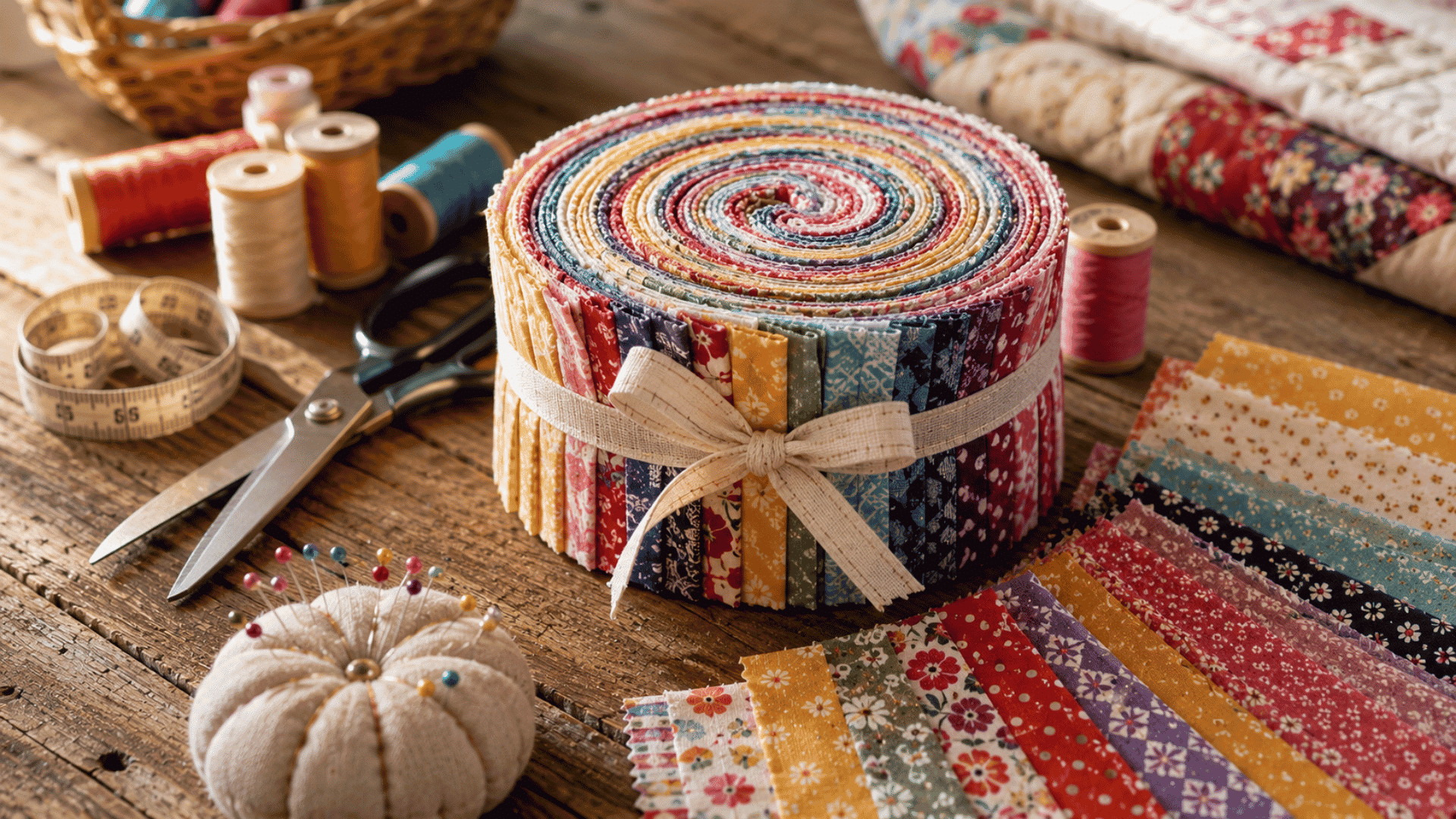
When I first made a jelly roll race quilt, I was surprised by how quickly the strips came together. The process felt relaxed, and the results were satisfying from the very first seam.
Over time, I tried different layouts, color groupings, and strip arrangements. Each quilt turned out differently, even when I started with similar fabric rolls.
In this post, I’ll share ideas that have worked well for me, along with options that can change the overall look of a jelly roll race quilt without adding complicated steps.
What is a Jelly Roll Race Quilt?
A jelly roll race quilt is made using precut fabric strips, usually measuring 2.5 inches wide. The strips are sewn together end-to-end to create one long strip.
The strip is then folded and stitched repeatedly until a quilt top forms.
Many quilters enjoy this method because there is very little preparation work involved. Since the strips are already cut, you can focus on arranging fabrics and sewing.
I often recommend this style of quilt to beginners because it teaches strip piecing while producing a finished quilt top fairly quickly.
Jelly Roll Race Quilt Ideas You Can Copy
Jelly roll race quilts offer plenty of room for customization. These ideas showcase different ways to play with color, theme, and fabric selection.
1. Rainbow Jelly Roll Race Quilt
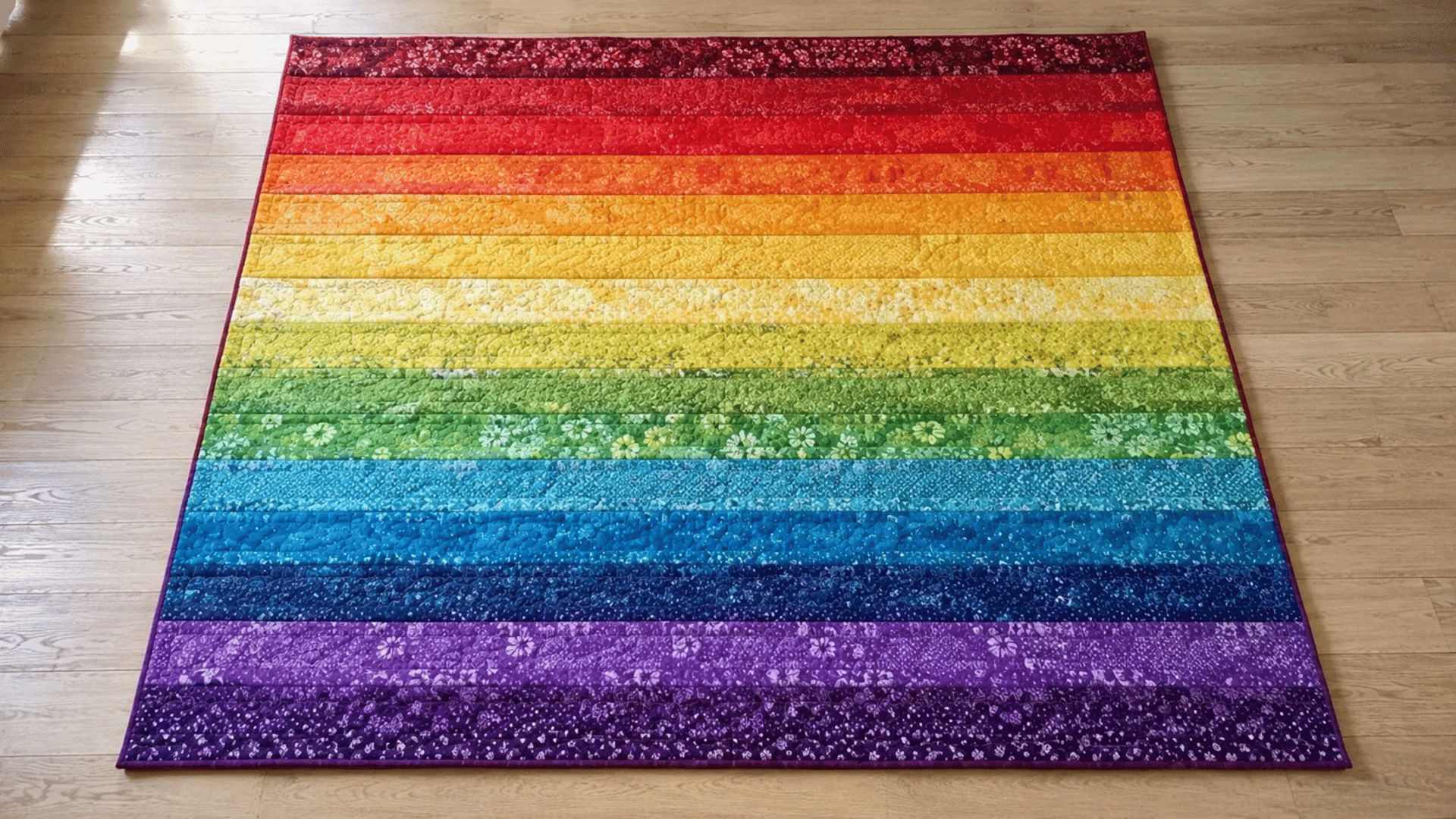
A rainbow jelly roll race quilt arranges fabric strips in color order to create a smooth color transition across the quilt top.
- Arrange strips from red through violet for a full rainbow effect.
- Group similar shades together to create smoother color transitions.
- Mix solids and prints within each color family.
- Add a neutral border to frame the colors.
- Use simple quilting lines to keep the focus on the fabric arrangement.
My Tip: Keep similar shades together for a more gradual rainbow effect.
2. Scrappy Mixed-Print Quilt
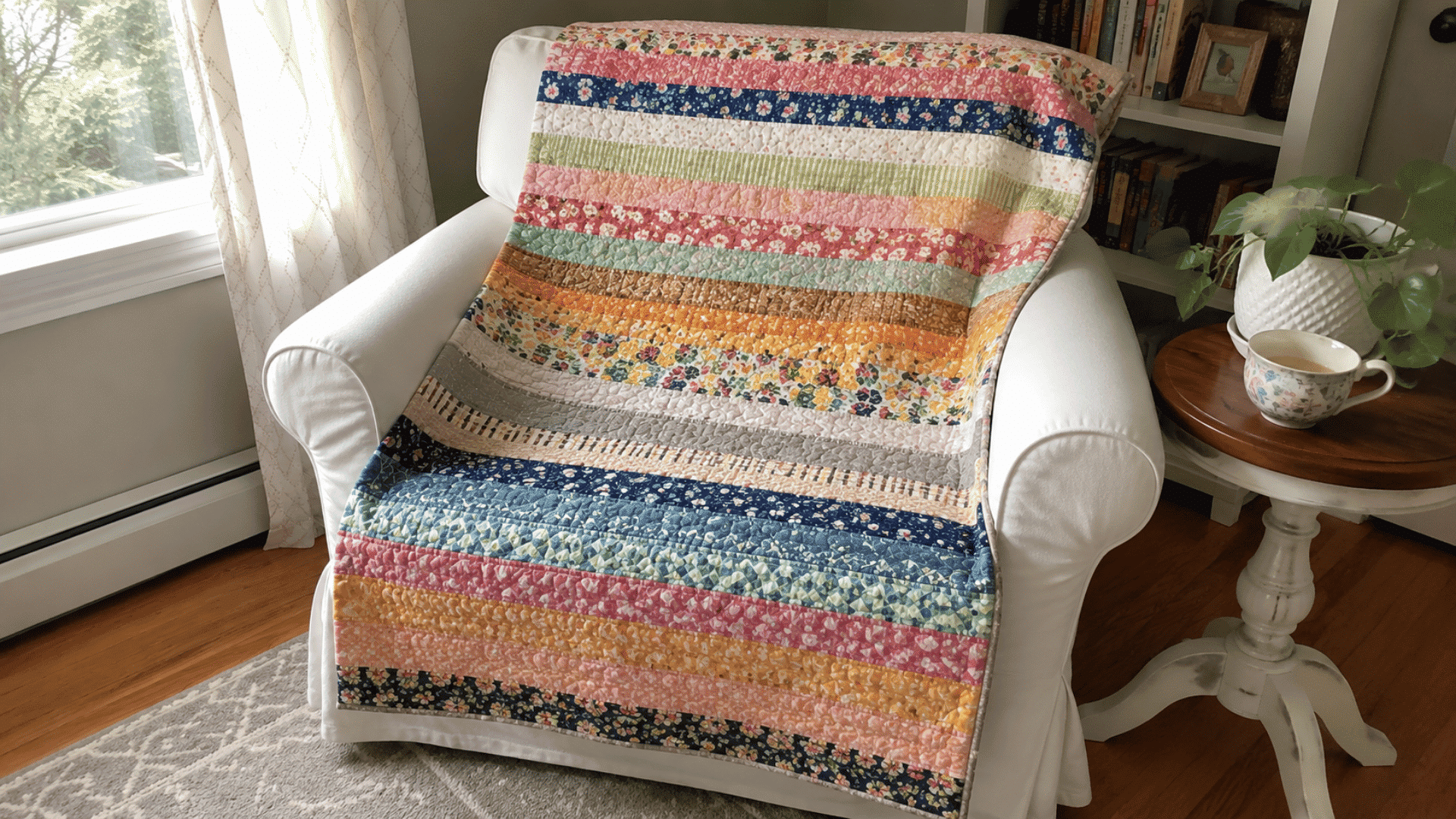
A scrappy mixed-print quilt combines a variety of fabrics in one project. This style works well for using leftover strips and creating a quilt with plenty of variety.
- Mix florals, dots, stripes, and geometric prints.
- Combine strips from multiple jelly roll collections.
- Alternate busy prints with simpler fabrics.
- Repeat a few colors throughout the quilt for consistency.
- Include novelty fabrics for added interest.
My Tip: Repeat a few colors throughout the quilt to help tie different prints together.
3. Two-Color Theme Quilt
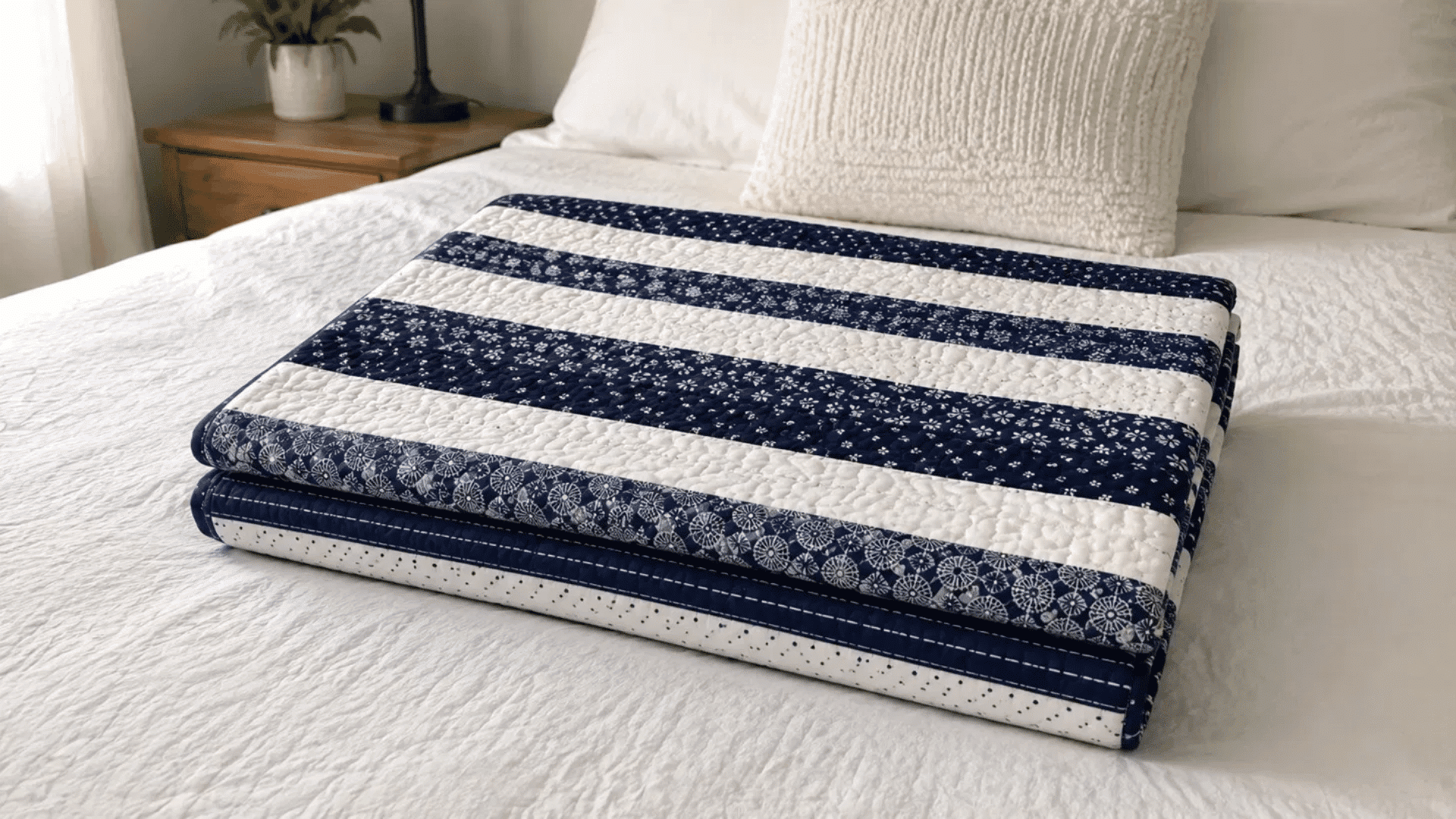
A two-color theme quilt limits the palette to two main colors, creating a more coordinated appearance. This approach can make even a simple race quilt look intentional.
- Pair navy and white for a classic combination.
- Try black and gray for a contemporary look.
- Use red and cream for a traditional feel.
- Mix different prints within the same two-color palette.
- Add a matching border to reinforce the color scheme.
My Tip: Pair a light color with a dark color for stronger contrast.
4. Seasonal Jelly Roll Race Quilt
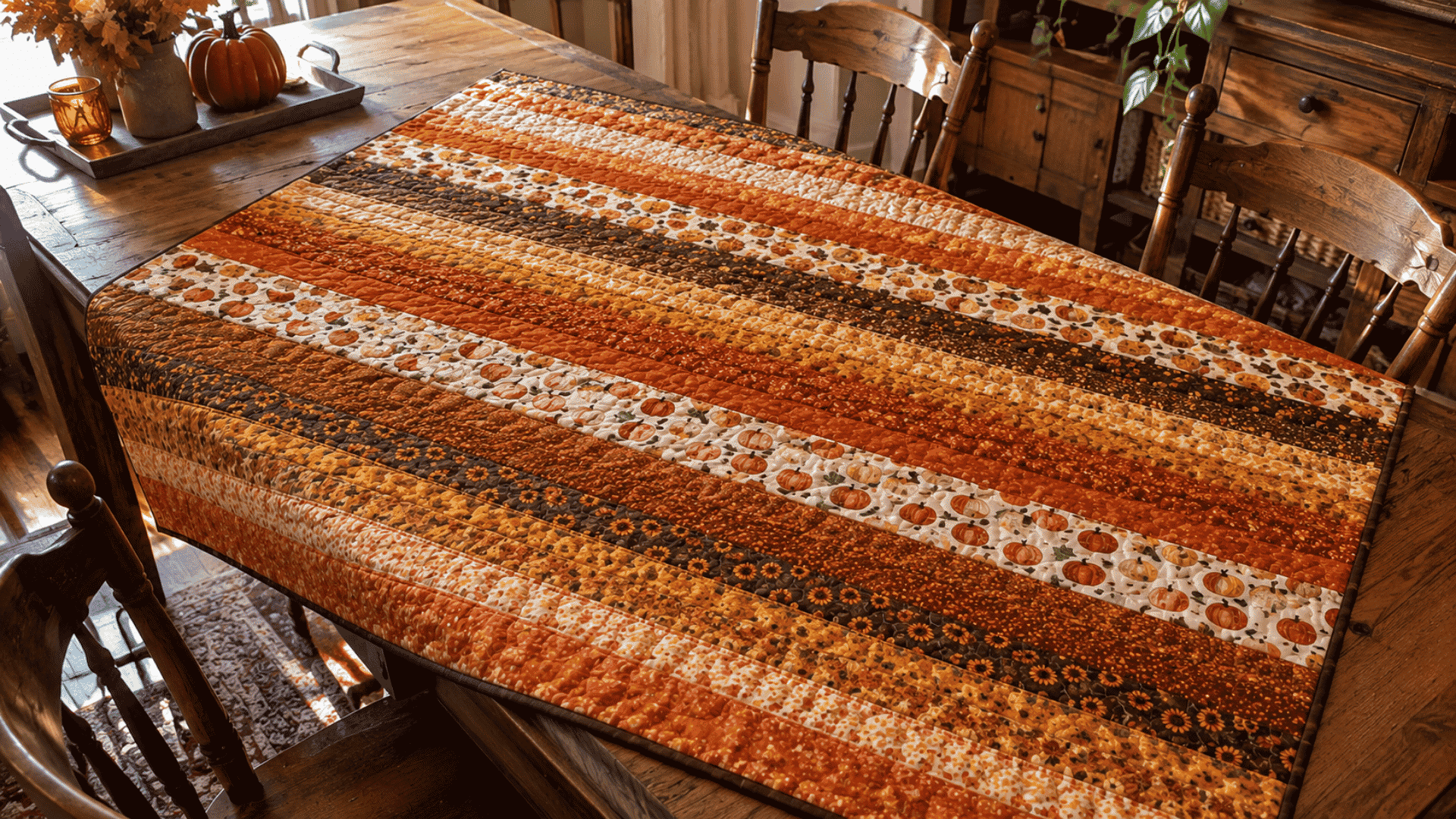
A seasonal jelly roll race quilt uses colors and prints inspired by a particular time of year. These quilts can be displayed throughout the season or given as gifts.
- Use pastel florals and greens for spring.
- Choose beach-inspired fabrics for summer.
- Combine orange, gold, and brown tones for autumn.
- Use snowflakes and cool blues for winter.
- Add seasonal borders to complete the theme.
My Tip: Focus on seasonal colors as well as themed prints for more versatility.
5. Ombre Color Progression Quilt
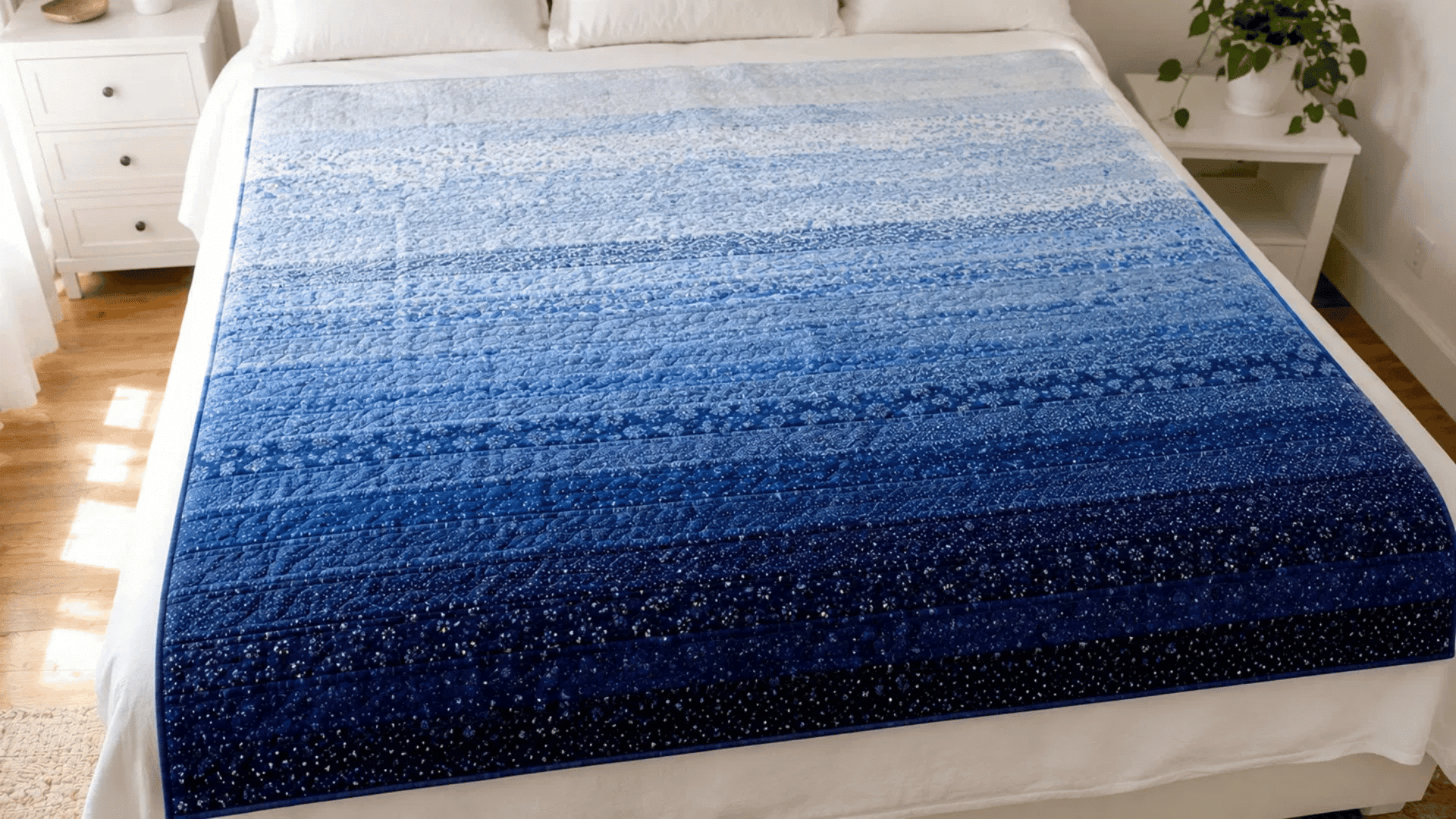
An ombre color progression quilt uses fabrics that move gradually from light to dark. The finished quilt highlights subtle color changes across the surface.
- Arrange strips from the lightest to the darkest shade.
- Use a single-color family for a smooth transition.
- Try blue, pink, green, or gray ombre palettes.
- Blend neighboring shades to avoid abrupt changes.
- Use simple quilting patterns to highlight the color progression.
My Tip: Lay out all the strips before sewing to check the color flow.
6. Children’s Jelly Roll Race Quilt
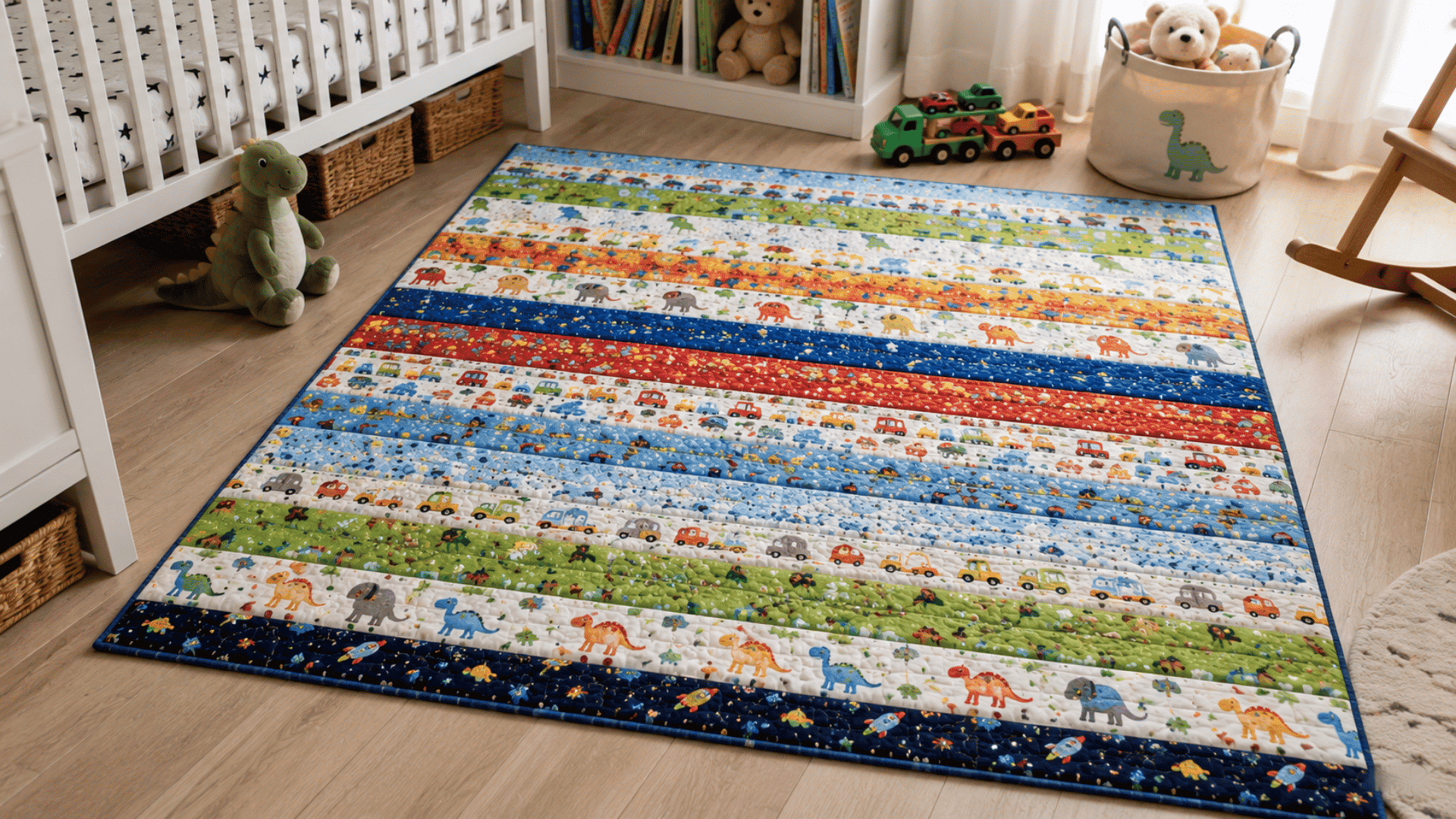
A children’s jelly roll race quilt features fabrics and colors suited for younger recipients. The simple layout allows playful prints to take center stage.
- Use animal-themed fabric collections.
- Incorporate dinosaurs, vehicles, or outer-space prints.
- Choose bright colors that appeal to children.
- Include storybook-inspired fabrics.
- Match the quilt to a nursery or bedroom theme.
My Tip: Choose durable fabrics that can handle frequent washing.
7. High-Contrast Jelly Roll Race Quilt
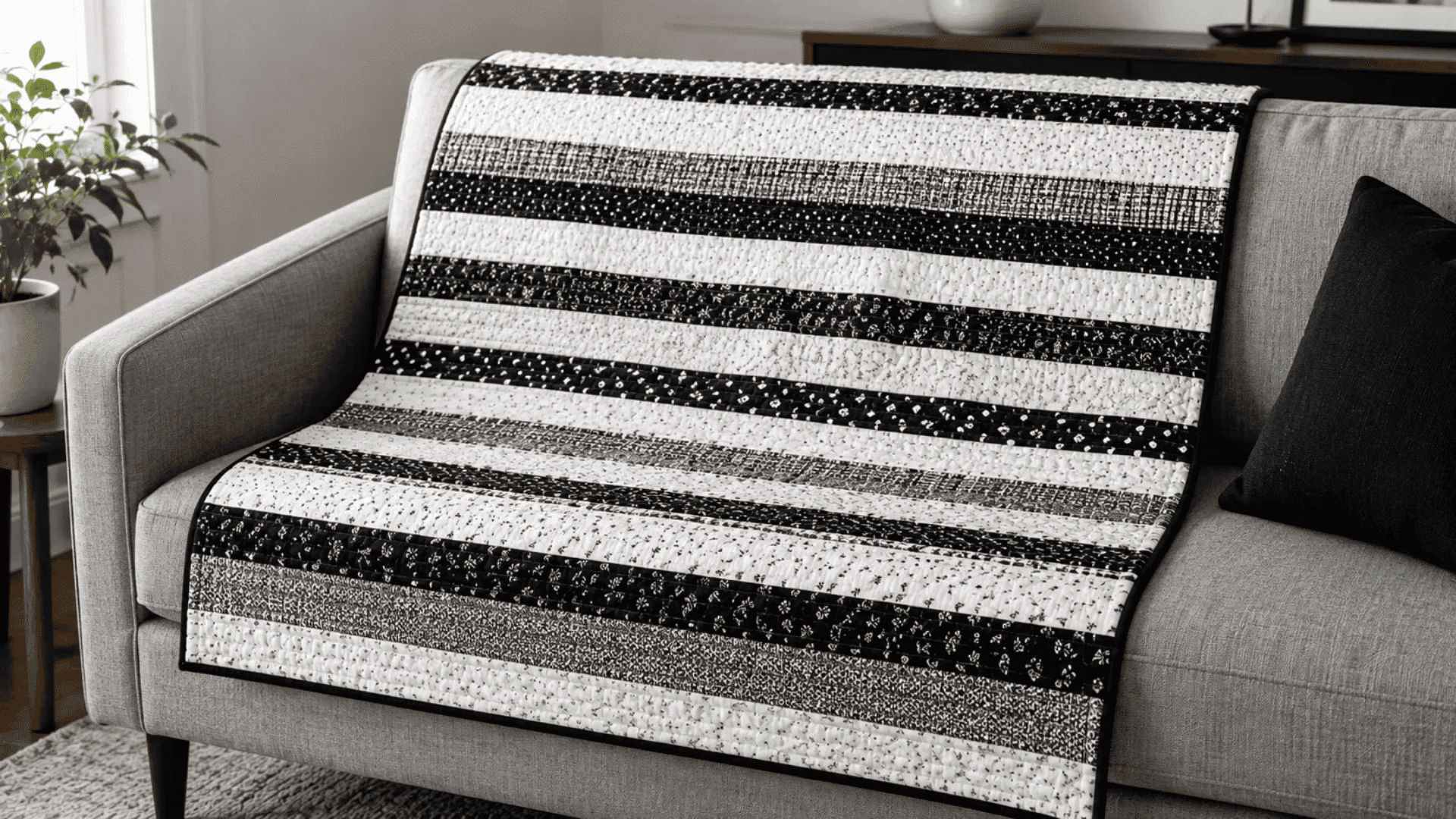
A high-contrast jelly roll race quilt uses light and dark fabrics to emphasize the strip arrangement. The contrast creates a stronger visual pattern across the quilt.
- Alternate dark and light strips throughout the layout.
- Pair black with white or cream fabrics.
- Use navy and light gray for a softer contrast.
- Combine solids with patterned fabrics for added variety.
- Finish with a border that echoes the contrast theme.
My Tip: Alternate dark and light strips throughout the layout for consistent contrast.
8. Batik Jelly Roll Race Quilt
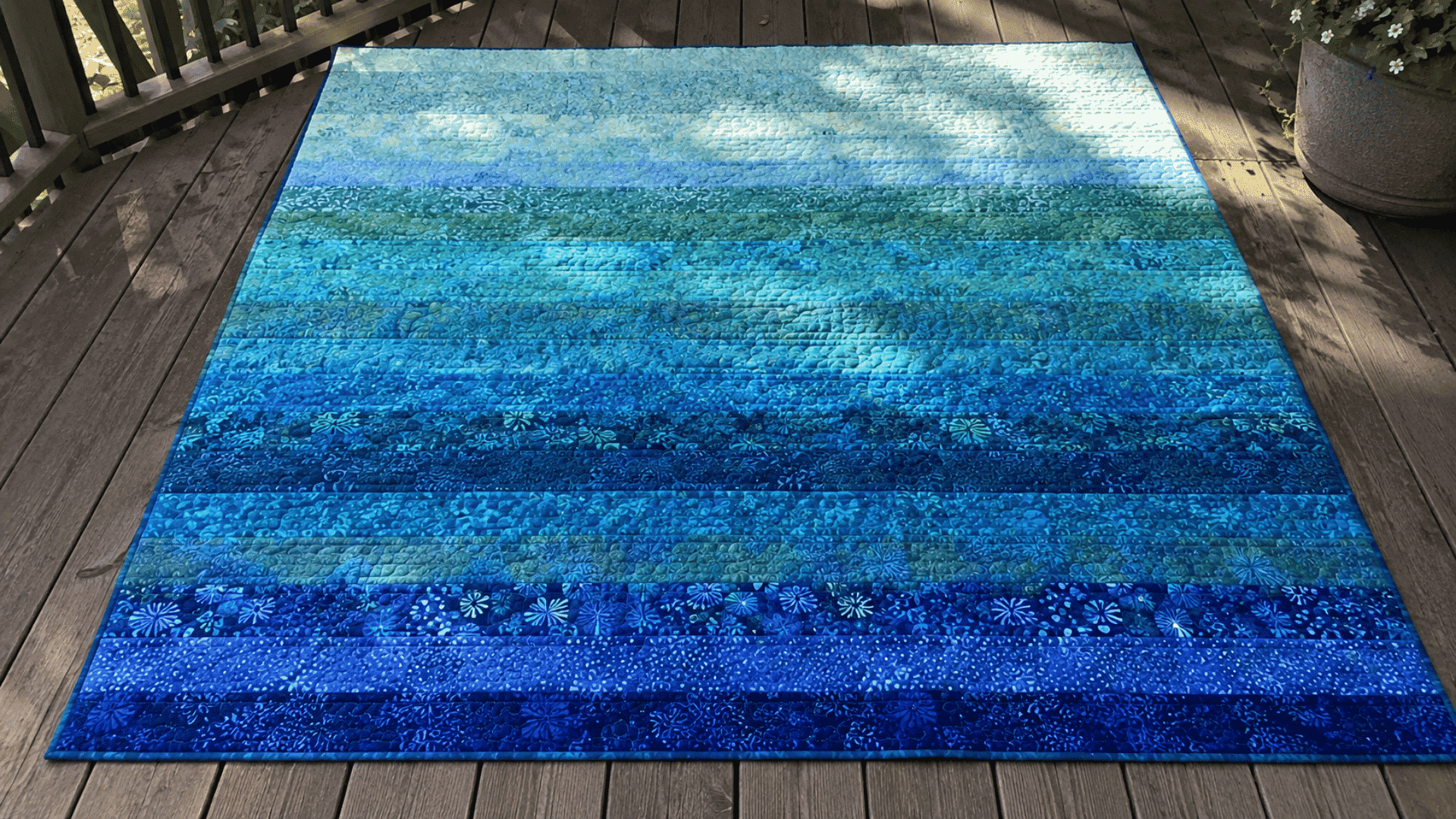
A batik jelly roll race quilt highlights the rich colors and patterns found in batik fabrics. These fabrics often blend naturally, making them well-suited for race quilt layouts.
- Use ocean-inspired blues and teals.
- Combine tropical greens and earth tones.
- Create a sunset palette with orange, pink, and gold fabrics.
- Mix light and dark batiks for contrast.
- Select batik collections with coordinated color schemes.
My Tip: Mix light, medium, and dark batiks to create more color variation.
9. Memory Jelly Roll Race Quilt
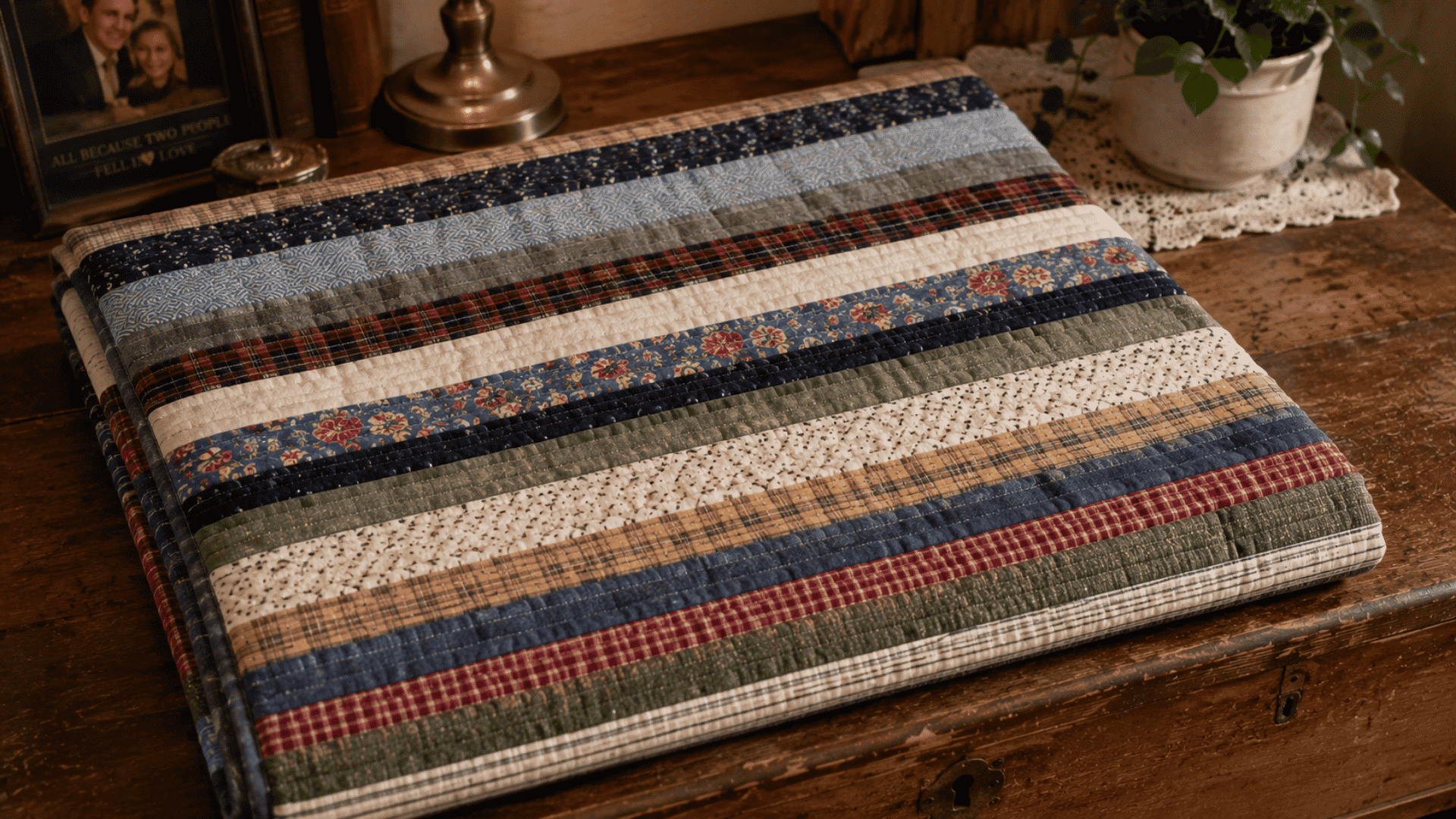
A memory jelly roll race quilt turns meaningful fabrics into a quilt that can be enjoyed for years. Clothing and fabric scraps from important moments can be incorporated into the design.
- Use shirts from family members or loved ones.
- Include baby clothes from childhood keepsakes.
- Incorporate fabric from previous quilting projects.
- Arrange fabrics by color for a more cohesive look.
- Add labels or embroidery for additional meaning.
My Tip: Stabilize lightweight clothing fabrics before cutting them into strips.
10. Jelly Roll Race Quilt With Borders
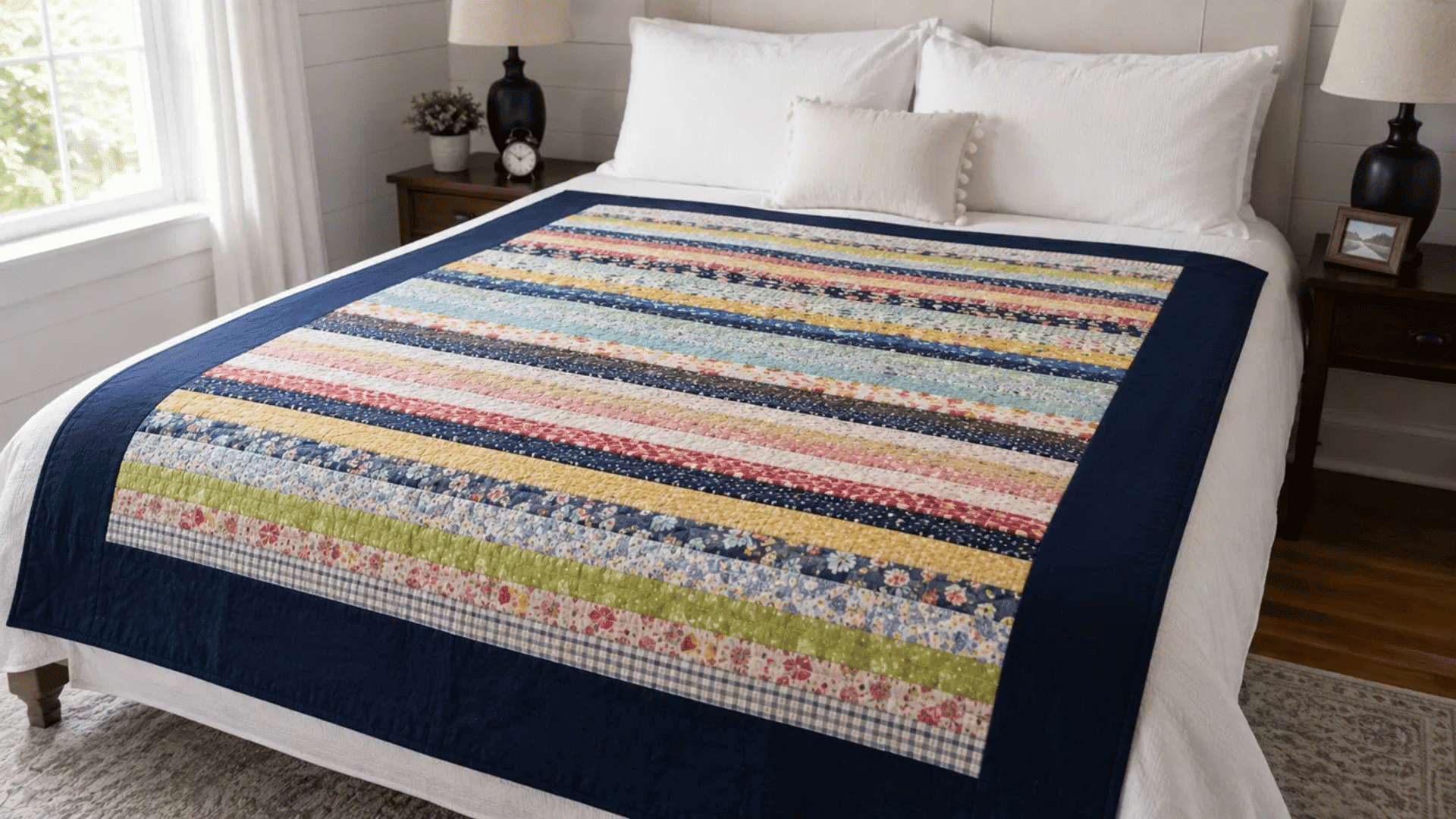
Adding borders is an easy way to change the size and appearance of a jelly roll race quilt. Borders can help frame the quilt and provide additional design opportunities.
You can also compare different border styles that work well with quilts before choosing a fabric that frames the jelly roll race center neatly.
- Add a solid border for a clean finish.
- Use pieced borders made from leftover strips.
- Include multiple narrow borders in coordinating colors.
- Choose a contrasting border to highlight the quilt center.
- Increase the quilt size without altering the main layout.
My Tip: Select border fabrics that complement the quilt rather than competing with it.
After choosing a layout and fabric combination, it’s worth thinking about the quilting pattern. The right design can complement the quilt top without competing with the fabric strips.
Quilting Designs for Jelly Roll Race Quilts
A jelly roll race quilt top can be finished in many different ways. The quilting pattern you choose can influence the overall look and texture of the finished quilt.
| Quilting Design | Style | Works Well With |
|---|---|---|
| Straight-Line Quilting | Clean | Modern layouts |
| Diagonal Quilting | Angled | Rainbow quilts |
| Wavy-Line Quilting | Flowing | Children’s quilts |
| Loop Quilting | Looped | Scrappy quilts |
| Crosshatch Quilting | Grid | Two-color quilts |
I usually choose a simple quilting pattern when working with busy fabrics so the strip arrangement remains the focal point.
Final Thoughts
Even after making many jelly roll race quilts, I still enjoy seeing how different each project can become.
Some of my most enjoyable projects started with a simple jelly roll and a willingness to try a new layout. That freedom to experiment keeps the process interesting every time I sew.
From rainbow color schemes and seasonal themes to memory quilts and batik fabrics, there are plenty of ways to put your own spin on a jelly roll race quilt.
I hope these ideas have sparked a few possibilities for your next project. Sometimes all it takes is a fresh fabric combination to turn a simple quilt into something you’ll be excited to finish.
Frequently Asked Questions
How Long Does It Take to Make a Jelly Roll Race Quilt?
The time varies depending on quilt size and sewing speed, but many quilters can complete the quilt top in a single day because the strips are already cut.
Can I Combine More Than One Jelly Roll in a Race Quilt?
Yes, combining multiple jelly rolls can add more color variety and help create a larger quilt without changing the basic construction method.
Do Jelly Roll Race Quilts Work Well for Gifts?
They are often chosen for gifts because they come together relatively quickly and can be customized with colors, themes, or meaningful fabrics.
Can I Use Fabric Scraps Instead of a Jelly Roll?
Yes, fabric strips cut to the same width as jelly roll strips can be used to create a similar effect while making use of leftover materials from previous projects.