
Ever wake up with a dry, scratchy throat even though your humidifier ran all night?
Where you place it matters just as much as whether you use one. Too close to the bed and you risk damp pillows or mold; too far and the air near you stays dry anyway.
The sweet spot depends on your room size, your furniture, and even which way your air vents blow.
In this post, you will find the best spots for a bedroom humidifier, why “right next to the bed” isn’t always the answer, and simple placement tips so you actually feel the difference when you wake up.
Where to Place a Humidifier in Your Bedroom?
The best place for a humidifier in your bedroom is an open spot a few feet away from your bed, ideally raised and away from walls or furniture.
This kind of placement allows moisture to spread evenly through the room without creating dampness on your bedding or nearby surfaces.
The right spot ultimately depends on your room’s size and layout, but the goal is always the same: enough distance to stay comfortable, enough open space for the mist to circulate, and enough clearance from things that moisture could damage over time.
Below, you will walk through the specific spots that work best and why each one helps you get the most out of your humidifier.
Reasons Why It Shouldn’t Be Placed Too Close to You
A lot of people instinctively want to put their humidifier as close to the bed as possible, especially when they’re sick or dealing with dry air.
But is that actually a good idea, or could it backfire? The answer depends on a few things, like the type of humidifier you have and how close is “too close.” Here’s what you should know before placing one right beside you.
- Faster relief for colds or congestion: Having it nearby means you breathe in moist air sooner, which can ease a stuffy nose or sore throat faster.
- Better for dry skin overnight: Sleeping closer to the mist can help if you wake up with dry skin, cracked lips, or irritated sinuses.
- Useful in larger or drafty rooms: If your bedroom is big or has poor air circulation, placing it closer ensures the humidity actually reaches you instead of dispersing elsewhere.
- Helpful for babies or kids: In nurseries, keeping the humidifier within a safe but close range helps maintain consistent humidity around a crib.
- Works well with low-mist or cool-mist models: These produce less direct moisture, so placing them a bit closer is generally safer than with warm-mist humidifiers.
Best Places to Put a Humidifier
So, where should you actually put it? There’s no single “correct” spot, but some placements work a lot better than others depending on your room layout and how you sleep.
1. Near the Center of the Room
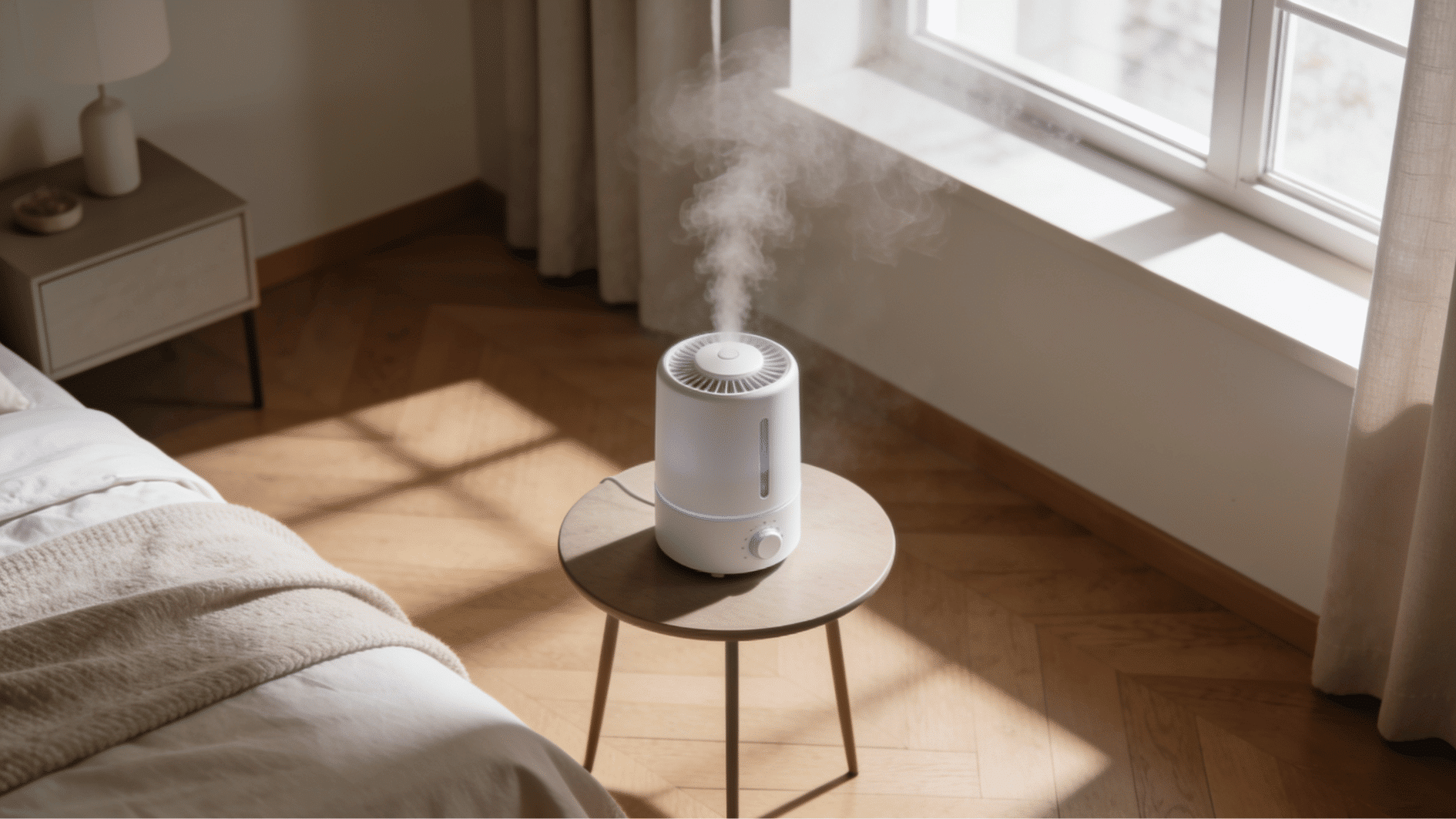
Placing your humidifier somewhere in the middle of the room helps the moisture spread out evenly instead of building up in just one corner.
- Moisture reaches every part of the room instead of just one side.
- The unit doesn’t have to work as hard to humidify the whole space.
- You feel consistent comfort no matter where you’re sitting or sleeping.
Quick Tip: If center placement isn’t possible, choose the spot with the most open space around it.
2. On a Dresser, Shelf, Raised Surface
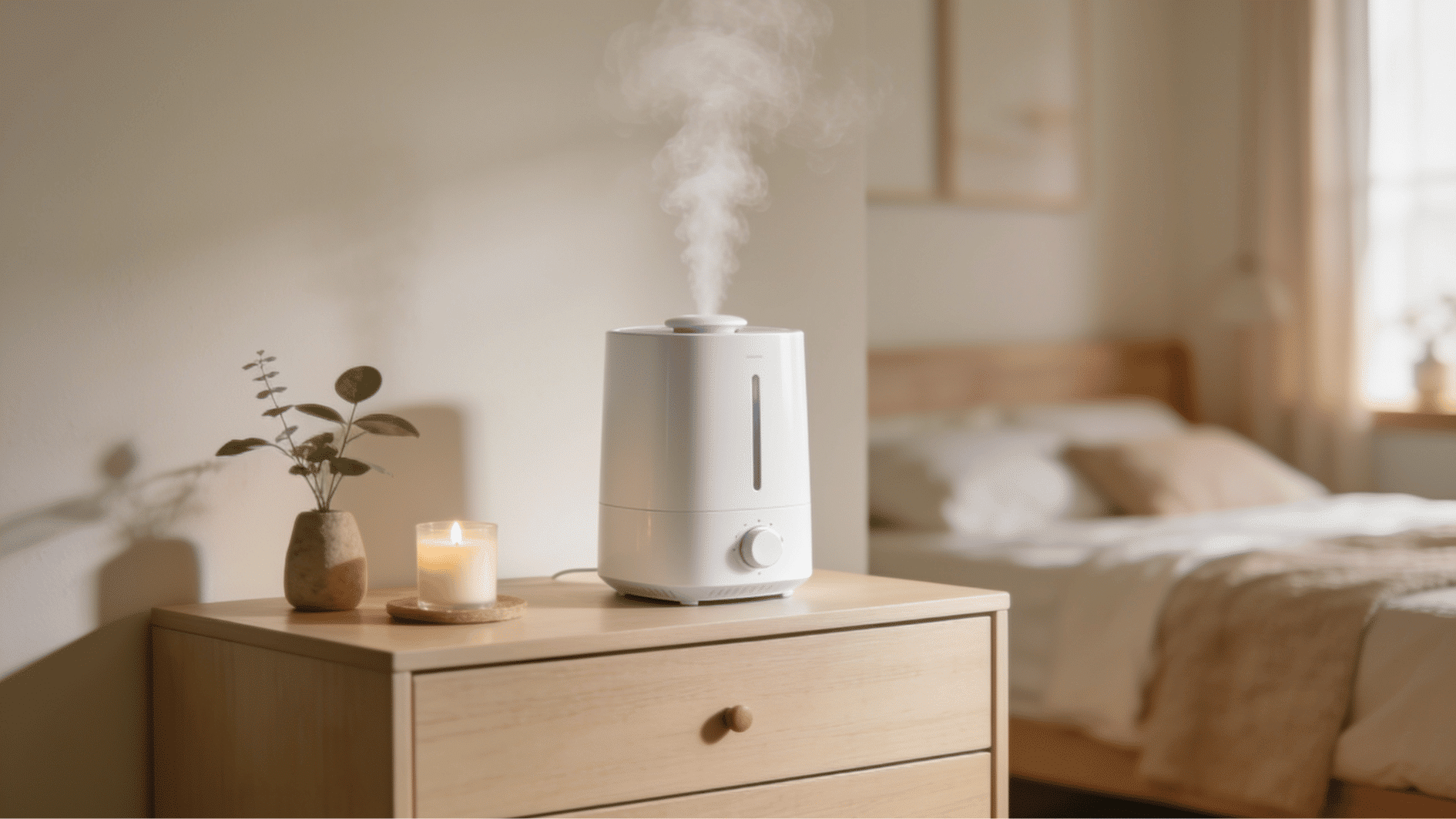
Setting your humidifier up higher, rather than directly on the floor, allows the mist to disperse more naturally through the air.
- Mist spreads outward instead of pooling near the floor.
- It’s harder for pets or kids to accidentally knock it over.
- You can monitor and refill it without constantly bending down.
Quick Tip: Use a waterproof mat or tray underneath to protect wood furniture from moisture damage.
3. A Few Feet Away From Your Bed
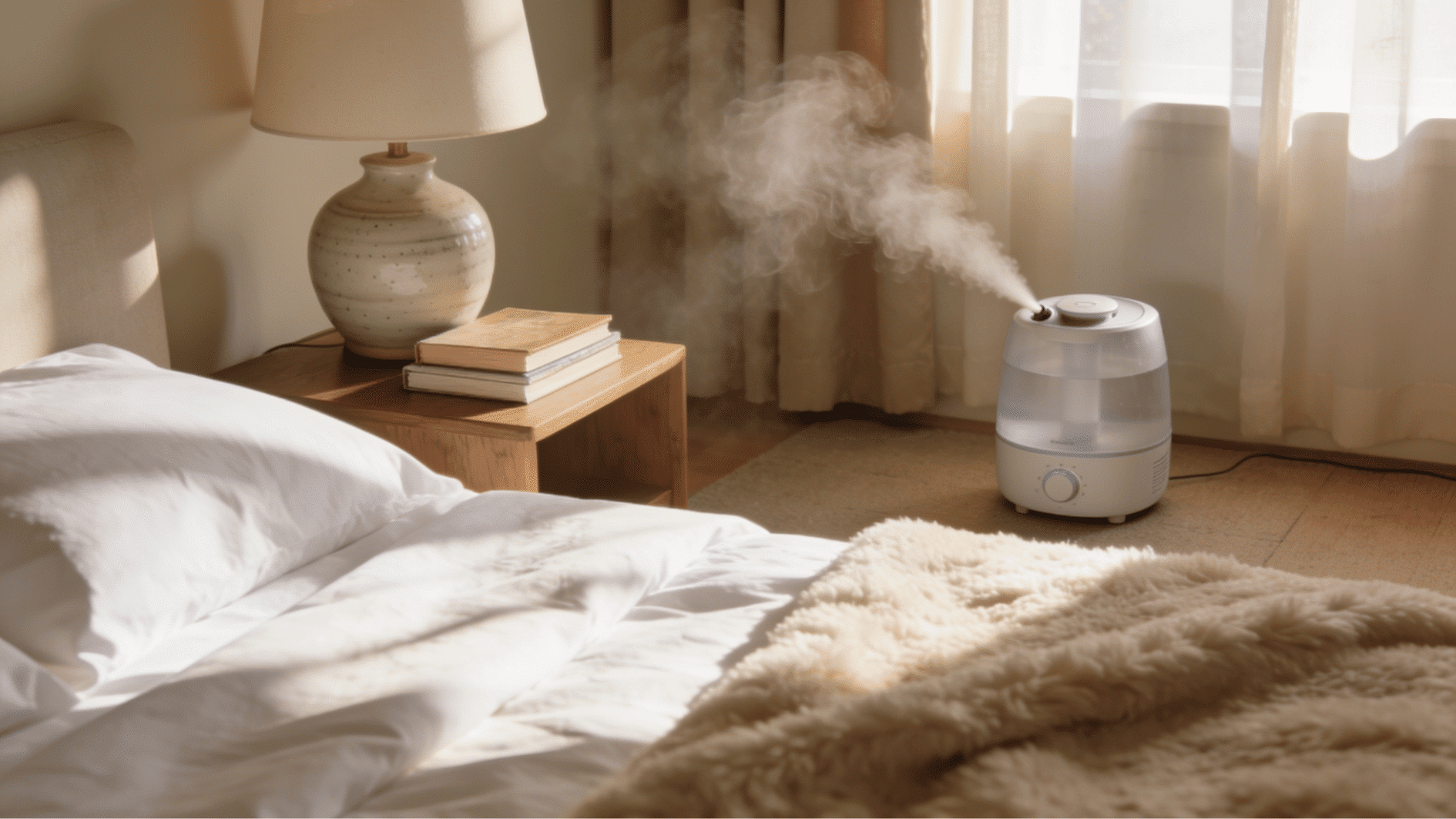
Keeping some distance between your bed and the humidifier means you still get the benefits without the dampness.
- Sheets and pillows stay dry instead of absorbing extra moisture.
- The risk of mold drops since moisture isn’t concentrated in one spot.
- You still feel better air quality without it being right on top of you.
Quick Tip: A distance of 3 to 6 feet usually works best for most bedrooms.
4. Away From Walls, Curtains, and Electronics
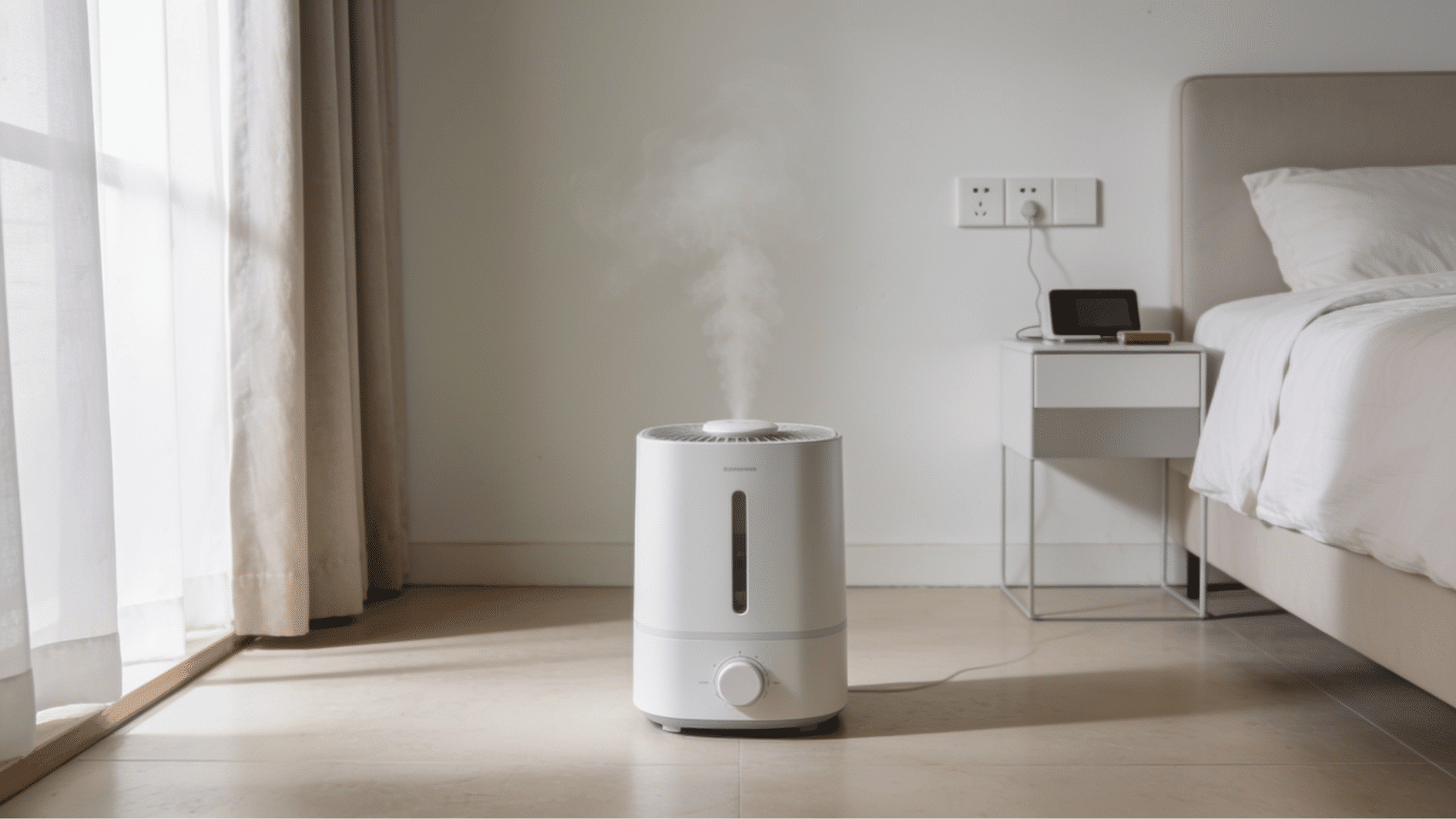
Giving your humidifier some breathing room helps protect nearby surfaces and keeps it working properly.
- Moisture won’t collect on walls or fabric over time.
- Mist stays away from outlets, chargers, or other devices.
- Open space around the unit helps mist disperse more effectively.
Quick Tip: Leave a few inches of clearance on all sides of the humidifier.
5. Near Some Airflow or Circulation
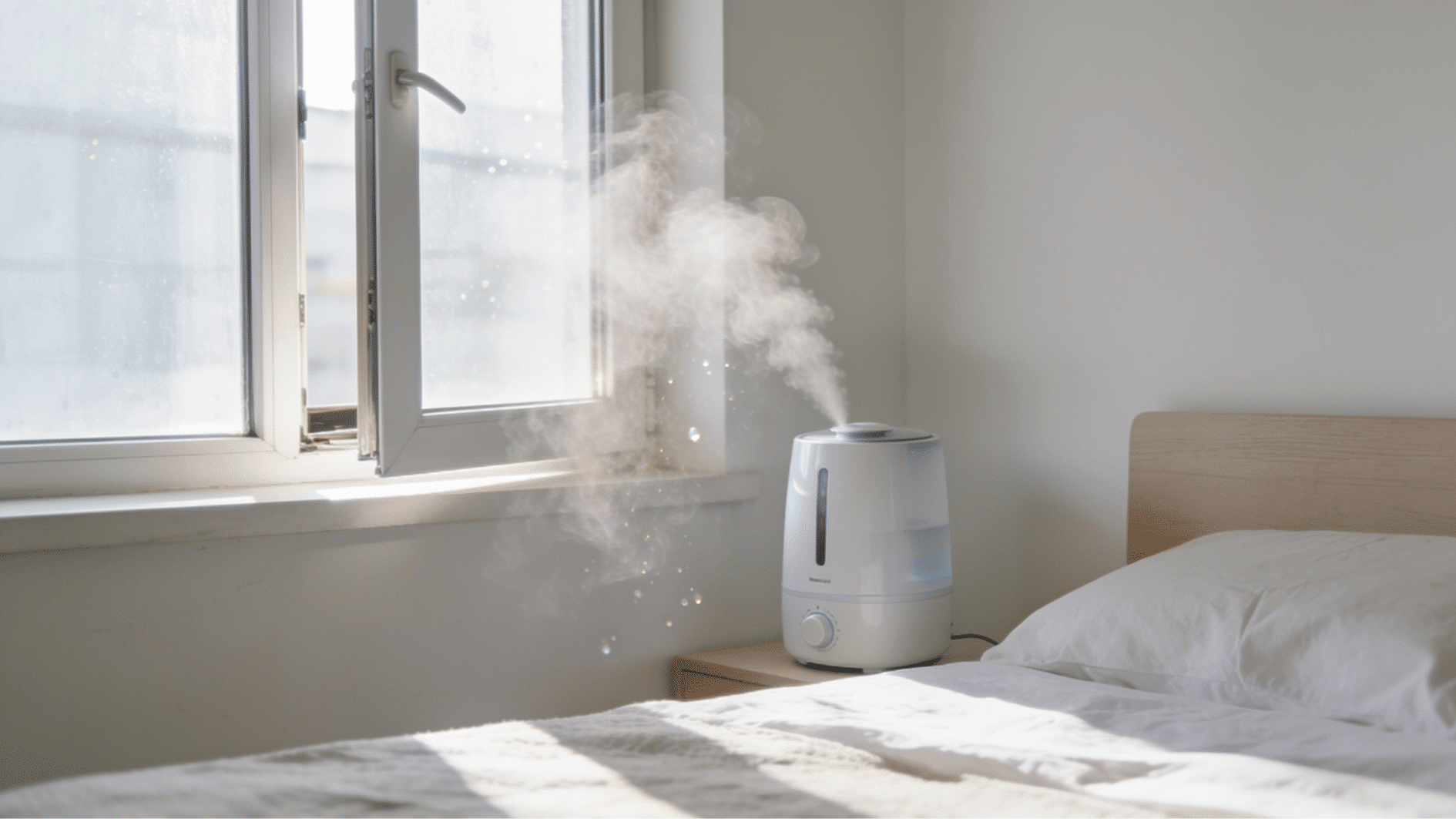
A spot with a bit of natural air movement helps humidity travel through the room instead of staying stuck in one area.
- Air circulation helps distribute moisture more evenly.
- It prevents one area of the room from feeling overly damp.
- Pairing it with a fan on low can improve overall air quality.
Quick Tip: Avoid placing it directly in front of a vent, as strong airflow can affect mist output.
6. Away From Direct Sunlight or Heat Sources
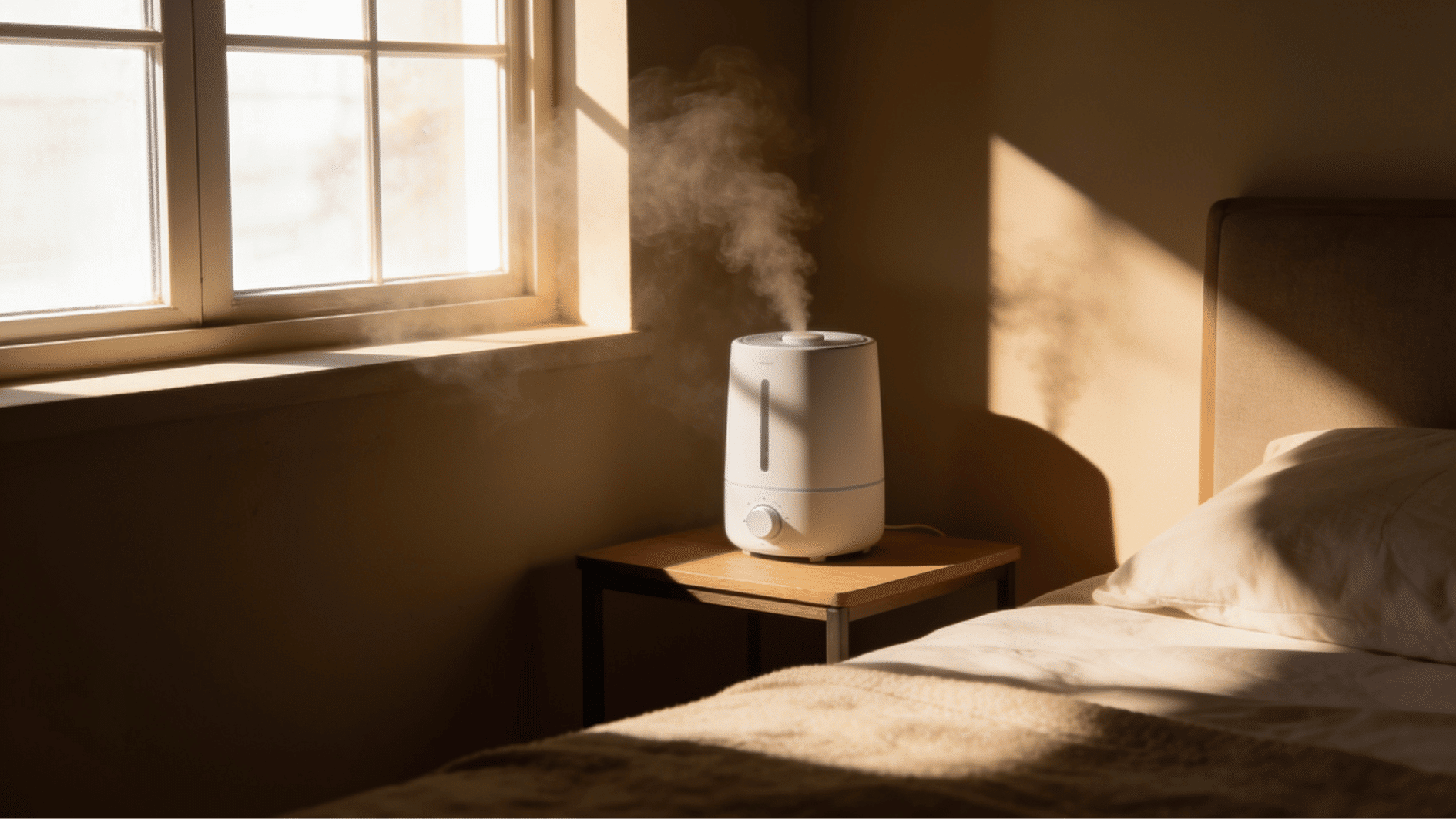
Keeping your humidifier out of direct sun or near heaters helps it work the way it’s supposed to.
- Heat can cause water in the tank to evaporate unevenly.
- Sunlight can promote bacteria or algae growth inside the tank over time.
- The unit performs more consistently in a cooler, shaded spot.
Quick Tip: A corner away from windows and radiators is usually a safer bet.
7. At a Height That Matches the Room
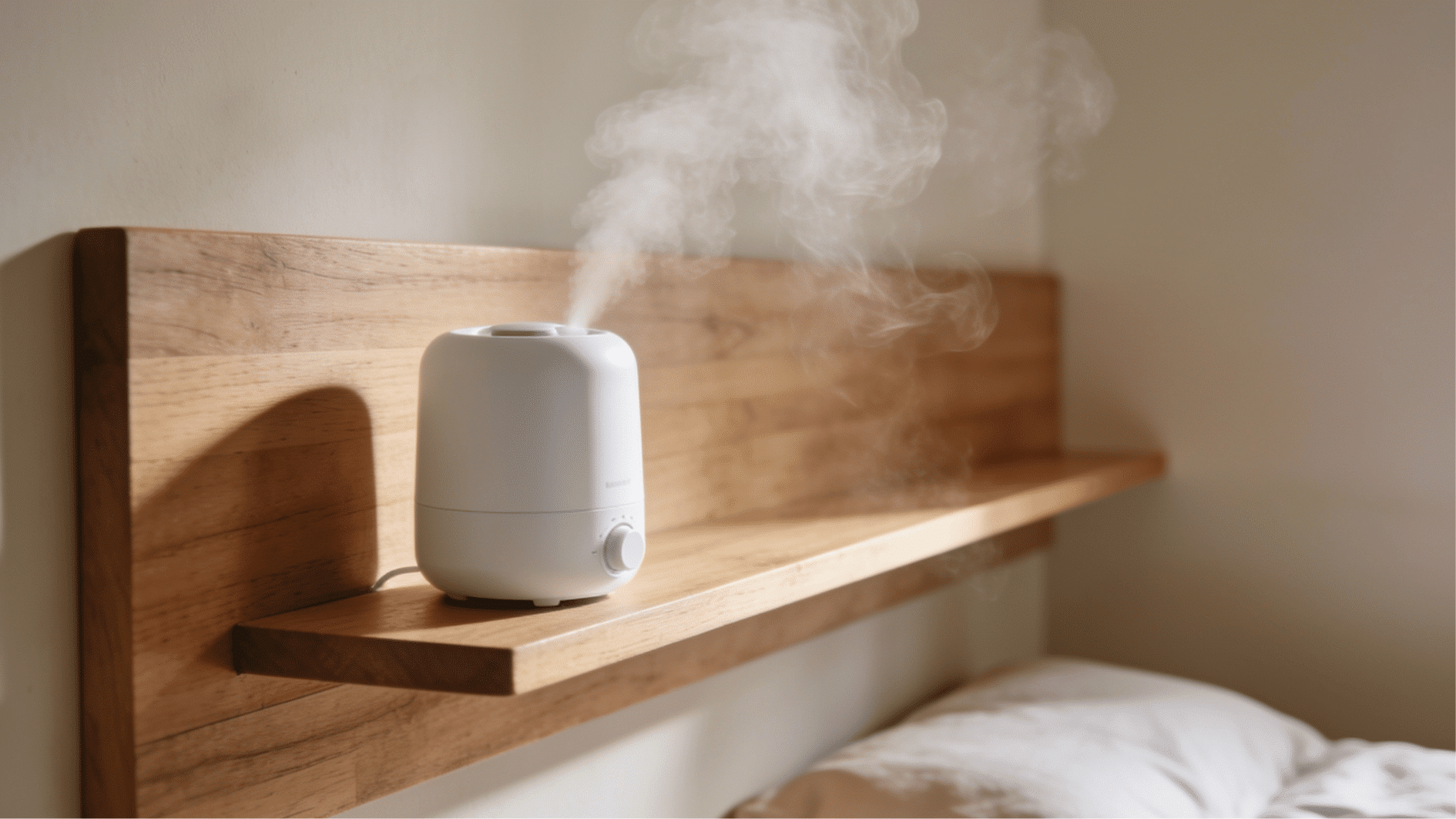
The height at which you place your humidifier can affect how well the mist disperses through the space.
- Raised placement works well for larger or open rooms.
- Floor placement can suit smaller rooms with less distance for mist to travel.
- Matching height to room size helps moisture spread more efficiently.
Quick Tip: For larger rooms, aim for waist-height placement to help the mist travel farther.
Spots You Should Avoid
Just as some spots help your humidifier work better, others can cause more harm than good. Knowing where not to place your humidifier in the bedroom can save you from damp walls, mold, or even damage to your furniture and electronics. Here are the spots worth steering clear of:
- Right next to electronics: Mist and moisture can damage chargers, outlets, or devices placed too close by.
- Directly on carpet or fabric: Soft surfaces can trap moisture, leading to mold or a musty smell over time.
- Too close to walls or curtains: Constant exposure to mist can cause water stains or fabric damage.
- In direct sunlight: Heat and light can affect water quality and encourage bacteria growth inside the tank.
- Right beside your bed: Placing it too close can leave your sheets and pillows feeling damp by morning.
- Inside enclosed spaces like closets: Poor air circulation traps moisture instead of letting it disperse properly
Best Placement Based on Room Size
The size of your bedroom plays a bigger role in humidifier placement than most people realize. A spot that works well in a small room might not be effective in a larger one, and vice versa.
| Room Size | Best Placement | Why It Works |
|---|---|---|
| Small Bedroom | Floor level or low shelf, a few feet from the bed | Mist doesn’t need to travel far, so lower placement still humidifies the whole room |
| Small Bedroom | Away from corners | Corners can trap moisture and reduce airflow in tighter spaces |
| Large Bedroom | Raised surface like a dresser or shelf | Helps mist travel farther and reach more of the room |
| Large Bedroom | Center of the room, if possible | Ensures even distribution across a bigger space |
| Large Bedroom | Closer to seating or sleeping areas | Compensates for the larger distance air needs to cover |
The Takeaway
Finding the right spot for your humidifier doesn’t have to feel complicated. From keeping a comfortable distance from your bed to choosing better places, it can make a real difference in your sleep and air quality.
So, is right next to the bed appropriate? Not quite, but a few feet away strikes the perfect balance. With the right placement, your humidifier can work the way it’s meant to, quietly improving your space.
Take a look around your bedroom, pick the spot, and let your humidifier do its job, one comfortable night at a time.
Frequently Asked Questions
Can You Run a Humidifier All Night in Your Bedroom?
Yes, most humidifiers are designed for continuous overnight use. Just make sure to clean the tank regularly and use distilled water to prevent mineral buildup.
How Often Should You Clean a Bedroom Humidifier?
Clean your humidifier every two to three days, and deep clean it weekly. Regular cleaning prevents mold, bacteria, and mineral deposits from building up inside.
What Humidity Level Is Best for Sleeping?
Most experts recommend keeping bedroom humidity between 30 and 50 percent. This range supports comfortable breathing without encouraging mold or dust mites.
Can a Humidifier Help With Snoring?
Yes, dry air can worsen snoring by irritating nasal passages. Adding moisture to the air may help reduce congestion and ease nighttime breathing.