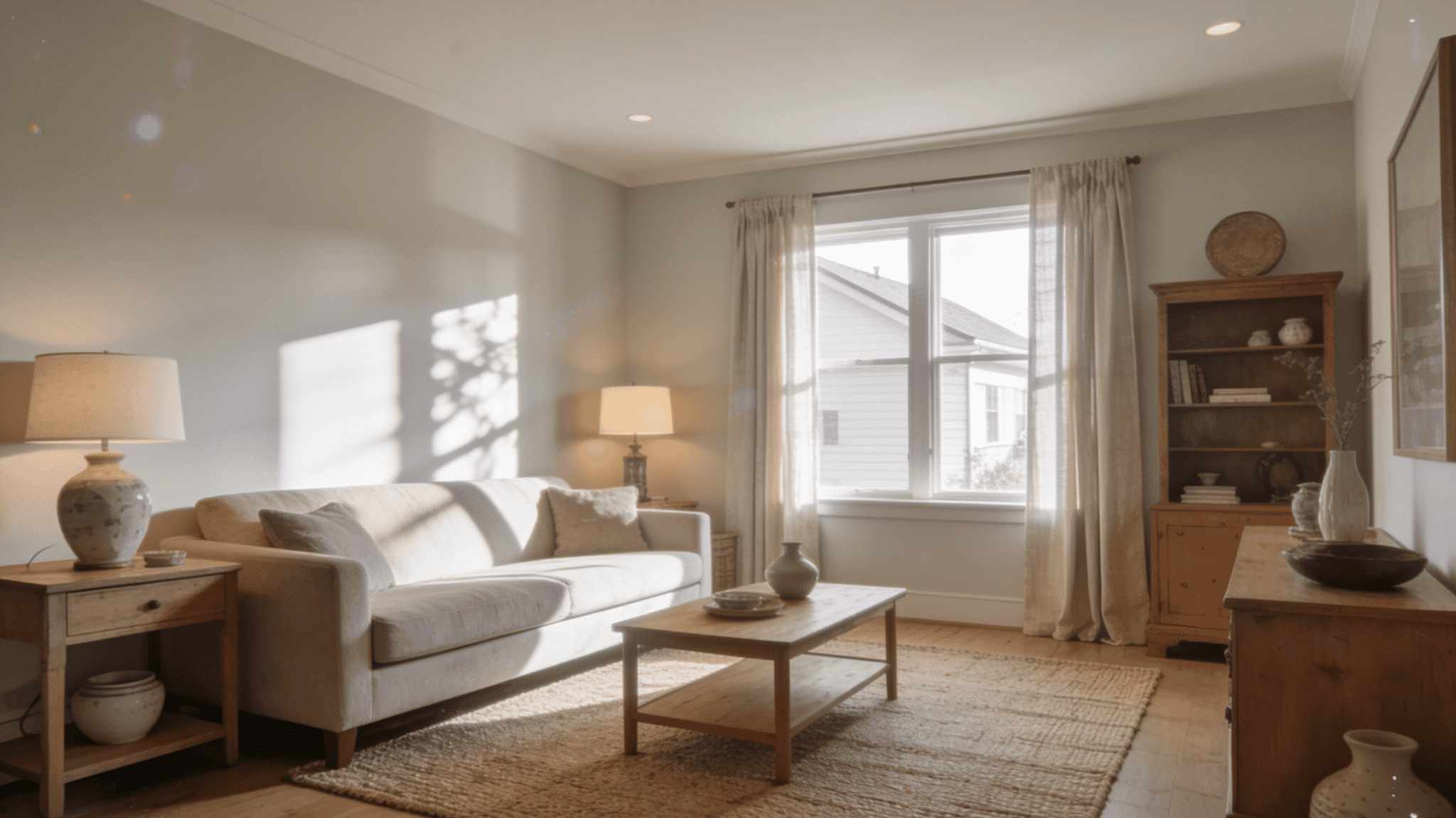
The best rooms are often the ones that feel collected, comfortable, and easy to live in.
Through years of working with home styling and room planning, I’ve noticed how transitional interior design creates this balance by blending classic details with modern simplicity.
If you’re wondering what transitional style is, it focuses on combining clean lines, soft textures, and timeless pieces without making a space feel too formal.
In this blog, I’ll share visual inspiration and decorating ideas to help you understand the look and plan your own space.
Defining Transitional Interior Design: What is Transitional Style?
A lot of rooms feel stuck between two decades, and that’s usually transitional style doing its job.
It’s the middle ground between traditional and modern design, and it’s the go-to whenever someone can’t pick a side.
You get the warmth of classic shapes, think rolled arms, wood tones, paired with the calm, uncluttered feel of modern rooms.
Nothing screams “trend.” Nothing feels dated either. It ages well; a transitional living room styled today will still feel right in ten years.
It’s less about following rules and more about balance. If you want a home that feels put-together without trying too hard, this is the style that gets you there.
Transitional Interior Design Characteristics to Know
A transitional room is usually easy to spot within seconds of walking in. A few details repeat every time, no matter the budget or the layout.
Once you learn these details, you’ll start noticing them in every transitional room you walk into, even ones you’ve seen a hundred times before. Here’s what to always check for first.
1. Neutral Color Palettes
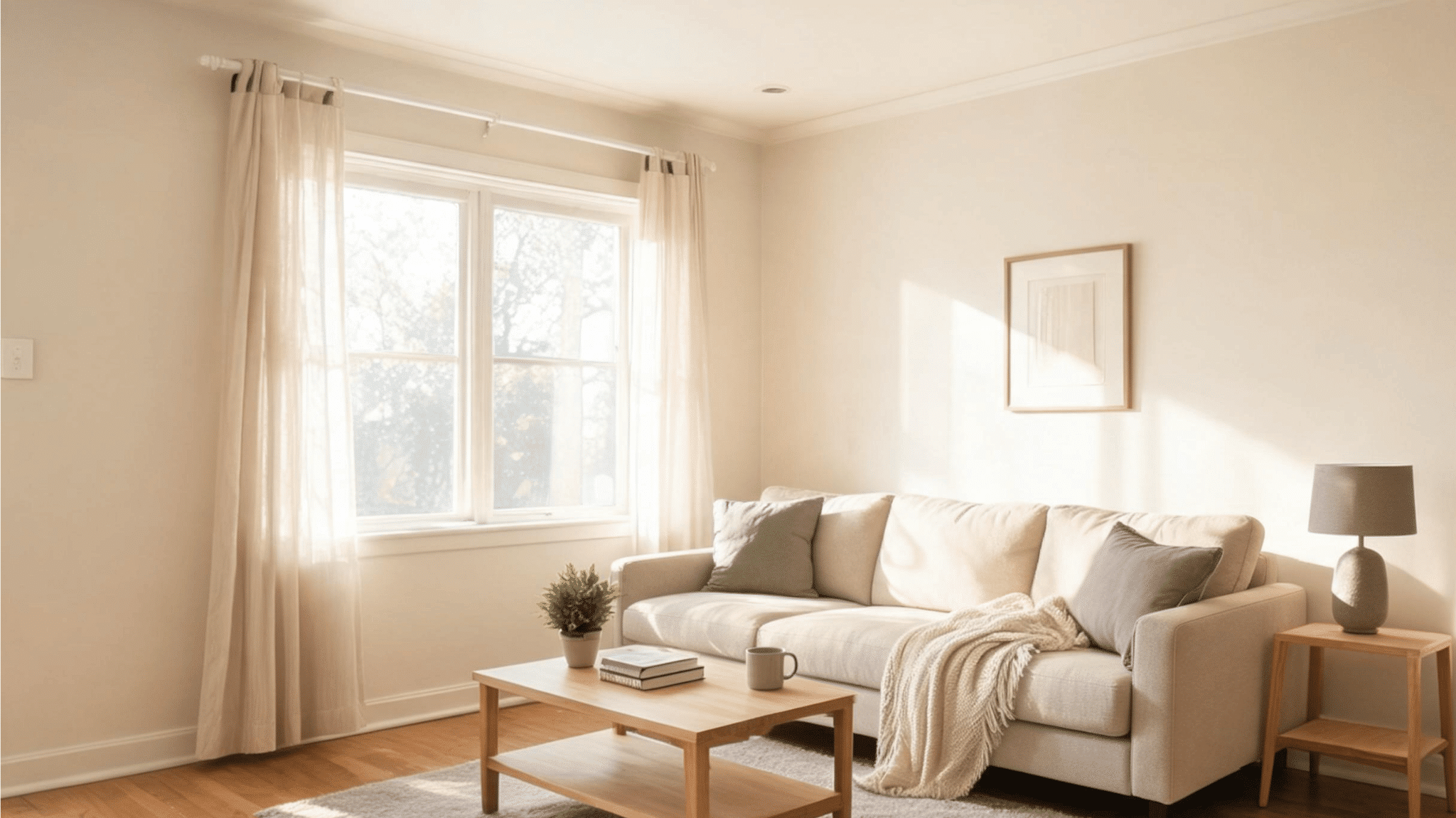
Build almost every transitional room around a neutral base; it’s what lets everything else feel calm instead of busy.
- Warm whites and soft greiges on the walls
- Beige, taupe, or oatmeal on large furniture pieces
- Black or dark bronze for metal accents
- Muted blues or greens used sparingly
- Natural wood tones left unpainted
Tip: I always test paint swatches at different times of day; the same neutral can look warm at noon and cold by evening.
2. Balanced Mix of Classic and Modern Furniture
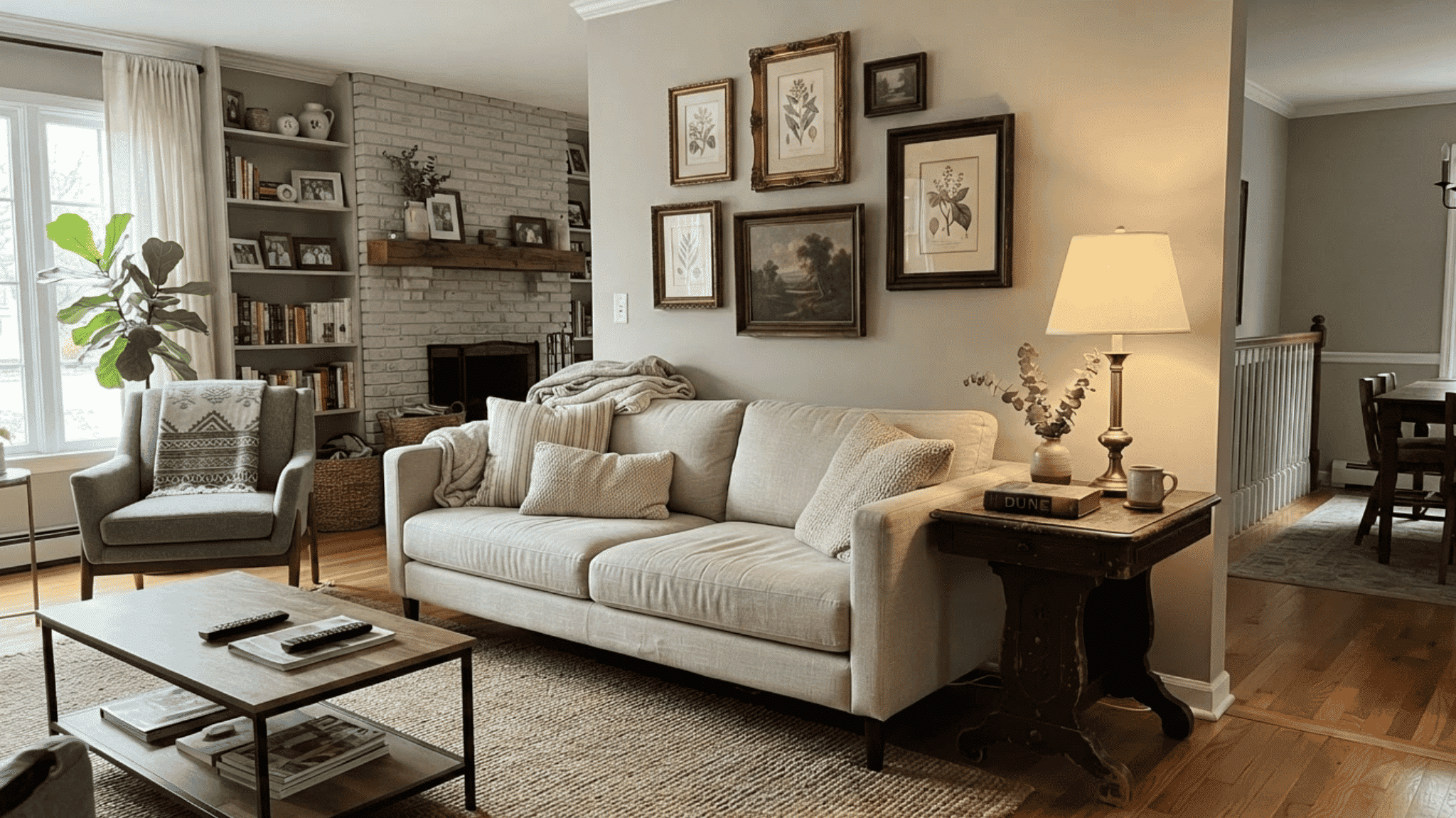
Never fill a transitional room with only new pieces or only antiques. The mix is the whole point. Combining modern furniture with older, collected pieces adds character.
- A traditional wingback chair next to a simple sofa
- Modern lighting over a classic wood dining table
- An heirloom mirror above a streamlined console
- Curved, classic legs paired with flat-front modern cabinets
- One statement vintage piece per room, not more
Tip: I keep it to one “old” anchor piece per space; more than that starts to feel like a shop, not a home.
3. Clean Lines with Soft Details
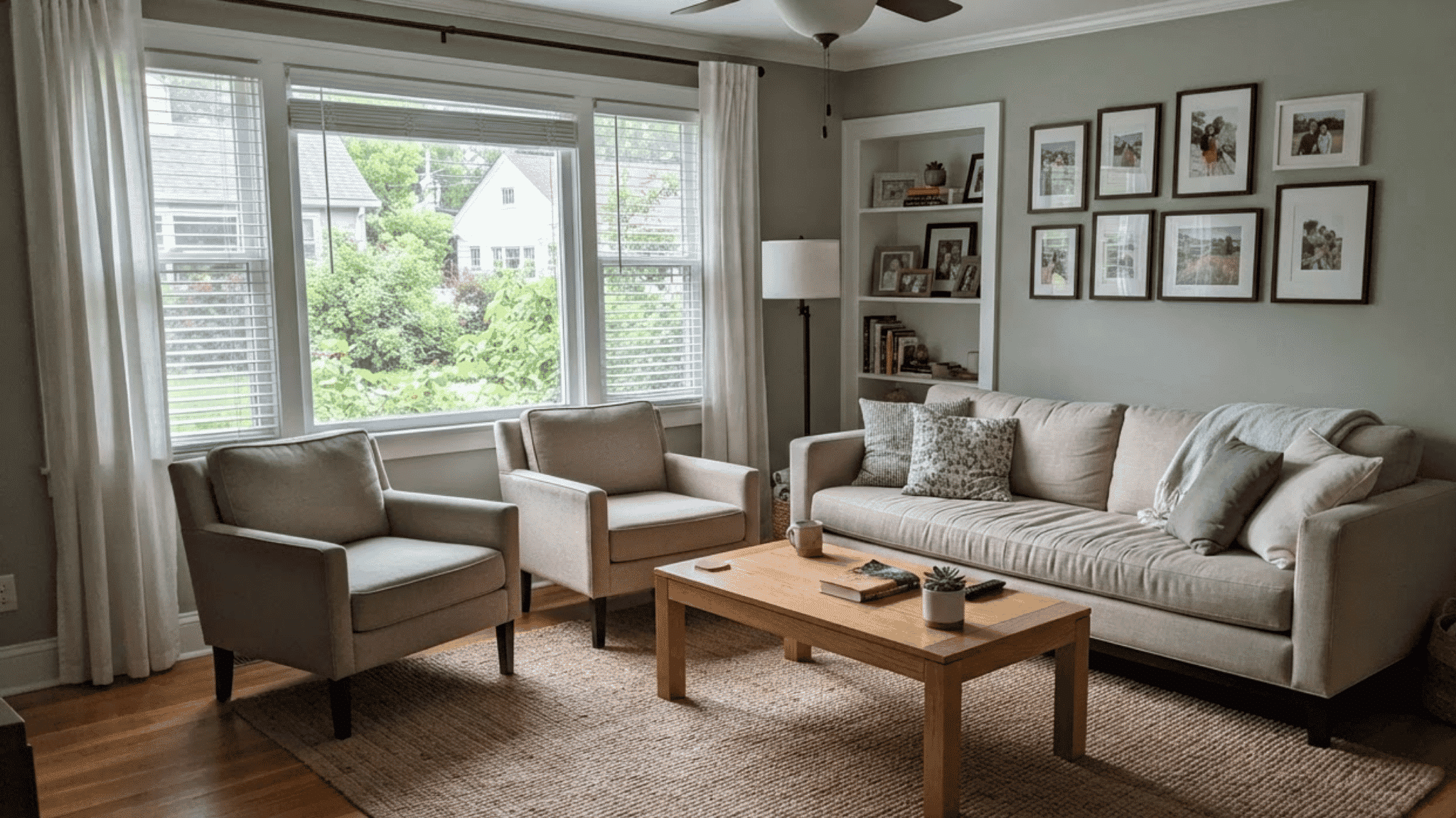
Furniture with simple, straight lines willnever let a room feel cold or bare. The goal is to create a room that feels organized and refined.
- Sofas and chairs with tailored, low-profile shapes
- Soft throw pillows to break up hard edges
- Rounded coffee tables instead of sharp corners
- Simple window treatments, no heavy drapery
- Smooth cabinet fronts with minimal carving
Tip: I add one curved piece, a lamp, a mirror, and a stool to soften a room that’s leaning too sharp and boxy.
4. Natural Materials and Textures
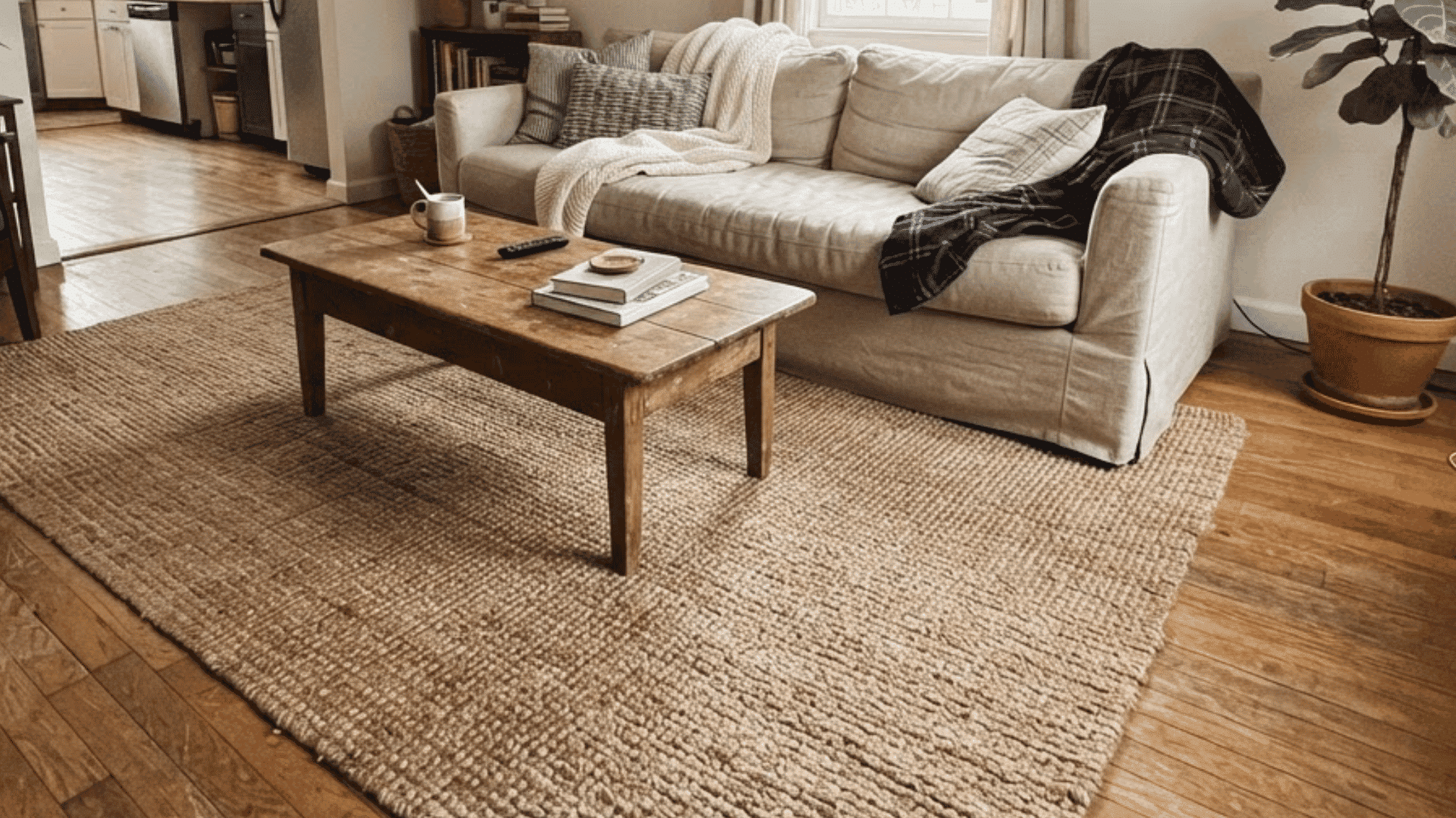
Reach for real, touchable materials because they carry a lot of the room’s personality on their own.
- Woven jute or wool area rugs
- Linen or cotton upholstery over synthetic blends
- Raw or lightly finished wood furniture
- Stone or ceramic accents on tables and shelves
- Rattan or wicker in baskets and light fixtures
Tip: I mix at least three different textures in one room: smooth wood, rough jute, soft linen, so it never feels flat.
5. Simple Yet Layered Decor
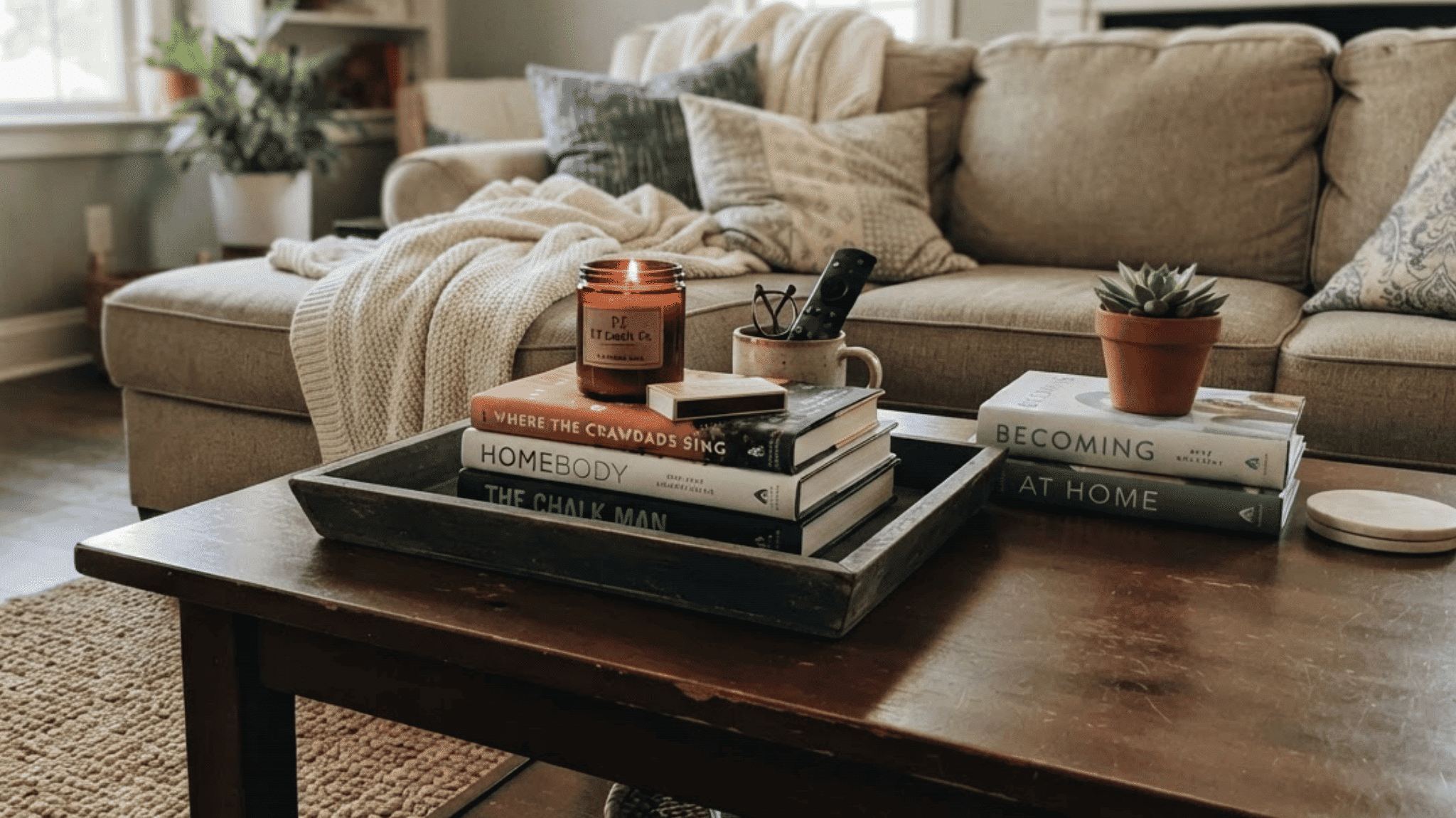
Keep the big pieces plain and let the small decor do the layering.
These layered living room ideas show how rugs, lamps, textiles, artwork, and natural materials can add warmth without making the room feel crowded. That’s how I get a room to feel finished, not empty.
- A few well-placed lamps instead of one overhead light
- Stacked books or trays on coffee tables
- One or two textured throw blankets
- Simple art in varied frame sizes
- A single plant or small tree for warmth
Tip: I never skip lamps; a room with only ceiling light almost always feels flat and unfinished to me.
Key Elements of Transitional Design
A thoughtful balance of furniture, colors, textures, and materials can make even a simple space feel complete and inviting.
These elements aren’t strict rules, more like checkpoints. Run through all of them before calling a room finished; it’s worth doing the same.
1. Transitional Furniture
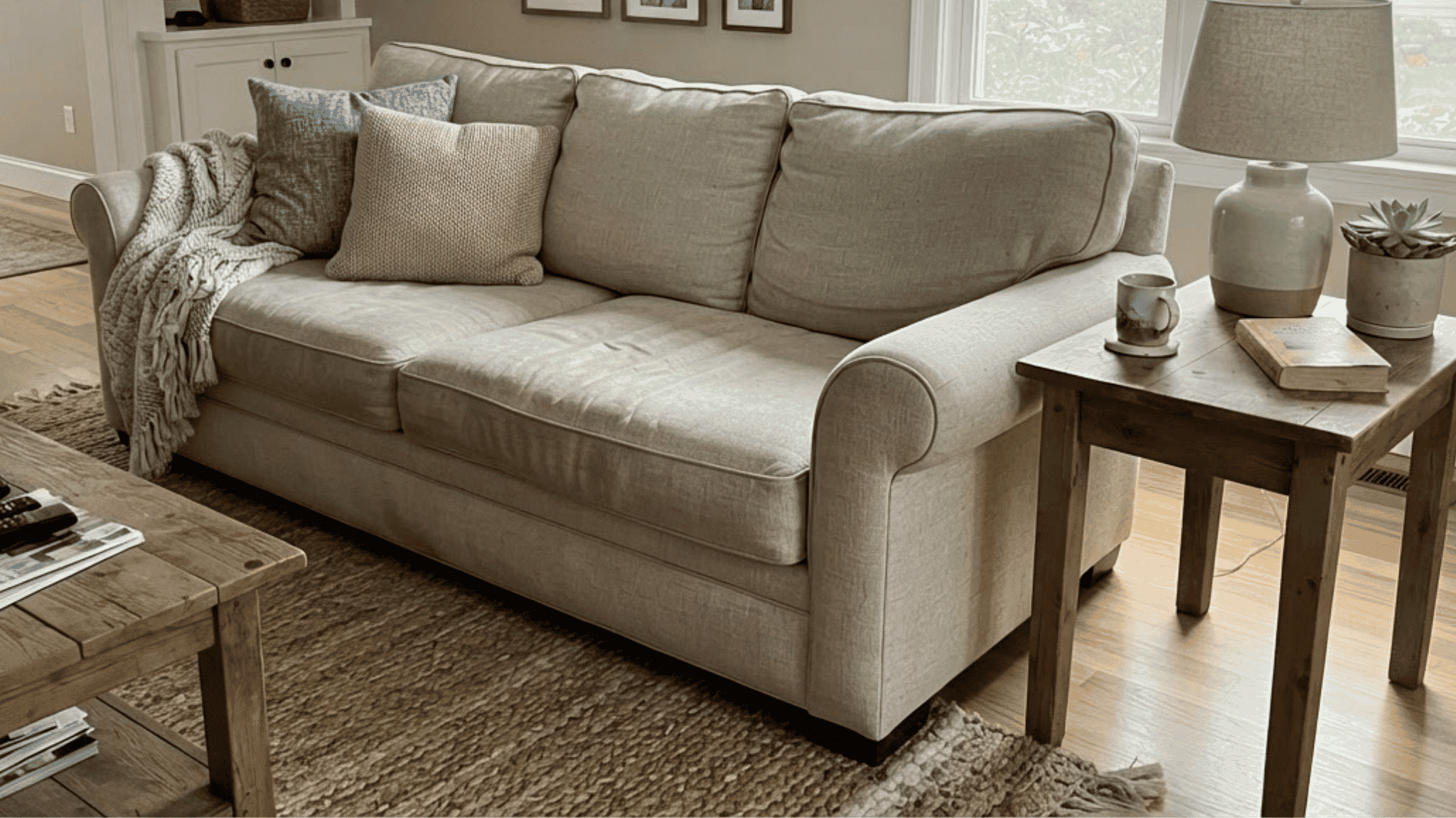
Once you understand the key details of transitional interiors, you’ll start spotting them in rooms you already know and see why they work so well.
Start with the furniture, as it sets the tone for the entire space. Look for pieces that balance traditional comfort with modern simplicity, avoiding anything too decorative or too plain.
Sofas with slightly rolled arms, wood dining chairs with clean legs, a classic dresser with simple hardware, and an upholstered bed are all good examples of this balanced style.
Tip: I always sit in a piece before buying it; transitional furniture should feel as comfortable as it looks.
2. Transitional Lighting
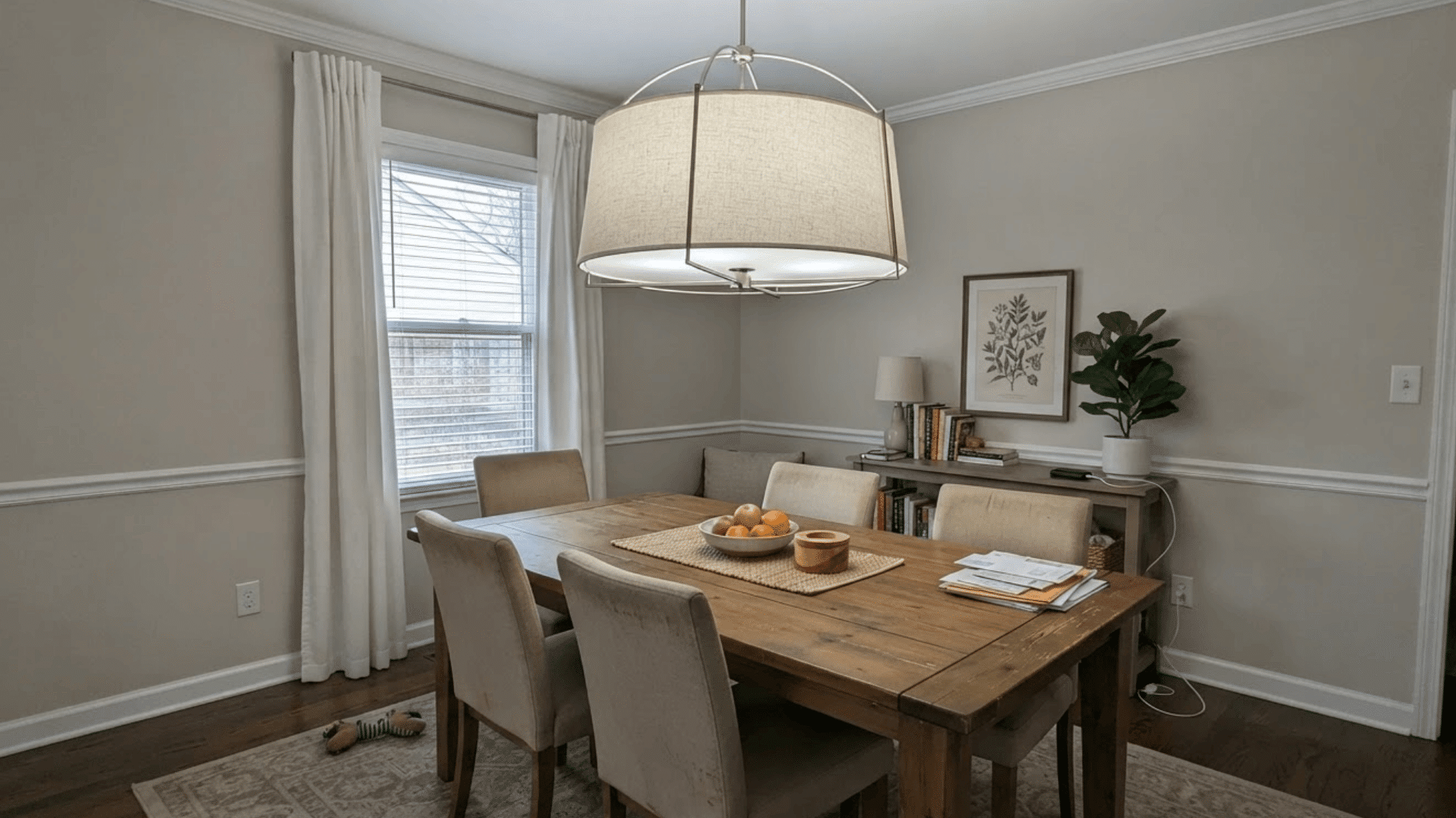
Lighting plays an important role in transitional interiors because it brings classic and modern elements together.
Instead of focusing only on brightness, look for fixtures with balanced shapes and clean details.
A drum-shade chandelier over a dining table, simple metal sconces near a mirror or bed, and ceramic table lamps can all add the right mix of warmth and simplicity.
Tip: I mix at least two lighting styles in one room, one classic fixture, one modern, so the ceiling doesn’t feel like an afterthought.
3. Transitional Rugs
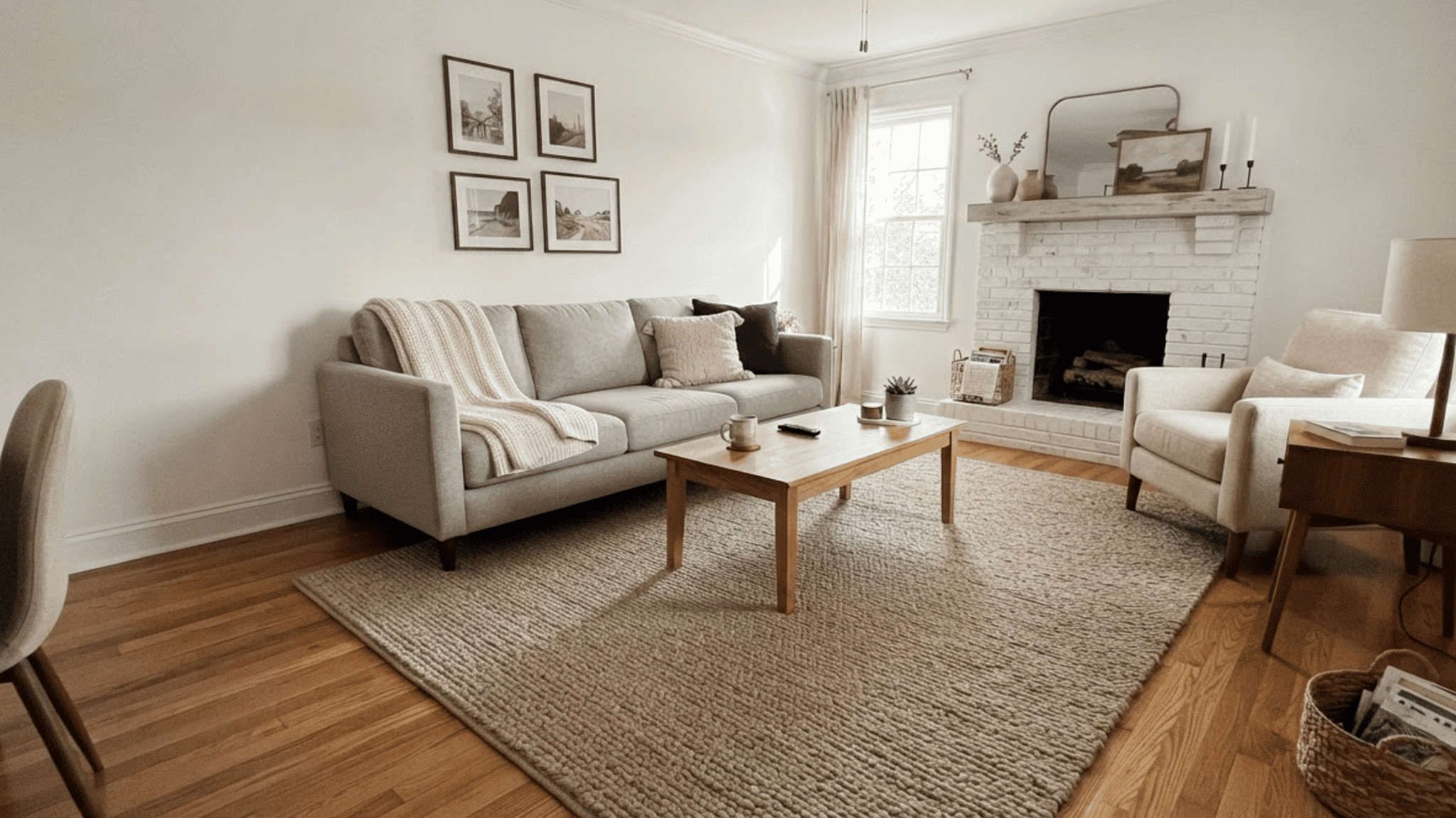
Rugs help anchor the room while keeping the overall look calm and balanced. They add warmth, texture, and comfort while creating a visual connection.
Since transitional spaces already use plenty of textures, choose rugs that support the design without taking over.
Neutral wool rugs, soft geometric patterns, jute or sisal options, faded traditional designs, and larger rugs that fit under furniture work well for this style.
Tip: I size rugs up before sizing them down; a too-small rug is the fastest way to make a transitional room look unplanned.
4. Transitional Décor and Accessories
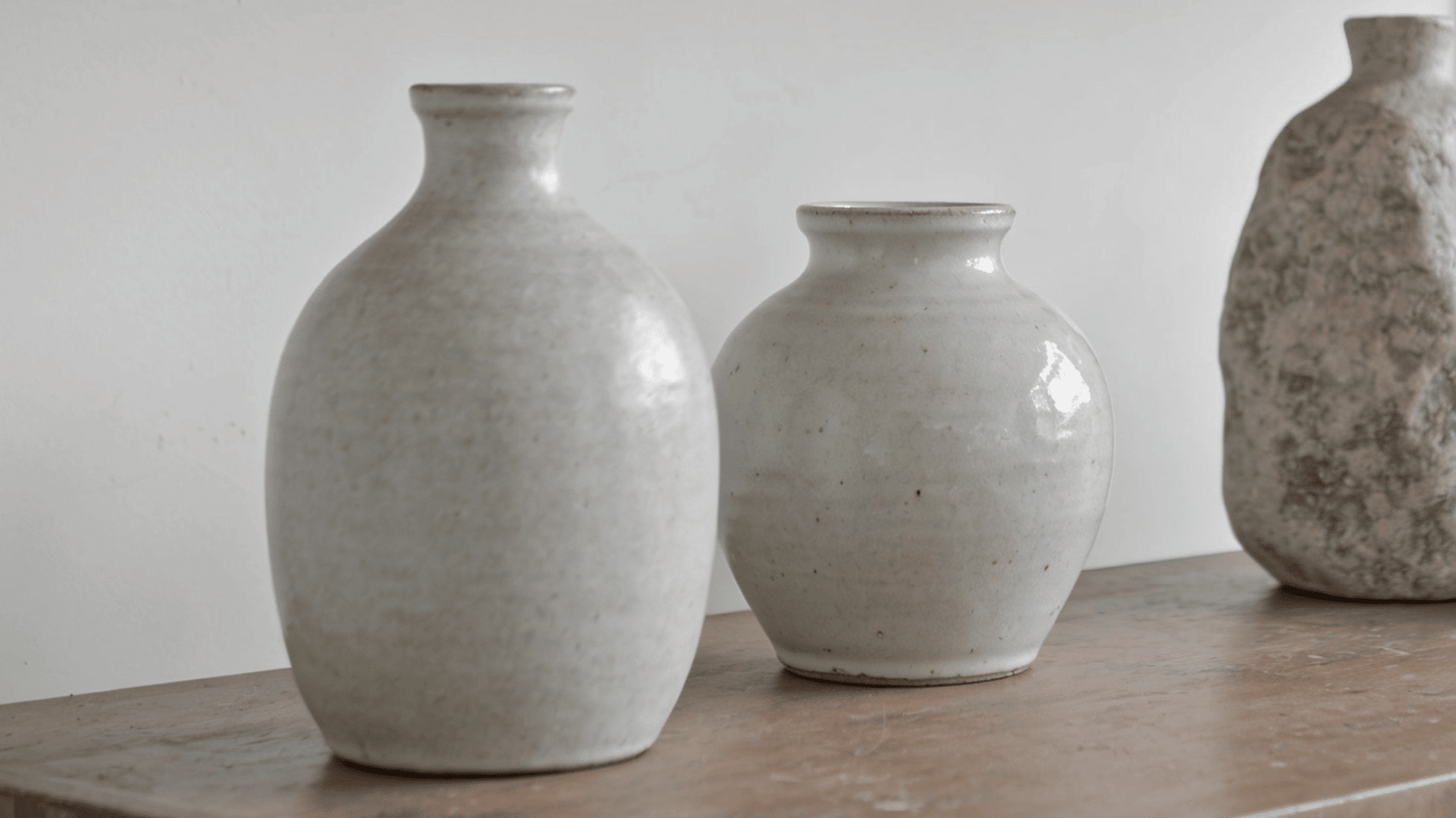
Accessories should add personality without making the room feel crowded. A few carefully chosen pieces often make a stronger impact than a shelf full of decor.
The goal is to create small moments of interest while keeping the overall space clean and balanced.
Try adding ceramic or stone vases, simple hardcover books, a meaningful vintage item, framed artwork with matching tones, or woven baskets that keep everyday items organized.
Tip: I follow a rule of three on shelves; three objects per grouping read as styled, not staged.
5. Transitional Window Treatments
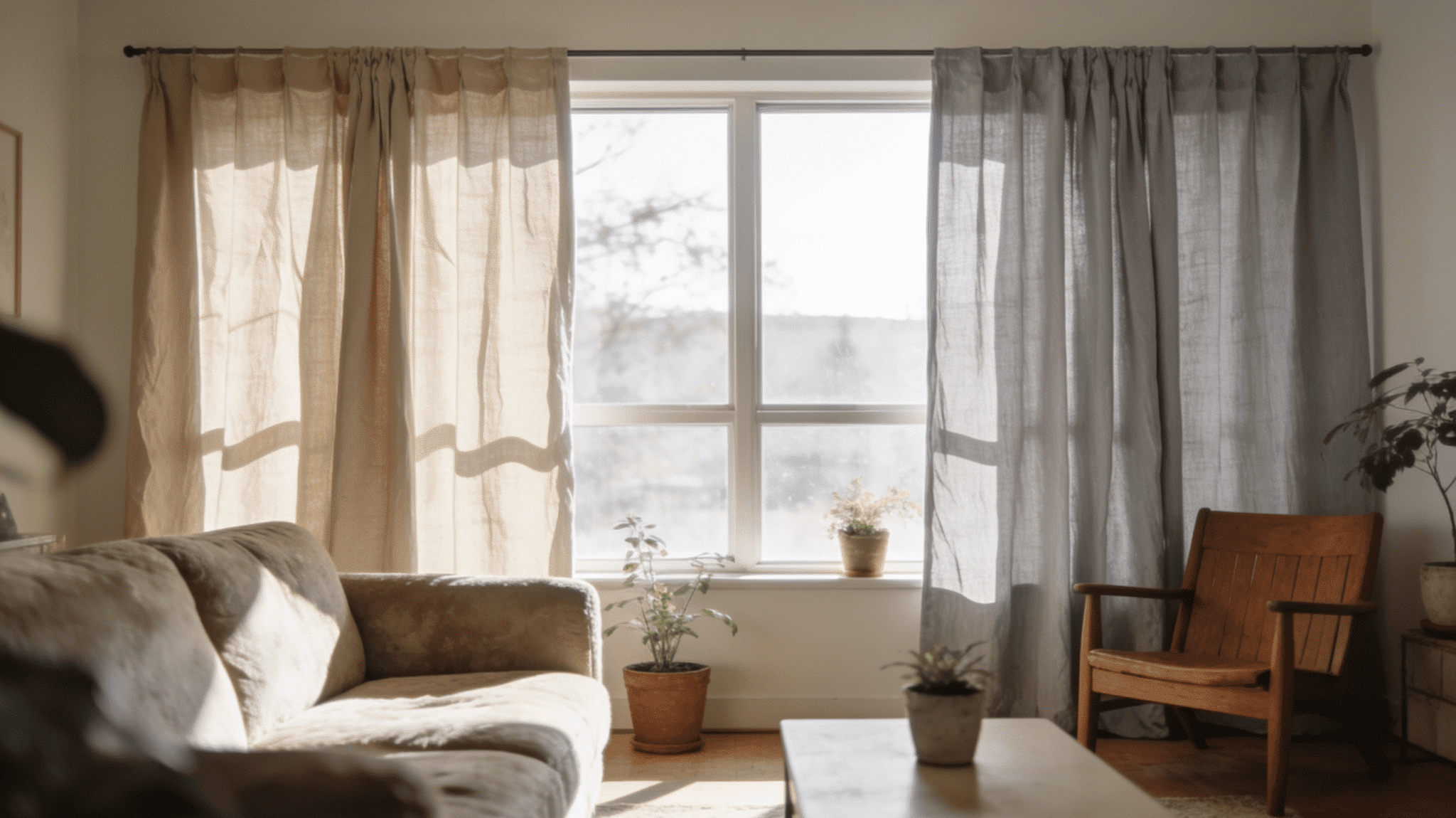
Window treatments should create a soft, relaxed finish rather than become the main focus of the room.
They should complement the furniture and decor while allowing natural light to flow through the space.
Simple linen or cotton curtains, neutral Roman shades, woven-wood shades, and gently draped panels can bring warmth while keeping the space open and comfortable.
Tip: I hang drapery rods close to the ceiling; even if the window is shorter, it makes the whole room feel taller.
What’s the Difference Between Transitional and Traditional Style?
This question comes up constantly, since the two styles share more than people expect at first glance.
People often send a photo of a traditional room and call it transitional, or the other way around. But once you put them side by side, the differences show up fast, especially in detail and formality.
| Feature | Transitional Style | Traditional Style |
|---|---|---|
| Overall Look | A balanced mix of classic and modern elements | A formal and classic look inspired by historic design styles |
| Furniture | Simple silhouettes with soft curves and minimal detailing | Heavier furniture pieces with carved details and classic shapes |
| Colors | Neutral shades like beige, gray, cream, and soft earthy tones | Richer colors like deep blues, burgundy, and warm wood tones |
| Patterns | Uses fewer patterns, often with subtle geometric designs or simple textures | Includes detailed patterns like florals, damasks, and traditional prints |
| Materials | Mixes wood, metal, glass, and soft fabrics for a balanced appearance | Focuses more on polished wood, antique finishes, and luxurious fabrics |
| Decor Style | Uses fewer accessories, focusing on meaningful pieces that add warmth | Often includes more decorative items like artwork and ornate accents |
| Lighting | Combines modern fixtures with classic shapes, such as simple chandeliers | Uses elegant chandeliers, lamps with decorative bases |
| Room Feel | Relaxed, welcoming, and easy to live in while still looking polished | Formal, elegant, and more structured with a classic atmosphere |
I always tell people traditional leans formal and detailed, while transitional trades some of that detail for calm and balance.
How to Mix Old and New Furniture in Transitional Design
Mixing old and new isn’t a guessing game; a few steady rules keep the balance from tipping too far either way.
- Pick one “old” anchor piece per room, not several
- Pair a vintage piece with a plain modern neighbor
- Keep old and new pieces in the same color family
- Avoid placing two ornate pieces side by side
- Let the new furniture have simpler lines than the old piece
- Repeat one material, like wood tone, across both eras
- Reupholster an old frame in a modern, plain fabric
- Use modern lighting to soften a traditional furniture set
- Keep patterns to one era only, never both at once
- Step back and check the room from the doorway first
No rulebook beats a trained eye, but these steps keep furniture from fighting instead of flowing.
Common Misconceptions About Transitional Interior Design
The same wrong assumptions about transitional style keep coming up, usually from people who’ve only seen it in photos.
| Myth: Transitional style is just safe or boring neutral decor Fact: Transitional rooms use neutral colors as a base, but textures, artwork, patterns, and statement pieces add personality and depth. |
| Myth: You need matching furniture sets to pull it off Fact: Mixing furniture styles, finishes, and textures often creates a more natural and collected look. |
| Myth: Transitional rooms cannot include vintage or inherited pieces Fact: Vintage furniture, family heirlooms, and meaningful decor can add character when paired with simpler modern elements. |
| Myth: You need a large budget to create a transitional home Fact: Small updates like changing lighting, adding neutral textiles, or mixing old and new pieces can create the look without a major renovation. |
| Myth: Transitional style only works in large, open spaces Fact: This style can work in rooms of any size because its balanced approach creates a comfortable, organized feel. |
Every one of these has been disproven in real rooms, and the truth is, transitional style is one of the most forgiving to work with.
Conclusion
Creating a home that feels balanced and comfortable comes down to choosing the right mix of details.
Through my experience with home styling and practical room planning, I’ve found that the key is to create a space that feels welcoming without looking overly decorated.
Transitional interior design works because it naturally blends classic elements with modern simplicity.
If you’re still wondering what transitional style is, think of soft textures, clean lines, neutral tones, and carefully chosen pieces working together.
With the right furniture, materials, and layout choices, you can bring this balanced style into any room.
Frequently Asked Questions
Can Transitional Style Work in A Modern Home?
Yes, transitional style works well in modern homes by adding classic details to create warmth and balance.
Is Transitional Style Expensive to Create?
No, you can create a transitional look by mixing existing furniture with simple updates.
What Furniture Works Best for Transitional Interiors?
Comfortable furniture with classic shapes, clean lines, and neutral fabrics works best.