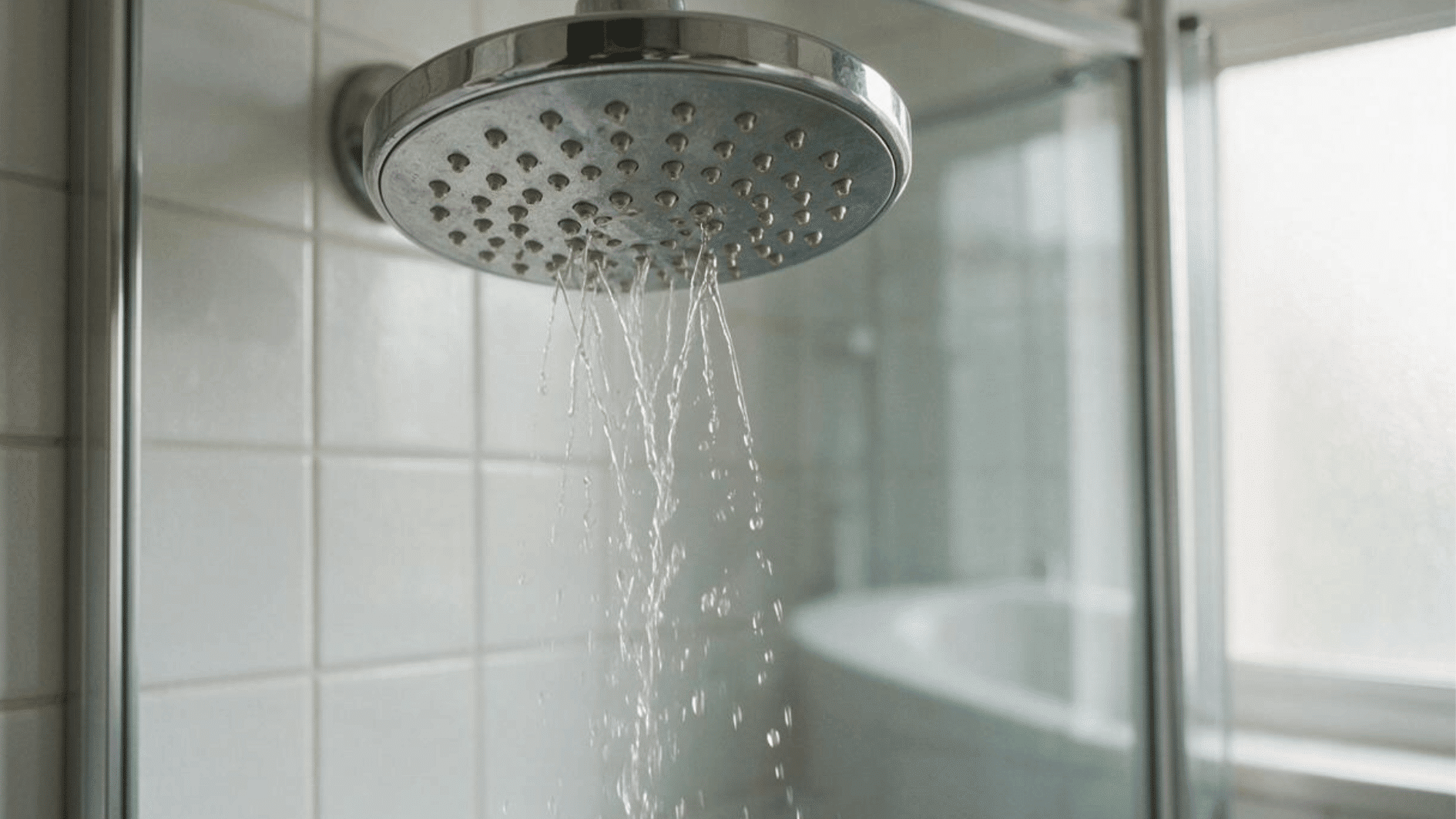
A weak shower stream shouldn’t ruin your morning. A slow-filling washing machine shouldn’t test your patience. Yet low water pressure in house plumbing does exactly that. It rarely warns you first.
So why is my water pressure low? I’ve helped homeowners work through this exact question for years. It’s rarely the same story twice. Chances are, someone else has already dealt with your exact symptoms.
That’s usually the fastest way to get answers. Compare what you’re seeing with what other homeowners went through. It often points straight to the cause.
What Does Low Water Pressure In the House Mean?
Low water pressure means water isn’t coming out with the force you expect. Your faucet, shower, or appliance feels weaker than normal. That’s the simplest way to describe it.
Most US homes run on 40 to 60 PSI. That’s the ideal range. It’s strong enough for a good shower. It’s gentle enough not to strain your pipes. Anything below 40 PSI usually feels weak.
It helps to separate two things people often confuse:
- Low water pressure: The force behind the water is weak. Think of a faucet that dribbles instead of streams.
- Low water flow: The water flow, even if the pressure seems fine. A partially blocked pipe can cause this.
Both feel similar in daily life, but the causes can be different. A weak shower or slow-filling washing machine is usually the first sign something’s off, and that’s exactly what the rest of this covers.
Common Causes for Low Water Pressure
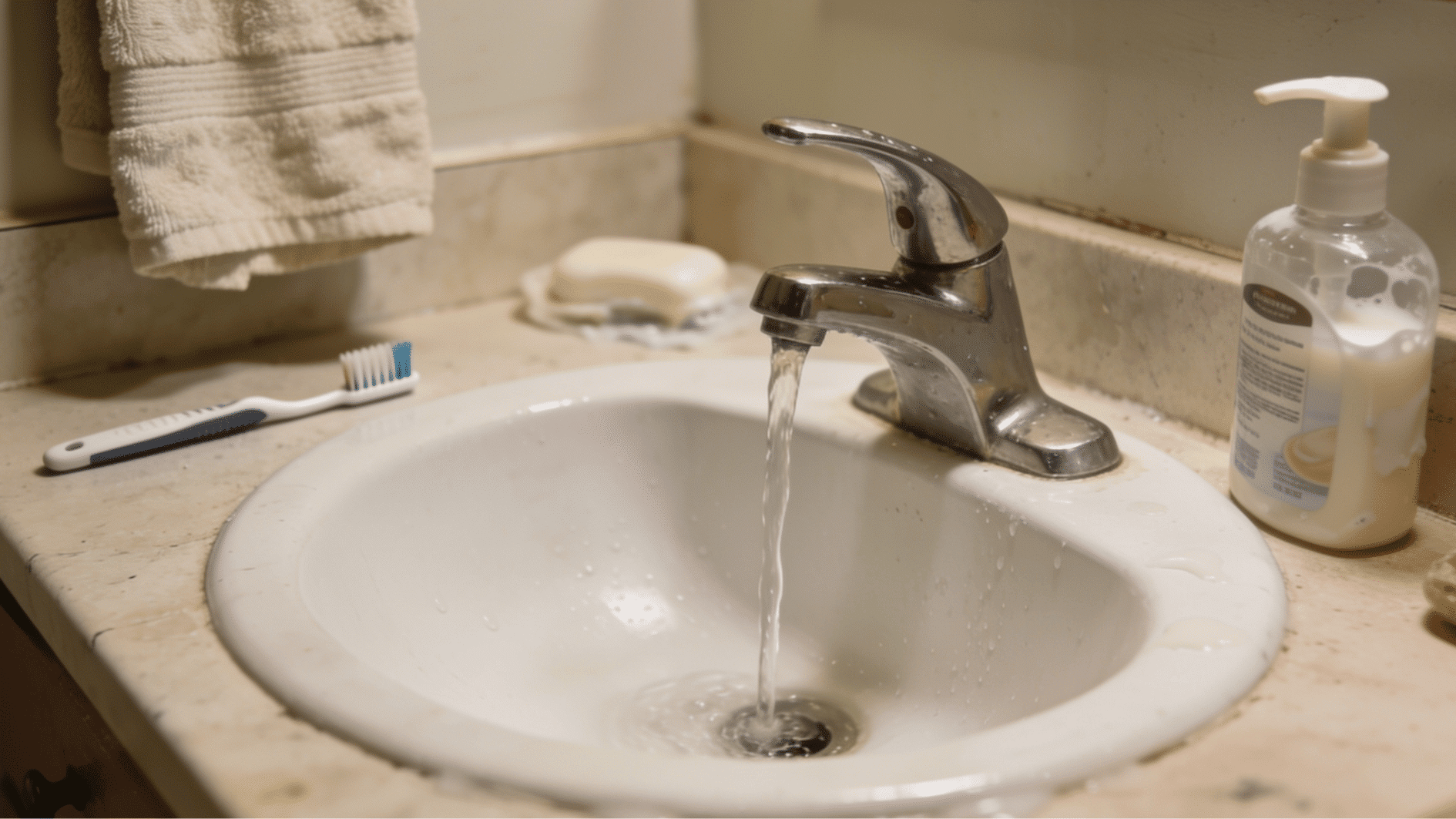
If you’re asking why your water pressure is low, it usually comes down to a few usual suspects. It could be a small fixture problem. It could be something bigger in your plumbing. Sometimes it’s not your house at all. Here’s what to check first.
1. Clogged Faucets and Showerheads
This is the most common cause. Mineral deposits build up over time. Hard water makes it worse. Sediment blocks the flow.
You’ll notice it in one spot first. Only one fixture feels weak. The shower spray looks uneven. Cleaning it often fixes the problem right away.
Try this. Clean the faucet aerator. Soak the showerhead in vinegar. Replace it if the buildup is too severe.
2. Partially Closed Water Shutoff Valve
Your main shutoff valve controls water entering the house. Sometimes it doesn’t get fully reopened after repairs or maintenance, and it’s easy to overlook once the work is done.
Check near your water meter or in your basement, since that’s usually where this valve is located. Turn it slowly, and never force a valve that feels stuck. Call a plumber if it won’t budge, as that often points to corrosion.
3. Faulty Pressure Regulator
Many homes have a pressure regulator at the point where the main water line enters the house. It brings high municipal pressure down to a safe, steady level. When it fails, the whole house usually feels it, not just one fixture.
Watch for sudden drops in flow and weak pressure at every faucet at once. Pressure that changes throughout the day is another clue. If the regulator is more than 10 to 15 years old, it’s a likely culprit.
4. Buildup or Leak in Pipes
Pipes cause two different issues. Buildup narrows the space inside older pipes. Corrosion adds to the problem. Leaks, on the other hand, send water where it shouldn’t go. Buildup shows up slowly. Pressure fades over time. Cleaning fixtures won’t help here.
Leaks show up differently. Pressure drops suddenly. You might notice water stains or damp spots. Your water bill climbs. You may even hear running water when everything’s off.
5. Municipal Water Supply Problems
Sometimes the issue isn’t your house at all. Water main repairs can cause it. So can local construction or utility work. This is one of the more overlooked causes of low water pressure in house plumbing, since it has nothing to do with your own pipes.
Ask your neighbors. If they’re dealing with the same thing, it’s likely not your plumbing. It’s the local supply.
How to Check If Your House Has Low Water Pressure
Before fixing anything, figure out where the low pressure is actually happening. This step saves you time and frustration.
- Check a few faucets around the house: Get a general sense of how pressure feels in different spots before assuming anything.
- Don’t forget outdoor faucets: They run off the same main line, so they’re worth checking too.
- Test hot and cold water separately: This helps you see the full picture instead of judging by just one temperature.
- One weak tap means a local issue: The problem is likely tied to that specific fixture or its supply line.
- Weak pressure everywhere means a bigger issue: This points to something like your main line or regulator.
- Attach the gauge and open it fully: Connect it to an outdoor faucet and turn the tap all the way on for an accurate reading.
- Check the reading: Normal pressure falls in the range you already know, but keep an eye on the extremes.
- Readings above 80 PSI are a problem too: It puts extra strain on your pipes and fixtures over time.
What Others Have Experienced with Low Water Pressure
Real experiences with low water pressure in the house often reveal patterns that generic troubleshooting guides miss.
Call the water company. Chances are it’s nothing at your house. Could be any number of things between you and the water source. – Lilysils
Check the line where it comes into the house. Usually there is a valve that turns off the whole house. Verify that it is open all the way. – SGBotsford
I had an old house with a small water line that couldn’t provide enough pressure to run a sprinkler system. I had to upgrade the water main and that gave much better pressure to the entire house. – GladysKravitzRedux
Water pressure varies anyway so it could be nothing. As other have mentioned check your meter to see if you are losing water. If not, could be that a main servicing your house is lowing Water, or just an increased demand in your area. – grafeisen203
Do you have a water filter? Change it. Water softener? Try bypassing it to see if it increases the pressure. – rocketmn69_
What Homeowners Tried Before Calling a Plumber
Homeowners usually start with simple checks first when dealing with low water pressure in the house. Online discussions show a common pattern: try the easy fixes, then call a plumber if the problem doesn’t clear up.
| What They Tried | Result | Next Step |
|---|---|---|
| Cleaned the aerator | Pressure returned to normal in one spot | Done, no action needed |
| Opened the main valve | Restored pressure house-wide | Done, no action needed |
| Tested PSI outdoors | Confirmed a pressure issue | Call the city or add a booster pump |
| Checked the water meter | Ruled out a hidden leak | Call a plumber if meter moved |
| Noticed sudden pressure loss | Pointed to a regulator or main line issue | Schedule a plumber |
| Pressure changed all day | Signaled a failing regulator | Get a regulator inspection |
| Noticed noise or old pipes | Suggested strain or age-related wear | Get a pipe/regulator inspection |
How Much Does It Cost to Fix Low Water Pressure?
Fixing low water pressure can cost anywhere from $0 for a simple DIY fix to several thousand dollars for major pipe repairs or whole-house repiping. The final cost depends on what is causing the pressure problem.
- Cleaning a faucet aerator or showerhead: Costs nothing if you already have vinegar or a descaling solution at home.
- Opening a stuck or partially closed valve: Free in most cases, since it’s usually a simple manual fix.
- Pressure regulator replacement: Typically runs $250 to $500 including labor, depending on your plumber and location.
- Pipe repair or replacement due to buildup and corrosion: Ranges from a few hundred dollars for a small section to several thousand for whole-house repiping.
- Booster pump installation: Usually falls between $200 and $1,500, depending on the size and style of the pump.
- Municipal supply issues: Costs you nothing directly, since the fix is on the city’s side, not yours.
Conclusion
Water pressure problems rarely feel dramatic until they are. One day, showers are fine. Next, you’re standing under a trickle, wondering why your water pressure is low. Most causes aren’t as complicated as they feel.
Patience matters most here. Rushing into an expensive fix wastes money. That’s the pattern I’ve seen play out again and again with low water pressure in-house issues.
If nothing adds up on your end, some causes fall outside what any homeowner can diagnose on their own. A plumber can spot what you might miss. That’s exactly when professional help earns its cost.
Frequently Asked Questions
Why is My Shower Pressure Low But My Sink is Fine?
A clogged showerhead, mineral buildup, or shower valve issue is often responsible when only the shower has weak pressure.
Why is My Hot Water Pressure Low But Cold Water is Fine?
This usually points to a failing water heater, mineral buildup in the tank, or a partially closed valve on the hot water line specifically.
Does a Booster Pump Really Work for Low Water Pressure?
Yes, a booster pump mechanically raises water pressure and works well when the municipal supply itself is weak.
Can Weather Affect Water Pressure In a House?
Yes, freezing temperatures can narrow pipes or cause minor blockages. Heavy rain can also temporarily affect municipal water pressure.