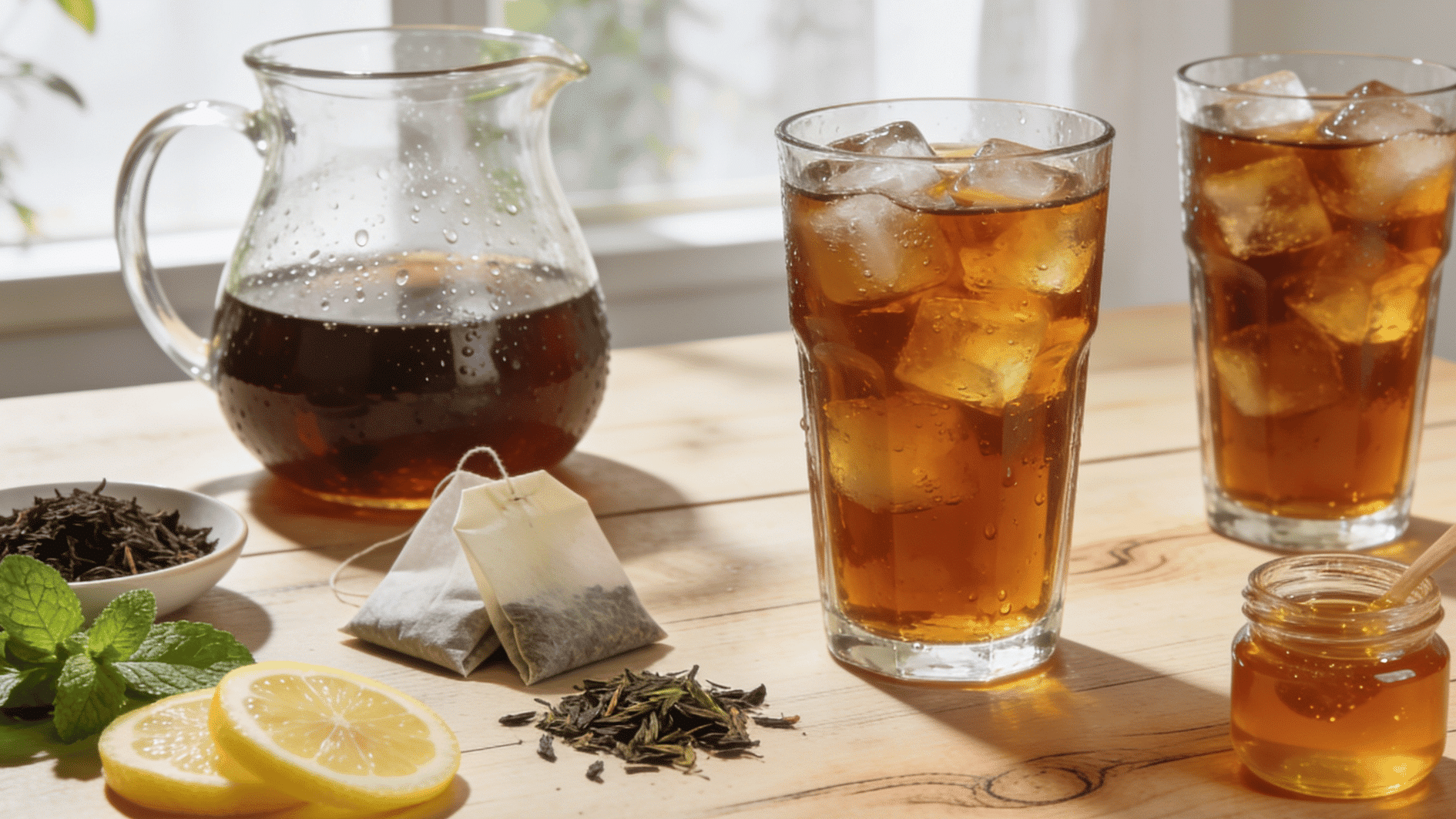
After six years and hundreds of pitchers, from cheap grocery bags to single-origin loose-leaf, everything below is what actually held up in my kitchen.
Somewhere along the way, iced tea got a bad reputation, and it’s not hard to see why. Most of us grew up with the kind that was brewed hot, poured over ice, and left tasting like a mouthful of over-steeped regret.
If you are wondering how to make cold-brew tea, try letting time do the work, coaxing out flavor slowly and skipping most of the harsh, astringent compounds that make tea bite back.
This blog walks you through exactly how to make cold brew tea, how long to cold brew tea for the best flavor, and how to avoid the rookie mistakes that ruin a good batch.
What is “Cold Brew” Tea?
Cold brew tea is tea steeped in cold or room-temperature water for several hours, rather than brewed hot and then chilled.
In my side-by-side tests, the same leaves brewed cold consistently taste rounder and less bitter, and here’s why.
Heat extracts flavor fast, but it also pulls tannins and caffeine aggressively, which is where bitterness and that dry aftertaste come from.
Cold water works more gently, drawing out sweeter, more delicate notes. This isn’t folklore: catechins and caffeine, the compounds behind astringency, dissolve far more readily in hot water than cold.
The trade-off is time; the payoff is a clean, naturally sweeter cup, often with less caffeine.
Ingredients and Equipment You’ll Need
The beauty of cold brew is that it demands almost nothing you don’t already own. There’s no special machine, no thermometer, and no barista training required.
| Item | Why You Need It | Notes |
|---|---|---|
| Tea of your choice | The star of the show | Loose-leaf or tea bags both work: green, black, white, oolong, herbal, or fruit blends |
| Cold, filtered water | Makes up most of the drink | Filtered tastes noticeably cleaner than tap |
| A pitcher or large jar | Holds the brew while it steeps | Glass is ideal because it won’t hold onto flavors |
| A lid or cover | Protects the flavor | Keeps fridge smells out of your tea |
| A fine mesh strainer | Separates leaves from liquid | Optional if you’re using tea bags instead of loose leaf |
| Optional extras | Finishing touches | Fresh mint, citrus slices, ginger, honey, or a small amount of homemade simple syrup |
Methods to Make Cold Brew Tea
There’s no single “correct” way to cold brew, which is part of the appeal. Below are three reliable methods, along with the tea-to-water ratio and brewing method details you’ll want to nail.
As a general starting point, use about one tablespoon of loose-leaf tea per cup of water, then adjust to taste. Cold brewing is forgiving, so treat your first batch as a friendly experiment rather than a pass-fail exam.
1. Cold Brew Tea in a Pitcher (Loose-Leaf)
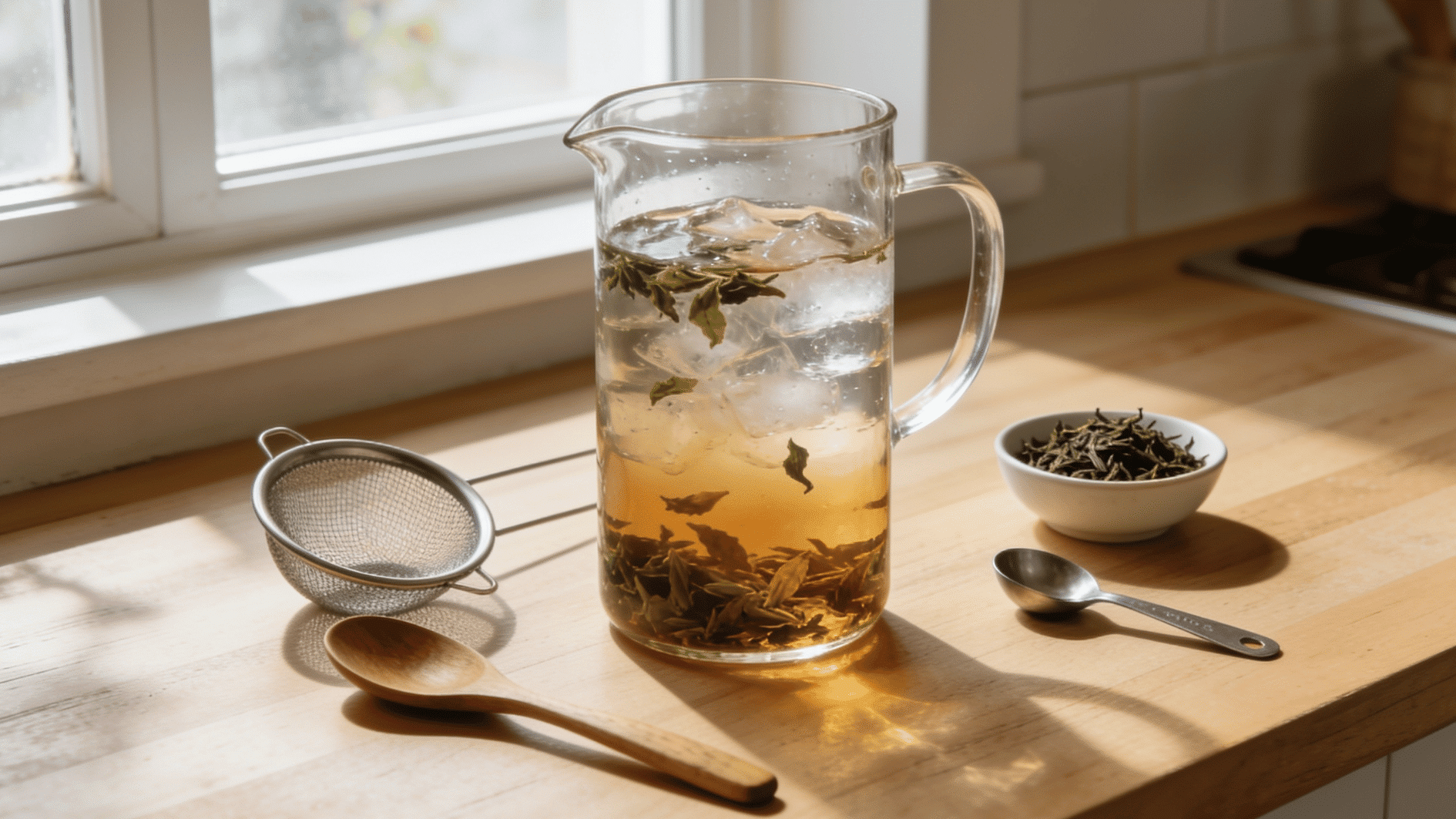
This is the classic approach and the best choice if you want to brew a larger batch and control the strength precisely. It’s the method I reach for most, usually a big jar of loose-leaf left in the fridge overnight.
The tea-to-water ratio here is your main lever: start with one tablespoon of loose-leaf per cup of water and scale up for a full pitcher.
- What you’ll need: 4 tablespoons of loose-leaf tea, 4 cups (1 quart) of cold filtered water, a glass pitcher with a lid, and a fine-mesh strainer.
- Time required: 5 minutes of hands-on prep, plus 4–12 hours of steeping in the fridge depending on your tea type.
Steps to Follow:
- Measure 4 tablespoons of loose-leaf tea and add it to a clean glass pitcher, using about 1 tablespoon per cup.
- Pour in 4 cups of cold, filtered water and make sure the tea leaves are fully covered.
- Stir gently so the leaves become saturated instead of floating on the surface.
- Cover the pitcher and refrigerate it for the recommended steeping time for your tea type.
- Strain the tea through a fine-mesh strainer into a clean container to remove the leaves.
- Serve over ice and keep any leftovers refrigerated for up to three to four days.
2. Cold Brew Tea with Tea Bags
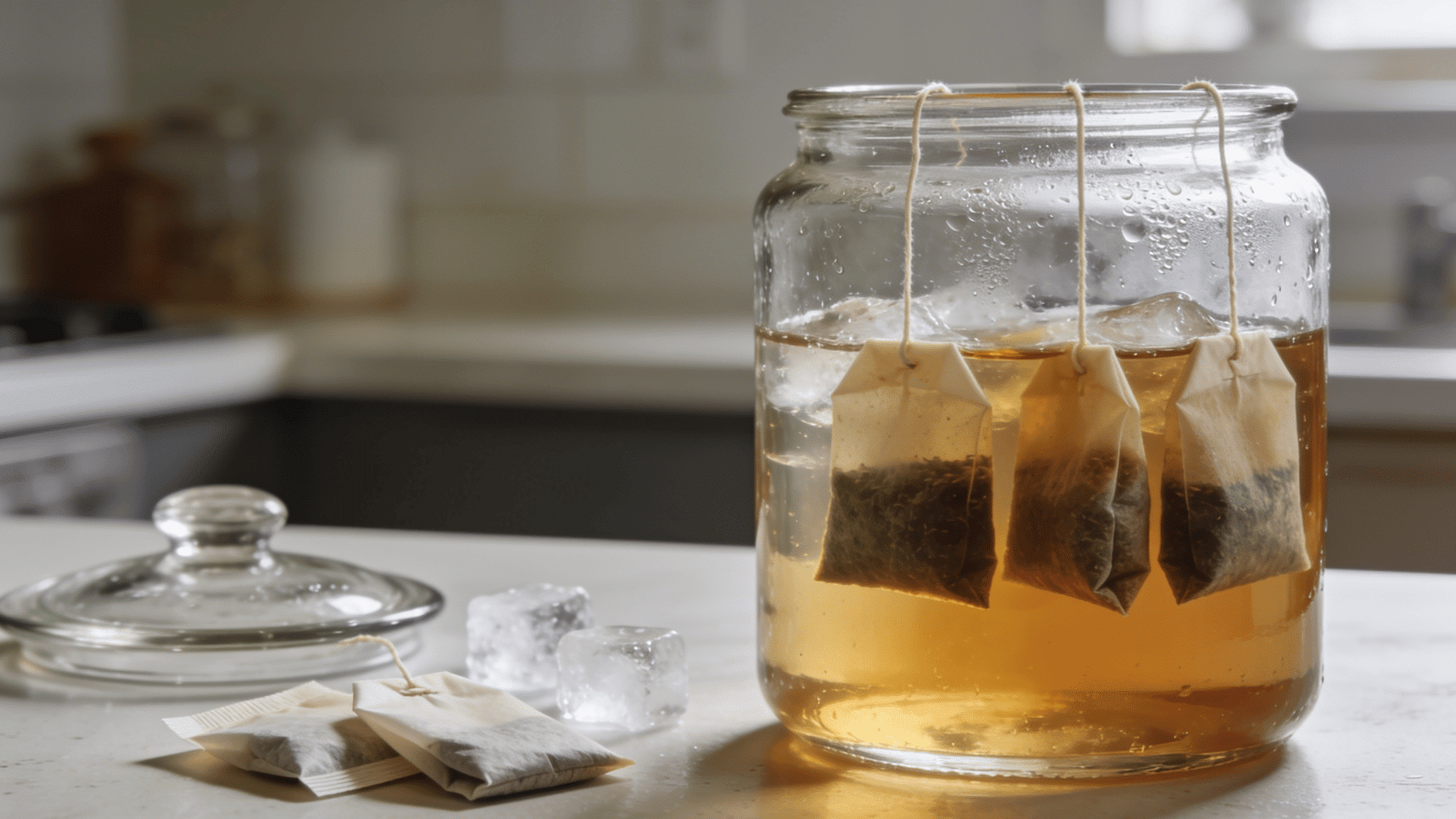
If loose-leaf feels fussy, tea bags are the low-drama option, and cleanup is basically nonexistent. The tea-to-water ratio is simpler here: one standard tea bag per cup of water, so four bags for a quart-sized batch.
- What you’ll need: 4 standard tea bags, 4 cups (1 quart) of cold filtered water, and a jar or pitcher with a lid. No strainer required.
- Time required: 2 minutes of hands-on prep, plus 4–12 hours of steeping in the fridge depending on your tea type.
Steps to Follow:
- Drop 4 tea bags into your pitcher or jar (one bag per cup of water).
- Add 4 cups of cold, filtered water, pouring slowly so the bags settle in.
- Make sure the bags are fully submerged rather than bobbing on the surface; nudge them down with a spoon if needed.
- Cover and refrigerate for the recommended steeping time (see the chart below).
- Lift out the bags and gently press or squeeze them against the side to release the last of the flavor without adding bitterness.
- Serve immediately over ice, or keep refrigerated for up to three to four days.
Steeping Time Chart for Cold Brew Tea
The most common question by far is how long to cold brew tea, and the honest answer is: it depends on the tea.
Cold brewing is slow, so most teas need several hours rather than minutes, and delicate teas ask for less time than robust ones.
Use the chart below as your reliable starting point, then adjust to your own palate. If a batch tastes thin, give it longer next time; if it edges toward bitter, pull it earlier.
| Tea Type | Cold Brew Steeping Time | Notes |
|---|---|---|
| Green tea | 4–6 hours | Stop early to keep it smooth and grassy |
| White tea | 4–6 hours | Light and floral; over-steeping mutes it |
| Oolong tea | 6–8 hours | Balanced and rounded, hard to overdo |
| Black tea | 8–12 hours | Bold and forgiving; great iced tea base |
| Herbal / fruit | 8–12+ hours | Very forgiving; longer often tastes better |
How to Prevent Cold Brew Tea From Tasting Bitter?
Cold brew is naturally less bitter than hot-brewed tea, but you can still overshoot.
I learned this the hard way after leaving a batch of green tea in the fridge for a full 24 hours and pouring myself a glass of something closer to lawn clippings.
Bitterness almost always comes down to time, temperature, or leaf quality, and every one of those is easy to control once you know what to watch for. Keep these in mind:
- Don’t over-steep. The single biggest culprit. When your tea hits the recommended time, strain it, even if you’re busy.
- Keep it cold. Room-temperature brewing is faster but riskier; the fridge slows extraction and keeps flavors gentle.
- Use the right ratio. Overloading the pitcher with leaves concentrates tannins and pushes the cup toward astringency.
- Strain thoroughly. Leaves or bags left sitting in the finished tea will keep extracting and turn it harsh over time.
- Start with good tea. Cheap, dusty tea has more broken leaf surface area, which releases bitterness faster.
Common Cold Brew Tea Mistakes
Even a foolproof method has a few tripwires.
Most cold brew disappointments trace back to the same handful of avoidable errors, and once you’ve sidestepped them, your batches become remarkably consistent. Here are the ones worth remembering:
- Rushing the process. Cold brew is a slow craft; pulling it after an hour leaves you with flavored water.
- Using warm or unfiltered water. Both change the taste, and not for the better.
- Forgetting to cover the pitcher. Your tea will happily absorb whatever your fridge is hiding.
- Leaving the tea leaves in indefinitely. Steeping doesn’t stop just because you walked away.
- Storing it for too long. Cold brew tastes best within about three to four days; after that, freshness fades.
- Never adjusting. Your first batch is data, not destiny. Tweak the ratio and timing until it’s yours.
Conclusion
Cold brew tea proves that the best drinks are often the least demanding.
By swapping heat for time, you sidestep the bitterness and astringency that ruin so many glasses of iced tea, and you end up with something smoother, sweeter, and genuinely refreshing.
The recipe is refreshingly loose: roughly one tablespoon of loose-leaf or one tea bag per cup of water, a spot in the fridge, and a steeping window that ranges from four hours for delicate green and white teas.
After years of doing this, my only real advice is to start a batch tonight, taste it tomorrow, and adjust from there. Once you’ve made one good batch, you’ll wonder why you ever brewed it hot.
Frequently Asked Questions
Can You Reuse Tea Leaves After Cold Brewing?
Yes, but the second batch will taste lighter and may require a longer steeping time.
Can You Heat Cold Brew Tea?
Yes, gently warm it on the stove or in the microwave without boiling it.
Does Cold Brew Tea Contain Caffeine?
Yes, though it often contains less caffeine than tea brewed with hot water.
Can You Add Fruit to Cold Brew Tea?
Yes, fresh berries, citrus slices, peaches, or herbs can add natural flavor while it chills.