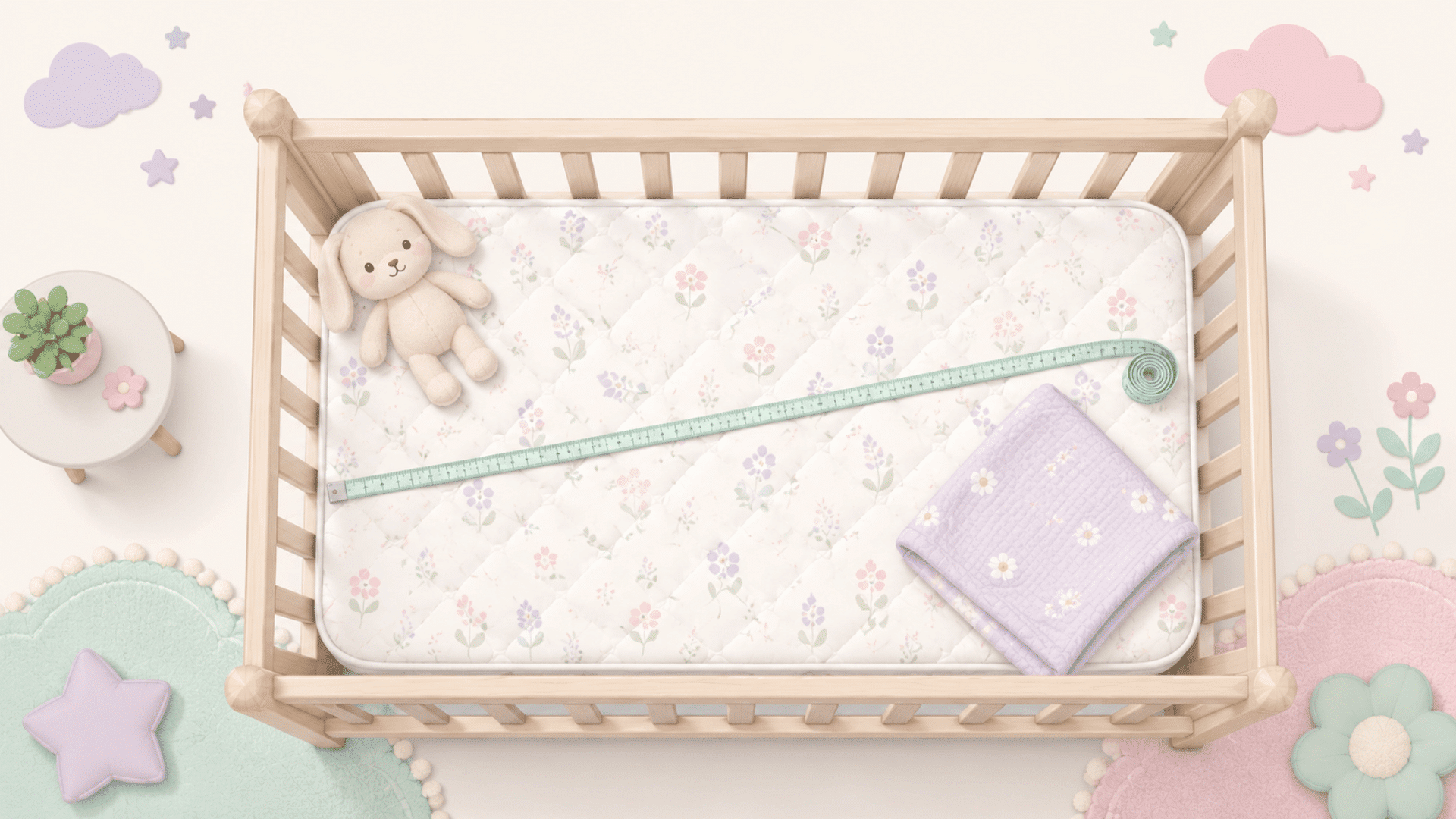
When I help families plan nurseries, one detail that often gets overlooked is the crib mattress size. It may seem like a simple purchase, but the right fit plays an important role in creating a safe sleep space.
Many parents focus on crib styles and nursery décor first. However, mattress dimensions deserve just as much attention.
In this blog, I’ll explain standard measurements, sizing differences, and what I always check before choosing a crib mattress for a nursery.
Why Proper Mattress Fit Matters
When I help people plan rooms, I always focus on how different pieces work together. The same principle applies to a crib and mattress.
Unlike an adult bed setup that may include a box spring, a crib needs a mattress that fits securely inside the crib frame.
A mattress that is too small can leave gaps around the edges of the crib. A mattress that is too large may not fit correctly inside the frame. Both situations can affect safety and convenience.
Using the correct crib mattress size helps ensure:
- A secure fit inside the crib
- Proper support for your baby
- Easier sheet fitting
- Compliance with safety recommendations
- Longer-term usability
Because infants spend many hours sleeping, selecting the right mattress size is one of the most important nursery decisions.
Standard Measurements Every Parent Should Know
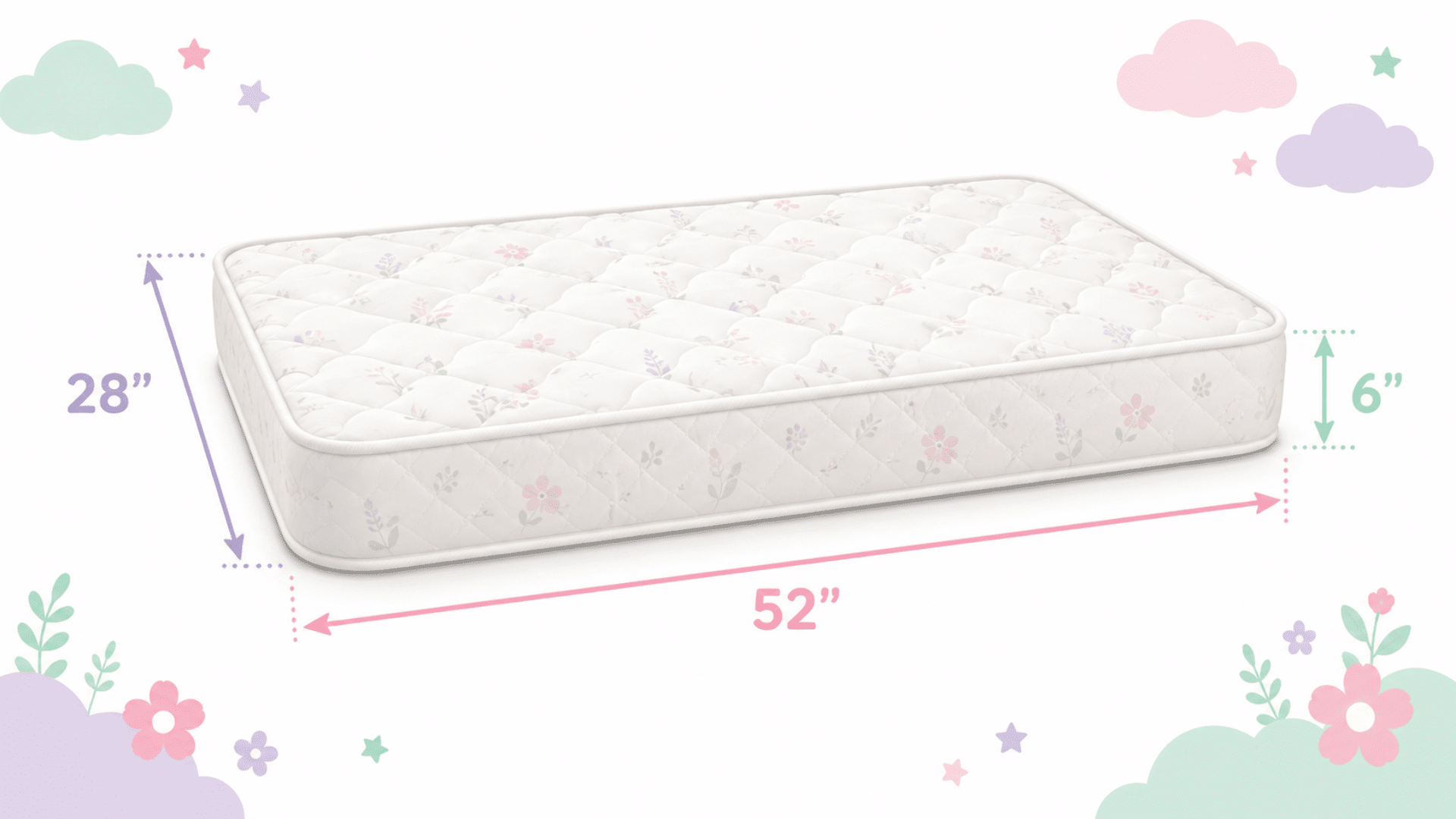
Before purchasing a mattress, I always check its dimensions to ensure it fits the crib properly. The right size can help create a safer and more comfortable sleep space.
Most full-size cribs are designed to accommodate a standard crib mattress size. While measurements are generally consistent across brands, reviewing the specifications is still an important step before making a purchase.
| Feature | Standard Measurement |
|---|---|
| Length | 52 inches |
| Width | 28 inches |
| Maximum Thickness | 6 inches |
| Compatible With | Standard Full-Size Cribs |
These measurements serve as a useful starting point when comparing crib mattresses. They can also help you determine whether a mattress is compatible with your crib.
How to Measure a Crib for the Right Mattress Size
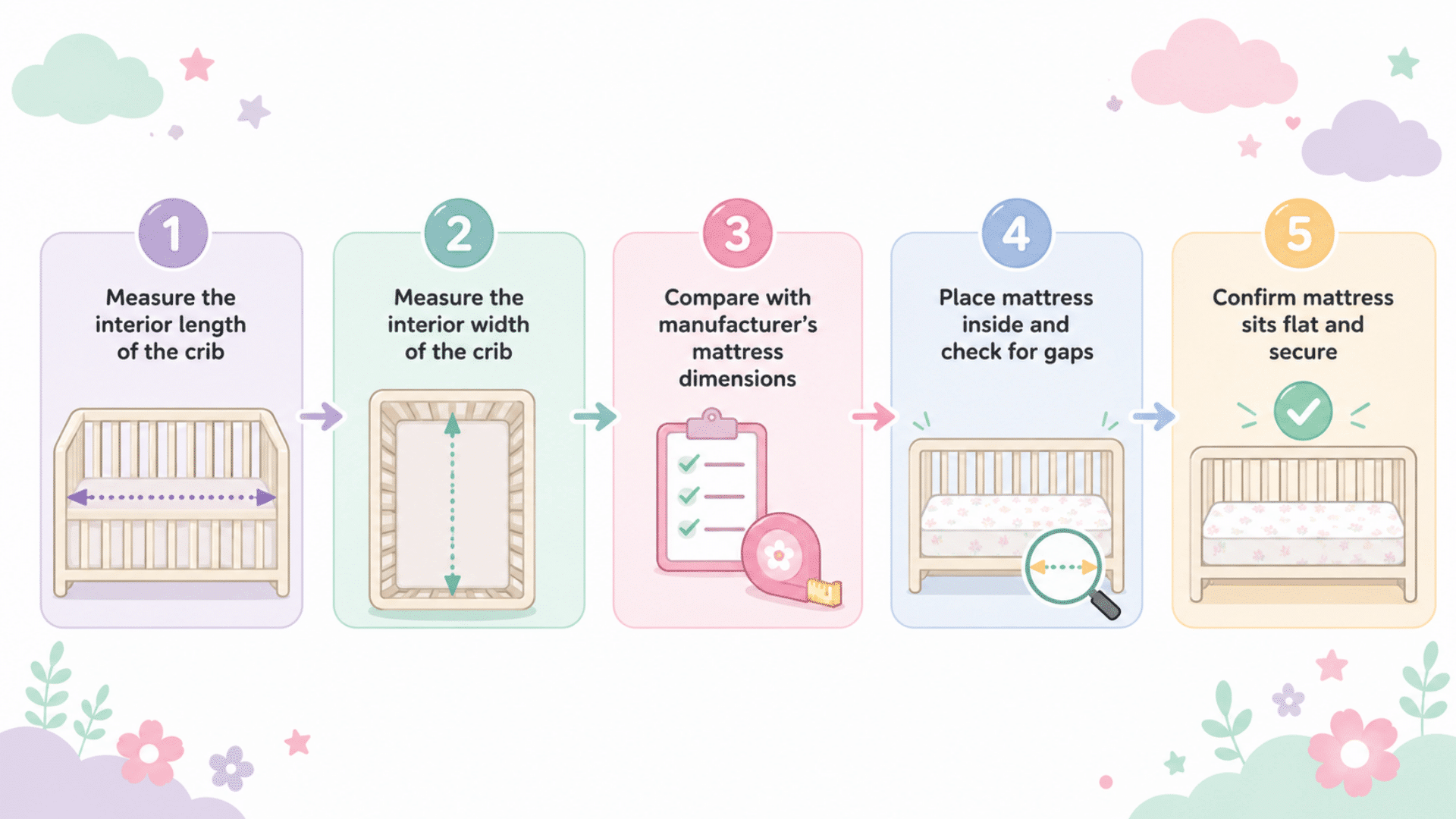
Before purchasing a crib mattress, I always recommend measuring the crib’s interior dimensions. Comparing these measurements with the dimensions of crib mattresses can help ensure a secure and proper fit.
To make the process easier, I like to break it down into a few simple steps. Following them can help you verify mattress compatibility before making a final decision.
- Step 1: Measure the interior length of the crib from one end panel to the other using a measuring tape.
- Step 2: Measure the interior width of the crib from one side rail to the opposite side rail.
- Step 3: Compare these measurements with the mattress dimensions provided by the manufacturer before making a purchase.
- Step 4: Place the mattress inside the crib and check for gaps around all four sides.
- Step 5: Confirm that the mattress sits flat and securely without shifting or leaving noticeable spaces along the edges.
Standard Crib Mattress vs. Mini Crib Mattress
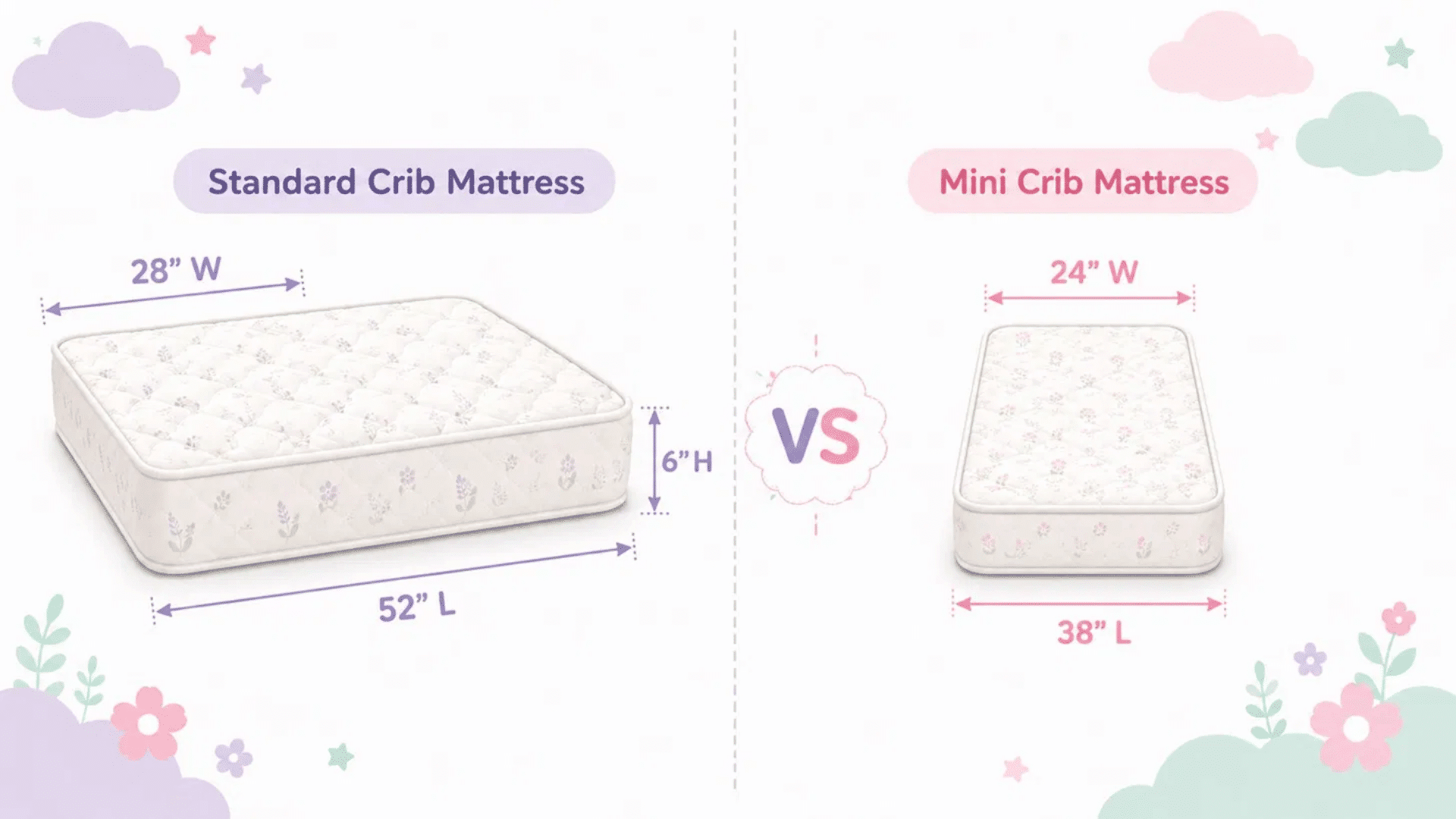
Not all crib mattresses have the same dimensions. Understanding the differences between standard and mini crib mattresses can help you choose the right fit for your crib.
| Feature | Standard Crib Mattress | Mini Crib Mattress |
|---|---|---|
| Length | 52 inches | 38 inches |
| Width | 28 inches | 24 inches |
| Maximum Thickness | Up to 6 inches | Varies by manufacturer |
| Compatible With | Standard Full-Size Cribs | Mini Cribs |
| Best For | Long-term use and larger nurseries | Compact spaces and smaller rooms |
While length and width are important, mattress thickness is another measurement worth considering. It can affect both the fit of the mattress and the overall functionality of the crib.
Crib Mattress Thickness: What You Need to Know
While length and width are often the main focus, mattress thickness is also important. Most standard crib mattresses range from 4 to 6 inches thick, with 6 inches generally considered the maximum recommended thickness.
Before choosing a crib mattress, it’s helpful to understand how thickness can affect fit and compatibility.
Most standard crib mattresses are between 4 and 6 inches thick, making them suitable for full-size cribs. A thickness of up to 6 inches is generally considered standard, though exact specifications may vary by manufacturer.
Mattress thickness can affect crib height adjustments, especially as babies grow and become more mobile.
The mattress should fit securely within the crib frame, regardless of its thickness. Always check the crib manufacturer’s recommendations to confirm compatibility before purchasing.
Understanding mattress thickness is important, but it’s equally helpful to know how to assess the fit once the mattress is inside the crib.
Common Crib Mattress Sizes Compared
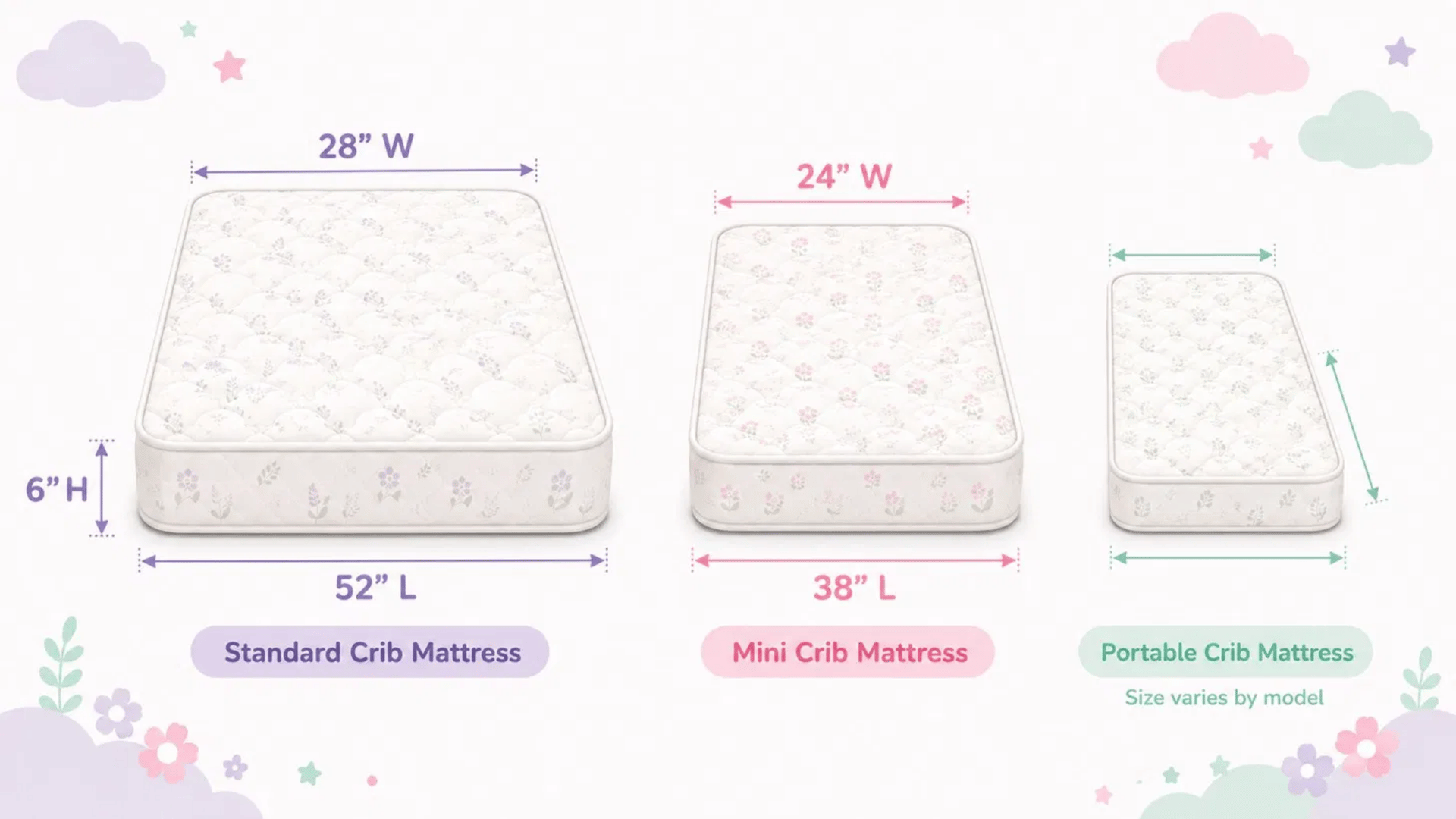
Standard crib mattresses are the most common option, but they aren’t the only size available. Comparing different mattress types can help you choose the right fit for your crib.
I always compare mattress measurements before purchasing because even small size differences can affect compatibility and fit. The table below highlights some of the most common crib mattress options and their dimensions.
| Mattress Type | Length | Width | Best Suited For |
|---|---|---|---|
| Standard Crib Mattress | 52 inches | 28 inches | Standard full-size cribs |
| Mini Crib Mattress | 38 inches | 24 inches | Mini cribs and compact spaces |
| Portable Crib Mattress | Varies by model | Varies by model | Travel and portable cribs |
Knowing the available mattress sizes can make shopping easier, but avoiding common sizing mistakes is just as important.
Final Thoughts
Choosing the right crib mattress size starts with understanding the standard measurements and how they relate to your crib. A proper fit can make a noticeable difference in both safety and everyday use.
I always recommend measuring the crib before purchasing a mattress, especially when working with older cribs or different brands. A few simple checks can help prevent sizing issues later.
The dimensions of crib mattresses are generally standardized, but small variations can still occur. Reviewing product specifications is one of the easiest ways to ensure compatibility.
By understanding standard dimensions and compatibility requirements, you can choose a crib mattress that suits both your crib and your baby’s needs.
Frequently Asked Questions
Can Two Cribs Use the Same Mattress Size?
Not always. While many full-size cribs accommodate a standard crib mattress size, mini and portable cribs often require different dimensions. Checking the manufacturer’s specifications is the best way to confirm compatibility.
Can I Use a Hand-Me-Down Crib Mattress?
A used mattress may not provide the same level of support as a newer one. Before reusing a crib mattress, check for sagging, damage, stains, or signs of wear that could affect performance.
Do Crib Mattress Covers Change the Fit?
Some waterproof covers can slightly increase the overall dimensions of a mattress. It’s important to choose a cover designed for your mattress size to maintain a secure fit.
When Should I Replace a Crib Mattress?
A crib mattress should be replaced if it shows signs of wear, loses its firmness, develops uneven areas, or no longer fits securely inside the crib.