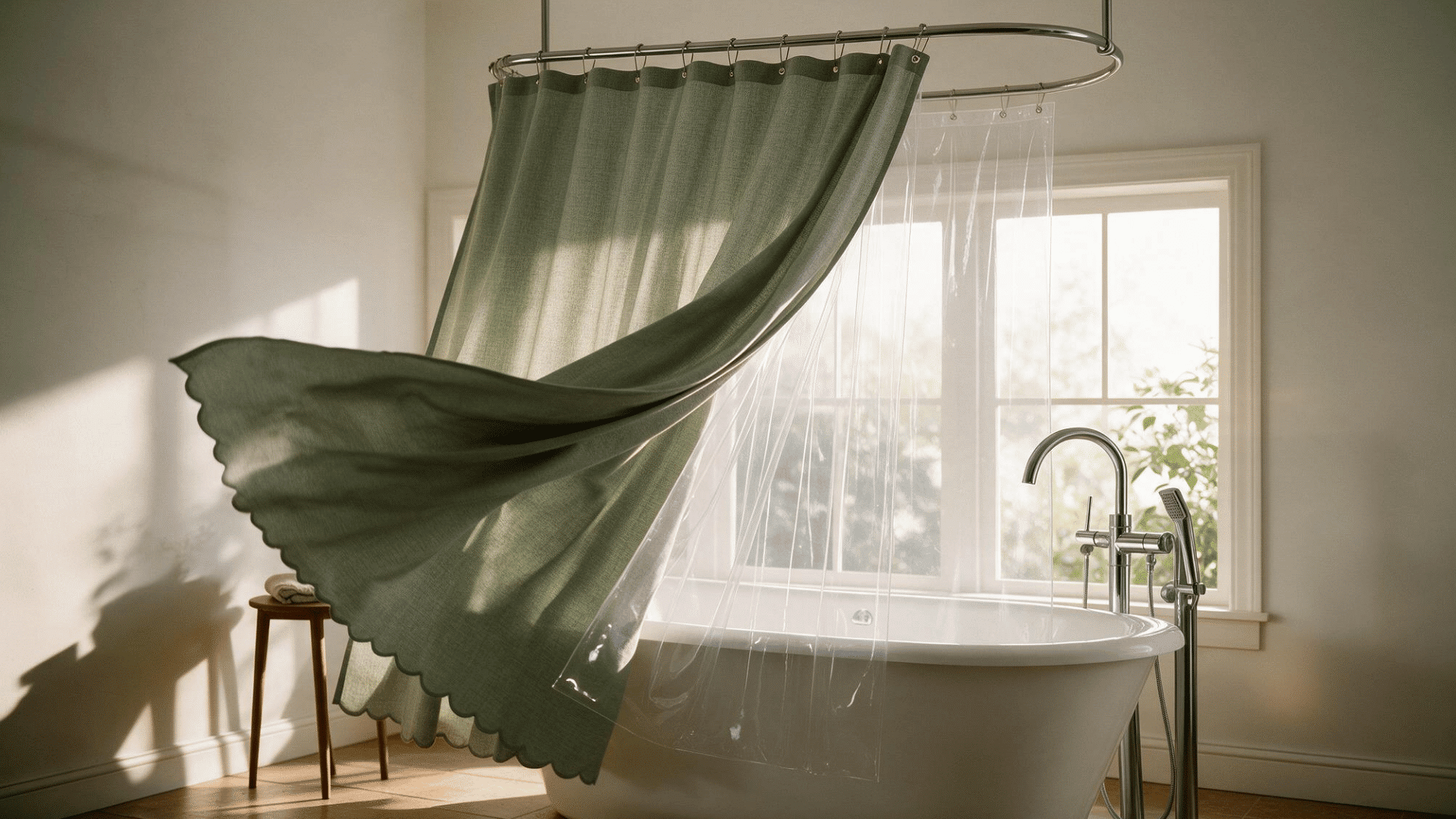
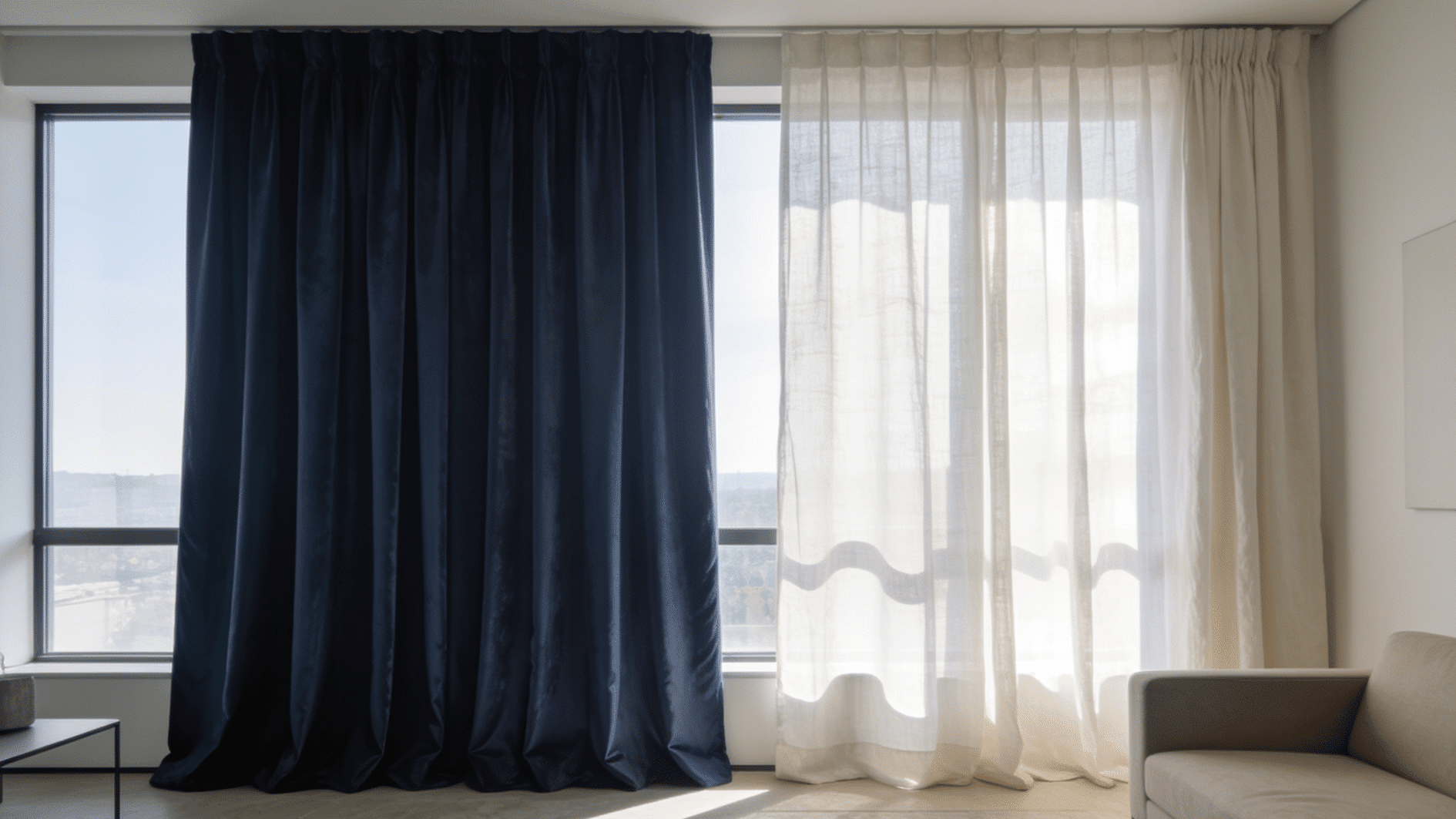
Many people have a hard time spotting the difference between drapes and curtains. Both are widely used and often treated as the same thing, but they are not.
The drapes vs. curtains debate goes beyond just names. The fabric, the build, the way they hang. It all differs more than you would think.
And those differences actually matter when you are trying to make a room look and feel right. Picking the wrong one can throw off the whole space.
With this blog, we want to make those differences clear so you can walk into any room and know exactly which one belongs on that window.
How Do Drapes and Curtains Change a Room’s Look?
When you look at drapes vs curtains side by side in a room, the difference is easy to notice and can change the whole feel of the space.
Drapes draw the eye upward, making ceilings appear higher and the room feel more structured and complete.
They add weight, depth, and a polished finish that works well in more formal or styled interiors. Curtains do the opposite more softly.
They let natural light flow in, smooth out sharp edges, and create a relaxed, comfortable atmosphere.
Together, both options shape how a room feels, but in very different ways depending on the mood and style you want.
Major Differences Between Drapes vs. Curtains
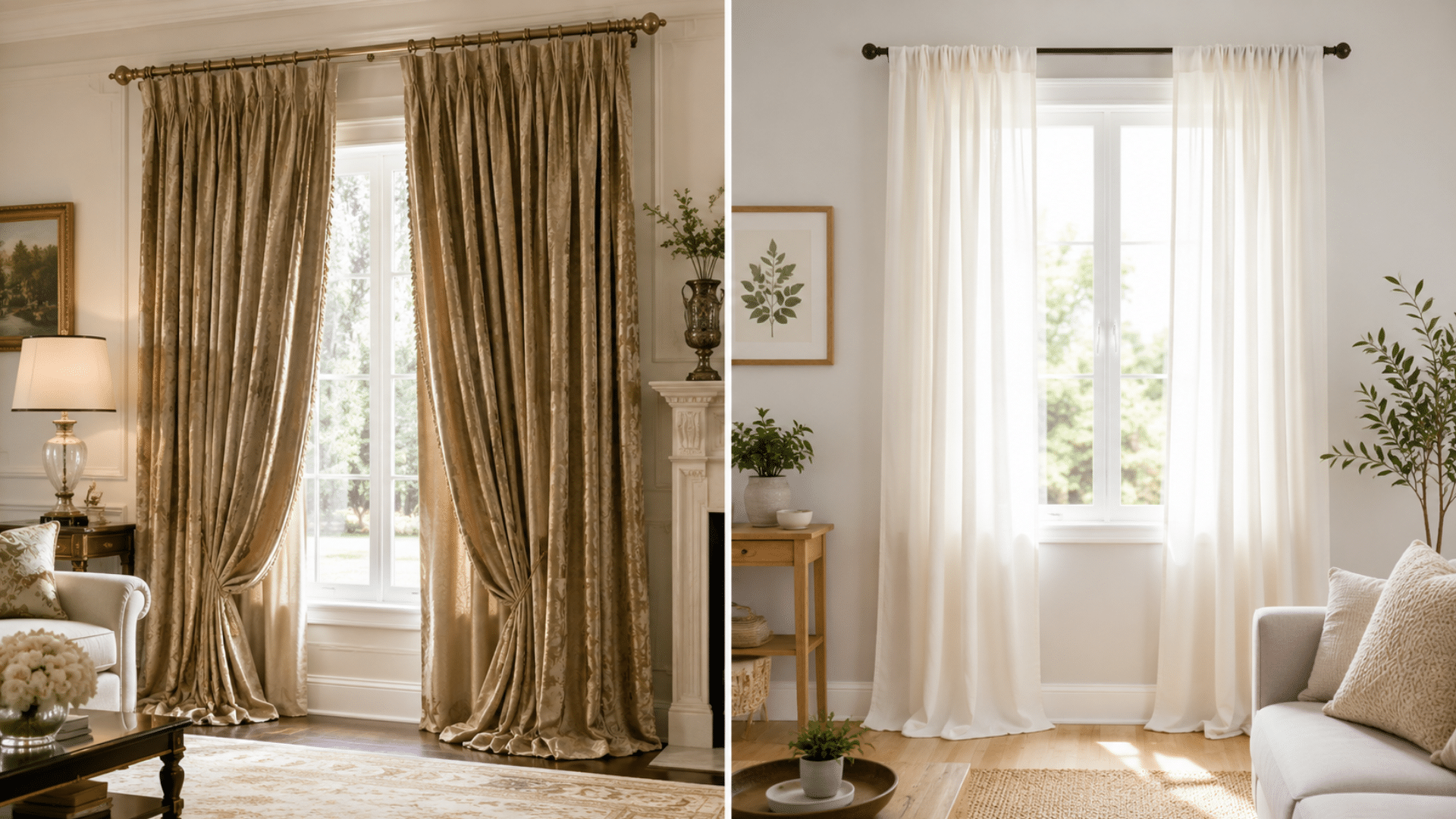
Now that you know what each one is, here is where it gets practical. These are the key differences that should actually guide your decision.
1. Types of Fabric
Drapes:
- Made from heavier fabrics like velvet, jacquard, and brocade
- Feel thicker, weightier, and more structured
- Hold their shape better when hanging
- Block more light naturally because of the fabric weight
- Help reduce sound and improve insulation
- Work well in bedrooms, formal rooms, and media rooms
Curtains:
- Made from lighter fabrics like cotton, linen, and sheer voile
- Feel softer, airier, and more relaxed
- Allow better airflow through the room
- Let in more natural light, depending on fabric thickness
- Used more for softness, privacy, and casual styling
- Work well in living rooms, kitchens, and everyday spaces
2. Overall Interior or Room Design
| Feature | Drapes | Curtains |
|---|---|---|
| Room style | Formal, traditional, or layered interiors | Casual, everyday, and relaxed spaces |
| Best rooms | Formal living rooms, bedrooms, dining rooms, media rooms | Kitchens, kids’ rooms, breakfast nooks, casual bedrooms |
| Layering | Often paired with sheers underneath for a two-layer look | Usually used alone or with simple blinds/shades |
| Header style | Pinch pleats, goblet pleats, or tailored pleats | Rod-pocket, tab-top, or simple grommet styles |
| Overall look | Structured, polished, and more decorative | Light, simple, and easygoing |
3. Privacy or Light Needs
Bedrooms and media rooms usually call for lined or blackout drapes, since even a small gap of light can be distracting when trying to sleep or watch a movie.
Daytime living spaces are a better fit for curtains, which let in filtered light and offer partial privacy without completely blocking out the room.
Tip: Want both? Layer a sheer curtain with a drape panel on the same rod. Slide the sheer closed during the day for privacy while keeping the room bright, then close the drape at night for full light control.
4. Installation
Drapes need more accurate measurements because they are usually floor-length, heavier, and more structured. They often require sturdy metal rods, strong brackets, and careful placement so the fabric hangs evenly. A small mistake can leave gaps, make the panels look uneven, or cause the fabric to drag on the floor.
Curtains are easier to measure and install because they are lighter and often come in ready-made sizes. Most standard windows can work with off-the-rack curtain panels, basic rods, or simple brackets. They are also easier to hang at home with a drill, screws, or even a tension rod.
Key difference: Drapes usually need more planning and stronger hardware, while curtains are quicker, simpler, and more beginner-friendly to install.
5. Personal Preference
Some people prefer drapes because they feel heavier, more formal, and more finished in a room. Others choose curtains because they are easier to wash, quicker to replace, and usually cost less upfront.
In some cases, the room decides for you. A small bathroom window, for example, usually works better with a light curtain than a heavy drape panel.
6. Cost
| Window Treatment | Typical Cost Range | What Affects the Price | Best For |
|---|---|---|---|
| Cotton or linen curtains | $20–$60 per pair | Fabric quality, panel size, brand, and whether you bought on sale | Budget-friendly rooms, casual spaces, kitchens, kids’ rooms, and quick updates |
| Ready-made drape panels | $80–$200+ per panel | Heavier fabric, lining, length, pleat style, and hardware needs | Bedrooms, dining rooms, formal living rooms, and rooms needing more light control |
| Custom lined drapes | $150–$500+ per panel | Custom measurements, lining, premium fabric, labor, and professional installation | Large windows, formal interiors, layered designs, and rooms where fit matters most |
| Multiple-window setup | Around $180 for curtains vs. $600+ for custom drapes | Number of windows, panel width, rod quality, and installation costs | Comparing full-room costs before choosing between curtains and drapes |
7. Maintenance
Curtains:
- Usually easy to clean at home
- Can often be washed in cold water on a gentle machine cycle
- Low tumble-dry or air-dry works for most lightweight fabrics. It can be cleaned every few months without much trouble
- Better for everyday rooms, kitchens, kids’ rooms, and casual spaces
Drapes:
- Need more careful maintenance because of the heavier fabric and lining
- Dry cleaning is usually the safest option
- Home washing can damage structured pleats or inner lining
- Small stains can be cleaned with a damp cloth
- Dust can be removed with a vacuum brush attachment
- Light steaming helps keep the fabric sharp and wrinkle-free
8. Sound, Energy, and Lifespan
Noise, energy bills, and lifespan all lean in the same direction.
Thick,lined drapes muffle outside noise by several decibels, trap heat in winter, block it out in summer, and often last 10 to 15 years with basic care.
This is why blackout drapes help control heat better than lightweight curtains in rooms that get strong sunlight. Curtains cannot compete on any of those fronts, but that is not really their job
Curtains cannot compete on any of those fronts, but that is not really their job. Thin fabric means less soundproofing and less insulation, and a shorter lifespan of 3 to 5 years before fading sets in.
Since curtains cost less to begin with, replacing them sooner is not much of a loss.
Note: Different rooms need different window treatments based on privacy, light control, and style. Blackout drapes work best in bedrooms while light curtains suit kitchens and home offices.
Can You Mix Drapes and Curtains in Every Room?
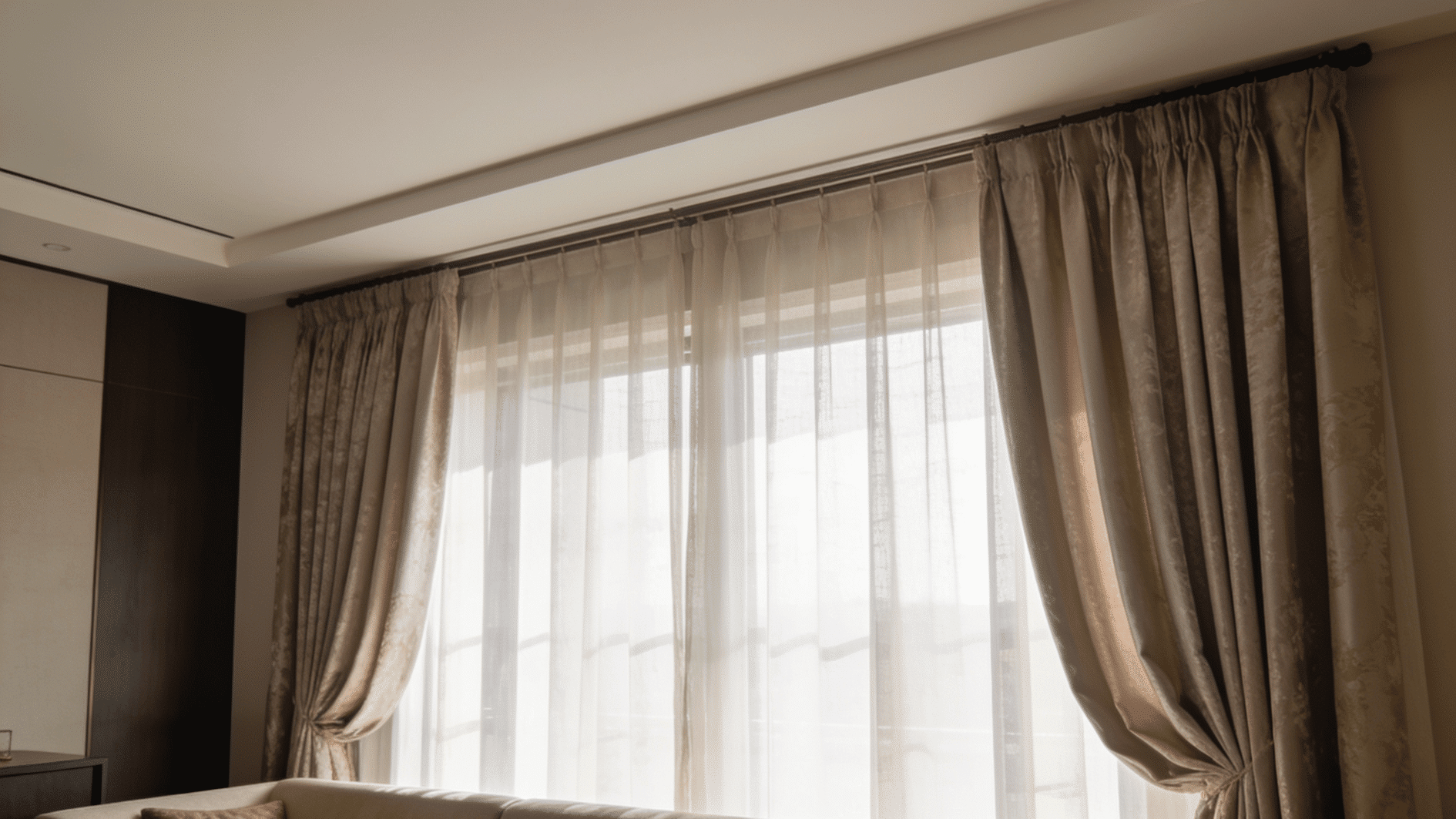
Yes, in most cases, you can mix drapes and curtains in the same room without it looking mismatched.
The most common way to do this is to hang a sheer curtain closer to the window and a heavier drape panel on the outside, either on the same rod or on a double rod set.
This combo gives you the light, airy look of curtains during the day and the privacy or light-blocking power of drapes at night.
That said, mixing works better in some rooms than others. Here is a simple way to think about it, based on how each room actually gets used.
You get natural light and privacy during the day, then full blackout coverage at night. Media rooms work the same way, especially if the room doubles as a home office during daytime hours.
When it comes down to drapes vs curtains, you do not always have to pick just one. Match your choice to how the room functions day-to-day, and combine them wherever that makes the space work better for you.
Conclusion
Whether it is drapes or curtains, the right choice depends on how you use your space.
Now that you know the differences in fabric, build, length, and function, picking the right one should feel much less confusing.
Take a look at the rooms in your home and ask what each window actually needs: light control, easy upkeep, or a polished look. Once you know that, the answer usually picks itself. And if you are still unsure, start with one room, see how it feels, and go from there.
The right window treatment makes a bigger difference than most people expect.