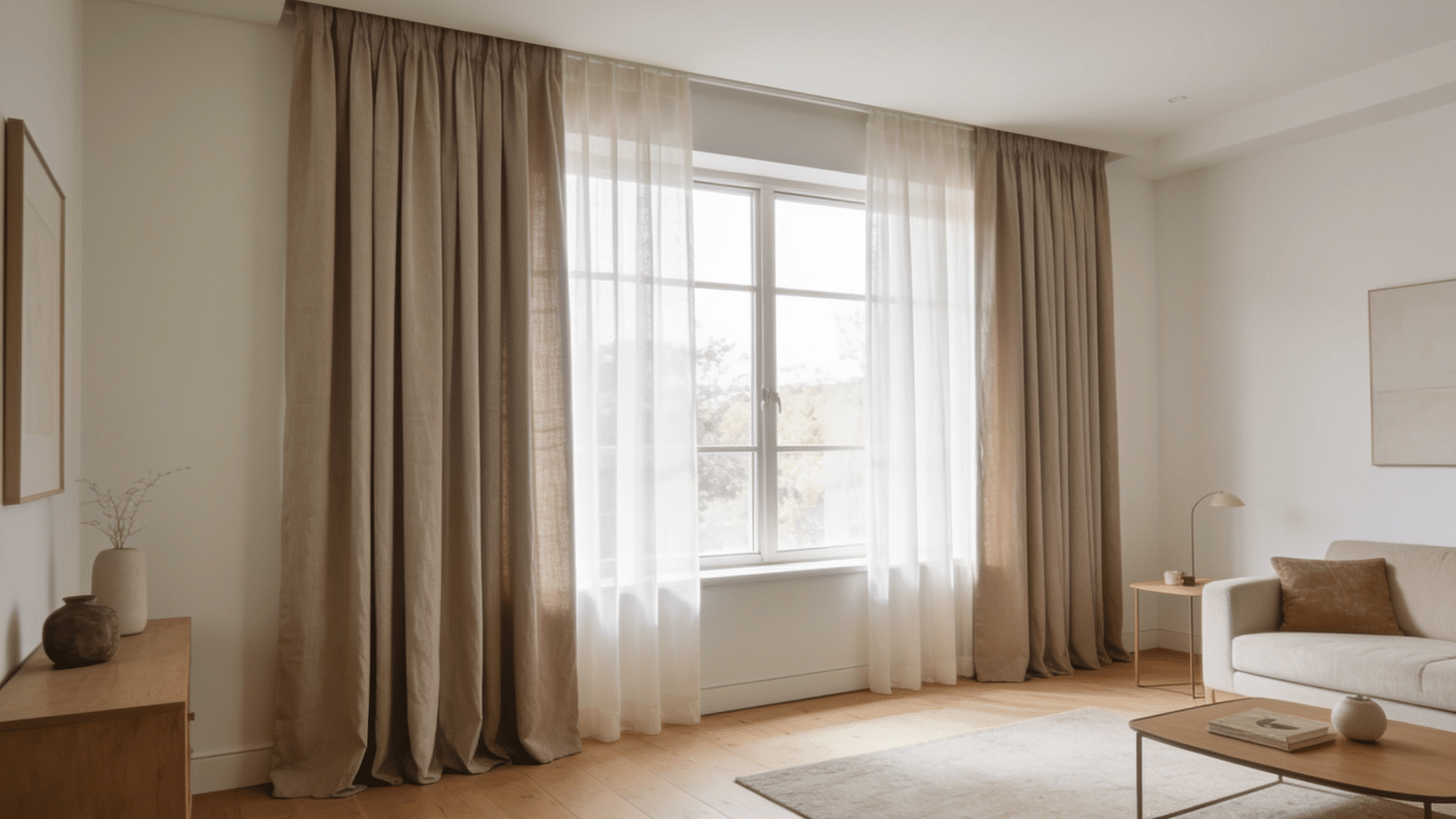
Ever walked into a room that felt almost right, good furniture, nice colors, but something still felt off? More often than not, the curtains are doing the wrong job.
The fabric hanging at your windows affects light, privacy, proportion, and the whole mood of a space. Yet most of us pick curtains last, quickly, and without much guidance.
This blog covers curtain styles in plain terms – what each one looks like, how it works, and which rooms it suits best – so choosing finally feels simple.
Why Does Curtain Style Come Before Fabric or Color?
Most people choose a curtain for its color or its fabric – and then wonder later why the room still does not feel quite right. The style of a curtain is what actually determines how a room behaves.
It controls how light enters in the morning, how private the space feels at night, how large or small the window appears, and whether the whole room looks finished or slightly unresolved.
The way a curtain is hung shapes the drape, the movement, and the visual weight of the fabric. The lining matters just as much.
Understanding curtain styles before you shop means you are choosing with the room’s needs in mind, not just reacting to what looks good on a hanger.
Curtain Styles: What They Look Like and How They Work
There are more curtain styles out there than most people realize, and each one behaves differently in a space. The way fabric is gathered, hung, or lined changes everything.
Here is a breakdown of everything, starting with the most commonly used, so you can match the right style to the right room without second-guessing.
1. Rod Pocket Curtains
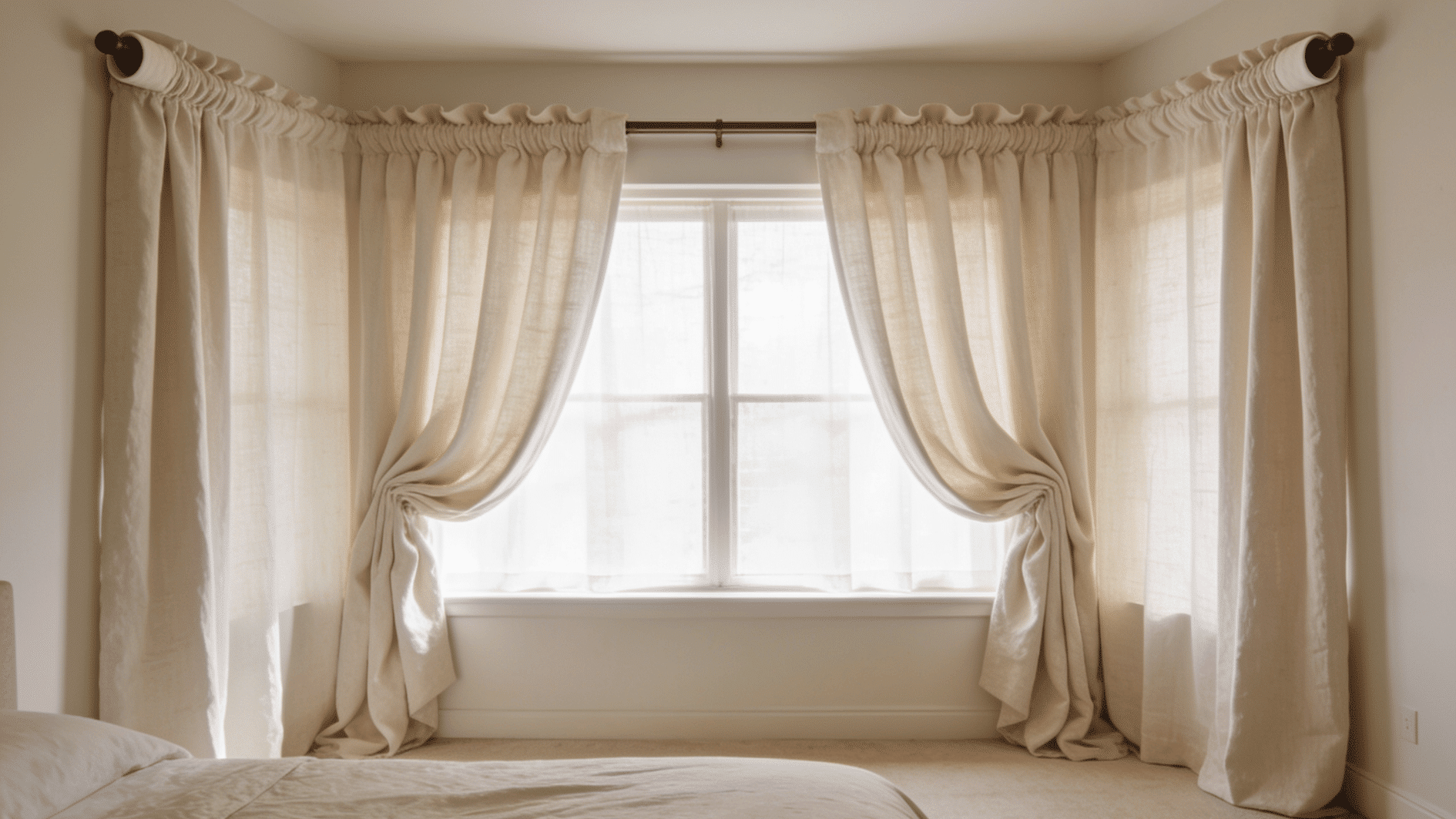
They have a soft, gathered look created by a sewn channel at the top where the rod slides directly through. This creates gentle bunching and a relaxed, decorative finish with no visible hooks or rings.
The rod stays hidden inside the fabric, giving a clean top line and a simple, casual style. The fullness depends on the amount of fabric, ranging from light waves to deeper gathers.
However, they don’t slide easily, so they’re not ideal for frequent opening and closing. Over time, this can make them less practical for daily use.
Best for: Bedrooms, reading corners, and decorative windows.
2. Grommet Curtains
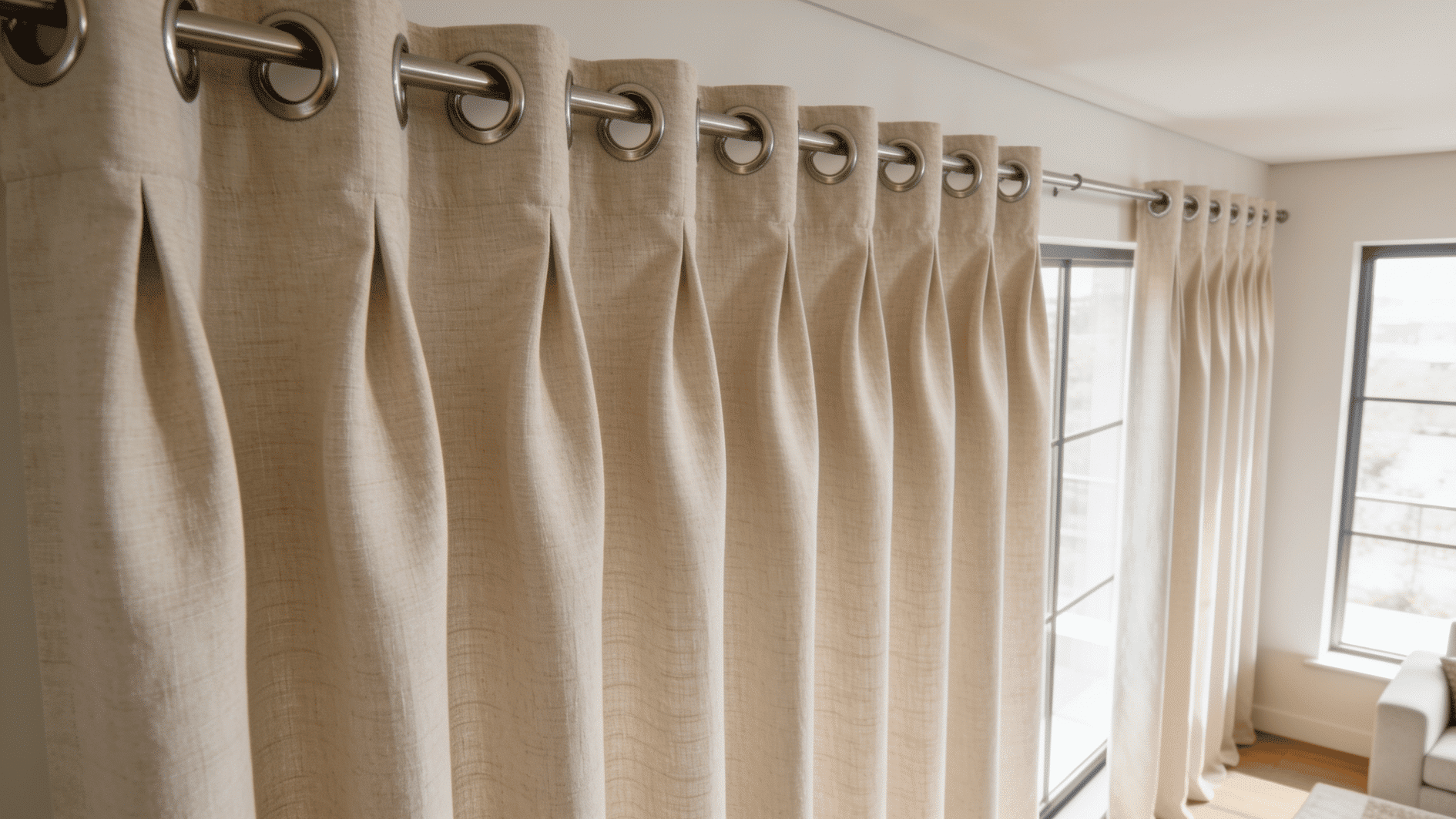
Grommet curtains are defined by the metal rings – grommets – punched at even intervals across the top of the panel, through which the rod threads directly.
The fabric between each ring falls forward into consistent, rounded folds, creating a clean wave that repeats all the way across the heading. That same hardware does the functional work of gliding smoothly along the rod.
They handle daily use without bunching, snagging, or wearing at the heading over time, and they hang predictably enough to straighten easily after washing.
Best for: Living rooms, open-plan spaces, windows used daily, and any room where a clean, contemporary look is the goal.
3. Pinch Pleat Curtains
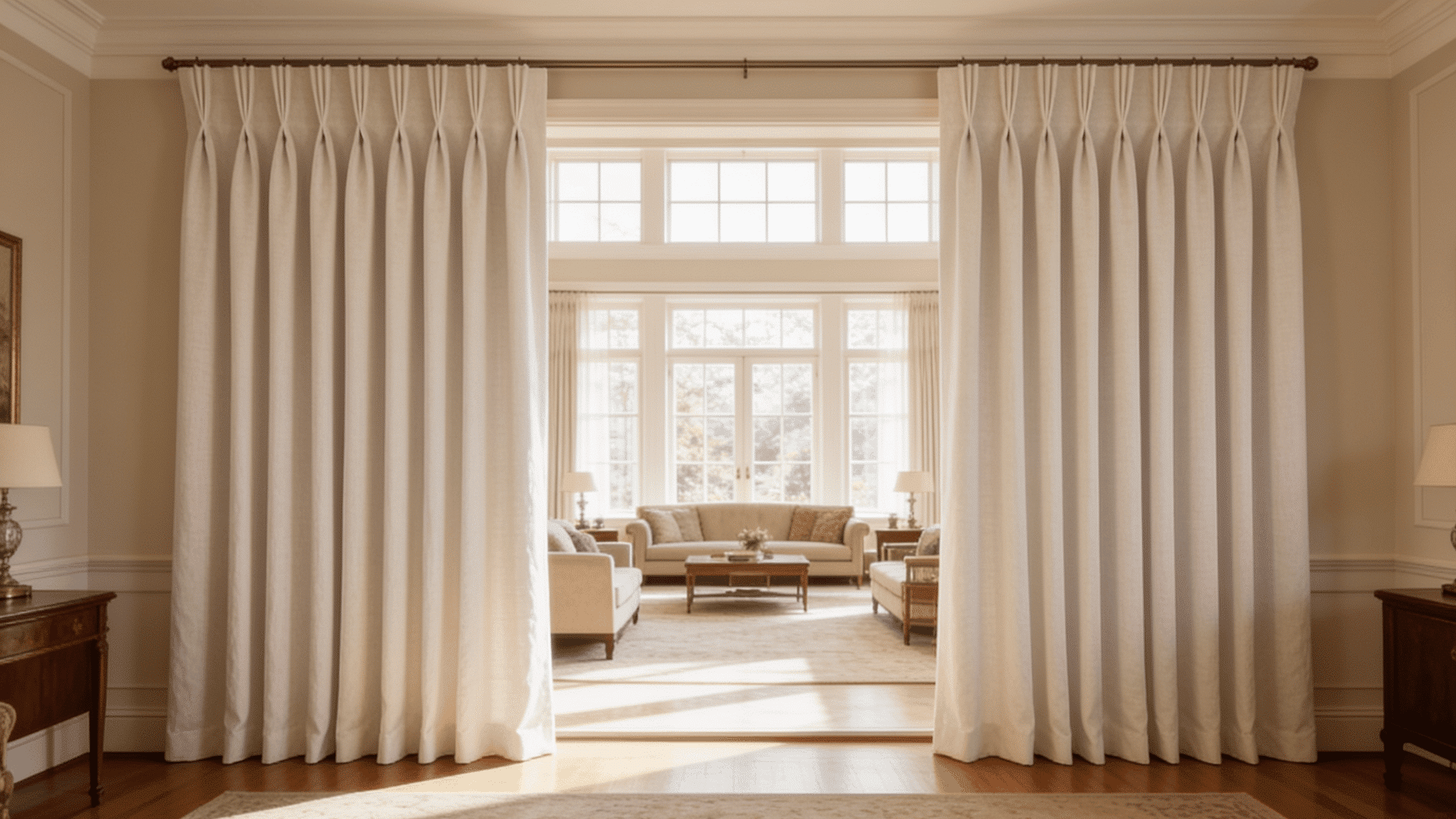
The fabric is gathered and pinched by hand into neat groups – two folds for a French pleat, three folds for a goblet pleat – at evenly spaced intervals across the heading.
The result is a series of controlled, uniform columns of fabric that fall from the heading to the floor with weight and intention. They slide reasonably well and can be used on windows you open and close regularly.
The structured heading keeps its shape over time without losing its crispness – even after washing and re-hanging, the pleats return to their original form.
Best for: Dining rooms, traditional living rooms, formal sitting areas, and any room where a polished, tailored curtain fits the tone of the space.
4. Tab Top Curtains
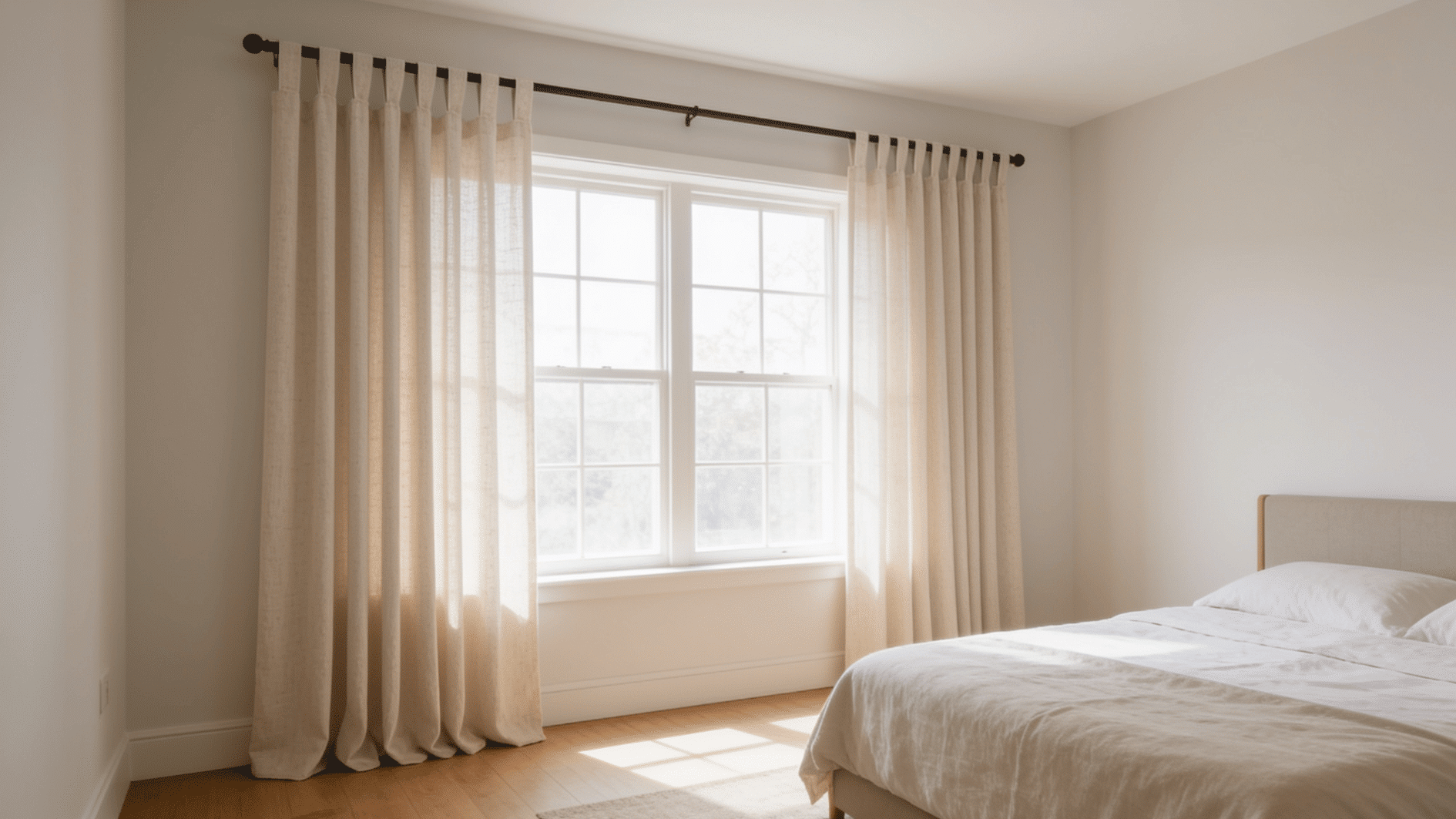
Loops of fabric – usually the same material as the panel itself – are sewn at regular intervals across the top and hang directly over the rod, leaving visible gaps between each tab where the rod shows through.
The drape below is relaxed and slightly irregular, with a natural looseness that comes from the way the fabric hangs between each loop. The overall effect is casual, warm, and unhurried.
They are best used on windows that stay mostly in one position like, a bedroom panel that opens in the morning and closes at night, or a decorative window in a room that does not require constant adjustment.
For those windows, they are excellent – easy to hang, comfortable to look at, and genuinely warm in feel.
Best for: Bedrooms, reading corners, informal sitting rooms, and windows that are dressed rather than operated frequently.
5. Pencil Pleat Curtains
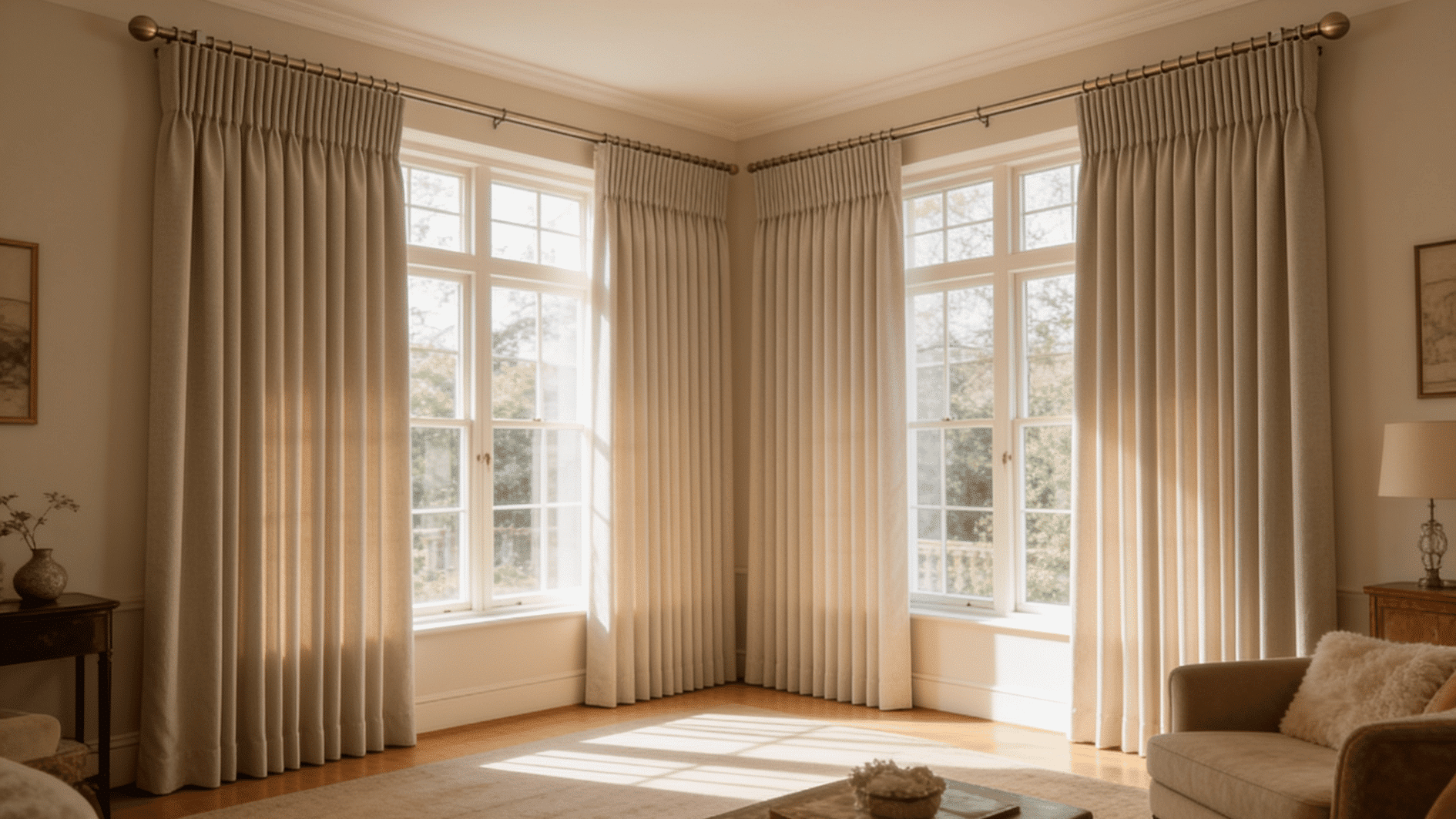
A dense row of narrow, tightly packed pleats runs the full width of the panel at the top – not unlike a row of upright pencils standing side by side, which is exactly how the style got its name.
The pleats are formed by pulling sewn-in cords that run through heading tape stitched across the back of the fabric.
When drawn tight, the cords gather the fabric into uniform, compact folds that give the heading a full, rich appearance. They slide along a rod or track with reasonable ease.
The heading tape also allows you to adjust the fullness by pulling the cords tighter or looser, giving you some control over how gathered the panel looks.
Its versatile: the heading style stays the same, but the fabric you choose changes the personality entirely.
Best for: Any room in the house. Kitchens, sitting rooms, dining rooms, and bedrooms all suit pencil pleat – the fabric does the tonal work.
6. Box Pleat Curtains
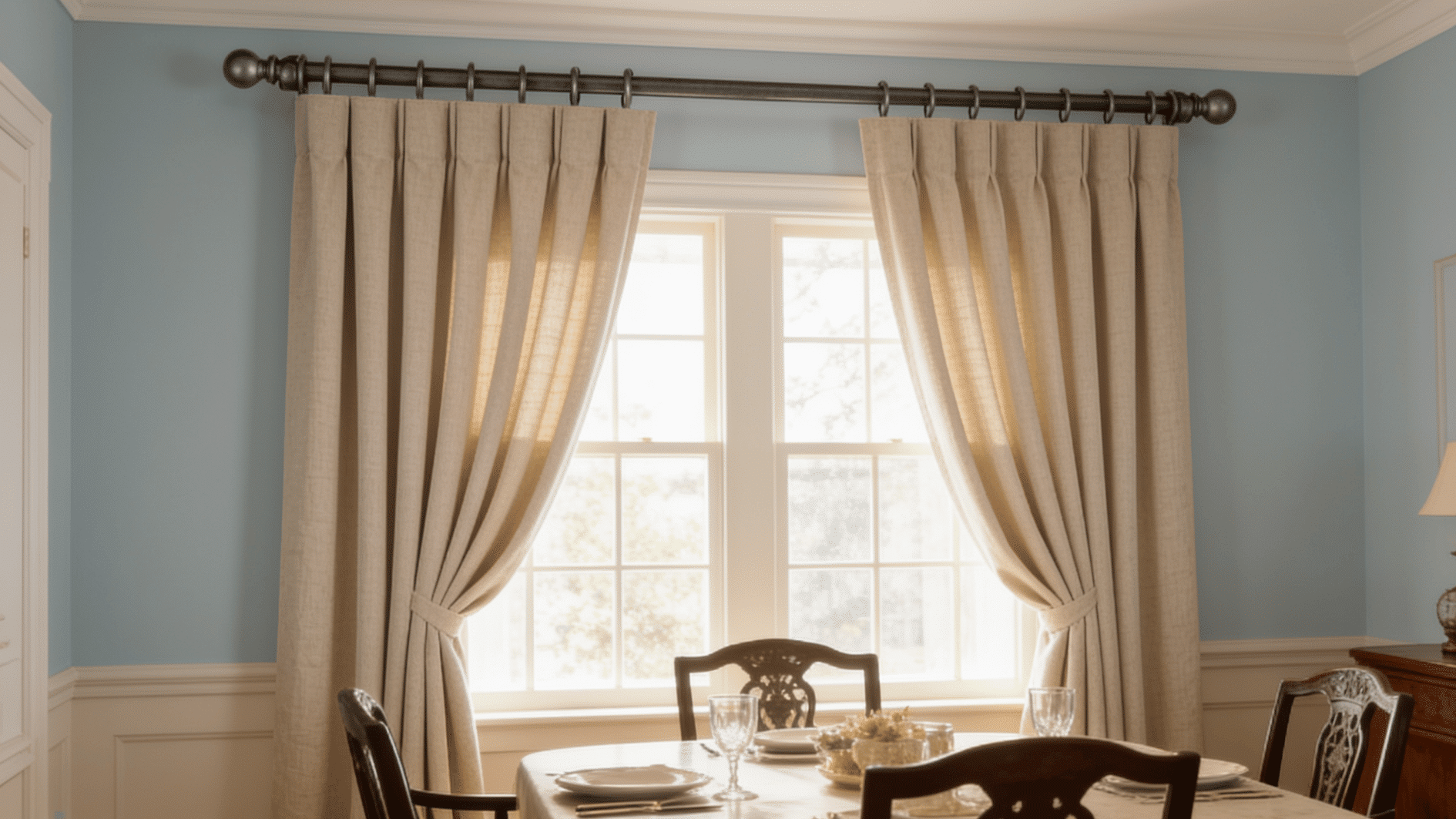
The heading features flat, evenly spaced pleats that fold back on themselves in clean, squared-off columns across the top of the panel.
There is no gathering, no soft bunching, no casual drape – just precise geometry from the heading all the way to the hem. When closed, the curtain hangs in sharp, disciplined vertical columns.
When open, it stacks flat and compact against the wall without creating any soft ruffling at the sides.The overall silhouette is crisp, structured, and completely intentional.
Because the pleats fold back on themselves, the heading uses more fabric than it appears to from the front, which means they require more generous fabric allowances to hang correctly.
Best for: Formal dining rooms, studies, home libraries, and any space where clean lines and a tailored, architectural finish are the design priority.
7. Sheer Curtains
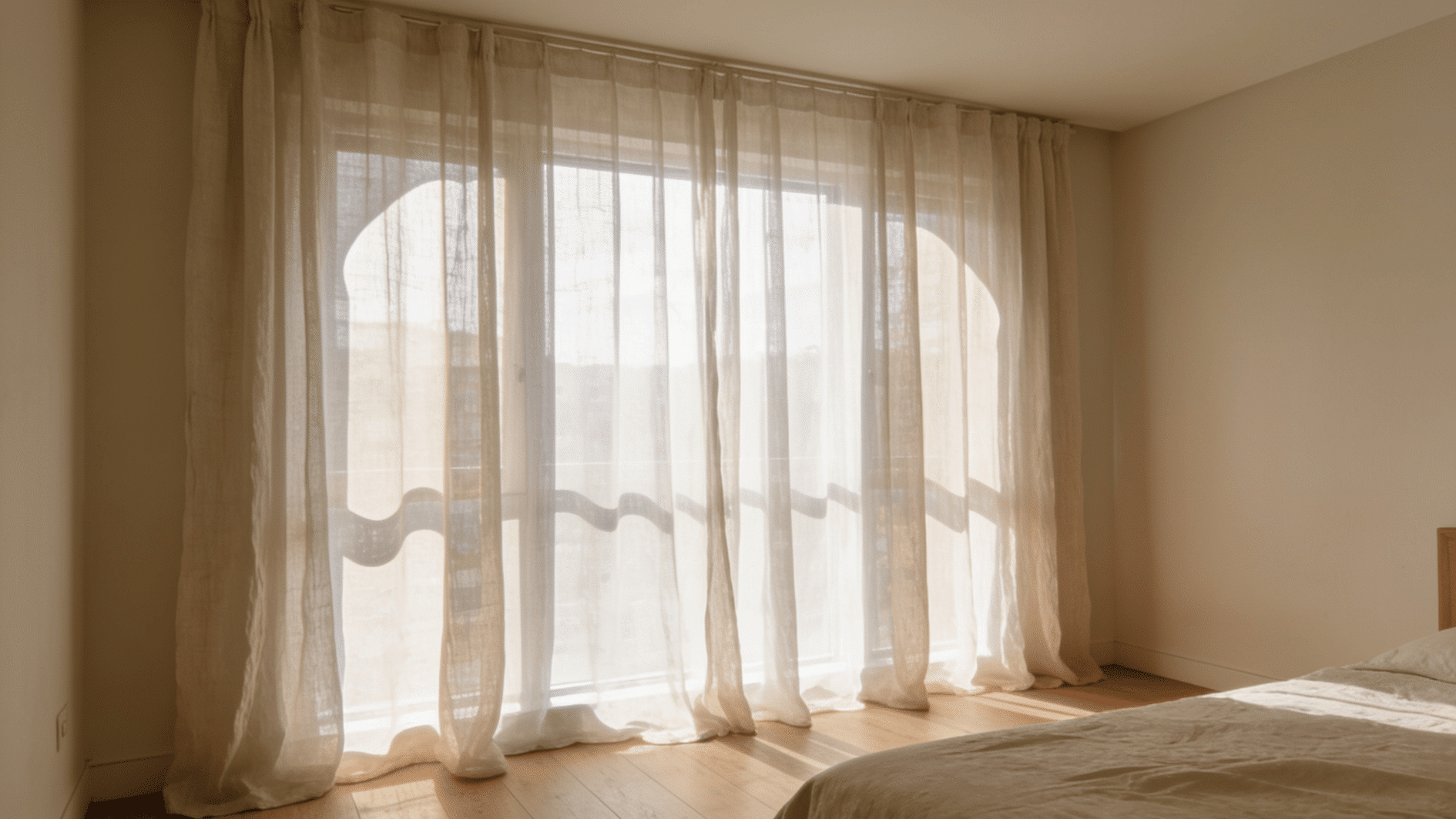
Sheer curtains are made from translucent, lightweight fabric – voile, organza, or a fine loosely woven linen – and their defining visual quality is lightness.
The fabric moves gently with air movement, has an almost weightless quality when you look at it, and adds a layer of texture to a window without adding visual bulk. In white or ivory, they feel airy and clean.
They diffuse direct sunlight rather than blocking it – which reduces harsh brightness and glare without making a room feel dark or closed off.
During daylight hours they provide a useful degree of privacy, but not at night when the lights are on.
In combination with a heavier drape on a double rod, they become one of the most flexible window treatments available.
Best for: Any room where softening light is the goal.
8. Blackout Curtains
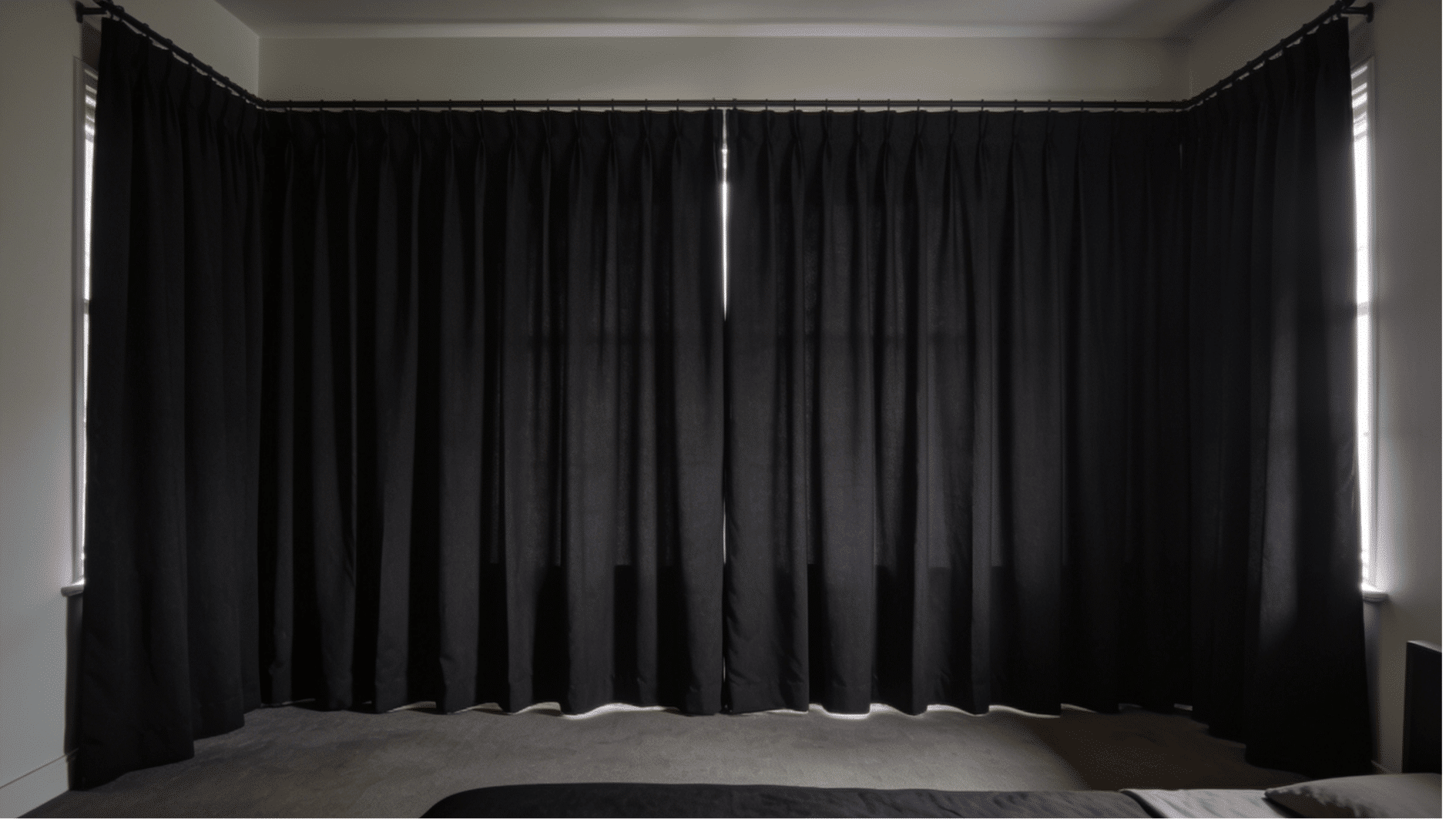
They come in a wide range of heading styles – grommet, pencil pleat, rod pocket, eyelet – and in fabrics that range from linen-look textures to smooth cottons to heavier weaves.
The blackout function comes entirely from the lining, which is hidden inside the panel and completely invisible once the curtain is hung.
The lining blocks light from passing through the panel. When properly fitted to a window with minimal gaps at the sides and top, a good blackout curtain eliminates almost all external light from the room.
The lining also adds a degree of insulation and sound dampening as a secondary benefit.
Best for: Bedrooms, nurseries, home theaters, guest rooms, and any room where controlling light is a genuine daily priority.
9. Café Curtains
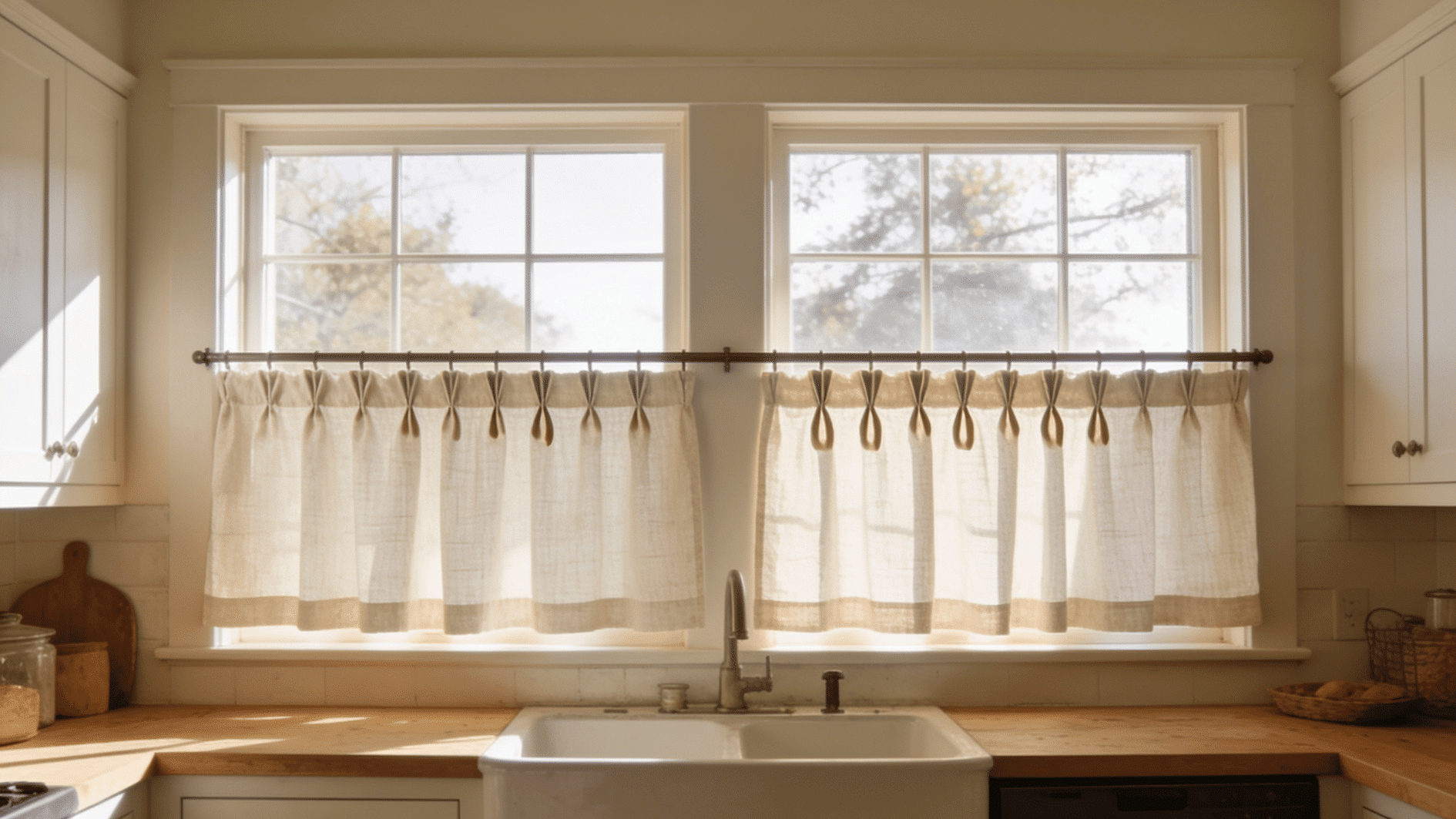
The rod sits at the midpoint of the window rather than at the top, so the panel covers only the lower half of the glass. The upper half of the window is completely open, just glass and whatever is beyond it.
The lower panel can be made in any fabric and hung in any simple heading style, but it is typically kept lightweight and relaxed – cotton, linen, or a soft gingham are all classic choices.
The visual effect is charming and practical: a dressed window that still feels open and bright. They give you privacy where you need it while leaving the top of the window completely unobstructed for light and sky.
They work best in rooms where natural light is important and the view above the midpoint is worth keeping – a garden, a courtyard, trees, or simply open sky.
Best for: Kitchens, bathrooms, basement rooms that need light, and any window where privacy at eye level is needed without sacrificing daylight.
10. Panel Curtains
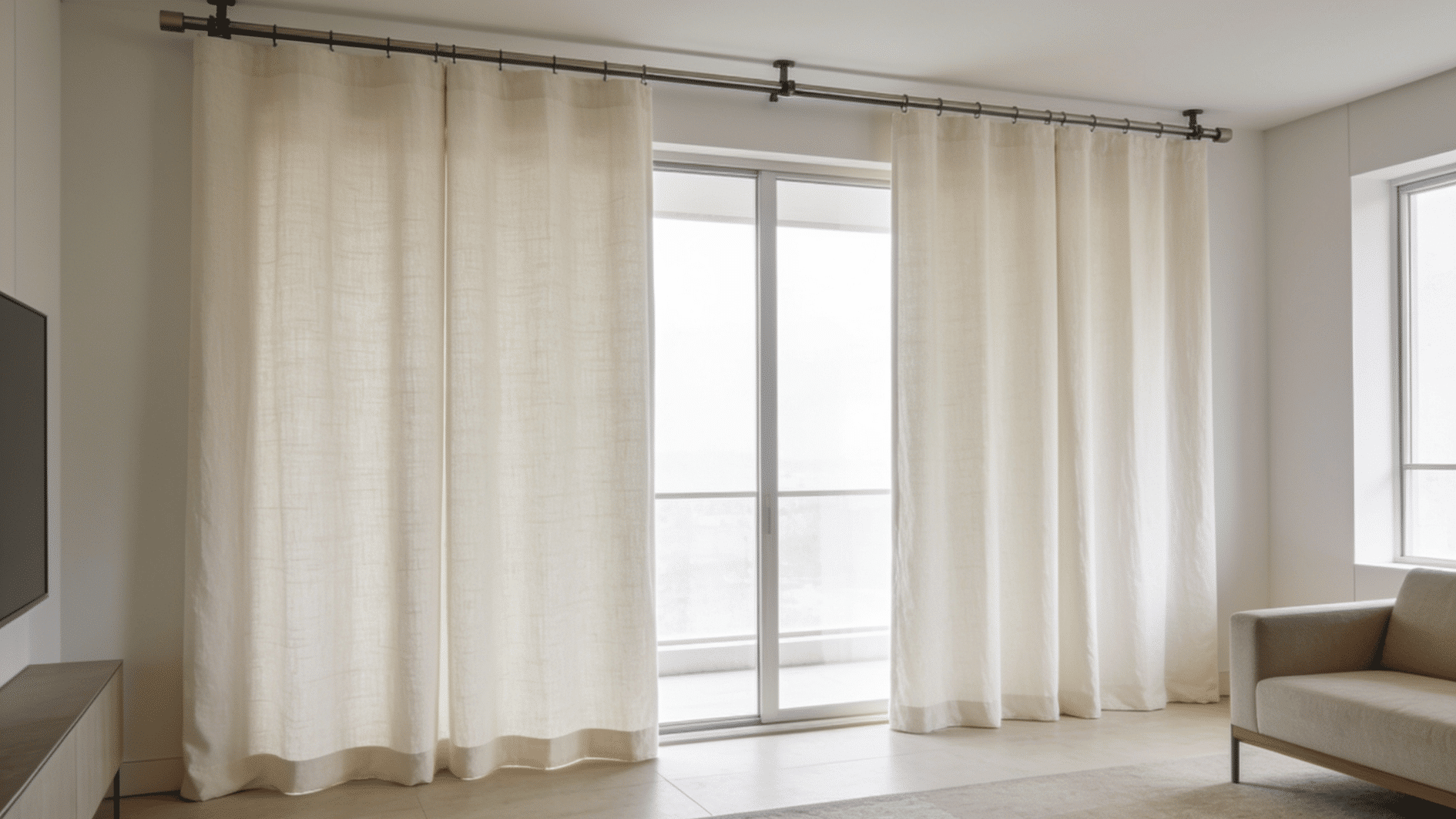
Large, flat rectangles of fabric hang from a ceiling-mounted track or a wide rod with no gathering, no pleating, and no decorative heading treatment.
A clean, uninterrupted plane of fabric that moves along the track in one direction. The look is architectural and quiet, which makes it particularly well suited to modern, minimal, and Japandi-influenced interiors.
Panel curtains slide can cover very wide openings that would be impractical with traditional gathered curtains. They are one of the best solutions for sliding glass doors.
Best for: Wide windows, sliding glass doors, floor-to-ceiling glazing, open-plan spaces, room dividers, and minimalist interiors where visual simplicity is the priority.
11. Velvet Curtains
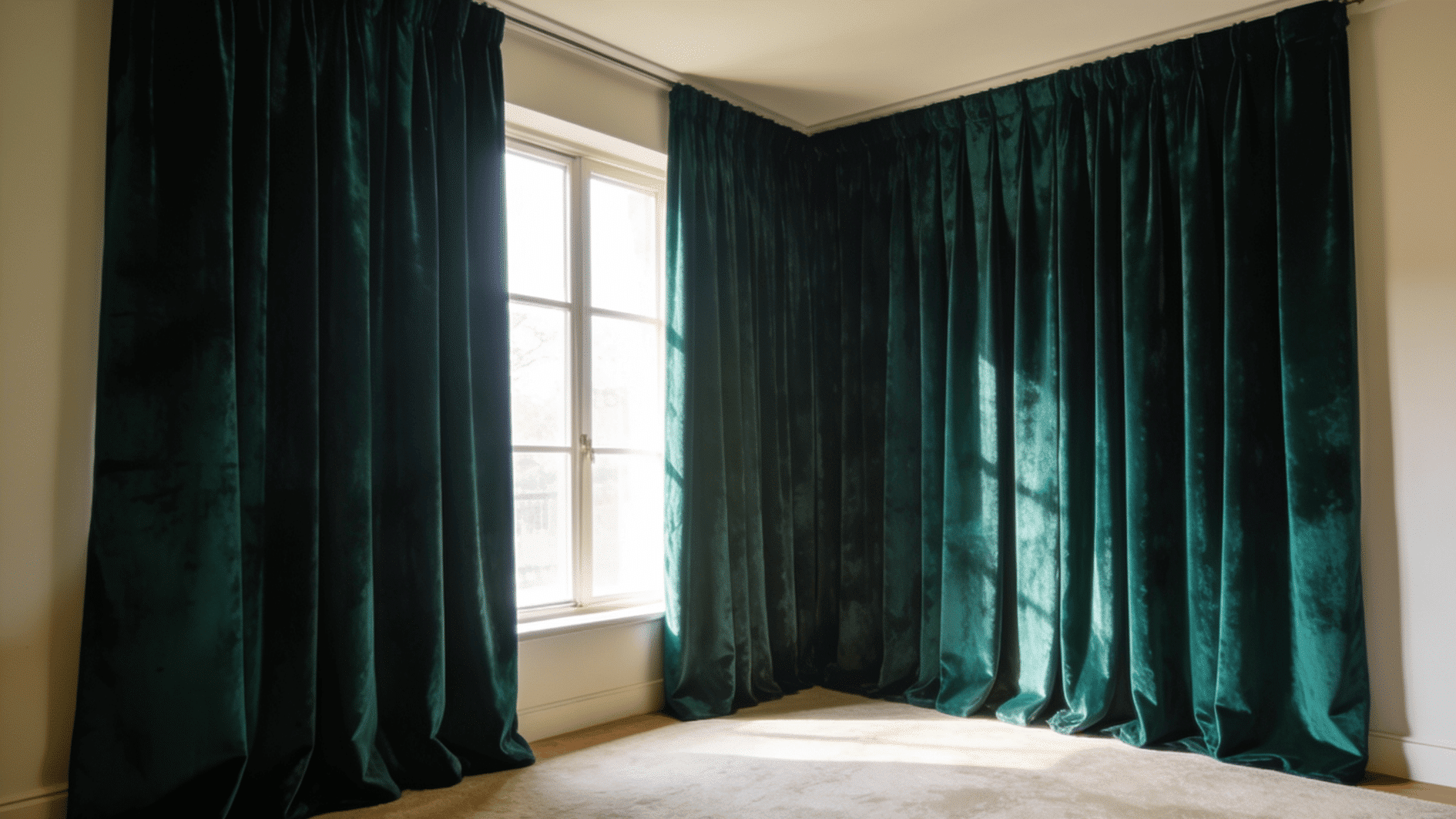
The dense, upright fibers that give velvet its characteristic texture. The surface appears to shift slightly as the light changes across the day, moving between matte and lustrous depending on the angle.
When hung floor to ceiling in a deep color velvet curtains make a room feel enclosed, warm, and complete in a way that is difficult to achieve with any other fabric.
The fabric insulates well, reducing heat loss through windows in cooler months and helping to maintain room temperature. It also absorbs sound which makes it a useful choice anywhere acoustic comfort matters.
Velvet should be steamed rather than ironed and benefits from professional cleaning for larger panels.
Best for: Formal sitting rooms, primary bedrooms, dining rooms, home offices, and any room where warmth, insulation, and a sense of enclosure are the desired qualities.
12. Linen Curtains
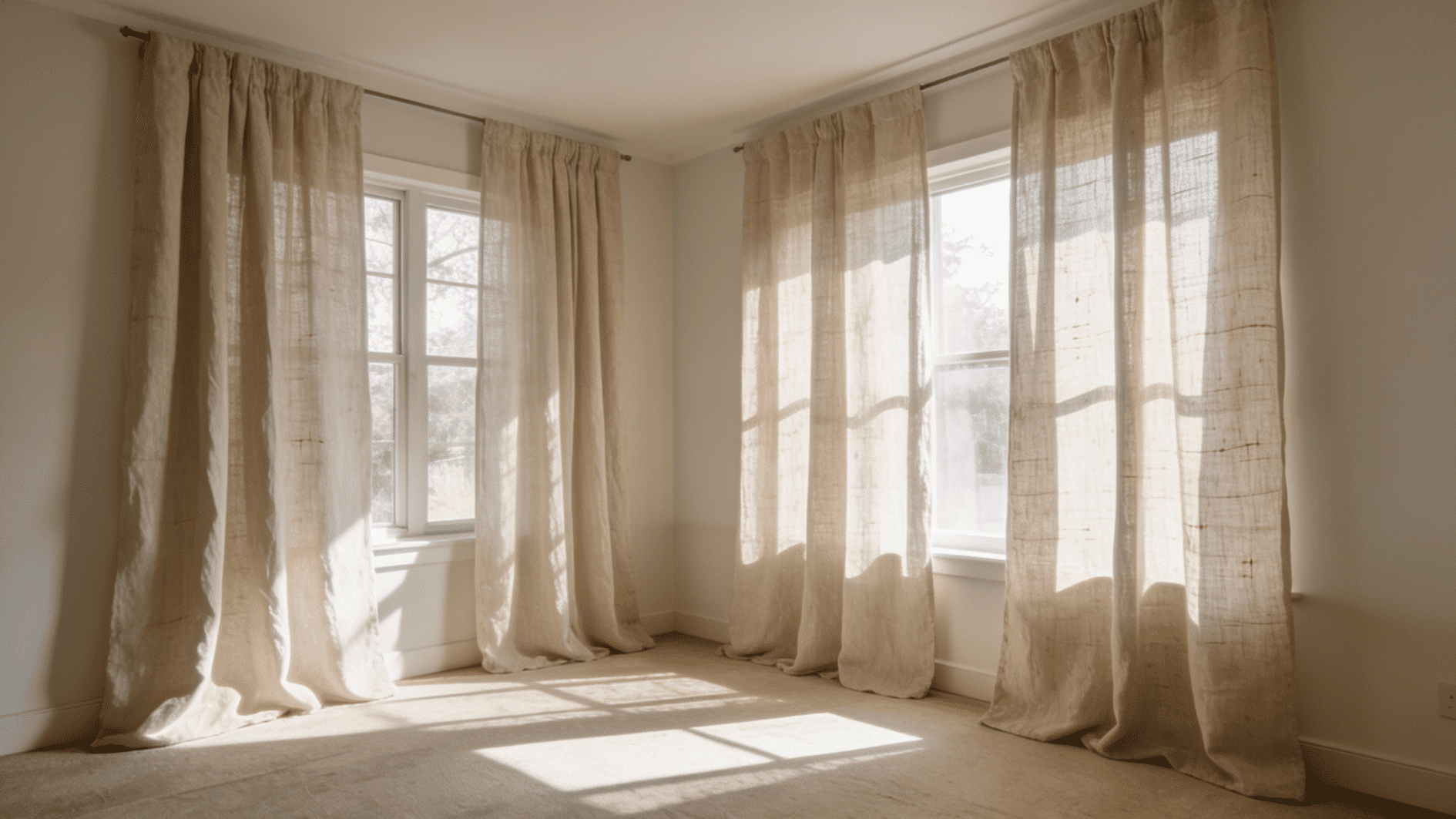
The characteristic slub of linen fabric – small, irregular thickenings in the weave – means no two panels look entirely identical, which gives them an organic, handmade quality.
They tend to crease gently and drape loosely rather than falling in sharp or precise folds. In natural, undyed tones they bring a quiet warmth to a room that reads as effortless rather than considered.
It is a breathable, durable, moderately lightweight fabric that lets in soft, diffused light rather than blocking it, and offers limited privacy in direct sunlight when lit from behind at night.
Linen tends to soften and improve in texture over time with washing, which makes it a practical long-term choice. The creasing is what makes linen work so well in relaxed interiors.
Best for: Farmhouse kitchens, coastal living rooms, minimalist bedrooms, and any space built around natural materials, neutral palettes, and a relaxed, unforced aesthetic.
13. Layered Curtains
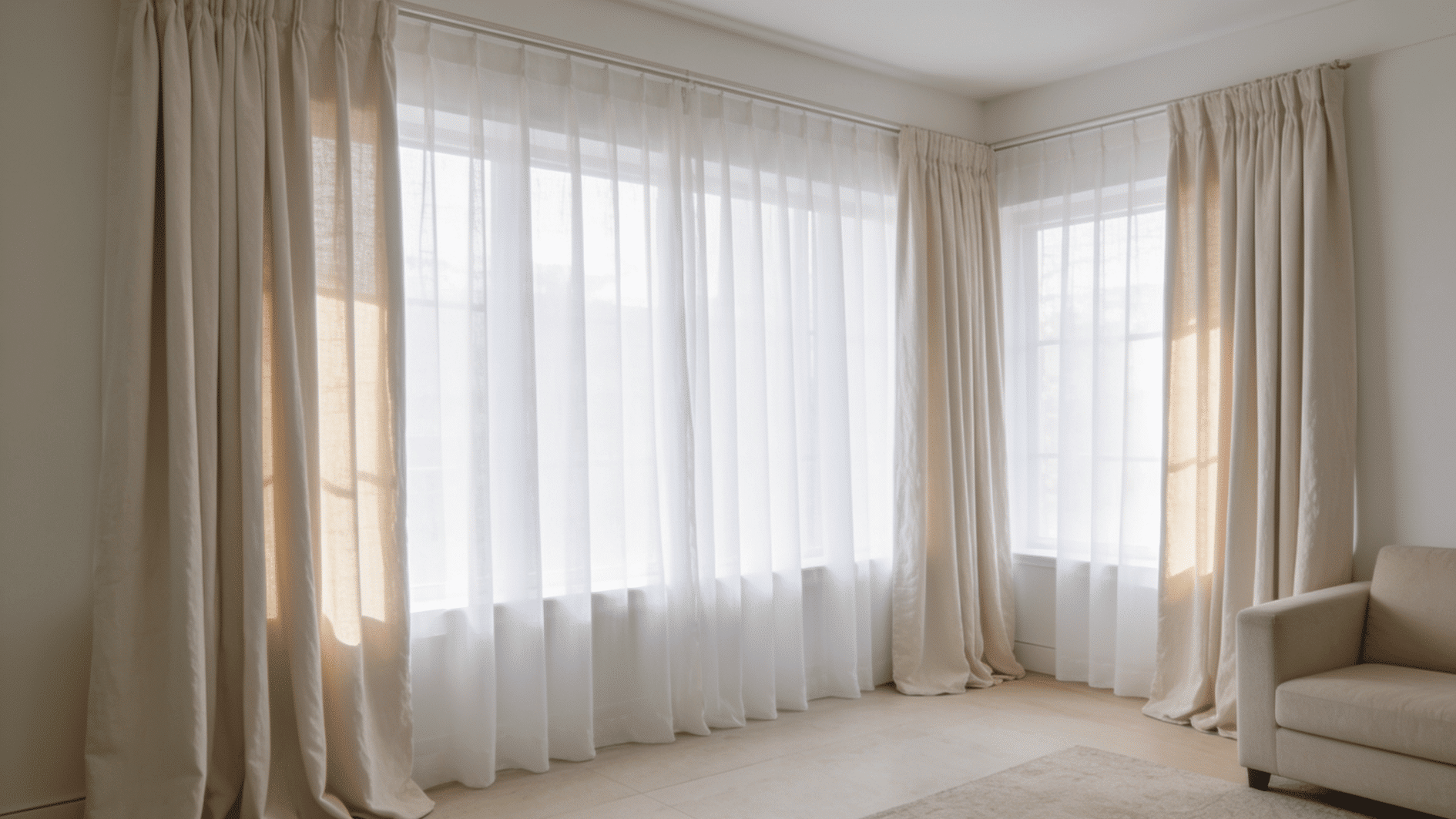
Layered curtains use two panels at the same window – one mounted behind the other on a double rod, each doing a different visual and practical job.
Most commonly, the back layer is a sheer or lightweight fabric closest to the glass, and the front layer is a heavier drape made of a more opaque material.
During the day, pull the heavy drape back and let the sheer handle light and privacy; at night, draw the drape for full privacy, insulation, and darkness.
Best for: Living rooms, bedrooms, and any room where light conditions change significantly across the day, and maximum flexibility over privacy and atmosphere is the priority.
14. Thermal Curtains
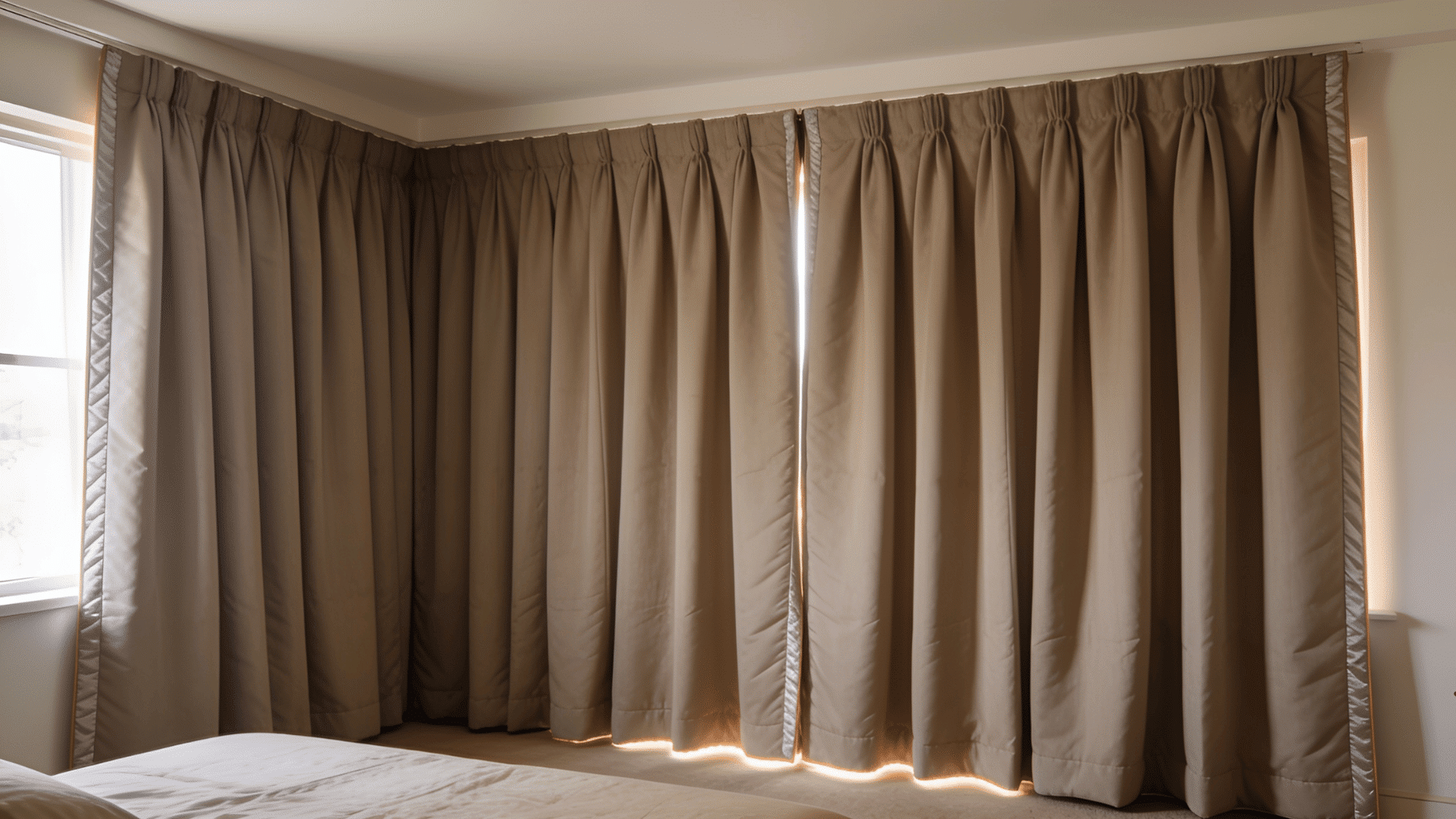
They come in a full range of heading styles – grommet, pencil pleat, eyelet, rod pocket – and in fabrics that run from smooth polyester blends to linen-look textures to heavier woven materials.
The insulating layer is entirely internal, hidden between the face fabric and a back lining, and is invisible once the curtain is hung.
In winter, it slows the rate at which heat escapes through the glass, keeping the room warmer for longer. In summer, it reduces the rate at which heat from sun-warmed glass transfers into the room.
Best for: Bedrooms, home offices, spare rooms with large windows, any room with older or poorly insulated glazing, and any household looking to reduce heating costs without replacing windows.
How Long Should Your Curtains Be?
Length is one of the decisions that most people make last, when it should really happen first. Wrong length can undermine everything else about the window treatment, regardless of how well the style was chosen.
Getting accurate curtain measurements first helps you avoid panels that look too short, too narrow, or awkward once installed. There are four standard curtain lengths, each creating a distinctly different effect.
| Curtain Length Type | Where It Falls | Best For | Look | Note |
|---|---|---|---|---|
| Sill Length | Ends at the windowsill | Kitchens, bathrooms, windows with counters or benches | Casual | Keeps the lower wall clear |
| Below-Sill / Apron Length | Falls a few inches below the sill | Deep windows or detailed walls | Tricky but intentional | Can look accidental if not styled well |
| Floor Length | Stops just above the floor | Most rooms | Clean and polished | Makes windows look taller |
| Puddle Length | Pools on the floor | Formal rooms and bedrooms | Soft and luxurious | Needs more cleaning and upkeep |
How to Choose the Right Curtain Style?
Choosing the right curtain style does not require a design background. It requires answering a few honest questions about the room and how you use it.
- Start with your light requirement. Do you need the room dark – for sleeping, for screen use? Go straight to blackout or thermal. Do you want soft light without heavy coverage? Sheers and linen are in your range.
- Know how often you will open and close the curtain. If you reach for it every morning and evening, choose grommet or eyelet. If the curtain is primarily decorative and stays in one position, rod pocket, tab top, and pinch pleat all work well.
- Match the style to the room’s register. Formal rooms: pinch pleat, box pleat, or pencil pleat in a heavier fabric, such as velvet. Casual room styles: rod pocket, tab top, linen panels, café curtains.
- Consider the room’s practical demands. A kitchen curtain needs to tolerate steam and regular washing. A child’s bedroom benefits from blackout lining. A home office curtain should manage screen glare. Let practical demands shape the shortlist before aesthetic decisions.
- Think about the window itself. Wide windows: panel curtains or flat-heading styles. Tall, narrow windows – curtains hung above the frame and dropped to the floor. Small windows look better with curtains that extend beyond the frame on either side.
- Let the fabric do as much work as the heading. Pencil pleat in velvet is formal. The same heading in washed linen is relaxed. The heading sets the structure; the fabric sets the mood. Choosing them together is what makes a curtain feel considered rather than assembled.
Conclusion
You now have a working picture of different curtain styles – what each one looks like, how it hangs, what it does well, and where it fits.
The right curtain does more than cover a window. It shapes how a room feels to live in: how warm it seems in the afternoon, how private it feels at night, how finished the whole space looks.
If you started here unsure of where to begin, begin with light. That one question will point you in the right direction faster than any other.
From there, match the style to how you use the room – and let the room tell you what it needs.
Frequently Asked Questions
How Do I Know What Curtain Length is Correct for My Window?
Curtains should either just graze the floor, puddle slightly for a formal look, or sit at the sill. Measure from the rod to your desired endpoint before buying.
Can I Mix Two Different Curtain Styles in the Same Room?
Yes, pairing a sheer layer with a heavier drape works well as long as the colors and rod hardware stay consistent.
What’s a Budget-Friendly Way to Upgrade the Style of Curtains without Buying New Ones?
Swapping the curtain rod, finials, or tiebacks instantly changes the look for a fraction of the cost.
What Curtain Trends are Popular Right Now?
Linen pinch-pleat curtains in warm neutrals and bold floor-length drapery with exposed wooden rods are leading current trends.
How Often Should Curtains Be Cleaned to Keep Their Look and Shape?
Most curtains should be vacuumed monthly and professionally cleaned or washed every 6 to 12 months, depending on the fabric.