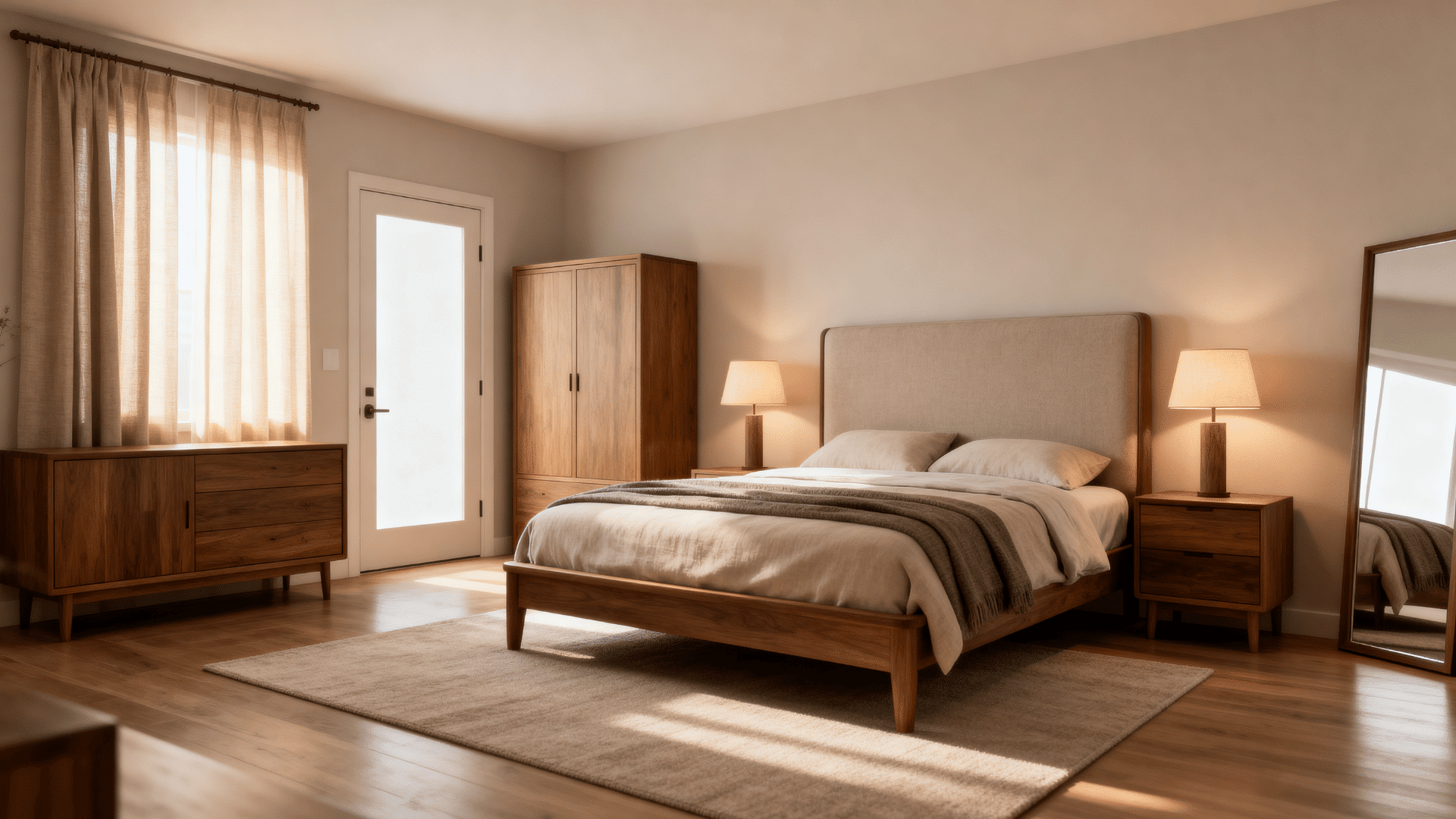
A bedroom can look neat and still feel hard to settle into. The bed may feel slightly off, the dresser may make one wall feel heavy, or the lighting may feel too sharp once the day slows down.
That is where bedroom feng shui can help, as it is not about chasing a perfect room.
It is about making smart choices with furniture, light, storage, and decor so the space feels easier to live in.
After years of styling rooms and testing layouts in real homes, one thing is clear: Small shifts often make the biggest difference.
What is Feng Shui?
Feng Shui is a traditional Chinese practice that focuses on creating balance between people and their surroundings. It is based on the idea that energy, often called “chi,” flows through every space and can affect how it feels.
A key part of feng shui is the five elements: wood, fire, earth, metal, and water. Each element is linked with certain colors, shapes, materials, and moods.
For example, wood can suggest growth, earth can feel steady, and water can bring a sense of calm.
Feng shui also looks at yin and yang, which means balancing soft and active energy. The goal is to keep these forces in balance so a space does not feel too heavy, too busy, or out of sync.
Bedroom Feng Shui Basics Before You Rearrange
Before making any changes, take a quick look at how the room feels and functions. This helps you spot what needs attention first, rather than moving everything at once.
Use these basics as a simple room check:
- Support: The bed should feel secure, with a solid wall or headboard behind it.
- Flow: You should be able to walk around the room without bumping into furniture.
- Balance: Both sides of the room should feel visually even, not heavy on one side.
- Comfort: Furniture should fit the room rather than make it feel tight.
- Calm: Lighting, colors, and decor should feel soft rather than loud or stressful.
- Clarity: Clutter should be reduced, especially near the bed and floor.
Once these basics are clear, it becomes much easier to apply bedroom feng shui in a practical way.
Bedroom Feng Shui Ideas for a Better Layout
Small layout changes can make your bedroom feel more restful and easier to use. These bedroom feng shui ideas focus on furniture placement, storage, lighting, decor, and comfort, so each part of the room has a clear purpose.
1. Place the Bed Where You Can See the Door
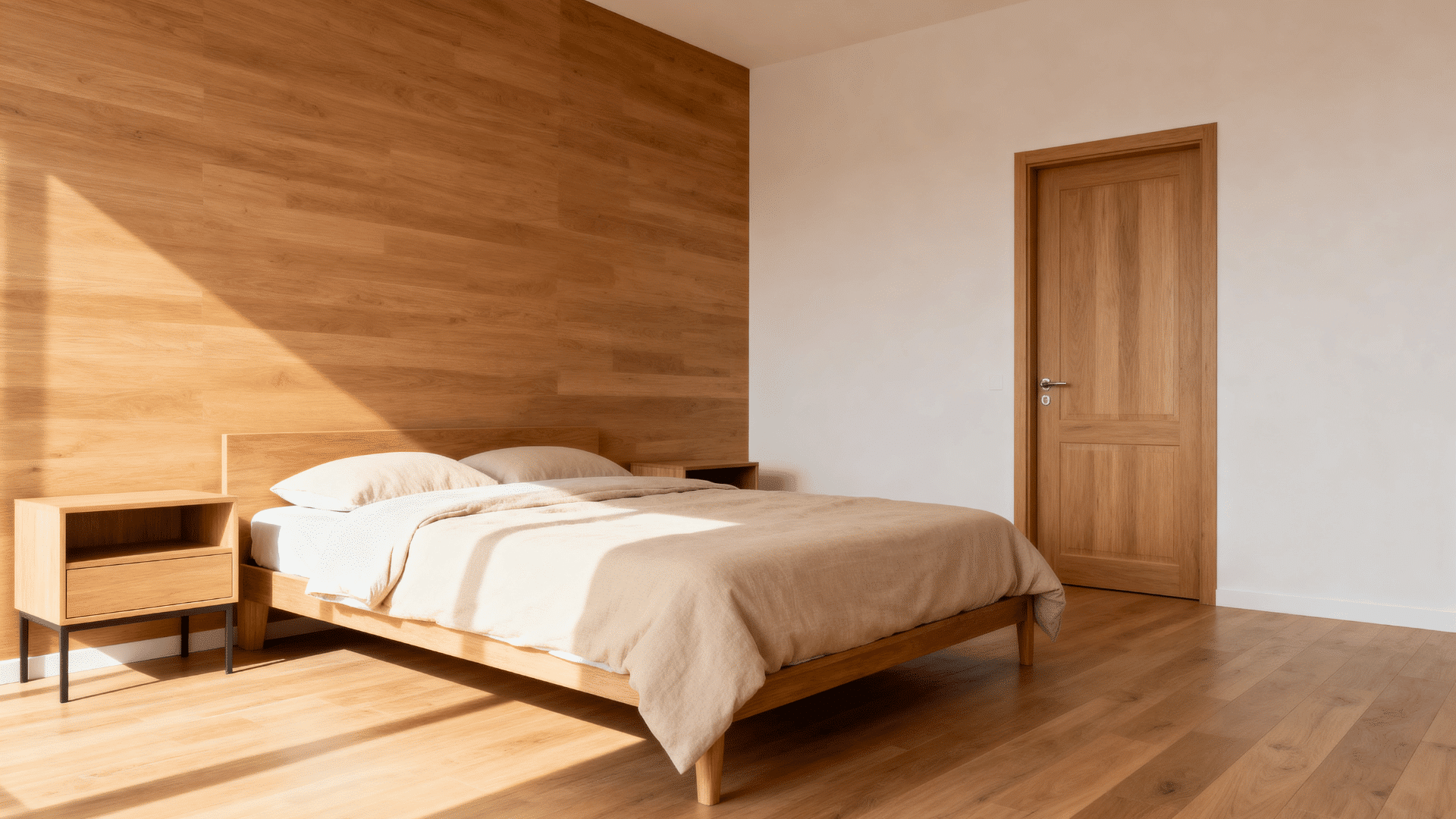
If the main question is where to put the bed in feng shui, start with the command position. The bed should feel secure without sitting in the direct path of the door.
Start with these layout checks:
- Door View: Place the bed where you can see the door while lying down, but avoid lining it up directly with the doorway.
- Wall Support: Keep the head of the bed against a solid wall for a stronger, more protected feel.
- Window Check: Avoid placing the headboard under a window if another wall gives better support.
- Side Space: Leave space on both sides of the bed when possible, and work with the best layout your room allows.
2. Choose a Solid Bed Frame and Headboard

A strong bed setup gives the room a clear anchor. In bedroom feng shui, the bed should feel supported, stable, and easy to use.
Check these details first:
- Frame Type: Choose a solid wood or upholstered bed frame that feels stable and noise-free.
- Headboard Style: Pick a full headboard with a simple shape and firm attachment.
- Frame Condition: Avoid weak, squeaky, broken, or unstable frames that make the bed feel unreliable.
- Wall Area: Skip open metal headboards if the room already feels cold, and keep the wall behind the bed clean and simple.
3. Use Balanced Nightstands with Closed Storage
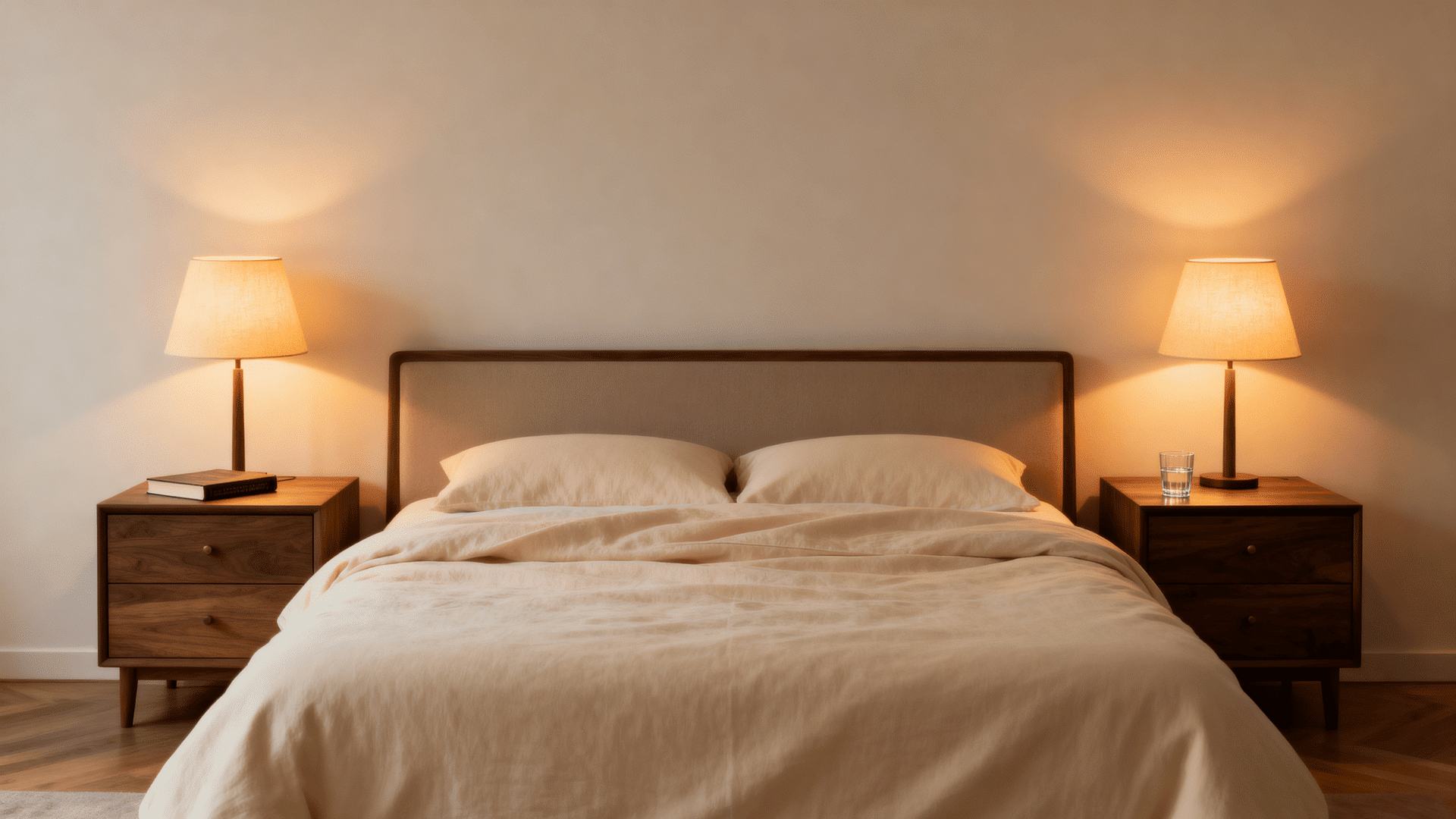
Nightstands should help the bed area feel organized without adding extra visual noise.
Keep these points in mind:
- Even Setup: Use two nightstands if the room has enough space, and keep them close to mattress height.
- Hidden Storage: Pick drawers or closed shelves to hide small items and reduce visual clutter.
- Balanced Look: Use similar shapes, sizes, or colors if the nightstands do not match exactly.
- Top Surface: Add soft lamps on both sides and keep only simple bedtime items on top.
4. Pick Dressers and Wardrobes that Fit the Room
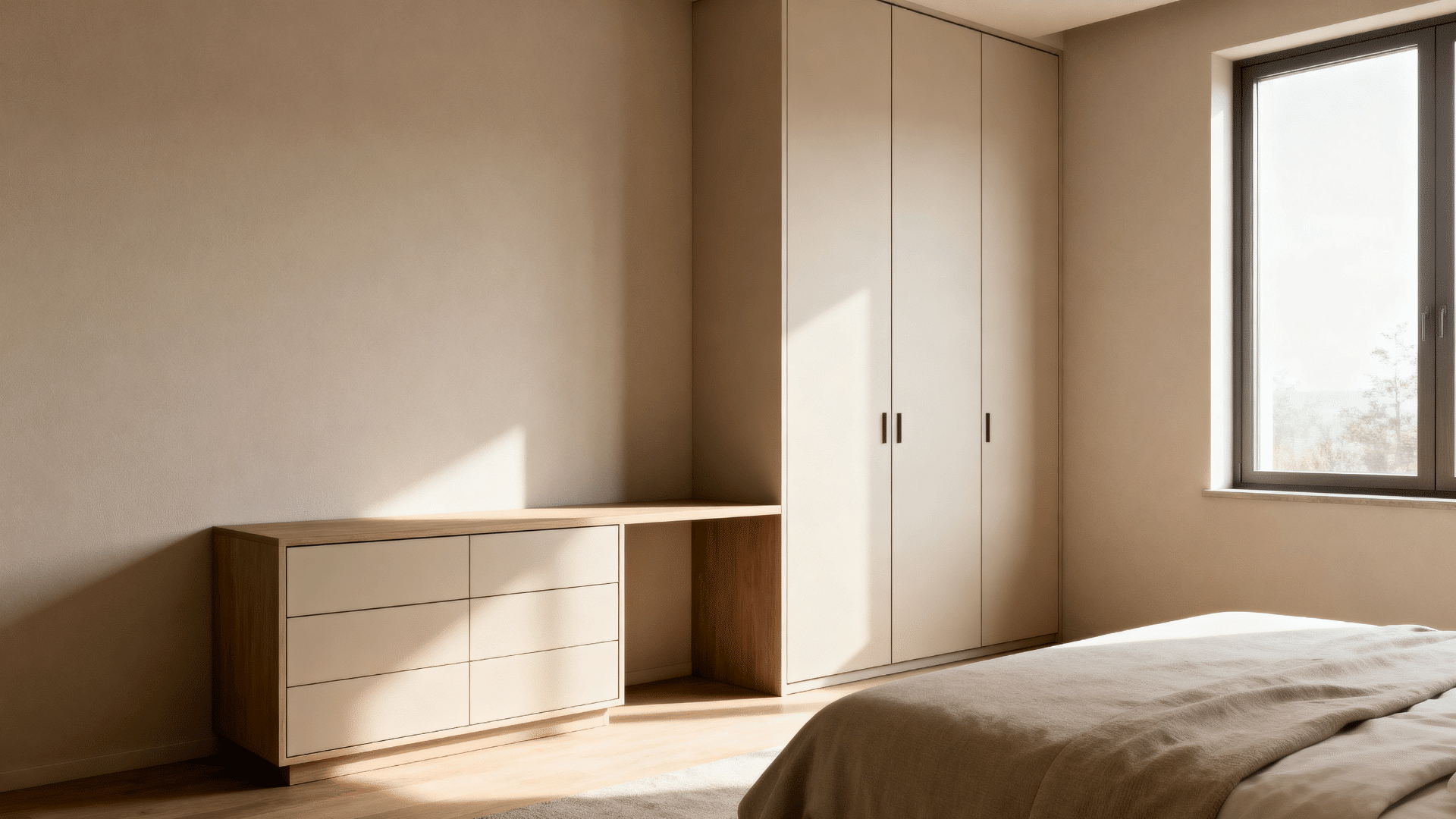
Storage should make the bedroom feel cleaner and easier to use. The best pieces hold what you need without taking over the room.
Use these simple storage cues:
- Dresser Size: Choose low or medium-height dressers with smooth fronts, especially in smaller bedrooms.
- Wall Placement: Place dressers against open wall space so drawers can open without hitting other furniture.
- Closed Storage: Use wardrobes with doors instead of open clothing racks to keep clothing hidden.
- Bed Distance: Avoid tall storage too close to the bed or heavy storage directly facing the bed if it makes the room feel tight.
5. Choose Furniture with Soft Lines and Natural Materials

Furniture shape and material affect the visual weight of the room. Softer forms and warmer materials usually work best for bedroom feng shui:
Focus on these furniture details.
- Soft Shapes: Choose rounded nightstands, smooth corners, and clean furniture fronts when possible.
- Warm Materials: Use wood, bamboo, rattan, cane, or upholstered pieces for a more natural feel.
- Sharp Edges: Avoid sharp corners pointing toward the bed and limit shiny, cold surfaces.
- Visual Weight: Pick furniture that looks balanced in the room instead of pieces that feel bulky or heavy.
6. Add Seating only if the Room has Space
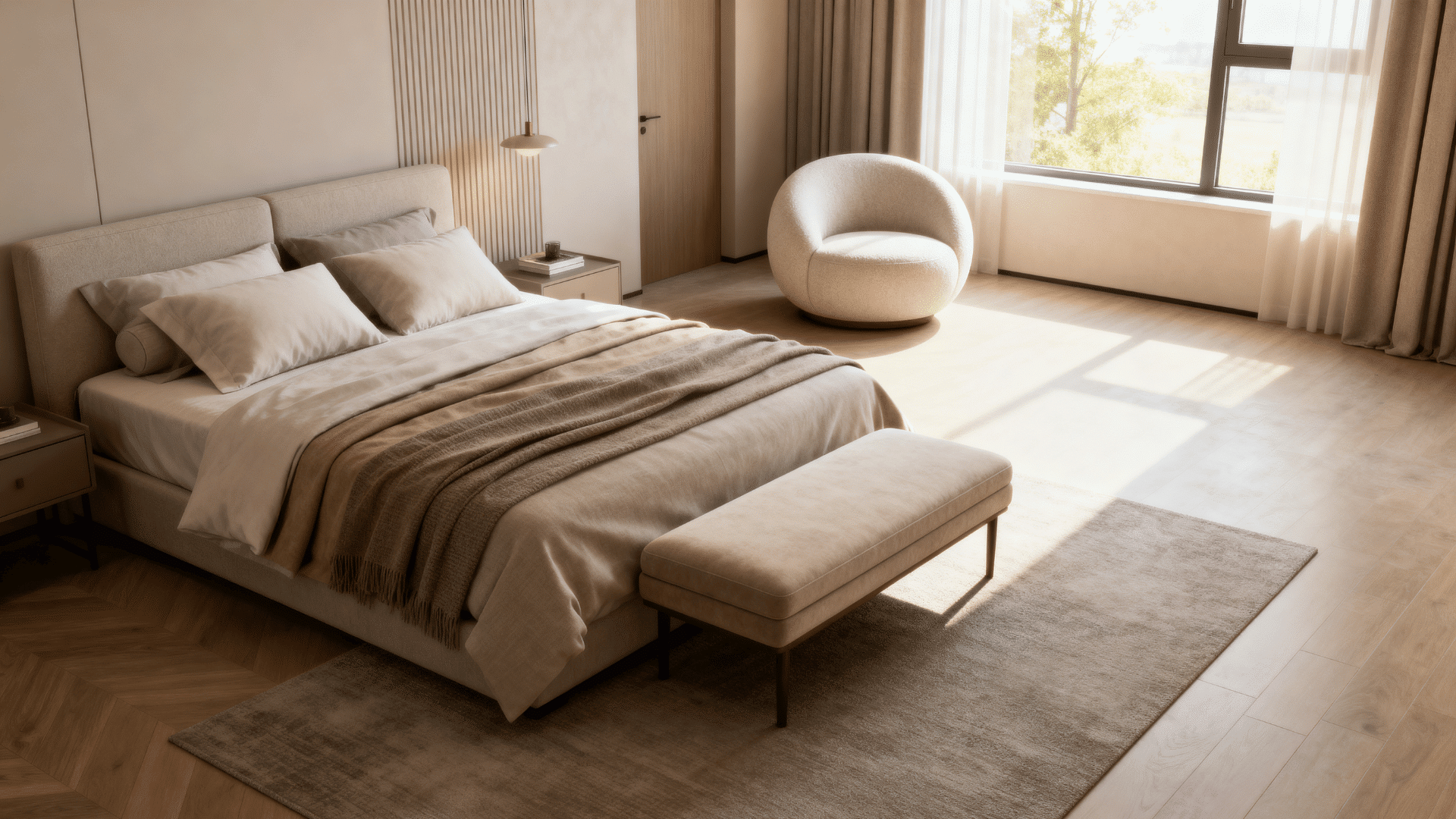
Extra seating should serve a clear purpose. If it blocks movement or turns into a laundry pile, it works against the room.
Make these small checks:
- Right Piece: Add one soft chair, small bench, or ottoman only if the room has enough open space.
- Bench Placement: Place a bench at the foot of the bed only when it does not block movement.
- Chair Placement: Use a chair near a window if it feels practical and does not crowd the layout.
- Daily Use: Choose upholstered or rounded seating, and avoid using the chair to store laundry.
7. Keep the Area Around the Bed Clear
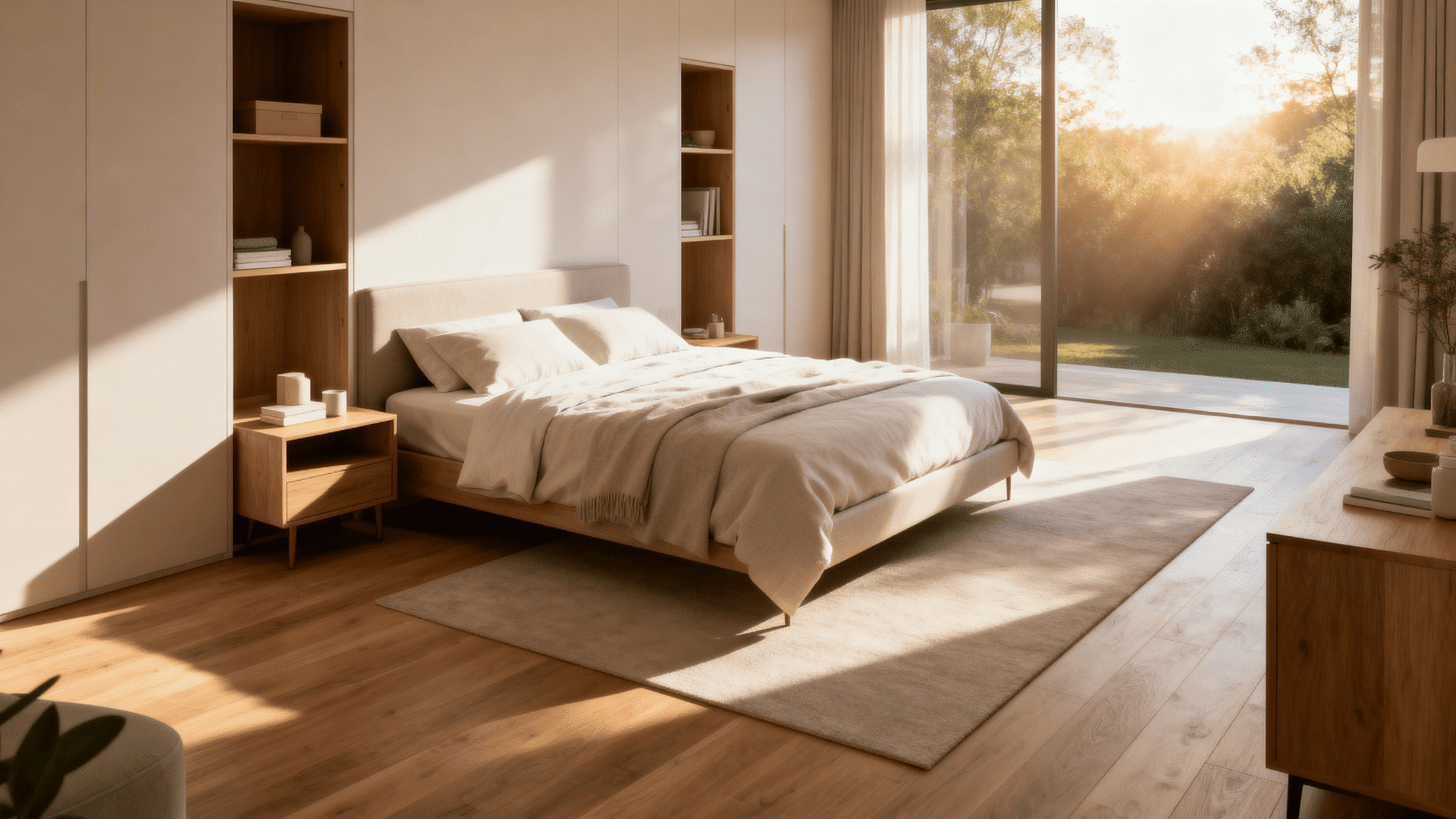
The bed area should feel clean and easy to maintain. This keeps the sleep zone from feeling packed with random items.
Start with these clutter-control basics:
- Floor Space: Keep clothes, shoes, boxes, bags, and random items away from the bed.
- Under-Bed Storage: Avoid storing work papers, old keepsakes, or stressful items under the bed.
- Lidded Bins: Use lidded bins only for under-bed storage; avoid open piles.
- Clear Paths: Clear cords from walking paths and leave open space at the foot of the bed when possible.
8. Place Mirrors with Care
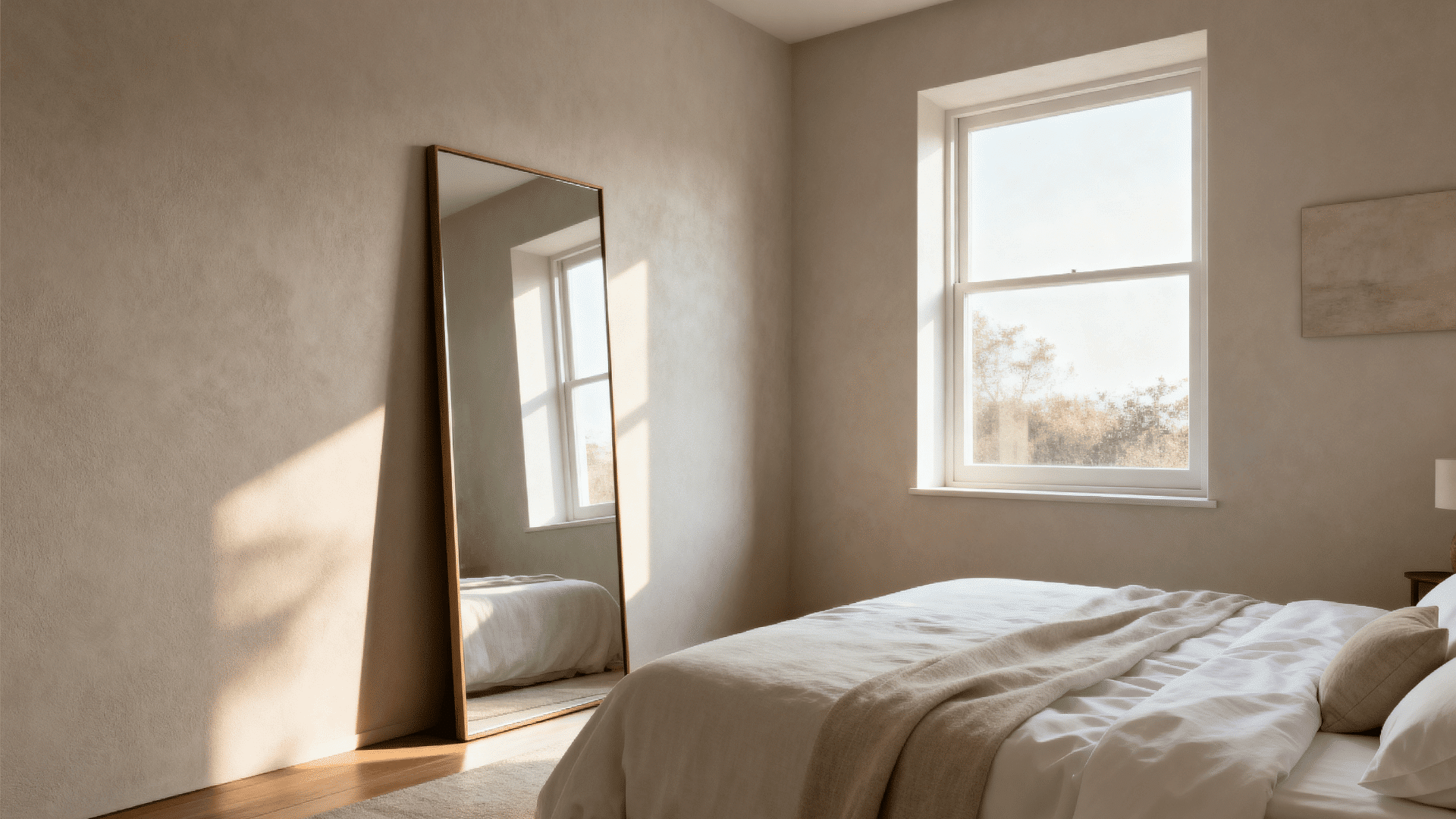
Mirrors can add light, but they can also make the room feel more active at night. Their placement should feel intentional.
Use these mirror checks:
- Bed Reflection: Avoid mirrors facing the bed or sitting in the direct line of sight from the bed.
- Light Reflection: Place mirrors where they reflect natural light or a calm view.
- Headboard Area: Avoid large mirrors behind the headboard or closet-door mirrors that reflect the bed.
- Night Comfort: Move or cover a mirror if it feels distracting at night.
9. Use Warm Lighting, Rugs, Curtains, and Bedding
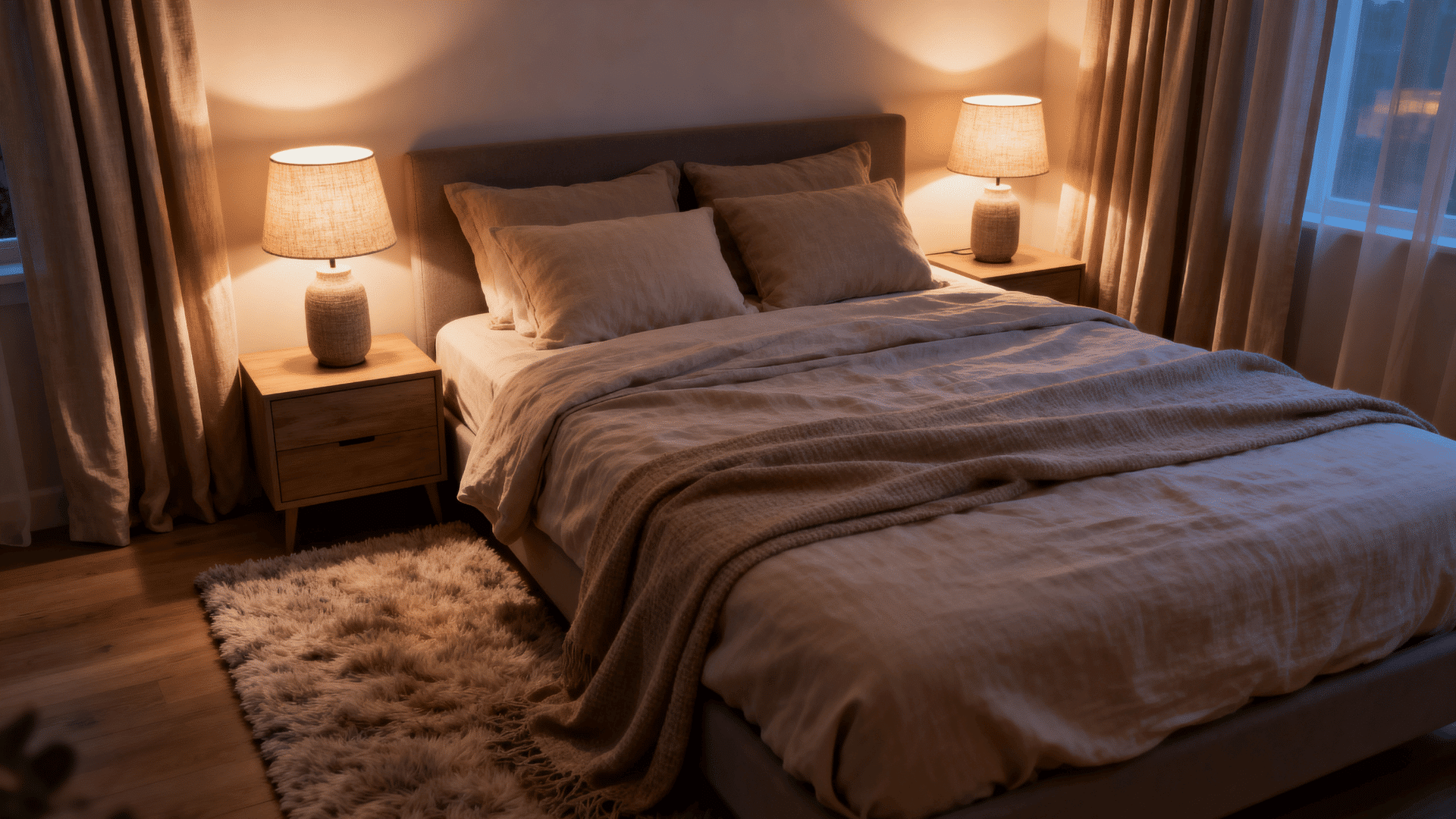
Lighting and texture help set the bedroom’s nighttime mood. In bedroom feng shui, these layers should feel gentle and easy to live with.
Try these comfort updates:
- Lighting: Use warm white bulbs with bedside lamps, wall sconces, or dimmable fixtures.
- Soft Glow: Pick fabric lampshades for a gentle glow instead of harsh light.
- Rug Placement: Place a soft rug under the lower two-thirds of the bed or on both sides. Good bedroom rug placement can make the bed area feel softer, warmer, and more grounded without changing the full room layout.
- Bedding and Curtains: Choose breathable bedding, such as cotton or linen, and use curtains that give privacy and control strong light.
10. Choose Calm Decor with Personal Meaning
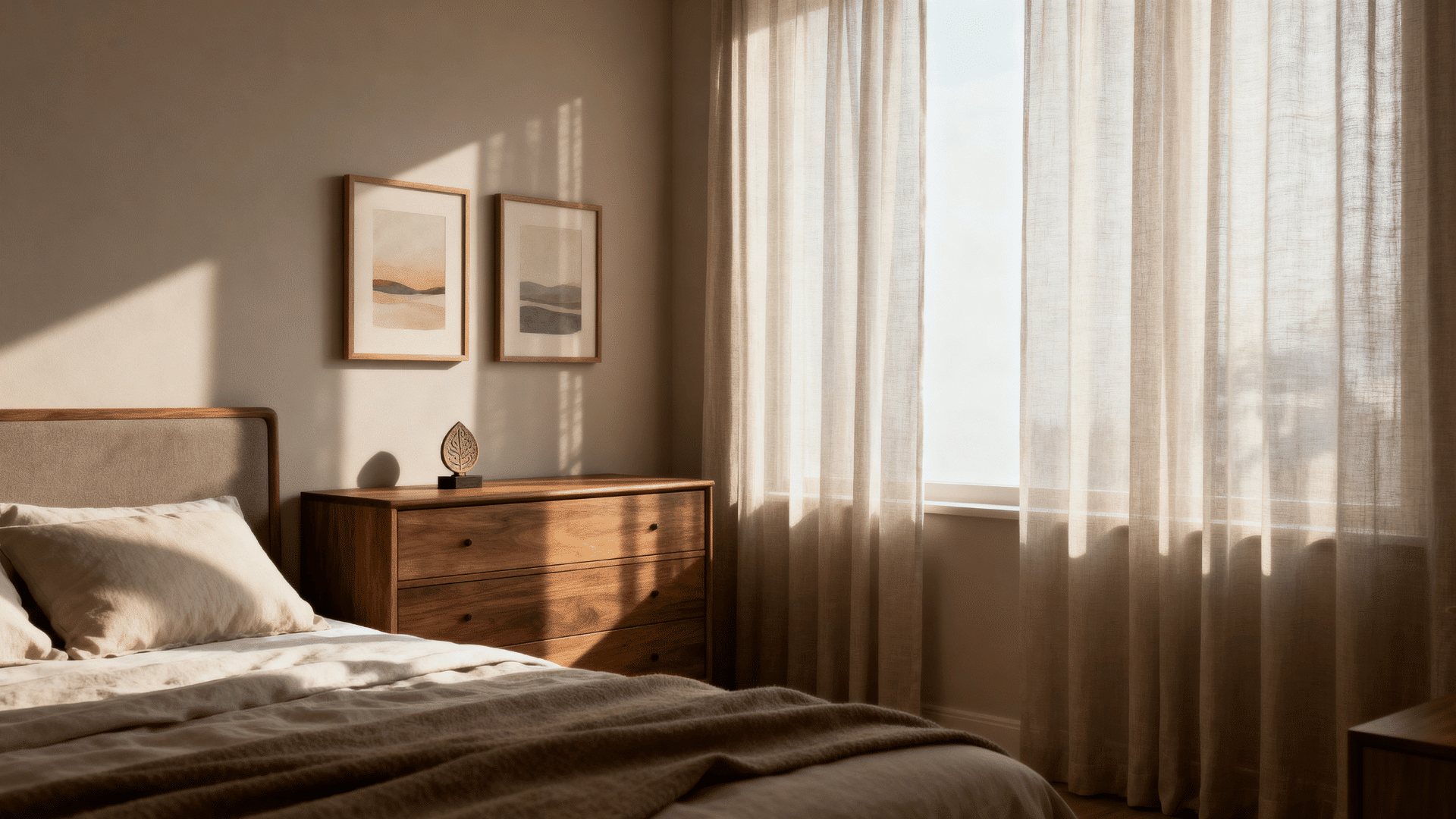
Decor should feel intentional. A few meaningful pieces usually work better than crowded surfaces or random accents.
Let these points shape the room.
- Wall Art: Choose art with calm colors and gentle movement.
- Balanced Pieces: Use paired objects for balance and add personal accents with meaning.
- Image Choice: Avoid sad, lonely, violent, or stressful images.
- Surface Control: Do not hang heavy shelves or large objects above the bed, and keep visible surfaces from getting overfilled.
Common Bedroom Feng Shui Mistakes and Their Fixes
Small layout issues can make a bedroom feel busy, heavy, or hard to rest in. Use this quick table to spot common problems and fix them without rearranging the whole room.
| Mistake | Why It Feels Off | Simple Fix |
|---|---|---|
| Bed Directly In Line with the Door | It can make the bed feel exposed instead of restful. | Move the bed slightly to the side while keeping a clear view of the door. |
| No Solid Support Behind the Bed | A weak or open setup can make the sleep area feel less grounded. | Place the headboard against a solid wall and use a firm, full headboard. |
| Mirror Facing the Bed | Reflections can feel too active at night and may make the room less calming. | Move the mirror to reflect natural light, a calm wall, or a closet area instead. |
| Clutter Under the Bed | Stored items can make the room feel mentally crowded, especially near the sleep zone. | Keep the space clear, or use closed bins only for soft, low-stress items. |
| Heavy Decor Above the Bed | Large shelves or heavy frames can make the bed area feel visually tense. | Choose lightweight art or keep the wall above the bed simple. |
Conclusion
Bedroom feng shui is most useful when it makes the room feel easier to live in, not just nicer to look at. Start with the bed, then check how the furniture, lighting, storage, and decor support rest.
For anyone asking where to put the bed in feng shui, the main idea is to keep the bed supported, easy to access, and out of the door’s direct path.
A good final check is simple: the room should feel easy to enter, easy to move through, and easy to settle into at night.
With a practical setup, bedroom feng shui can help the space feel balanced, comfortable, and better suited to rest.
Frequently Asked Questions
Can Bedroom Feng Shui Work in a Rental?
Yes. Use renter-friendly changes like moving small furniture, changing lamps, using rugs, adding curtains, and reducing clutter.
How Often Should a Bedroom Be Refreshed for Feng Shui?
A light refresh every season can help. Wash bedding, clear unused items, check lighting, and remove anything that no longer feels useful.
Can Bedroom Feng Shui Work with Any Decor Style?
Yes. Bedroom feng shui can work with modern, farmhouse, boho, classic, or simple decor as long as the room feels balanced and restful.