Some bedrooms instantly feel cozy, calm, and beautifully put together. That’s the effect color drenching can create.
This design approach uses the same color across multiple surfaces, helping the room feel more connected and inviting. The trend may look designer-approved, but it’s actually simple to try at home with the right paint choices.
In this guide, you’ll learn how to use color drenching in your bedroom, choose the best shades, and avoid common mistakes.
What is Color Drenching in a Bedroom?
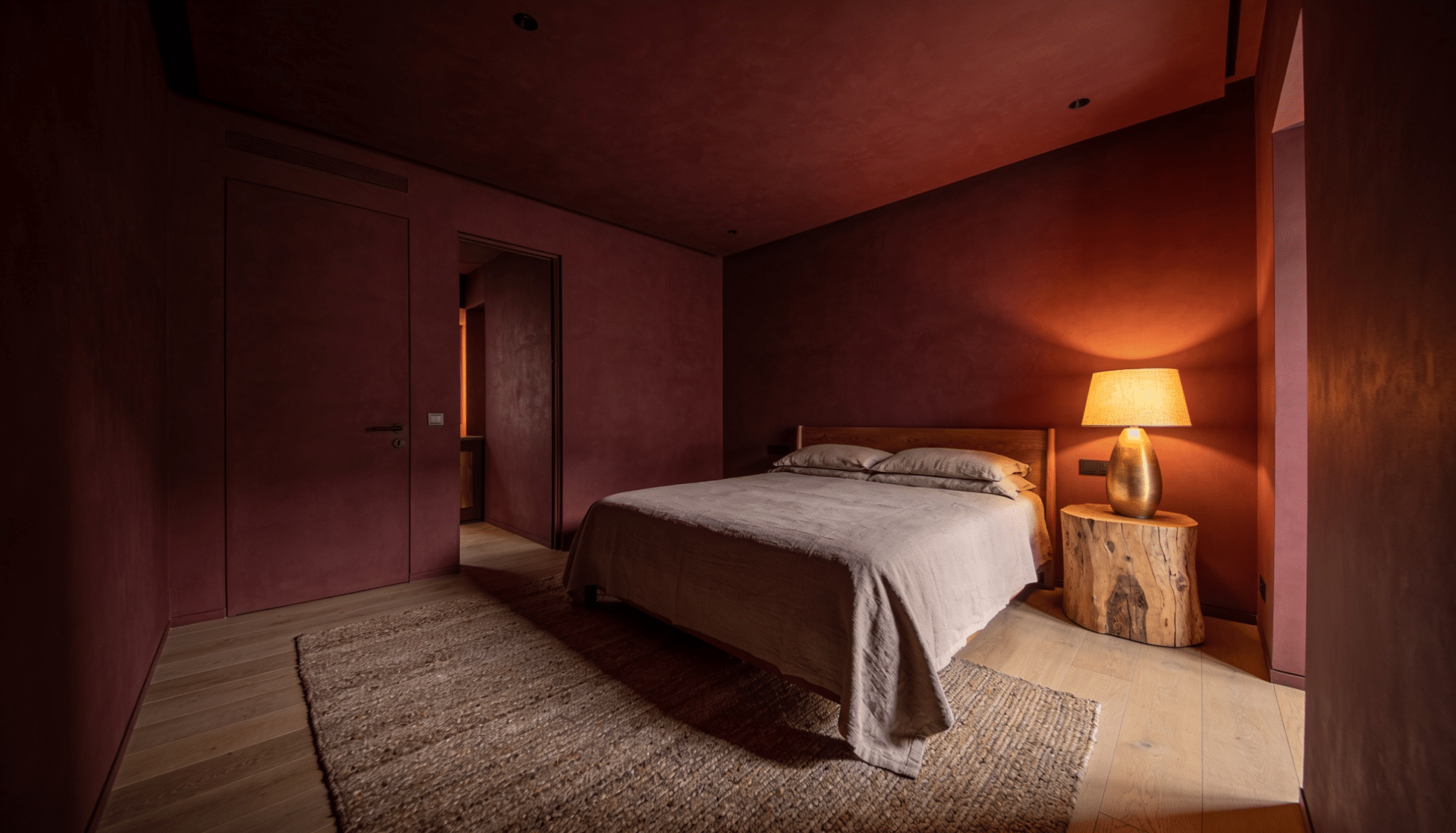
Color drenching means painting your walls, trim, ceiling, and doors all in the same color or very close shades of it. Sometimes furniture and soft furnishings follow the same palette too.
Unlike traditional decorating, there are no contrasting trims or stark white ceilings breaking up the space. Every surface wraps you in the same hue, creating a seamless, enveloping effect.
The result is a bedroom that feels deeply cozy and intentional. Nothing competes for attention; the color does all the talking.
According to interior designers and color specialists, this technique works particularly well in bedrooms because it reduces visual interruptions and creates a more restful atmosphere.
By allowing the eye to move smoothly across the room, color drenching can make a space feel calmer, more cohesive, and thoughtfully designed.
Picking the Right Color for Drenching
Choosing the right color is the foundation of the whole look. The wrong shade can make a drenched room feel heavy, cold, or restless; the right one makes it feel like the most calming place in your home.
| Color | Vibe | Best For |
|---|---|---|
| Soft Blue | Quiet, airy | Sleep and calm |
| Earthy Green / Sage | Grounding, natural | Restful retreat |
| Warm Beige / Taupe | Soft, easy | Neutral drench |
| Clay / Terracotta | Warm, inviting | Cozy warmth |
| Deep Navy | Moody, intimate | Bold cocoon |
| Vivid Yellow / Electric Teal | Loud, stimulating | Avoid in bedrooms |
Through years of residential interior design projects, designers have found that softer, nature-inspired shades tend to create the most comfortable bedroom environments.
Research on color psychology consistently suggests that cooler blues and greens can promote relaxation, while highly saturated and energetic colors may make it harder to create a restful bedroom atmosphere.
How to Color Drench a Bedroom the Right Way
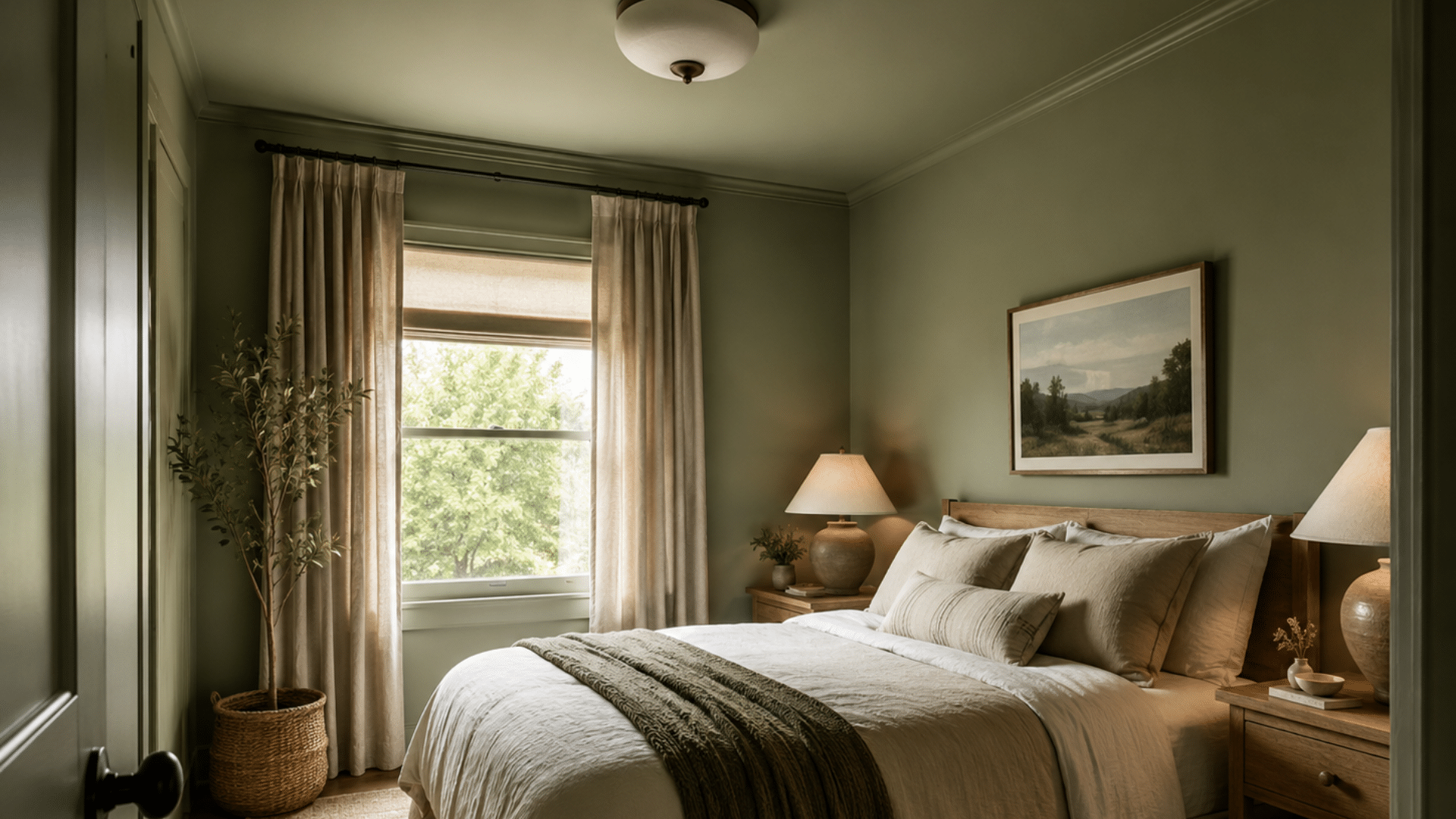
Color drenching can make a bedroom feel cozy, relaxing, and thoughtfully designed. The key is knowing where to use color, how much of it to use, and what details can keep the room from feeling too heavy. Follow these steps to create a balanced look that feels comfortable and visually pleasing.
Step 1: Test Your Color in Different Lighting
A paint color can look completely different throughout the day.
Apply large sample swatches on at least two walls and check them in natural daylight, evening light, and with your bedroom lamps turned on.
This simple step can help you avoid choosing a color that feels too dark, too bright, or different from what you expected.
Step 2: Decide How Far You Want to Take the Color
Not every color-drenched bedroom needs to include every surface.
For a softer approach, paint the walls and trim in the same shade. For a stronger effect, continue the color onto doors, built-ins, and even the ceiling.
Using the same color across more surfaces creates a more connected and immersive look.
Designer Athena Calderone applied this in her own Brooklyn bedroom, repainting the ceiling to match her walls after moving in – specifically to make the space feel more cohesive. (EyeSwoon)
Step 3: Add Texture to Create Interest
When a room uses one main color, texture becomes even more important.
Layer materials such as linen bedding, woven baskets, upholstered headboards, wood furniture, and area rugs. These details add depth and help the room feel warm rather than one-dimensional.
Designer Amber Lewis is known for layering natural materials – linen, wood, and woven accents – within a neutral palette to create depth and texture. (TZR)
Step 4: Balance the Space with Lighting and Decor
Good lighting can make a color-drenched bedroom feel soft and inviting.
Use warm-toned bulbs, bedside lamps, wall sconces, or dimmers to create a comfortable glow. Keep decorative pieces simple so the color remains the main focus of the room.
British designer Kelly Hoppen emphasizes that lighting is all about layering and that controlling different lighting elements separately is key to creating the right atmosphere in a space. (LuxDeco)
Step 5: Finish with Coordinated Details
Small details can make the entire design feel more cohesive.
Curtains, throw pillows, artwork, and accessories don’t need to match perfectly, but they should complement the main color. Staying within the same color family helps create a polished final result.
Designer Sarah Sherman Samuel describes her approach as creating spaces that feel ‘collected’ but not ‘matchy-matchy’ – using pieces with similar qualities but varied finishes to achieve cohesion without looking overly coordinated. (Lulu and Georgia)
Best Color Drenching Ideas by Bedroom Size
The size of your bedroom can help determine which colors will look and feel their best. While color drenching works in rooms of all sizes, choosing the right shade can make the space feel more balanced and comfortable.
1. Small Bedroom: Soft Sage or Warm Beige
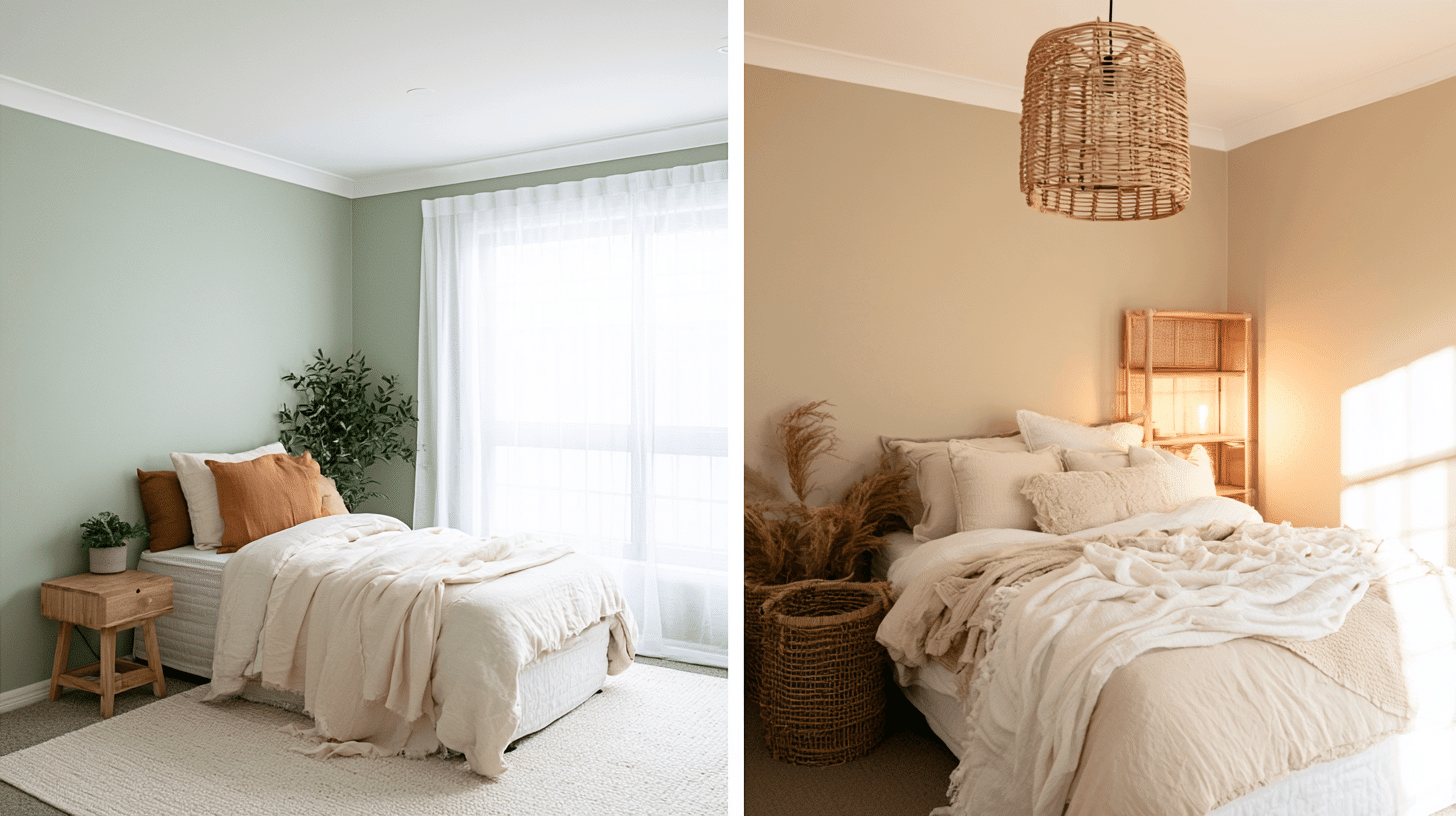
Small bedrooms often benefit from lighter, softer shades that keep the room feeling open and airy.
A soft sage green brings a fresh, calming feel without making the space seem smaller. Warm beige creates a cozy atmosphere while reflecting enough light to keep the room bright.
For the best results, carry the color onto the trim and ceiling to reduce visual breaks and create a smoother look.
2. Medium Bedroom: Dusty Blue or Mushroom
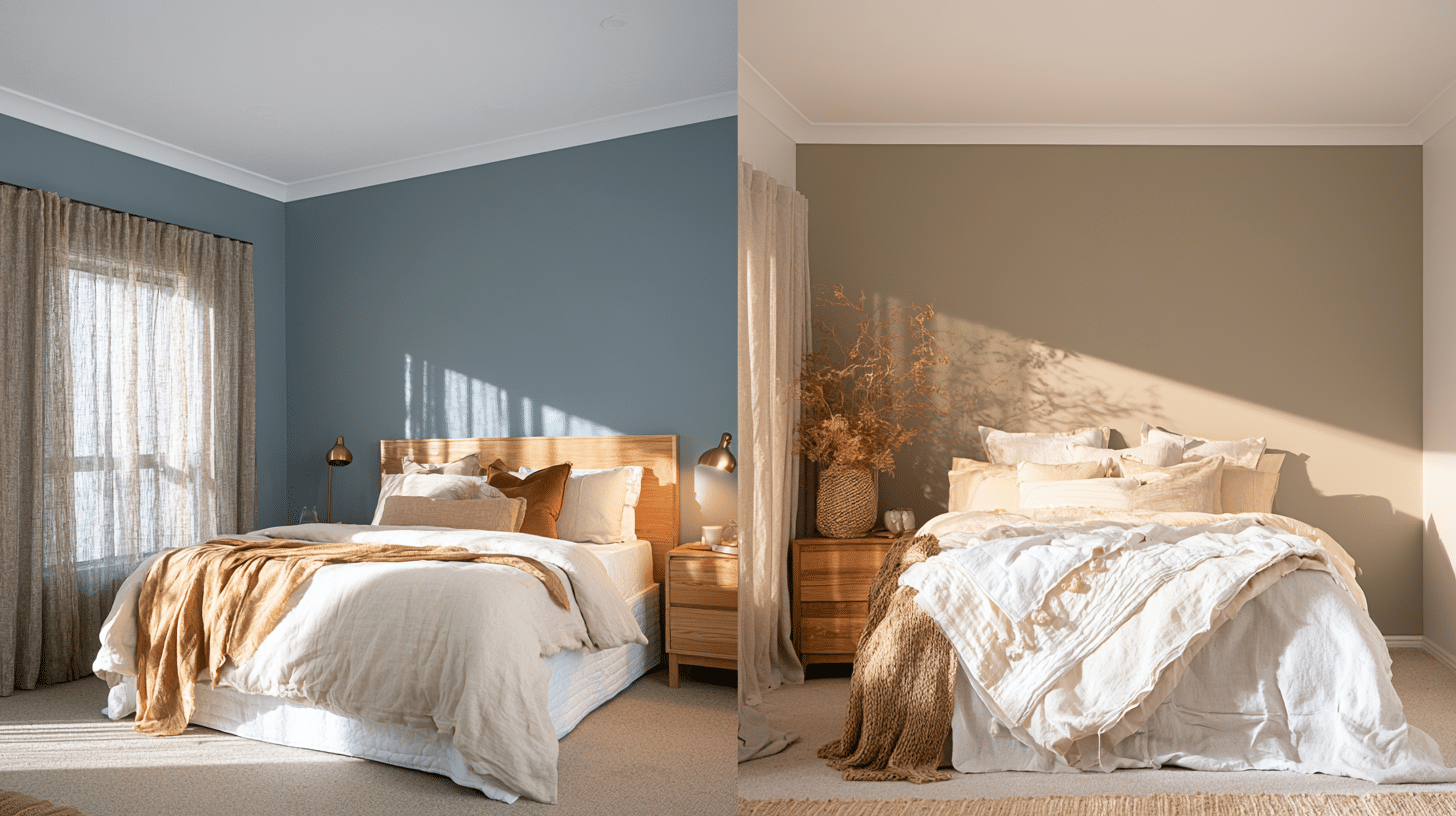
A medium-sized bedroom gives you more flexibility to play with color depth.
Dusty blue creates a relaxing retreat-like feel and pairs beautifully with white, wood, and natural textures. Mushroom, a blend of gray and brown undertones, offers warmth and softness without feeling overly dark.
Complete the look with layered bedding, textured curtains, and warm lighting to add depth.
3. Large Bedroom: Navy, Plum, or Forest Green
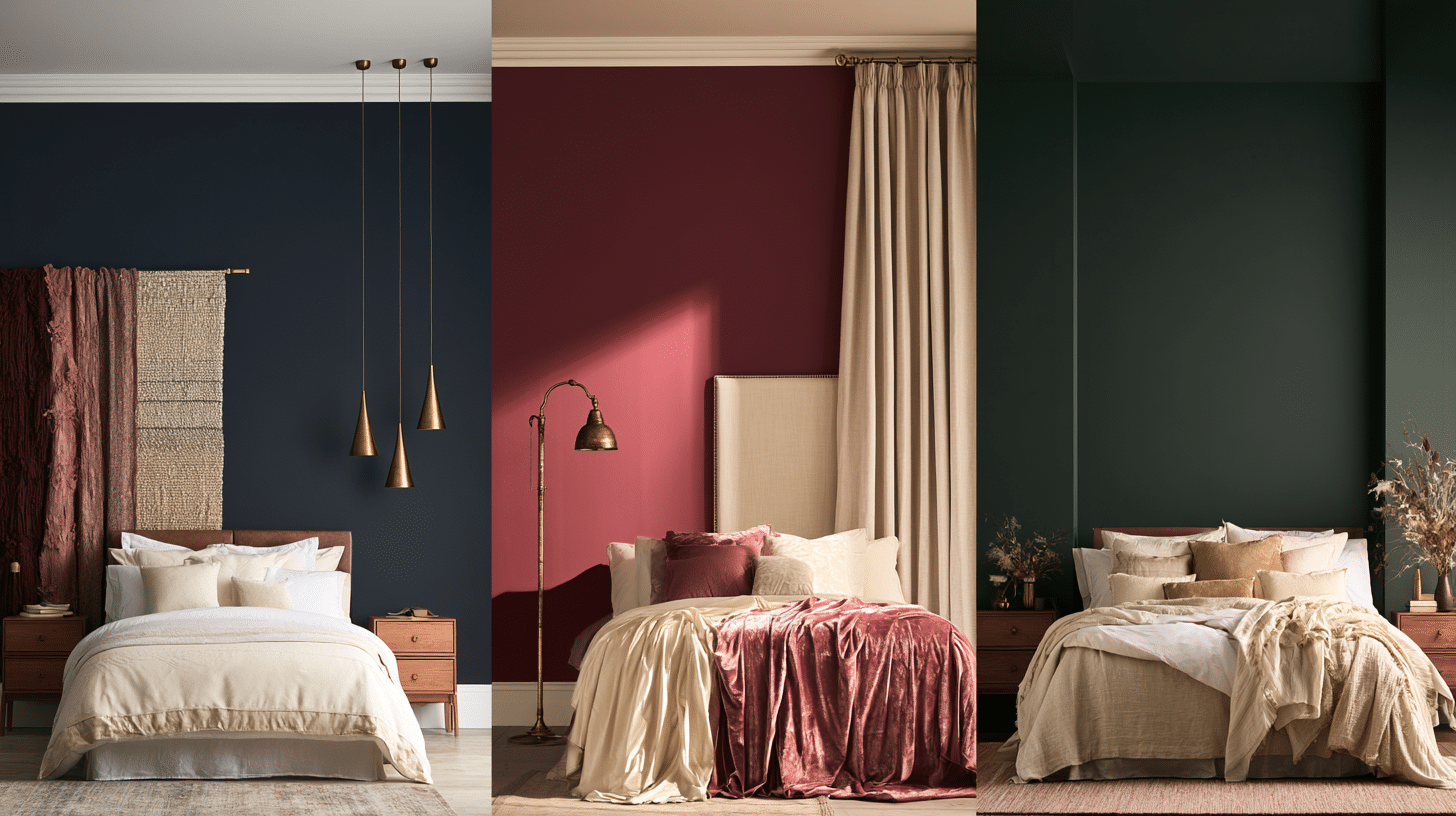
Larger bedrooms can handle deeper, richer colors without feeling closed in.
Navy creates a dramatic yet restful setting, while plum adds warmth and personality. Forest green brings a grounded, nature-inspired feel that works especially well with wood furniture and brass accents.
For a fully color-drenched effect, continue the shade across the walls, trim, doors, and ceiling to create a cozy, cocoon-like atmosphere.
Common Mistakes to Avoid
A few small mistakes can make color drenching feel less effective.
- Skipping paint samples can lead to surprises, since colors often look different once they’re on the wall.
- Using too many accent colors can take attention away from the main shade and make the room feel less cohesive.
- Forgetting trim and doors breaks up the look. Painting these surfaces in the same color creates a smoother finish.
- Choosing the wrong paint finish can affect how the color appears, while not adding texture can make the room feel flat. Use bedding, rugs, curtains, and natural materials to add depth.
Final Thoughts
Color drenching is a simple way to make a bedroom feel more cozy, connected, and thoughtfully designed.
By using one color across multiple surfaces and balancing it with texture and lighting, you can create a space that feels both comfortable and stylish.
Start with a color you genuinely love, test it carefully, and build the room around it. Even small changes, like matching the trim or ceiling to the walls, can make a noticeable difference.
Its popularity among interior designers stems from a timeless design principle: cohesion. Rather than drawing attention to individual architectural features, color drenching allows the entire room to work together as a unified space.
Frequently Asked Questions
Does Color Drenching Work in Rental Bedrooms?
Yes. You can try the look with removable wallpaper, peel-and-stick wall panels, matching textiles, and decor in a single color family without making permanent changes.
Can I Color Drench a Bedroom with White?
Absolutely. Using different shades of white and off-white on walls, trim, and ceilings can create a soft, layered look while keeping the room bright.
How Long Does a Color-Drenched Bedroom Stay on Trend?
Color drenching has been popular for several years because it focuses on creating a cohesive space rather than following a specific color trend. Choosing timeless shades can help it stay relevant longer.
Is Color Drenching Suitable for Bedrooms with Low Ceilings?
Yes. Painting the ceiling the same color as the walls can actually reduce visual breaks, making the room feel more unified and helping the ceiling appear less noticeable.