
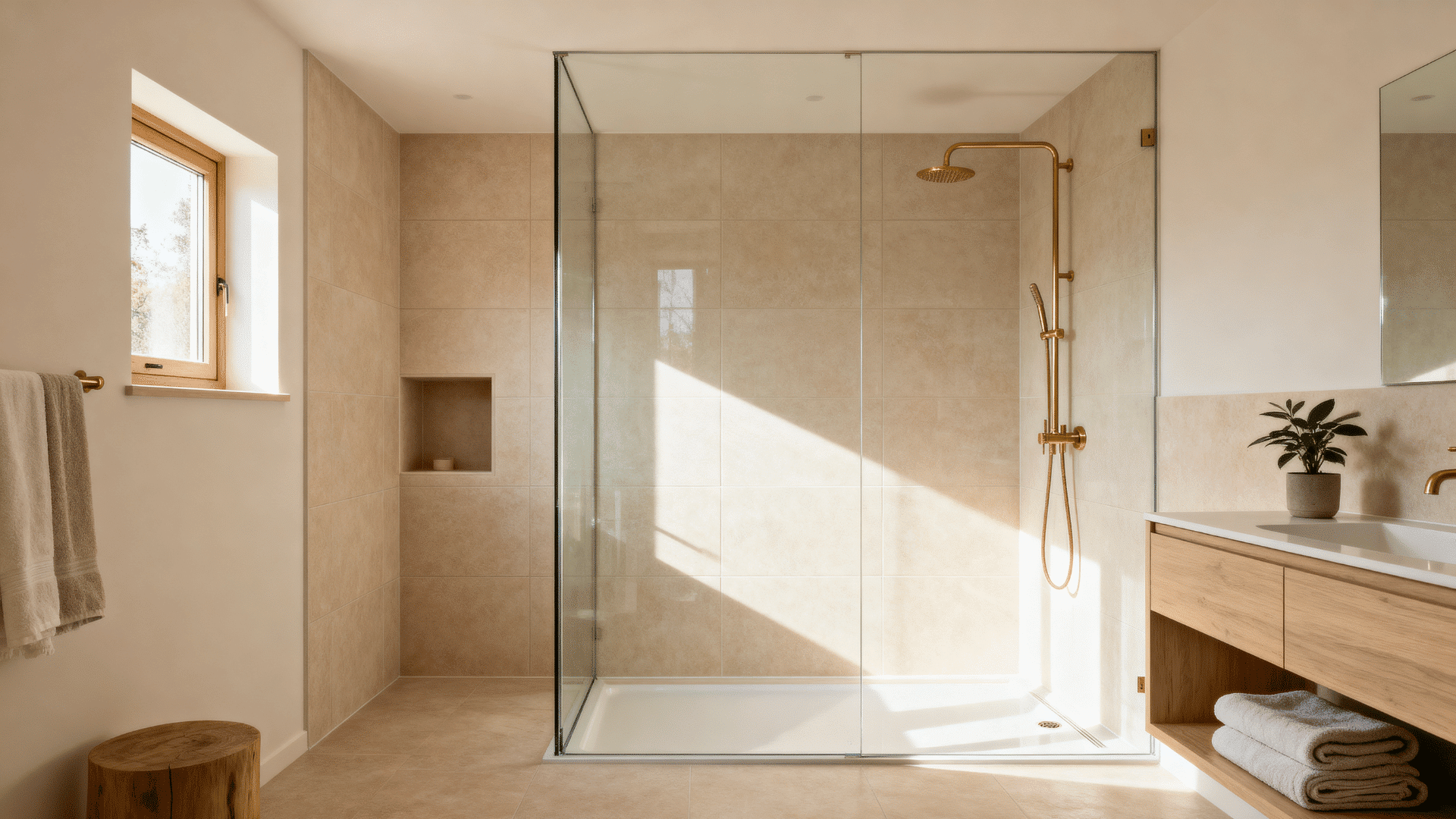
Ever walked into a tiny bathroom and felt like the shower was taking up the whole room? I have, and it usually comes down to one thing: the layout is working against the space.
That is where the right small bathroom walk-in shower ideas can completely change how the room feels. With smart glass, better tile choices, built-in storage, and a layout that suits real daily use.
Even a compact bathroom can feel brighter, cleaner, and easier to move around. These ideas are simple, practical, and planned for bathrooms where every inch truly matters.
What to Plan Before Choosing a Walk-In Shower
Before picking tile, glass, or fixtures, check how your bathroom works right now. In a small space, the best shower choice depends on clearance, storage, light, and water control.
- Shower Size: Measure the width, depth, ceiling height, and the space for the nearby toilet or vanity.
- Door Clearance: Choose a fixed panel or sliding door if a swing door blocks movement.
- Splash Control: Door-free showers require sufficient depth, smart showerhead placement, and a proper floor slope.
- Storage Needs: Plan a niche or ledge before tile work begins.
- Lighting: Dark bathrooms may need light tile, clear glass, and wet-rated shower lighting.
- Floor Safety: Choose shower floor tile with a non-slip surface for wet conditions.
- Drainage and Waterproofing: Have plumbing, slope, waterproofing, electrical work, and curbless entries handled by qualified pros.
A little planning upfront can help these small bathroom walk-in shower ideas feel more practical for your real bathroom, not just nice in photos.
Small Bathroom Walk-In Shower Ideas
The ideas below focus on real shower choices that affect daily use, from glass panels and tile size to drains, niches, lighting, and storage. Each one is meant to solve a specific small-bathroom issue.
1. Add a Clear Glass Shower Panel
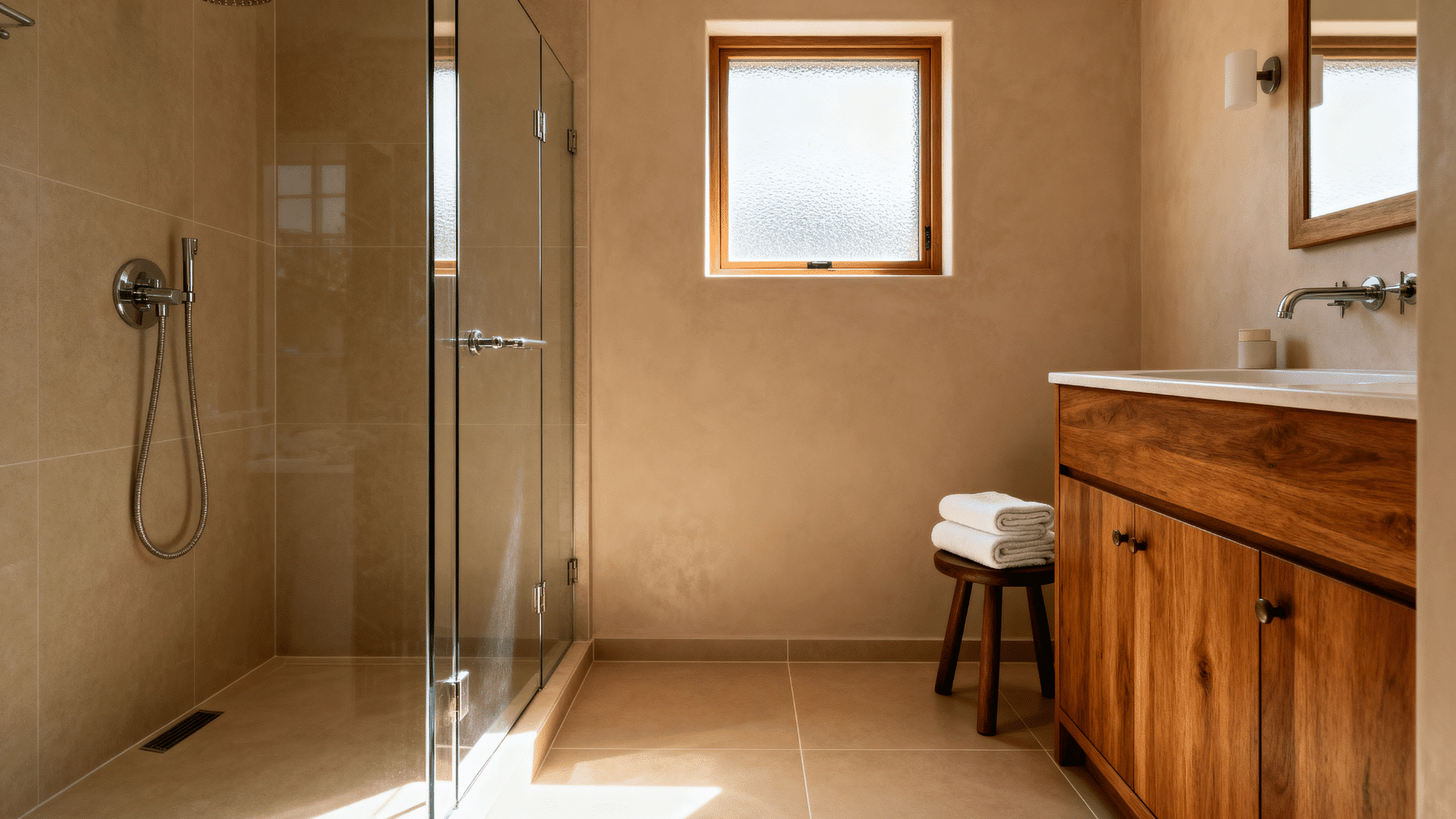
A clear glass panel keeps the shower from blocking the rest of the bathroom. It lets the eye move across the room rather than stop at a wall or curtain.
Why It Fits Small Bathrooms:
- Keeps sightlines open
- Let the light pass through the room
- Works well with corner showers
- Makes tile and flooring more visible
2. Use a Fixed Glass Screen
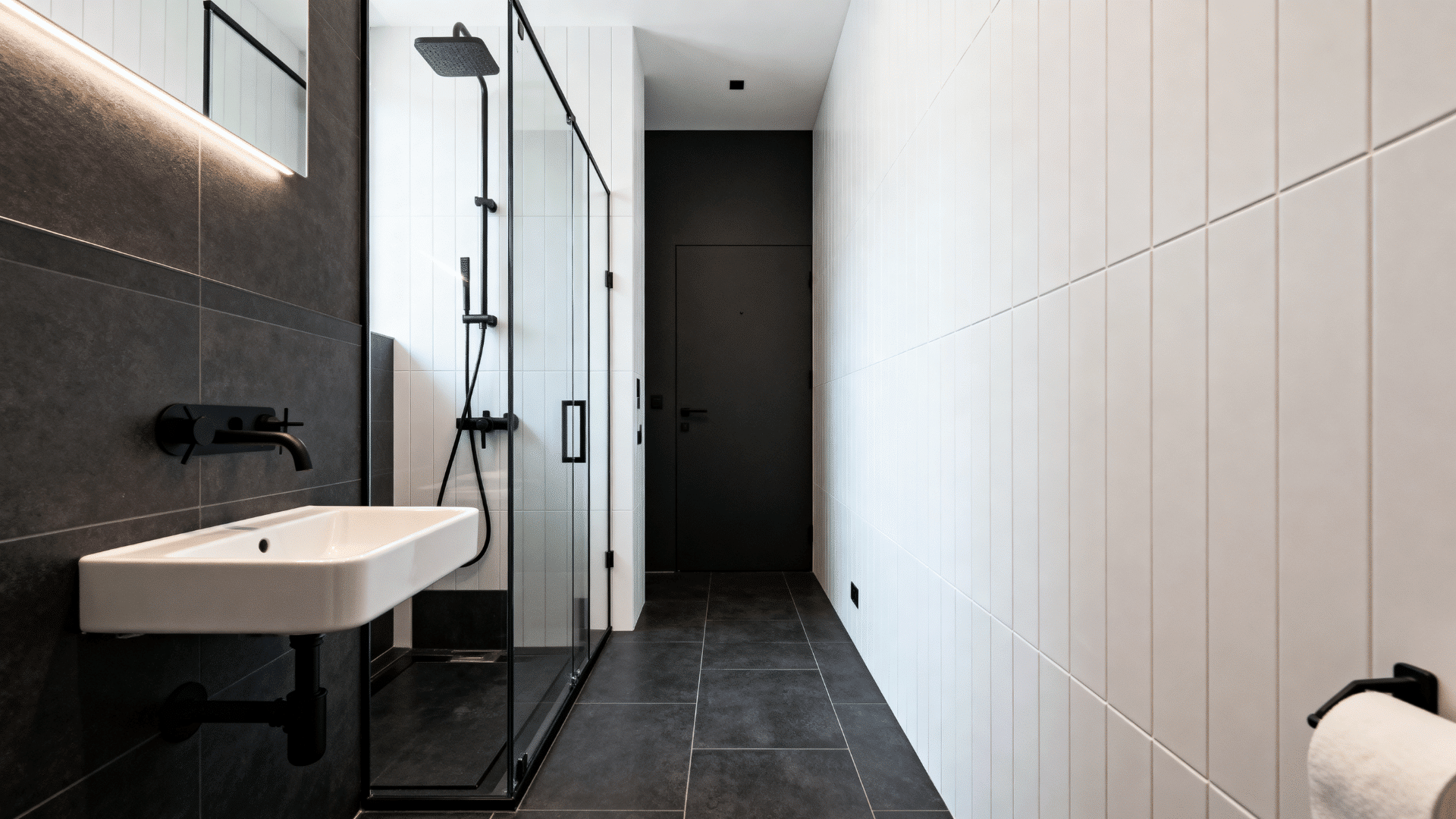
A fixed glass screen is helpful when a swinging door would hit the vanity, toilet, or wall. It gives some splash control without needing extra clearance.
How It Saves Space:
- Removes door swing issues
- Keeps the walking path clear
- Uses less hardware than a full enclosure
- Works well in narrow shower zones
3. Try a Curbless Shower Entry
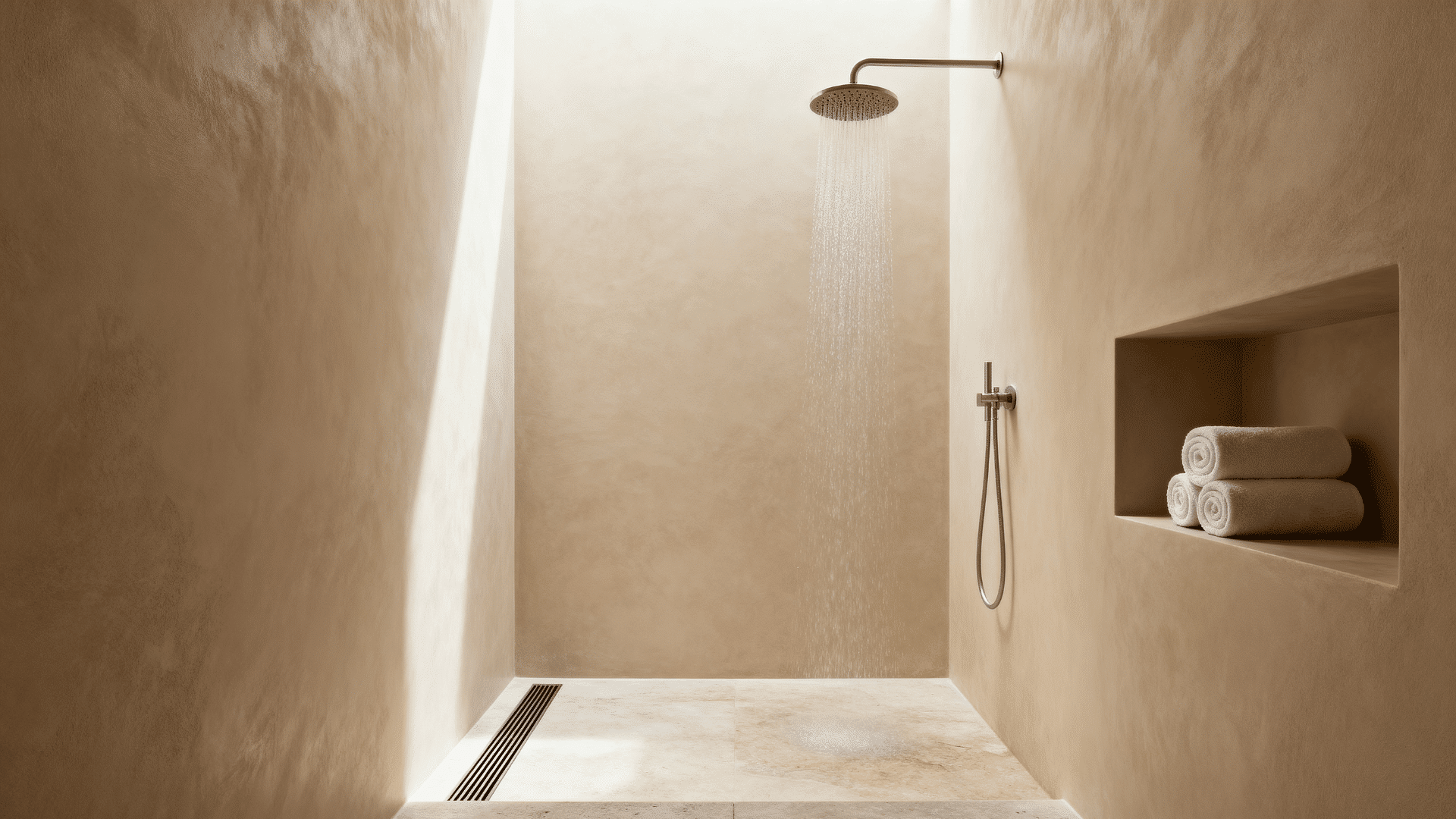
A curbless entry keeps the bathroom and shower floors at one level. This can make movement easier and help the room feel less broken up.
What Makes It Smart:
- Removes the raised shower edge
- Makes entry easier
- Helps the floor feel continuous
- Supports long-term comfort and access
4. Choose Large Wall Tiles
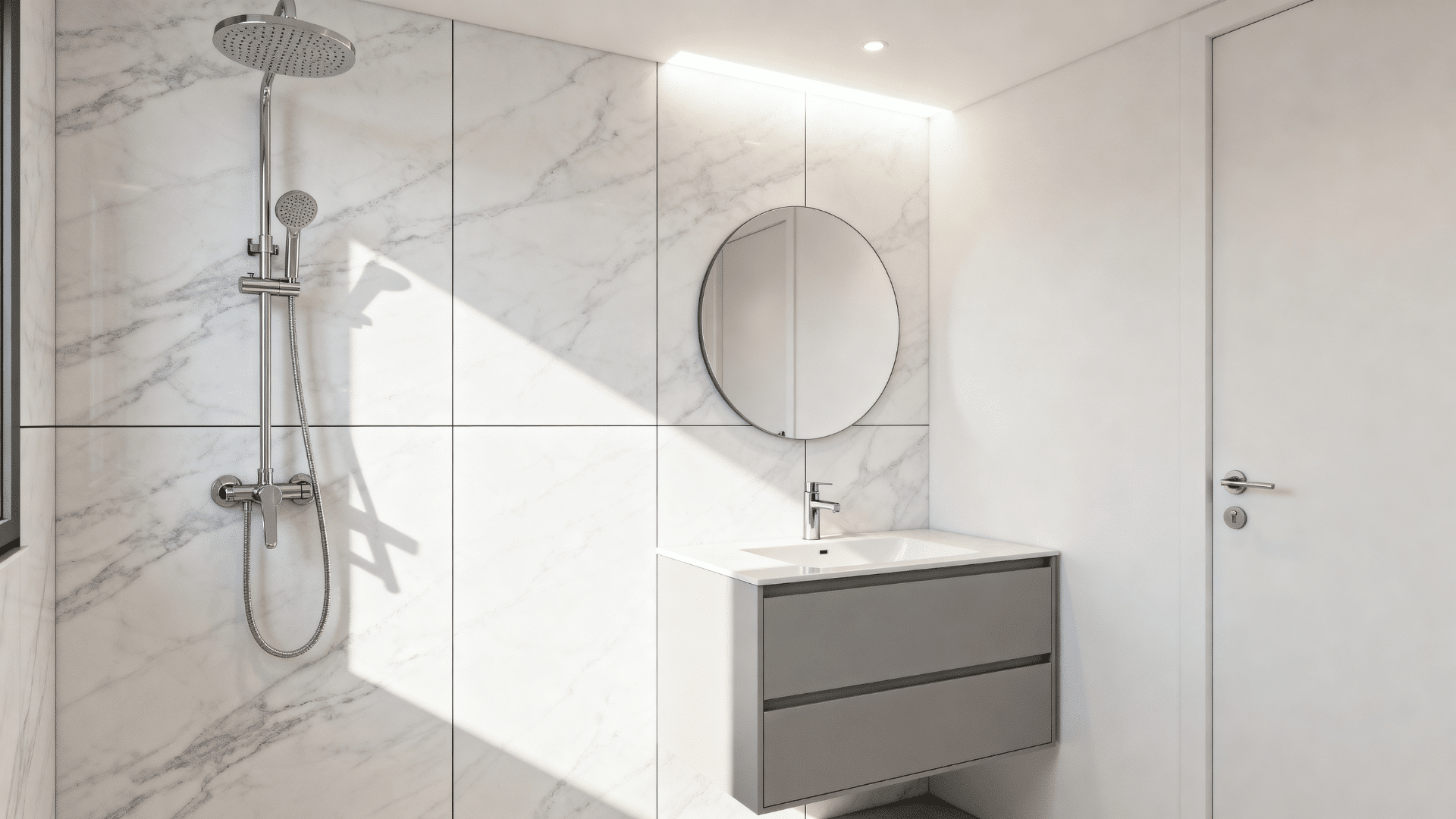
Large wall tiles create fewer grout lines, which helps the shower look less busy. They also make daily wiping and weekly cleaning easier.
Why It’s a Good Pick:
- Cuts down on grout lines
- Makes shower walls easier to clean
- Works well in narrow showers
- Gives the shower a smoother finish
5. Add a Built-In Shower Niche
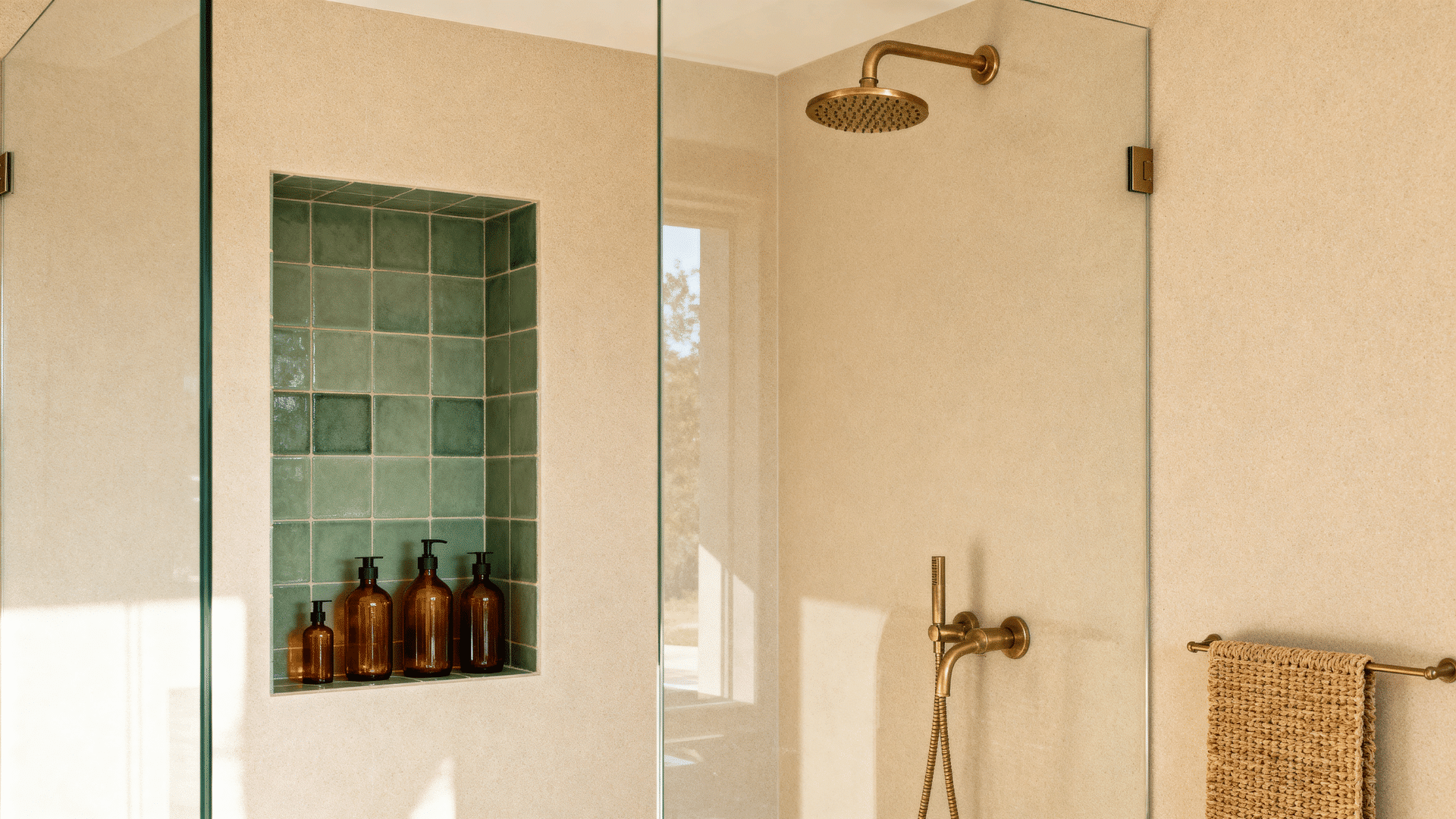
A built-in niche gives bath products a set spot inside the wall. It keeps bottles off the floor without adding a rack that sticks out.
What Makes It Smart:
- Saves floor and corner space
- Keeps bottles within easy reach
- Looks cleaner than hanging storage
- Can be planned around product height
6. Use Light Neutral Shower Tile
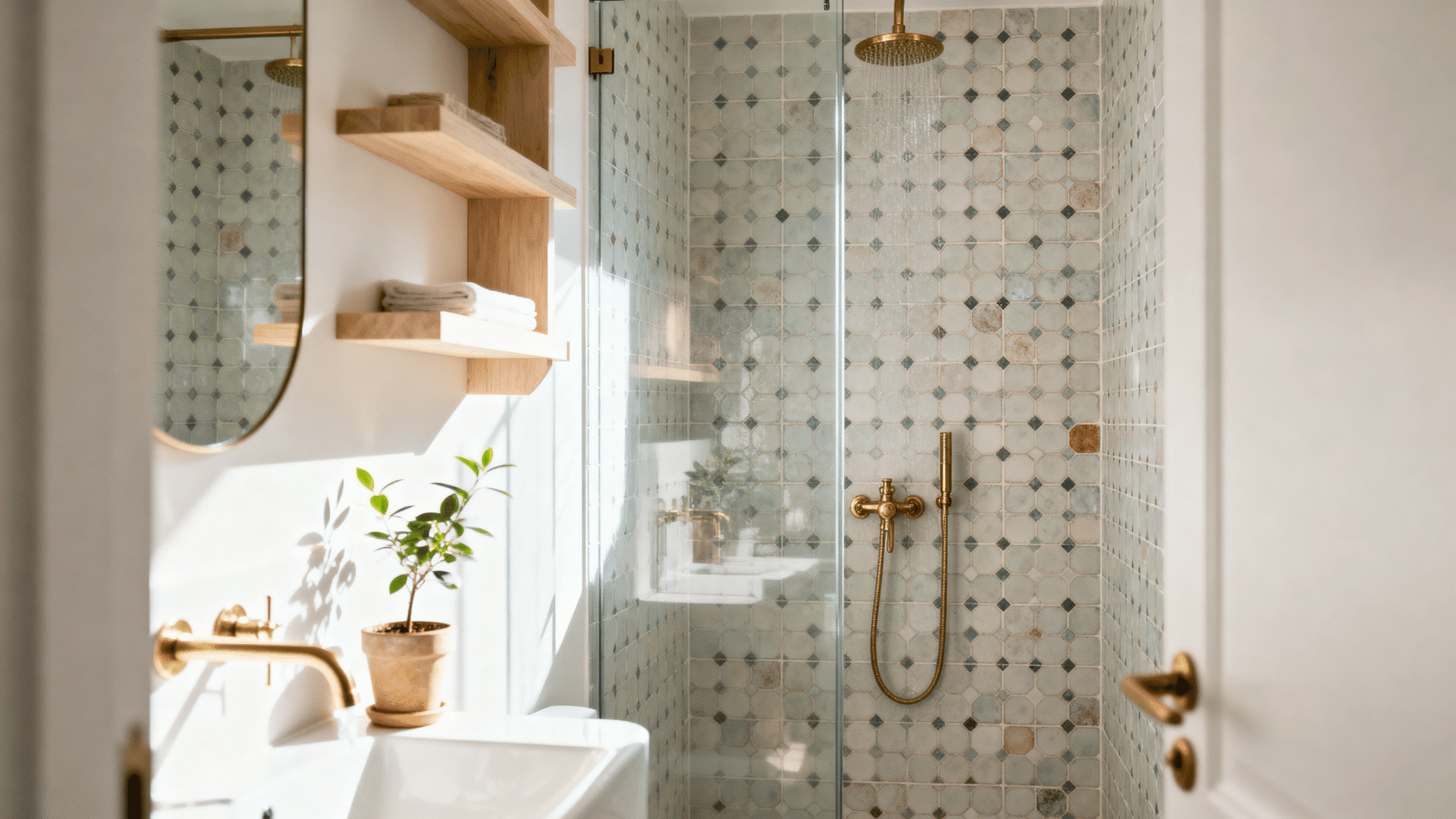
Light neutral tile can help a small shower feel brighter, especially in bathrooms with little or no natural light. Warm white, cream, beige, pale gray, and soft stone tones all work well.
Why It Fits Small Bathrooms:
- Reflects more light
- Keeps the shower from feeling heavy
- Pairs well with most fixtures
- Helps windowless bathrooms feel fresher
7. Install Vertical Shower Tile
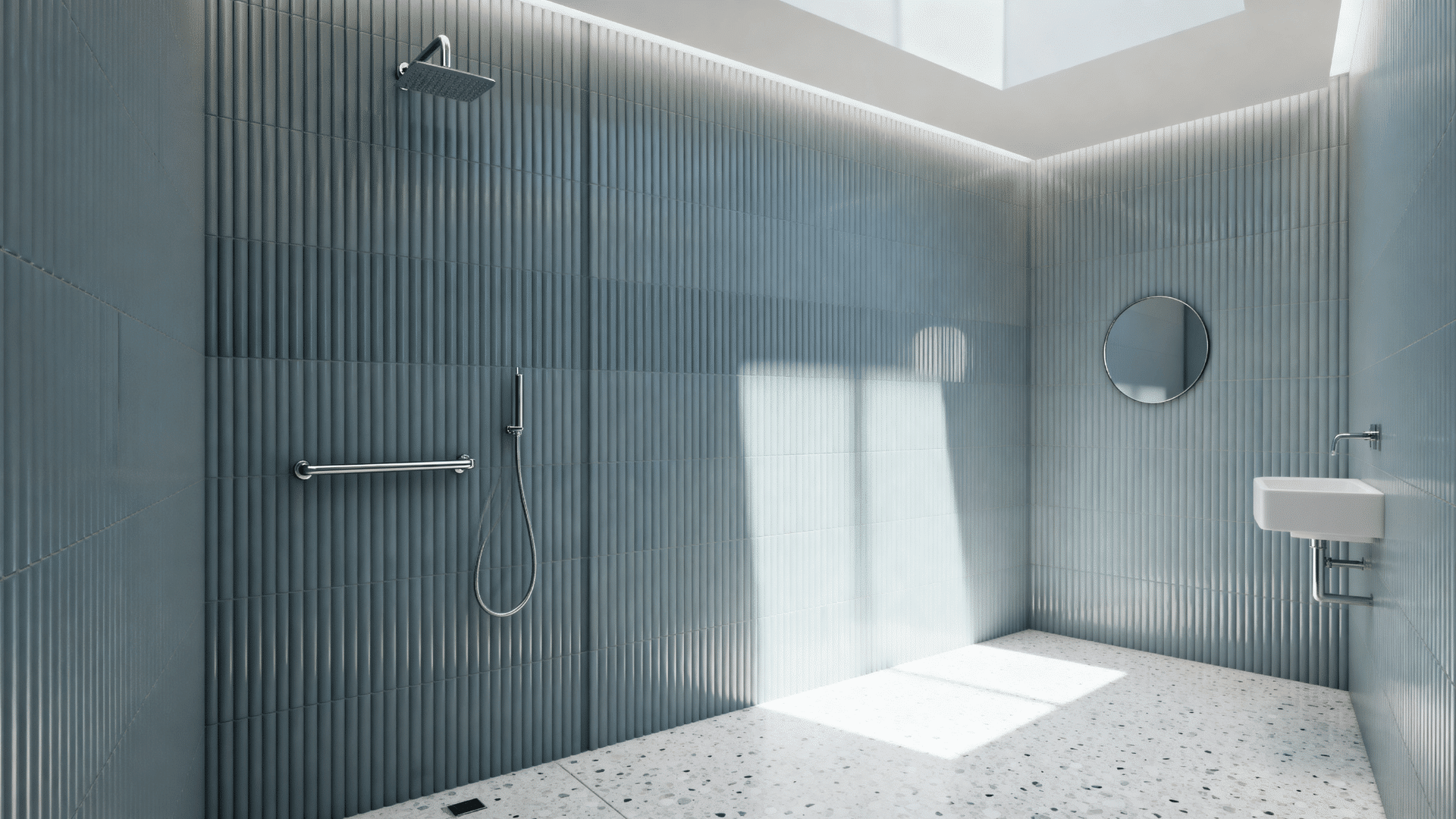
Vertical shower tile draws attention upward. This helps a short shower wall or low ceiling feel taller without adding extra decor.
Why It’s a Good Pick:
- Adds a sense of height
- Works with slim rectangular tile
- Gives the simple tile more shape
- Keeps the wall design clean
8. Use a Corner Walk-In Shower
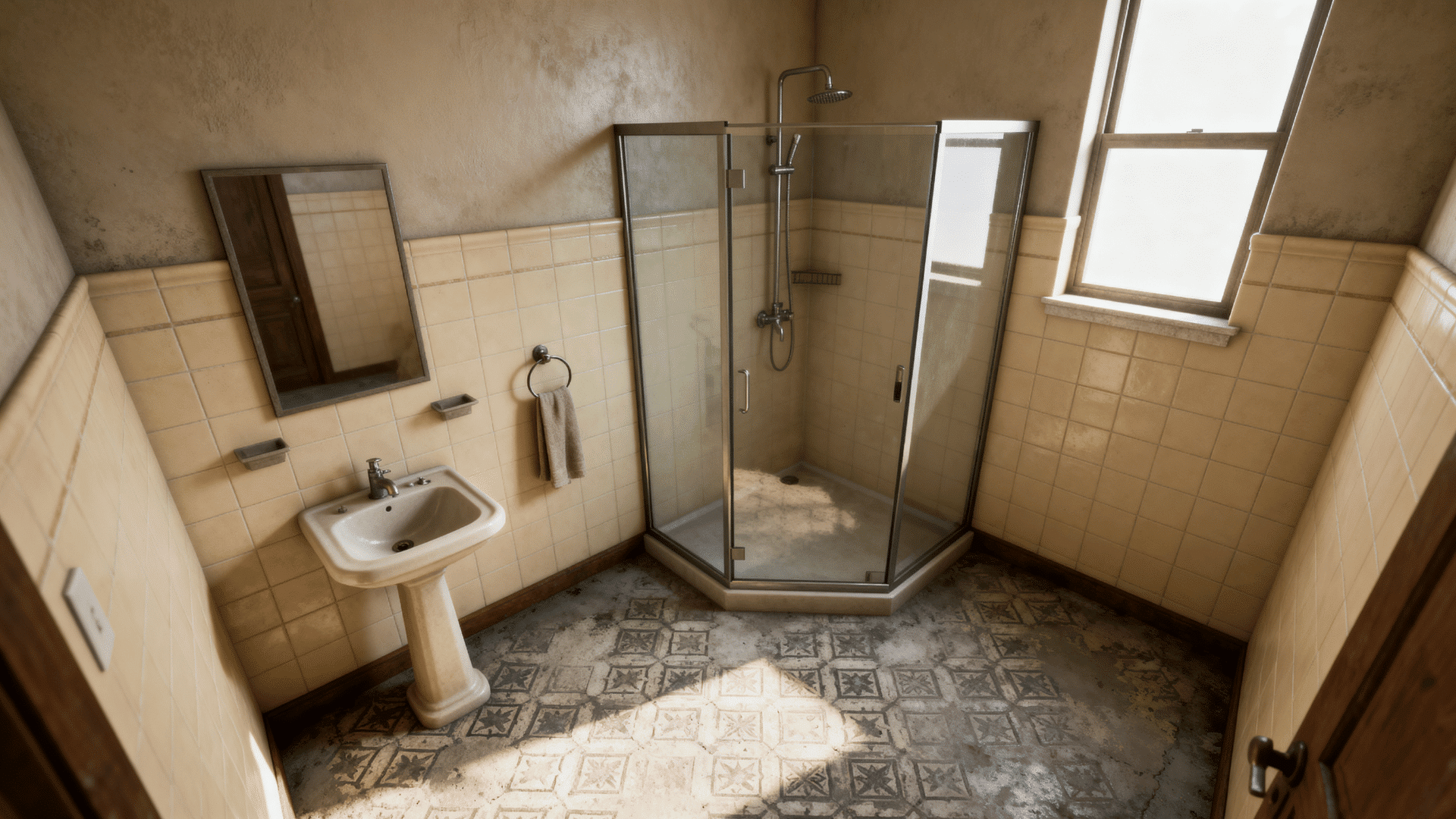
A corner walk-in shower uses an area that might otherwise stay empty. It can free up the middle of the bathroom and make daily movement easier.
How It Saves Space:
- Uses an unused corner
- Opens up the center of the room
- Fits many square bathrooms
- Works well with a clear glass panel
9. Convert an Old Tub Into a Walk-In Shower
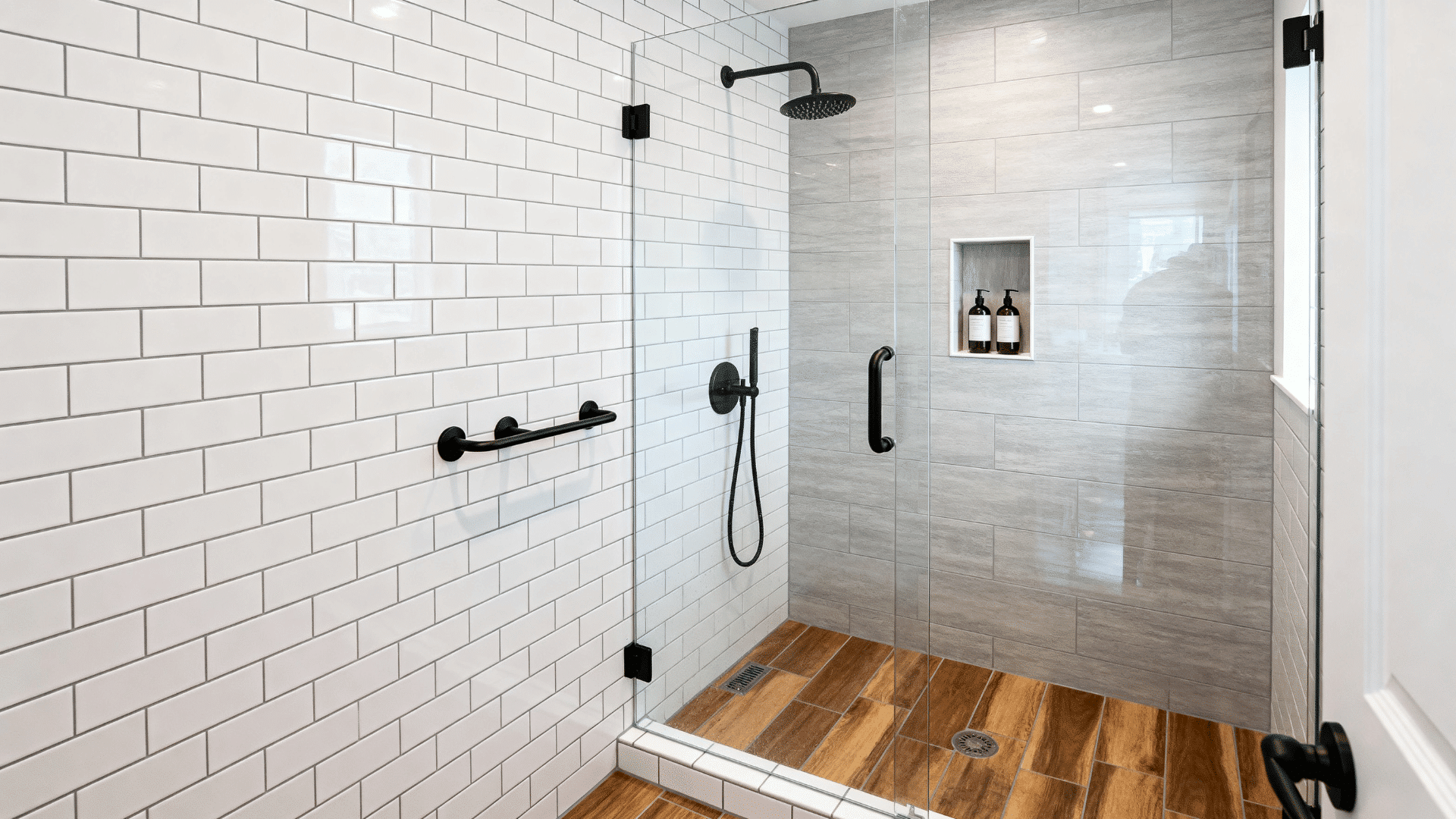
A tub-to-shower update can make a small bathroom easier to use when the tub rarely serves a purpose. The old tub space often gives enough width for a comfortable shower.
What Makes It Smart:
- Uses the existing footprint
- Can improve daily function
- Makes entry easier
- Creates room for built-in storage
10. Add a Slim Floating Bench for Comfort
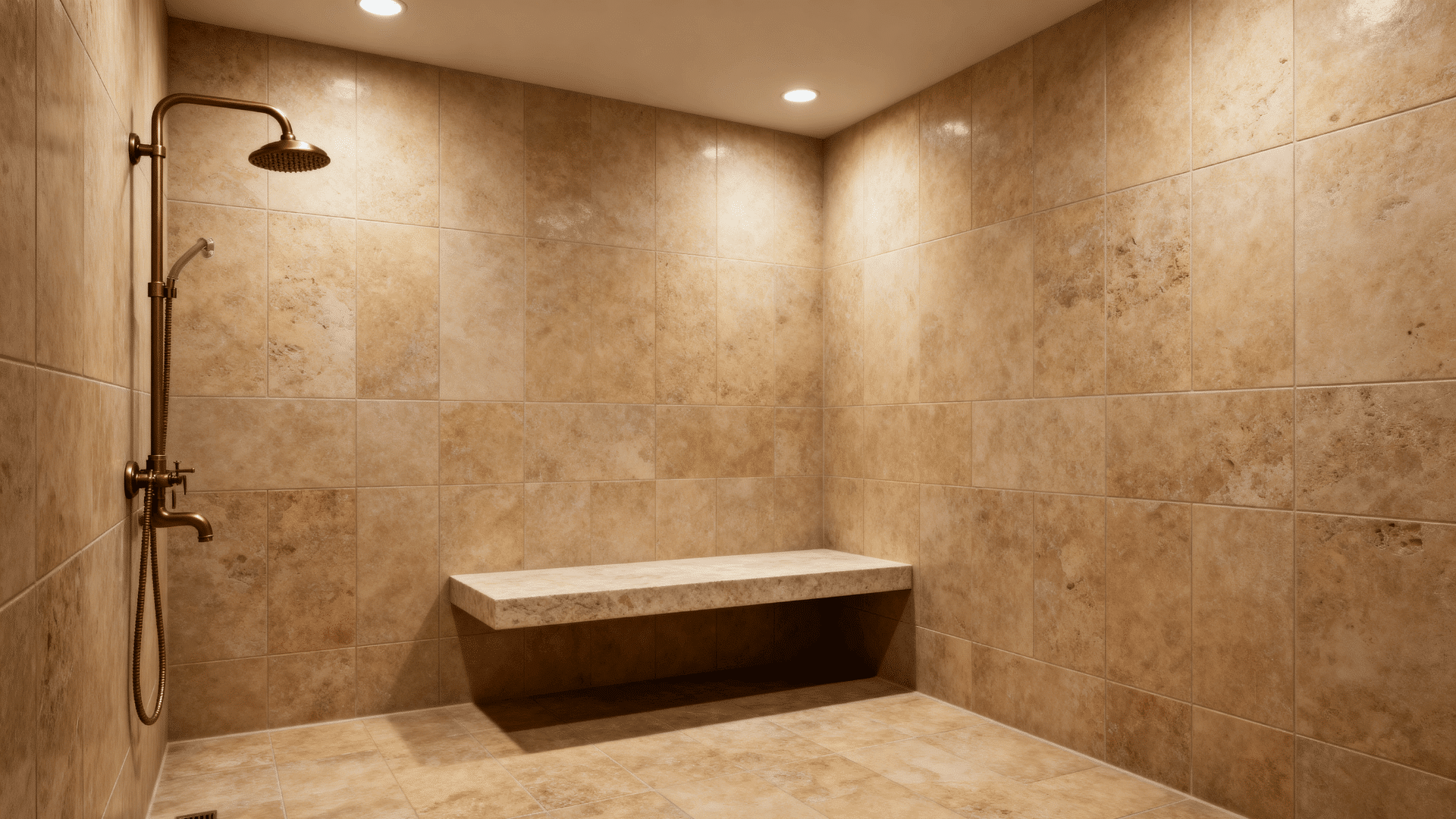
A slim floating bench provides a useful seat without taking up the shower floor. It can help with shaving, resting, or placing a towel within reach.
Why It’s a Good Pick:
- Keeps more floor area open
- Looks lighter than a full bench
- Adds comfort in a compact footprint
- Works well in longer showers
11. Add a Handheld Showerhead for Easy Cleaning
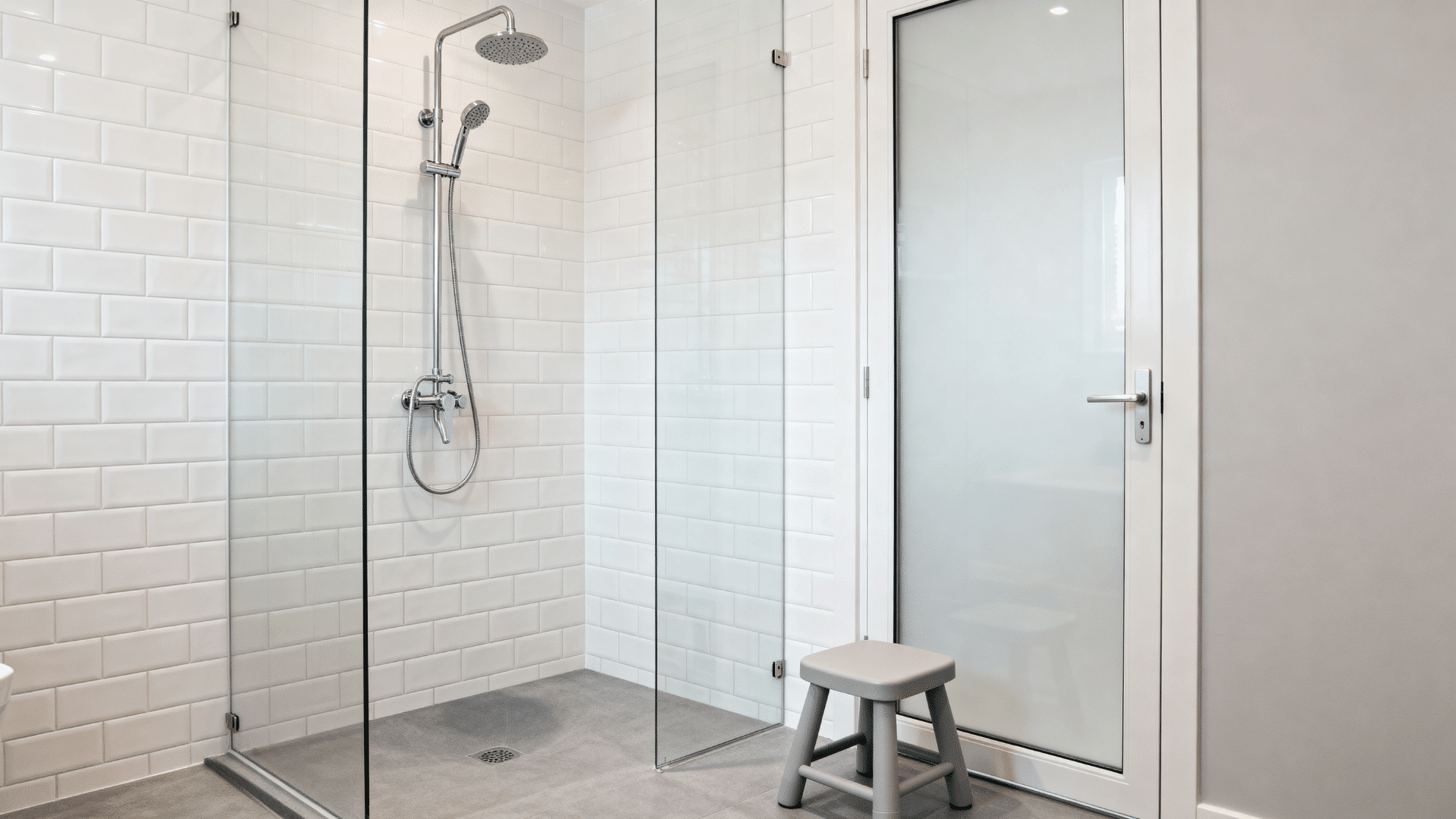
A handheld showerhead makes it easier to rinse a small shower from top to bottom. It also helps with kids, pets, and hard-to-reach corners.
What Makes It Smart:
- Adds function without using floor space
- Helps rinse shower walls
- Makes cleaning faster
- Works in most shower layouts
12. Choose a Sliding Shower Door
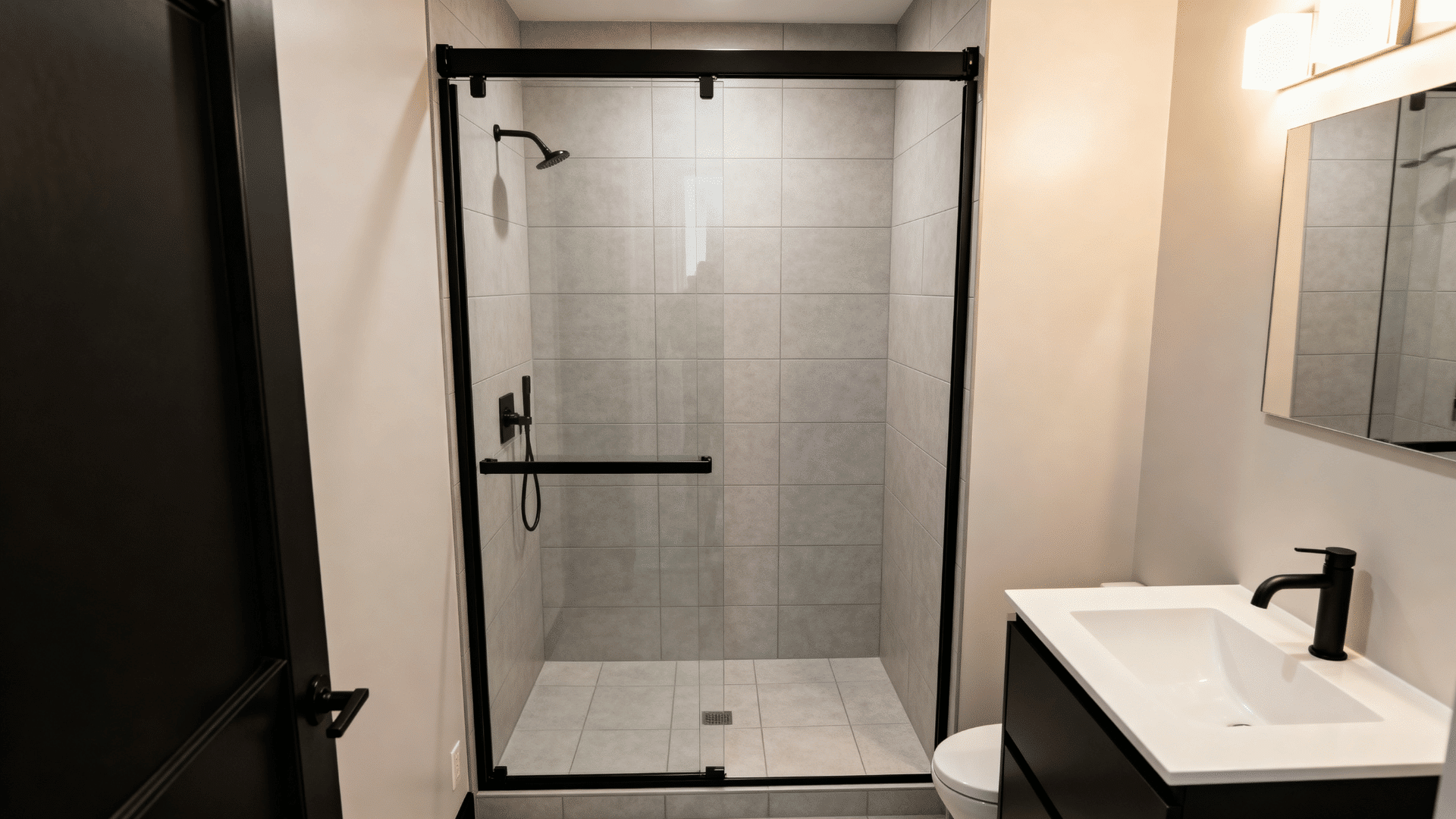
A sliding shower door is one of the most practical small bathroom stand-up shower ideas when a swing door would block the vanity, toilet, or walkway. It works especially well in alcove showers.
How It Saves Space:
- Keeps clearance open
- Helps contain water
- Fits tight shower openings
- Avoids door swing problems
13. Add Wet-Rated Lighting Inside the Shower
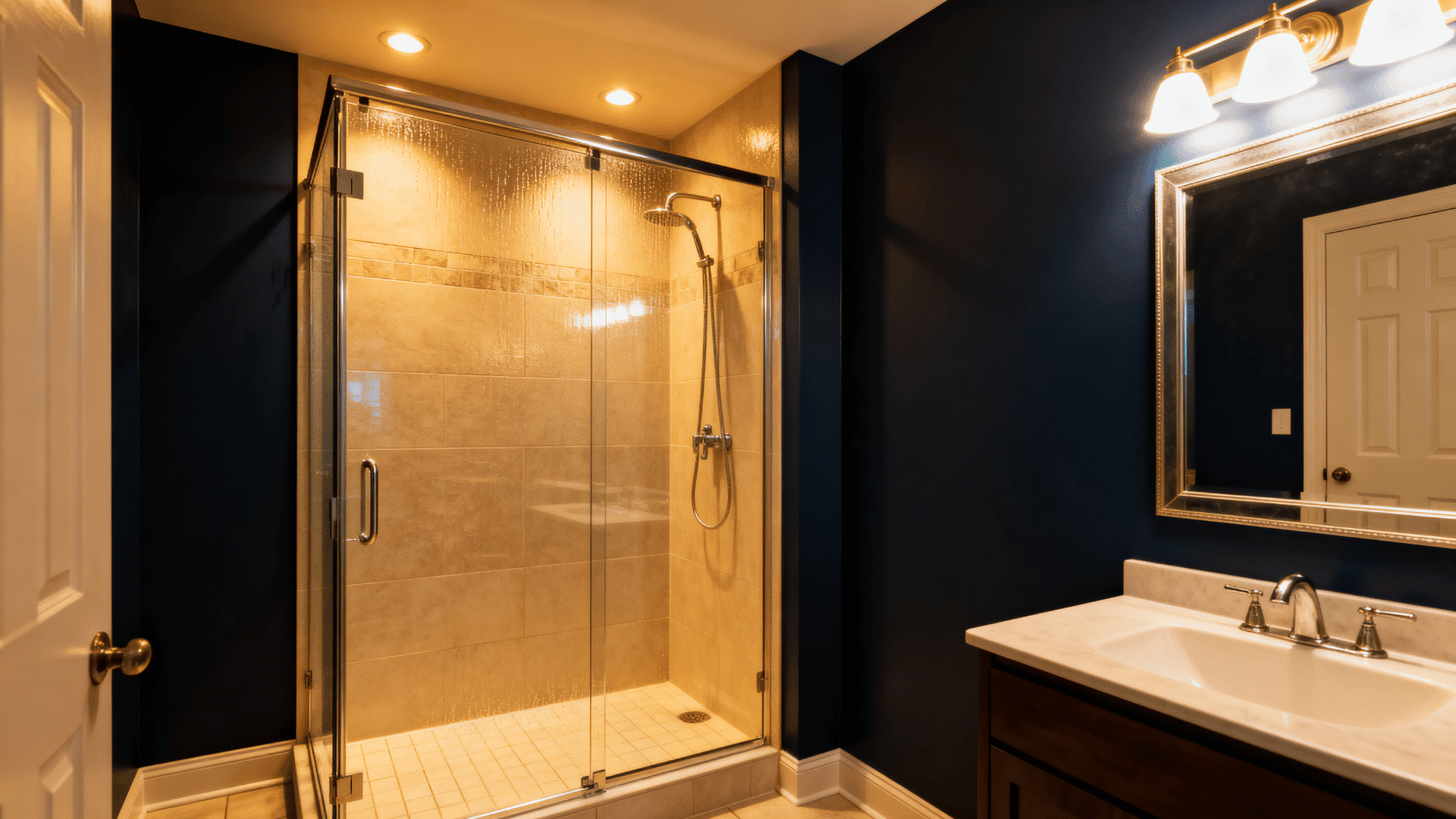
A wet-rated shower light can brighten dark corners and make the shower easier to use. It is especially helpful in deep alcoves or windowless bathrooms.
Why It Fits Small Bathrooms:
- Brightens the shower zone
- Helps with grooming tasks
- Makes cleaning easier
- Uses ceiling space instead of wall space
14. Build a Half Wall with Glass for Privacy
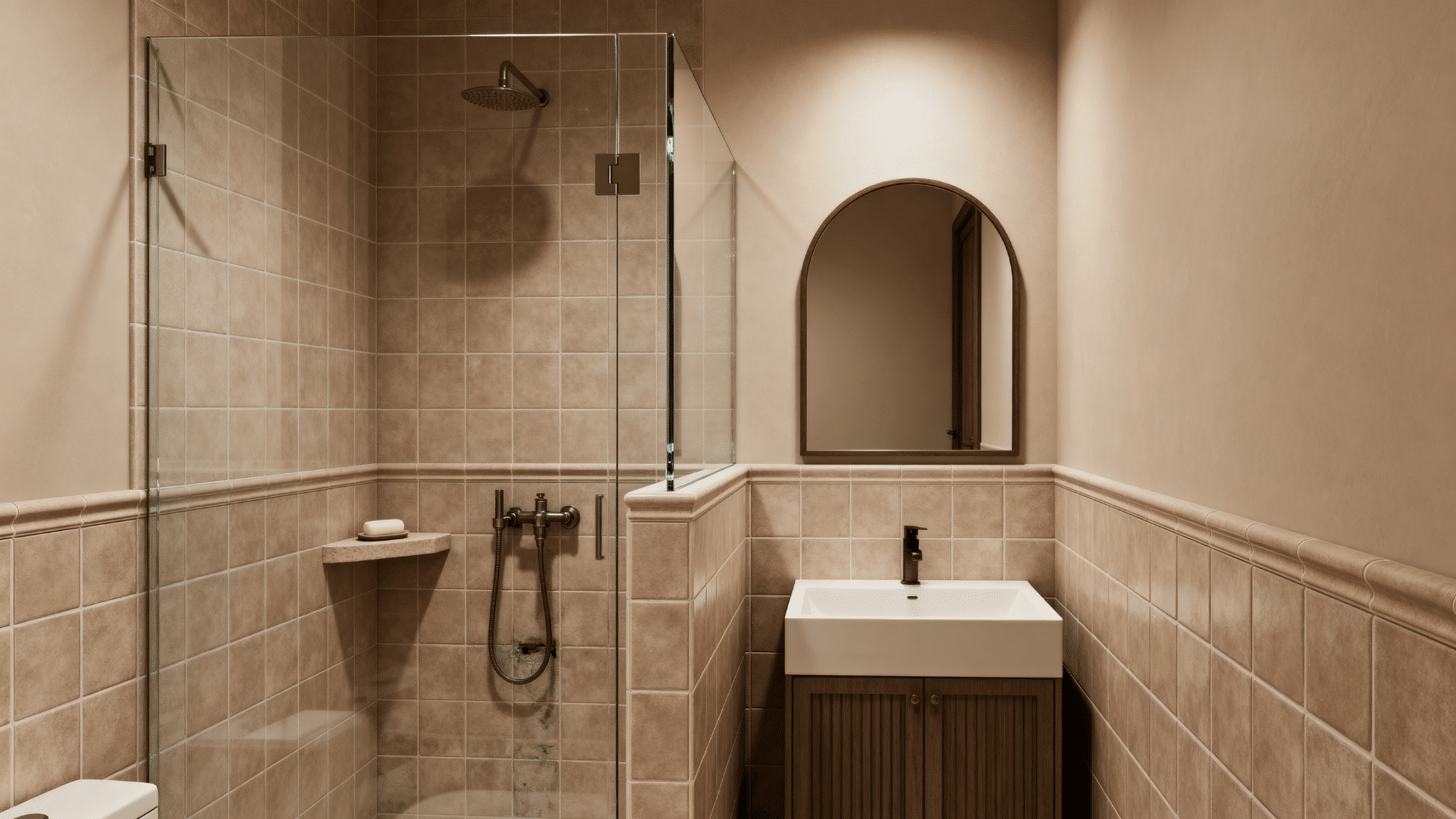
A half wall adds privacy where the shower sits close to the toilet or vanity. Glass above the wall keeps the upper part of the room open.
What Makes It Smart:
- Adds privacy without a full wall
- Keeps the upper area open
- Can hide plumbing lines
- Creates a small ledge for bath items
15. Use a Linear Drain for a Cleaner Floor
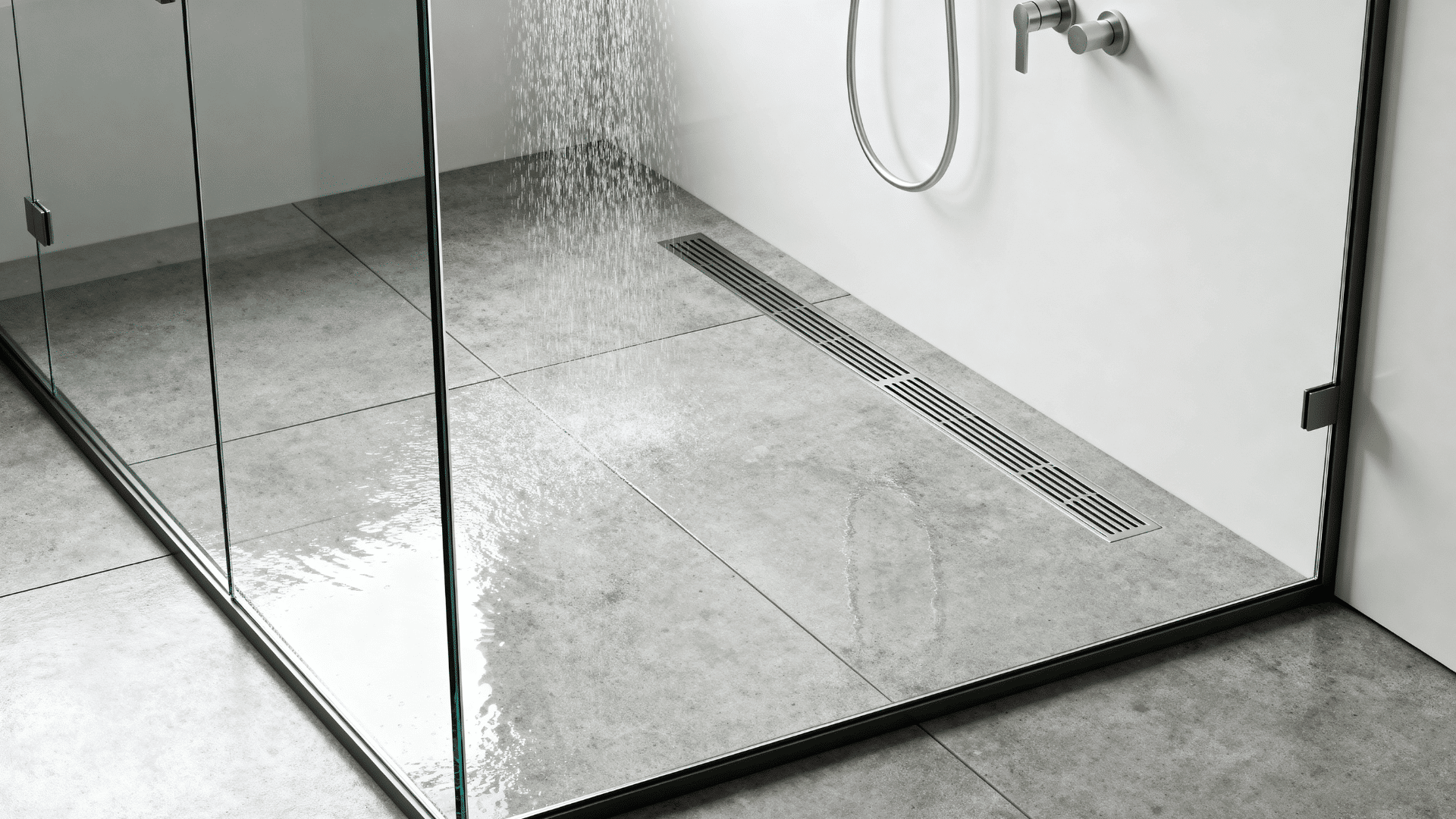
A linear drain gives the shower floor a simple, neat line. It can also help direct water toward one side when the floor slope is planned correctly.
Why It’s A Good Pick:
- Creates a clean floor detail
- Helps water move toward one side
- Works with larger floor tile in some layouts
- Pairs well with curbless showers
16. Choose Slim Shower Hardware
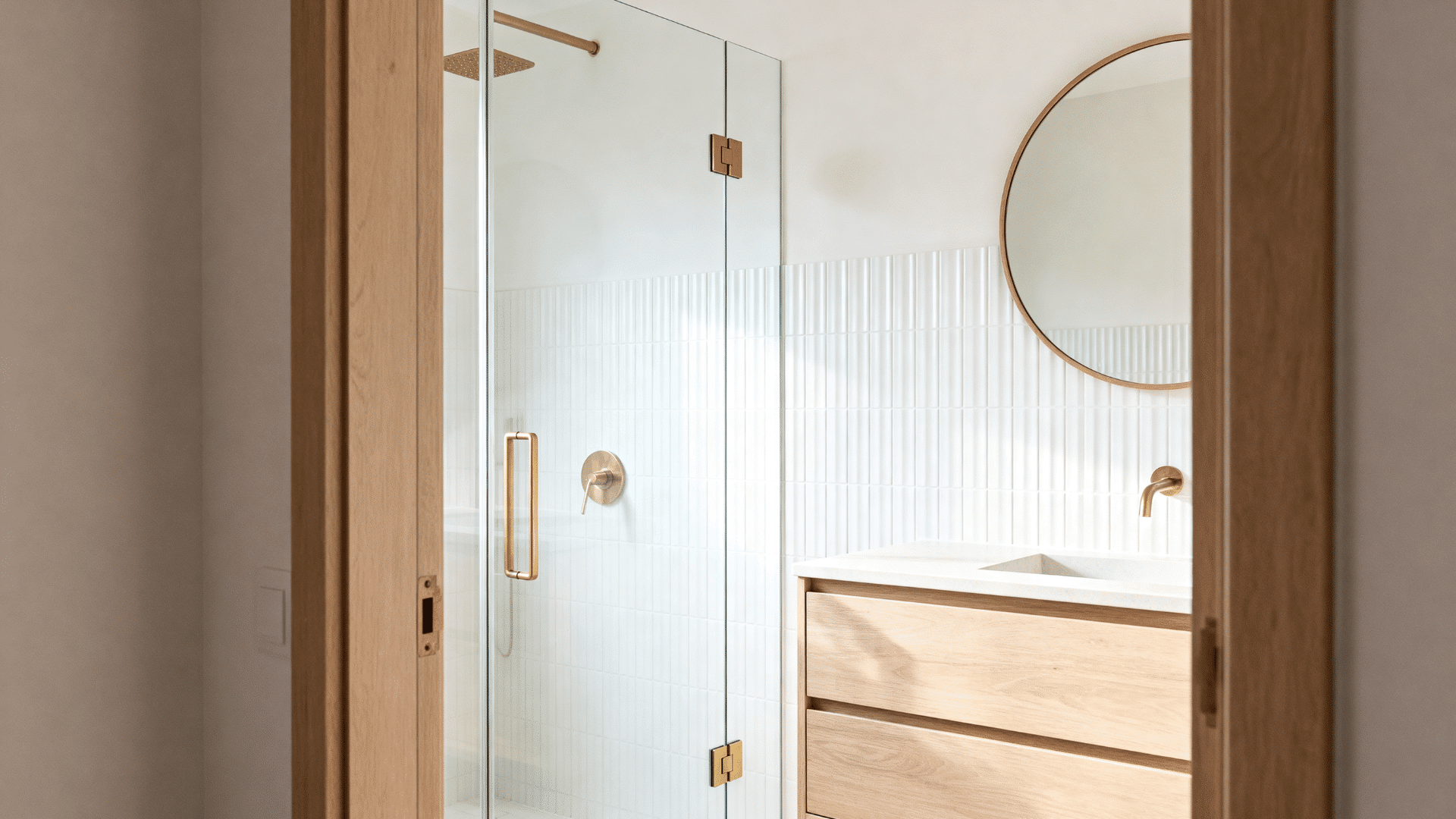
Slim hinges, handles, and frames keep the shower from feeling heavy. This detail matters in a small bathroom because every piece is easy to see.
Why It Fits Small Bathrooms:
- Reduces visual weight
- Keeps glass looking cleaner
- Makes the shower feel less crowded
- Works with simple tile choices
17. Add a Shower Ledge for Built-In Storage
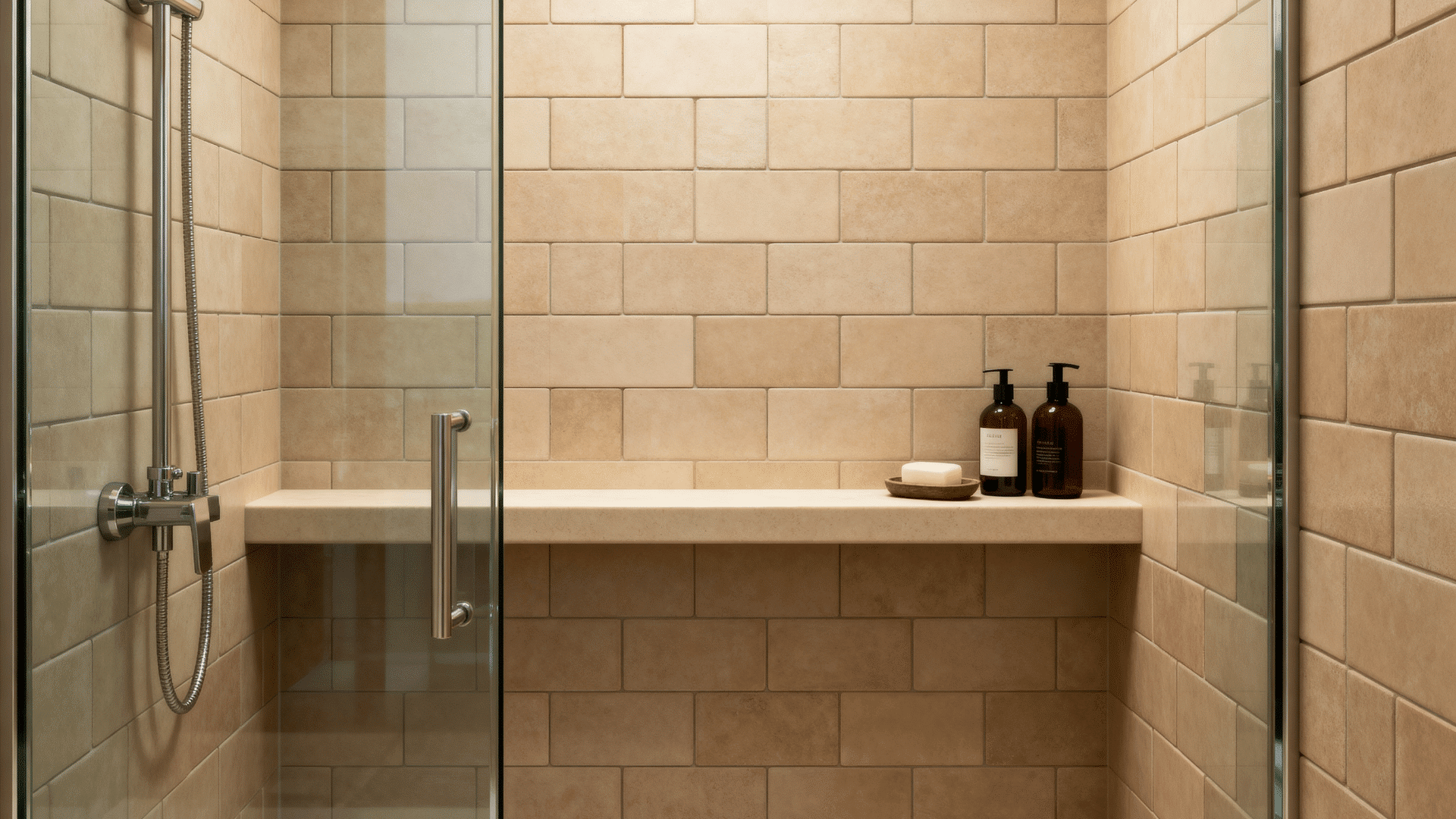
A shower ledge gives more surface space than a small shelf. It works well along one wall and can hold bottles, soap, or a folded washcloth.
What Makes It Smart:
- Adds storage without bulky racks
- Works well in long showers
- Keeps products within easy reach
- Gives more room than a small niche
18. Choose Slip-Resistant Floor Tile
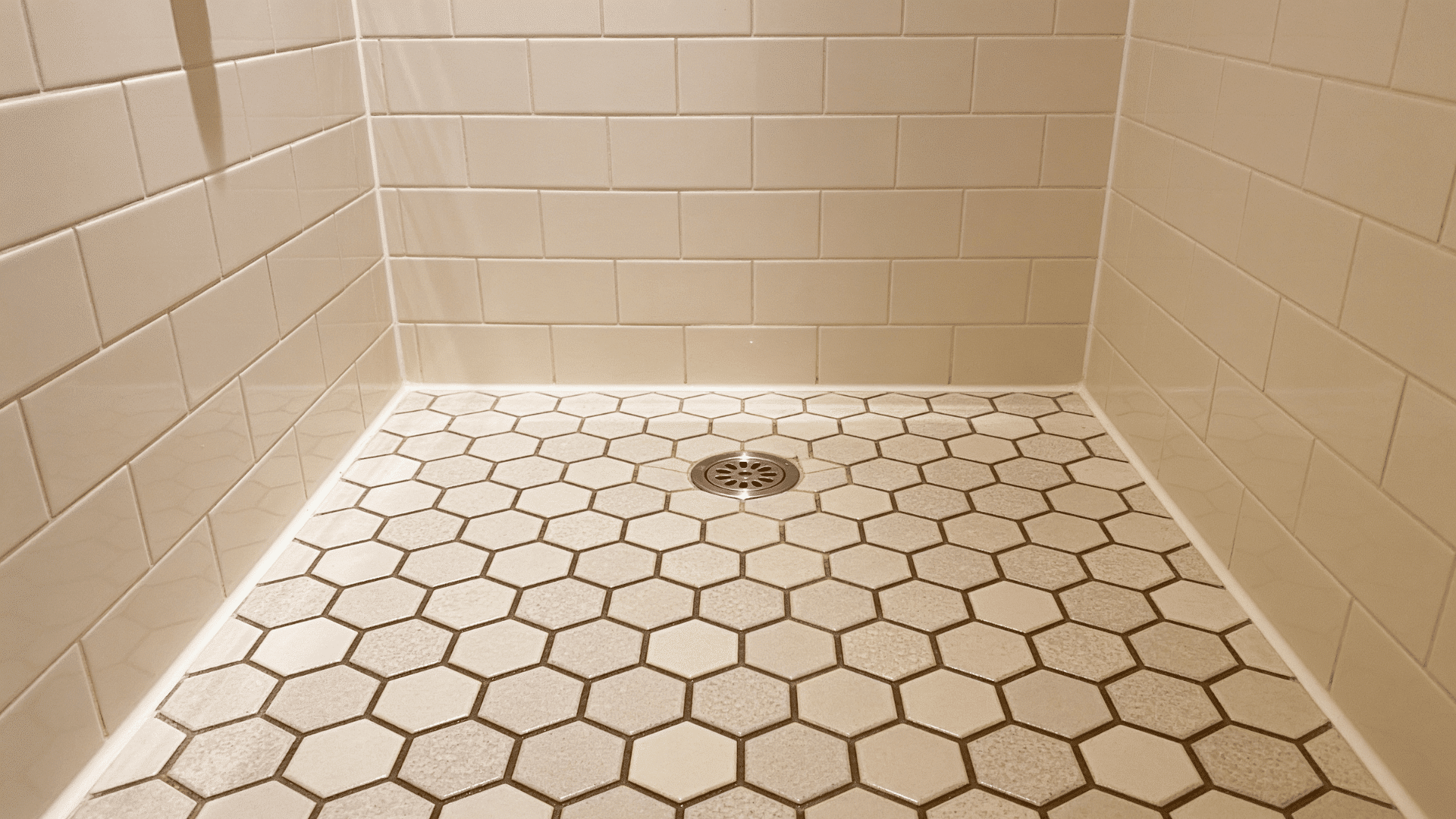
A small shower floor needs good grip because wet tile can become slick. Small mosaic tile is a common choice because the grout lines add traction.
Why It’s a Good Pick:
- Helps reduce slipping
- Works with sloped shower floors
- Adds safety in wet areas
- Comes in simple shapes and colors
19. Match Shower and Bathroom Floor Tile
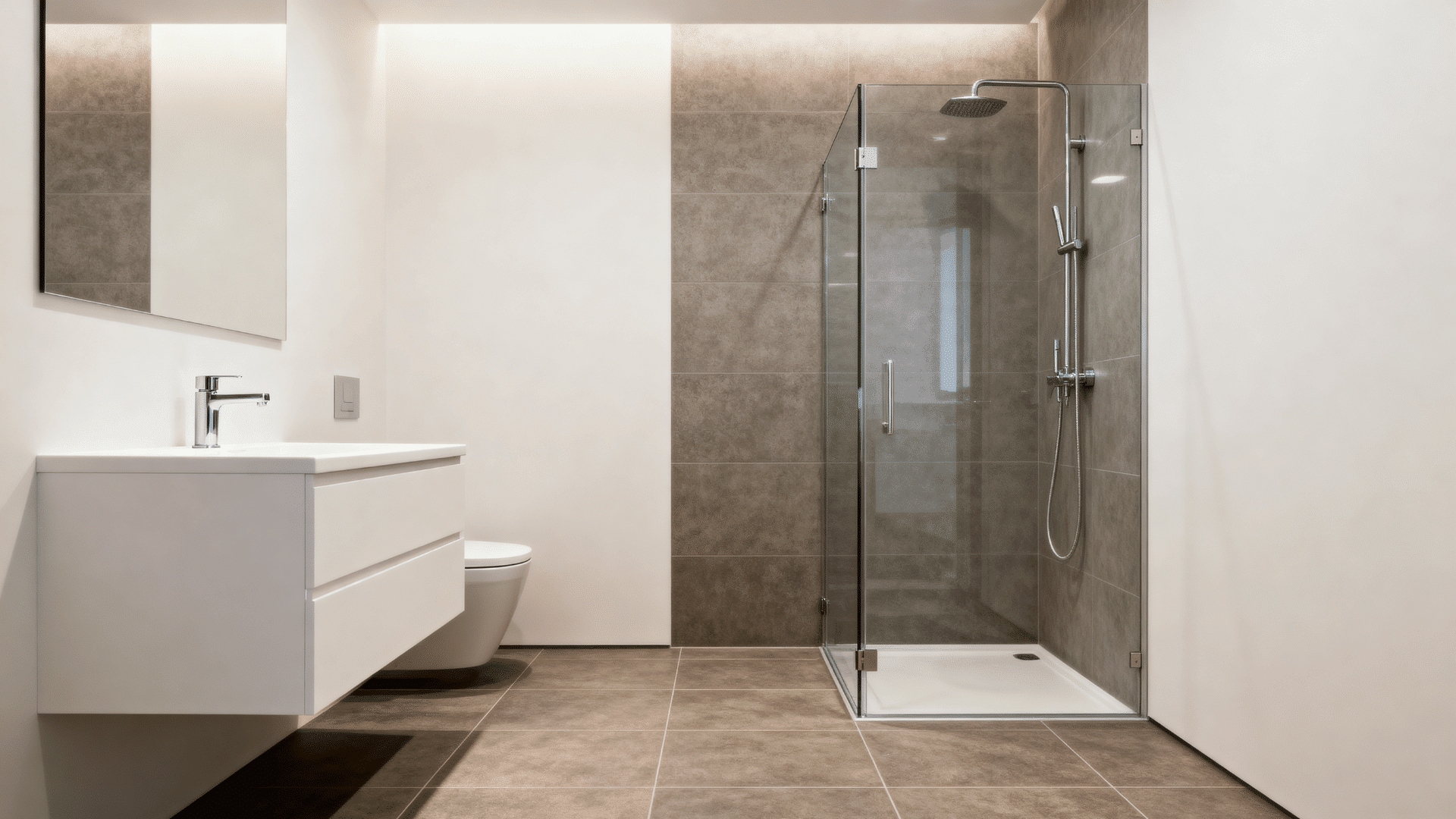
Using similar tones on the shower floor and bathroom floor can make the space feel more connected. This is helpful when the shower has clear glass or a curbless entry.
Why It Fits Small Bathrooms:
- Softens harsh floor breaks
- Helps the room feel wider
- Keeps the floor plan visually connected
- Makes the shower blend into the room
20. Add Towel Hooks Close to the Shower
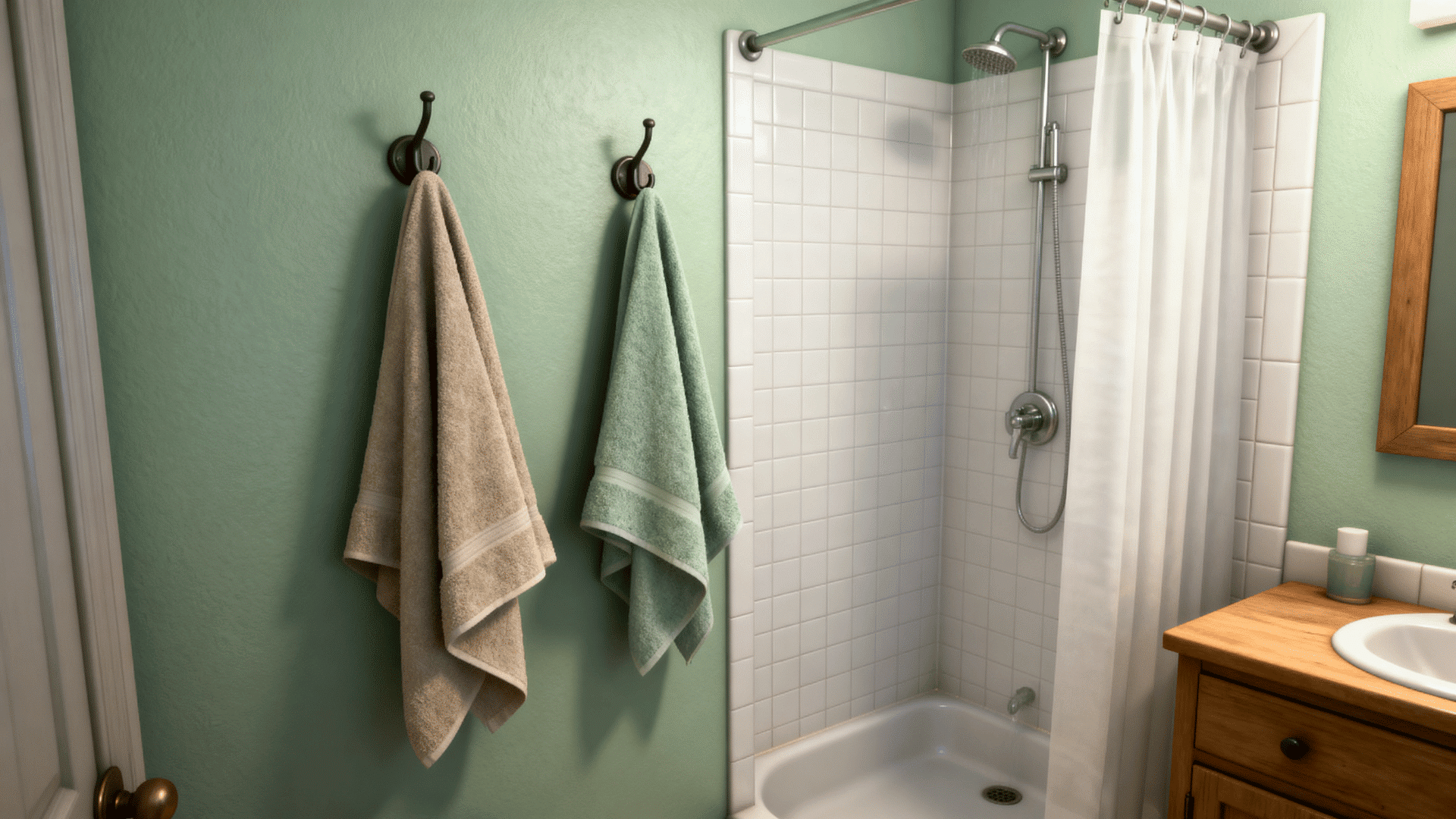
Towel hooks provide storage without taking up as much wall space as towel bars. They work well behind doors, beside the shower, or on a narrow wall.
How It Saves Space:
- Uses small wall areas
- Keeps towels off the vanity
- Works better than bulky bars
- Makes towels easy to reach
21. Plan a Door-Free Walk-In Shower with Care
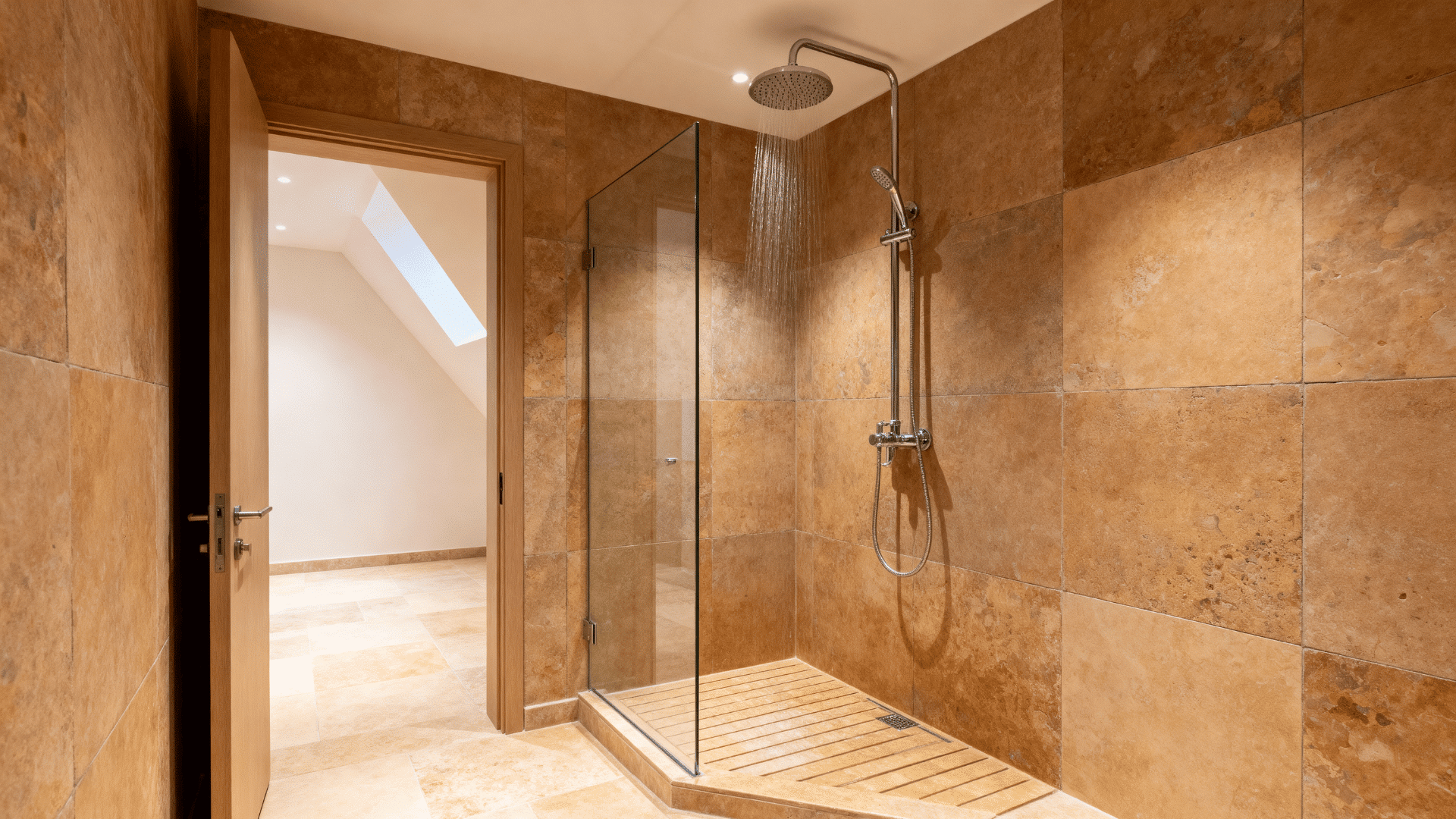
A door-free walk-in shower can make a bathroom feel open, but it needs enough depth to limit splashing. Showerhead placement, drain position, and floor slope matter here.
What Makes It Smart:
- Removes door tracks and hinges
- Makes entry easier
- Keeps the shower opening clear
- Reduces some cleaning around hardware.
Small Walk-In Shower Features Worth Spending On
A small shower does not need every upgrade to feel better. The smartest spending usually goes toward features that improve safety, cleaning, storage, and long-term use.
| Feature | Best For | Planning Tip |
|---|---|---|
| Quality Waterproofing | Long-term leak protection | Ask what waterproofing system will be used before tile work starts. |
| Slip-Resistant Floor Tile | Safer daily showers | Check the slip rating and avoid very slick floor tile. |
| Built-In Storage | A cleaner shower layout | Plan storage before tiling so it lands at a comfortable height. |
| Clear Glass Panel | Small bathrooms | Choose glass thickness and door swing based on bathroom space. |
| Handheld Showerhead | Easy rinsing and cleaning | Pick one with an adjustable slide bar for better daily use. |
| Wet-Rated Shower Lighting | Better visibility | Use fixtures rated for wet locations, not just damp areas. |
| Better Drain Placement | Water control | Confirm the floor slope and drain position before tile is installed. |
These upgrades support many small bathroom walk-in shower ideas because they focus on how the shower works every day, not just how it looks.
Conclusion
A small bathroom can still feel bright, useful, and comfortable when the shower is planned with care. The best small bathroom walk-in shower ideas are not just about good looks.
They also solve real issues such as tight clearances, poor lighting, limited storage, and water control.
Start with the layout, then choose features that make daily use easier, such as clear glass, safe floor tile, built-in storage, and proper lighting.
With the right choices, even a compact shower can feel cleaner, safer, and much easier to live with.
Frequently Asked Questions
How Much Does a Small Walk-In Shower Remodel Cost?
A small walk-in shower remodel often costs more when plumbing, tile work, custom glass, or waterproofing needs major updates.
Is a Walk-In Shower Better for Resale Than a Tub?
It can be, but many buyers still prefer at least one tub somewhere in the home.
How Long Does It Take to Install a Small Walk-In Shower?
Most small shower remodels can take a few days to a few weeks, depending on plumbing, tile, glass, and drying time.






2 Responses