What if feeding your baby healthy, fresh food didn’t have to be complicated or expensive?
Many parents assume homemade baby food takes too much time, but the truth is, it’s simpler than you think. A little planning and a few fresh ingredients, and you’re all set.
Making food at home also means you know exactly what’s going into every bite- no hidden additives, no guessing.
If your baby is starting solids or ready to try new textures and flavors, there’s something here for every stage.
This blog brings you a variety of easy baby food recipes and wholesome homemade baby food recipes you can confidently make in your own kitchen.
Is Homemade Baby Food Better Than Store-Bought?
Pick up a jar of store-bought baby food and flip it over. The ingredient list is often longer than you’d expect. Many commercial options contain added starch, concentrated fruit juice, or preservatives to extend shelf life.
Some products also use high-heat processing that reduces the natural nutrient content of fruits and vegetables. When you make homemade baby food recipes yourself, you choose every ingredient, the texture, the combinations, and the freshness.
From a personal standpoint, many parents find that babies who start on home-cooked food transition more easily into family meals.
You don’t need fancy equipment to make easy baby food recipes at home. A basic blender or food processor, ice cube trays for freezing portions, and airtight containers are enough to get started.
The NHS advises that homemade baby food should never be reheated more than once and should be cooled quickly before being stored in the fridge, where it stays safe for up to two days.
Easy Homemade Baby Food Recipes to Try
Making food for your baby at home doesn’t have to be complicated. These easy homemade baby food recipes use simple, whole ingredients you likely already have in your kitchen. Each recipe below is designed to be quick, nutritious, and easy to adapt as your baby grows.
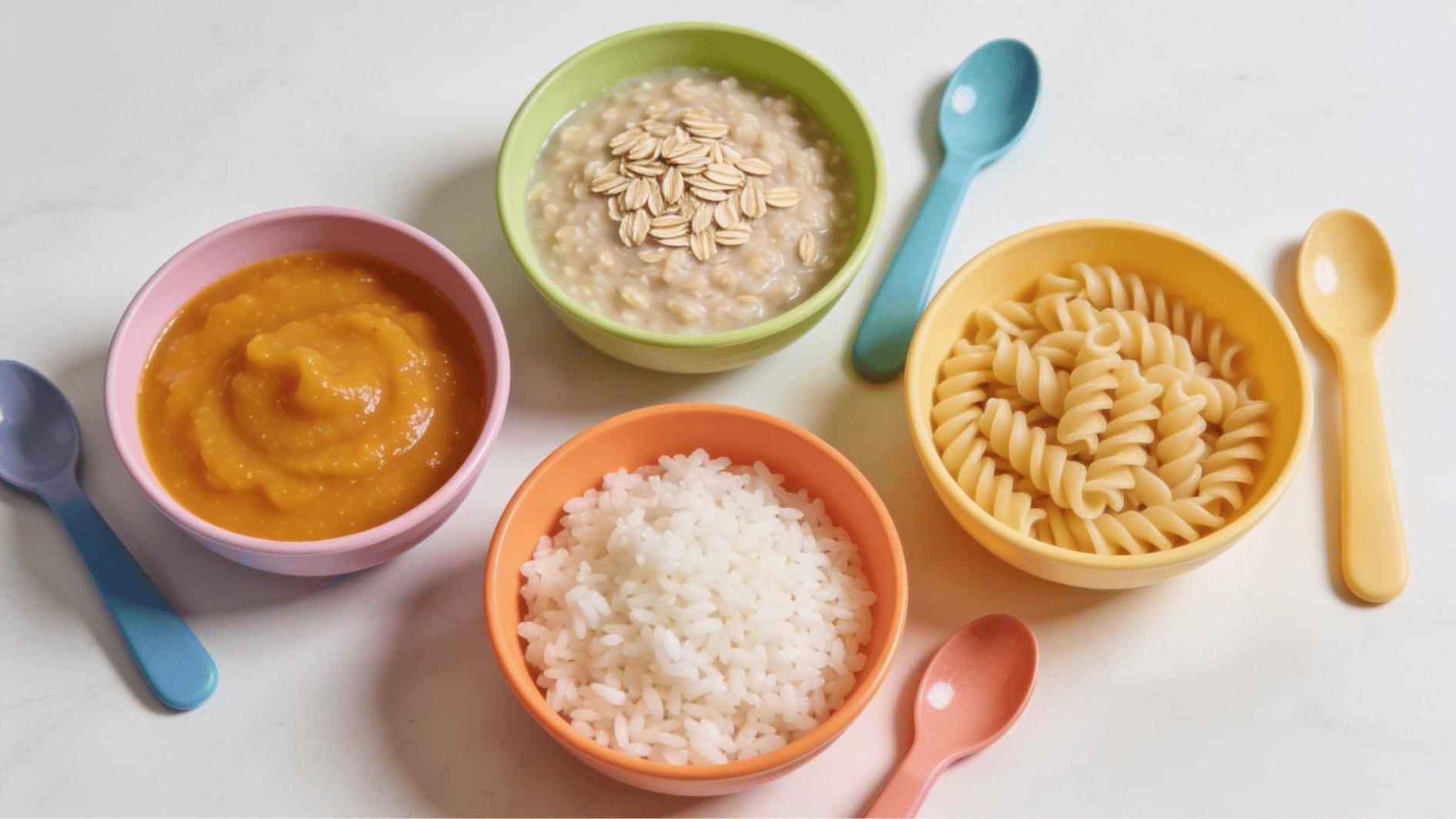
1. Sweet Potato Puree
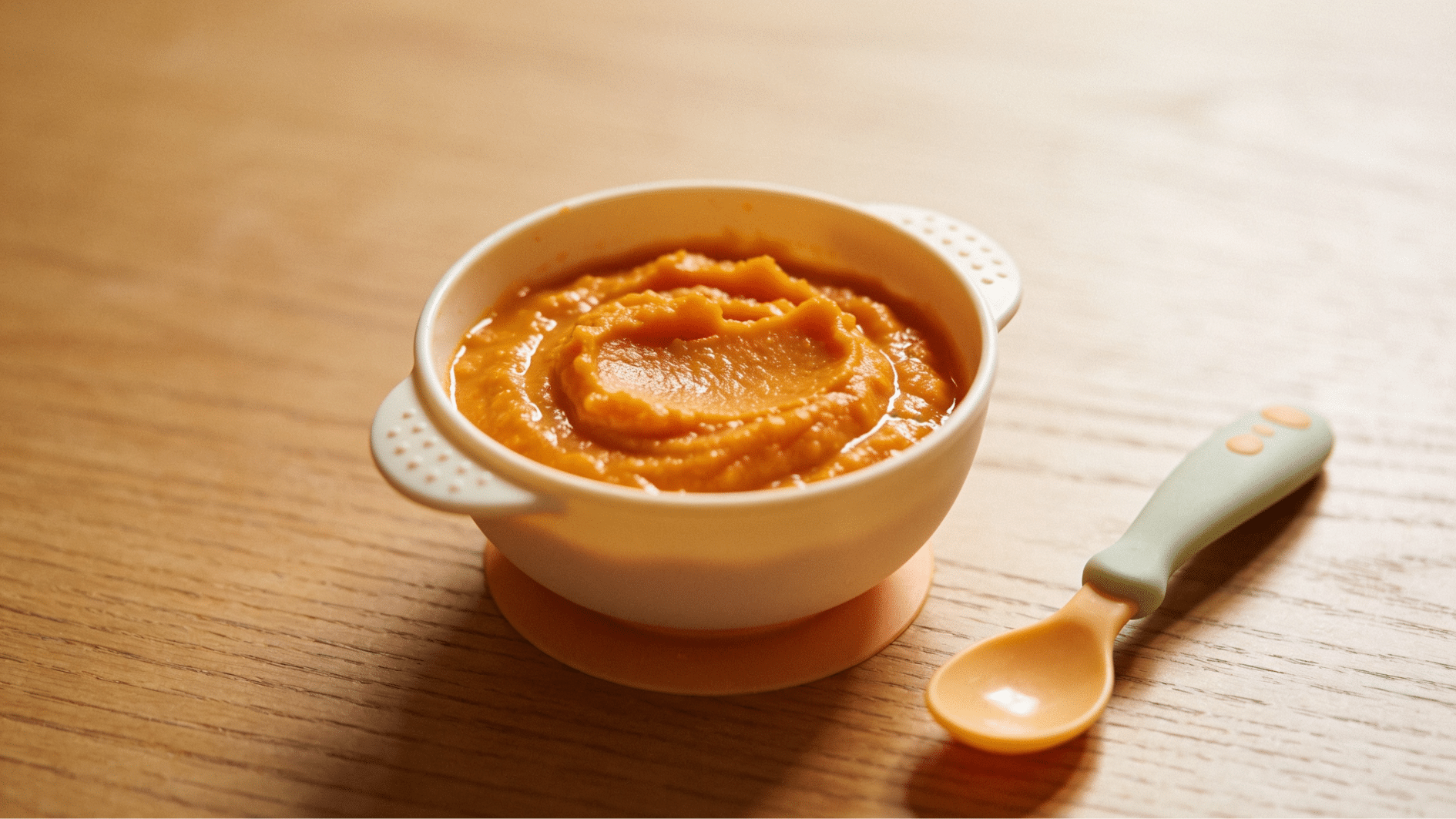
Sweet potato is one of the best first foods for babies because it is naturally sweet, easy to digest, and packed with beta-carotene. This simple puree comes together in minutes and freezes well for the week ahead. It is a great starting point for babies just beginning their solid food journey.
Time: 20 minutes
Ingredients:
| Ingredient | Amount |
|---|---|
| Sweet potato | 1 medium |
| Water or breast milk | 2–3 tbsp |
Steps:
- Peel the sweet potato and cut it into small, even chunks so it cooks through evenly.
- Steam or boil the chunks for around 15 minutes until they are completely soft and a fork slides through easily.
- Transfer the cooked sweet potato into a blender and add two to three tablespoons of water or breast milk to loosen the mixture.
- Blend until the puree is completely smooth with no lumps remaining.
- Allow it to cool fully before serving or transferring into ice cube trays to freeze.
2. Apple and Pear Puree
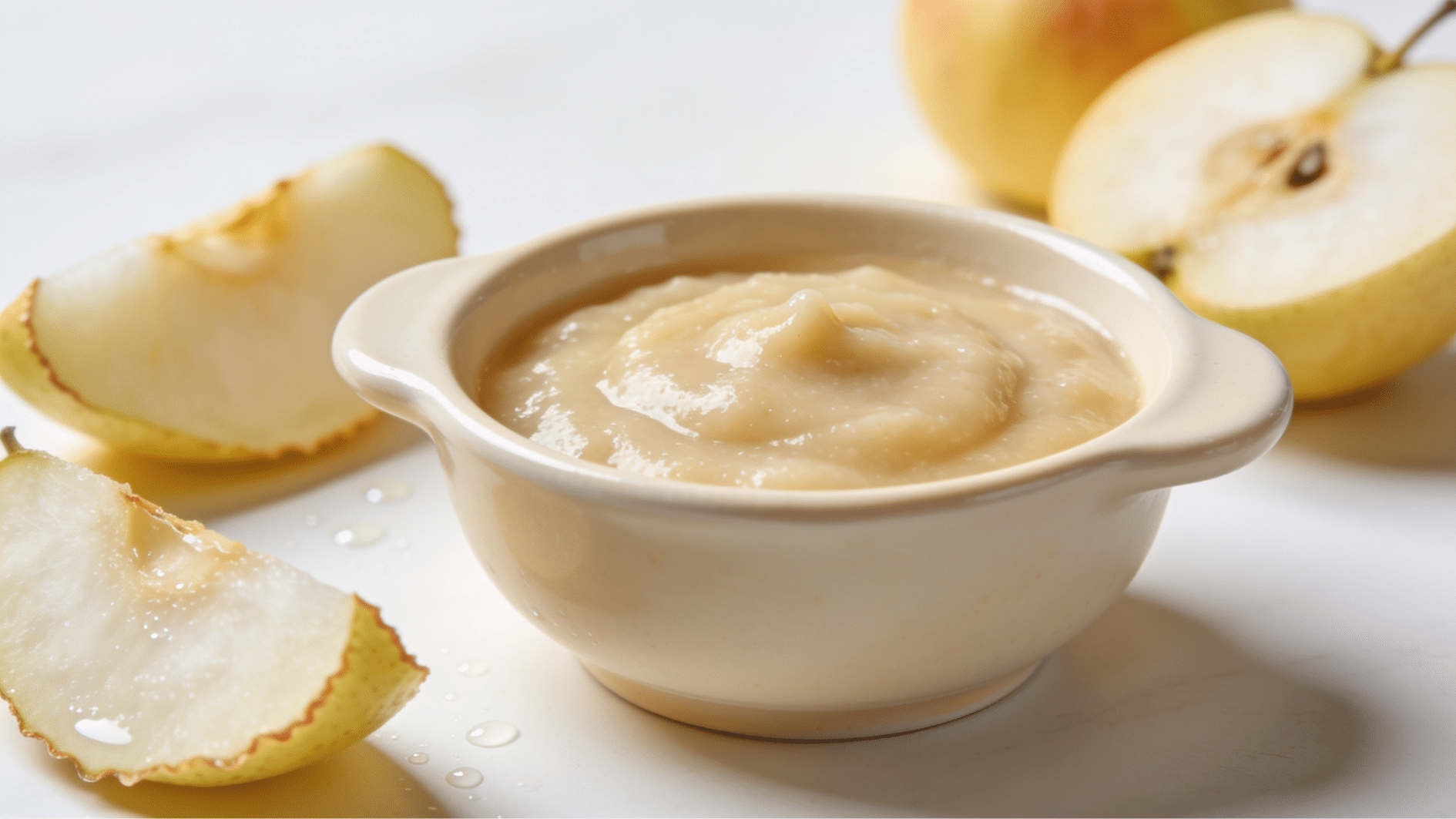
Apple and pear together make a naturally sweet, gentle puree that is easy on a baby’s stomach and rarely causes reactions. Both fruits are rich in fiber and vitamin C, making this one of the most reliable, easy baby food recipes for the early stages. It also works beautifully mixed into oatmeal as your baby gets older.
Time: 15 minutes
Ingredients:
| Ingredient | Amount |
|---|---|
| Apple | 1 medium |
| Pear | 1 medium |
| Water | 2 tbsp |
Steps:
- Peel and core both the apple and pear, then cut them into small chunks of similar size.
- Place the chunks in a small saucepan with two tablespoons of water and cook over medium heat for around ten minutes until soft.
- Pour the cooked fruit into a blender and blend until you reach a smooth, lump-free consistency.
- Add a splash more water if the puree feels too thick for your baby’s current stage.
- Cool completely before serving and store any leftovers in the fridge for up to two days.
3. Carrot and Ginger Puree
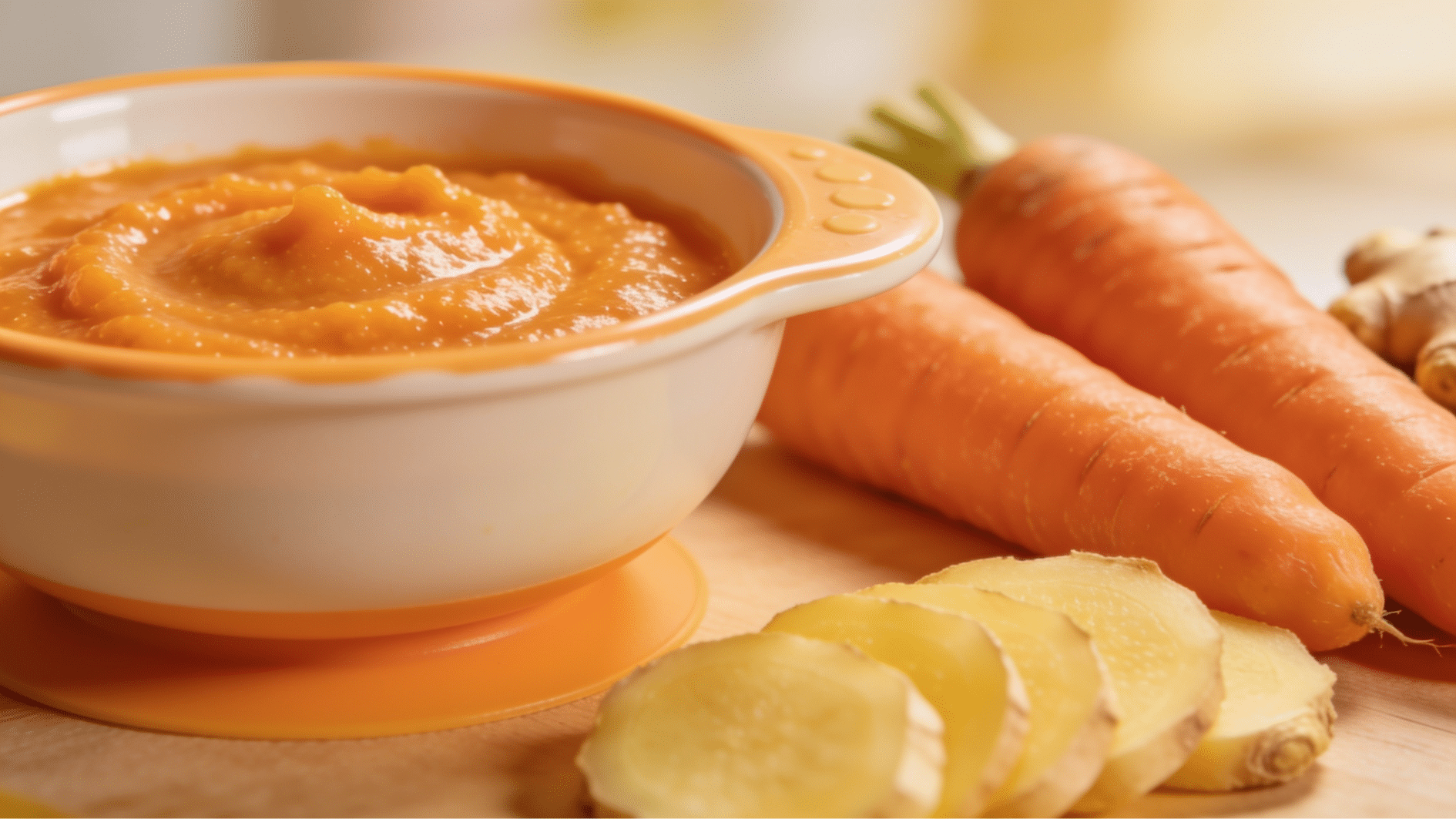
Carrots are a classic first vegetable, mild in flavor and rich in vitamin A, which supports healthy eye development in babies. A very small amount of ginger adds a gentle warmth and can also help with digestion. This homemade baby food recipe is a great way to start introducing subtle new flavors early on.
Time: 25 minutes
Ingredients:
| Ingredient | Amount |
|---|---|
| Carrots | 2 medium |
| Fresh ginger | A very small pinch, grated |
| Water or formula | 3 tbsp |
Steps:
- Peel the carrots and cut them into thin, even rounds so they cook through at the same time.
- Steam or boil the carrot pieces for around 15 to 20 minutes until they are very soft all the way through.
- Add the cooked carrots to a blender along with a tiny amount of freshly grated ginger and your liquid of choice.
- Blend until the mixture is completely smooth and no fibrous bits remain.
- Taste the puree yourself to make sure the ginger is barely noticeable before serving it to your baby.
4. Banana and Avocado Mash
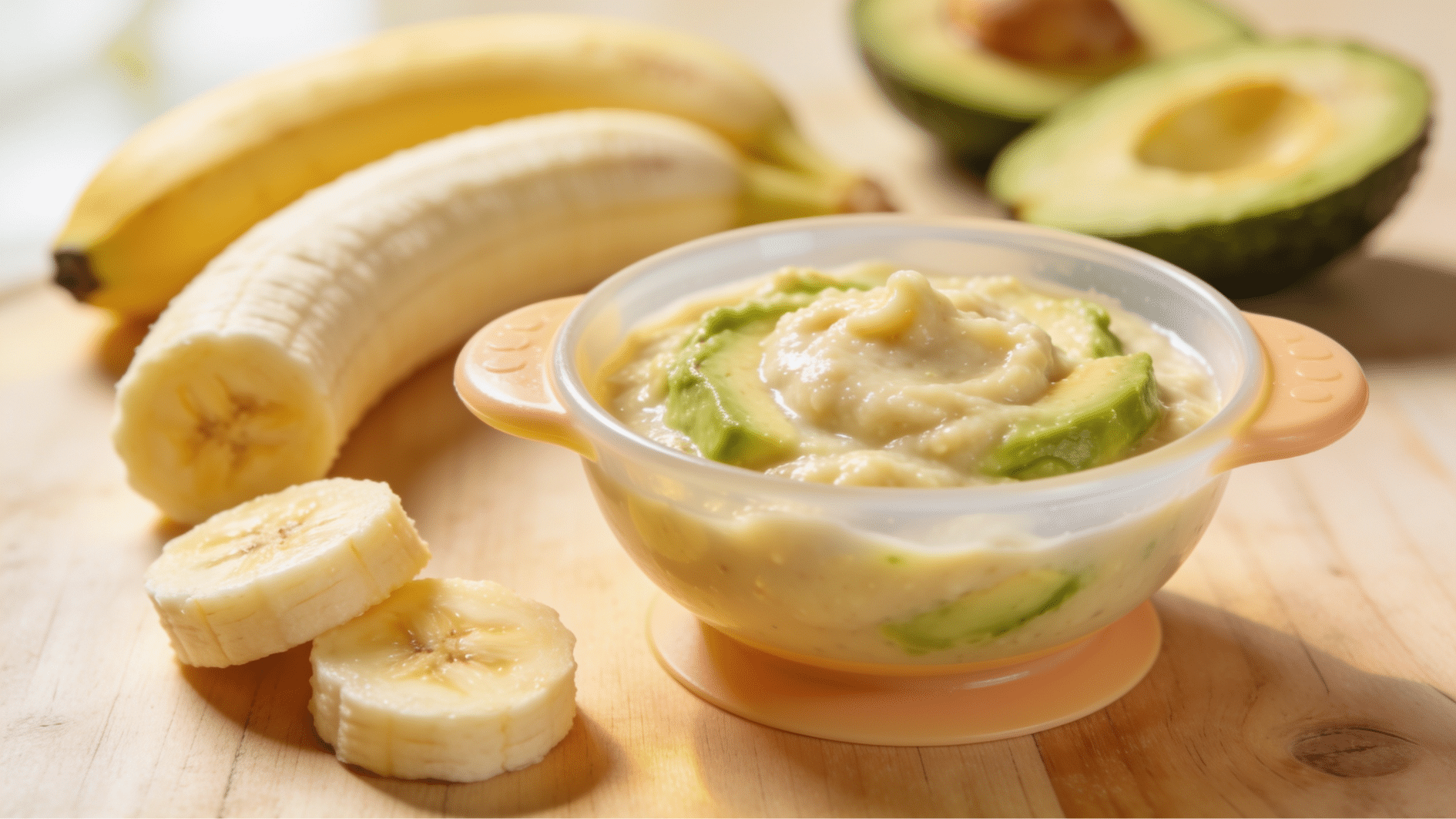
Banana and avocado are two of the easiest homemade baby food recipes you can make because they require no cooking at all. Avocado provides healthy fats that support brain development, while banana adds natural sweetness and energy. This is a perfect option for busy days when you need something ready in minutes.
Time: 5 minutes
Ingredients:
| Ingredient | Amount |
|---|---|
| Ripe banana | ½ |
| Ripe avocado | ½ |
Steps:
- Cut the avocado in half, remove the pit, and scoop the flesh out into a small bowl.
- Peel the banana and break half of it into the bowl with the avocado.
- Use a fork to mash both together firmly until the mixture is smooth and creamy with no large lumps.
- If the mash feels too thick, add a small amount of breast milk or water to loosen it slightly.
- Serve immediately, as this mixture browns quickly and is best eaten fresh.
5. Spinach, Pea and Potato Blend
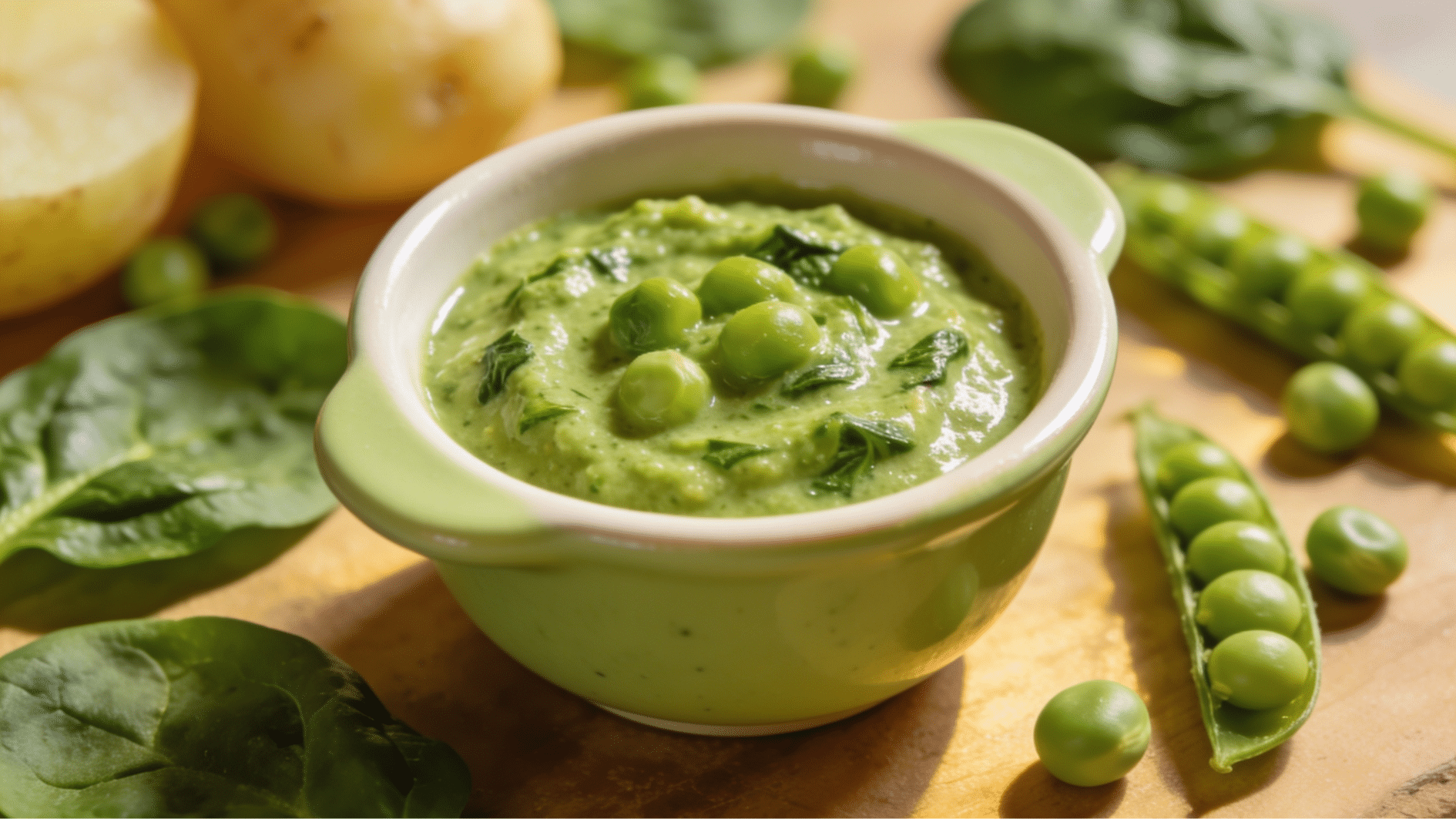
This green blend is a gentle way to introduce leafy vegetables to babies ready to try new flavors and textures. Potatoes give the puree a creamy base, while spinach and peas add iron and vitamins. It is one of those easy baby food recipes that works well both as a smooth puree and as a chunkier mash for older babies.
Time: 25 minutes
Ingredients:
| Ingredient | Amount |
|---|---|
| Potato | 1 small |
| Frozen peas | 3 tbsp |
| Fresh spinach | A small handful |
| Water or breast milk | 3 tbsp |
Steps:
- Peel the potato, cut it into small cubes, and boil until completely soft, which takes around 15 minutes.
- Add the frozen peas to the pot in the last three minutes of cooking so they heat through without becoming overcooked.
- Stir in the fresh spinach leaves right at the end and let them wilt in the hot water for about one minute.
- Drain everything and transfer to a blender with your liquid of choice.
- Blend to your desired consistency, smooth for younger babies or slightly textured for babies at a later stage.
6. Lentil and Carrot Mash
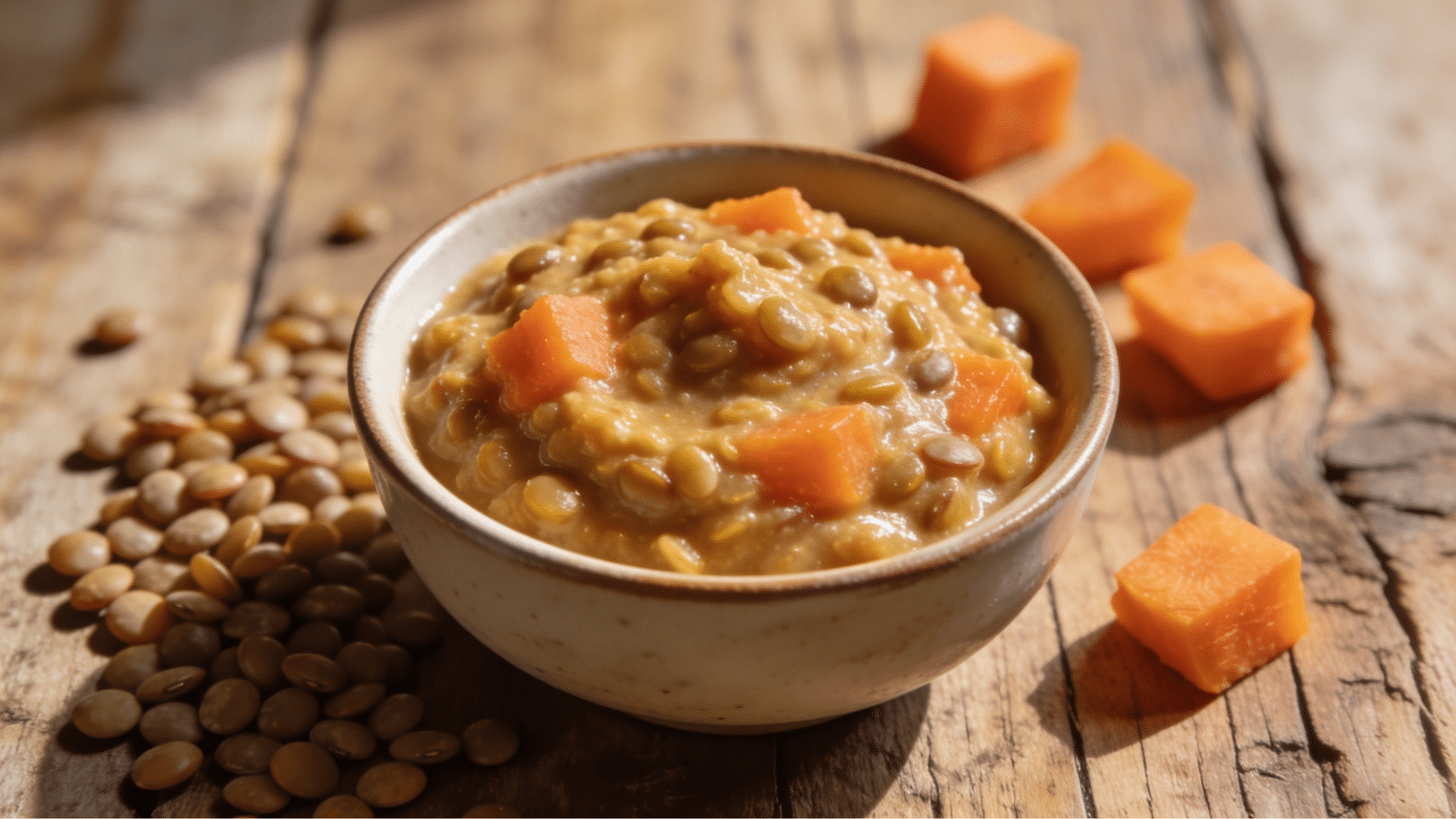
Red lentils are an excellent plant-based source of iron and protein, both of which are important for babies from around six months onwards. Combined with carrot, this mash has a naturally sweet flavor that most babies take to easily. It is one of the most nourishing homemade baby food recipes you can add to your weekly rotation.
Time: 30 minutes
Ingredients:
| Ingredient | Amount |
|---|---|
| Red lentils | 3 tbsp |
| Carrot | 1 medium |
| Water or vegetable stock | 150 ml |
Steps:
- Rinse the red lentils thoroughly under cold water until the water runs clear.
- Peel and chop the carrot into small pieces, then add it to a small saucepan along with the lentils and liquid.
- Bring everything to a boil, then reduce the heat and simmer for around 20 minutes until the lentils are completely soft and mushy.
- Mash or blend the mixture depending on the texture your baby is ready for at their current stage.
- Allow to cool before serving and portion any leftovers into ice cube trays for easy freezing.
7. Oatmeal With Mashed Banana
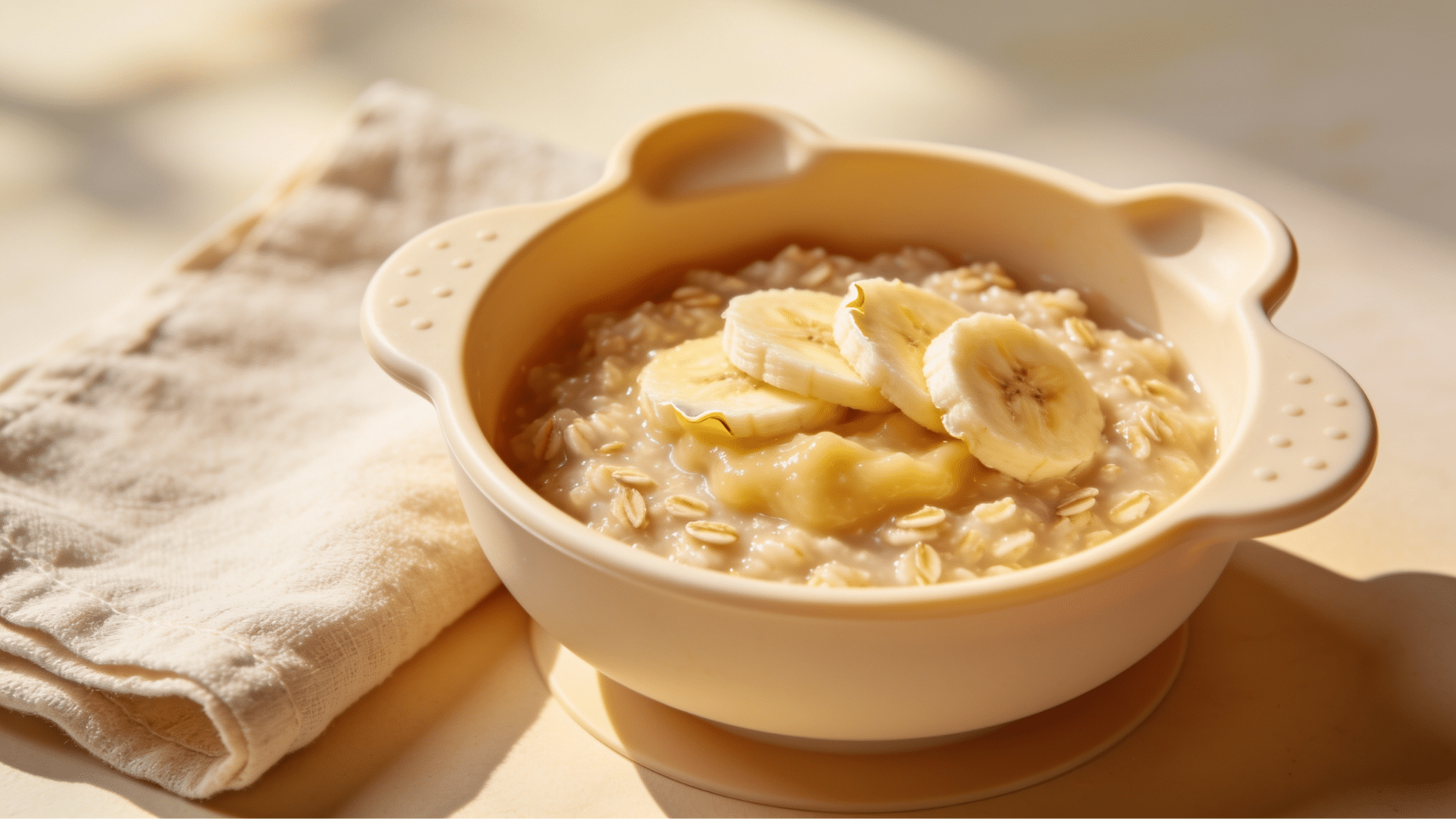
Oatmeal is a warm, filling breakfast option that is gentle on a baby’s digestive system and easy to prepare in under ten minutes. Mashed banana stirs in naturally to add sweetness without any added sugar. This is one of those easy baby food recipes that grows with your baby — you can make it thinner for younger babies and thicker as they get older.
Time: 10 minutes
Ingredients:
| Ingredient | Amount |
|---|---|
| Baby oats or finely milled oats | 3 tbsp |
| Water or breast milk | 100 ml |
| Ripe banana | ¼ |
Steps:
- Combine the oats and liquid in a small saucepan and cook over low to medium heat, stirring continuously.
- Cook for around five minutes until the oats have absorbed the liquid and the mixture is thick and creamy.
- Remove from the heat and mash the banana separately with a fork until there are no large lumps.
- Stir the mashed banana into the cooked oatmeal and mix well so the flavor is evenly distributed.
- Check the temperature carefully before serving, as oatmeal retains heat and can stay very hot in the center.
8. Chicken, Sweet Potato and Pea Mash
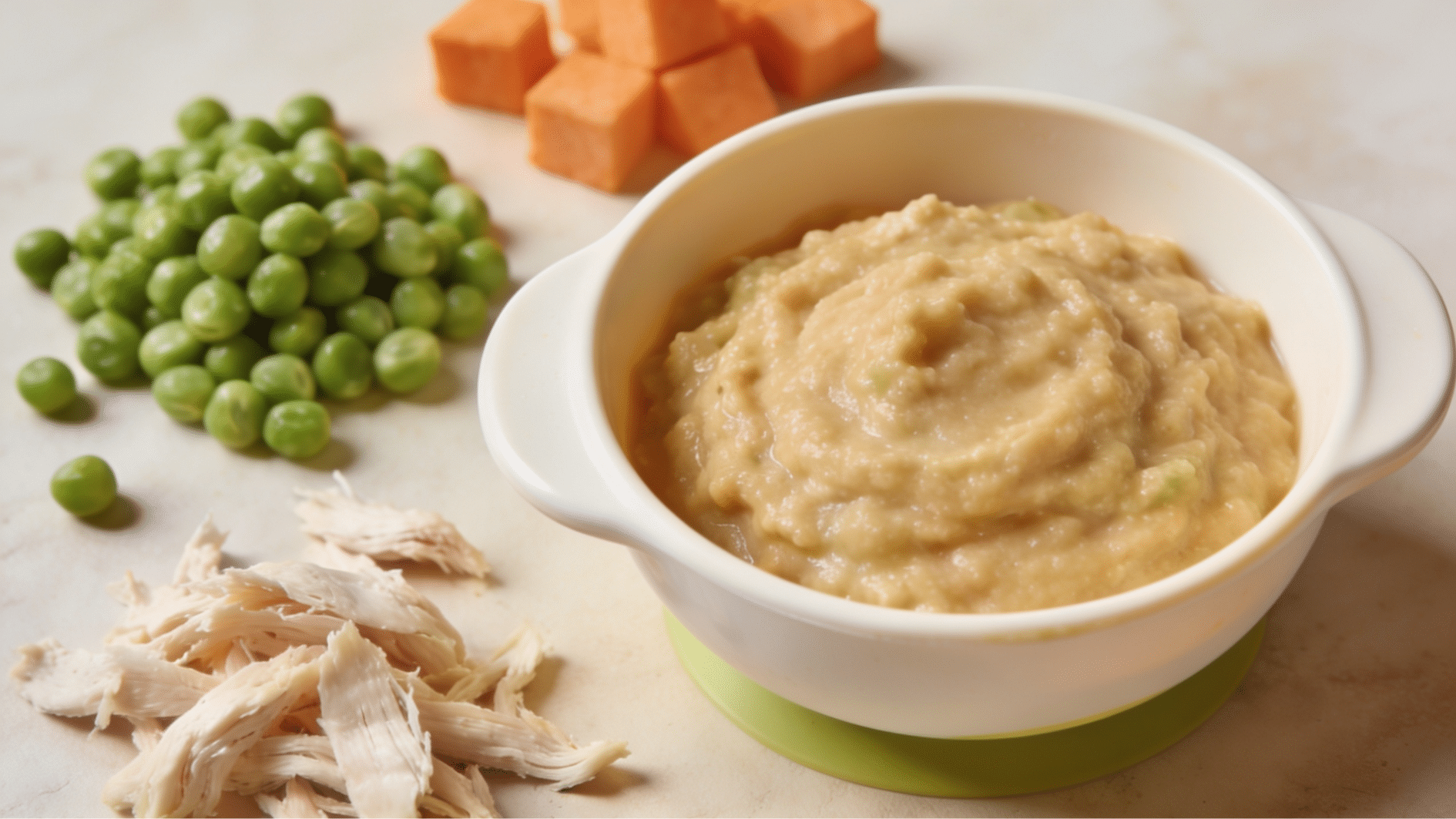
Introducing protein-rich foods like chicken is an important step as babies move into the later stages of weaning, usually around seven to eight months. Combined with sweet potato and peas, this mash gives a good balance of protein, carbohydrates, and vegetables in one bowl. It is one of the more filling homemade baby food recipes on this list and works well as a small lunch or dinner.
Time: 35 minutes
Ingredients:
| Ingredient | Amount |
|---|---|
| Chicken breast | 50g |
| Sweet potato | ½ medium |
| Frozen peas | 2 tbsp |
| Water or low-sodium stock | 3 tbsp |
Steps:
- Cook the chicken breast by poaching it in a small pot of water over medium heat for around 20 minutes until fully cooked through with no pink remaining.
- Peel and cube the sweet potato, then steam or boil separately until completely soft, about 15 minutes.
- Add the frozen peas in the last three minutes of cooking the sweet potato so they are just heated through.
- Shred the cooked chicken finely and combine it with the sweet potato and peas in a blender or bowl.
- Blend or mash to a consistency suitable for your baby, adding a little stock or cooking water to loosen if needed.
9. Soft Rice With Vegetable Broth
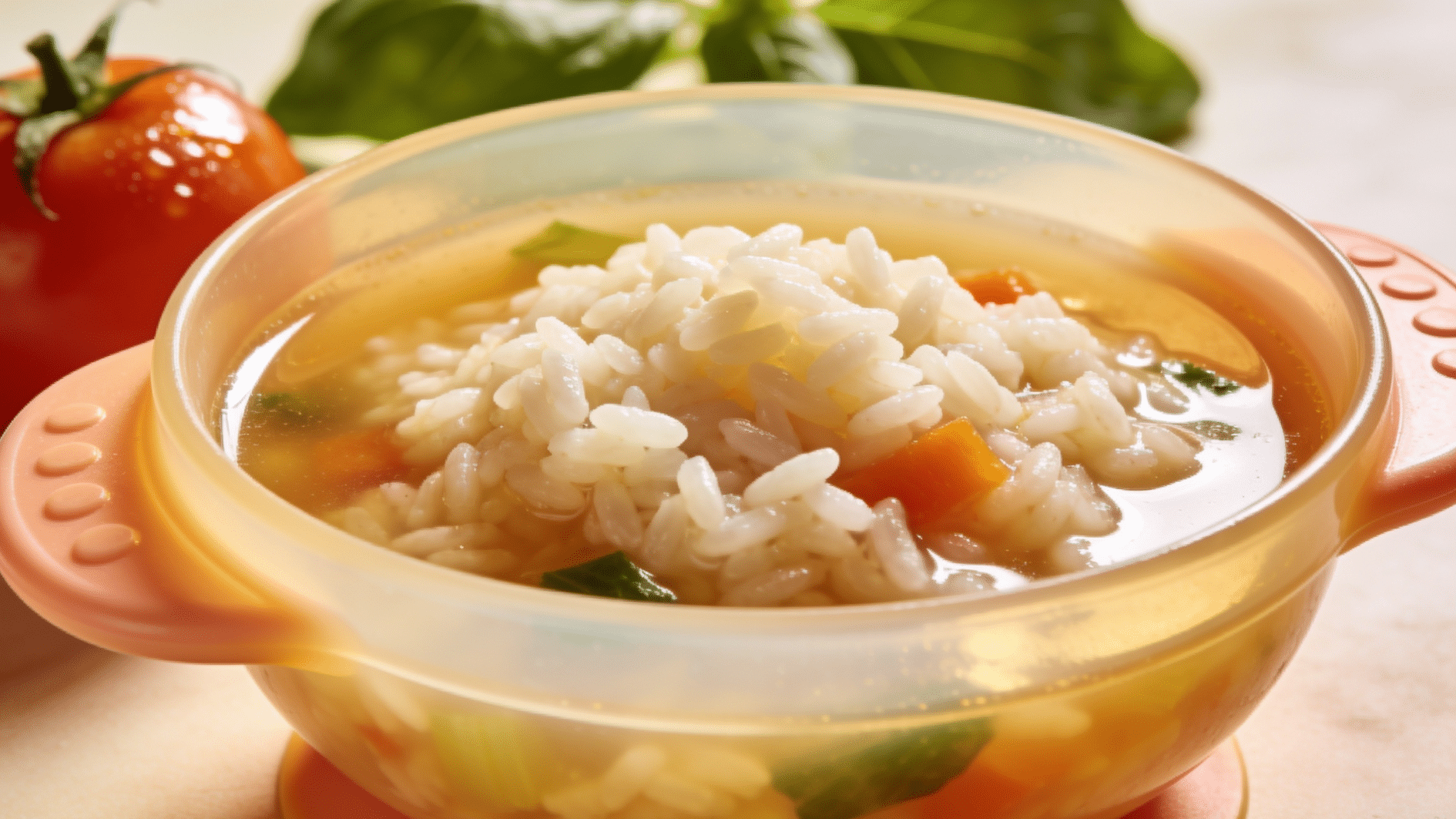
Soft rice cooked in a mild vegetable broth is a light, easy-to-digest option that works well when babies are tired, unwell, or adjusting to new textures. It is simple, comforting, and one of the gentlest easy baby food recipes you can make. Use a homemade or very low-sodium broth to keep sodium levels appropriate for babies.
Time: 30 minutes
Ingredients:
| Ingredient | Amount |
|---|---|
| White rice | 3 tbsp |
| Low-sodium vegetable broth | 150 ml |
| Water | 50 ml |
Steps:
- Rinse the rice under cold water until the water runs clear to remove excess starch.
- Combine the rice, broth, and water in a small saucepan and bring to a gentle boil.
- Reduce the heat to low, cover the pan, and cook for around 20 minutes until the rice is very soft and has absorbed most of the liquid.
- Mash the cooked rice lightly with the back of a spoon or blend briefly for a smoother consistency.
- Cool to a safe temperature before serving and add a little extra warm water if it thickens too much on standing.
10. Soft-Cooked Pasta With Tomato Puree
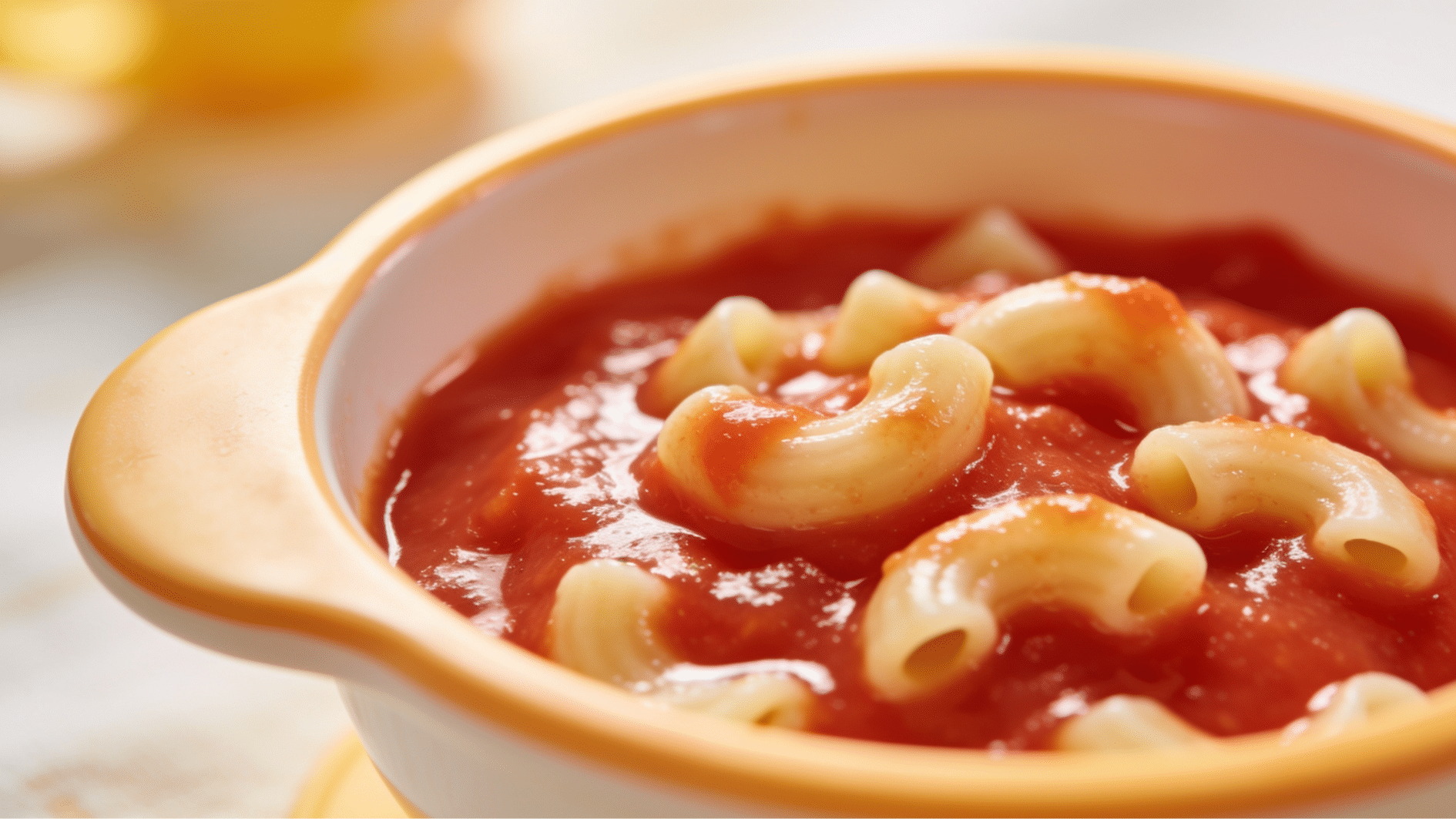
Soft pasta is a great way to introduce new textures to babies around 8 to 9 months, especially as they start developing their pincer grasp. A simple homemade tomato puree keeps this dish fresh and free from the added salt and sugar found in many jarred sauces. This is one of those homemade baby food recipes that easily adapts into a full family meal as your baby grows.
Time: 20 minutes
Ingredients:
| Ingredient | Amount |
|---|---|
| Small pasta shapes | 30g |
| Ripe tomato | 1 medium |
| Olive oil | ½ tsp |
| Fresh basil | Optional, one small leaf |
Steps:
- Cook the pasta in a pot of unsalted boiling water for two to three minutes longer than the packet suggests so it becomes very soft and easy for babies to manage.
- While the pasta cooks, score the tomato with a knife, place it in boiling water for one minute, then peel and deseed it.
- Blend or mash the tomato flesh with a tiny drizzle of olive oil until you have a smooth, thin sauce.
- Drain the pasta and stir it through the tomato puree so every piece is lightly coated.
- Serve at a safe temperature and cut or break any larger pasta pieces into smaller portions appropriate for your baby’s stage
Tips for Picky Eaters at Home
Even the best homemade baby food recipes hit a wall sometimes. Babies and toddlers go through phases where familiar foods get rejected, and new ones feel like a battle.
These simple tips can help you navigate fussy eating without stress, and toddler meal ideas always come to the rescue.
- Start with what they already like: Introduce a new ingredient alongside a food your baby already enjoys so the unfamiliar feels less threatening.
- Change the texture, not the recipe: If a puree gets rejected, try mashing it chunkier or offering it as a soft finger food instead.
- Offer new flavors more than once: Research shows babies may need to be exposed to a new food eight to fifteen times before accepting it.
- Keep portions small when trying something new: A large bowl of an unfamiliar food can feel overwhelming. A small spoonful alongside a known favorite works better.
- Avoid making mealtime a struggle: Pressure and stress around food can build negative associations early, so keep the atmosphere calm and low-key.
- Mix strong flavors with mild ones: Blending a bitter vegetable like spinach into a sweet potato puree is one of the easiest ways to sneak in nutrition without resistance.
Final Thoughts
Making homemade baby food recipes is one of the simplest ways to give your baby a healthy, confident start with food.
From the first sweet potato puree to navigating a picky phase, every small effort adds up to something that really matters. You now have the recipes, the tips, and the knowledge to make it work in your own kitchen.
Remember that question about whether feeding your baby well had to be complicated? It really doesn’t.
These easy baby food recipes prove that fresh, wholesome meals can be quick, affordable, and genuinely enjoyable to make. So go ahead and get started with one recipe today; your baby’s plate is ready for something good.
Frequently Asked Questions
Can I Mix Fruits and Vegetables in Baby Food?
Yes, combining fruits and vegetables is fine and often helps babies accept new flavors more easily. Sweet potato and apple or carrot and mango are popular combinations.
Do I Need to Add Oil or Butter to Homemade Baby Food?
A small amount of unsalted butter or olive oil can be added after six months to support healthy fat intake and improve texture.
Can I Use Frozen Fruits and Vegetables for Baby Food?
Yes, frozen produce works well and is often just as nutritious as fresh. Avoid varieties with added salt, sugar, or seasoning.
How Much Should I Feed My Baby at Each Meal?
Start with one to two tablespoons per meal and increase gradually based on your baby’s hunger cues and age.