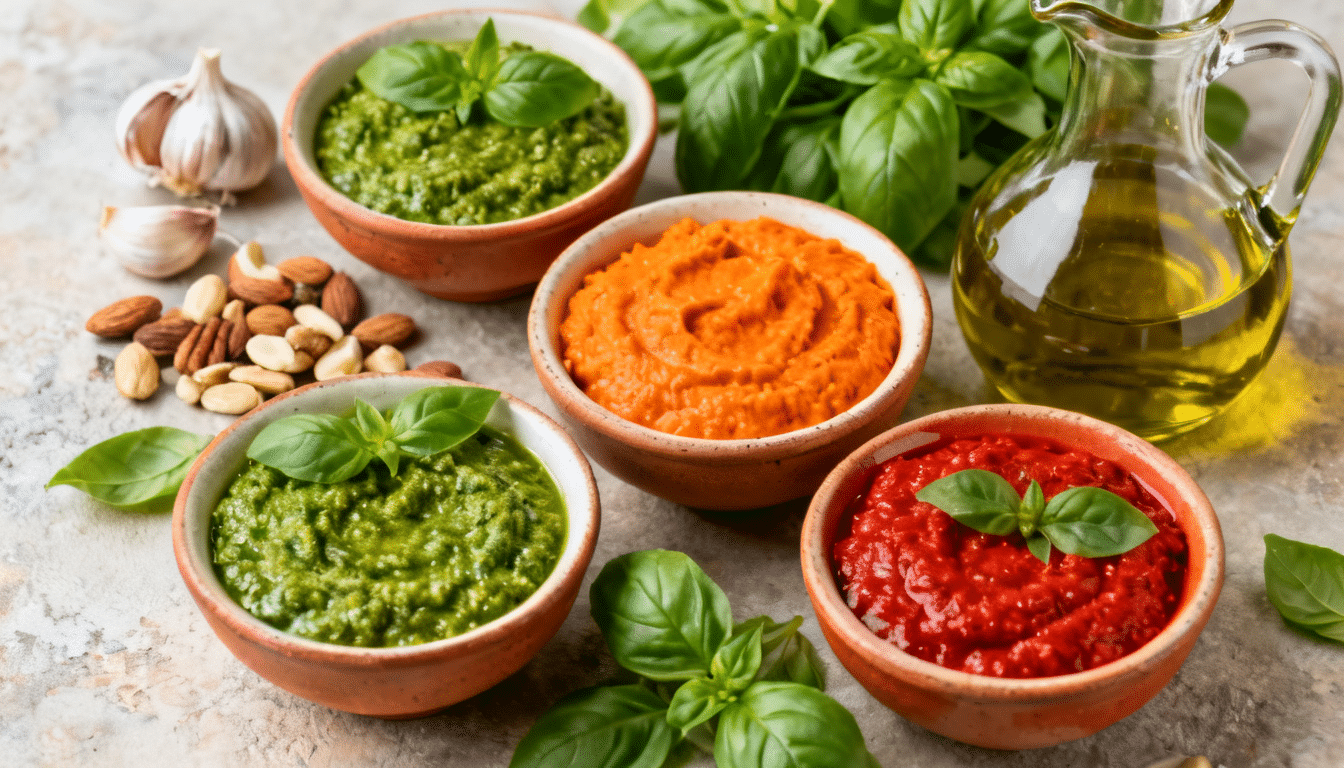
Traditional pesto is often made with pine nuts, but they’re not the only way to create a rich and flavorful sauce.
Many home cooks search for pesto without pine nuts because pine nuts can be costly, difficult to find, or simply absent from the pantry when a pesto craving strikes.
Fortunately, pesto is one of the easiest sauces to adapt. A variety of nuts and seeds can provide texture, depth, and a satisfying finish while bringing their own unique flavor to the recipe.
In this collection, you’ll find creative pesto recipes that skip pine nuts and use ingredients you may already have at home.
Why Make Pesto Without Pine Nuts?
Pine nuts are a classic pesto ingredient, but they aren’t essential for a flavorful sauce. Alternatives like walnuts, almonds, and cashews can deliver the same richness while adding their own distinct taste and texture.
Cost and availability are the biggest reasons to skip pine nuts. They’re often expensive and hard to find, while most substitutes are affordable and stocked at any grocery store.
Each alternative brings something unique to the sauce. Walnuts add earthy depth, cashews bring mild creaminess, and seeds like sunflower or pumpkin work well for those avoiding nuts altogether.
The best part – pesto is highly adaptable. With the right substitute, you can craft a sauce that pairs beautifully with pasta, pizza, grilled vegetables, and more.
What to Look for in a Pine Nut Alternative for Pesto
Not all pesto substitutes produce the same result. The right choice depends on the flavor, texture, and consistency you want, so it’s worth knowing what each ingredient brings to the sauce.
Look for substitutes with natural oils. These help create the smooth, spreadable texture that makes pesto easy to toss with pasta, spread on bread, or spoon over vegetables.
Flavor and texture vary more than you’d expect. Cashews blend mildly with basil, while walnuts add a deeper, earthier taste. Some nuts produce a creamy sauce, while seeds can result in a thicker consistency – easily balanced with a little extra olive oil.
Budget and dietary needs matter too. Walnuts, almonds, and seeds are far more affordable than pine nuts and widely available. For those with nut allergies, sunflower or pumpkin seeds offer the same richness without relying on tree nuts.
The best substitute is ultimately the one that matches your taste preferences and the ingredients you already have available in your kitchen.
Tip: Lightly toast nuts or seeds before blending them into pesto. A few minutes in a dry skillet can bring out richer flavors and add extra depth to the finished sauce without requiring additional ingredients.
Creative Pesto Recipes Without Pine Nuts
Pesto is easy to customize, making it a great sauce for experimenting with different nuts and seeds. The recipes below offer a variety of flavors and textures while helping you create delicious pesto without relying on pine nuts.
1. Classic Walnut Basil Pesto
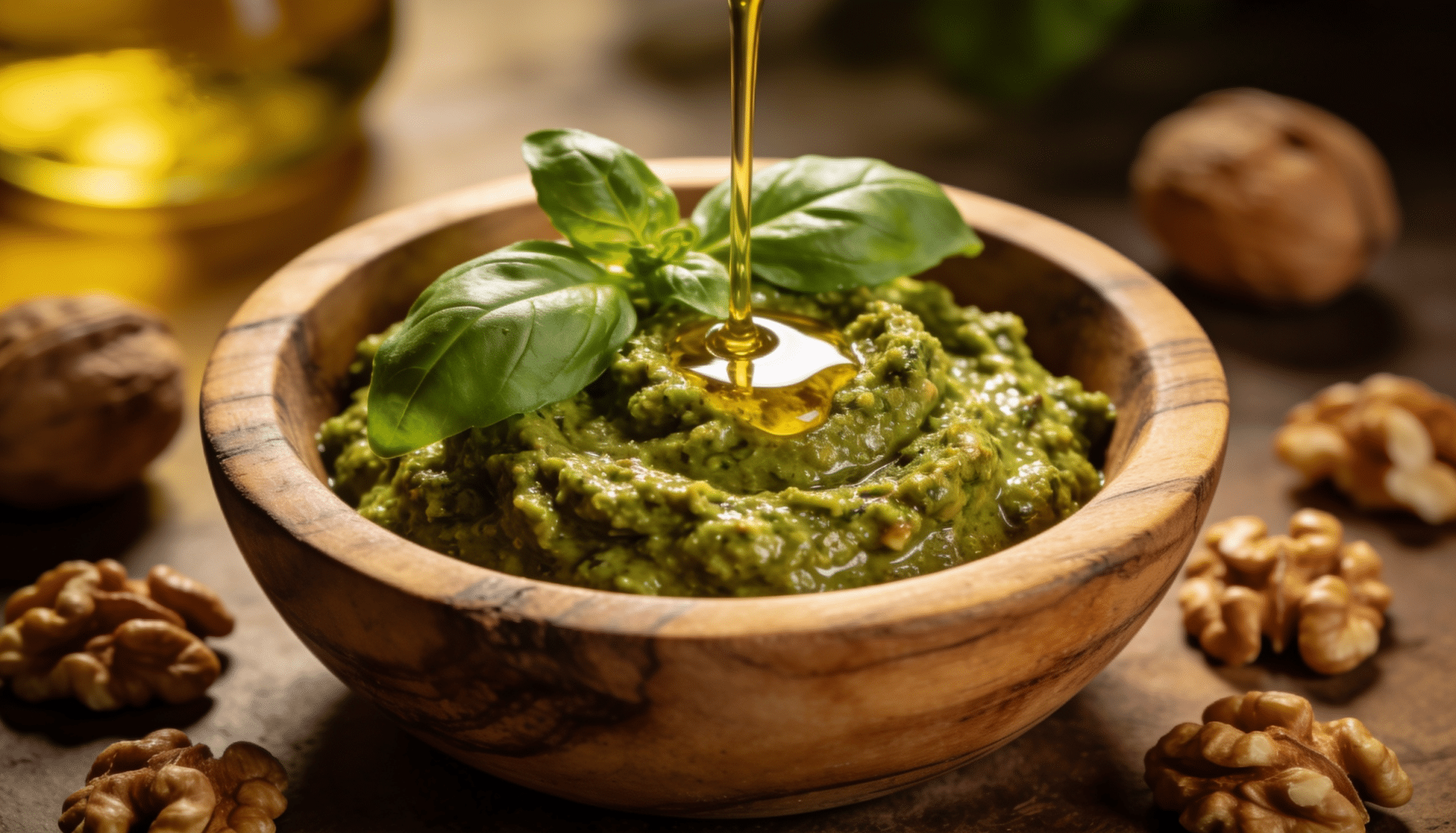
Walnuts add a rich, earthy flavor that pairs naturally with fresh basil. This version is a great choice for anyone looking for a simple pine nut alternative for pesto.
Ingredients:
| Ingredient | Amount |
|---|---|
| Fresh basil leaves | 2 cups |
| Walnuts | ½ cup |
| Parmesan cheese, grated | ½ cup |
| Garlic cloves | 2 |
| Extra-virgin olive oil | ½ cup |
| Lemon juice | 1 tbsp |
| Salt | ½ tsp |
| Black pepper | ¼ tsp |
Steps:
- Step 1: Add the walnuts and garlic cloves to a food processor. Pulse several times until the walnuts are broken into small pieces.
- Step 2: Add the basil leaves, Parmesan cheese, lemon juice, salt, and black pepper. Blend until the ingredients begin to combine.
- Step 3: Slowly pour in the olive oil while the processor is running. This helps create a smooth and creamy consistency.
- Step 4: Stop occasionally to scrape down the sides of the bowl. Blend again until the pesto reaches your desired texture.
- Step 5: Taste the pesto and adjust the seasoning if needed. Serve immediately or store in an airtight container.
2. Creamy Cashew Pesto
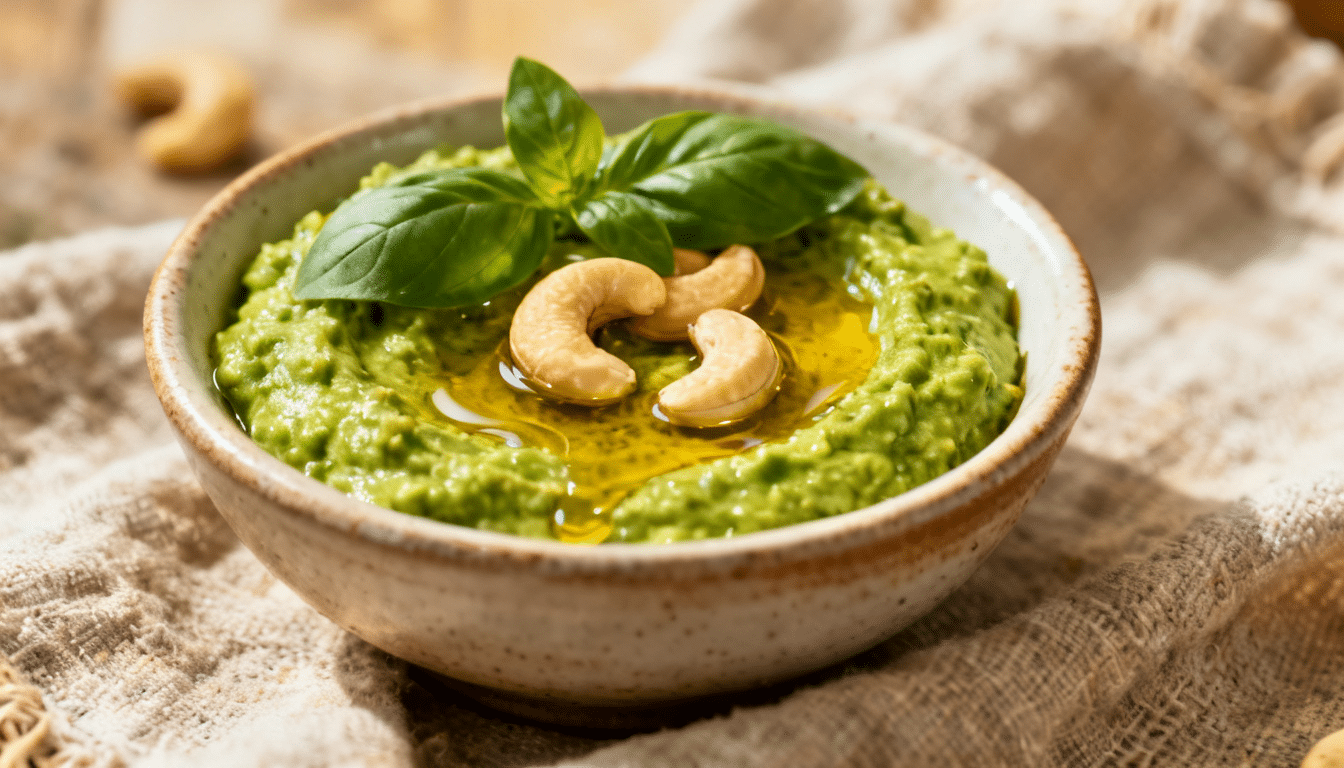
Cashews create a smooth texture and mild flavor that allows the basil to remain the star of the recipe.
Ingredients:
| Ingredient | Amount |
|---|---|
| Fresh basil leaves | 2 cups |
| Raw cashews | ½ cup |
| Parmesan cheese, grated | ½ cup |
| Garlic clovesz | 2 |
| Extra-virgin olive oil | ½ cup |
| Lemon juice | 1 tbsp |
| Salt | ½ tsp |
| Black pepper | ¼ tsp |
Steps:
- Step 1: Place the cashews in a bowl of warm water and soak them for 15 minutes. Drain them before using.
- Step 2: Add the soaked cashews, garlic, and basil leaves to a food processor. Pulse until roughly combined.
- Step 3: Add the Parmesan cheese, lemon juice, salt, and black pepper. Blend until the mixture becomes evenly mixed.
- Step 4: Slowly add the olive oil while blending. Continue processing until the pesto becomes smooth and creamy.
- Step 5: Check the consistency and flavor. Add a little more olive oil if you prefer a thinner sauce.
3. Toasted Almond Pesto
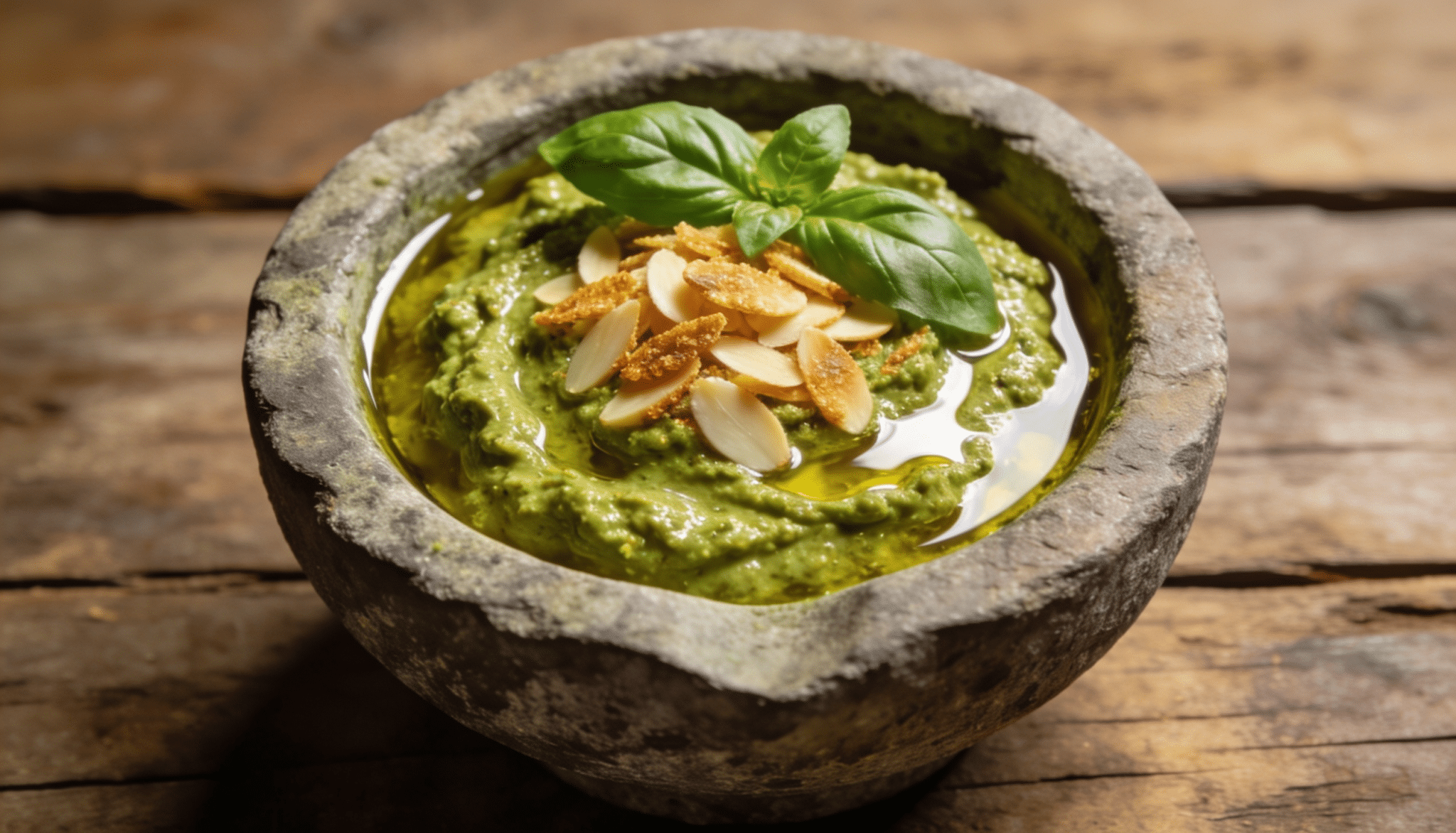
Almonds bring a lightly sweet and nutty flavor that works especially well with pasta and grilled vegetables.
Ingredients:
| Ingredient | Amount |
|---|---|
| Fresh basil leaves | 2 cups |
| Almonds | ½ cup |
| Parmesan cheese, grated | ½ cup |
| Garlic cloves | 2 |
| Extra-virgin olive oil | ½ cup |
| Lemon juice | 1 tbsp |
| Salt | ½ tsp |
| Black pepper | ¼ tsp |
Steps:
- Step 1: Place the almonds in a dry skillet over medium heat. Stir frequently until they become lightly golden and fragrant.
- Step 2: Allow the almonds to cool slightly before transferring them to a food processor with the garlic cloves.
- Step 3: Add the basil, Parmesan cheese, lemon juice, salt, and pepper. Blend until the mixture is finely chopped.
- Step 4: Gradually pour in the olive oil while continuing to process the ingredients.
- Step 5: Blend until smooth, then taste and adjust the seasoning before serving.
4. Sunflower Seed Pesto
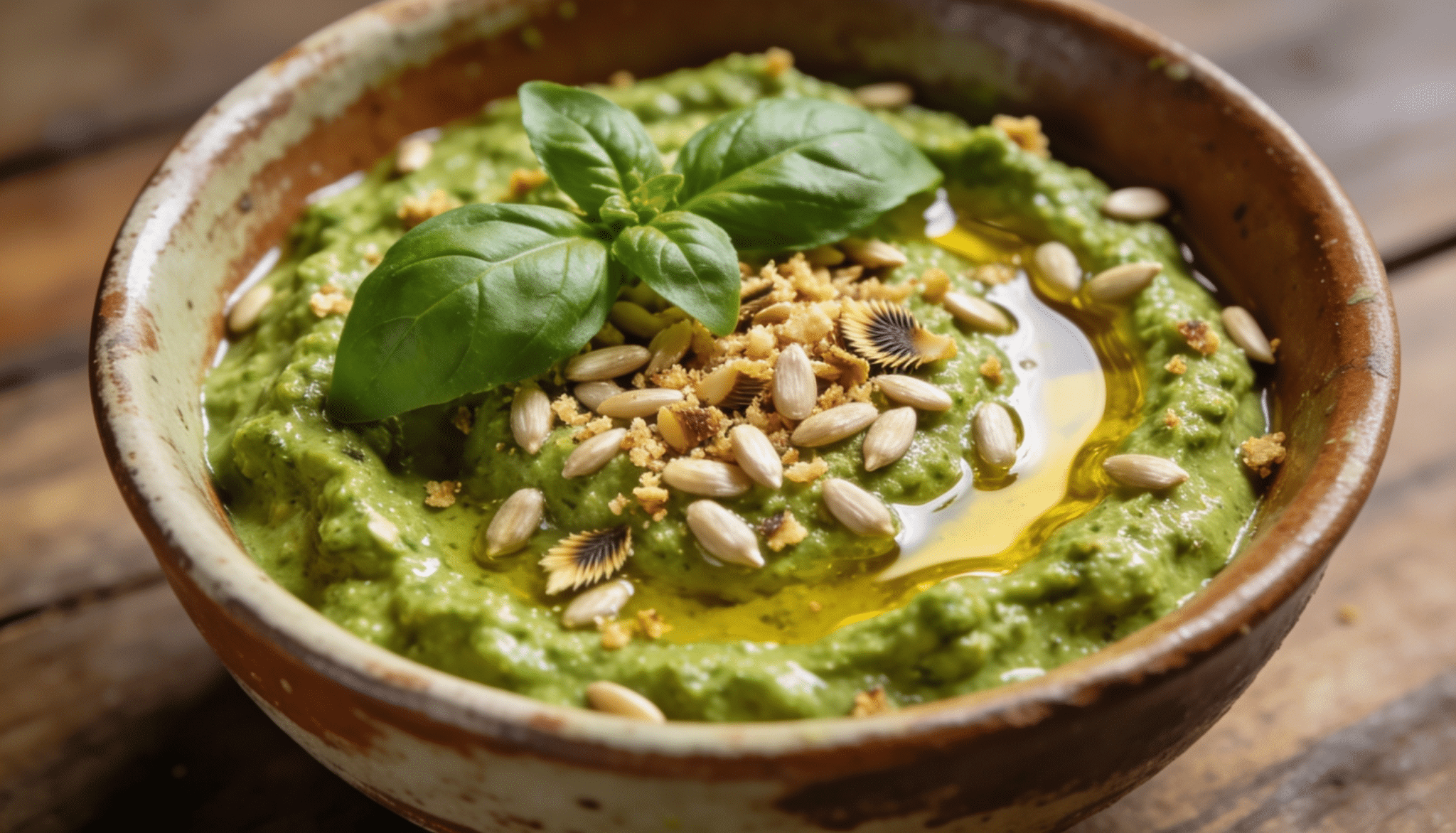
Sunflower seeds create a budget-friendly pesto with a pleasant texture and subtle nutty flavor.
Ingredients:
| Ingredient | Amount |
|---|---|
| Fresh basil leaves | 2 cups |
| Sunflower seeds | ½ cup |
| Parmesan cheese, grated | ½ cup |
| Garlic cloves | 2 |
| Extra-virgin olive oil | ½ cup |
| Lemon juice | 1 tbsp |
| Salt | ½ tsp |
| Black pepper | ¼ tsp |
Steps:
- Step 1: Add the sunflower seeds and garlic cloves to a food processor. Pulse until the seeds are finely chopped.
- Step 2: Add the basil leaves, Parmesan cheese, lemon juice, salt, and black pepper.
- Step 3: Blend the ingredients until they form a coarse mixture with an even texture.
- Step 4: Slowly drizzle in the olive oil while blending. Continue processing until smooth.
- Step 5: Taste the pesto and make any necessary adjustments before serving with your favorite dishes.
5. Pumpkin Seed Pesto
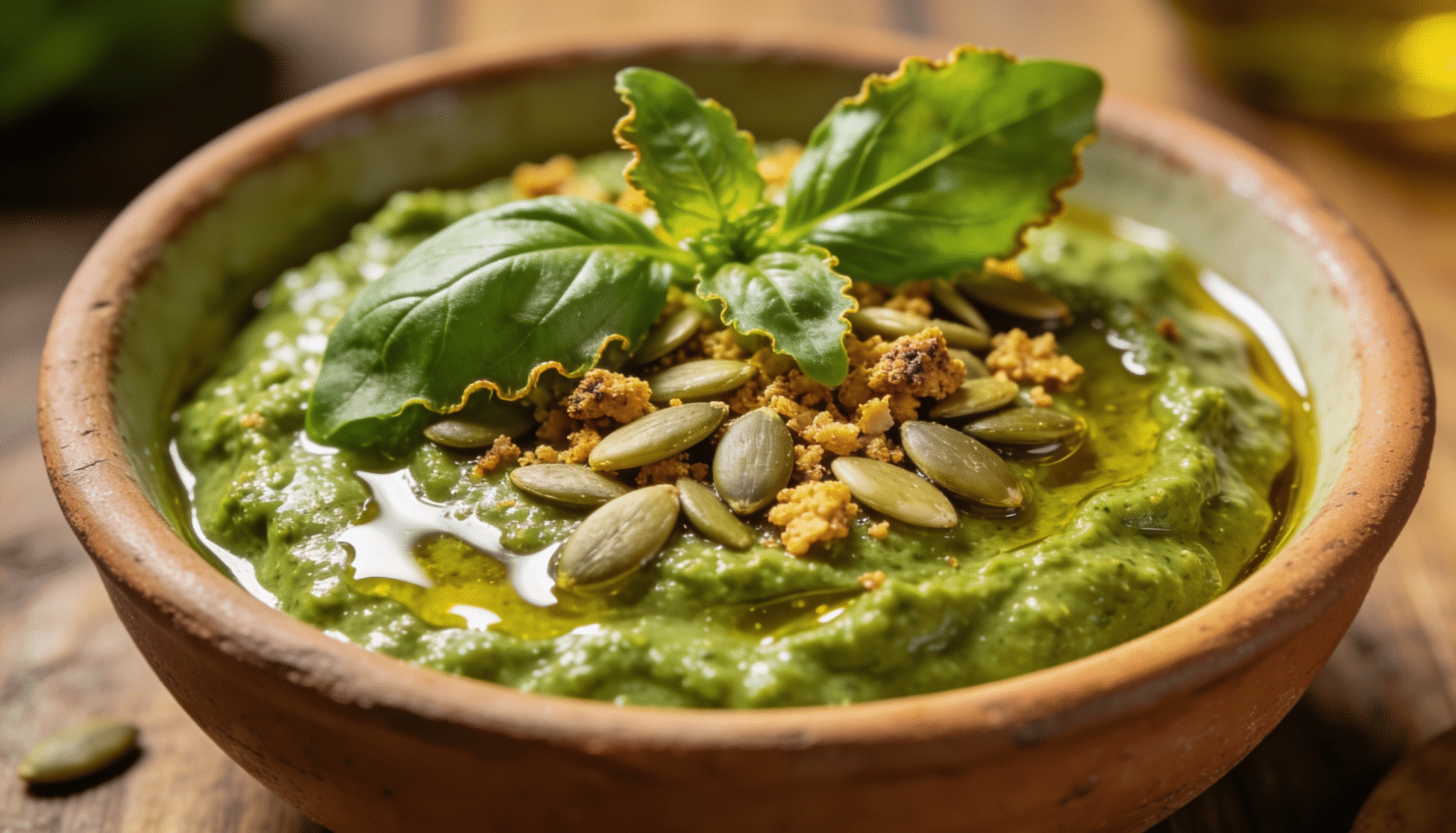
Pumpkin seeds add an earthy flavor and vibrant color that make this pesto stand out from more traditional versions.
Ingredients:
| Ingredient | Amount |
|---|---|
| Fresh basil leaves | 2 cups |
| Pumpkin seeds | ½ cup |
| Parmesan cheese, grated | ½ cup |
| Garlic cloves | 2 |
| Extra-virgin olive oil | ½ cup |
| Lemon juice | 1 tbsp |
| Salt | ½ tsp |
| Black pepper | ¼ tsp |
Steps:
- Step 1: Place the pumpkin seeds in a food processor with the garlic cloves. Pulse until the seeds are broken into small pieces.
- Step 2: Add the basil leaves, Parmesan cheese, lemon juice, salt, and black pepper.
- Step 3: Blend the ingredients until everything is evenly combined and finely chopped.
- Step 4: With the processor running, slowly add the olive oil to create a smooth consistency.
- Step 5: Taste the pesto and adjust the flavor as needed before using it on pasta, sandwiches, or roasted vegetables.
6. Pistachio and Parsley Pesto
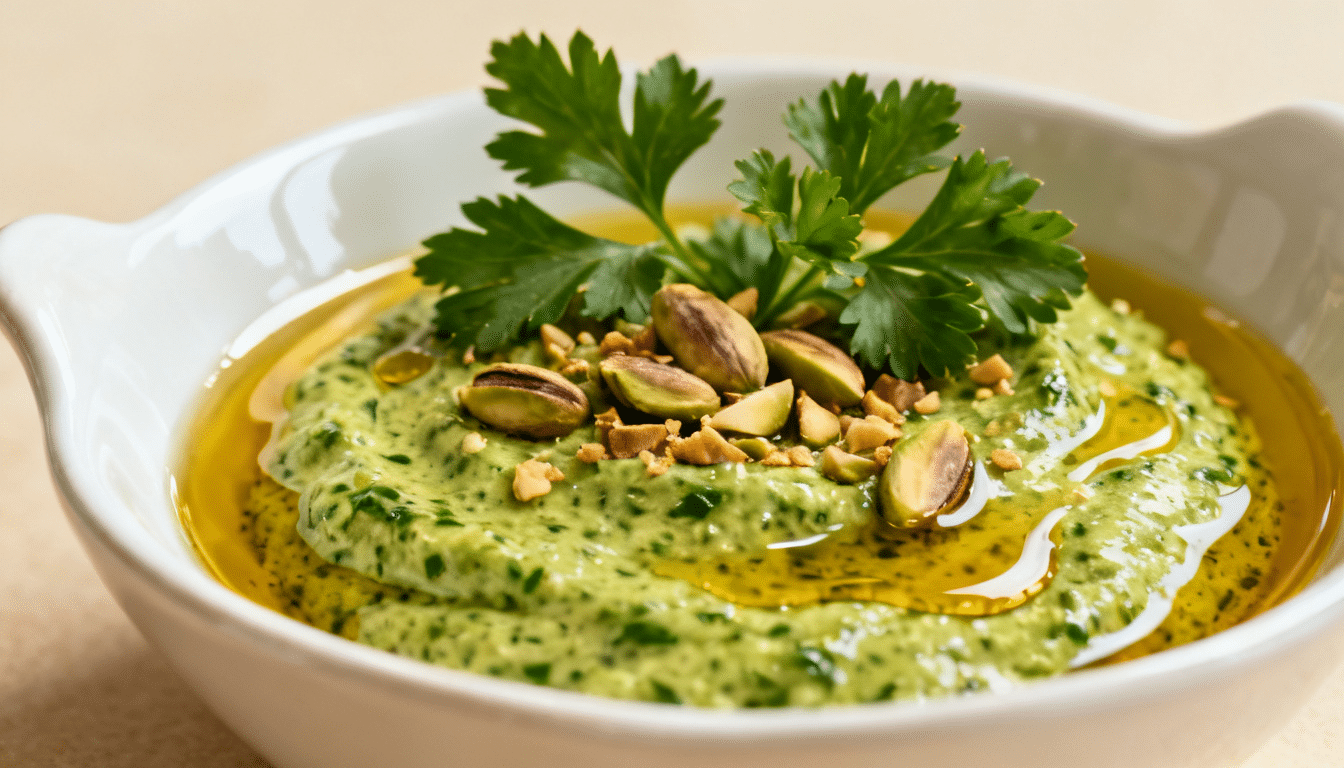
Pistachios bring a naturally buttery flavor, while parsley adds a fresh, herbaceous taste that makes this pesto stand out.
Ingredients:
| Ingredient | Amount |
|---|---|
| Fresh parsley | 2 cups |
| Shelled pistachios | ½ cup |
| Parmesan cheese, grated | ½ cup |
| Garlic cloves | 2 |
| Extra-virgin olive oil | ½ cup |
| Lemon zest | 1 tsp |
| Salt | ½ tsp |
| Black pepper | ¼ tsp |
Steps:
- Step 1: Add the pistachios and garlic cloves to a food processor and pulse until the nuts are finely chopped.
- Step 2: Add the parsley, Parmesan cheese, lemon zest, salt, and black pepper to the processor bowl.
- Step 3: Blend the ingredients until they form a coarse mixture with evenly distributed herbs and nuts.
- Step 4: Slowly pour in the olive oil while processing to create a smooth texture.
- Step 5: Taste the pesto and adjust the seasoning before serving with grilled chicken, shrimp, or pasta.
7. Pecan Cilantro Pesto
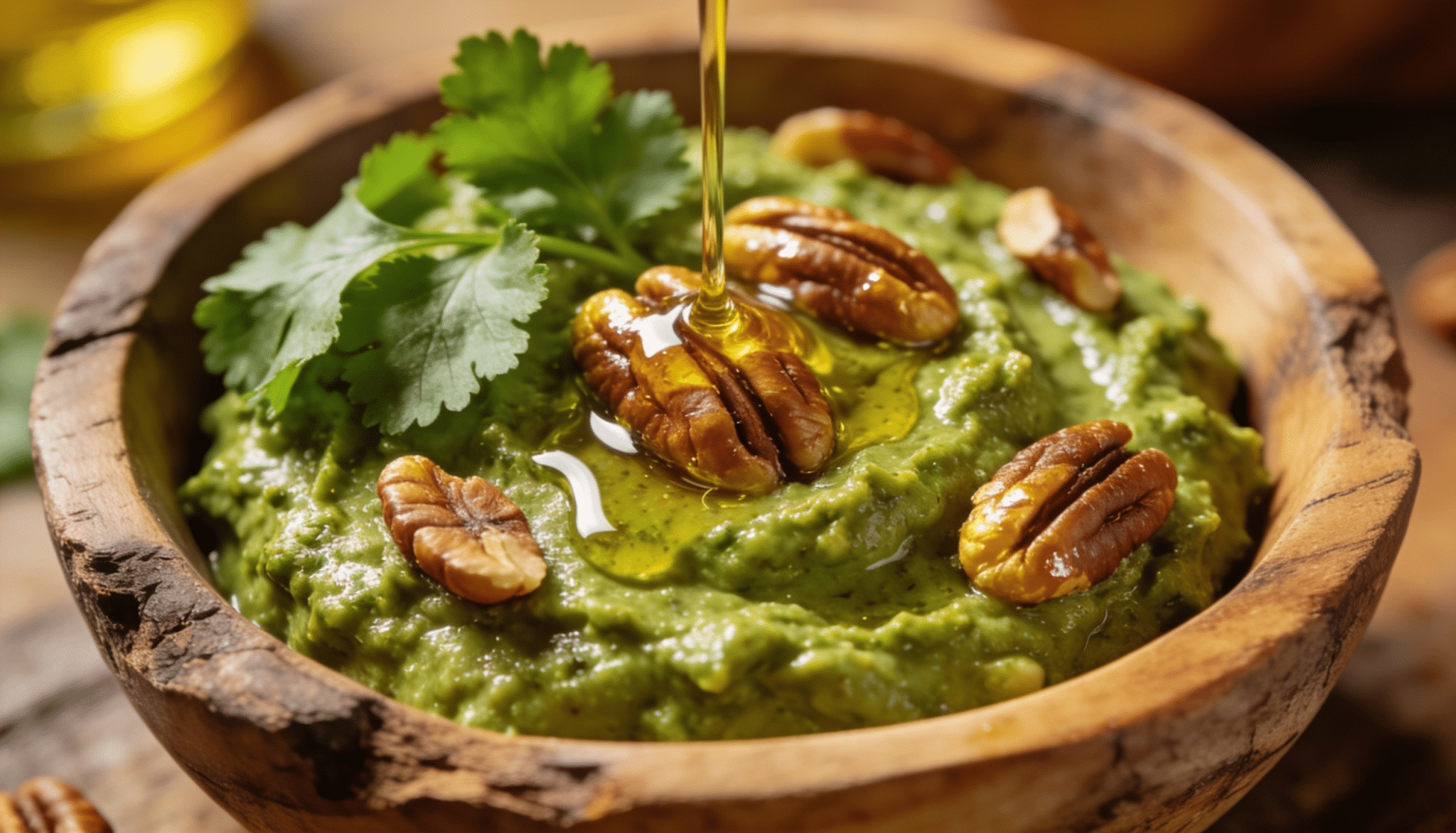
Pecans offer a rich flavor that complements the bright, slightly citrusy notes of fresh cilantro.
Ingredients:
| Ingredient | Amount |
|---|---|
| Fresh cilantro | 2 cups |
| Pecans | ½ cup |
| Garlic cloves | 2 |
| Cotija cheese, crumbled | ½ cup |
| Extra-virgin olive oil | ½ cup |
| Lime juice | 1 tbsp |
| Salt | ½ tsp |
| Black pepper | ¼ tsp |
Steps:
- Step 1: Place the pecans and garlic cloves in a food processor and pulse until the mixture becomes crumbly.
- Step 2: Add the cilantro, Cotija cheese, lime juice, salt, and black pepper.
- Step 3: Blend until the ingredients are evenly combined and the cilantro is finely chopped.
- Step 4: Gradually drizzle in the olive oil while continuing to blend the mixture.
- Step 5: Process until smooth, then taste and adjust the lime juice or seasoning if desired.
8. Hemp Seed Spinach Pesto
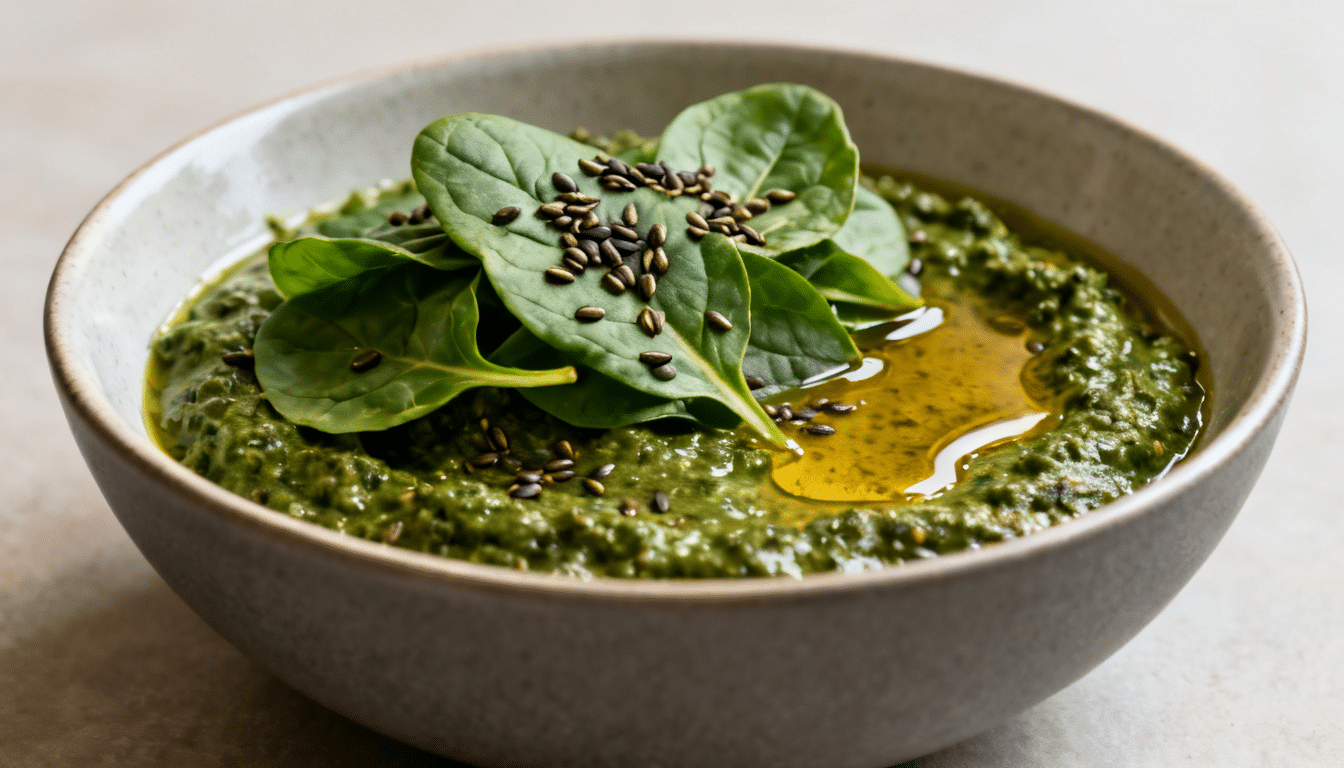
Hemp seeds create a creamy texture without requiring any soaking, while spinach contributes a mild flavor and bright color.
Ingredients:
| Ingredient | Amount |
|---|---|
| Fresh spinach | 2 cups |
| Hemp seeds | ½ cup |
| Parmesan cheese, grated | ⅓ cup |
| Garlic cloves | 2 |
| Extra-virgin olive oil | ½ cup |
| Lemon juice | 1 tbsp |
| Salt | ½ tsp |
| Black pepper | ¼ tsp |
Steps:
- Step 1: Add the hemp seeds and garlic cloves to a food processor and pulse several times to break them down.
- Step 2: Add the spinach, Parmesan cheese, lemon juice, salt, and black pepper.
- Step 3: Blend until the spinach is finely chopped and incorporated into the mixture.
- Step 4: Slowly add the olive oil while blending to create a creamy consistency.
- Step 5: Taste the pesto and make any final seasoning adjustments before serving.
9. Arugula Walnut Pesto
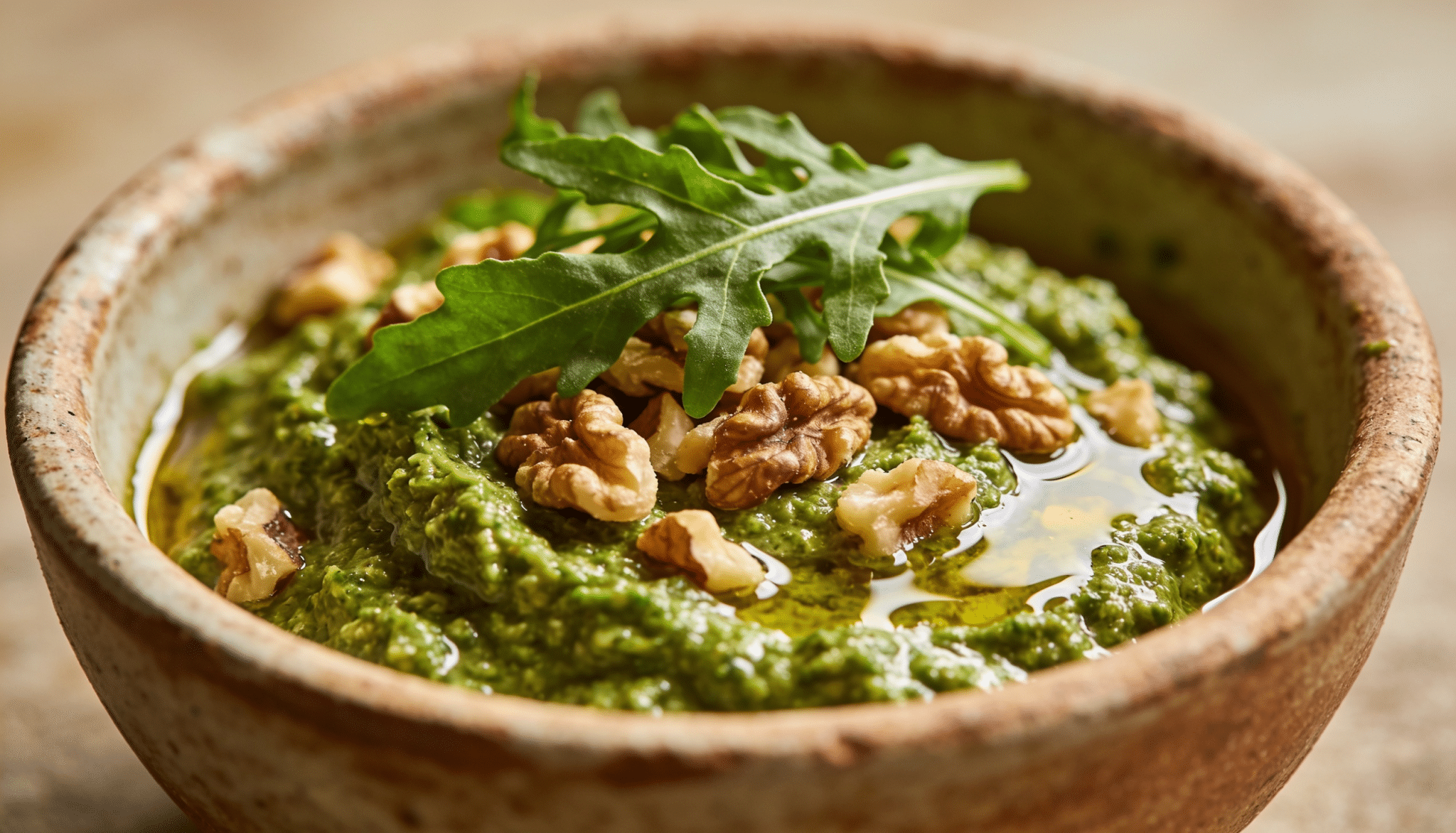
Arugula adds a peppery kick that creates a bold contrast to the richness of walnuts.
Ingredients:
| Ingredient | Amount |
|---|---|
| Fresh arugula | 2 cups |
| Walnuts | ½ cup |
| Pecorino Romano cheese, grated | ½ cup |
| Garlic cloves | 2 |
| Extra-virgin olive oil | ½ cup |
| Lemon juice | 1 tbsp |
| Salt | ½ tsp |
| Black pepper | ¼ tsp |
Steps:
- Step 1: Place the walnuts and garlic in a food processor and pulse until finely chopped.
- Step 2: Add the arugula, Pecorino Romano cheese, lemon juice, salt, and black pepper.
- Step 3: Blend until the leaves are broken down and evenly mixed with the other ingredients.
- Step 4: Pour in the olive oil gradually while continuing to process the mixture.
- Step 5: Blend until smooth and creamy, then adjust the seasoning to suit your taste.
10. Kale Almond Pesto
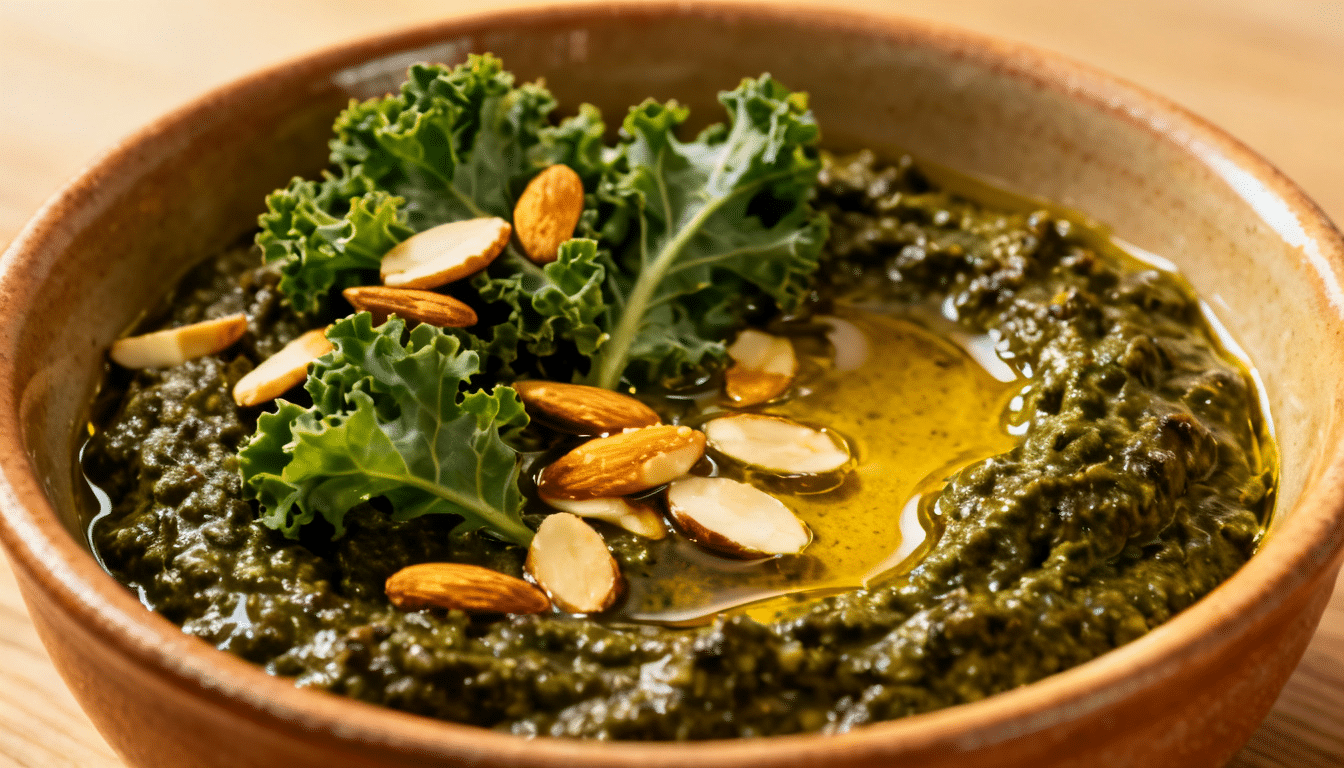
Kale provides a hearty texture and slightly earthy flavor that pairs well with toasted almonds.
Ingredients:
| Ingredient | Amount |
|---|---|
| Kale leaves, stems removed | 2 cups |
| Toasted almonds | ½ cup |
| Parmesan cheese, grated | ½ cup |
| Garlic cloves | 2 |
| Extra-virgin olive oil | ½ cup |
| Lemon juice | 1 tbsp |
| Salt | ½ tsp |
| Black pepper | ¼ tsp |
Steps:
- Step 1: Tear the kale leaves into smaller pieces and add them to a food processor with the almonds and garlic.
- Step 2: Pulse several times until the ingredients are finely chopped and evenly distributed.
- Step 3: Add the Parmesan cheese, lemon juice, salt, and black pepper to the mixture.
- Step 4: Slowly drizzle in the olive oil while blending until the pesto becomes smooth.
- Step 5: Taste and adjust the seasoning before using the pesto on pasta, flatbreads, or roasted vegetables.
11. Nut-Free Basil Pesto With Breadcrumbs
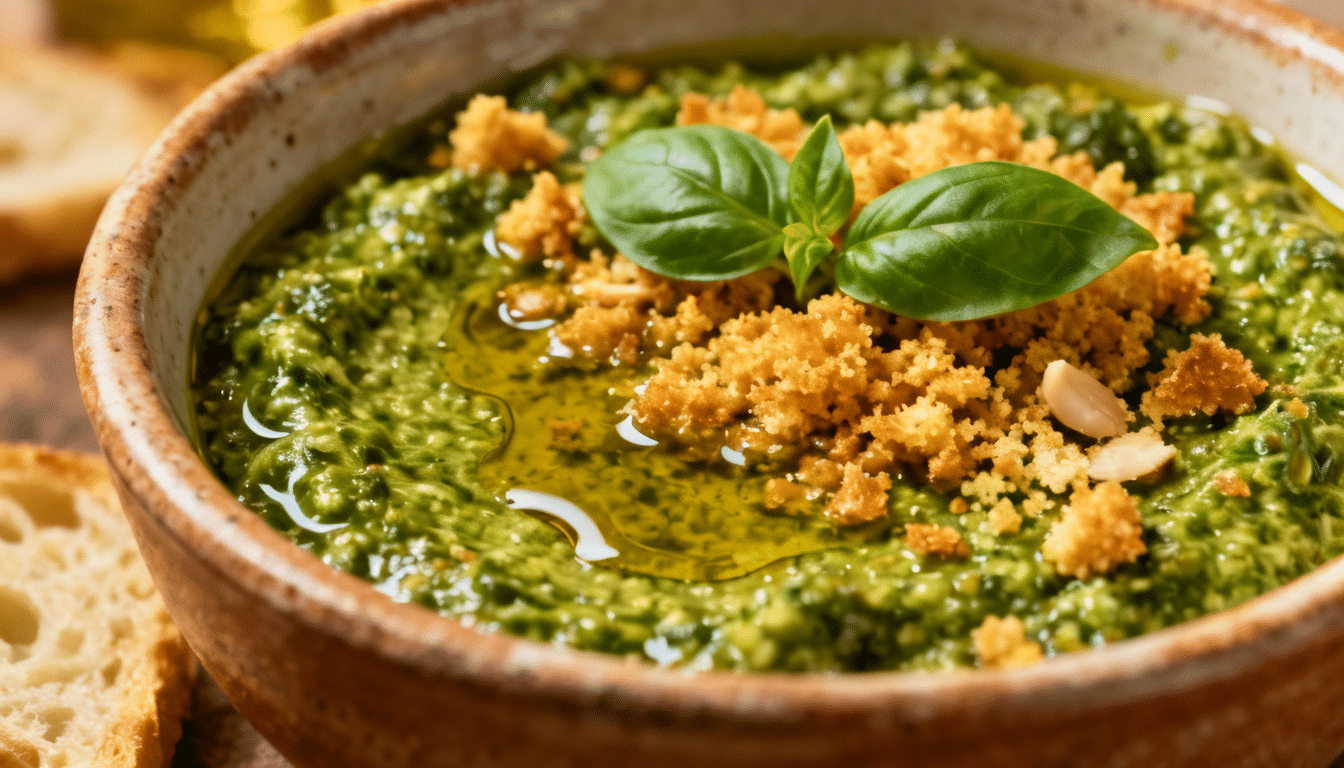
Breadcrumbs help create a thick, satisfying texture, making this recipe a practical choice for anyone avoiding nuts and seeds.
Ingredients:
| Ingredient | Amount |
|---|---|
| Fresh basil leaves | 2 cups |
| Plain breadcrumbs | ½ cup |
| Parmesan cheese, grated | ½ cup |
| Garlic cloves | 2 |
| Extra-virgin olive oil | ½ cup |
| Lemon juice | 1 tbsp |
| Salt | ½ tsp |
| Black pepper | ¼ tsp |
Steps:
- Step 1: Add the breadcrumbs and garlic cloves to a food processor. Pulse several times until the garlic is finely chopped and evenly mixed with the breadcrumbs.
- Step 2: Add the basil leaves, Parmesan cheese, lemon juice, salt, and black pepper. Blend until the basil is broken down into small pieces.
- Step 3: With the processor running, slowly pour in the olive oil to help the ingredients combine into a cohesive mixture.
- Step 4: Continue blending until the pesto becomes smooth and spreadable. Stop to scrape down the sides of the bowl if needed.
- Step 5: Taste the pesto and adjust the seasoning according to your preference before serving.
12. Roasted Red Pepper Cashew Pesto
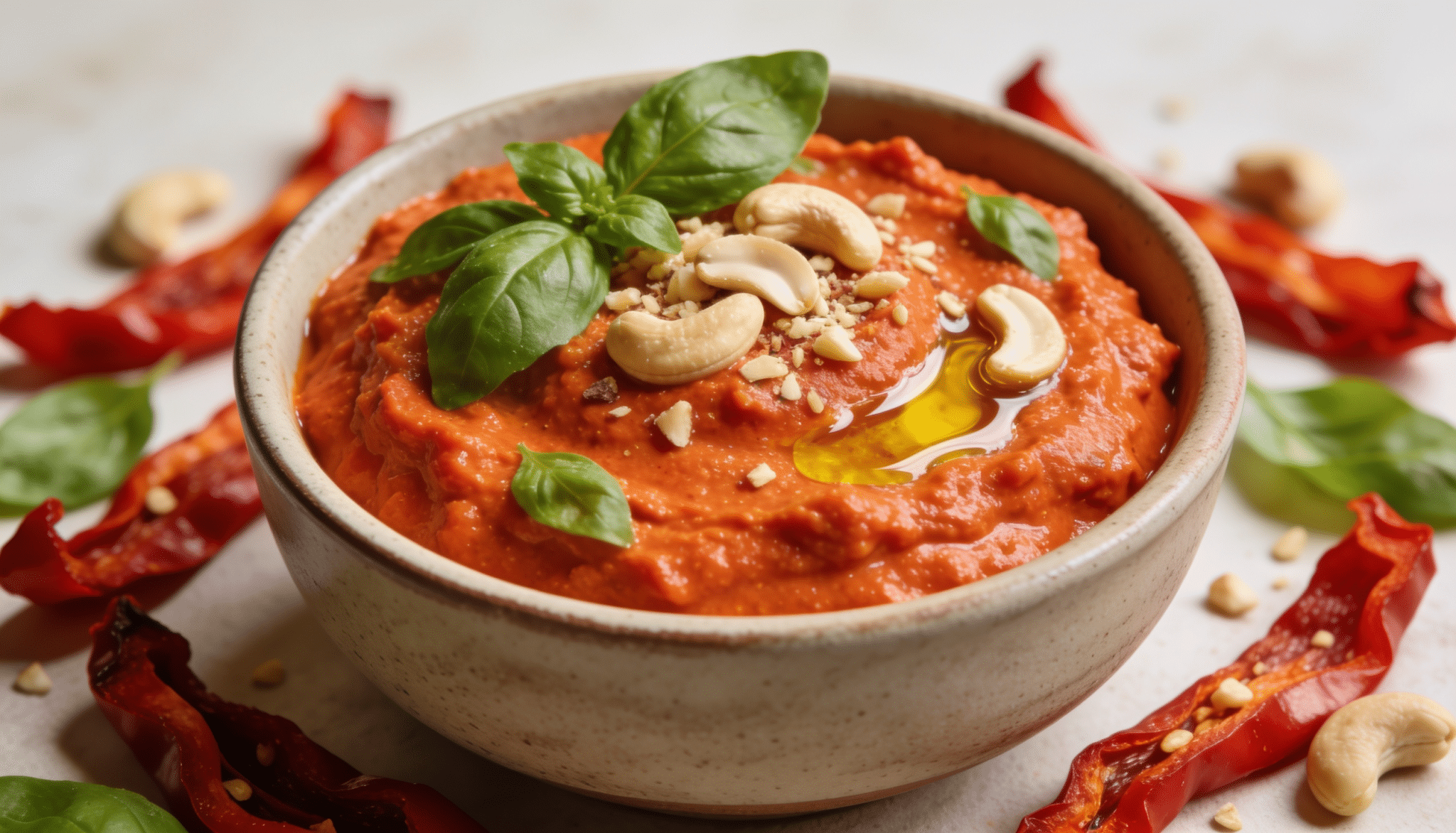
Roasted red peppers add a touch of sweetness and a vibrant color, while cashews create a smooth, creamy texture.
Ingredients:
| Ingredient | Amount |
|---|---|
| Roasted red peppers | 1 cup |
| Raw cashews | ½ cup |
| Fresh parsley | 1 cup |
| Parmesan cheese, grated | ⅓ cup |
| Garlic cloves | 2 |
| Extra-virgin olive oil | ⅓ cup |
| Lemon juice | 1 tbsp |
| Salt | ½ tsp |
Steps:
- Step 1: Add the cashews and garlic cloves to a food processor. Pulse until the cashews are finely chopped and resemble coarse crumbs.
- Step 2: Add the roasted red peppers, parsley, Parmesan cheese, lemon juice, and salt to the processor bowl.
- Step 3: Blend the ingredients until the peppers and herbs are fully incorporated and the mixture begins to thicken.
- Step 4: Slowly drizzle in the olive oil while blending to create a creamy and well-balanced texture.
- Step 5: Taste the pesto and make any final adjustments before serving with pasta, grilled meats, sandwiches, or fresh vegetables.
Matching the Right Pesto to Different Dishes
Not all pesto works the same way, and each type has its own best match in the kitchen. Think of it like a flavor chain where every pesto naturally connects to the right dish.
| Walnut pesto → Pasta dishes Rich and deep in flavor, walnut pesto coats noodles evenly and works best in warm pasta recipes |
| Cashew pesto → Creamy sauces & dressings Smooth and soft in texture, cashew pesto blends easily into creamy recipes without feeling heavy. |
| Sunflower seed pesto → Sandwiches & wraps Thick and spreadable, this version holds well inside bread-based meals without dripping. |
| Pumpkin seed pesto → Roasted vegetables Earthy and nutty, it pairs naturally with the savory taste of roasted veggies. |
|
Pistachio & parsley pesto → Seafood & chicken |
| Arugula walnut pesto → Burgers & mushrooms Peppery and bold, it balances rich foods like steak, burgers, and grilled mushrooms. |
| Roasted red pepper cashew pesto → Dips & snacks Sweet-smoky and creamy, it works well as a dip for vegetables, crackers, or toasted bread. |
Final Thoughts
Making pesto without pine nuts doesn’t mean sacrificing flavor. With the right ingredients, you can create a sauce that’s just as satisfying while adding your own unique twist.
From rich walnuts and creamy cashews to budget-friendly sunflower seeds and pumpkin seeds, there are plenty of ways to customize pesto based on your preferences and pantry staples.
The best pine nut alternative for pesto ultimately comes down to the flavor and texture you’re looking for. Trying different combinations can help you find a version that works perfectly for your favorite meals.
With these recipes as inspiration, you can enjoy homemade pesto in many different forms and keep this classic sauce exciting every time you make it.
Frequently Asked Questions
Can I Make Pesto without a Food Processor?
Yes. You can use a blender, mortar and pestle, or finely chop the ingredients by hand. The texture may be slightly different, but the flavor will still be enjoyable.
Why Does Homemade Pesto Sometimes Taste Bitter?
Overprocessing herbs or using old olive oil can contribute to a bitter flavor. Using fresh ingredients and blending only until combined can help improve the taste.
Should Pesto Be Served Hot or Cold?
Pesto is typically added to warm dishes rather than cooked at high temperatures. This helps preserve the flavor and color of the herbs.
Can Pesto Be Used as a Marinade?
Yes. Pesto works well as a marinade for chicken, seafood, and vegetables. Allow the ingredients to marinate for at least 30 minutes for better flavor.
Can I Make Pesto Ahead of Time for Meal Prep?
Yes. Preparing pesto in advance can make weeknight meals faster and more convenient. Store it properly and use it throughout the week in different dishes.