The first time I made a Dutch Baby Pancake, I thought it looked like something that needed a lot more skill than it actually did.
It came out of the oven puffed, golden, and curled around the edges, and I remember thinking, “That was it?”
That’s the fun part about this recipe. It feels special, but the ingredients are simple, and the method is easy once you know a few key tricks.
In this post, I’ll walk through what a Dutch Baby is, how to make it, the best toppings, easy variations, and common mistakes to avoid
What is a Dutch Baby Pancake?
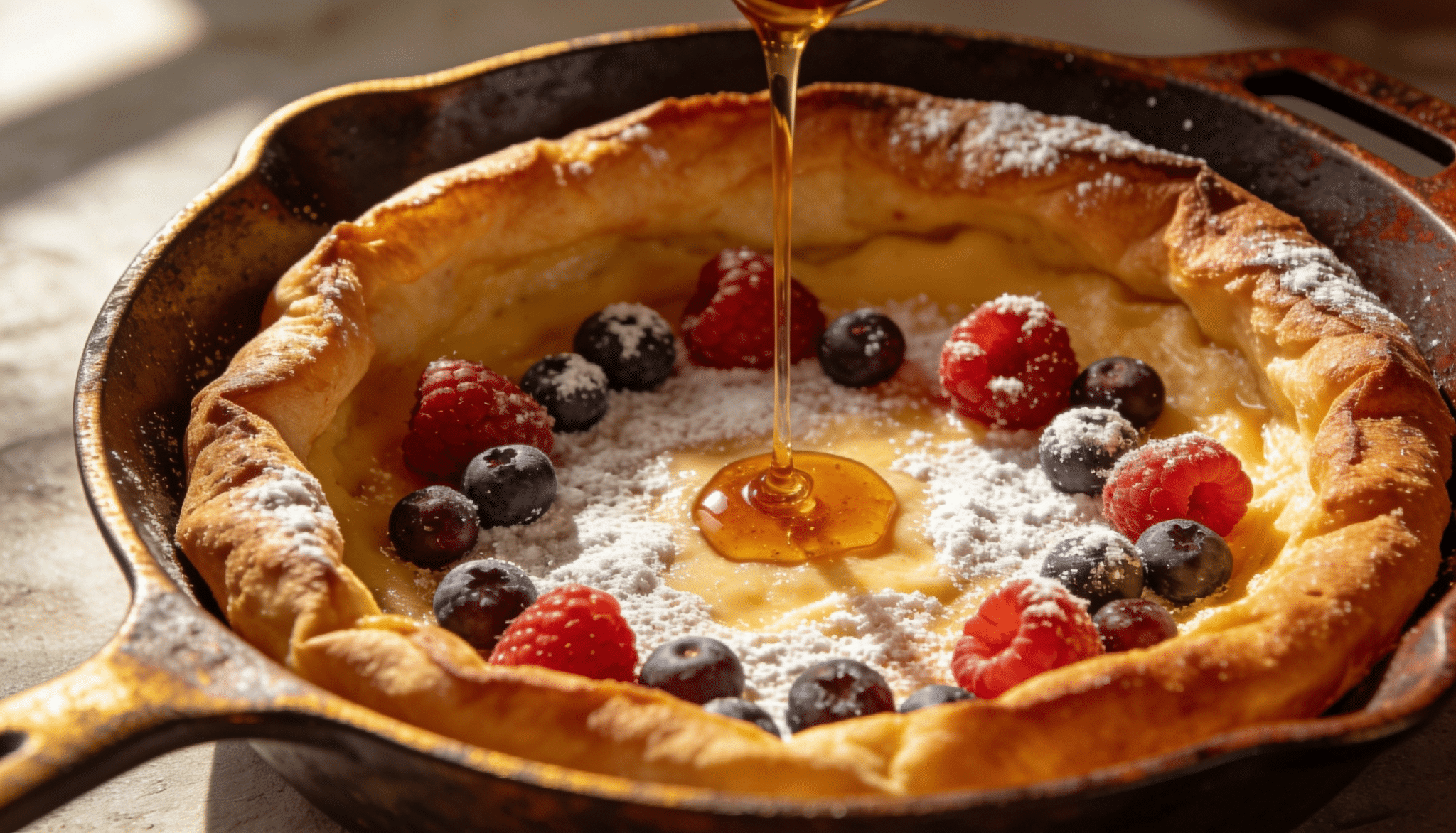
A Dutch Baby is a large, oven-baked pancake made from a simple egg, flour, and milk batter. It goes into a hot skillet and comes out puffed, golden, and slightly crispy at the edges – with a soft, eggy center.
The dish traces back to German cuisine, where a similar recipe called Pfannkuchen was a household staple. German immigrants brought it to the United States in the late 1800s.
The name came from a Seattle restaurant called Manca’s Cafe in the early 1900s. The owner’s daughter mispronounced “Deutsch” as “Dutch,” and the name stuck.
Regular pancakes rely on baking powder for lift and are cooked one at a time on a stovetop. A Dutch Baby uses no leavening – the rise comes entirely from the eggs and oven heat.
The batter is egg-heavy, which gives it the dramatic puff at the edges and the soft, custardy center.
Basic Dutch Baby Ingredients
These are the only six things standing between you and a perfect Dutch Baby Pancake:
| Ingredient | Quantity | Notes |
|---|---|---|
| Eggs | 3 large | Main base ingredient |
| Milk | ½ cup | Helps create a light texture |
| Flour | ½ cup | Gives structure |
| Butter | 2 tbsp | For the hot pan |
| Salt | ¼ tsp | Balances flavor |
| Vanilla Extract | ½ tsp | Optional |
| Optional Flavor Add-Ins | Cinnamon, Nutmeg, Lemon Zest, Almond Extract (¼ tsp) | Add one or mix a few for extra flavor |
Note: A hot cast-iron skillet gives the Dutch Baby its best puff, crisp edges, and golden base.
How to Make a Dutch Baby Pancake
The whole process takes under 30 minutes. Here’s exactly how to do it, step by step.
Step 1: Preheat the Oven and Pan
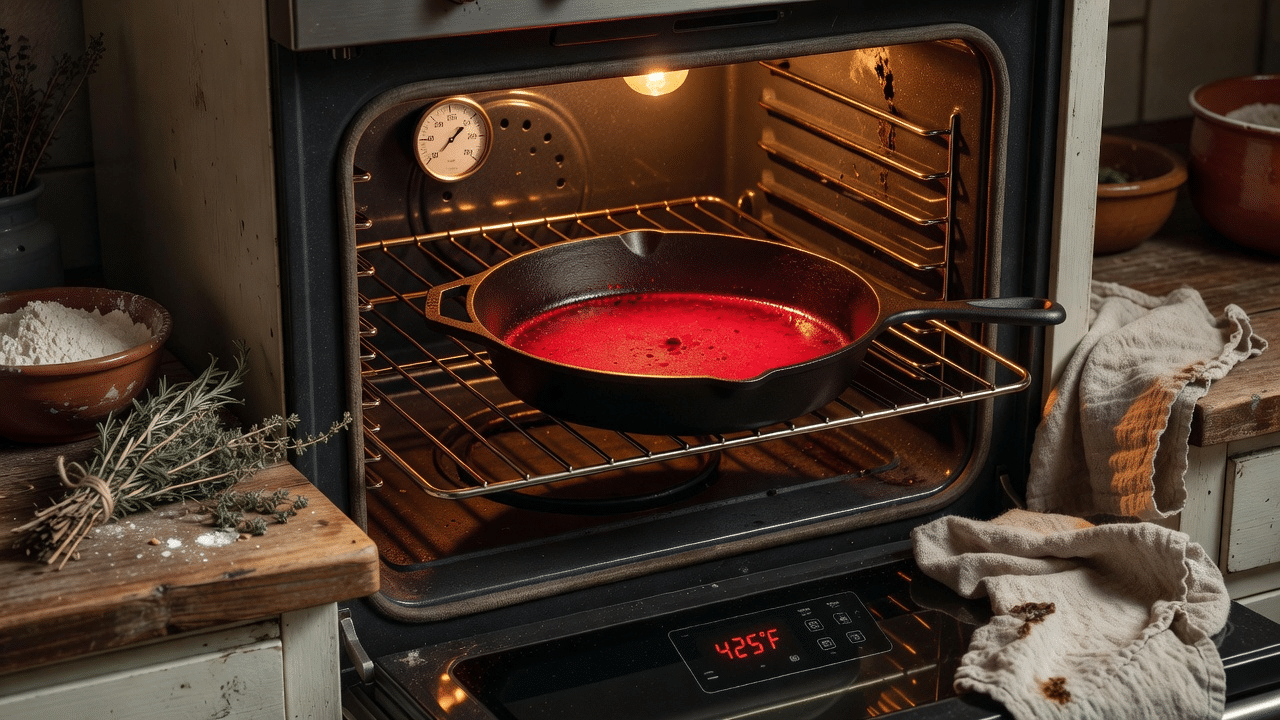
Set your oven to 425°F (220°C) and place your cast-iron skillet inside while it heats. The pan needs at least 10 minutes to get hot enough – this is the most important step, so don’t rush it.
A cold or lukewarm pan won’t give the batter the heat shock it needs. No heat shock means no dramatic rise.
Step 2: Blend the Batter
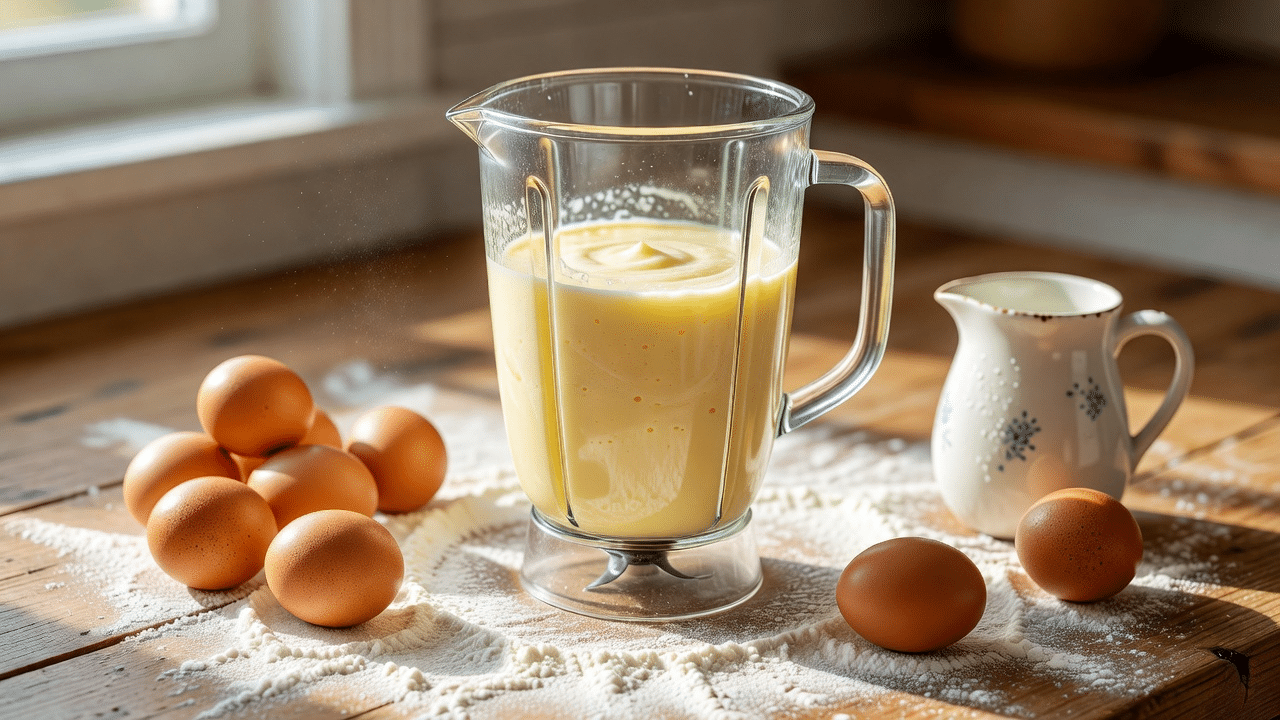
Add eggs, milk, flour, salt, and vanilla to a blender and mix until completely smooth. Thirty seconds on high is usually enough – you’re looking for a thin, pourable consistency with no lumps.
Let the batter rest for 5 minutes while the pan finishes heating. This gives the flour time to absorb the liquid fully, which makes a difference in the final texture
Step 3: Add Butter to the Hot Pan
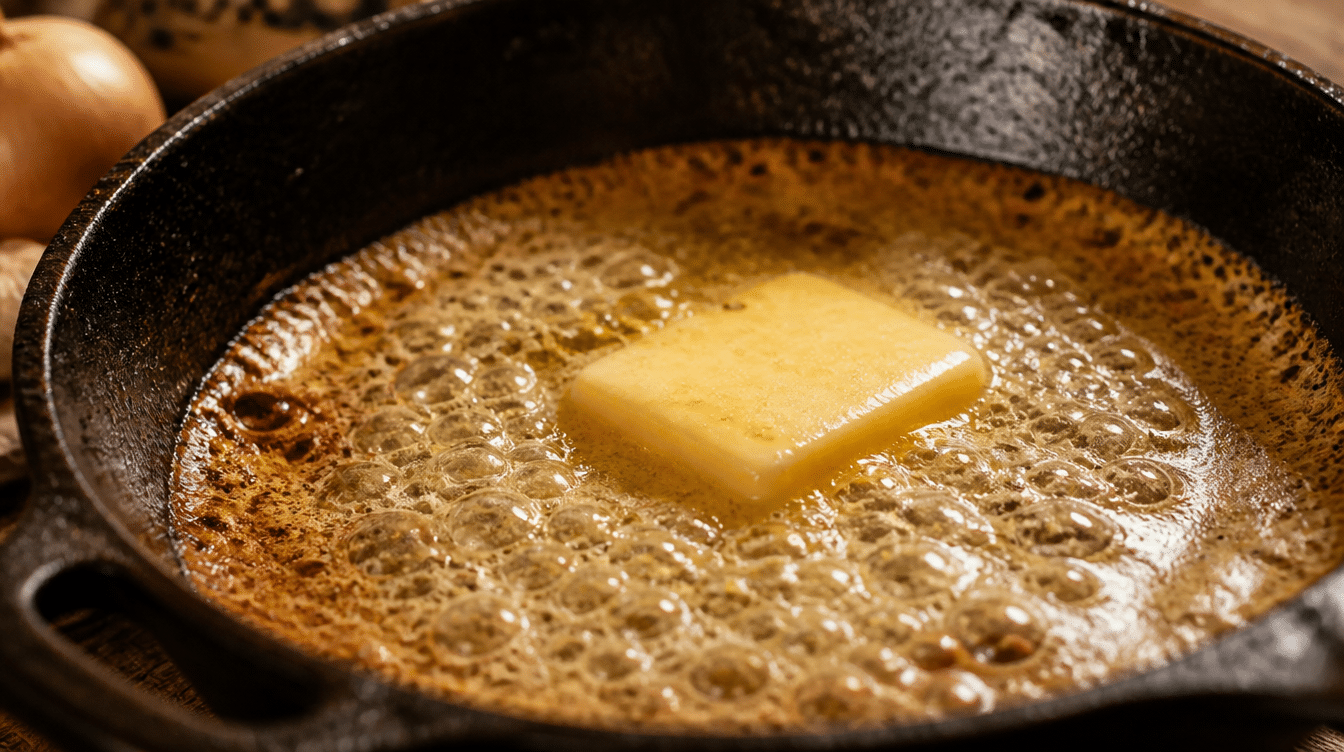
Use oven mitts – the handle will be extremely hot. Carefully pull the skillet out and drop the butter straight in.
Swirl the pan until the butter coats the entire surface and turns slightly golden. This takes about 30 seconds, and that browned butter adds a nutty depth to the finished dish.
Step 4: Pour in the Batter
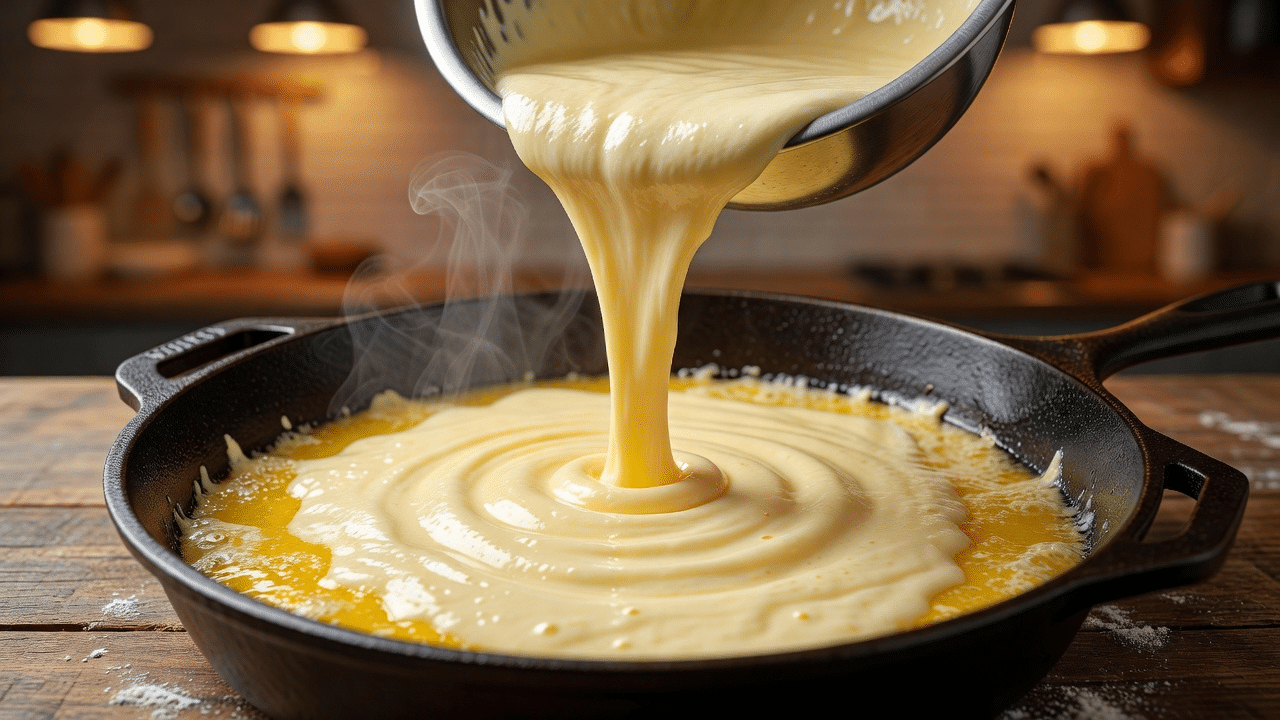
Pour the batter straight into the center of the hot, buttered pan in one steady motion. It will spread on its own – don’t stir, tilt, or shake the pan.
Get it back into the oven as quickly as possible. Every second the pan sits out, it loses the heat that drives the puff.
Step 5: Bake Until Puffy and Golden
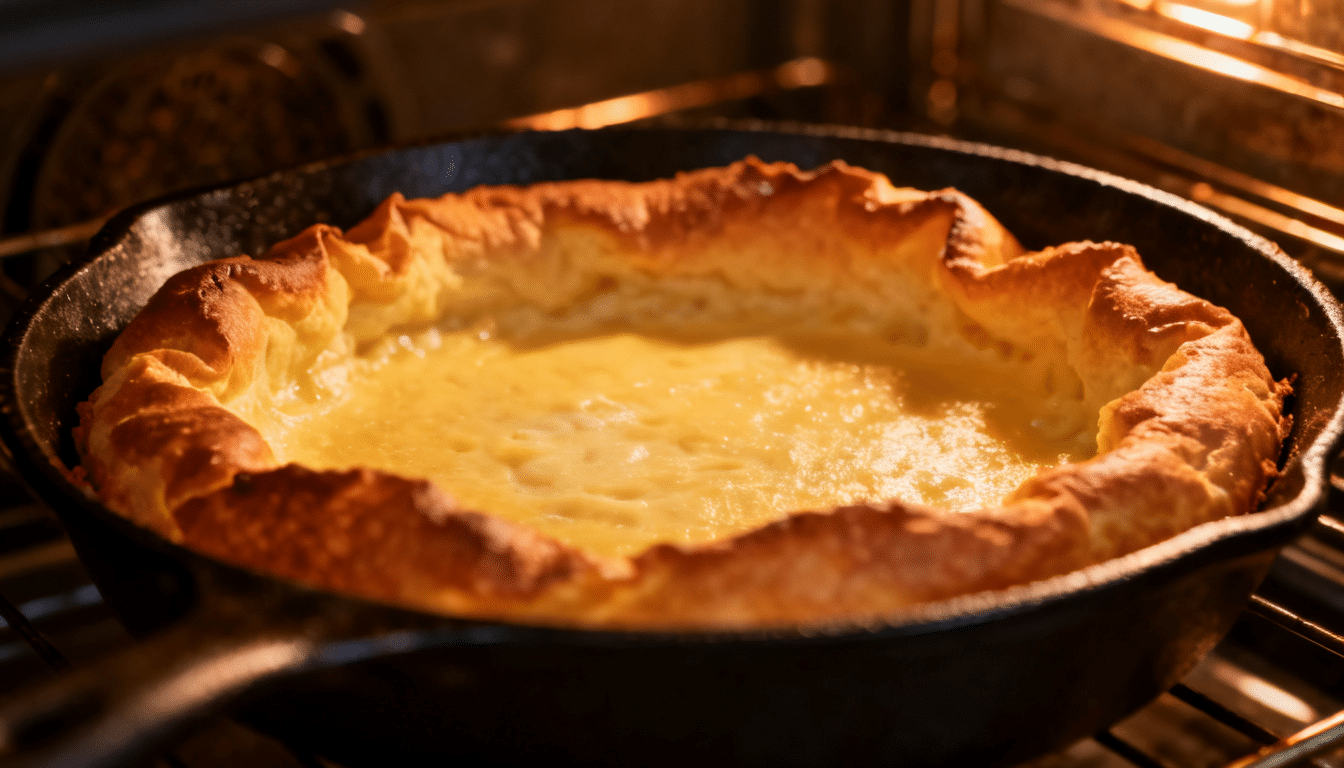
Slide the pan back into the oven and bake for exactly 20 minutes. The edges will climb up the sides of the pan, turn deep golden, and crisp up while the center stays soft and custardy.
Do not open the oven door at any point. The temperature drop will cause the puff to collapse before it sets.
Step 6: Serve Right Away
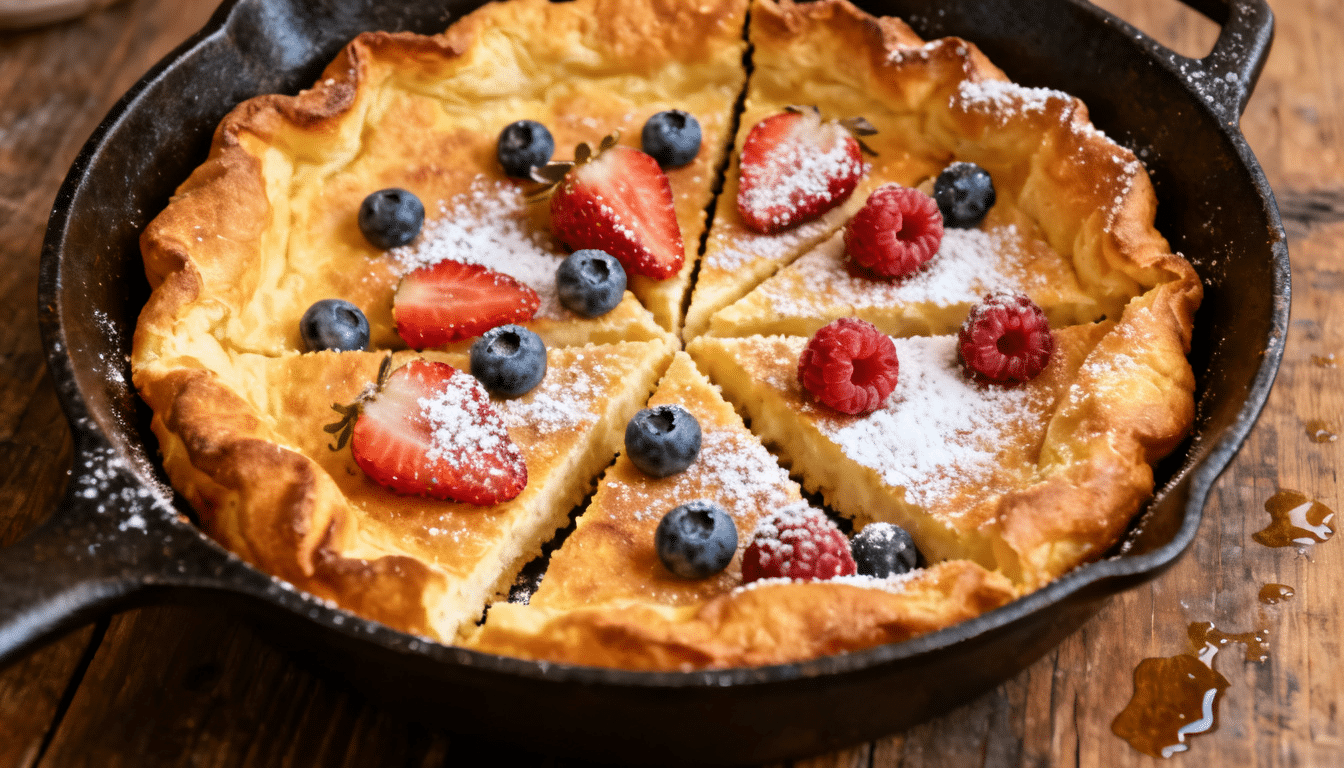
Pull it out and bring it straight to the table – a Dutch Baby starts deflating within a minute or two of leaving the oven. That’s completely normal and doesn’t affect the flavor.
Have your toppings ready in advance, cut into wedges right from the pan, and serve while it’s still warm.
What Toppings Work Best on a Dutch Baby?
A Dutch Baby tastes best with toppings that balance its buttery, crisp edges and soft center. I like keeping it sweet, adding something fresh, or turning it into a savory breakfast.
- Powdered Sugar: Adds a light sweetness without making the pancake feel heavy.
- Fresh Berries: Strawberries, blueberries, or raspberries add color, freshness, and a juicy bite.
- Lemon Juice: A small squeeze brightens the flavor and cuts through the richness.
- Maple Syrup: Works well if you want a classic sweet breakfast flavor.
- Whipped Cream: Adds a soft, creamy finish, especially with fruit toppings.
- Nut Butter: Peanut, almond, or cashew butter makes it richer and more filling.
- Greek Yogurt: Gives a creamy, tangy topping that pairs well with honey or fruit.
- Savory Toppings: Eggs, cheese, herbs, avocado, or smoked salmon can turn it into a brunch-style dish.
Dutch Baby Variations Worth Trying
The base recipe is simple enough that it takes to variations well. Here are the ones worth making.
1. Mini Dutch Babies
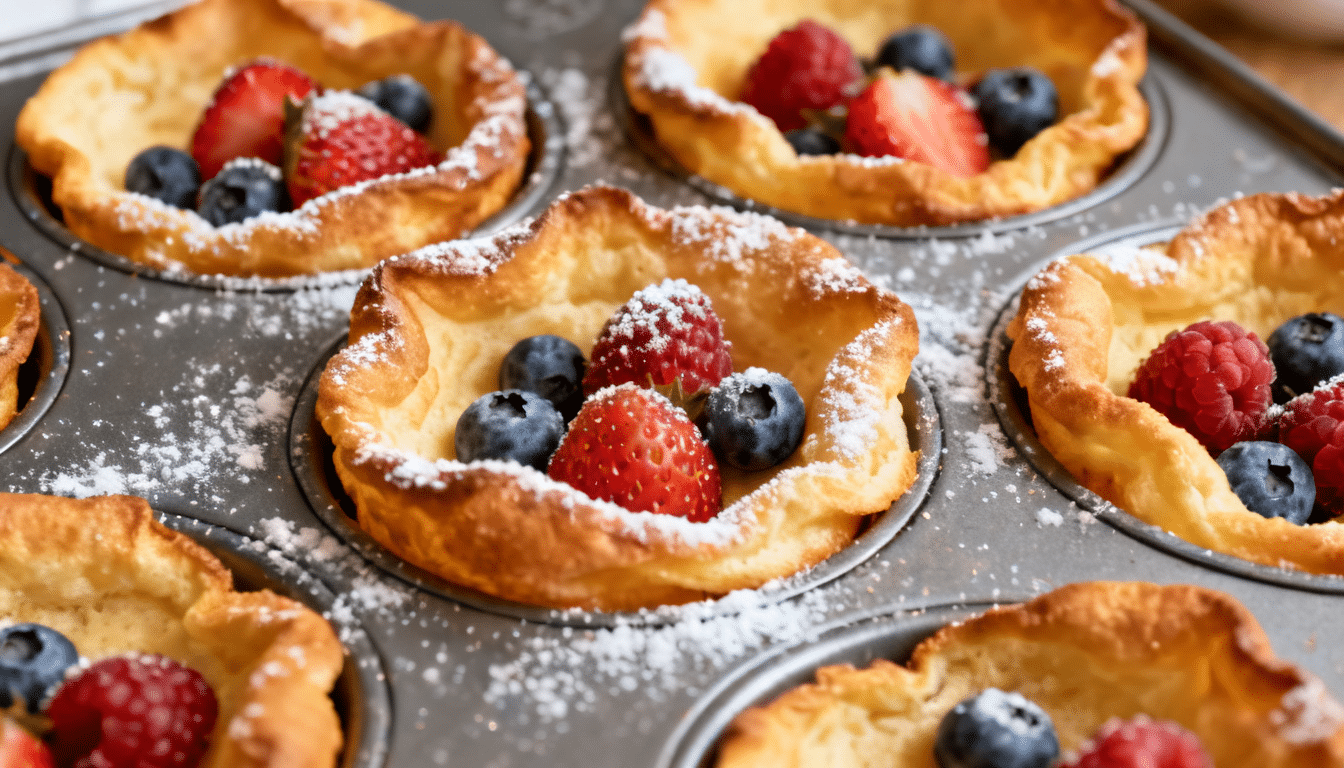
Mini Dutch Babies are made in a muffin tin or small oven-safe skillets instead of one large pan. They are great for brunch, kids’ breakfasts, or serving guests because each person gets an individual portion.
Since they are smaller, they bake faster than a full-size Dutch Baby. Start checking them around 12 minutes, and pull them out when the edges are puffed and golden.
Grease each muffin cup well with butter so the batter does not stick. Fill each cup only halfway, as the batter rises quickly in the oven.
2. Chocolate Dutch Baby
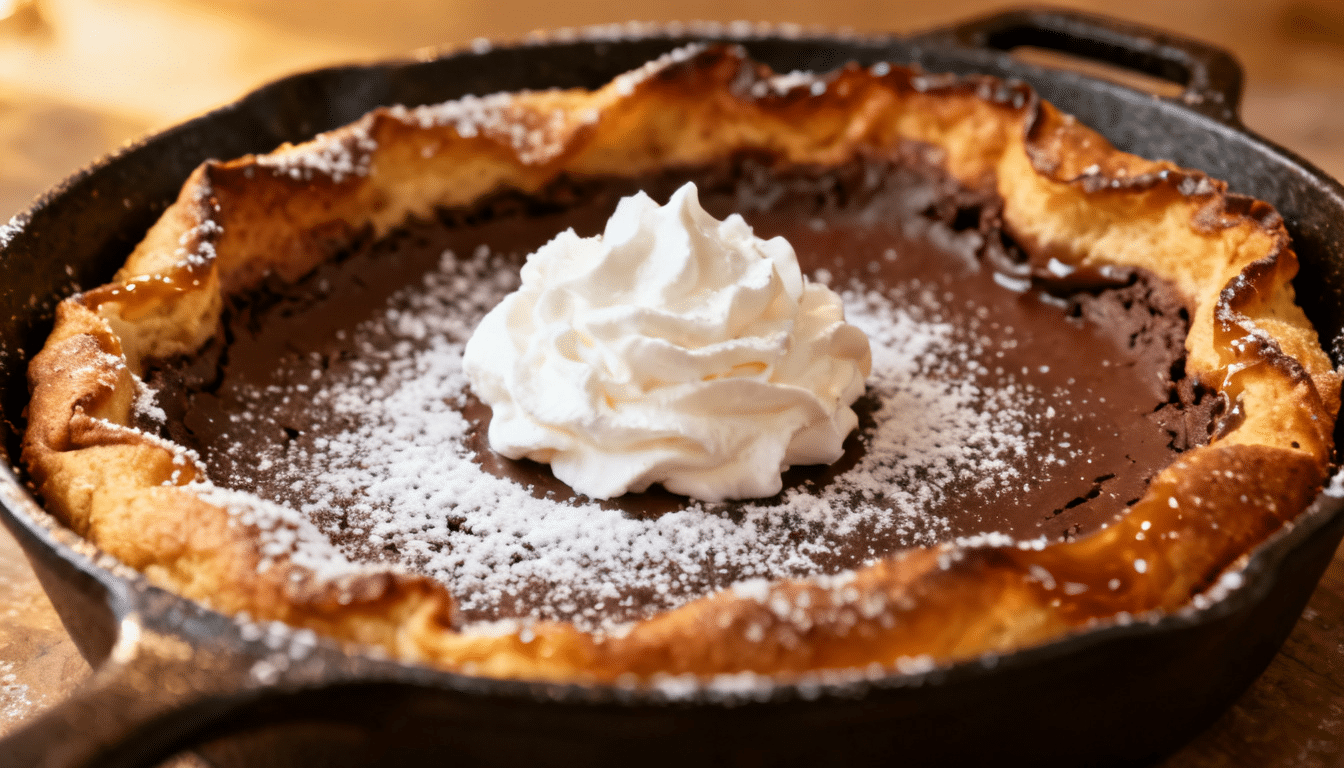
A chocolate Dutch Baby is a richer version of the classic recipe. Add 2 tablespoons of unsweetened cocoa powder and 1 tablespoon of sugar to the batter for a deeper flavor.
Cocoa powder can make the batter slightly drier, so blend it well with the milk and eggs to avoid lumps. The center will be soft and slightly fudgy, while the edges turn crisp.
3. Pumpkin Spice Dutch Baby
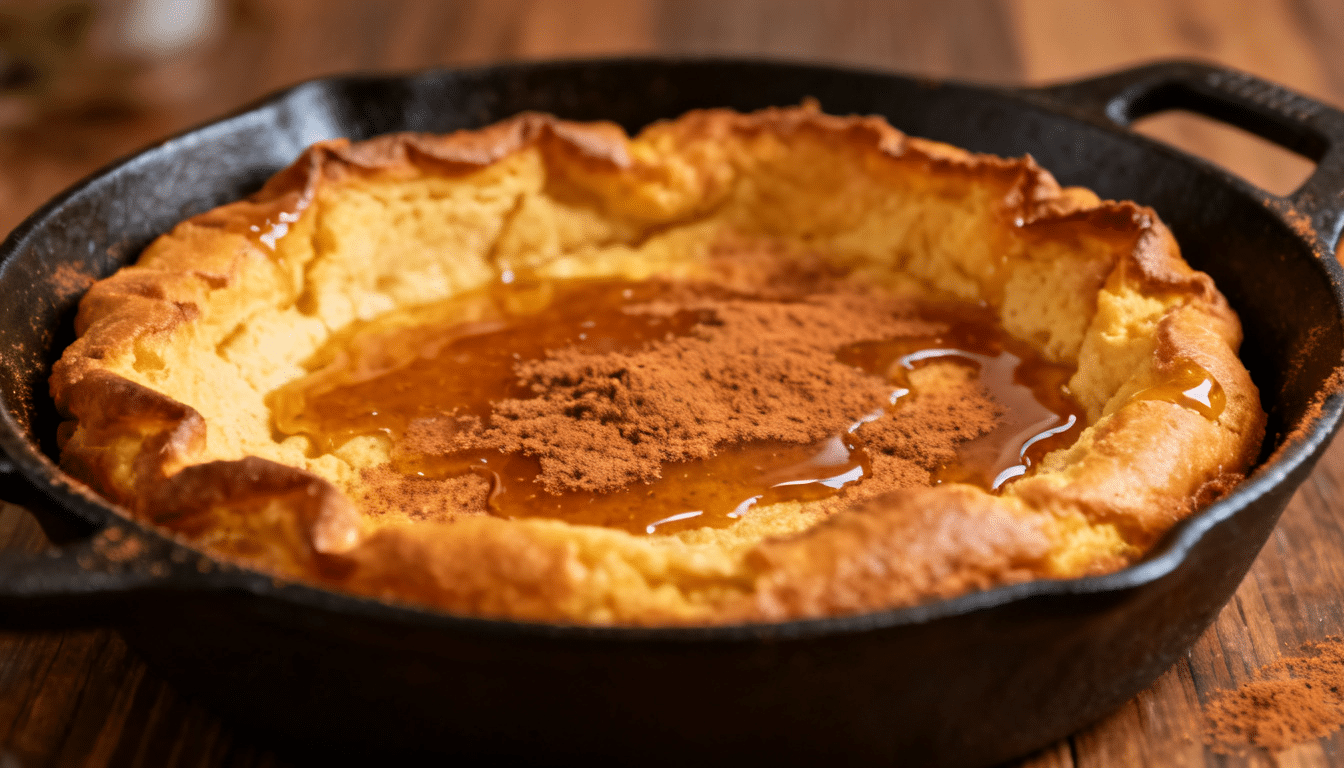
A pumpkin spice Dutch Baby is a cozy version that works well for fall breakfasts or holiday brunch. Mix in 3 tablespoons of pumpkin puree, ½ teaspoon of cinnamon, and a small pinch of nutmeg.
Pumpkin adds moisture, so this variation may rise a little less than the classic recipe. That is normal. The center will be softer and slightly denser, but the edges should still puff and crisp.
Use plain pumpkin puree, not pumpkin pie filling. Pie filling already contains sugar and spices, which can change the texture and flavor balance.
4. Gluten-Free Dutch Baby
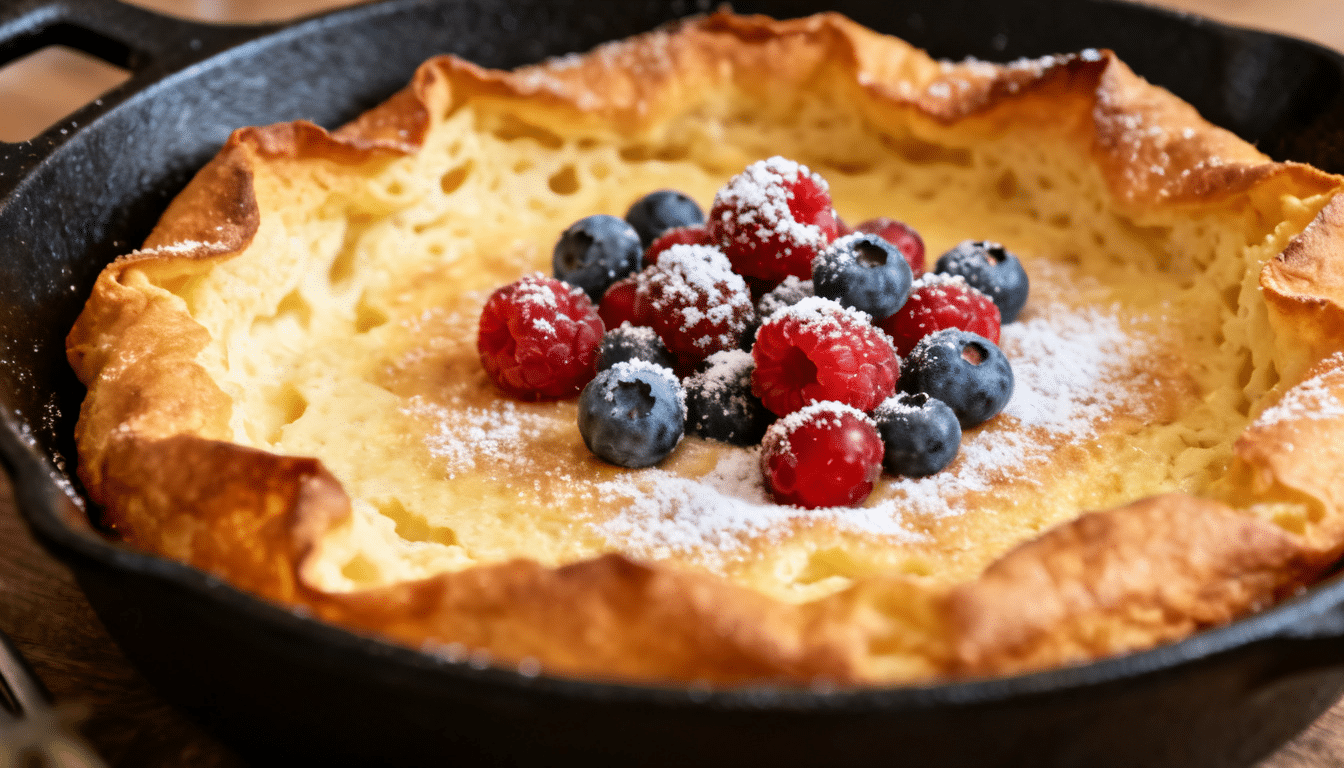
For a gluten-free Dutch Baby, use a 1:1 gluten-free flour blend made for baking. These blends usually contain starches and binders that help the batter hold together.
The texture may be slightly more custardy in the center, but the edges can still turn crisp when the skillet is hot enough. Let the batter blend fully so the flour hydrates well before baking.
My Experience: Avoid almond flour or coconut flour as a direct swap. They absorb liquid differently and do not give the same structure as all-purpose flour.
5. High-Protein Dutch Baby
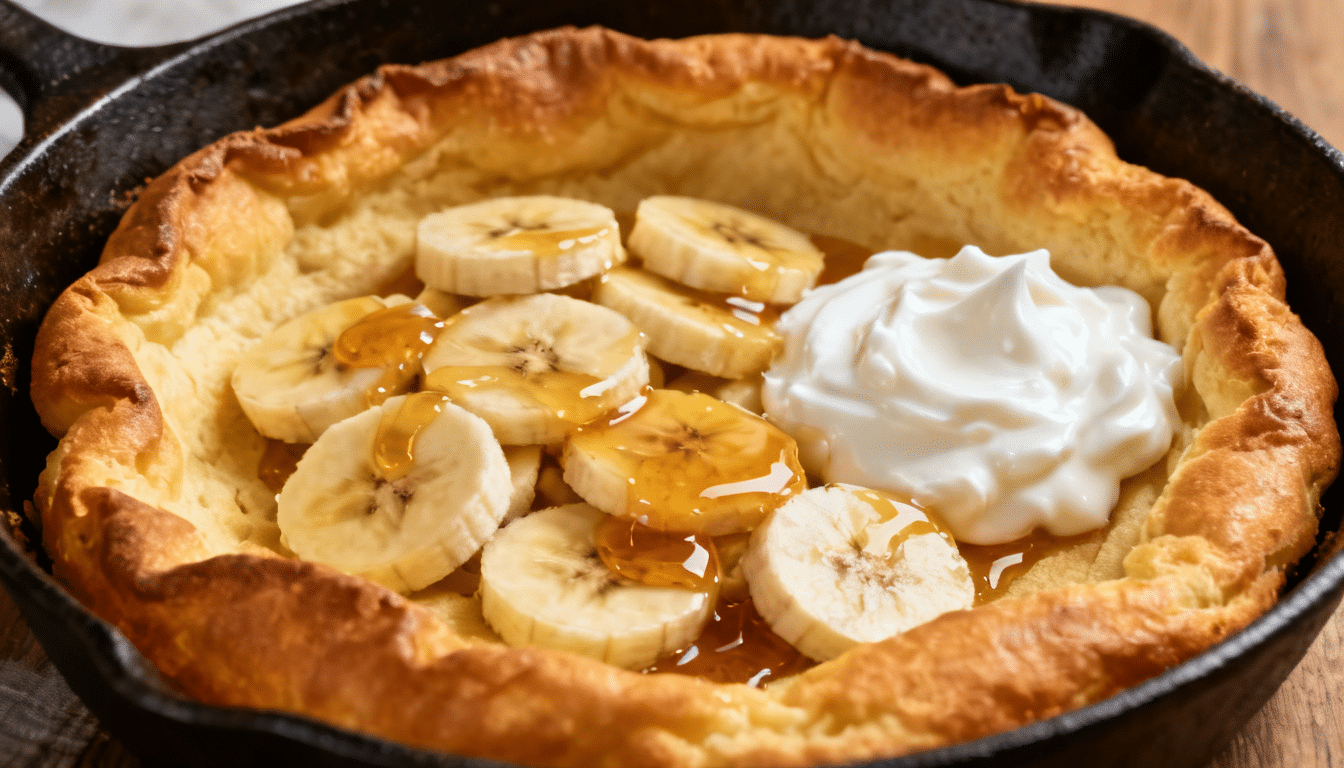
A high-protein Dutch Baby can be made by replacing half the flour with unflavored or vanilla protein powder. Add one extra egg to help the batter hold its structure.
This version may not puff as high as the classic recipe because protein powder changes the texture of the batter. Still, it can come out light, filling, and flavorful when measured carefully.
I would suggest using a protein powder with a mild taste, since strong flavors can overpower the pancake.
Common Mistakes and How to Fix Them
If something went wrong, it’s usually one of these four things.
| Problem | Possible Cause | Fix |
|---|---|---|
| Didn’t rise | Pan wasn’t hot enough | Preheat skillet fully before adding batter |
| Dense texture | Batter wasn’t blended well | Blend until completely smooth |
| Burned edges | Oven too hot | Check and adjust oven temperature |
| Soggy center | Underbaked | Bake for a few more minutes |
Final Thoughts
A Dutch Baby is one of those recipes that looks far more complicated than it actually is.
Once you nail the basics – hot pan, room-temperature ingredients, and a hands-off oven, it comes together without much effort.
The variations are easy to try, the toppings are flexible, and the whole thing is done in under 30 minutes.
Make it once, and it’ll be in your regular rotation.
Frequently Asked Questions
Can I Make the Batter Ahead of Time?
Yes – up to one day in advance. Store it in the fridge and give it a quick stir or blend before using, as it settles overnight.
Can I Make a Dutch Baby without a Blender?
A whisk works, but you’ll need more effort to get a lump-free batter. A hand mixer is a good middle ground.
Can I Double the Recipe for a Larger Crowd?
Don’t double the batter in one pan, it becomes too thick to cook evenly. Use two separate skillets and bake them simultaneously on different racks.
Is a Dutch Baby the Same as a Popover?
Similar, but not the same. Popovers bake in a tall, narrow tin and come out hollow inside. A Dutch Baby bakes flat in a wide skillet with a custardy center.