
A bedroom rug does much more than add softness underfoot. When placed correctly, it can help the room feel comfortable, balanced, and well put together.
The right rug placement can also support your overall bedroom layout, especially when the bed is the main focal point.
On the other hand, poor rug placement can make a bedroom feel awkward, even when the furniture and decor are carefully chosen.
Through years of writing about home styling and room layouts, I’ve found that rug placement is one detail many people tend to overlook.
The good news is that getting it right doesn’t require complicated design rules. It usually comes down to choosing the right size, positioning it thoughtfully, and considering how you use the space every day.
Bedroom Rug Placement Basics
A bedroom rug helps bring the furniture together while adding comfort and warmth to the space. When placed correctly, it can make the room feel more balanced and inviting.
The size and position of the rug often have a greater impact than the pattern itself. A well-placed rug helps define the sleeping area and improves the overall layout.
Many rug placement issues come down to sizing. A rug that fits the room and furniture properly creates a more comfortable and organized look.
General Placement Rules:
- Keep the rug visible on both sides of the bed.
- Extend the rug beyond the foot of the bed.
- Choose a rug that is proportional to the bed size.
- Leave enough clearance for doors and walkways.
- Position the rug where your feet naturally land when getting out of bed.
Bedroom Rug Placement by Bed Size
The best rug size and placement can vary depending on your bed size. Choosing the right combination helps create a balanced and comfortable bedroom layout.
1. Twin Bed Rug Placement
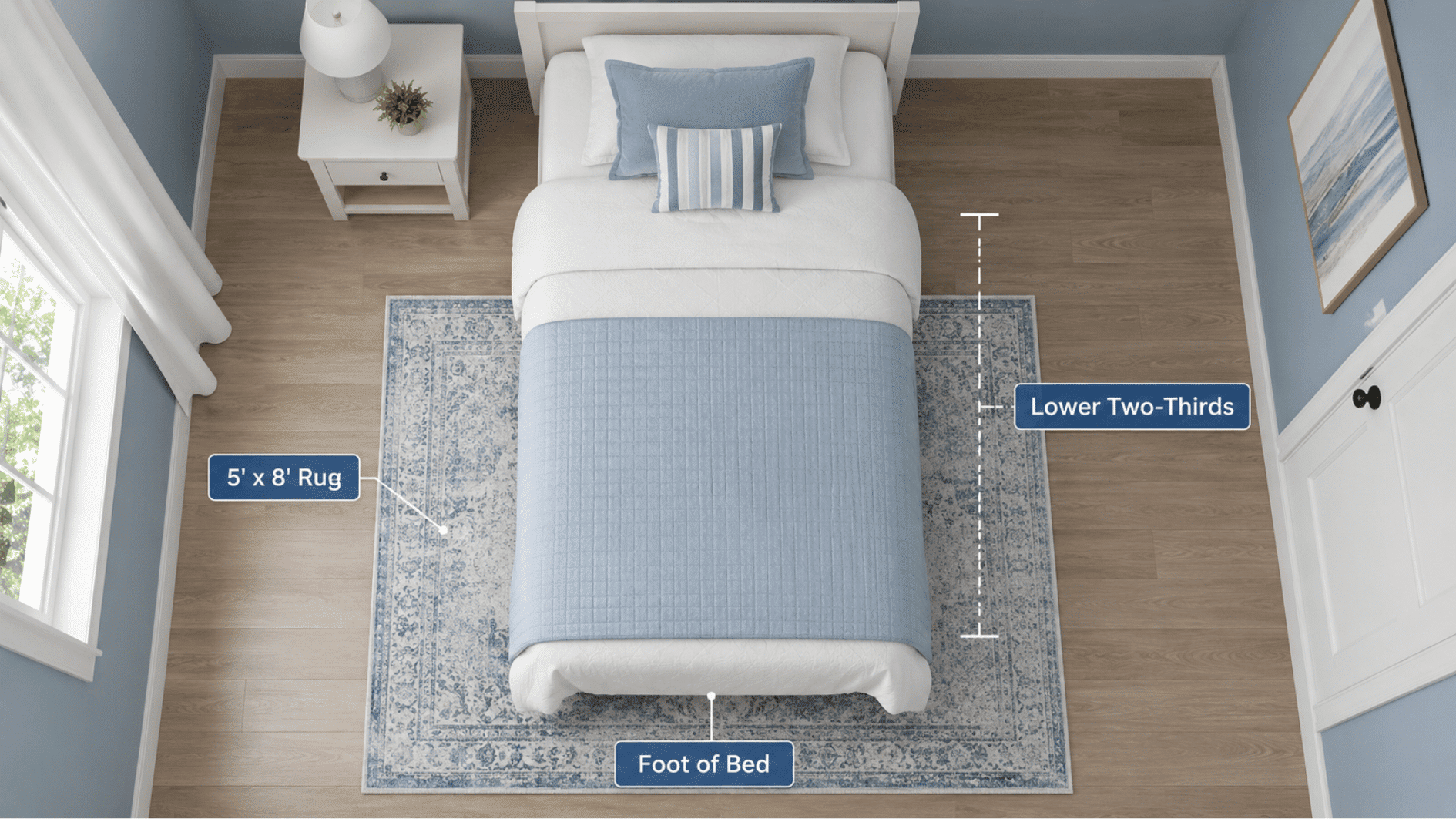
Twin beds work well with smaller rugs since they take up less floor space. A 5′ x 8′ rug is often a practical choice.
- Place the rug under the lower two-thirds of the bed.
- Use a side runner if floor space is limited.
- Leave some rug visible beyond the foot of the bed.
2. Full Bed Rug Placement
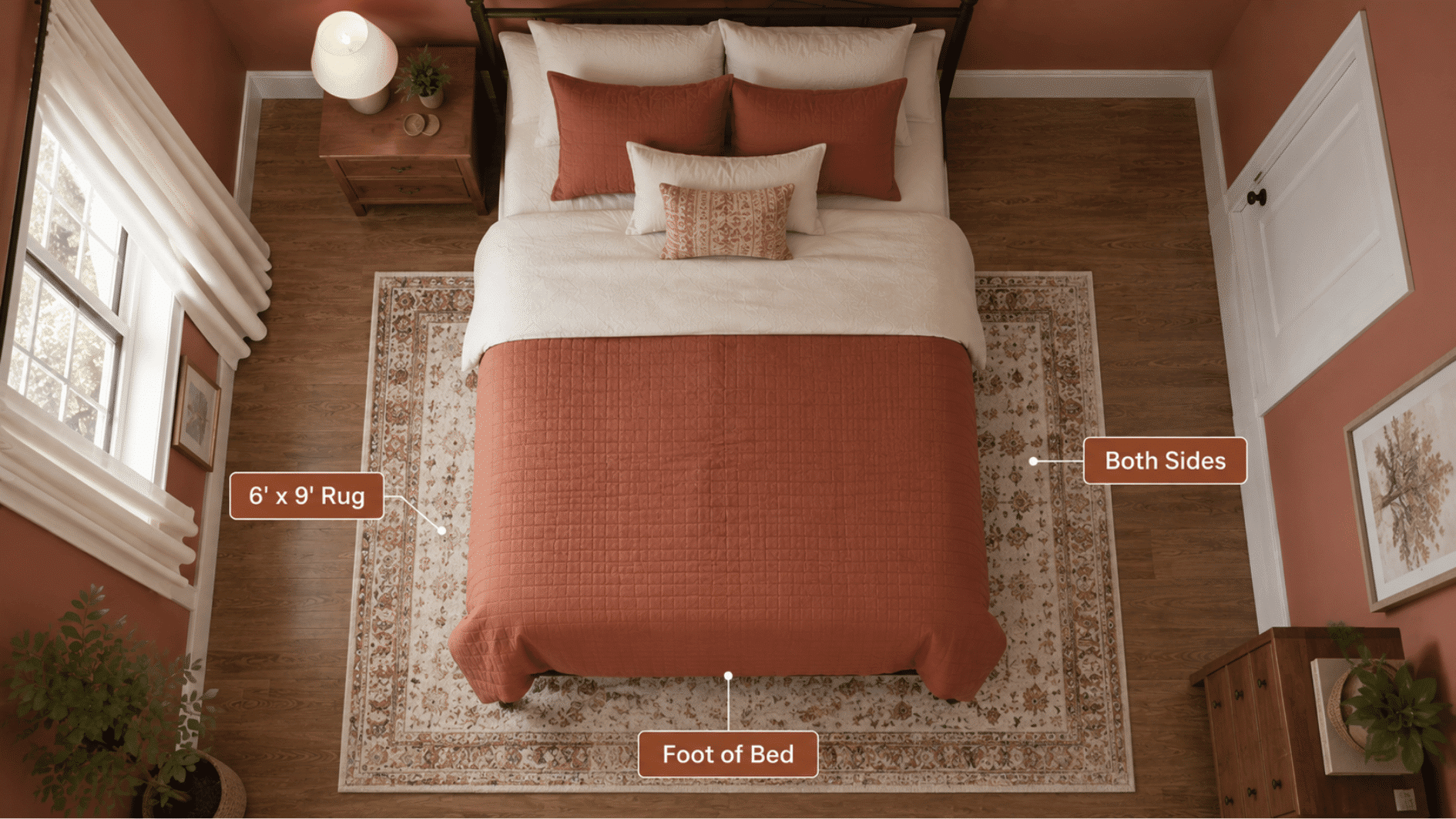
A full-size bed offers more flexibility and pairs well with medium-sized rugs.
- A 6′ x 9′ rug is suitable for most layouts.
- Position the rug under the lower portion of the bed.
- Ensure the rug extends beyond both sides for better balance.
3. Queen Bed Rug Placement
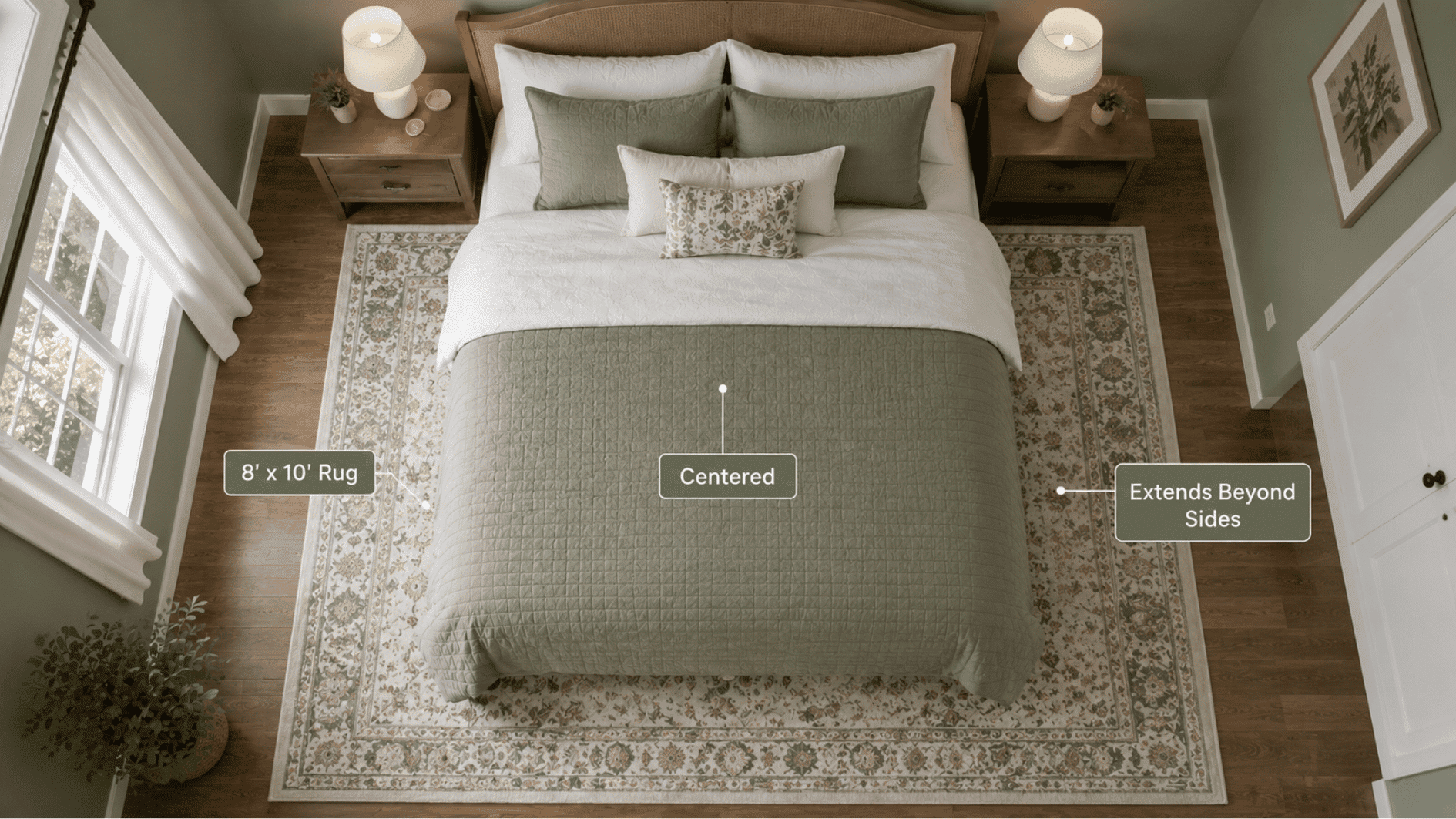
Queen beds typically look best with a larger rug that anchors the sleeping area.
- An 8′ x 10′ rug is a popular choice.
- Center the rug beneath the bed.
- Allow enough rug to extend beyond the sides and foot of the bed.
4. King Bed Rug Placement
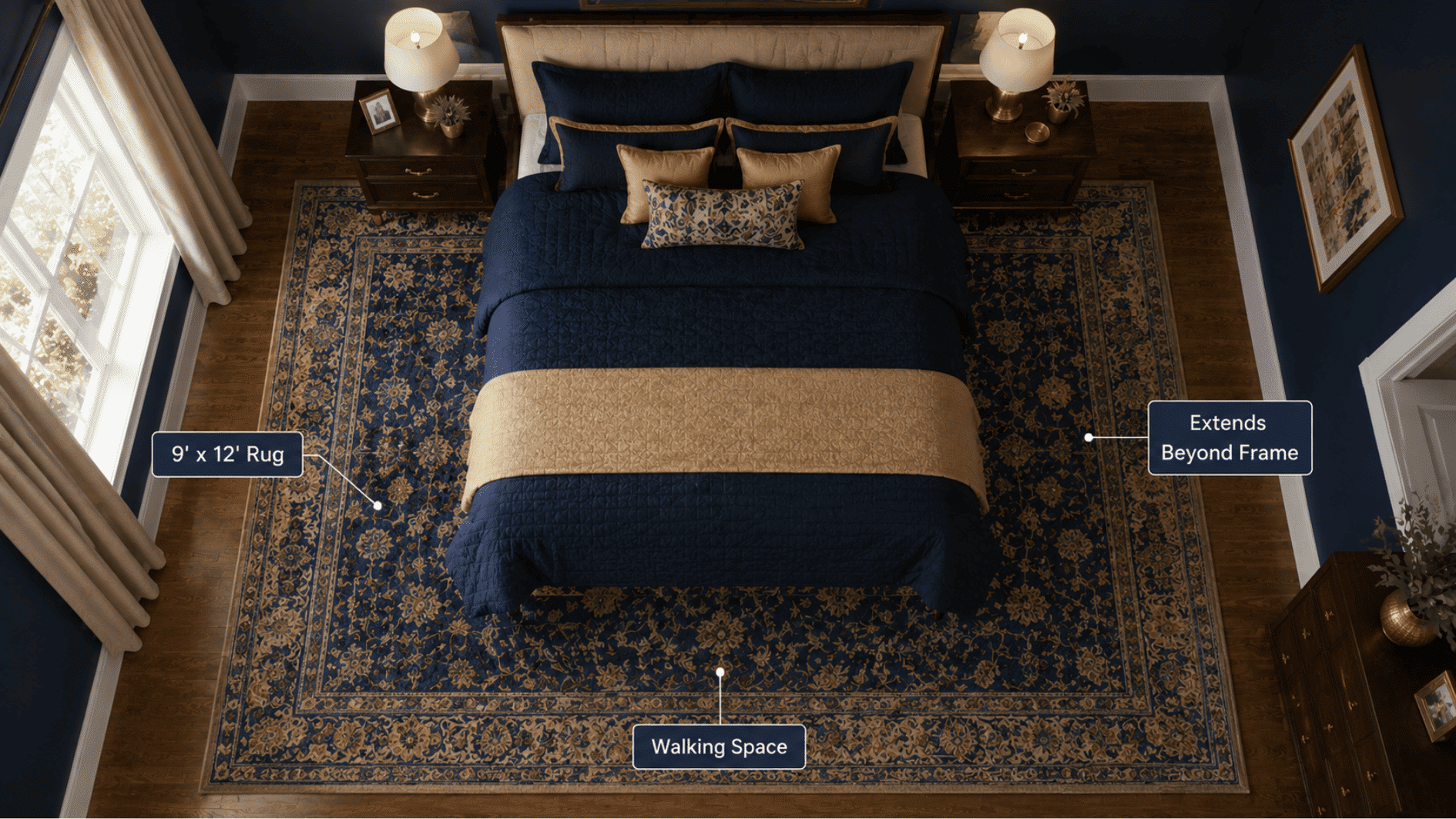
Because of their larger footprint, king beds require rugs that provide adequate coverage around the bed.
- Choose a 9′ x 12′ rug or larger.
- Extend the rug well beyond the bed frame.
- Maintain visible rug space on both sides for comfortable walking.
Popular Bedroom Rug Placement Layouts
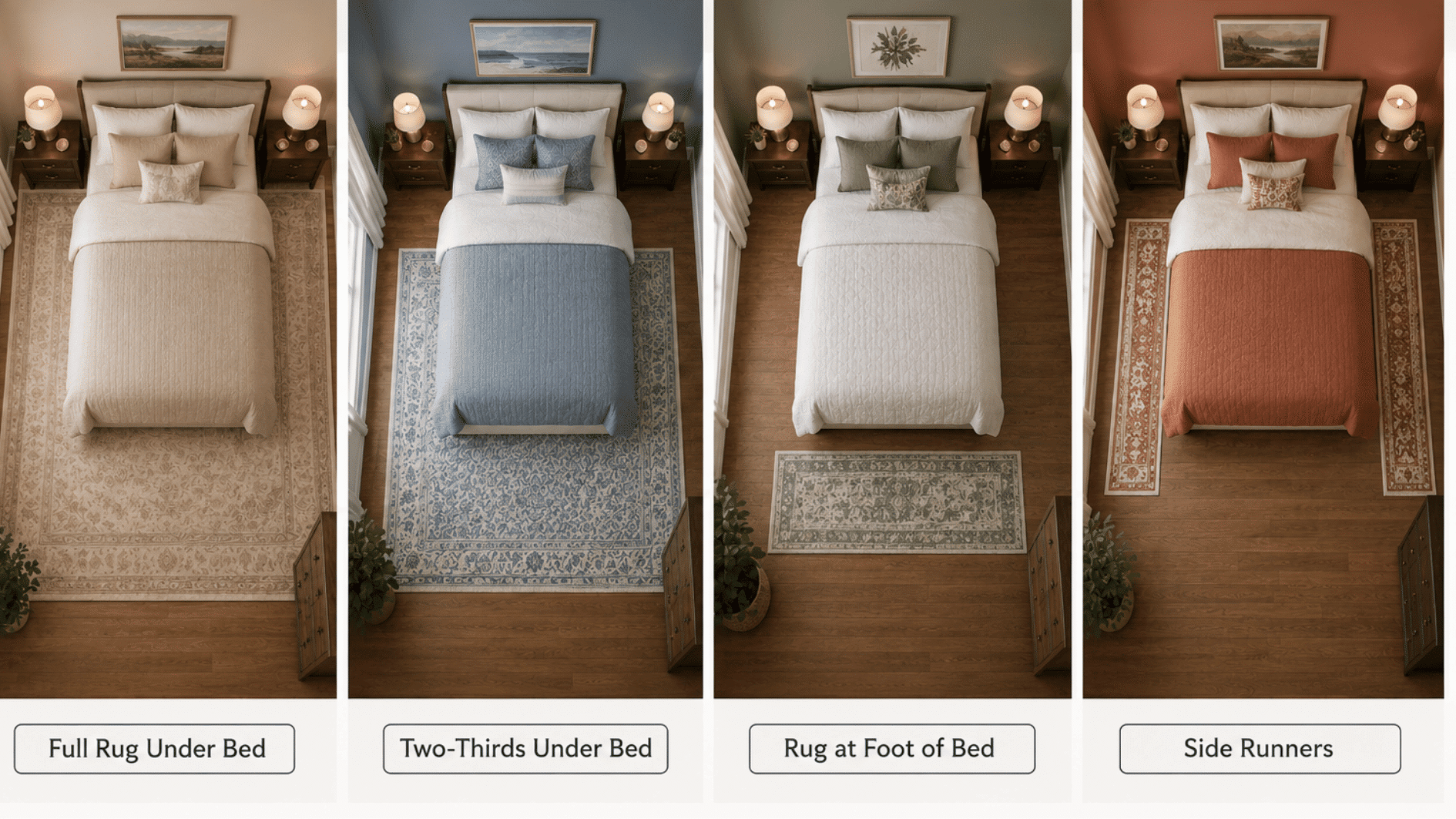
Rug size is important, but placement can have just as much impact on the overall look and functionality of a bedroom.
The table below highlights some of the most common bedroom rug layouts and when they work best.
| Layout | Description | Best For |
|---|---|---|
| Full Rug Under the Bed | The bed and nearby furniture sit entirely on the rug. | Large bedrooms with ample floor space |
| Two-Thirds Under the Bed | The rug starts beneath the lower portion of the bed and extends outward. | Most bedroom sizes |
| Rug at the Foot of the Bed | A smaller rug is placed horizontally at the foot of the bed. | Compact bedrooms or accent styling |
| Side Runners | One or two runners are placed alongside the bed. | Narrow rooms or limited floor space |
Should Nightstands Sit on the Rug?
When planning a bedroom rug layout, many people wonder whether nightstands should sit on the rug along with the bed. The answer often depends on the rug size and the overall room layout.
With a large rug, placing both the bed and nightstands on the rug can create a more connected and balanced arrangement.
In smaller bedrooms, it’s common to keep the nightstands off the rug. This allows a smaller rug to work without overwhelming the space.
As a general rule, consistency matters more than the specific option you choose. If the rug placement feels balanced and intentional, either arrangement can work successfully.
Using Runners Instead of a Large Rug
A large area rug isn’t the only option for a bedroom. Runners can add comfort around the bed while leaving more of the flooring visible.
I’ve found that runners can be especially useful in smaller bedrooms where a large rug may take up more floor space than necessary.
- Place runners on one or both sides of the bed for a soft landing spot.
- Use a runner at the foot of the bed to add warmth without covering a large area.
- Runners are often a practical choice for narrow bedrooms or smaller spaces.
- They can also be easier to clean, move, and replace than larger rugs.
Tips for Choosing the Right Bedroom Rug Placement

A few thoughtful decisions can make a significant difference in how a bedroom rug looks and functions. Before settling on a layout, consider the following tips to create a comfortable, well-proportioned space.
- Measure Before Buying: Take measurements of both the room and the bed to ensure the rug provides adequate coverage without overwhelming the space.
- Keep the Layout Balanced: Try to leave a similar amount of rug visible on each side of the bed to create a more organized appearance.
- Focus on Walking Areas: Position the rug where you naturally step when getting in and out of bed for added comfort.
- Test the Placement First: Use painter’s tape to outline the rug dimensions on the floor before purchasing to confirm the size works in the room.
- Consider the Entire Room Layout: Door swings, nightstands, benches, and other furniture pieces should all be considered when deciding on rug placement.
Bedroom Rug Size and Placement: Quick Reference Chart
A quick-reference chart can make it easier to compare rug sizes and placement recommendations across different bed sizes. Use the table below to find a setup that fits your bedroom layout.
| Bed Size | Recommended Rug Size | Placement Recommendation |
|---|---|---|
| Twin | 5′ x 8′ | Under the lower two-thirds of the bed or with a side runner |
| Full | 6′ x 9′ | Under the lower portion of the bed with a visible rug on both sides |
| Queen | 8′ x 10′ | Centered beneath the bed with extension on the sides and foot |
| King | 9′ x 12′ or larger | Extending beyond the bed frame to create a comfortable walking space |
Conclusion
Bedroom rug placement is about more than selecting the right size. The way a rug is positioned can influence how comfortable, organized, and balanced the room feels.
The best placement depends on factors such as bed size, room dimensions, and how the space is used each day.
In my experience, taking a few extra minutes to plan rug placement before buying often leads to better results. Small adjustments can make a noticeable difference.
By choosing a rug size and layout that fit your space, you can create a bedroom that feels comfortable, practical, and well-arranged.
Frequently Asked Questions
What is the Rule of Thumb for Bedroom Rugs?
A simple rule is to leave about 2 feet of rug visible on the sides and foot of the bed. This usually means a 5′ x 8′ rug for a twin bed, an 8′ x 10′ rug for a queen bed, and a 9′ x 12′ rug for a king bed.
How Do You Know If a Rug is Too Big for a Bedroom?
A rug may be too large if it reaches too close to the walls. As a general guideline, leave about 12 to 18 inches of visible flooring around the edges of the room.
How Big Should a Rug Be in a 12×12 Bedroom?
In a 12′ x 12′ bedroom, an 8′ x 10′ rug is often a practical choice. Larger rugs can work depending on the bed size and furniture arrangement.
How Do You Place Two Rugs in a Bedroom?
Two rugs can be placed on either side of the bed as runners or layered by placing a smaller rug over a larger one. In larger bedrooms, this approach can add comfort while helping define different areas of the room.