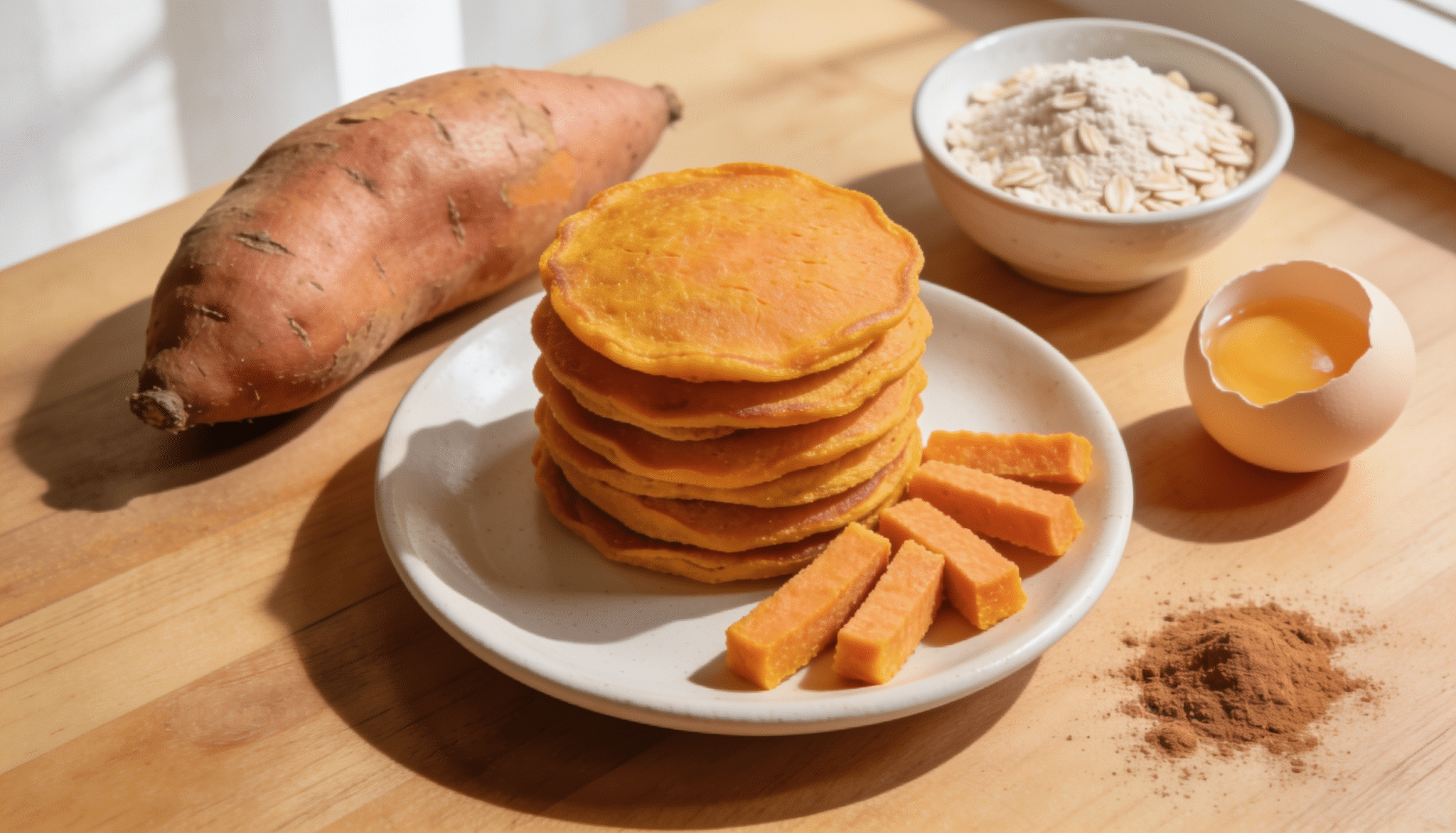
Finding simple, homemade meals for babies doesn’t have to be difficult. These sweet potato pancakes for babies are made with everyday ingredients and have a soft texture that’s easy for little hands to hold.
They work well for breakfast, snacks, or even a light lunch. The naturally mild flavor makes them a good choice for babies who are learning to enjoy different foods.
This sweet potato egg pancake recipe is quick to prepare and can be made ahead for busy days.
You’ll also find helpful tips for cooking, serving, storing, and making small ingredient changes while keeping the pancakes soft and baby-friendly.
Why These Sweet Potato Pancakes Work Well for Babies
Sweet potato pancakes are soft, easy to hold, and simple for little hands to pick up. Their mild flavor also makes them a good option for babies trying new foods.
Sweet potatoes add fiber, vitamins, and minerals, while eggs provide protein and help hold the pancakes together. The recipe uses everyday ingredients without added sugar or salt.
The pancakes can be cut into strips or small pieces to match your baby’s eating skills. Always make sure they are soft enough to mash easily between your fingers before serving.
They also work well for meal prep. Make a batch, freeze the extras, and reheat only what you need for a quick breakfast, snack, or light meal.
When Can Babies Eat Sweet Potato Pancakes?
Most babies can try sweet potato pancakes once they are ready for solid foods, usually around 6 months of age. Readiness is more important than age alone.
Look for signs such as sitting with support, having good head control, and showing interest in food. These skills help babies eat more safely.
If you’re making sweet potato egg pancakes, introduce eggs on their own first if they haven’t already been offered. This makes it easier to notice any reaction to a new food.
Keep the pancakes soft and easy to mash with gentle pressure. Cut them into finger-length strips for younger babies or small bite-sized pieces as chewing skills improve.
If your baby was born early or has feeding concerns or food allergies, ask your pediatrician for guidance before adding new foods.
Ingredients You’ll Need
These sweet potato egg pancakes come together with a handful of pantry staples. Each ingredient plays a role in creating pancakes that are soft, easy to hold, and suitable for babies who are ready for solid foods.
| Ingredient | Why It’s Included | Helpful Tips |
|---|---|---|
| Cooked Sweet Potato (½ cup, mashed) | The main ingredient that gives the pancakes their soft texture, natural sweetness, fiber, vitamin A, and potassium. | Steam, bake, or boil the sweet potato until very soft. Mash it well so there are no lumps that could affect the texture. Orange-fleshed sweet potatoes work best. |
| Egg (1 large) | Helps bind the batter together, adds protein, and makes the pancakes less likely to fall apart while cooking. | Use only if your baby has already been introduced to eggs. Mix the egg thoroughly into the mashed sweet potato for an even batter. |
| Oat Flour or Finely Blended Rolled Oats (¼ cup) | Gives the pancakes structure while keeping them soft and tender. Oats also add fiber. | If using rolled oats, blend them into a fine flour before mixing. Add a little more if the batter feels too thin. |
| Ground Cinnamon (Optional) | Adds a mild flavor without using sugar or sweeteners. | Use only a small pinch. Leave it out if you’re introducing new foods one at a time or prefer a plain version. |
| Water, Breast Milk, or Formula (1–2 tablespoons, if needed) | Helps loosen a thick batter and makes it easier to spread in the pan. | Add a little at a time. The batter should be thick enough to hold its shape but still spread easily with a spoon. |
| Avocado Oil or Mild Cooking Oil (for the pan) | Prevents sticking and helps the pancakes cook evenly. | Use only a light coating in a nonstick skillet over low to medium heat to keep the pancakes soft instead of crisp. |
How to Make Sweet Potato Pancakes for a Baby
These sweet potato egg pancakes are simple to prepare and don’t require special equipment. Taking your time with each step helps create pancakes that are soft, easy to hold, and fully cooked.
Step 1: Cook and Mash the Sweet Potato
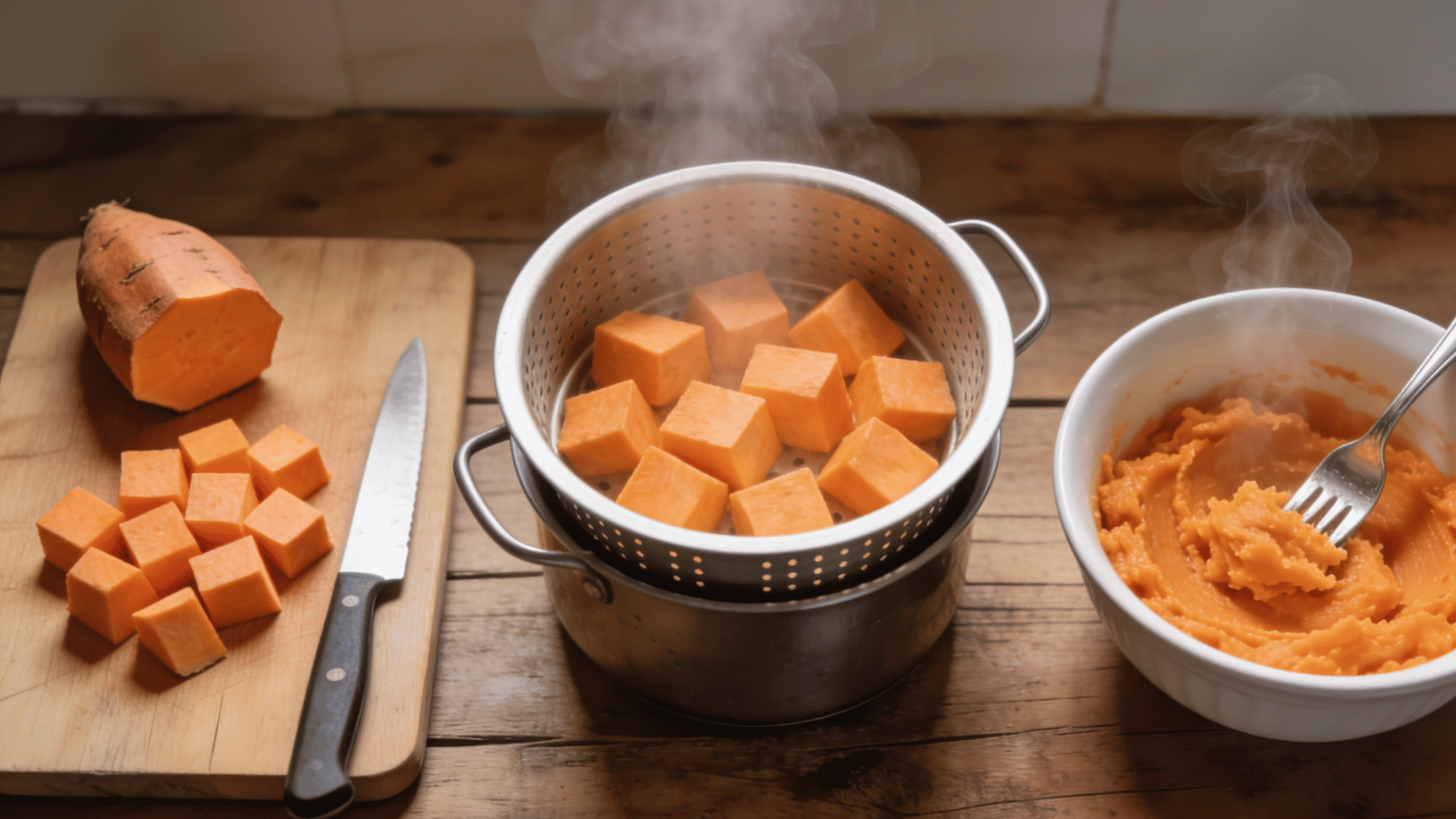
Wash and peel one small sweet potato, then cut it into evenly sized cubes. Steam, boil, or bake the pieces until they are very soft and can be easily pierced with a fork.
This usually takes about 10–15 minutes to steam or boil, while baking may take longer.
Transfer the cooked sweet potato to a bowl and mash it until smooth. If needed, use a fork, potato masher, or food processor to remove any lumps.
Measure out ½ cup of mashed sweet potato and let it cool for a few minutes before preparing the batter.
Step 2: Prepare the Pancake Batter
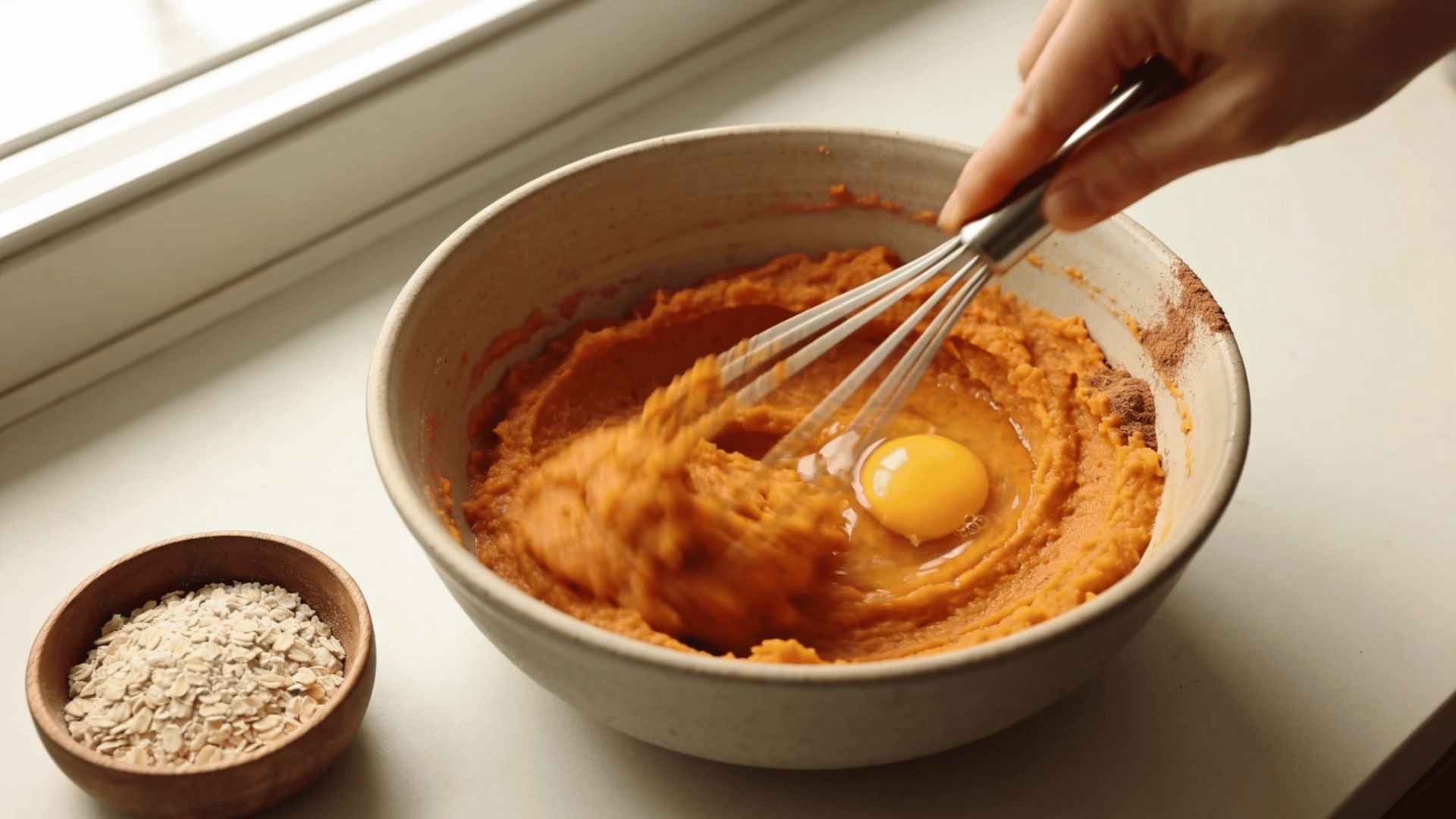
Add the mashed sweet potato to a medium mixing bowl. Crack in 1 large egg and whisk until the mixture looks smooth and evenly combined.
Stir in ¼ cup oat flour or finely blended rolled oats. If you’re using cinnamon, mix in a small pinch at this stage.
The batter should be thick enough to hold its shape on a spoon but soft enough to spread slightly when dropped into the pan. If it feels too thick, stir in 1 tablespoon of water, milk, or formula.
If it’s too runny, add another teaspoon of oat flour until the consistency is right.
Step 3: Heat the Pan and Portion the Batter
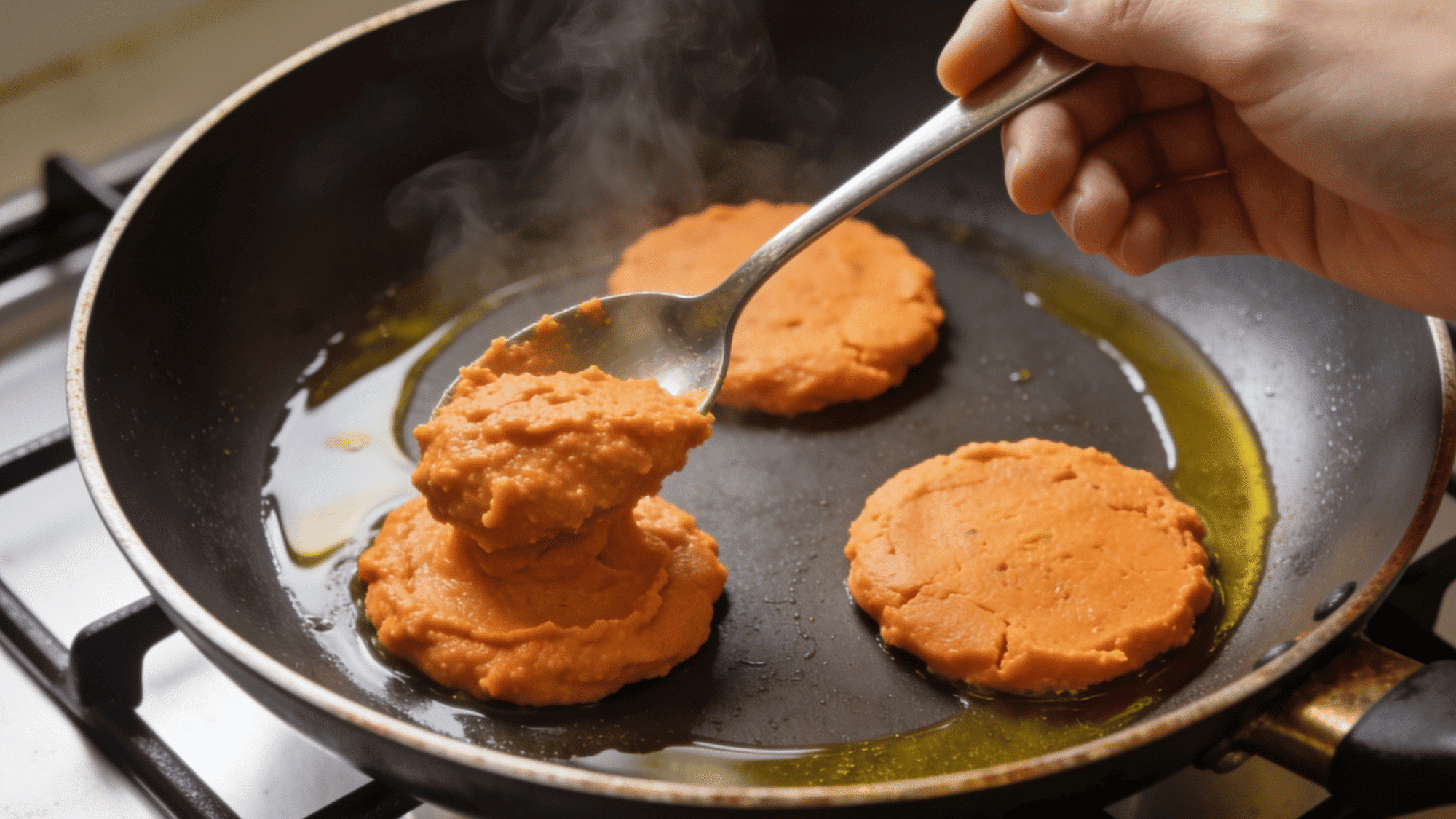
Place a nonstick skillet or griddle over low to medium heat. Lightly grease the surface with a small amount of avocado oil or another mild cooking oil.
Once the pan is warm, scoop about 2 tablespoons of batter onto the skillet for each pancake.
Use the back of the spoon to gently spread each pancake into a circle about 2½ to 3 inches wide. Leave space between each pancake so they are easy to flip.
Step 4: Cook Until Soft and Fully Done
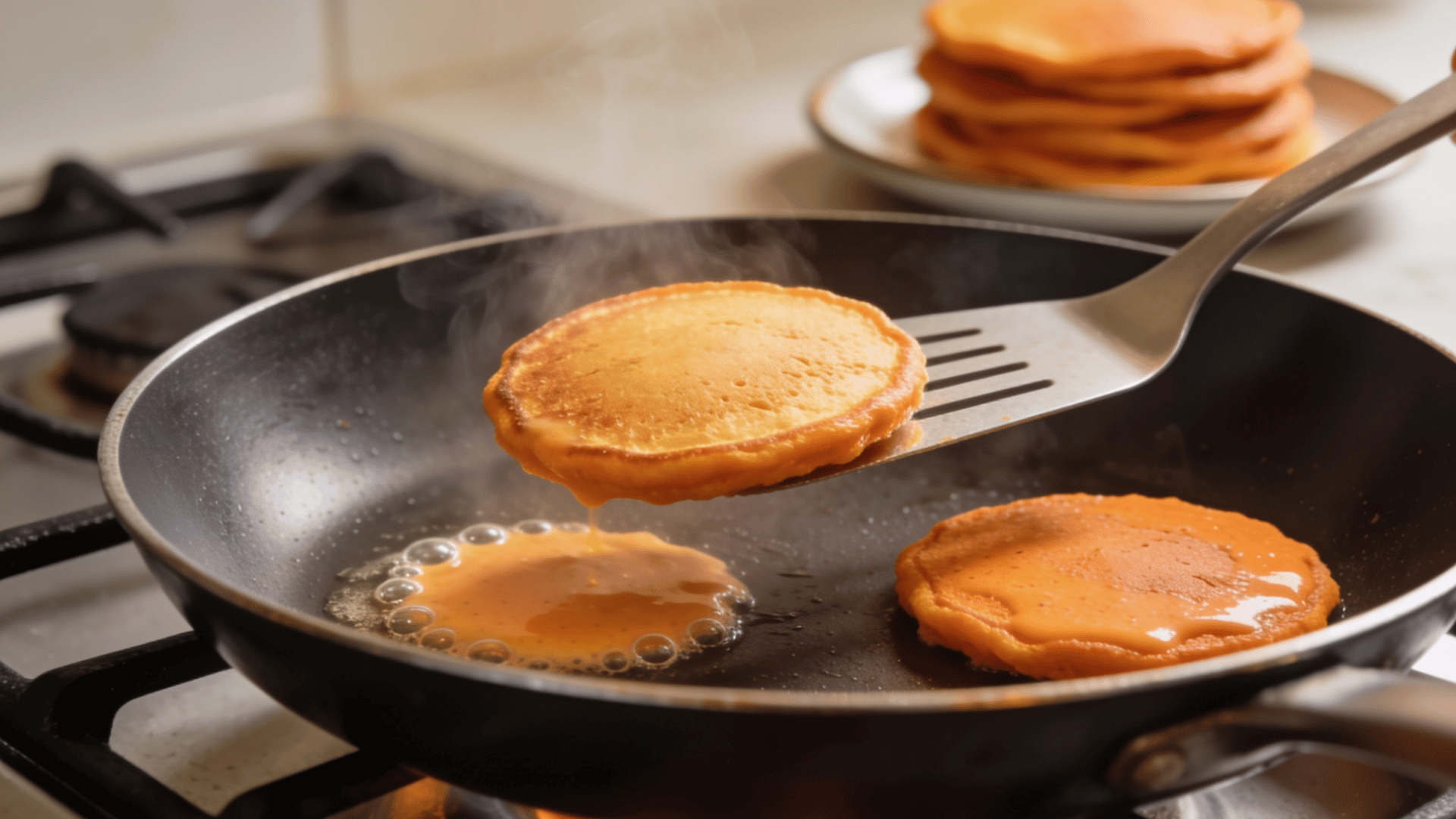
Cook the pancakes for 2 to 3 minutes on the first side. Small bubbles may appear around the edges, and the bottom should turn a light golden color.
Slide a thin spatula underneath each pancake and flip it carefully. Cook for another 2 to 3 minutes until the second side is lightly golden and the center is fully cooked.
Avoid cooking over high heat, as the outside can brown too quickly while the inside stays undercooked.
Repeat with the remaining batter, adding a little more oil to the pan only if needed.
Step 5: Cool Before Serving
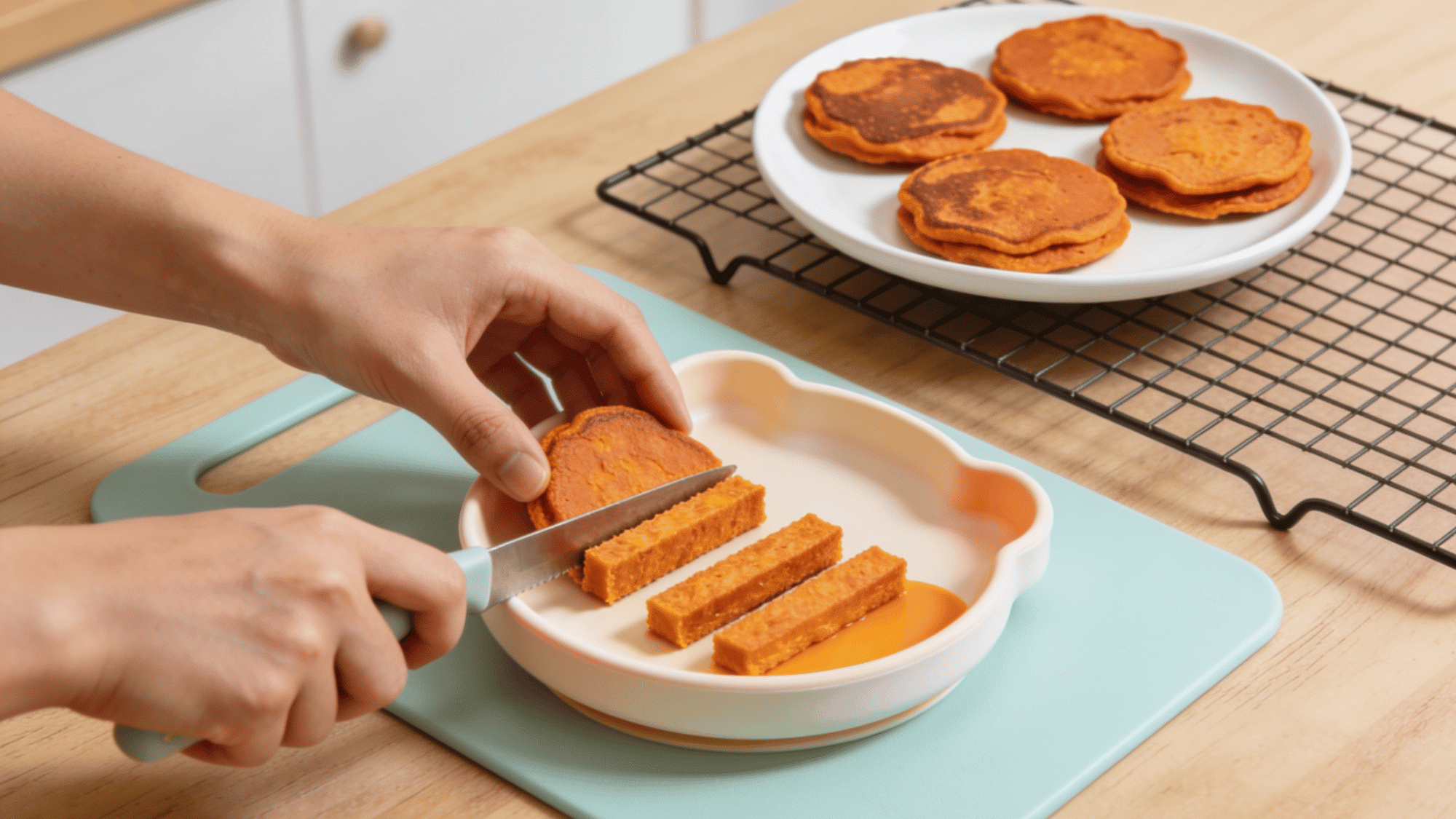
Place the cooked pancakes on a plate or cooling rack for several minutes. Check that they are warm rather than hot before serving.
For younger babies, cut each pancake into finger-length strips that are easy to grasp. As your baby’s chewing skills improve, cut them into smaller bite-sized pieces if appropriate.
Tip: Before serving, gently press a pancake between your fingers. It should mash easily without feeling dry, firm, or crumbly. If it seems dry, reduce the cooking time slightly or mix a little more mashed sweet potato into the next batch.
Tips for Making Soft Sweet Potato Pancakes Every Time
Small changes in the batter and cooking method can help you get soft, baby-friendly pancakes with every batch.
- Mash the sweet potato until smooth – A lump-free mash creates an even batter and helps the pancakes hold together.
- Keep the batter thick but easy to scoop – Add a little liquid if it’s too thick, or a spoonful of oat flour if it’s too runny.
- Cook over low to medium heat – This gives the center enough time to cook without drying out the outside.
- Make small pancakes – They cook more evenly, are easier to flip, and are the right size for little hands.
- Flip only after the edges are set – Turning the pancakes too soon can cause them to break apart.
- Check the texture before serving – The pancakes should mash easily between your fingers and feel soft all the way through.
Easy Ways to Change the Recipe
Once your baby is comfortable with the basic pancake recipe, you can slowly add simple ingredients to improve taste, texture, and nutrition. These small changes keep the pancakes soft, easy to chew, and baby-friendly.
| Ingredient Add-In | How to Use It | Benefit |
|---|---|---|
| Mashed banana | Mix into batter | Adds natural sweetness and extra softness |
| Grated apple | Squeeze excess moisture before adding | Mild flavor and gentle texture |
| Spinach (finely chopped) | Mix small amounts into batter | Adds iron and nutrients |
| Zucchini (grated) | Remove excess water before mixing | Adds moisture and mild veggie boost |
| Whole-milk yogurt | Serve on the side | Adds creaminess and protein |
| Mashed berries | Serve as topping | Natural sweetness and antioxidants |
| Unsweetened applesauce | Use as topping or dip | Soft, easy-to-digest fruit option |
For extra protein at the same meal, you can learn how to prepare chicken for your baby and serve it on the side.a
Final Thoughts
These sweet potato pancakes for babies are an easy way to serve a homemade meal using simple, wholesome ingredients. Their soft texture and easy-to-hold shape make them suitable for many babies who are ready for finger foods.
You can prepare them fresh, freeze extra portions, and adjust the recipe with familiar fruits or vegetables as your baby tries new flavors.
Always serve the pancakes in an age-appropriate size and check that they are soft before offering them.
With a little planning, this recipe can become a regular part of your baby’s breakfast, snack, or lunch rotation.
Frequently Asked Questions
Can I Use Purple Sweet Potato for This Recipe?
Yes. Purple sweet potatoes work well, although the pancakes may have a slightly different texture and color.
Can I Make the Batter the Night Before?
Yes. Store the batter in a covered container in the refrigerator and give it a quick stir before cooking.
Can I Use Sweet Potato Baby Food Instead of Mashed Sweet Potato?
Yes, if it contains only sweet potato with no added sugar, salt, or seasonings.
Can I Cook These Pancakes without Oil?
Yes. A good-quality nonstick skillet often allows you to cook the pancakes without adding oil.
How Do I Know if the Pancakes are Cooked Through?
Break one pancake in half after cooking. The center should be firm, warm, and free of wet batter.