
Starting your baby on solid foods is an exciting milestone, and chicken is one of the best proteins to introduce during baby-led weaning.
But preparing it safely requires more than just cooking it through; texture, size, and cutting technique all matter just as much as doneness.
From choosing the right cut and cooking method to shaping pieces your baby can easily grip and self-feed, every step plays a role in making mealtime both safe and successful.
In this blog, I will walk you through exactly how to prepare tender, baby-safe chicken your little one can start with confidence, spoon-free.
What is Baby-Led Weaning?
Before learning how to prepare chicken for a baby, it’s important to understand the basics of baby-led weaning (BLW).
This feeding approach encourages babies to self-feed soft, age-appropriate pieces of food instead of being spoon-fed purees. Before adding chicken, many parents start with soft baby-led weaning foods that help babies practice gripping, chewing, and self-feeding.
By picking up, chewing, and testing different textures on their own, babies gradually develop fine motor skills, hand-eye coordination, chewing ability, and confidence during mealtimes.
When prepared with the right texture, size, and cooking method, chicken can be a nutritious, protein-rich food that fits perfectly into a baby-led weaning routine.
When Can Babies Start Eating Chicken?
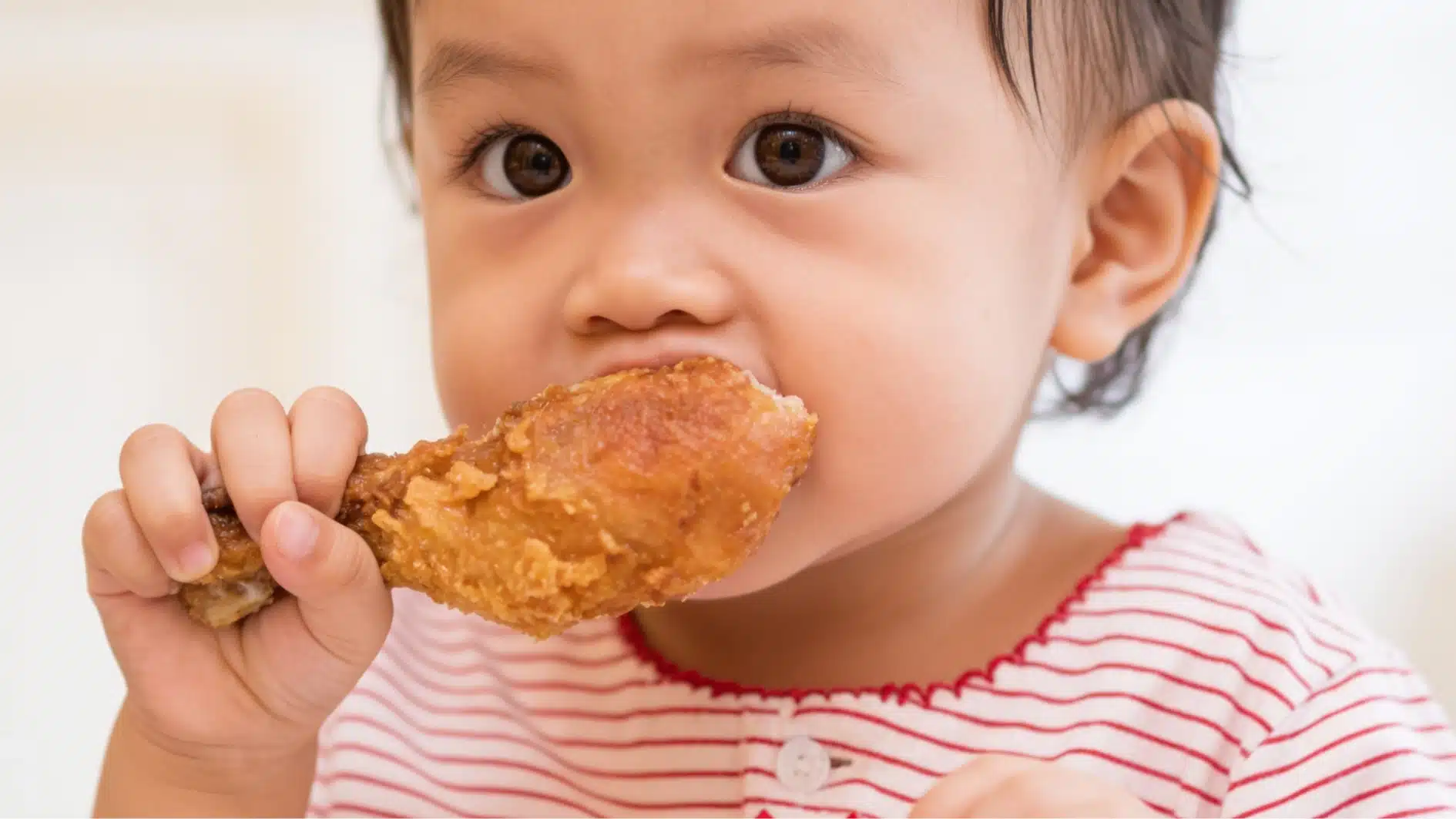
Most pediatricians recommend introducing chicken around 6 months, once a baby shows clear signs of readiness for solid foods.
Readiness matters more than age alone. Here’s what to look for before offering chicken:
Signs Your Baby is Ready:
- Sitting up independently with minimal support
- Good head andneck control
- Showing active interest in food (reaching, watching, opening mouth)
How to Introduce Chicken Safely:
- Offer onenew food at a time to easily identify any allergic reactions
- Watch for symptoms like rash,swelling, or digestive upset after the first few tries
- Wait a few days before introducing another new food
Before You Start: Consult your pediatrician before beginning solids, especially if your baby has known allergies, sensitivities, or feeding concerns.
Key Takeaway: Confirm readiness with your pediatrician before introducing chicken or any new solid food; age is a guideline, not a rule.
How to Prepare Chicken for a Baby: Step by Step
Preparing chicken for your baby doesn’t need to be complicated once you understand the fundamentals. Getting the texture, size, and cooking method right is what separates a safe, successful mealtime from a stressful one.
Follow these simple steps for chicken that’s tender, safely sized, and ready for self-feeding.
Step 1: Get the Texture Right
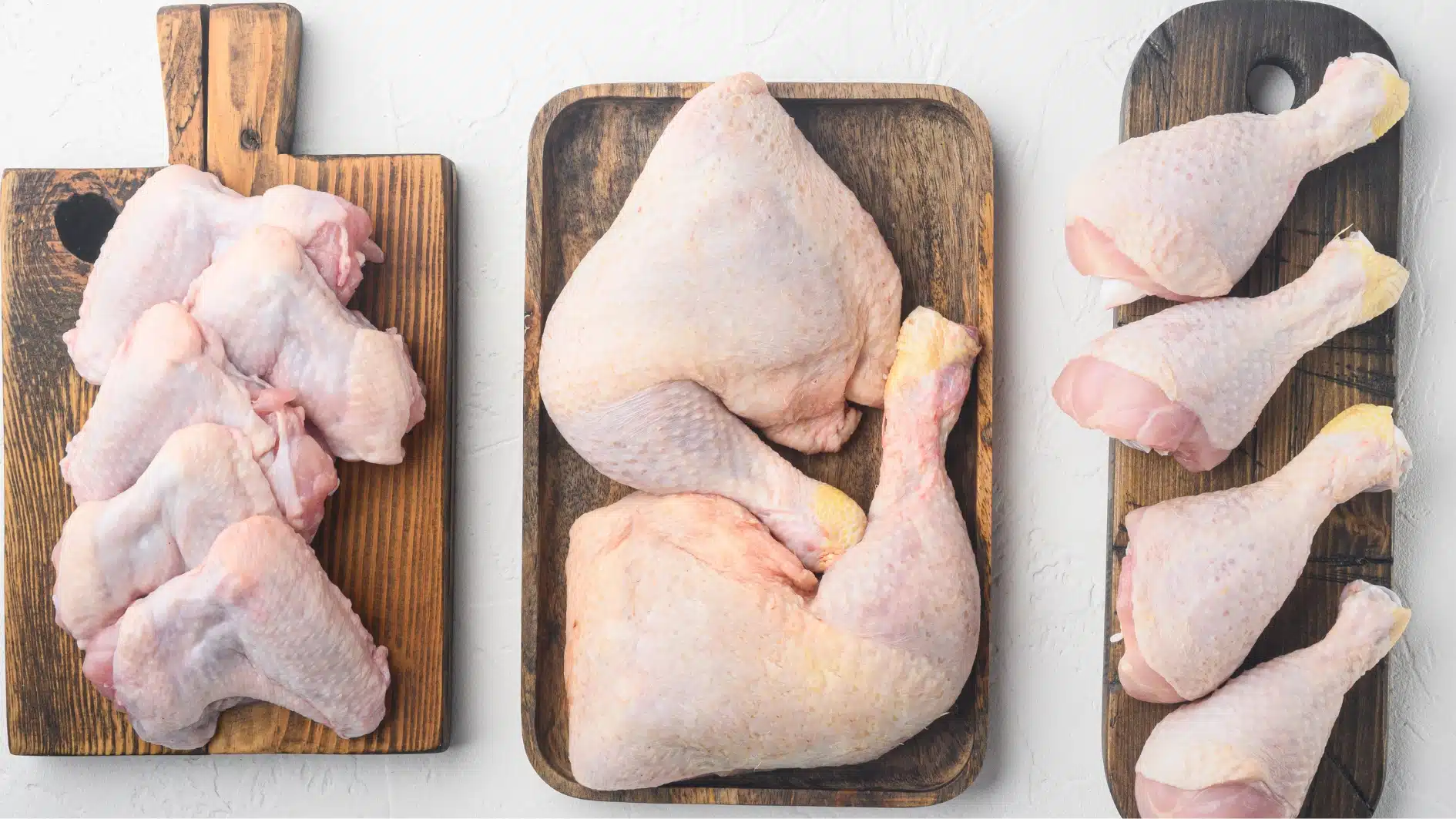
Texture is the single most important factor inBLW prep, even more than seasoning or presentation. Chicken that’s too firm is difficult for babies to gum and swallow safely, while properly cooked chicken practically falls apart on its own.
What You’ll Need:
| Item | Amount Needed |
|---|---|
| Boneless, Skinless Chicken | 1 chicken breast or thigh |
| Water or Low-Sodium Broth | Enough to fully submerge the chicken |
| Small Pot | 1 pot |
How to Do It:
- Place the chicken in a pot and cover completely with water or broth
- Bring to a gentle boil, then reduce the heat and simmer on low for 15–20 minutes, until the internal temperature reaches 165°F with no pink remaining.g
- Remove from heat and let cool slightly before handling
- Perform the squish test – press a piece gently between two fingers; it should flatten easily without resistance
- If it still feels firm or springs back, simmer a few more minutes until fully tender
Signs It’s Ready: Mashes easily, feels moist, pulls apart with a fork, and has no chewy or tough spots.
Avoid: Firm or springy texture, charred edges, and dense pieces that resist shredding.
Step 2: Choose the Right Size
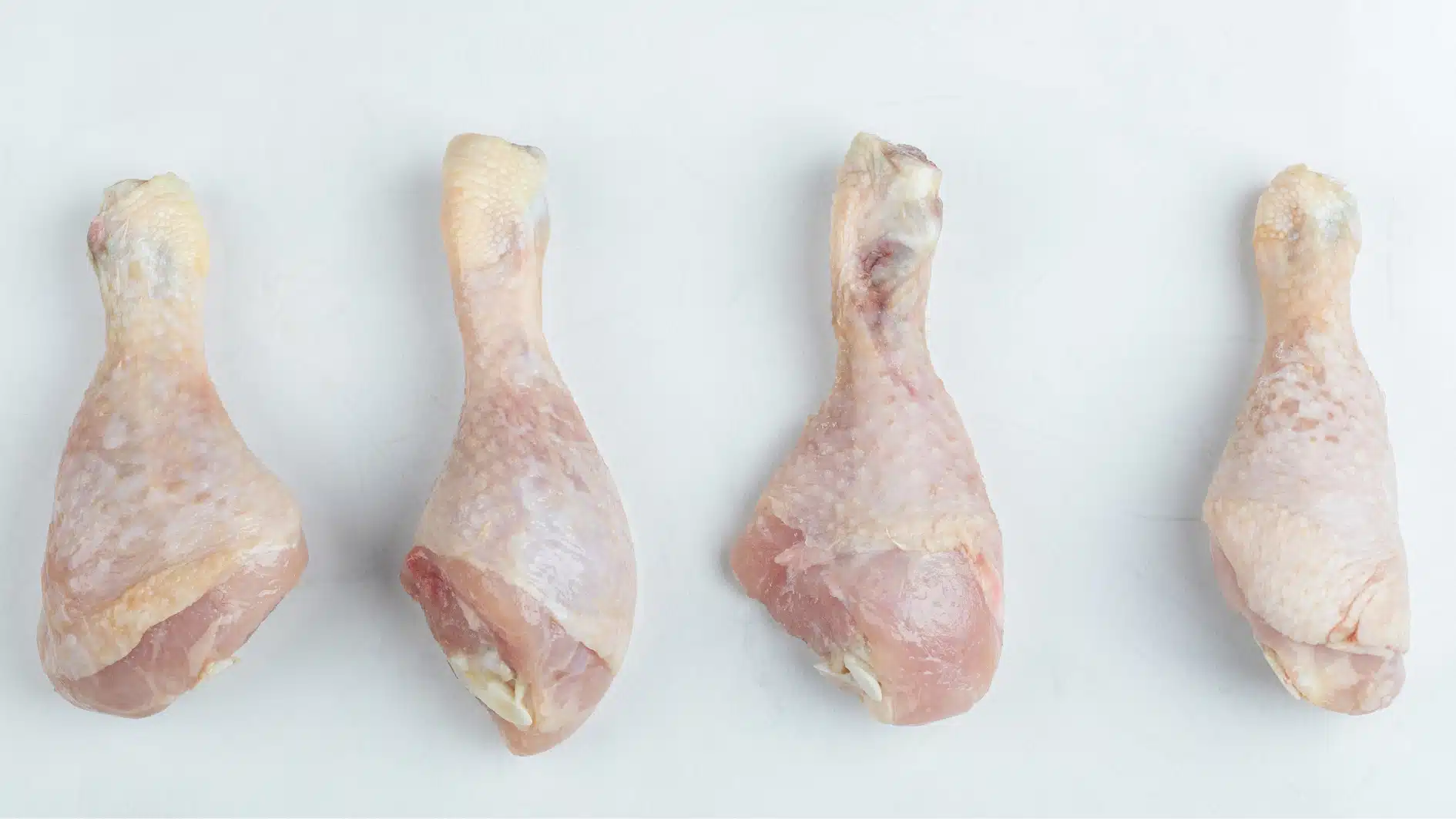
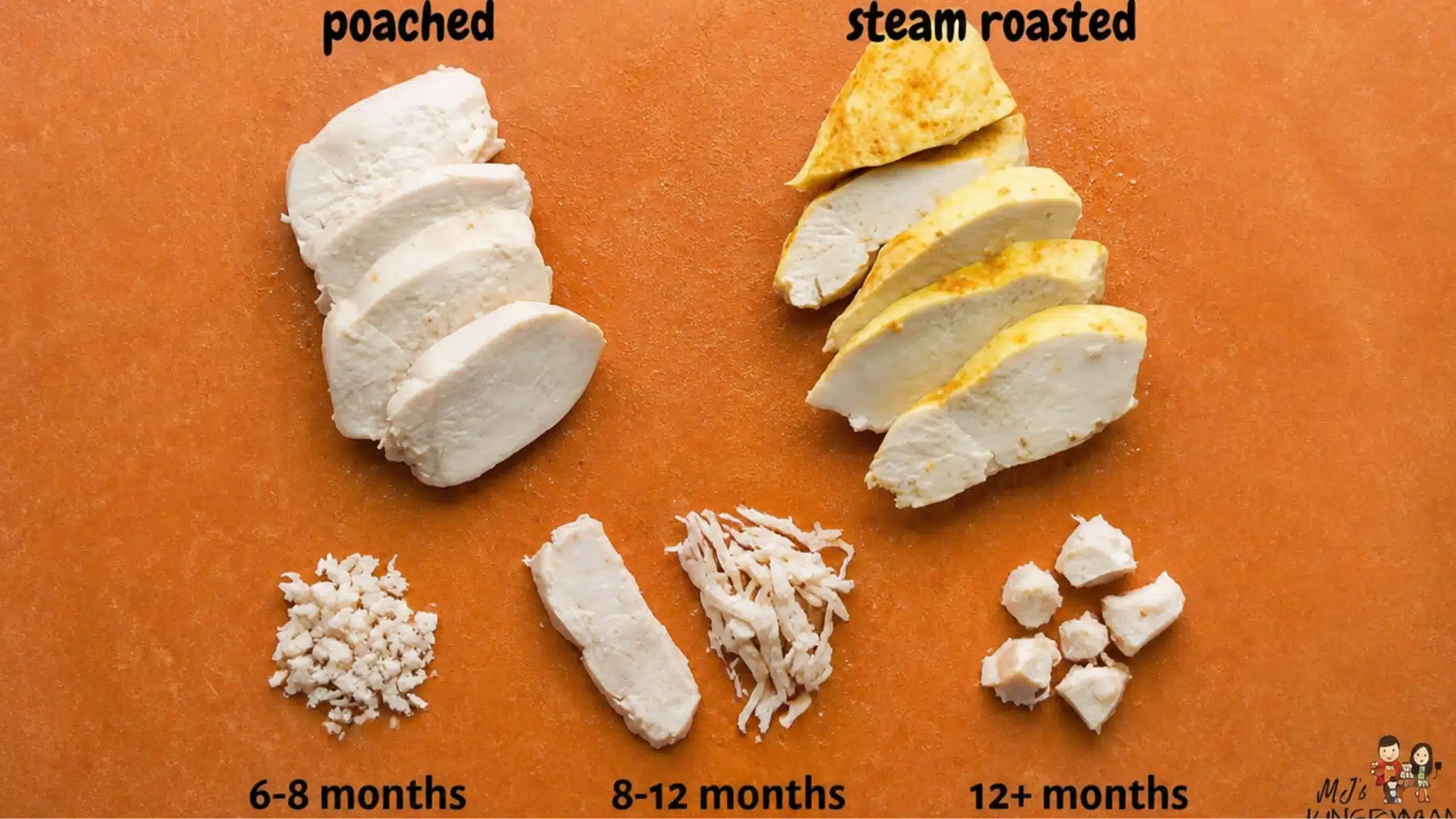
A piece that’s ideal for a 7-month-old may be too large or too small for a 10-month-old refining their pincer grasp, so match the cut to your baby’s current developmental stage.
What You’ll Need:
- Fully cooked, tender chicken
- A cutting board and a sharp knife
- Clean hands or two forks (for shredding)
Size Guide by Age:
| Age | Recommended Size |
|---|---|
| 6–9 months | Finger length strips |
| 9–12 months | Bite-sized pieces or shreds |
| 12+ months | Diced or shredded chunks |
Avoid: Coin-shaped pieces, small cubes, and large, unwieldy chunks.
Step 3: Choose a Safe Cooking Method
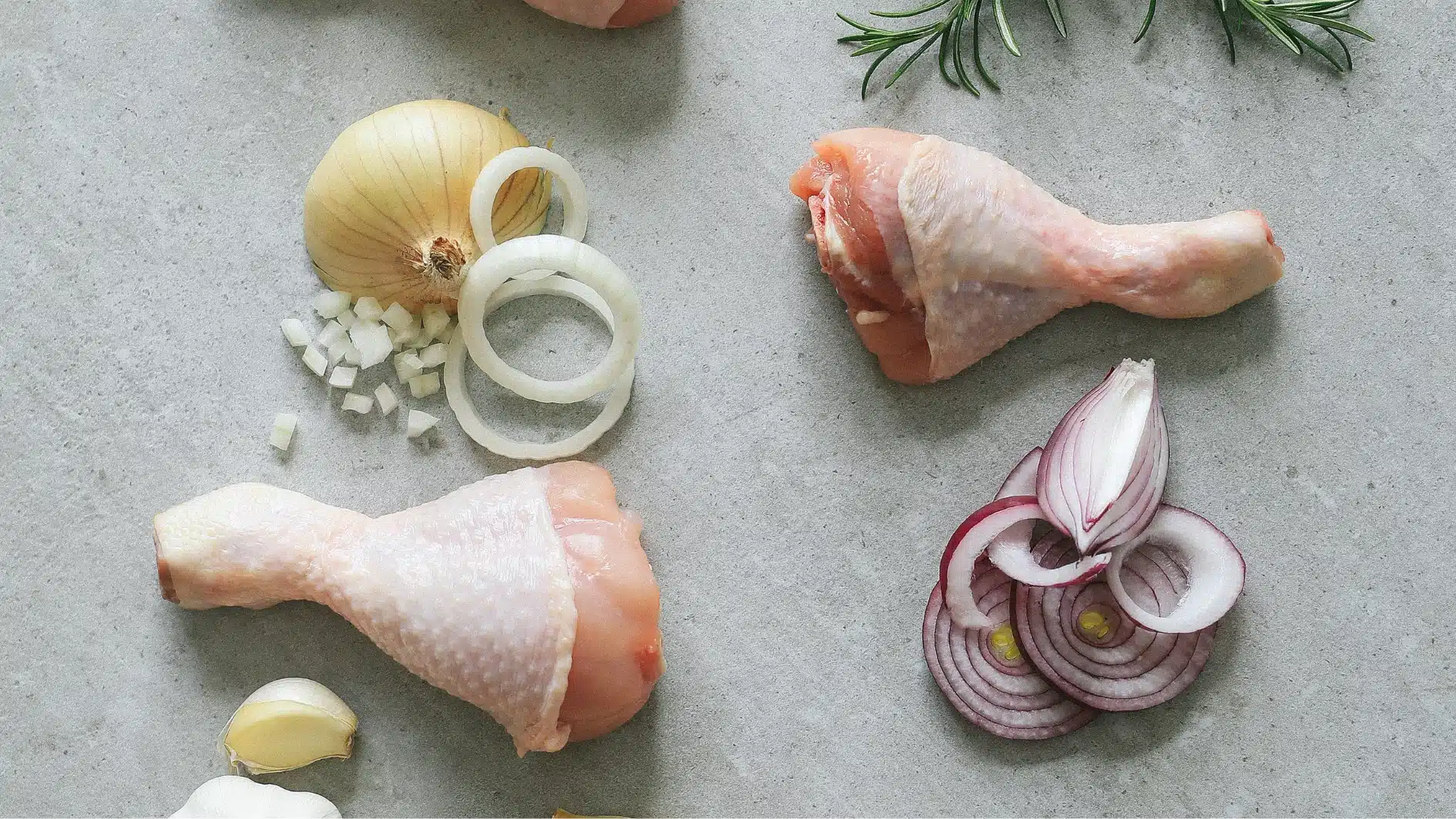
The cooking method has just as much impact on safety as sizing does. Some methods naturally produce softer, more baby-friendly results than others.
What You’ll Need:
- Boneless, skinless chicken (breast or thigh)
- Oven, pot, or slow cooker
- Meat thermometer
How to Do It:
Choose a gentle, moisture-retaining method: baking, poaching, boiling, or slow cooking.
- Baking/roasting: Cook at 375°F until internal temperature reaches 165°F
- Poaching/boiling: Simmer gently in water or broth for extra soft, sheddable chicken
- Slow cooking: Cook on low for 3–4 hours to naturally break down muscle fibers
Confirm doneness with a meat thermometer before serving.
Best Methods: Baking or roasting, poaching or boiling, and slow cooking.
Avoid: Frying, heavy breading, or grilling with charred edges – these create tougher textures and increase choking risk.
Step 4: Know What to Avoid
Beyond texture and size, certain ingredients and prep habits can quietly turn an otherwise safe meal into a risky one.
Steps to Check Before Serving:
- Skip added salt, sugar, or strong seasonings; sodium isn’t recommended before age 1
- Avoid store-bought sauces, marinades, or breaded coatings, which often hide added salt and sugar
- Remove all chicken skin, as it’s tough to chew
- Check thoroughly for bones or cartilage before every serving, even with boneless cuts
What to Avoid: Salt, sugar, or heavy seasoning; sauces or breading; chicken skin; bones or cartilage.
Best Chicken Cuts for Baby-Led Weaning
Chicken thigh is generally the best cut for baby-led weaning because it stays moist and tender even when fully cooked, while chicken breast can dry out if overcooked.
Choosing the right cut matters just as much as texture and size; some cuts naturally cook up softer and are easier for babies to manage.
| Cut | Fat Content | Texture When Cooked | Best For | Recommended Method |
|---|---|---|---|---|
| Chicken Thigh | Higher fat content | Naturally moist, tender, hard to overcook | Beginner babies are still mastering the grasp | Baking, poaching, slow cooking |
| Chicken Breast | Leaner, lower fat | Can dry out or toughen if overcooked | Parents wanting a leaner option | Poaching or baking (moisture-retaining methods) |
| Ground Chicken | Varies (use ground thigh for more moisture) | Soft, easy to shape | Meatballs or patties | Steaming or baking |
For most parents starting baby-led weaning, chicken thighs are the easier, more forgiving option.
Chicken breast works well too, as long as it’s cooked using a gentle, moisture-retaining method. Ground chicken, ideally from thigh meat, is a great alternative when shaped into soft, baby-safe patties or meatballs.
Chicken Safety Tips for Baby-Led Weaning
Chicken is safe for baby-led weaning when it’s fully cooked, cut into age-appropriate sizes, and served without added salt, sauces, or bones, always under adult supervision.
Following a few key safety practices can significantly reduce the risk of choking and make mealtime worry-free.
- Cut chicken into age-appropriate strips or pieces, never round or coin-shaped
- Ensure chicken mashes easily and avoid tough, chewy, or dry textures
- Remove all bones, cartilage, and skin before serving
- Stay within arm’s reach during every meal
- Seat the baby upright, never reclined, while eating
- Learn infant CPR and basic choking response as a precaution
- Refrigerate cooked chicken for up to 3–4 days in an airtight container
- Reheat thoroughly to 165°F before serving again
- Never refreeze chicken that’s already been cooked and cooled
- Watch for signs of a poultry allergy, though rare
- Confirm chicken has reached a safe internal temperature before serving
- Skip any pieces that fail the squish test for softness
Conclusion
Timing matters, but readiness matters more. Rather than fixating on the 6-month mark alone, watch for the real signs your baby is prepared: sitting up steadily, strong head and neck control, and genuine curiosity about food.
Once those milestones are in place, chicken can be a safe and nutritious way to begin your baby’s solid food journey.
Introduce it slowly, monitor for any reactions, and keep your pediatrician in the loop every step of the way.
Getting this first step right lays the foundation for a smoother, more confident start to baby-led weaning.
Frequently Asked Questions
Can Babies Eat Chicken Every Day?
Babies can eat chicken regularly, but it is better to rotate it with other protein foods like eggs, beans, lentils, fish, turkey, yogurt, or soft-cooked meat. Variety helps babies access a wider range of nutrients and become more comfortable with a wider range of flavors.
Is Chicken a Common Allergen for Babies?
Chicken allergy is not among the most common food allergies, but any food can cause a reaction. Offer chicken in a small amount at first and watch for rash, swelling, vomiting, diarrhea, coughing, or breathing trouble.
Can I Give My Baby Cold Chicken from the Fridge?
It is safer to reheat cooked chicken thoroughly before serving leftovers. Make sure it reaches 165°F, then let it cool to a safe temperature before offering it to your baby.
Can Babies Eat Rotisserie Chicken?
Rotisserie chicken is not the best first choice because it is often high in sodium and may contain seasonings, skin, sauces, or tougher pieces. Plain, home-cooked chicken is usually a safer option for baby-led weaning.