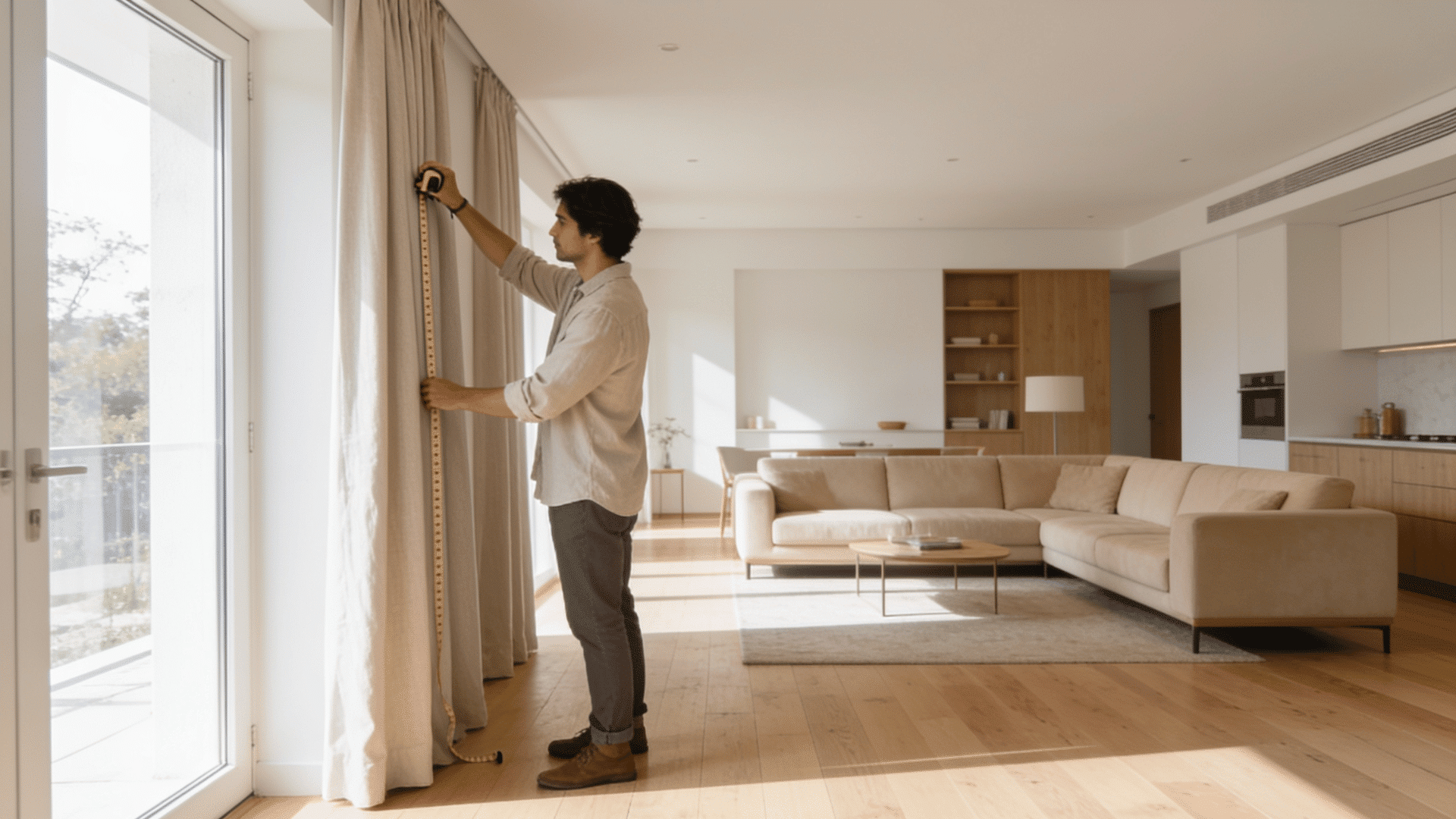
Buying curtains involves more than choosing a fabric or color. The dimensions you select can affect everything from light control and privacy to how well the curtains work with your window and surrounding space.
With so many sizes, panel options, and window styles available, it’s important to understand which measurements matter before making a purchase.
Knowing what to look for can help you compare products more confidently and choose an option that suits your needs.
A little preparation before shopping can also make the selection process less overwhelming. Understanding the basics of curtain sizing can help you focus on products that are more likely to suit your space and requirements.
What Measurements Do You Need for Curtains?
To measure for curtains, you need three main measurements: the curtain rod width, the curtain length, and the window size.
These measurements help you choose panels that fit properly, cover the window well, and create the finished look you want.
Before shopping, write down the basic dimensions instead of guessing from the window size alone. Curtains usually need to be wider than the window so they can hang with enough fullness and still cover the glass when closed.
You should also decide how you want the curtains to look once they are installed. A fuller style needs wider panels, while a cleaner, more streamlined look may require less extra fabric.
Tools and Measurements You’ll Need
Before measuring curtains, gather a few basic tools and identify the dimensions you’ll need to record. Taking a few minutes to prepare can help make the measuring process quicker and more accurate.
| Item | Why It’s Needed |
|---|---|
|
Metal tape measure |
Provides accurate width and length measurements |
|
Notepad or phone |
Keeps all measurements organized in one place |
|
Pencil or pen |
Makes it easy to write down measurements as you go |
|
Step stool |
Helps you safely reach higher curtain rods or windows |
|
Curtain rod width |
Determines the total curtain width required |
|
Desired curtain length |
Helps you select the correct curtain size |
|
Window width |
Serves as a reference when calculating curtain fullness |
|
Window height |
Helps compare different curtain length options |
If you’re measuring multiple windows, label each set of measurements clearly. This can help prevent confusion when shopping for ready-made curtains or placing a custom drapery order.
How to Measure Curtains Correctly?
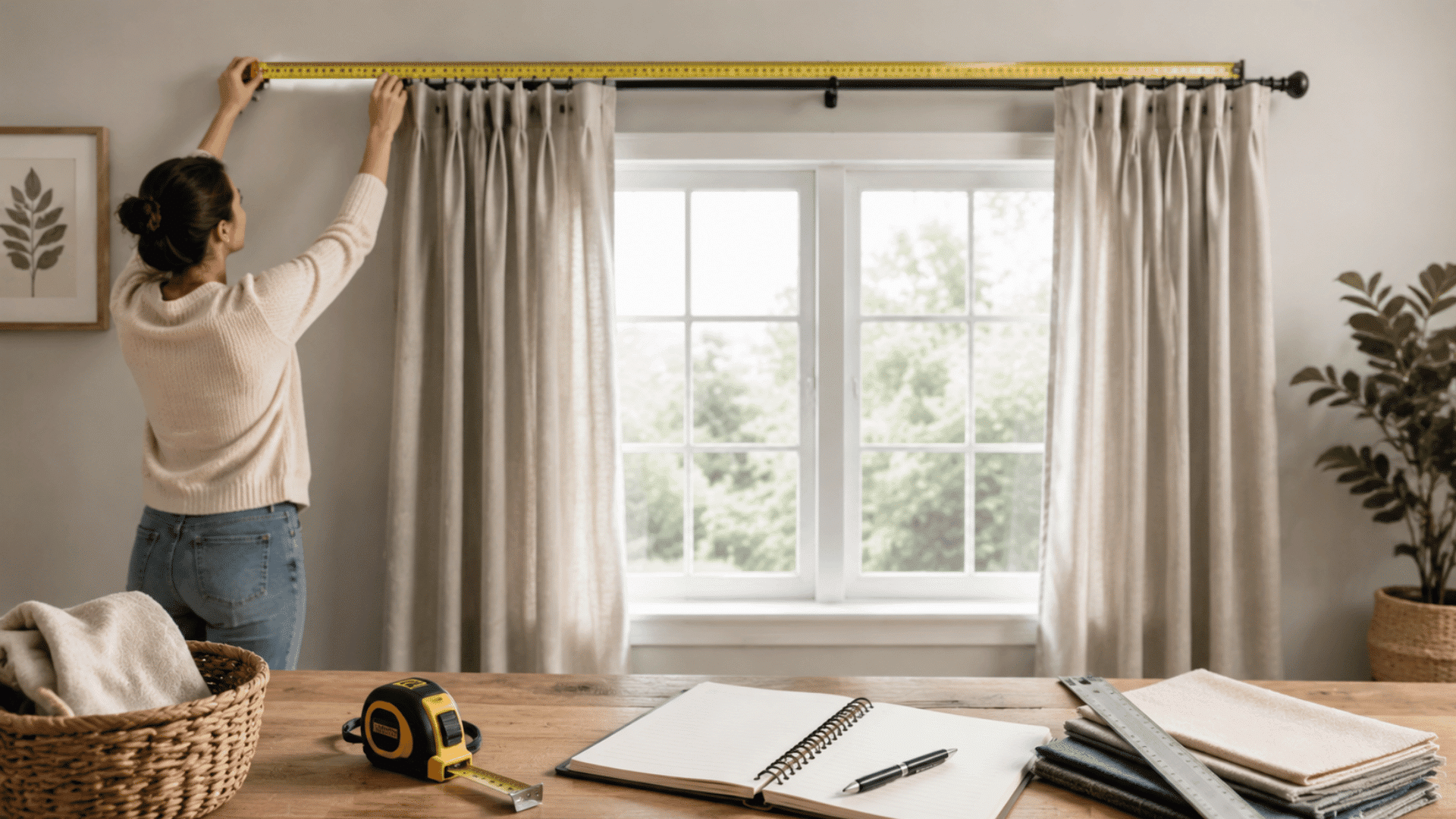
Taking accurate measurements from the start can help you choose curtains that fit properly and reduce the chances of ordering the wrong size.
- Determining Curtain Rod Placement: Before taking any measurements, decide where the curtain rod will be installed. The rod position affects both the curtain width and length, so it’s best to finalize its placement first.
- Recording Accurate Measurements: Use a tape measure and write down each dimension as you go. Keeping a clear record of your measurements can make it easier to compare products and avoid confusion during the buying process.
- Avoiding Common Measuring Mistakes: Estimating dimensions instead of measuring them can lead to sizing issues. Taking exact measurements and verifying the numbers can help ensure a better fit once the curtains are installed.
- Measuring Each Window Separately: Even if multiple windows appear similar, their dimensions may differ slightly. Measuring each window individually can help you select the most suitable curtain size for every space.
- Reviewing Measurements Before Ordering: Before placing an order, check all recorded measurements one final time. Proper curtain installation is just as important as accurate measurements, since even the right-sized panels can look uneven if they’re hung incorrectly.
How to Measure Curtain Width?
Before you start measuring, it helps to follow a clear step-by-step approach so you don’t miss anything important in getting the right curtain width.
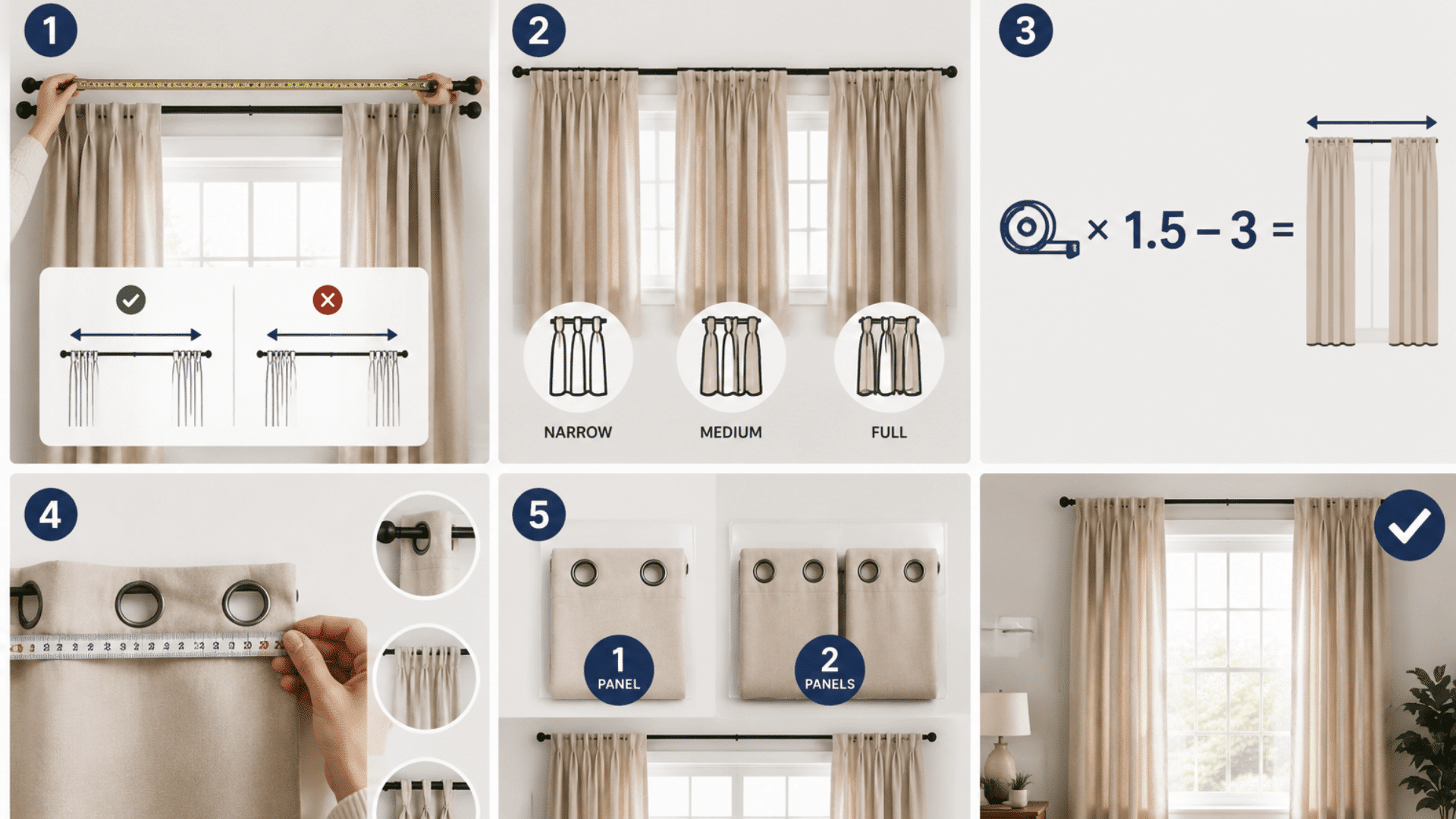
Step 1: Measure the curtain rod from one end to the other. If the rod isn’t installed yet, use the planned rod width instead of the window width.
Step 2: Decide how full you want the curtains to look when they are closed, since this will affect the total fabric width needed.
Step 3: Multiply the rod width by 1.5 to 3 times to determine the ideal curtain width range, depending on your preferred fullness.
Step 4: Check the width of each curtain panel before purchasing, as panel sizes can vary from product to product.
Step 5: Confirm how many panels are included in the set so the combined width is enough to fully cover the window.
How to Measure Curtain Length
To get the right curtain length, it helps to follow a clear step-by-step method so the final fit matches both your window and room style.
Step 1: Measure from the top of the curtain rod down to where you want the curtains to end. If using rings or clips, include their length in the measurement.
Step 2: Decide the desired finish point, such as windowsill, just below the sill, or floor length, based on your room style and preference.
Step 3: Consider how the curtains will sit in the space, since floor-length styles often create a more complete look compared to shorter options.
Step 4: Compare your measurements with available curtain sizes to find the closest match that fits your requirements.
Step 5: Double-check all dimensions before ordering to ensure the final length matches your window setup.
Choosing the Right Curtain Size for Your Windows
Before jumping into curtain selection, it helps to understand how different sizing choices impact fit, coverage, and overall look.
- Match Curtain Size to Window Needs: Once measurements are ready, choose curtain dimensions that fit the window size and provide the right level of coverage for daily use.
- Check Both Width and Length: Always compare both dimensions before buying, since a curtain may fit the width but still be too short or too long.
- Review Panel Count: Pay attention to whether the set includes one panel or two, as this directly affects the total coverage across the window.
- Compare Standard Sizes Carefully: If your measurements fall between standard sizes, check product details closely and choose the closest suitable option.
- Consider Custom Drapes: For windows that do not fit standard sizes well, custom drapes can provide a cleaner, more precise fit.
- Add Extra Width for Large Windows: Larger windows, sliding doors, and irregular shapes often need more fabric width to ensure full coverage when closed.
Tip: Before placing an order, compare your measurements with the product’s finished dimensions rather than relying solely on the size listed in the product title.
Measuring Curtains for Different Window Types
Not all windows follow the same measuring method, and choosing the right approach depends on the shape and structure of each opening. Here’s a simple breakdown to help guide the correct way to measure different window types before selecting curtain sizes.
| Window Type | How to Measure | Key Focus |
|---|---|---|
| Standard windows | Measure curtain rod width and the desired curtain length | Simple width + drop is usually enough for sizing |
| Bay windows | Measure each section separately instead of treating it as one | Ensures even coverage across all window panels |
| Sliding glass doors | Measure the full width of the door opening | Curtains should fully cover when closed |
| Tall or oversized windows | Measure from the rod position to the desired endpoint | Helps ensure enough length for full coverage |
| Corner windows | Measure each window individually and include rod overlap | Prevents gaps where rods meet |
| Mixed window styles | Keep separate measurements for each window type | Makes shopping and ordering more organized |
Final Thoughts
Curtain sizing isn’t a one-size-fits-all decision. Factors such as rod placement, panel width, window style, and available product sizes all play a role in finding the right fit.
By taking a careful approach and reviewing the details before ordering, you can narrow down your options more effectively and choose curtains that work well for your space.
Once you have the correct measurements, comparing curtain types and sizes becomes much easier.
This can help you shop with greater confidence and select window treatments that meet both your practical needs and personal preferences.
Frequently Asked Questions
Can Curtains Help Improve Energy Efficiency?
Yes. Thermal or insulated curtains can help reduce heat loss during colder months and limit heat gain during warmer months, potentially improving indoor comfort.
What Curtain Fabric is Best for Blocking Sunlight?
Heavier fabrics, such as velvet and blackout-lined materials, are often more effective at reducing incoming light than lightweight fabrics like sheer curtains.
Should Curtains Match the Wall Color?
Not necessarily. Some people prefer curtains that blend with the wall color for a subtle look, while others choose contrasting colors to create more visual interest.
How Often Should Curtains Be Cleaned?
Cleaning frequency depends on the room and fabric type. Curtains in kitchens or homes with pets may need more frequent cleaning due to dust, odors, and airborne particles.
Can Curtains Make a Room Look Larger?
Yes. Hanging curtain rods higher and wider than the window frame can draw the eye upward and outward, which may help create a more spacious appearance.