

A good pillow is often overlooked until sleep quality starts to suffer. Over the years, I have noticed that even a comfortable mattress cannot compensate for a pillow that lacks the right support.
The market offers a wide variety of pillows, each designed with different materials, shapes, and comfort levels. What feels comfortable for one person may not suit another.
Sleep specialists often highlight the importance of proper neck and spinal support during sleep. The right pillow plays an important role in achieving that comfort.
In this blog, I will cover the different types of pillows, their features, and their benefits. This information can help you choose an option that matches your sleeping habits and preferences.
How a Good Pillow Supports Better Sleep
A good pillow does more than provide comfort. It helps keep the head, neck, and spine properly aligned, which can reduce strain and support a more relaxed sleeping position throughout the night.
Using the right pillow can make a noticeable difference in sleep quality. Proper support may help minimize frequent position changes, allowing the body to rest more comfortably and consistently.
A suitable pillow can also reduce pressure on sensitive areas such as the neck and shoulders. When comfort and support are balanced, it becomes easier to wake up feeling refreshed and ready for the day.
Different Types of Pillows Based on Filling Material

Pillows are often classified by their filling material, as it directly affects comfort, support, breathability, and durability. Understanding different fillings can help you choose a pillow that matches your sleeping preferences.
1. Memory Foam Pillows
Memory foam pillows contour to the shape of the head and neck, offering personalized support. From my experience, they provide reliable neck support and pressure relief, making them a good choice for side and back sleepers.
Benefits:
- Excellent neck and head support
- Promotes proper spinal alignment
- Helps reduce pressure on the neck and shoulders
Works Best For: Side and back sleepers who need excellent neck support and pressure relief.
2. Latex Pillows
Latex pillows provide responsive support and maintain their shape well over time. They are often preferred by sleepers who want a supportive pillow without excessive sinking.
Benefits:
- Durable and long-lasting
- Naturally breathable
- Provides consistent support
Works Best For: Side and back sleepers who prefer a supportive, breathable, and durable pillow.
3. Down Pillows
Down pillows are filled with the soft undercoating of ducks or geese, giving them a plush and lightweight feel. They are a popular choice for sleepers who prefer a softer pillow.
Benefits:
- Soft and lightweight
- Easily adjustable
- Comfortable for stomach sleepers
Works Best For: Stomach sleepers and those who enjoy a soft, plush sleeping surface.
4. Feather Pillows
Feather pillows contain bird feathers and provide a balance between softness and support. Their flexible structure allows users to shape them according to their comfort preferences.
Benefits:
- Flexible and moldable
- Moderate support
- Cost-effective option
Works Best For: Combination sleepers who like adjusting their pillow for personalized comfort.
5. Polyester Fiberfill Pillows
Polyester fiberfill pillows are made from synthetic materials and are among the most widely available pillow types.
From my experience, they offer decent comfort for everyday use and are a practical choice for those seeking an affordable pillow.
Benefits:
- Budget-friendly
- Lightweight design
- Easy to maintain
Works Best For: Individuals looking for an affordable and low-maintenance pillow for everyday use.
6. Gel Pillows
Gel pillows incorporate cooling technology designed to regulate temperature during sleep. They are often preferred by individuals who tend to sleep hot.
Benefits:
- Cooling comfort
- Temperature regulation
- Supportive cushioning
Works Best For: Hot sleepers and people who prefer a cooler sleeping environment.
7. Buckwheat Pillows
Buckwheat pillows are filled with natural hulls that adapt to the shape of the head and neck. They provide firm support while allowing excellent airflow.
Benefits:
- Adjustable support
- Excellent breathability
- Durable filling material
Works Best For: Sleepers who enjoy firm support and customizable pillow height.
8. Cotton Pillows
Cotton pillows use natural cotton fibers to create a soft and breathable sleeping surface. They are often chosen by people who prefer natural bedding materials.
Benefits:
- Soft and breathable
- Natural filling
- Suitable for everyday use
Works Best For: People who prefer natural, breathable bedding materials for daily comfort.
Different Types of Pillows Based on Purpose and Design
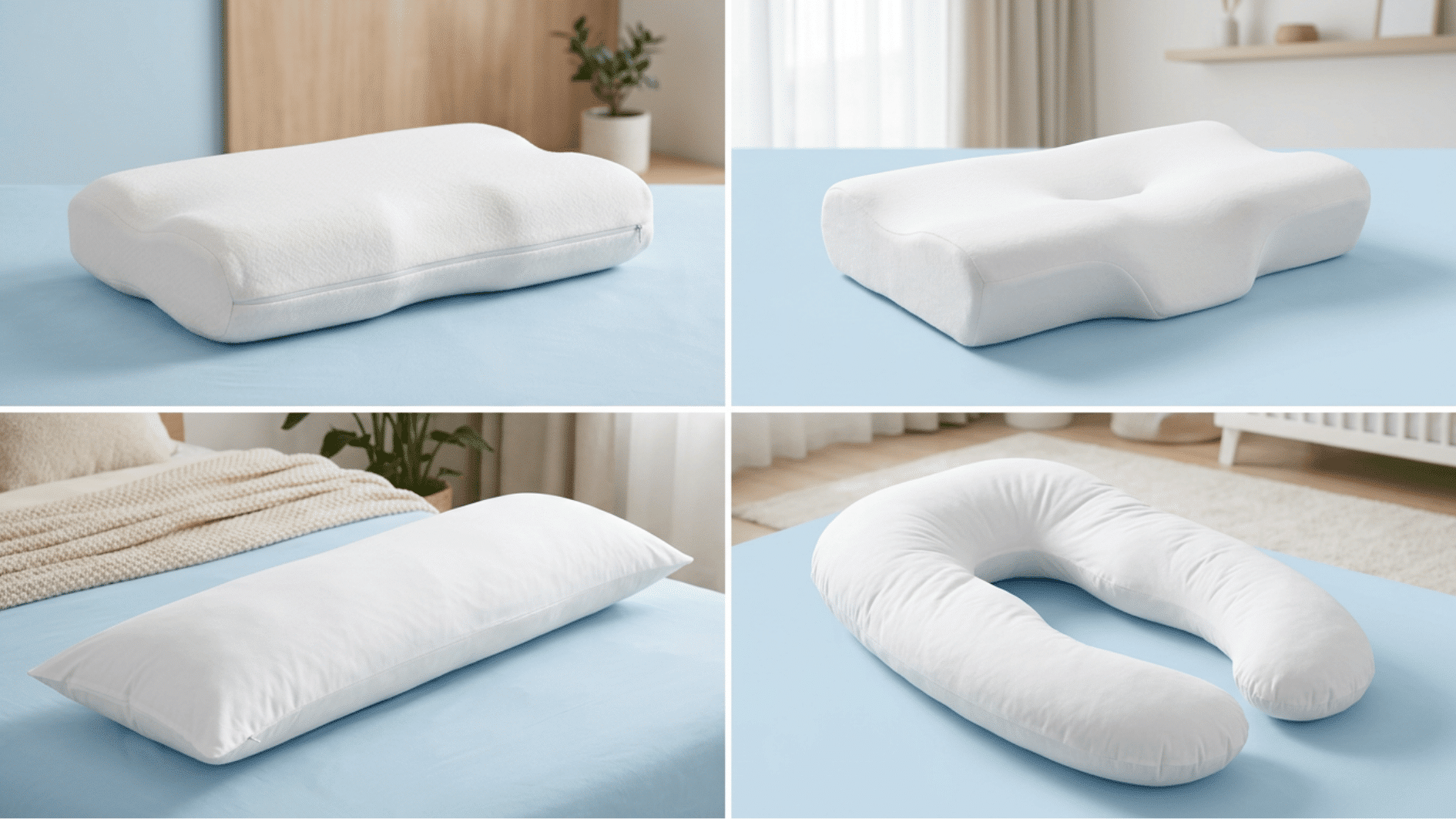
While filling materials influence a pillow’s feel, some pillows are designed for specific comfort and support needs. Their unique shapes help address different sleeping positions and lifestyle requirements.
| Pillow Type | Purpose | Key Benefit | Suitable For |
|---|---|---|---|
| Orthopedic Pillow | Supports the spine and neck | Better alignment | People needing extra support |
| Cervical Pillow | Supports the neck curve | Neck pressure relief | Side and back sleepers |
| Body Pillow | Supports multiple body areas | Full-body comfort | Side sleepers |
| Pregnancy Pillow | Supports the abdomen and back | Reduced body strain | Pregnant women |
| Wedge Pillow | Elevates the body | Improved positioning | Reading and resting |
| Travel Pillow | Supports the neck while traveling | Portable comfort | Frequent travelers |
| Knee Pillow | Fits between the knees | Better lower-body alignment | Side sleepers |
| Lumbar Support Pillow | Supports the lower back | Improved posture | Office workers |
| Cooling Pillow | Regulates sleep temperature | Cooler sleep experience | Hot sleepers |
Key Factors to Consider When Choosing a Pillow
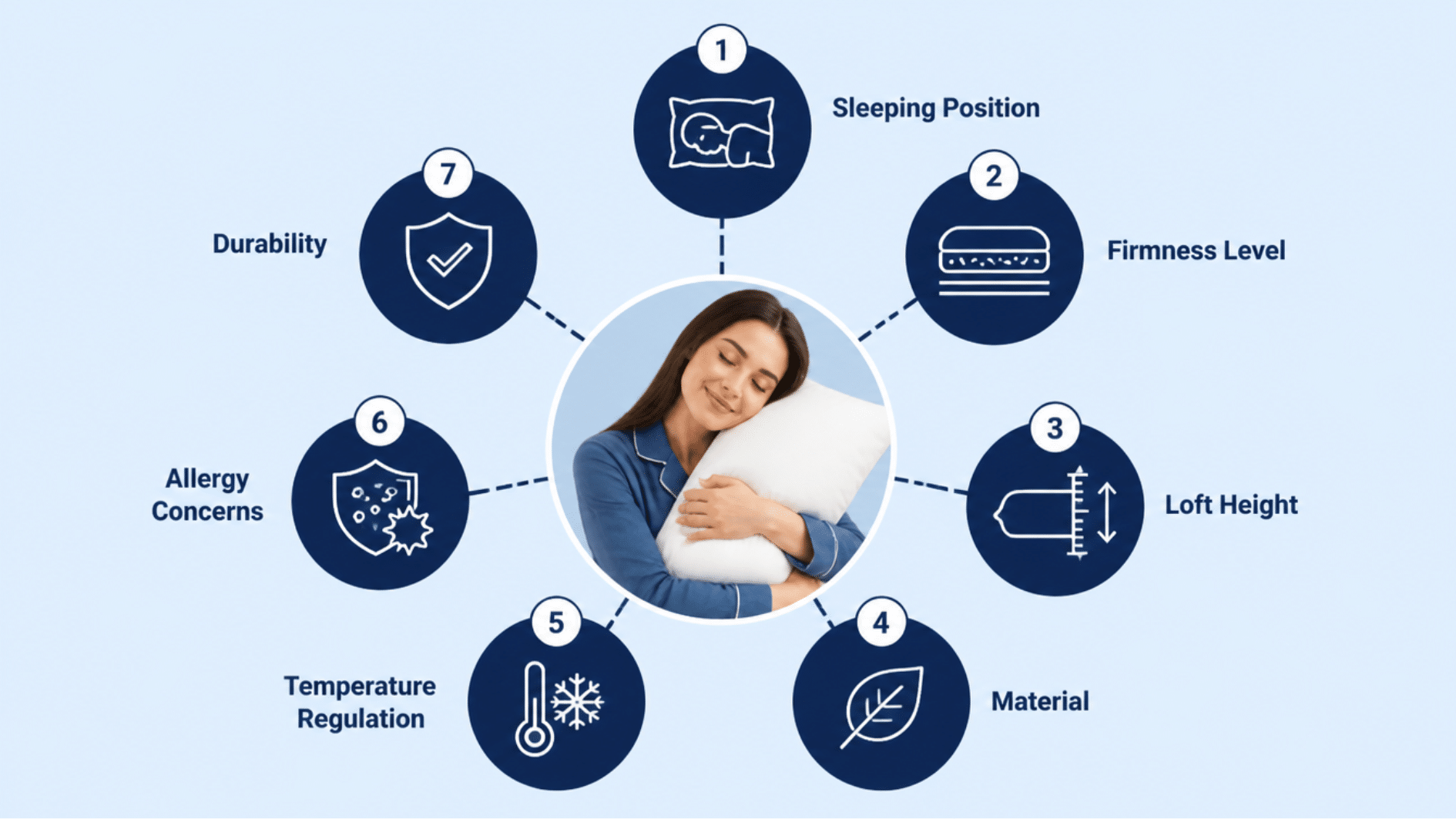
With so many pillow options available, selecting the right one can feel overwhelming. Paying attention to a few key factors can help you find a pillow that offers the comfort and support you need.
- Sleeping Position: Choose a pillow that complements your preferred sleeping position to maintain proper neck and spinal alignment.
- Firmness Level: Select a firmness level that provides adequate support without compromising comfort.
- Loft (Height): The pillow’s thickness should keep your head and neck in a neutral position while sleeping.
- Material: Different materials offer varying levels of support, breathability, and durability.
- Temperature Regulation: Cooling and breathable pillows can help create a more comfortable sleeping environment.
- Allergy Concerns: Hypoallergenic pillows may be a better option for people sensitive to common allergens.
- Durability: A durable pillow can retain its shape and support for a longer period, making it a worthwhile investment.
How Often Should You Replace Your Pillow?
Most pillows should be replaced every 1 to 2 years, but the exact timing depends on the material and how well you care for it.
Polyester pillows may lose shape faster, while latex and memory foam pillows often last longer. A pillow should be replaced when it feels flat, lumpy, stained, or no longer supports your head and neck properly.
You may also need a new pillow if you wake up with neck pain, shoulder stiffness, or allergy symptoms.
Regular washing, pillow protectors, and proper care can help extend its life, but no pillow lasts forever.
Conclusion
Choosing the right pillow can improve comfort and support during sleep. Understanding the available options can help you make a more informed decision.
From memory foam and latex to down and cotton, each pillow type offers unique characteristics. The ideal choice often depends on individual preferences, sleeping habits, and support requirements.
It is also important to consider factors such as sleeping position, firmness, loft, and breathability before making a purchase. Paying attention to these details can help ensure a more comfortable sleeping experience.
A well-chosen pillow can contribute to better rest and long-term comfort. Taking the time to select the right one can make a noticeable difference in your sleep routine.
Frequently Asked Questions
Should My Shoulders Be on My Pillow When I Sleep?
No, your shoulders should generally rest on the mattress while the pillow supports your head and neck. This position helps maintain proper spinal alignment and sleeping comfort.
What Pillow is Best for GERD?
A wedge pillow is often recommended for GERD because it elevates the upper body during sleep, which may help reduce acid reflux and improve comfort.
What Kind of Pillow is Best for Bruxism?
Memory foam and cervical pillows are often recommended for people with bruxism because they support proper neck alignment and may help reduce strain on the jaw during sleep.
What is the 2-2-1 Rule for Pillows?
The 2-2-1 rule is a pillow arrangement technique that uses two large pillows, two medium-sized pillows, and one accent pillow to create a balanced and visually appealing bed setup.