You’ve probably had mango sticky rice at a Thai restaurant and thought, “I could never make this at home.” But honestly? You can. This dessert looks fancy, yet it’s built from just a handful of simple ingredients you probably already know.
I remember thinking the same thing before I finally tried it myself; it turns out it’s way easier than it looks. Your kitchen doesn’t need anything special, just a little patience while the rice does its thing.
So if you’ve been craving that sweet, creamy, chewy combo, you’re in the right place. Here’s exactly how to make mango sticky rice from scratch.
What Is Mango Sticky Rice?
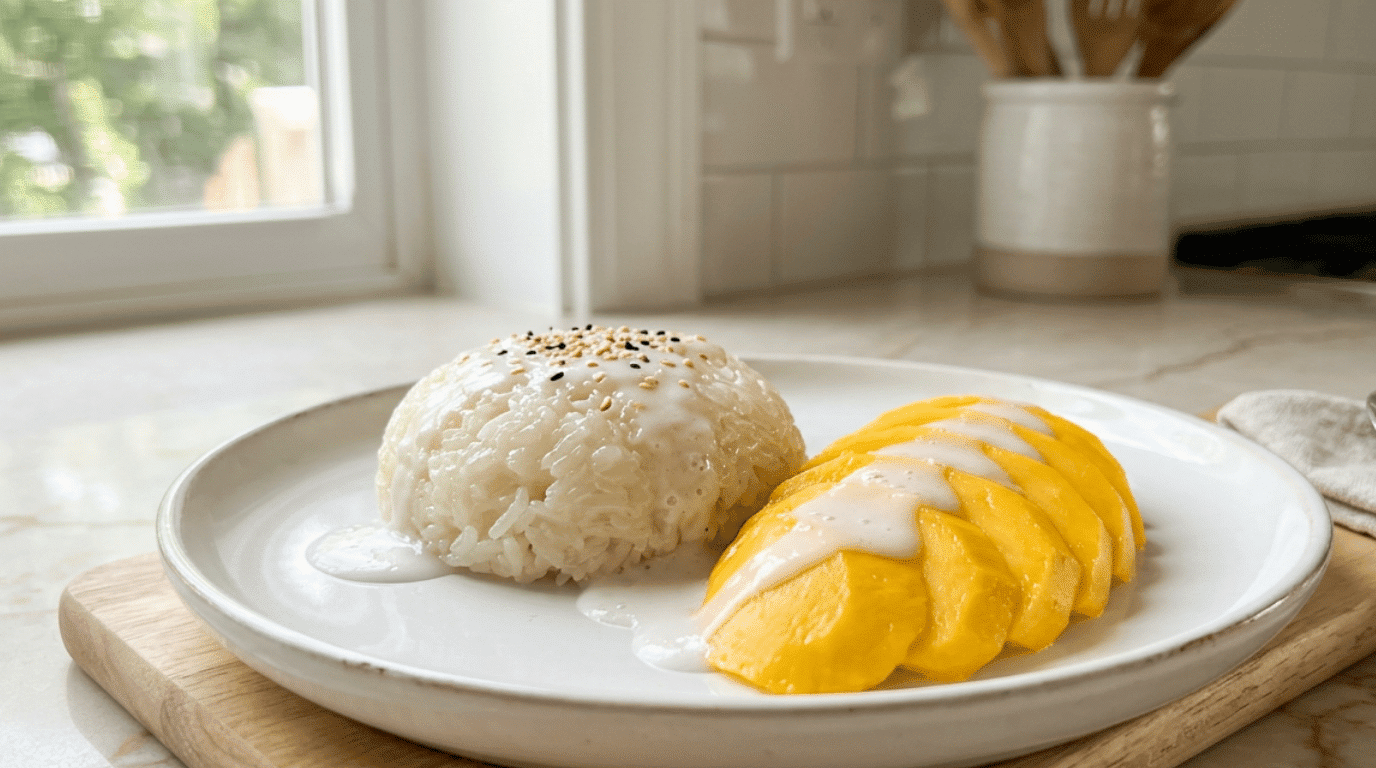
Mango sticky rice, known as khao niao mamuang, is a Thai dessert made with sweetened sticky rice, coconut milk, and ripe mango.
The dessert is part of Thailand’s broader traditional sweet culture, where coconut-seasoned sticky rice is served with different toppings, including mango.
Its appeal comes from the contrast of textures and flavors: chewy sticky rice, creamy coconut, and sweet, juicy mango.
Because the creaminess comes from coconut milk rather than dairy, this dessert also fits neatly alongside other dairy-free meals.
The dish has also become a well-known Thai dessert for visitors, with Thailand’s tourism materials highlighting mango served with sweetened sticky rice and coconut milk as a must-try dish.
Ingredients You’ll Need
The ingredients for mango sticky rice are simple, but each one plays an important role in creating the right balance of sweetness, creaminess, and texture.
| Ingredient | Quantity | Why Needed |
|---|---|---|
| Thai glutinous rice | 1 cup uncooked | Creates a soft, chewy texture |
| Coconut milk | 1 can (13.5 oz) | Adds rich, creamy flavor |
| Sugar | ½ cup | Sweetens the coconut sauce |
| Salt | ½ teaspoon | Balances sweetness and coconut flavor |
| Fresh mangoes | 2 large ripe mangoes, sliced | Adds natural sweetness and freshness |
| Cornstarch or rice flour (optional) | 1 teaspoon | Thickens the coconut topping |
| Toasted sesame seeds or mung beans (optional) | 1–2 tablespoons | Adds extra texture |
How to Make Mango Sticky Rice From Start to Finish
Making mango sticky rice requires properly soaked sticky rice, a smooth coconut sauce, and correct steaming technique. Follow these simple steps to get the right texture and balanced flavor:
Prep Time: 4–12 hours (includes soaking)
Cook Time: 45–50 minutes
Total Time: About 5 hours (or overnight with soaking)
Step 1: Prepare and Soak the Sticky Rice
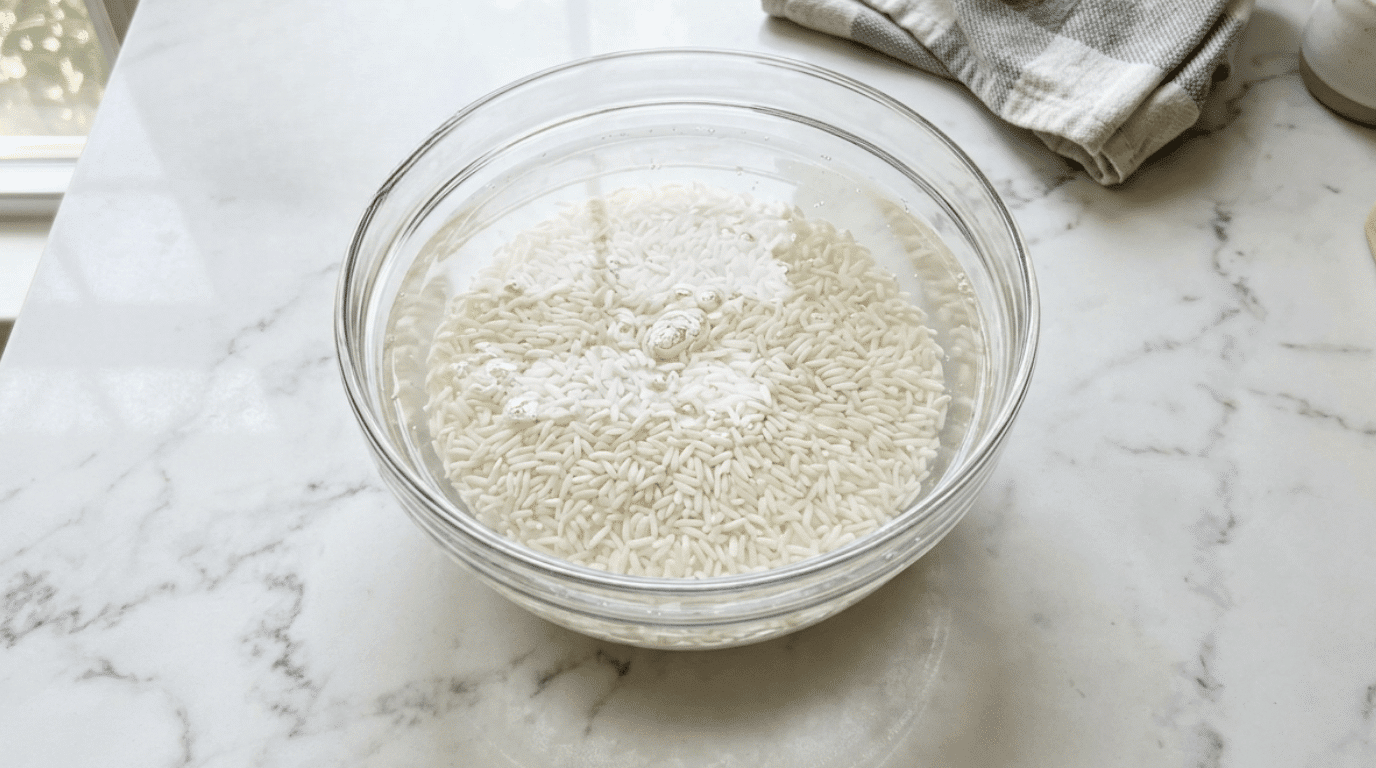
Good preparation sets up the grains for consistent cooking later. This stage takes patience, but most of that time is completely hands-off. I keep the following details in mind before moving ahead:
- Measure accurately: Start with 1 cup of Thai glutinous rice.
- Wash thoroughly: Rinse under cold running water until the liquid becomes mostly clear.
- Rub carefully: Move the grains between your fingers without crushing them.
- Use a roomy bowl: Leave enough space for the contents to expand.
- Submerge completely: Pour in enough water to cover everything generously.
- Wait 8–12 hours: Leave the bowl undisturbed or keep it overnight.
- Drain well: Remove all excess liquid before transferring it to the steamer.
Step 2: Steam the Rice Until Soft and Chewy
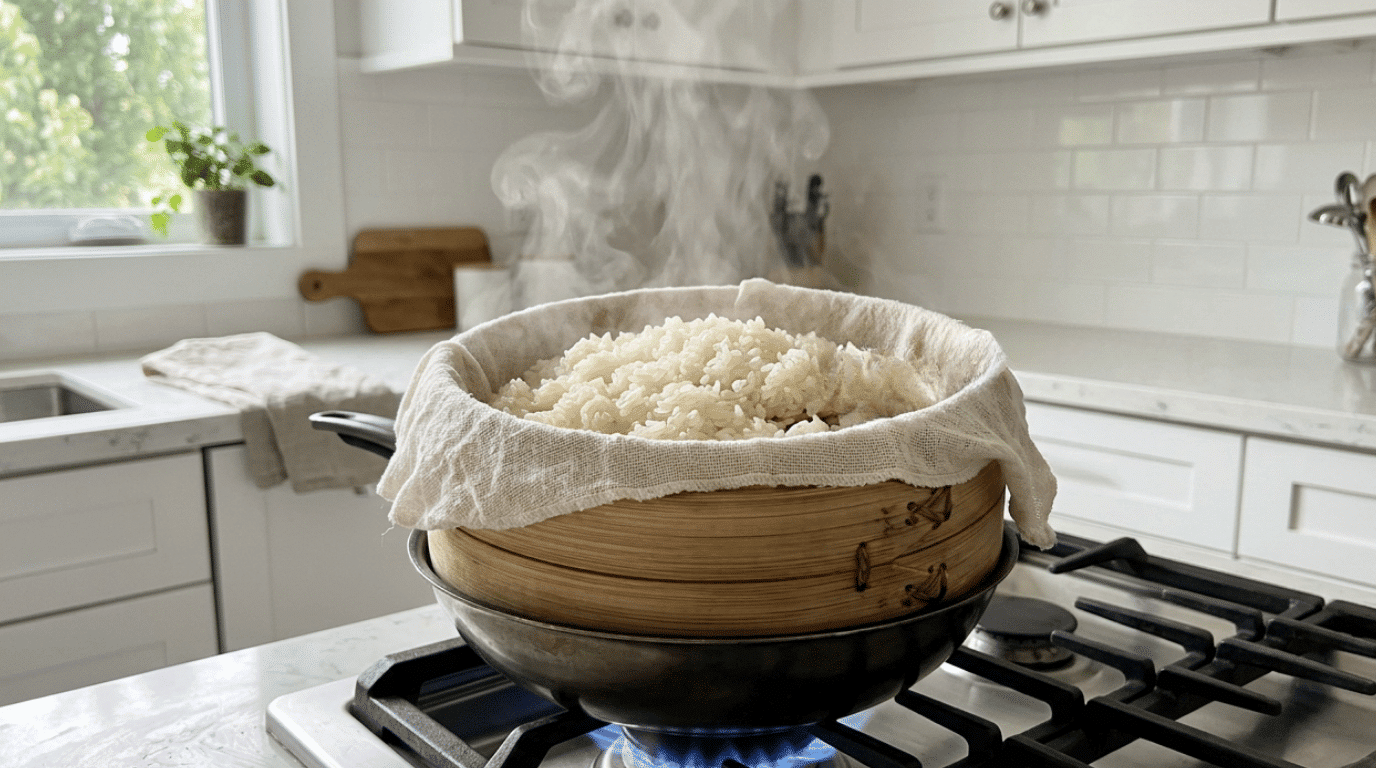
Steaming provides controlled cooking without surrounding the grains with boiling water. Done correctly, it produces the characteristic consistency needed for this dessert.
- Line the basket: Place cheesecloth or a clean kitchen towel inside the steamer.
- Arrange an even layer: Distribute the soaked grains without packing them tightly.
- Allow circulation: Leave enough room for vapor to travel throughout the basket.
- Cook 25–30 minutes: Begin checking for doneness toward the end.
- Test a grain: It should feel tender with a pleasant chew.
- Check the appearance: Properly cooked grains become slightly translucent.
- Avoid overcooking: Stop before they turn mushy or lose their individual shape.
Step 3: Make the Sweet Coconut Sauce
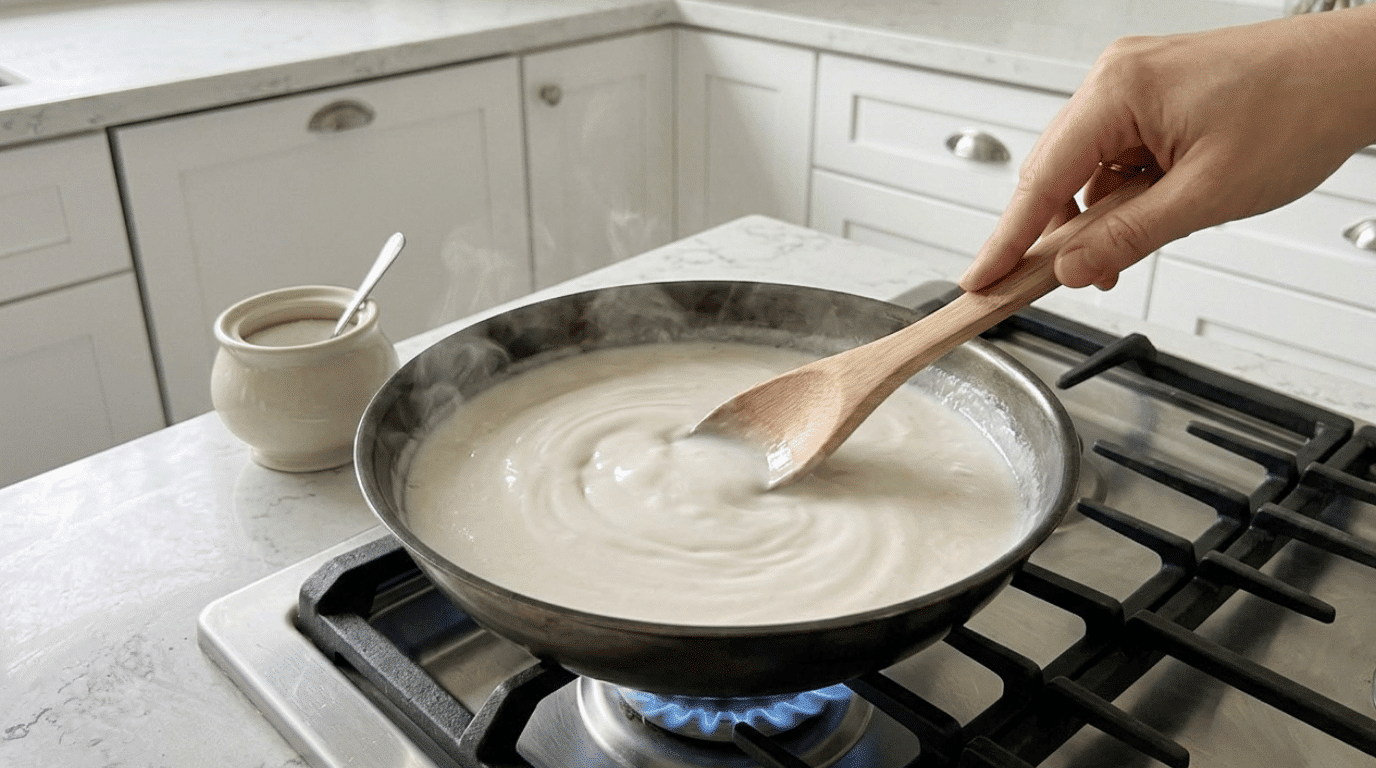
This mixture supplies the dessert’s signature richness and sweet-salty balance. Careful temperature control also helps produce a consistent finish. Focus on these details while working at the stove:
- Measure first: Portion the coconut milk, sugar, and salt before starting.
- Combine in a saucepan: Add all three ingredients to the same pan.
- Set low heat: Keep the burner at a gentle temperature throughout cooking.
- Stir regularly: Stir the mixture to prevent scorching.
- Dissolve completely: Continue until no visible sugar crystals remain.
- Avoid boiling: Strong bubbling can cause the coconut milk to separate.
- Set some aside: Reserve a portion for finishing the plated dessert.
Step 4: Mix the Sticky Rice With Coconut Sauce
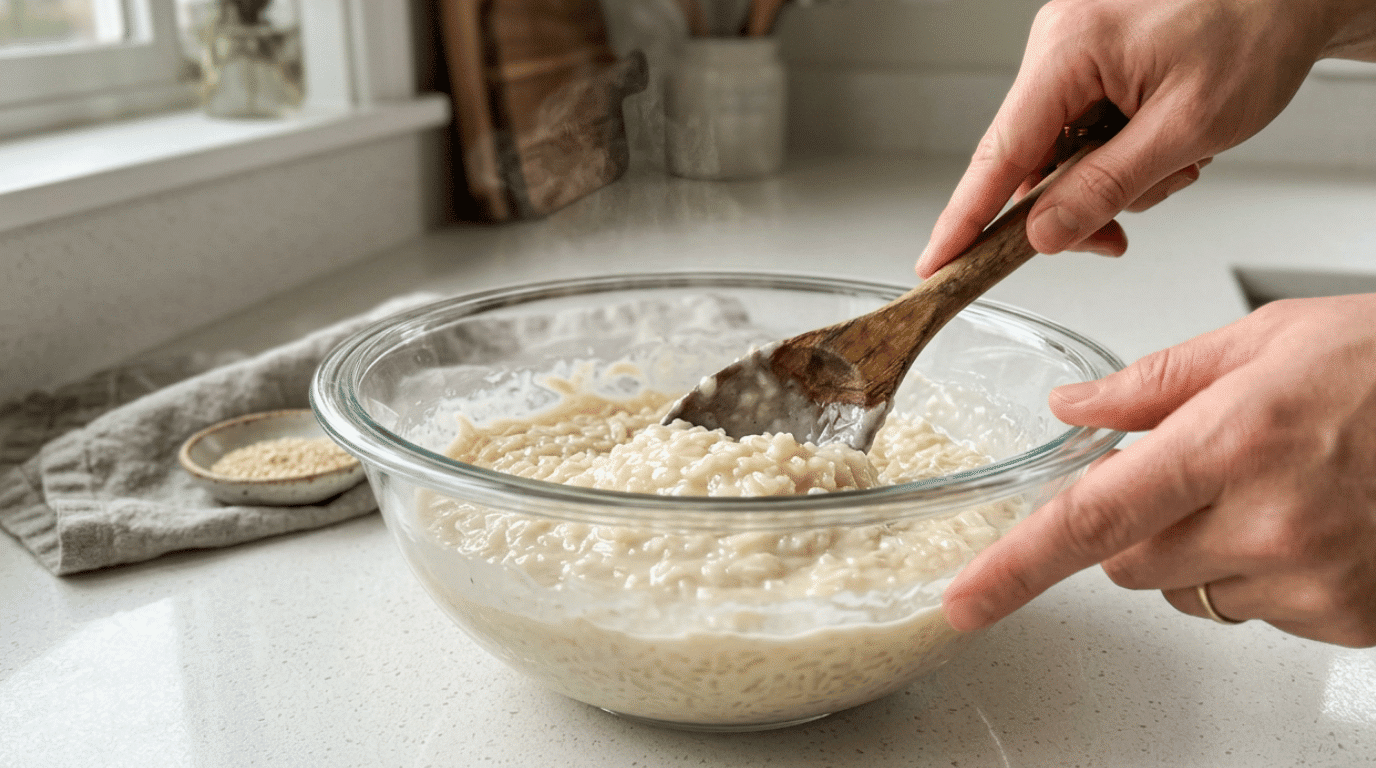
Now the two main components come together and develop the dessert’s familiar richness. A short waiting period is especially important at this stage. I follow these cues for the best consistency:
- Work while warm: Transfer the freshly steamed rice into a heat-safe bowl.
- Pour gradually: Distribute most of the coconut mixture across the surface.
- Fold carefully: Turn everything together without crushing the cooked grains.
- Coat throughout: Make sure the mixture reaches the entire batch.
- Wait 15–20 minutes: Leave the bowl undisturbed while it absorbs.
- Check consistency: The finished rice should feel moist, not watery.
- Adjust if necessary: Spoon in some reserved mixture when the batch seems too dry.
Step 5: Serve Mango Sticky Rice With Fresh Mango
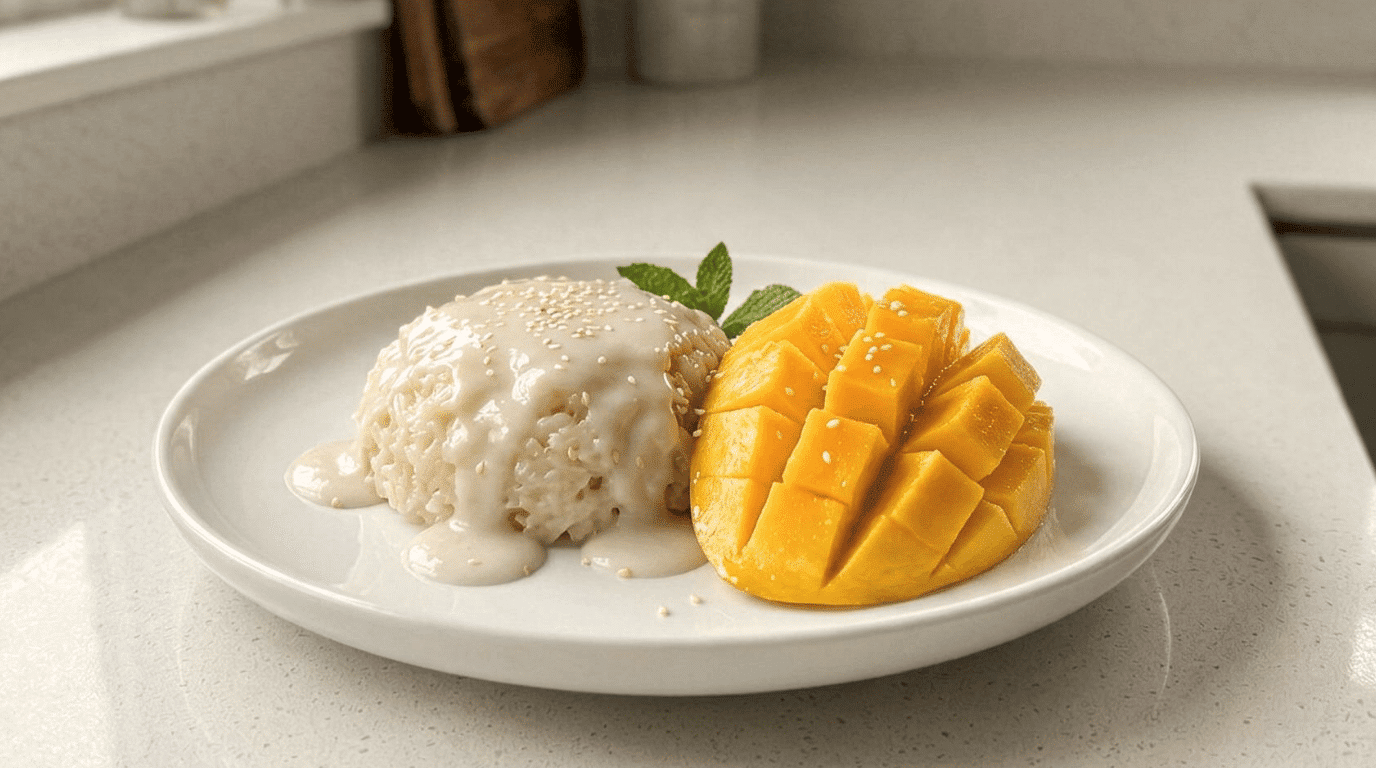
The final stage brings a cool, fruity element to the finished dessert. A little attention to fruit selection and presentation makes a noticeable difference. Complete the plate using these finishing touches:
- Pick ripe fruit: Choose mangoes with a fragrant aroma and slight give when pressed.
- Remove the skin: Peel carefully without taking away too much flesh.
- Cut around the pit: Separate both fleshy sides cleanly from the center.
- Make even pieces: Cut into thin strips or bite-sized chunks.
- Portion the dessert: Spoon the prepared sticky rice onto individual plates.
- Arrange alongside: Position the cut fruit next to the rice rather than mixing it in.
- Add the finishing drizzle: Spoon the reserved coconut mixture over the top before eating.
What Rice Do You Use for Mango Sticky Rice?
Thai glutinous rice is the right choice for mango sticky rice because it gives the dessert its signature soft, sticky, and chewy texture.
It may also be labeled sticky rice or sweet rice at Asian grocery stores or online.
Regular white rice, jasmine rice, and basmati rice will not provide the same texture because their grains tend to stay separate when cooked.
If Thai glutinous rice is unavailable, look for sweet or sticky rice rather than substituting a regular rice variety.
Mango Sticky Rice Variations You Can Try
Traditional mango sticky rice is delicious on its own, but simple changes can create new ways to enjoy this Thai dessert. Try these variations while keeping the creamy coconut sauce and chewy sticky rice as the base:
1. Add Different Fresh Fruits
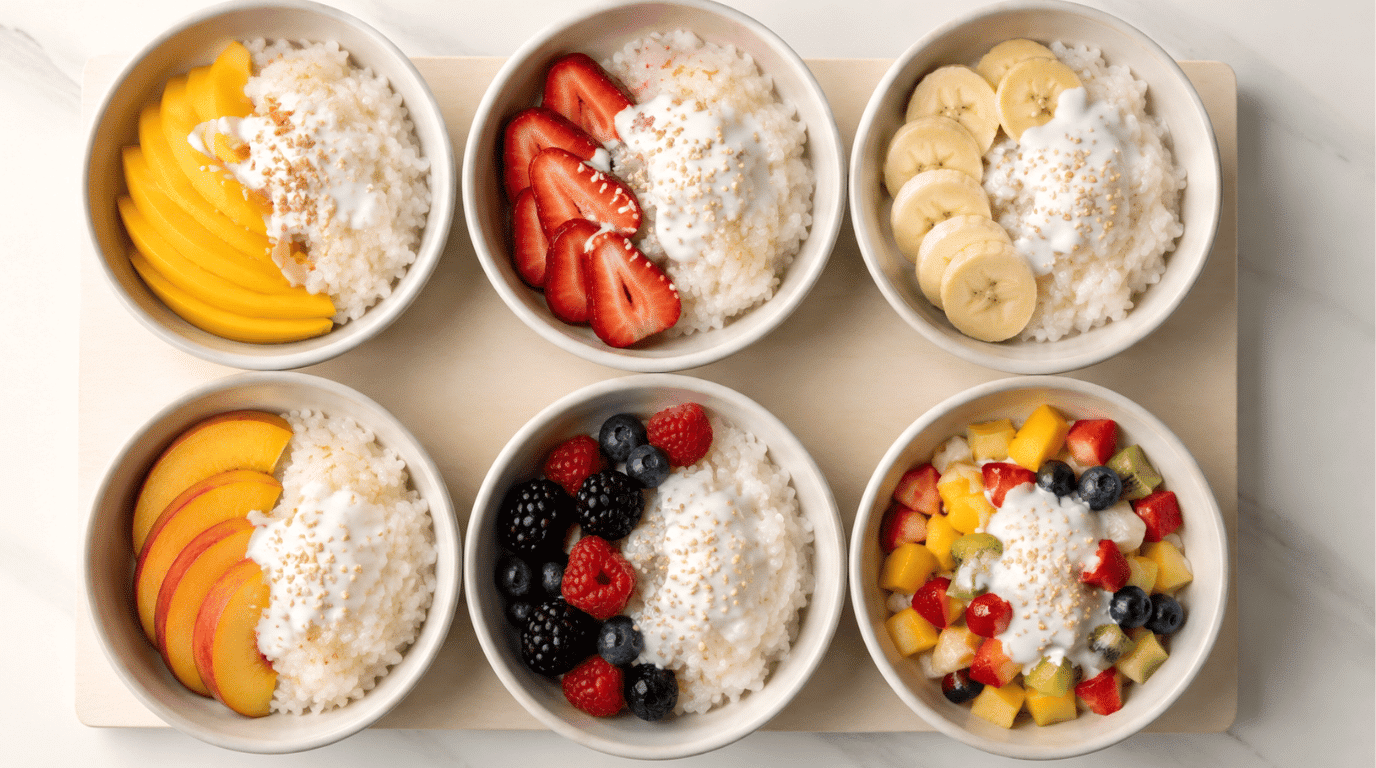
Mango is traditional, but other ripe fruits can bring their own sweetness and texture to the dessert. Strawberries, bananas, peaches, or berries can work well alongside the coconut sticky rice.
Choose soft, naturally sweet fruit and cut it shortly before serving. You can also combine mango with another fruit rather than replacing it completely.
2. Make Mini Mango Sticky Rice Cups
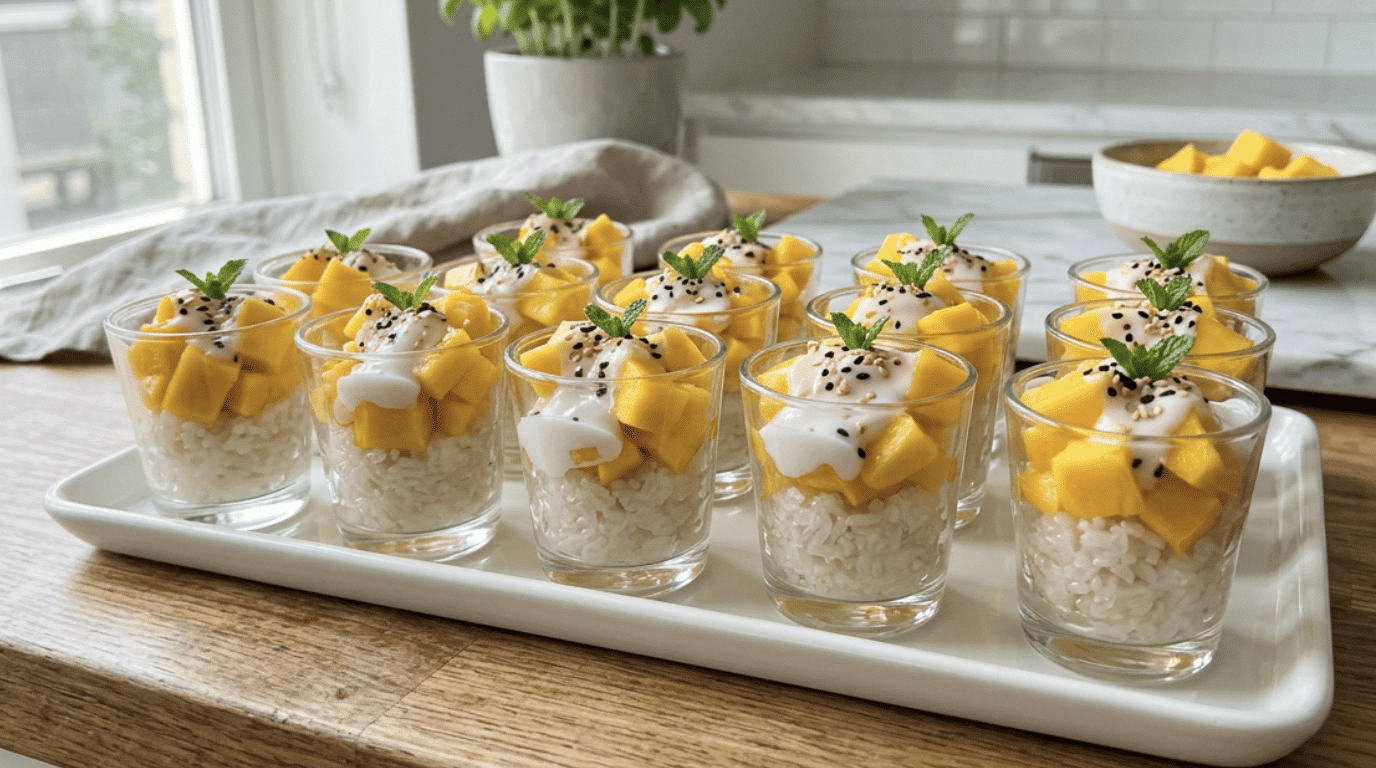
Individual cups turn mango sticky rice into an easy-to-serve dessert for parties and gatherings. Add a small portion of coconut sticky rice to each cup, then top it with sliced or diced mango.
Keep the portions small enough to eat comfortably with a spoon. Add fresh fruit and any toppings close to serving time for the best texture.
3. Serve With Coconut Ice Cream
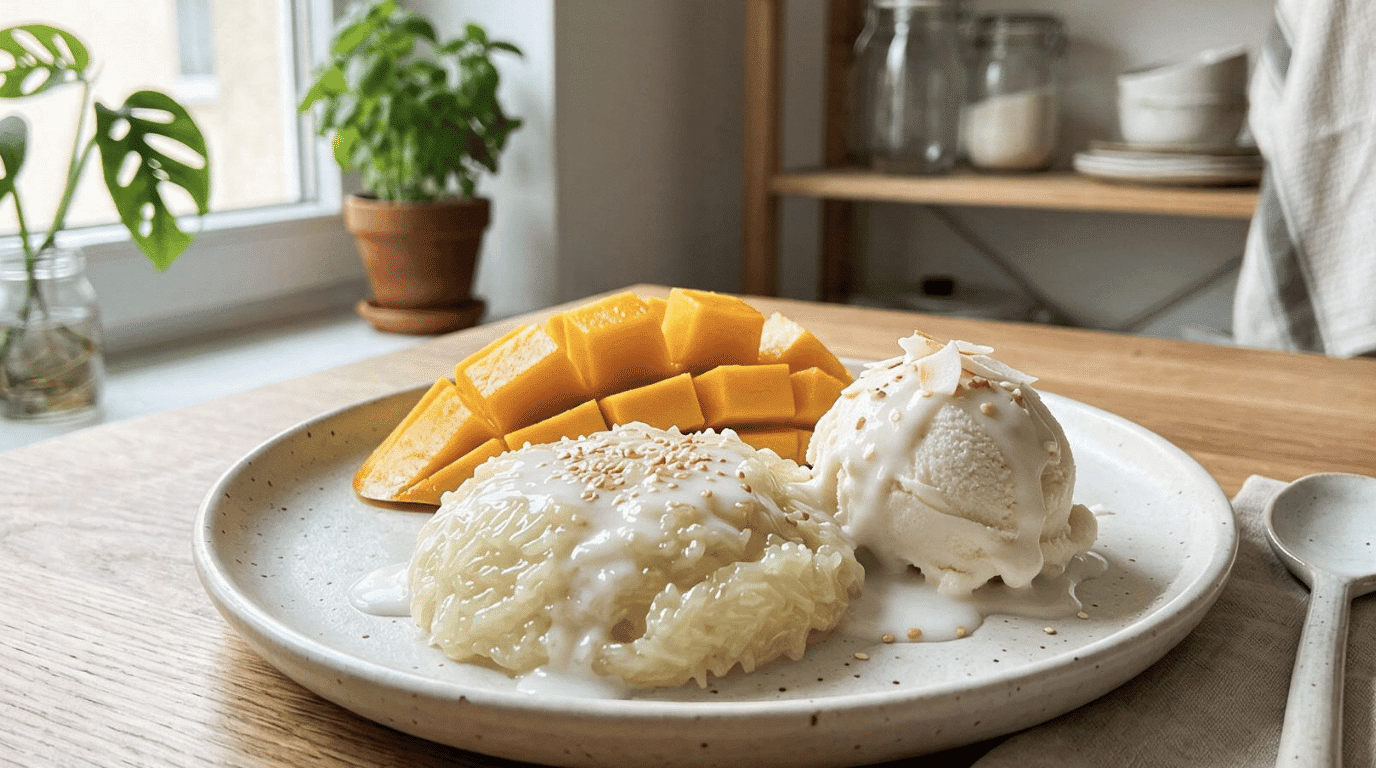
Coconut ice cream adds a cool, creamy contrast to the soft sticky rice and fresh mango. Serve one small scoop beside the dessert rather than mixing it into the rice.
Warm or room-temperature sticky rice creates an enjoyable temperature contrast. Add the ice cream at the last moment so it does not melt before serving.
4. Add Coconut Flakes and Sesame Seeds for Crunch
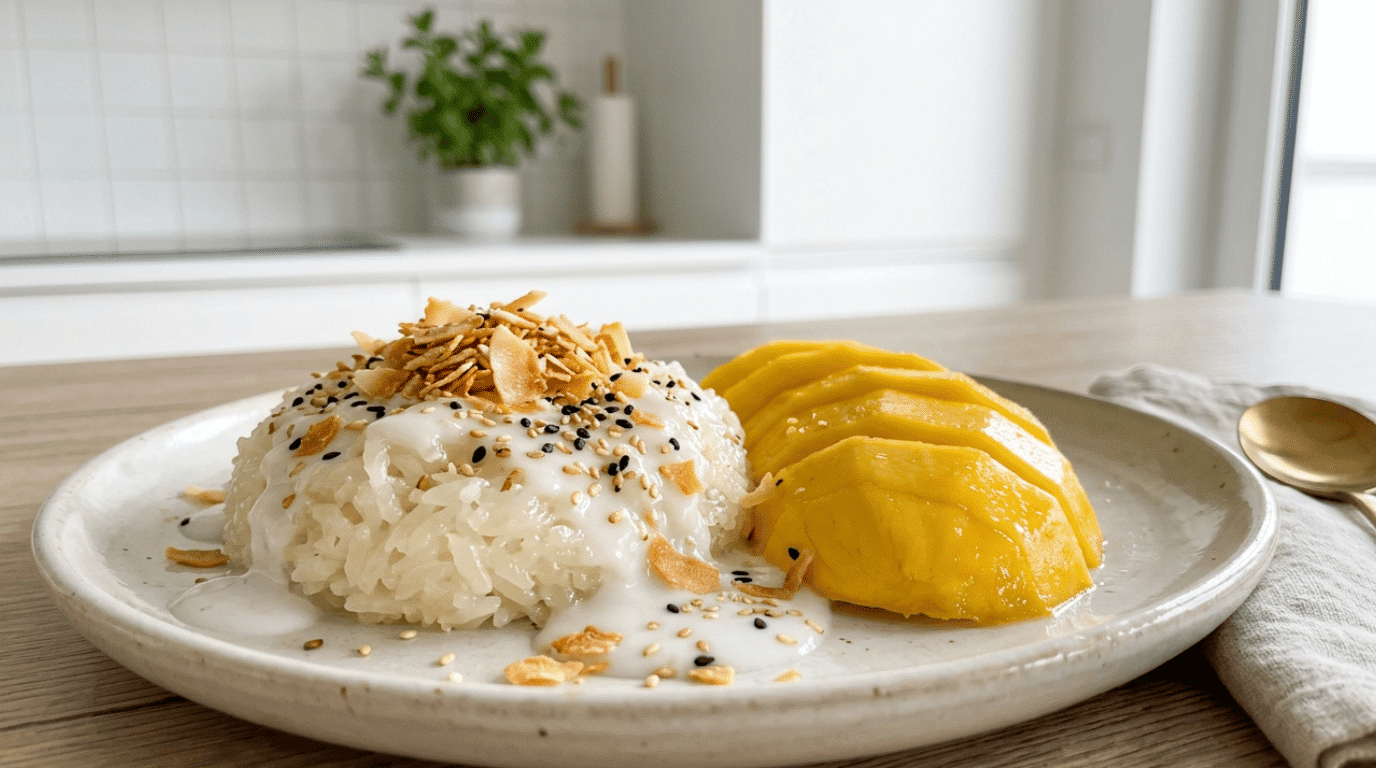
Toasted coconut flakes and sesame seeds add a crisp finish without overpowering the main flavors. Toasting also brings out their aroma and gives the toppings a deeper taste.
Sprinkle a small amount over the finished dessert just before serving. This works especially well when you want more texture without changing the main recipe.
5. Try Crispy Mung Beans
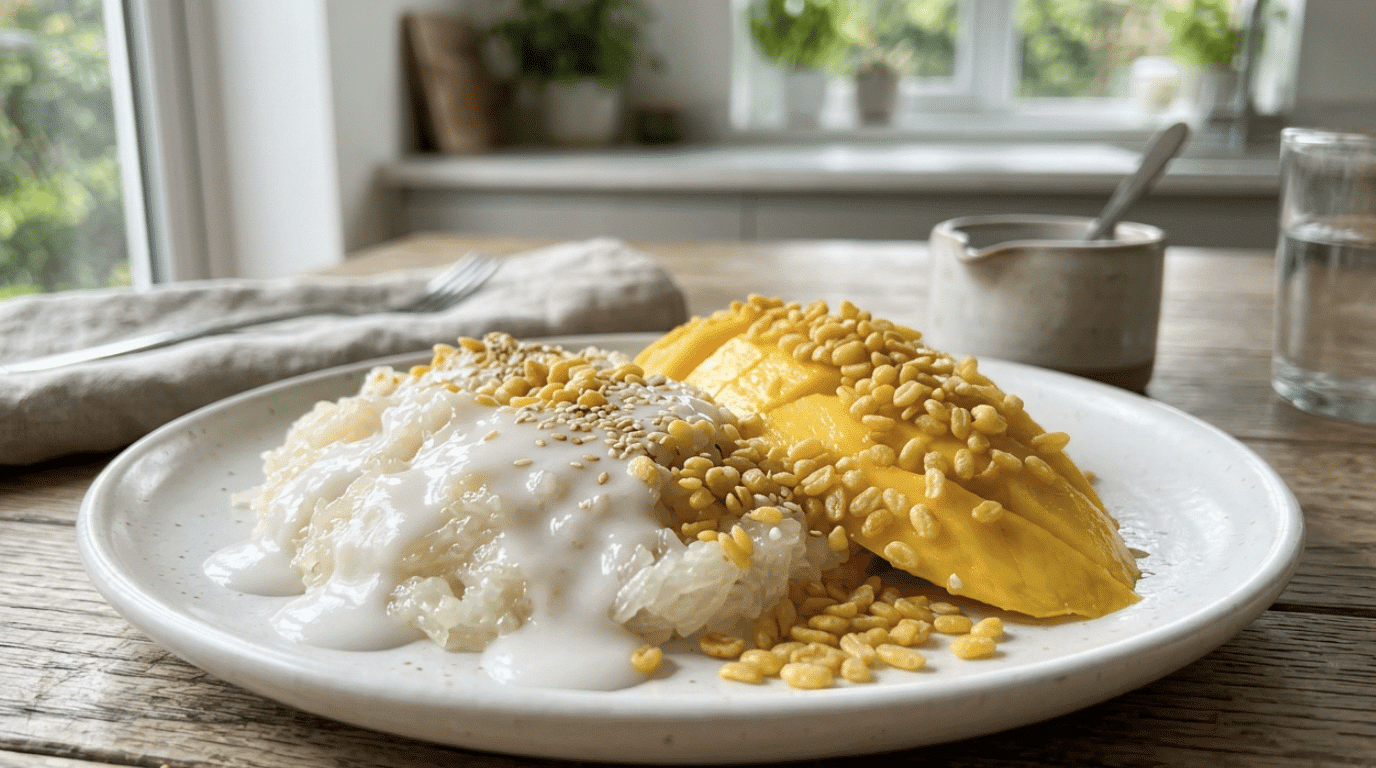
Crispy mung beans provide a light crunch that contrasts with the tender rice and juicy mango. In Thailand, toasted or crispy mung beans are also a familiar topping for mango sticky rice.
Scatter them over the dessert shortly before serving to keep them crisp. A small amount is usually enough to add texture to each bite.
6. Make Mango Sticky Rice Sushi
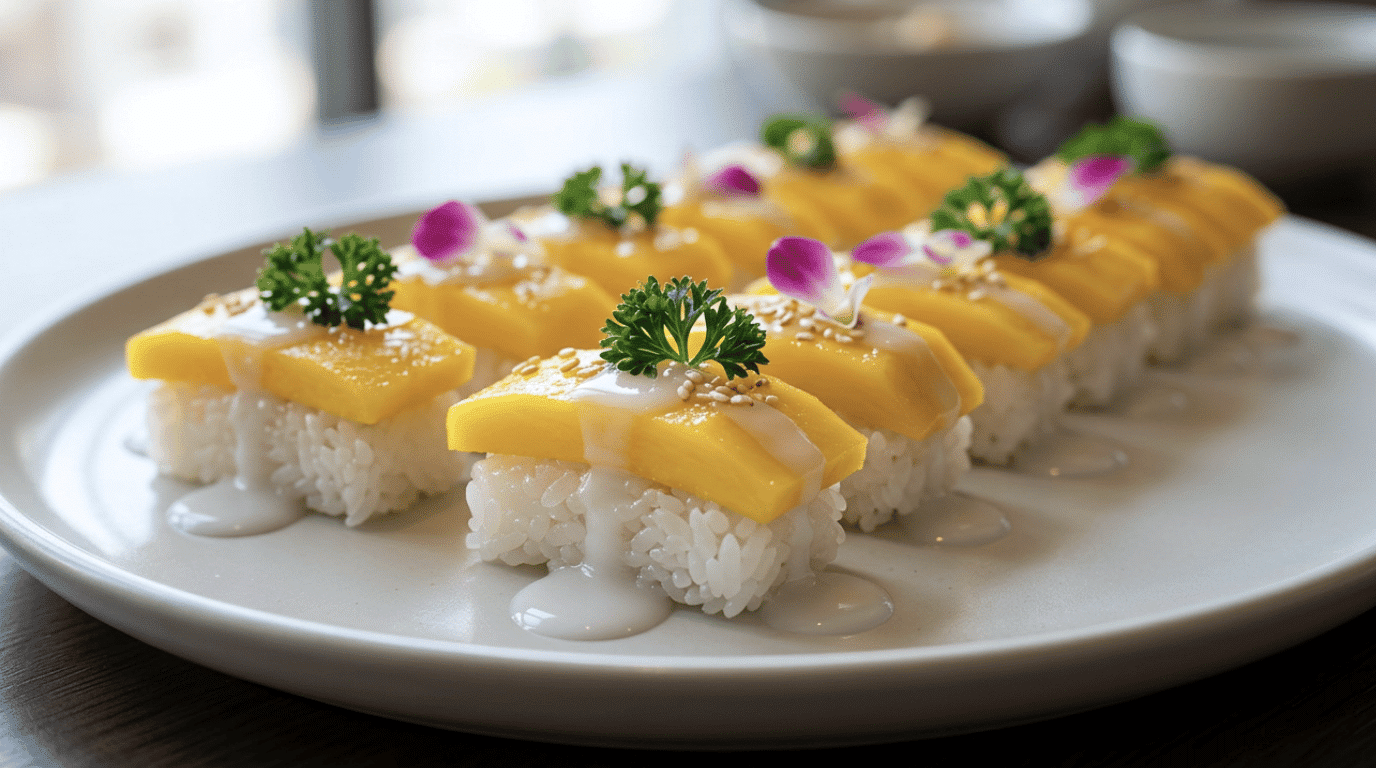
Turn the dessert into bite-sized pieces for a playful party presentation. Shape cooled coconut sticky rice into small rectangles, then place a thin slice of ripe mango neatly over each piece.
Finish with a light coconut drizzle or a few sesame seeds. These sushi-inspired bites are an adaptation, not a traditional way of serving Thai mango sticky rice.
Simple Solutions for Mango Sticky Rice Problems
Mango sticky rice can turn out too hard, mushy, dry, or overly sweet when the cooking time or ingredient balance is off. Most of these problems have a simple cause.
| Problem | Likely Cause | Simple Fix |
|---|---|---|
| Rice is hard | Short soaking or not enough steaming | Steam longer and allow enough soaking time next batch |
| Rice is mushy | Excess moisture or overcooking | Reduce cooking time and avoid cooking directly in water |
| Rice feels dry | Too little coconut mixture or poor absorption | Add a small amount of warm coconut mixture |
| Rice is too wet | Too much coconut mixture added at once | Let it rest longer before adding any more liquid |
| Rice is too sweet | Too much sugar in the coconut mixture | Reduce the sugar in the next batch |
| Rice is not sweet enough | Too little sugar for the amount of rice | Adjust the sugar while preparing the coconut mixture |
| Coconut sauce is too thick | Sauce was heated too long | Remove it from heat sooner and avoid strong boiling |
| Coconut sauce separates | Heat was too high | Warm coconut milk gently over low heat |
| Coconut flavor is weak | Too little coconut mixture was used | Check the rice-to-coconut mixture ratio |
| Rice cooks unevenly | Grains were crowded or steamed unevenly | Spread them evenly so steam can circulate properly |
The Right Way to Store Mango Sticky Rice
Store leftover mango sticky rice in an airtight container in the refrigerator and keep the fresh mango in a separate container. This helps protect the fruit’s texture and keeps extra moisture from affecting the rice.
For food safety, refrigerate leftovers within two hours of serving. When you are ready to eat, gently reheat the rice until hot throughout, adding a small splash of coconut milk if it feels dry.
I serve it with the chilled mango afterward. Avoid leaving cooked sticky rice at room temperature for long periods. For the best texture and flavor, enjoy refrigerated leftovers within a few days.
Wrapping It Up
And you’ve just made mango sticky rice from scratch, and honestly, that’s worth celebrating. What seemed like a fancy restaurant dessert is now something you can whip up whenever the craving hits.
I still remember how surprised I was the first time mine turned out this good. Once you get the hang of it, it barely feels like work anymore.
So go ahead, grab a spoon, and dig into the mango sticky rice you just made. You’ve earned every sweet, chewy bite.
Frequently Asked Questions
Can I Make Mango Sticky Rice Without a Steamer?
Yes, you can use a rice cooker or an alternative steaming setup, though the texture may vary slightly.
Can I Use Frozen Mangoes for Mango Sticky Rice?
Yes, frozen mangoes can work, but fresh ripe mangoes usually provide better flavor and texture.
What Type of Mango is Best for Mango Sticky Rice?
Sweet, low-fiber varieties like Ataulfo or Champagne mangoes work well because they are soft and naturally flavorful.