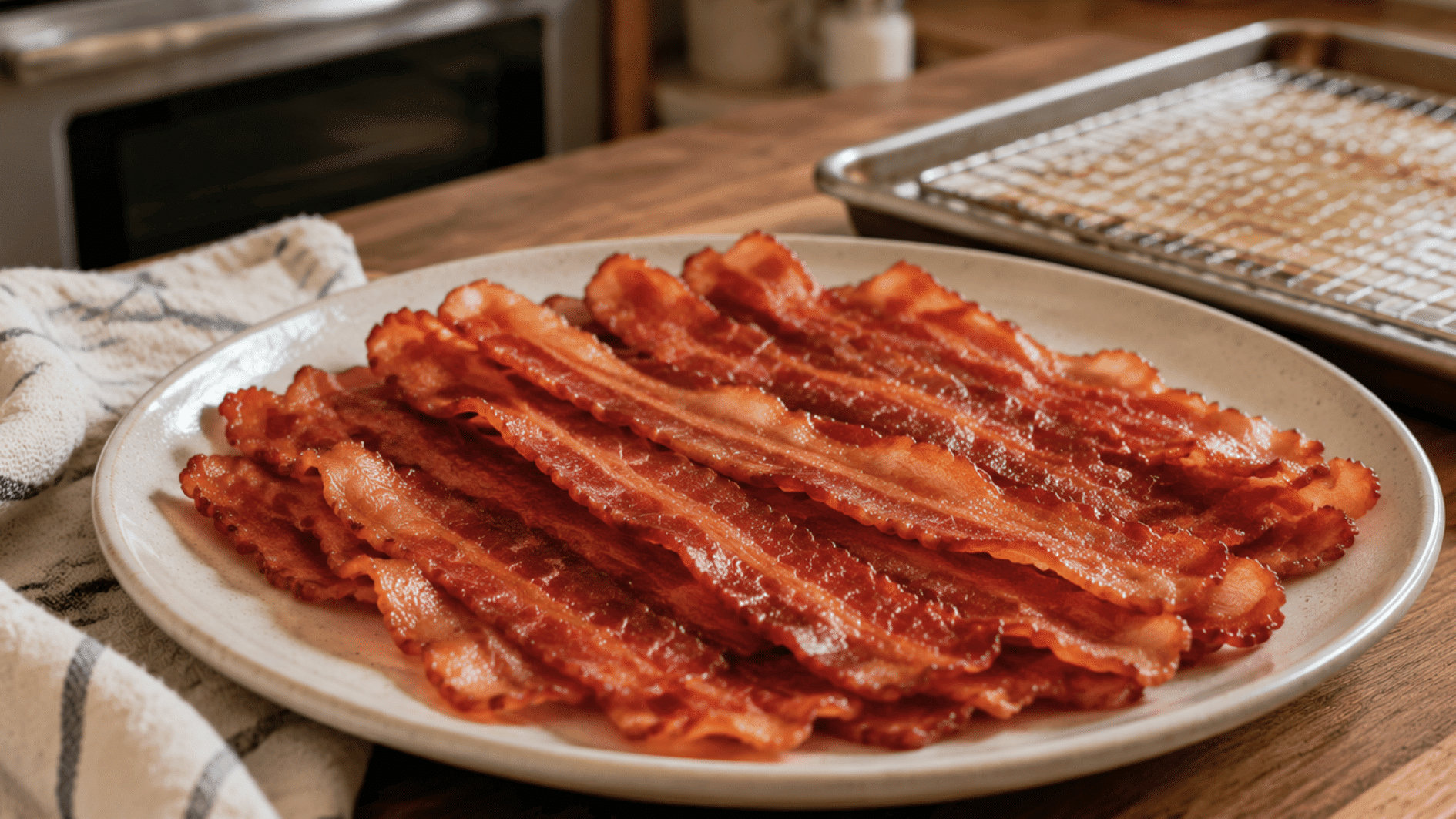
Bacon cooked in a hot oven turns out crispier than any stovetop batch I’ve made. No standing over spitting grease, no flipping every thirty seconds.
No burnt edges sitting next to raw middles either. I stumbled onto this method years ago, cooking for a crowd with only one skillet on hand.
Since then, it’s the only way I make bacon at home. Curious how a few strips on a plain baking sheet beat a hot pan every time? Stick around, because the real trick isn’t the bacon at all. It’s what happens underneath it.
Why Oven-Baked Bacon Works So Well
Oven heat exposes the bacon to steady heat across the tray, helping multiple strips cook more consistently than they often do in a crowded skillet.
A skillet blasts grease straight up the moment bacon hits hot metal. In the oven, grease stays low and drips onto the tray below instead of your stovetop, your shirt, or your forearm. This is only fully accurate when using a rack. Bacon placed directly on a sheet pan cooks in some of its rendered fat.
Cleanup takes seconds when the tray is lined with foil or parchment first. Fold the liner up, toss it, and the pan underneath still looks brand new.
A stovetop pan fits maybe four or five strips at a time, tops. A full sheet pan holds a dozen strips with room to spare, so a family breakfast stops feeling like a relay race between batches.
Ingredients and Tools List
Nothing on this list is complicated, and most of it is probably already sitting in your kitchen drawers. Here’s exactly what earns a spot on your counter before the oven even finishes preheating.
| Item | Quantity |
|---|---|
| Bacon | 8–12 strips |
| Rimmed baking sheet | 1 |
| Parchment paper or aluminum foil | 1 sheet |
| Wire rack (optional) | 1 |
| Tongs | 1 pair |
| Paper towels | 3–4 sheets |
Simple Steps to Bake Bacon Perfectly
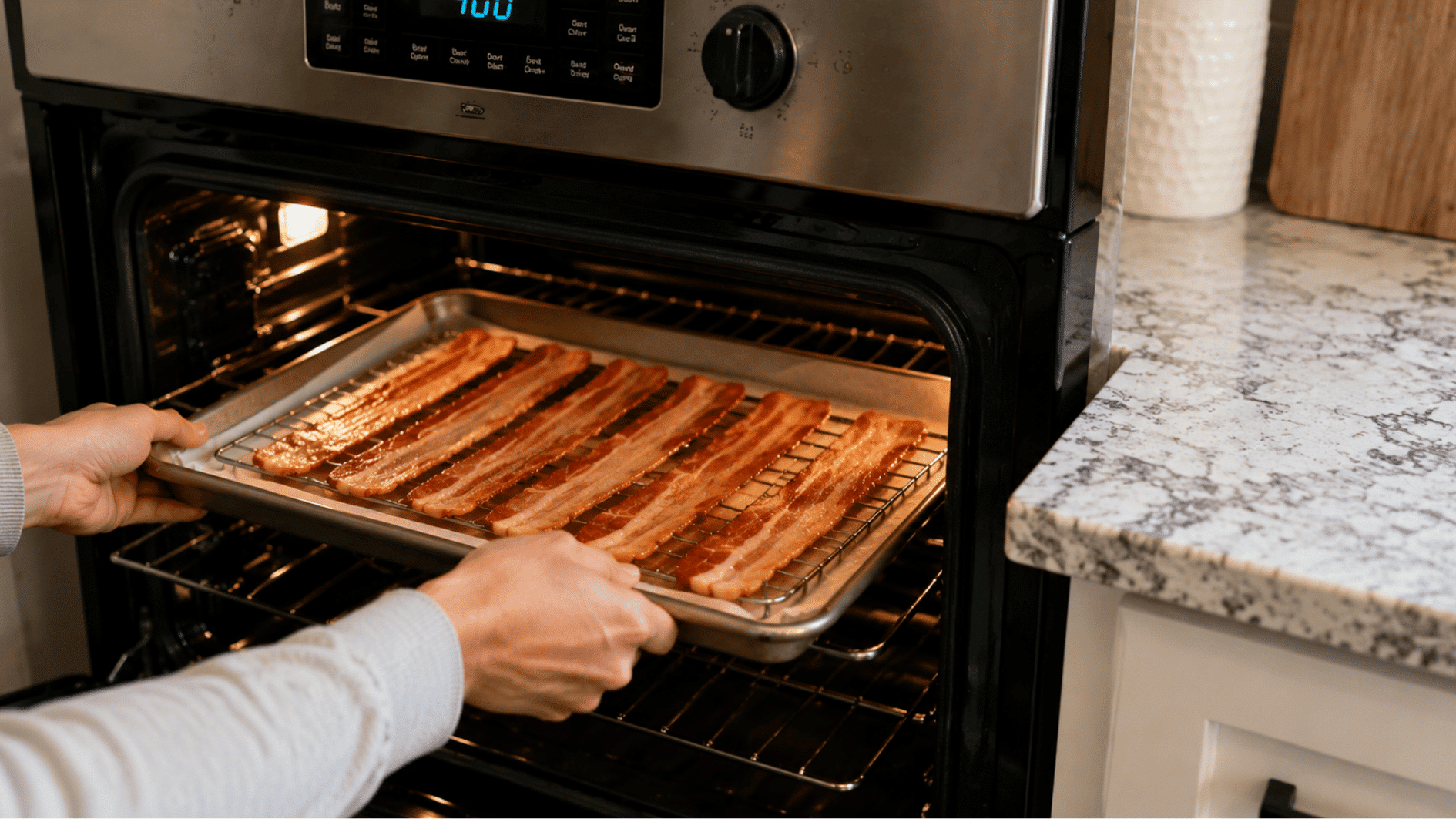
Learning how to make bacon in the oven is one of those kitchen tricks you’ll probably use again and again.
It takes very little effort, cooks several slices at once, and gives you crispy baked bacon without standing over a hot skillet or dealing with grease splatters.
Step 1: Preheat the Oven
Preheat your oven to 400°F. It might be tempting to slide the bacon in while the oven is still warming up, but waiting until it’s fully preheated helps every slice cook evenly from the beginning.
While the oven heats, line a rimmed baking sheet with parchment paper or foil. Having everything ready means you can get the bacon in the oven as soon as it reaches temperature.
- Preheat the oven completely before baking
- Use the middle rack for the most even cooking
- Keep the oven door closed while it heats
Step 2: Prepare the Baking Sheet
A little prep now saves you plenty of cleanup later. Line your baking sheet with parchment paper or aluminum foil to catch the grease, and if you like your bacon extra crispy, place a wire rack on top before adding the slices.
Using a rimmed baking sheet is important because it keeps the hot bacon grease from spilling over the edges while it cooks.
- Use a rimmed baking sheet
- Line it with parchment paper or foil
- Add a wire rack if you want crispier bacon
Tip: I usually use parchment paper because cleanup is quick, and I don’t end up scrubbing baked-on grease afterward.
Step 3: Arrange the Bacon Slices
Lay the bacon strips in a single layer with a little space between each one. It doesn’t have to be a huge gap, but giving each slice some breathing room helps the heat circulate so the bacon crisps instead of steaming.
If all the bacon doesn’t fit comfortably, grab a second baking sheet instead of trying to squeeze everything onto one.
- Leave a small gap between each slice
- Keep the strips flat instead of folded
- Use a second tray for larger batches
Tip: Every time I’ve crowded the pan, I’ve ended up with bacon that’s chewy in some spots and crispy in others. A little space goes a long way.
Step 4: Bake Until Crispy
Slide the tray onto the middle oven rack and bake for about 15 to 20 minutes. The exact time depends on how thick the bacon is and how crispy you like it, so it’s worth checking a few minutes before you think it’ll be done.
You’re looking for deep golden edges and bacon that looks crisp but isn’t burnt. It will continue to crisp slightly after you take it out of the oven.
- Start checking around the 15-minute mark
- Rotate the pan if your oven cooks unevenly
- Remove the bacon when the edges are nicely browned
Step 5: Drain and Serve
Move the bacon to a plate lined with paper towels as soon as it comes out of the oven. This helps soak up the extra grease and keeps the slices nice and crisp while they cool for a minute.
Serve it alongside a puffy Dutch baby with breakfast, tuck it into a sandwich, crumble it over a salad, or store a few slices in the fridge for quick meals later in the week.
- Transfer the bacon with tongs
- Let it rest for about a minute before serving
- Change the paper towel if it becomes too greasy
Tip: I never leave the bacon sitting on the hot pan. It keeps cooking in the leftover grease, and those perfectly crispy slices can turn soft before you know it.
Best Oven Temperature and Approximate Cooking Times for Bacon
The best temperature for how to make bacon in the oven depends on how crispy you like it. While 400°F is the most reliable choice for most home cooks, this quick guide can help you choose the right setting.
| Oven Temperature | Regular-Cut Bacon | Thick-Cut Bacon | Best Results |
|---|---|---|---|
| 375°F | 20–25 min |
25–30 min |
Chewier bacon with even cooking |
| 400°F | 15–20 min |
20–25 min |
Crispy, evenly cooked baked bacon |
| 425°F | 12–15 min |
15–20 min |
Fast cooking and extra-crispy bacon |
Keep in mind: Every oven cooks a little differently. If your bacon regularly takes longer than expected or browns too quickly, an inexpensive oven thermometer can help you get more consistent results.
How to Store Leftover Cooked Bacon
Let leftover bacon cool briefly, then refrigerate it promptly in a covered container. According to the USDA, home-cooked bacon can be kept in the refrigerator for 4 to 5 days or frozen for about 1 month.
Keep refrigerated foods at 40°F or below, and avoid partially cooking raw bacon if you plan to finish it later. Cook the batch completely before storing any leftovers.
For reheating, warm only the amount you plan to serve so the remaining bacon stays properly chilled.
Wire Rack or Sheet Pan: Which Gives Better Bacon?
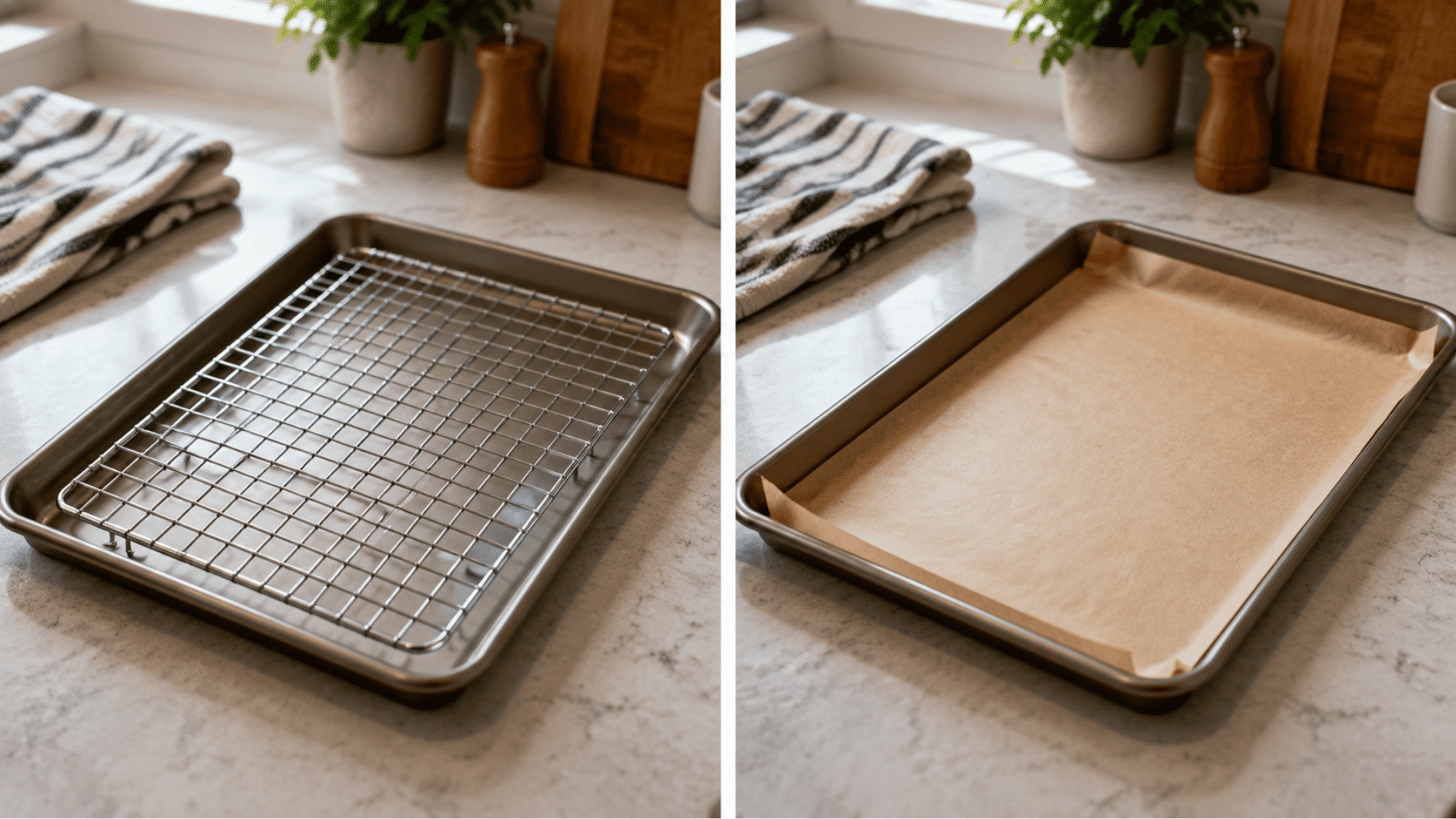
Both methods get you crispy, oven-baked bacon, but the final bite isn’t quite identical.
A sheet pan is the easier lift for busy mornings and gives bacon a richer, slightly softer bite. A wire rack takes one extra step but crisps every strip more evenly on both sides.
- Texture: Sheet pan bacon stays chewier since it cooks in its own fat; rack bacon crisps on both sides, closer to fried.
- Cleanup: Sheet pan cleanup ends the moment the liner goes in the trash; a rack adds one more thing to scrub.
- Best for: Sheet pan suits regular-cut bacon and weekday mornings; rack suits thick-cut bacon and feeding a crowd.
A few reliable picks if you’re shopping for either setup:
Wire rack:
- OXO Non-Stick Cooling and Baking Rack
- GoodCook Pro Nonstick Steel Wire Cooling Rack (Walmart)
- Figmint Nonstick Carbon Steel Cooling Rack (Target)
Sheet pan:
- Nordic Ware 2-Piece Oven Bacon Set (Walmart)
- Winco Baking Sheet (Home Depot)
- OXO Non-Stick Pro Half Sheet Pan
Final Thoughts
Baking bacon in the oven turns a messy, stand-by-the-stove chore into a walk-away task. Set the temperature, arrange your strips, and let the oven handle the rest while you finish everything else for breakfast.
I’ve made this method my default for family meals and lazy weekend mornings alike. Once you taste evenly crisp bacon with zero grease marks on your arm and countertop, a skillet starts feeling completely unnecessary.
Give this a try, and next time company’s coming over, load up a full tray without a second thought. Breakfast for a crowd just got a lot simpler.
Frequently Asked Questions
Can I Bake Bacon Without Lining the Pan?
You can, but cleanup gets much harder since grease bakes directly onto the metal. A liner takes seconds to add and saves real scrubbing time later.
Do I Need to Flip Bacon While It Bakes?
No. Oven heat surrounds the strips on all sides, so flipping isn’t necessary as it is on a stovetop.
Can I Bake Bacon Straight From Frozen?
Yes, though it needs roughly five extra minutes. Check strips a bit more often near the end since frozen bacon can cook unevenly.
How Should I Store Leftover Cooked Bacon?
Refrigerate it in an airtight container for up to five days. Reheat briefly in the oven or in a pan to restore the crispness.