I once made a coleslaw dressing recipe that turned out either soggy or bland. That genuinely happens more than you’d think, and it usually comes down to one thing: the dressing.
Get that part wrong, and no amount of fresh cabbage will save it. But nail the ratio of creamy to tangy to sweet, and suddenly your simple side dish becomes the thing everyone asks about at the cookout.
I ended up testing this coleslaw dressing recipe, and it worked out. With no guesswork needed on your end, just a dressing that actually works.
Let’s learn exactly how to make it.
What Is Coleslaw?
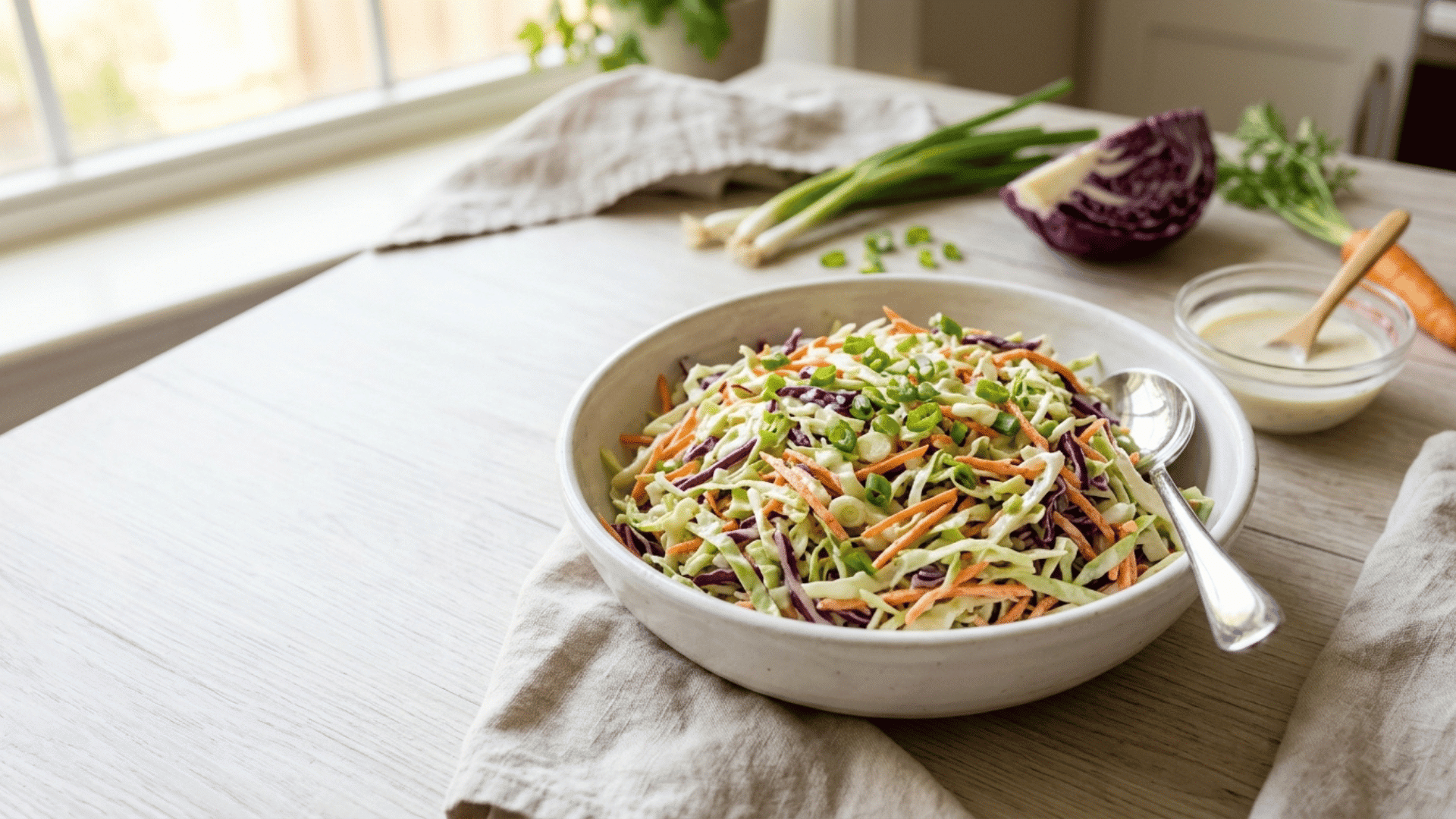
Coleslaw is a cold salad made mainly with finely shredded cabbage and often carrots. It is known for its crisp texture and fresh, slightly tangy flavor. Classic coleslaw usually comes with a creamy dressing.
The cabbage stays crunchy, while the dressing brings sweetness, acidity, and richness to every bite. Coleslaw is especially popular at summer cookouts, barbecues, picnics, and family gatherings.
It can be served as a simple side dish or added to sandwiches and pulled pork for extra crunch and a refreshing contrast to richer foods.
Ingredients You’ll Need
This coleslaw dressing recipe combines crisp cabbage, colorful vegetables, and a creamy, tangy dressing in a tested ratio that coats the slaw evenly without making it overly heavy or watery.
| Ingredient | Amount | Why It’s Used |
|---|---|---|
| Green cabbage | 5 cups, thinly shredded | Provides the crisp base |
| Red cabbage | 2 cups, thinly shredded | Adds color and extra texture |
| Carrots | 1 cup, shredded | Contributes mild sweetness and color |
| Mayonnaise | ¾ cup | Creates the creamy dressing base |
| Apple cider vinegar | 2 tablespoons | Adds brightness and tang |
| Granulated sugar | 2 tablespoons | Balances the acidity |
| Dijon mustard | 1 teaspoon | Adds savory depth |
| Salt and black pepper | ½ teaspoon salt and ¼ teaspoon pepper | Strengthens the overall flavor |
Note: I often reach for bagged coleslaw mix when I am short on time because it keeps preparation quick without changing the dressing or final flavor.
How to Make Cabbage Slaw?
Homemade cabbage slaw is simple, but a few small details can make the final result much better. Texture and flavor depend on how you handle each stage. Follow these five steps for a fresh, well-balanced batch:
| Servings: 8 servings, approximately 1 cup per person Prep Time: 15 minutes Chill Time: 30 minutes Total Time: 45 minutes Nutritional Value per Serving: Approx. 190 calories| 16 g fat| 13 g carbohydrates| 2 g protein| 2 g fiber| 8 g sugar| 300 mg sodium |
1. Shred the Cabbage Evenly
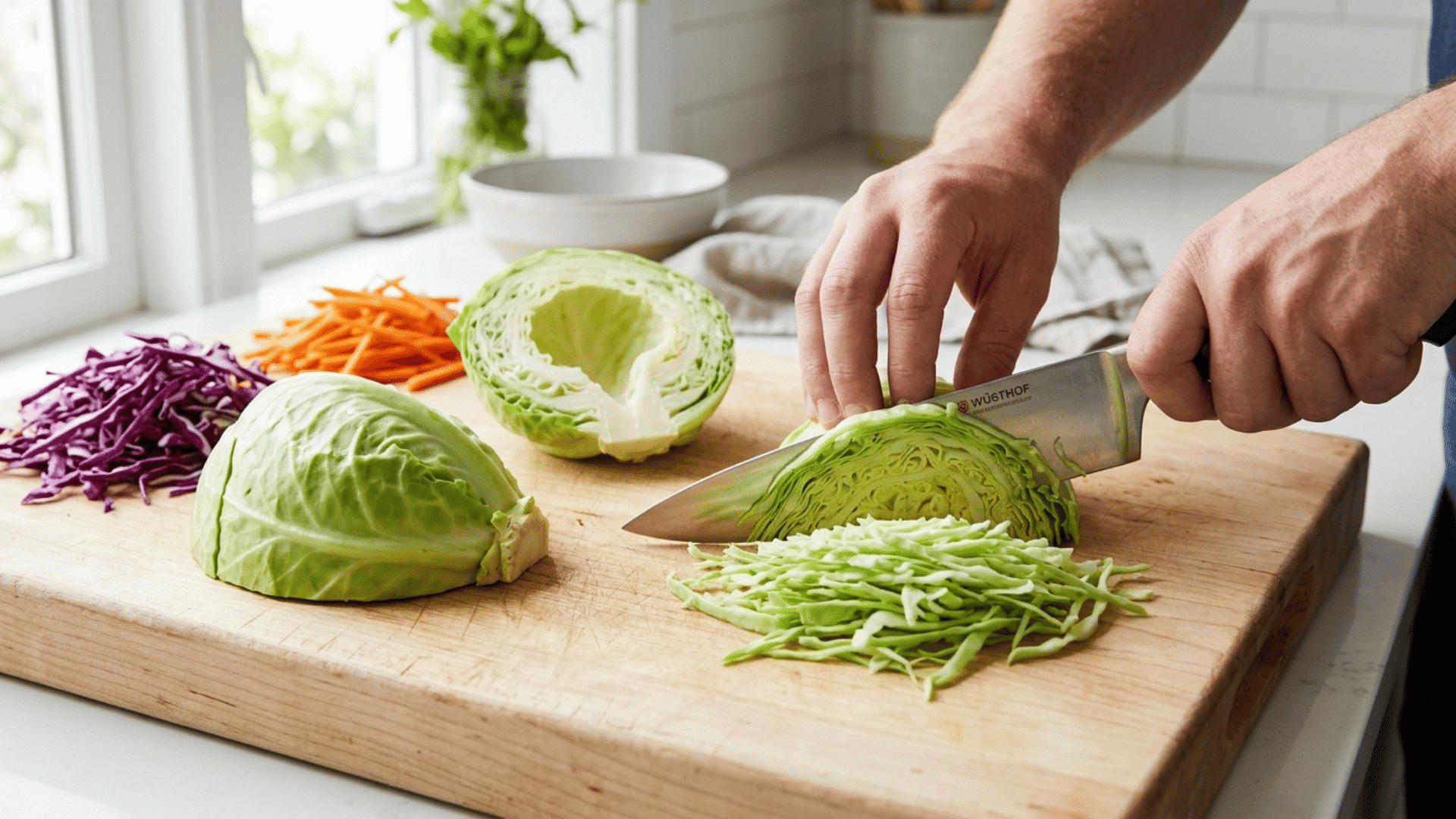
Start by preparing thin, tidy strips that are easy to eat and combine. Taking your time here creates a more consistent base for everything that follows.
- Use a chef’s knife, mandoline, or food processor slicing attachment for steady control.
- Quarter the cabbage and cut out the core before slicing.
- Cut ribbons about 1/8 inch wide for consistent texture.
- Keep every piece the same size so dressing absorbs evenly.
Tip: I always stack a few leaves flat before hand-slicing, one time I skipped this and ended up with half my strands twice as thick as the rest.
2. Whisk the Dressing
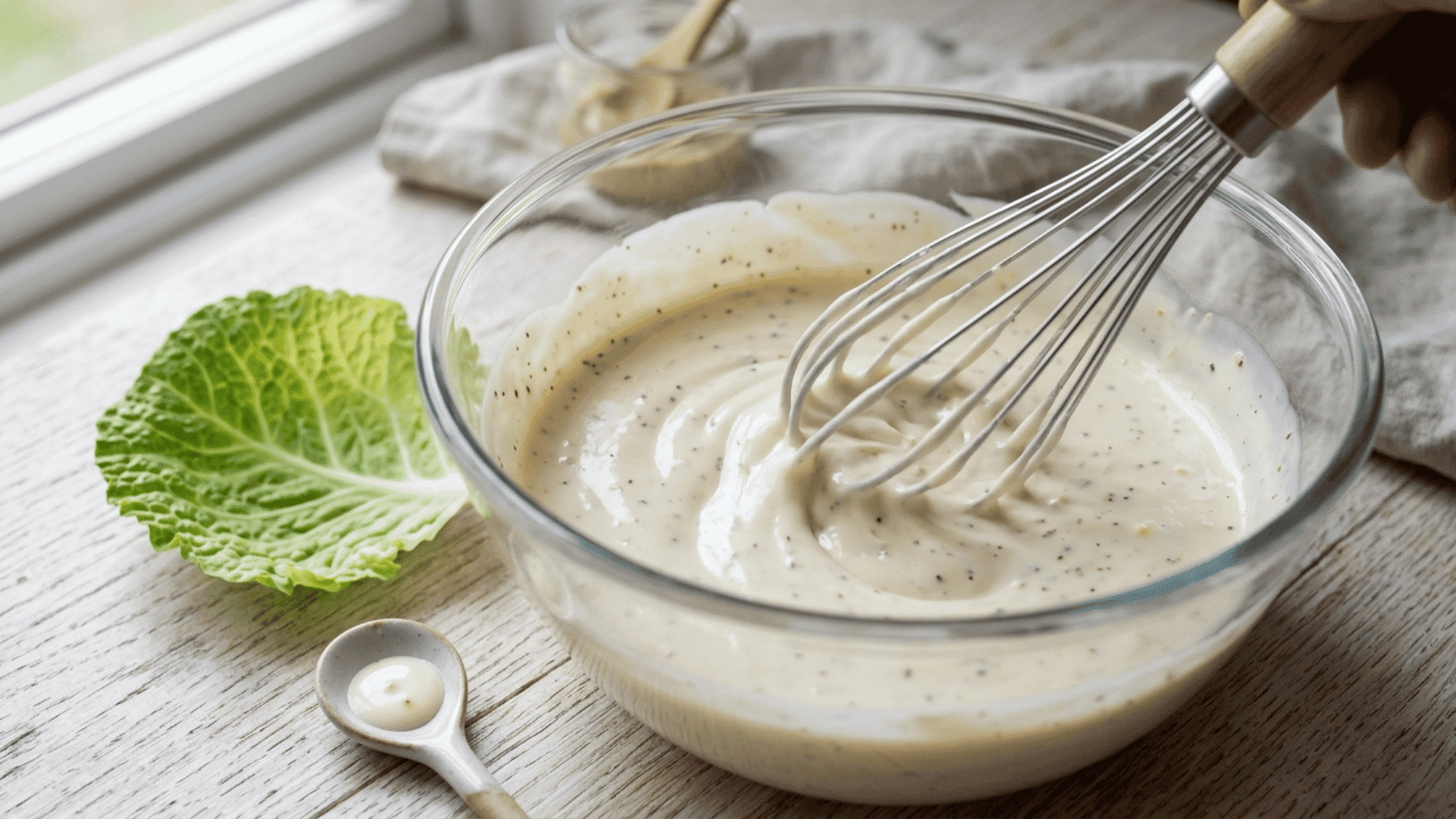
Next, prepare the creamy mixture that brings the sweet and tangy notes together. A well-blended base gives each forkful balanced flavor.
- Combine mayonnaise, vinegar, sugar, and seasonings until smooth and pale.
- Confirm the sugar has fully dissolved; grainy dressing means uneven sweetness later.
- Taste it on an actual piece of cabbage, not straight off the spoon.
- Remember, raw cabbage mutes sweetness and sharpens acidity.
Tip: I learned to taste on cabbage the hard way, my dressing tasted perfect off the spoon, then bland once it hit the bowl.
3. Toss With Most of the Dressing
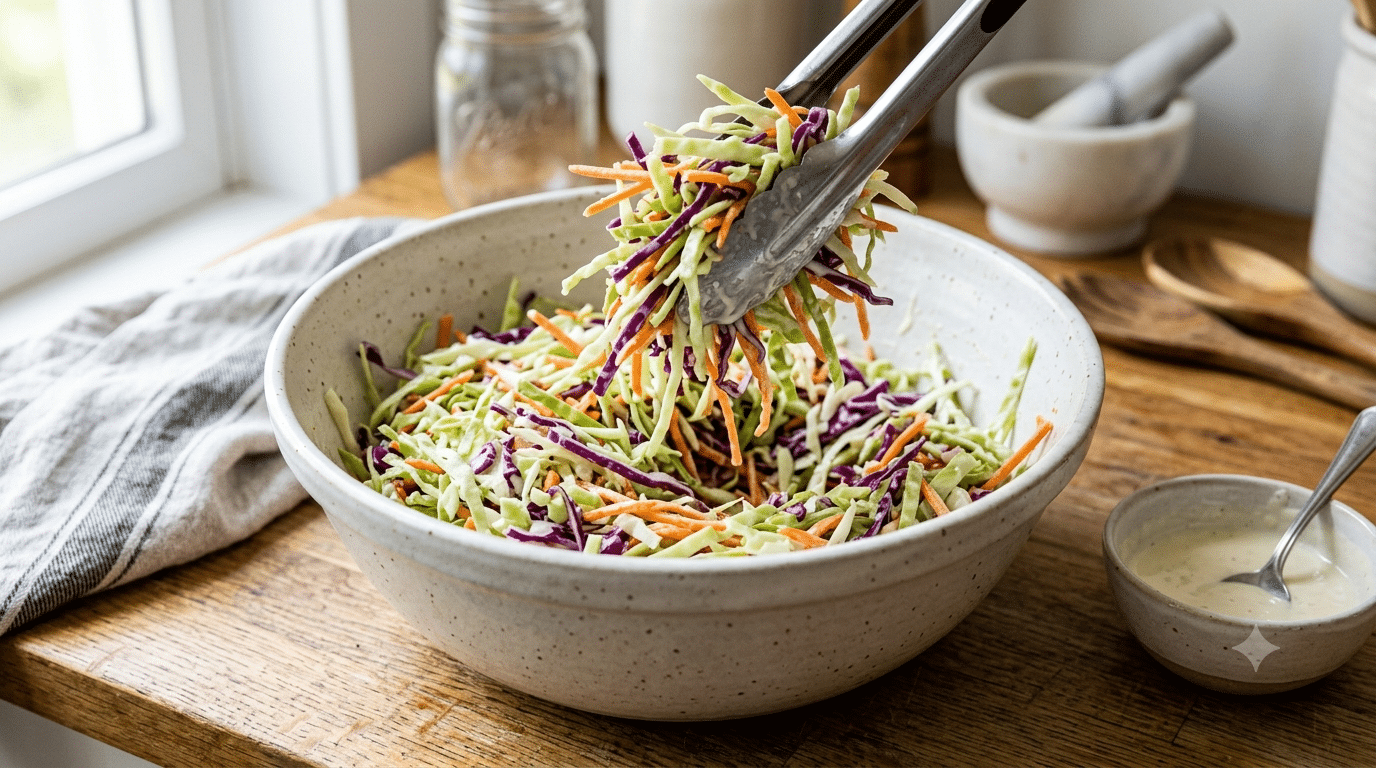
Now bring both parts together gradually rather than pouring everything in at once. This gives you better control over the final consistency and helps prevent an overly heavy result.
- Add about three-quarters of the dressing first.
- Toss thoroughly, working it into every layer, not just the top.
- Check that strands look coated but not swimming in liquid.
- Add the rest only if patches still look dry.
Tip: I switched to tongs years ago, my hands used to ache from folding heavy slaw with a spoon, and the coating was never as even.
4. Rest According to Preferred Texture
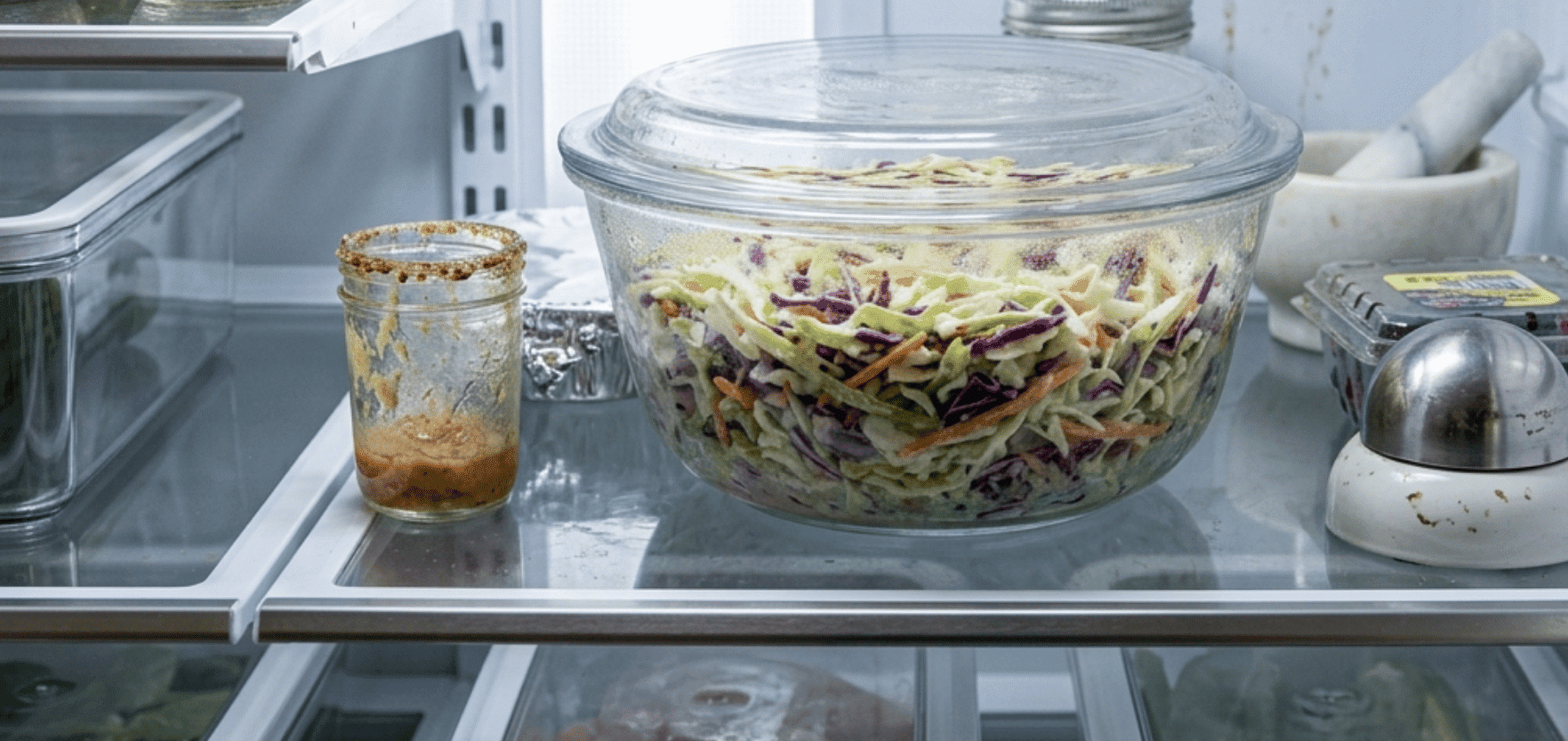
A short pause can change the final bite more than you might expect. The longer the salad sits, the more its character shifts from crunchy and fresh toward tender and developed.
Choose your timing based on the result you want:
- Serve immediately for the firmest crunch.
- Rest for 15 to 30 minutes for balanced crispness.
- Rest for one to two hours for softer, more seasoned cabbage.
- Rest overnight for the softest texture and deepest flavor, best for sandwich fillings.
Tip: I make a batch a day ahead for barbecues now, by the time guests arrive, it’s soft and soaked up all the seasoning I want.
5. Taste and Finish
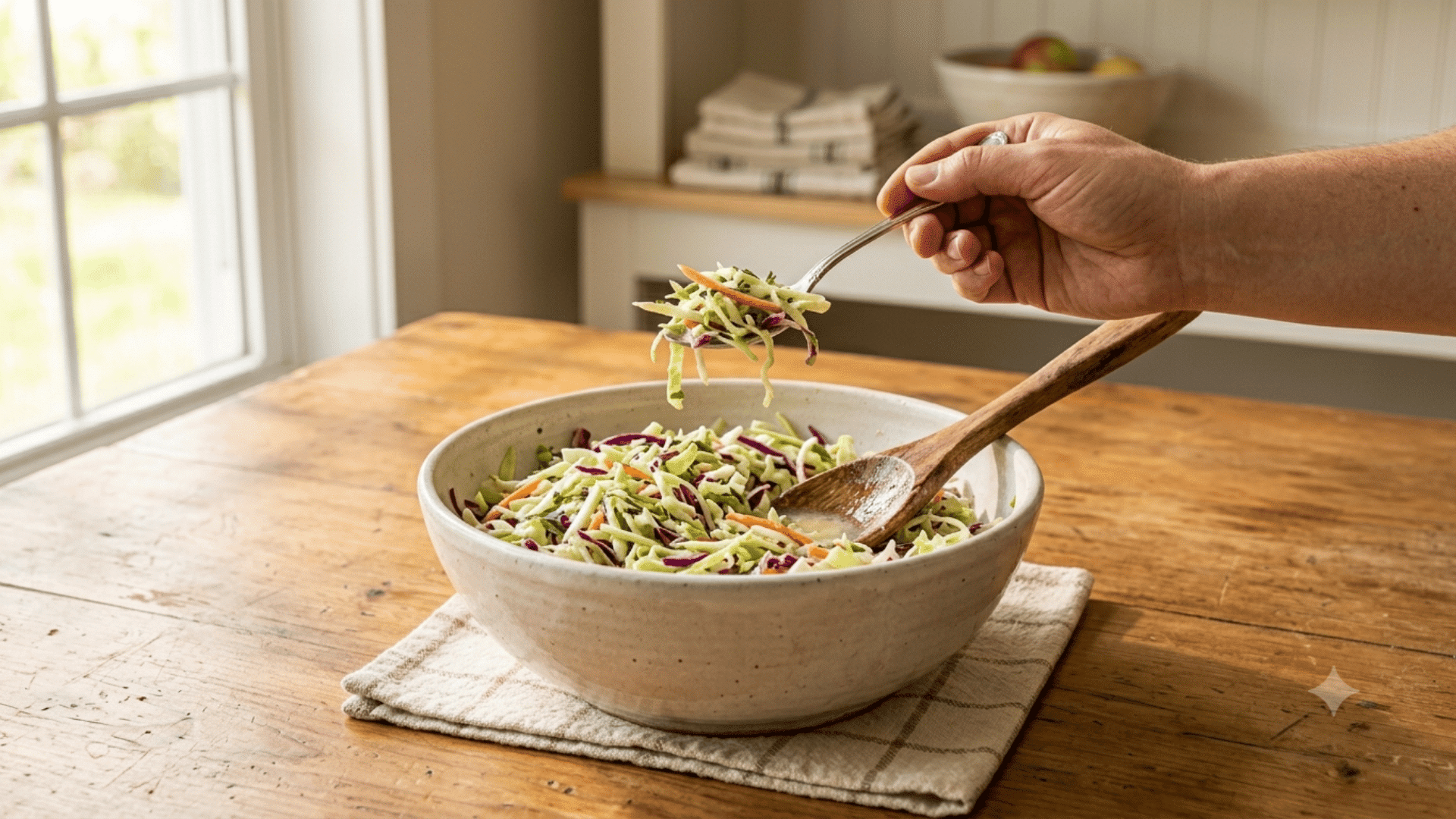
Before serving, take a moment to evaluate the overall balance rather than assuming it is ready. Small last-minute changes can noticeably improve the final dish. Make these checks before bringing it to the table:
- Taste the slaw again, not just once at the start.
- Adjust salt, acid, sugar, or pepper in small increments.
- Remember, a little goes further once the cabbage softens slightly.
- Check the liquid at the bottom of the bowl before adding more dressing.
Tip: I keep a small spoon just for tasting as it rests, I’ve saved more than one batch from being flat by catching it 20 minutes in.
Dressing-to-Cabbage Ratio to Use for Coleslaw
The amount you need changes with the size and type of vegetable mix you’re using. Freshly prepared and packaged options may also behave differently. Use this quick chart as your starting guide:
| Cabbage or Slaw Amount | Dressing Amount | Effect |
|---|---|---|
| 4 cups | ½ batch | Works well for a smaller batch |
| 8 cups | 1 full batch | Matches the standard recipe |
| 8 oz packaged mix | Start below ½ batch | Increase only as needed |
| 14–16 oz packaged mix | Start below 1 batch | Increase gradually if needed |
Coleslaw Dressing Variations to Try for a Twist
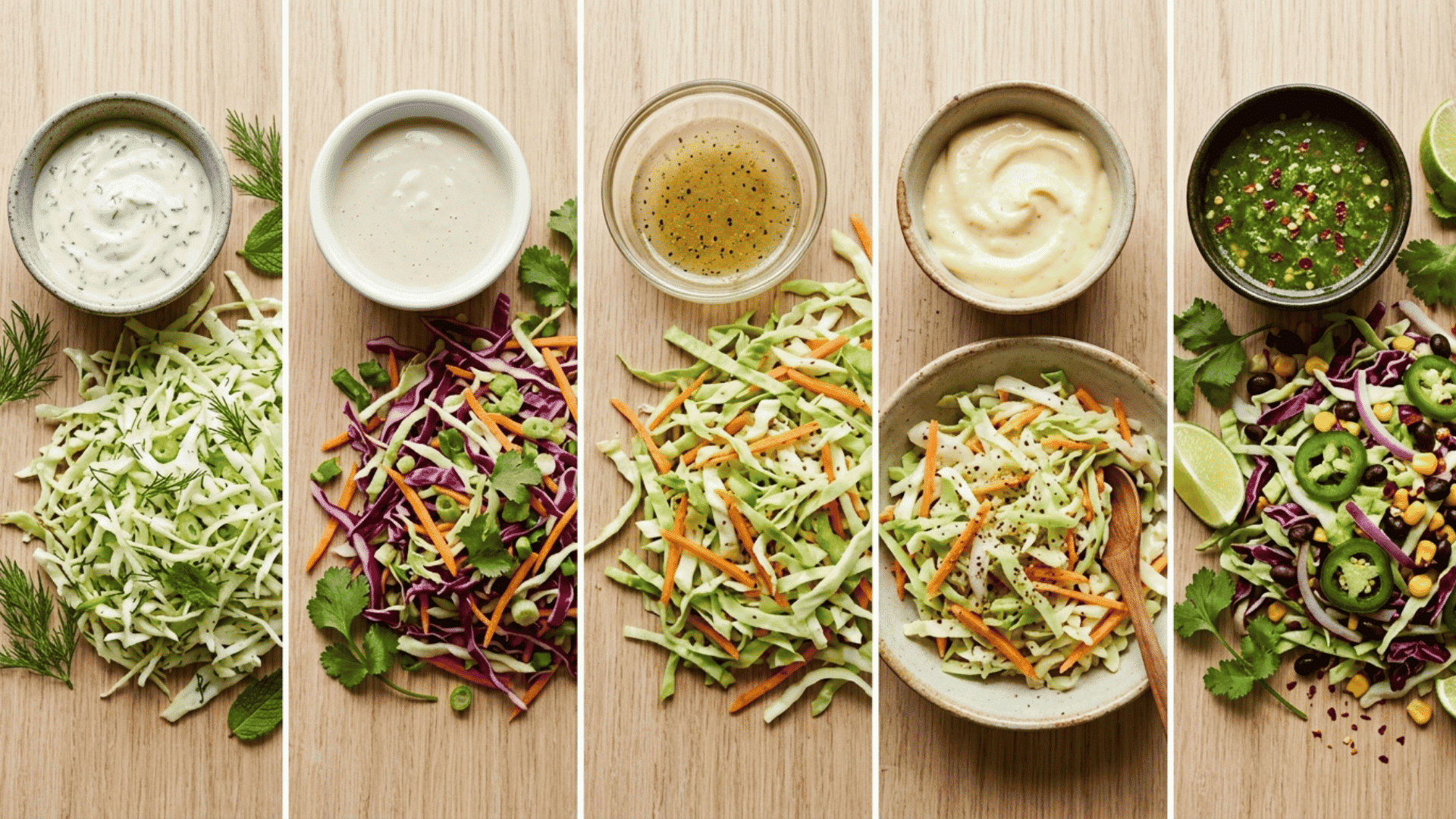
One basic coleslaw dressing can take on very different flavors with a few smart ingredient changes. That makes it easy to match your slaw with anything from tacos to barbecue.
1. Lighter Yogurt Dressing
Greek yogurt creates a tangier version with less richness than an all-mayo option, making it a good match for simple weeknight dinners.
- Main ingredients: Greek yogurt, mayonnaise, vinegar, and your preferred sweetener.
- Flavor: Tangy, mild, and refreshing.
- Best with: Grilled chicken, sandwiches, or simple weeknight dinners.
2. Vegan Coleslaw Dressing
This plant-based version keeps the familiar creamy character without relying on traditional mayonnaise. Maple syrup can bring a gentle sweetness that complements the sharper notes.
- Main ingredients: Vegan mayonnaise, maple syrup or sugar, and vinegar.
- Flavor: Creamy with a sweet-and-tangy finish.
- Best with: Veggie burgers, plant-based BBQ, or meat-free cookouts.
3. No Mayo Vinegar Dressing
A vinegar-based option gives coleslaw a brighter character without the heavier creamy element. Its sharper profile makes it especially useful alongside rich foods.
- Main ingredients: Vinegar, neutral oil, mustard, sweetener, and seasonings.
- Flavor: Bright, punchy, and slightly sweet.
- Best with: Pulled pork, smoked meats, or fried foods.
4. Southern Style Sweeter Dressing
This version is my personal favorite because it leans into the sweeter flavor often associated with Southern-style coleslaw. Celery seed adds an aromatic note that gives the finished salad more depth. It is particularly suited to classic cookout favorites.
- Main ingredients: Mayonnaise, vinegar, sweetener, and celery seed.
- Flavor: Creamy, sweet, and gently tangy.
- Best with: Barbecue ribs, smoked pork, or fried chicken.
5. Spicy Lime Dressing
Lime and chile bring a lively kick that moves coleslaw away from its traditional flavor profile. The result works particularly well when the rest of the meal has Mexican-inspired flavors. Choose this version for a bolder pairing:
- Main ingredients: Lime juice, mayonnaise, and hot sauce, jalapeño, or chipotle.
- Flavor: Zesty, creamy, and spicy.
- Best with: Fish tacos, grilled meats, or burrito bowls.
How to Keep Coleslaw Crisp and Crunchy?
Start with a firm, fresh head of cabbage, since older leaves tend to lose their snap quickly. For extra crunch, lightly salt the cut cabbage and let it sit for about 30 minutes.
This draws out some of the water stored inside the leaves. Rinse away the excess salt, then dry the cabbage thoroughly with a clean towel or salad spinner.
If you are preparing coleslaw ahead for a party or cookout, keep the vegetables and sauce in separate containers until closer to serving time. Store both in the refrigerator, since keeping everything cold also helps preserve that fresh crunch.
Meals that Taste Better with Coleslaw
Coleslaw can do more than fill an empty spot on the plate. Its fresh texture makes it useful with casual dinners, cookouts, and handheld favorites. Here are serving ideas that you can consider:
- Pulled pork sandwiches: Layer slaw inside the bun to add extra texture to the tender meat.
- Hot dogs: Spoon it over the sausage for an easy cookout topping.
- Fish tacos: Tuck a small portion into each tortilla before serving.
- Brisket sandwiches: Add slaw between the brisket and bun for a more varied bite.
- Crab cakes: Place a small serving alongside each cake for a simple seafood meal.
- Sloppy Joes: Top with slaw and a drizzle of mac sauce to contrast the soft filling.
- Baked potatoes: Add a spoonful alongside other toppings for a fresh element.
- Cornbread: Serve both together as part of a casual Southern-inspired spread.
- Baked beans: Put them on the same cookout plate for an easy combination of warm and chilled sides.
- Corn on the cob: Pair the two for a simple summer picnic or backyard meal.
- Mac and cheese: Serve a smaller portion of each to bring different textures to the plate.
- BBQ nachos: Scatter a little slaw over the finished nachos just before eating for added freshness.
- Baked Chicken: Pairs well with coleslaw when you want a cold, crisp side next to a warm main dish.
Fixing Your Coleslaw Without Starting Over
Even a good batch of coleslaw can end up too sweet, sharp, thick, or bland. Most of these issues are easy to correct without starting over. I use this quick troubleshooting guide to bring the flavor and texture back into balance:
| Problem | Likely Cause | Correction |
|---|---|---|
| Too Sweet | Excess sweetener or sweet mayonnaise | Add vinegar in small increments |
| Too Sharp | Excess vinegar | Add mayonnaise, then a little sweetener if needed |
| Too Thick | High mayonnaise ratio | Whisk in vinegar or lemon juice gradually |
| Too Thin | Excess acid or cabbage liquid | Add mayonnaise or drain excess liquid |
| Too Salty | Over-seasoning or inadequately rinsed cabbage | Add unsalted cabbage and additional mayonnaise |
| Bland | Insufficient acid or seasoning | Add salt first, then vinegar if required |
Wrapping It Up
Turning out great coleslaw dressing really comes down to just a few things done right. No fuss, no long list of steps, just balance between creamy, tangy, and sweet.
I’ve relied on this coleslaw dressing recipe for years now, tweaking it until every batch landed exactly where I wanted. Trust me, it holds up either you’re serving it fresh tonight or making it ahead for a weekend cookout.
Just try it once, and you’ll see why it’s become a go-to in my kitchen.
Frequently Asked Questions
Can Broccoli Stems Be Mixed with Cabbage Slaw?
Peel the tough outer layer, then shred the firm core. Broccoli stems can replace up to half the cabbage without changing the texture much.
Can Coleslaw Dressing Be Used on Other Salads?
Yes. It works well on broccoli salad, kale slaw, carrot slaw, cold pasta salad, and even as a sandwich topping.
Why Did Red Cabbage Turn the Dressing Pink?
Red cabbage releases pigment into the dressing over time. Add it closer to serving if you want the dressing to stay white.