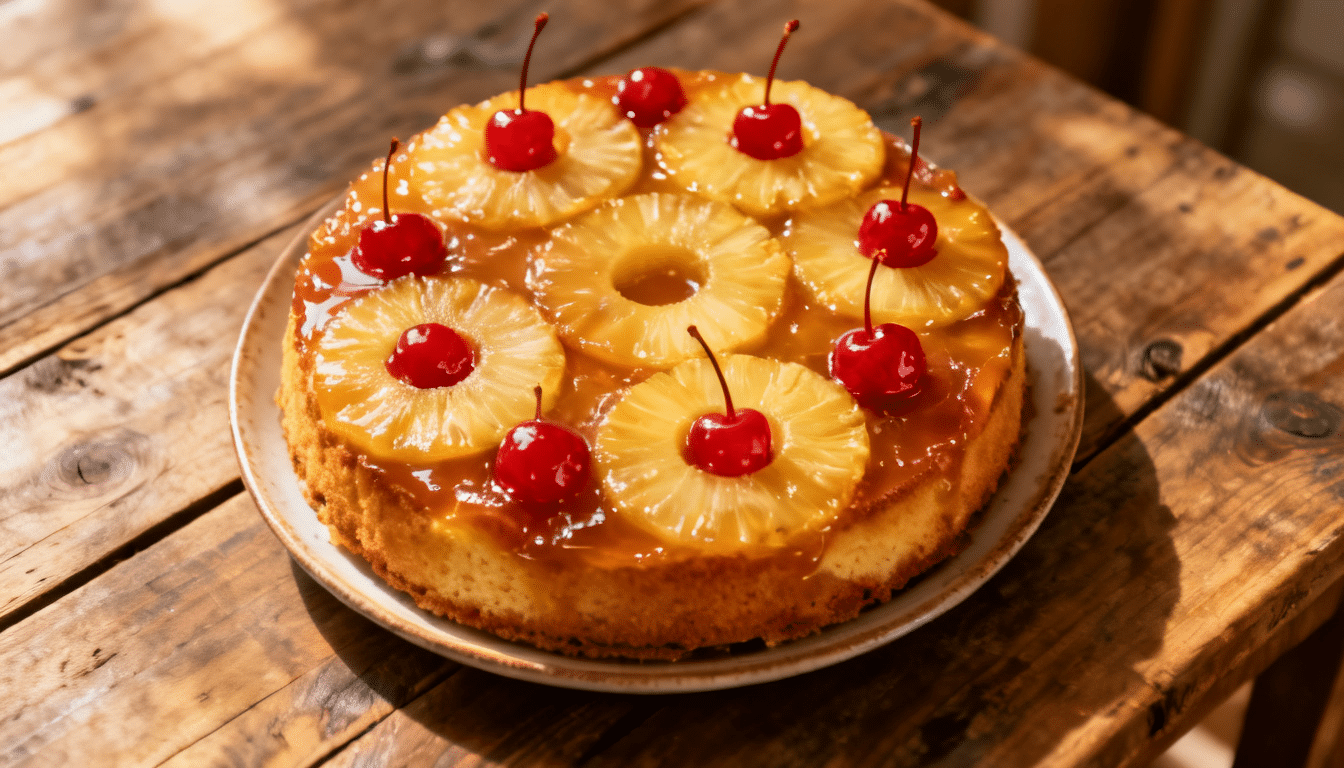
Pineapple upside-down cake is one of those classic desserts that feels cheerful before you even take a bite.
The glossy pineapple rings, bright cherries, and brown sugar topping give it a beautiful homemade look, while the soft buttery cake underneath keeps it comforting and familiar.
The best part is that the topping forms right in the pan as the cake bakes, so no extra decorating is needed. With the right timing, a well-greased pan, and a warm flip, you get a moist cake with a caramelized fruit layer on top.
Let’s get started!
What is a Classic Pineapple Upside-Down Cake?
A classic pineapple upside-down cake is a traditional American dessert made by layering pineapple slices, cherries, butter, and brown sugar in the bottom of a cake pan before adding the batter.
After baking, the cake is turned onto a serving plate, revealing a caramelized fruit topping.
The recipe became especially popular in the early and mid-1900s when canned pineapple became widely available in the United States. Its attractive presentation and simple preparation helped make it a favorite for home bakers.
What sets the traditional version apart is its balance of flavors and textures. The sweet pineapple topping pairs with a soft, buttery cake, while the brown sugar creates a rich caramel-like layer during baking.
If you like simple fruit desserts, this cake has the same cozy, easy appeal as an apple cake with cake mix, but with a brighter caramelized pineapple topping.
Today, pineapple upside-down cake remains a go-to dessert for family gatherings, potlucks, holidays, and anyone looking to recreate a classic homemade treat.
Ingredients Needed
One reason this recipe has remained popular is its simple ingredient list. Most of the ingredients are pantry staples, making it easy to prepare without a special trip to the grocery store.
The recipe consists of two main parts: the caramelized fruit topping and the soft, buttery cake batter.
| Ingredient | Amount | Purpose |
|---|---|---|
| Unsalted butter | 1/4 cup (for topping) | Creates the rich caramel base |
| Brown sugar | 1/2 cup | Adds sweetness and a caramel-like flavor |
| Pineapple rings | 6–8 slices | Forms the signature topping |
| Maraschino cherries | 6–8 cherries | Adds color and classic presentation |
| All-purpose flour | 1 1/2 cups | Provides structure to the cake |
| Baking powder | 1 1/2 teaspoons | Helps the cake rise |
| Salt | 1/4 teaspoon | Balances sweetness |
| Granulated sugar | 3/4 cup | Sweetens the batter |
| Unsalted butter | 1/2 cup (softened) | Adds richness and moisture |
| Eggs | 2 large | Binds ingredients together |
| Milk | 1/2 cup | Creates a smooth batter |
| Vanilla extract | 1 teaspoon | Adds flavor and aroma |
Many traditional recipes call for canned pineapple because it provides consistent sweetness and moisture. If using fresh pineapple, choose ripe fruit and slice it evenly for the best results.
How to Make Pineapple Upside-Down Cake: Step by Step
Making a classic pineapple upside-down cake starts with preparing the topping that will eventually become the top of the finished dessert.
Step 1: Prepare the Pineapple Layer
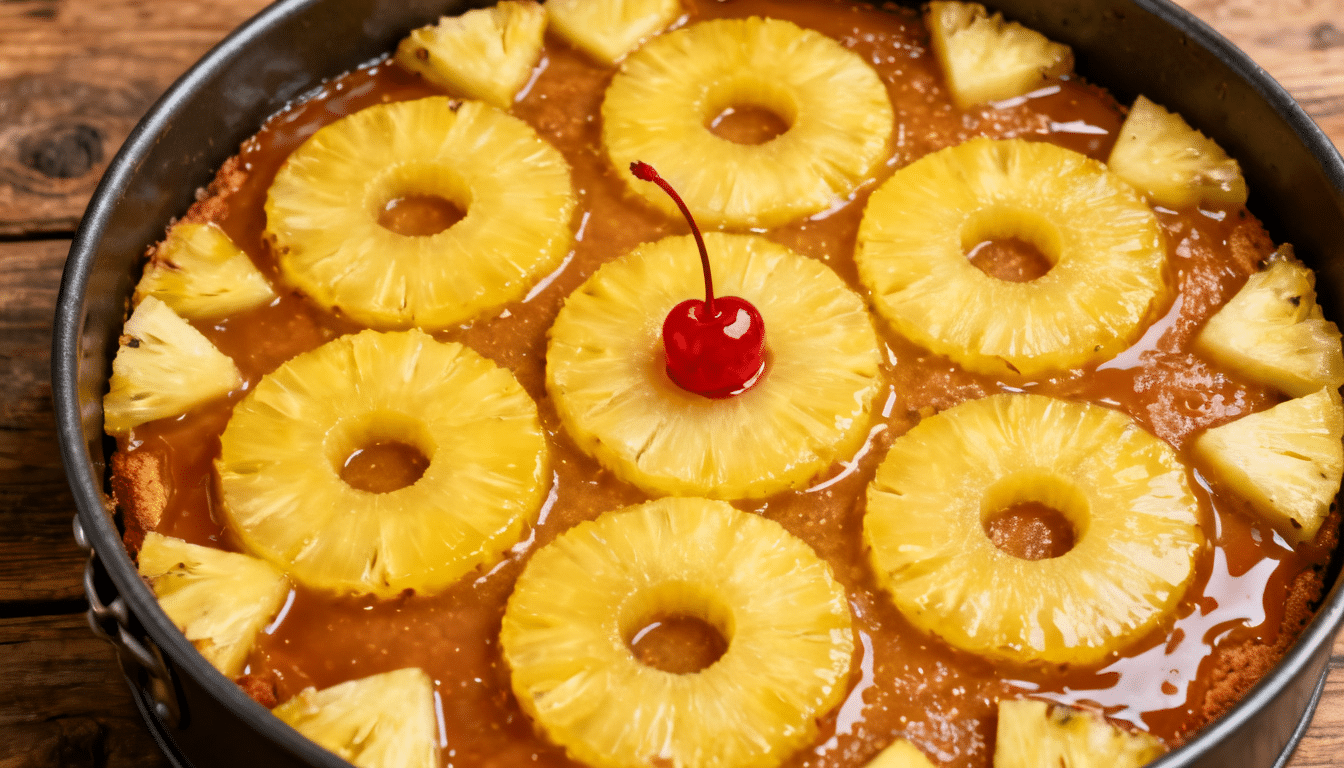
Pat the pineapple slices dry with paper towels to remove excess liquid. Arrange 6 to 8 pineapple rings over the brown sugar mixture, creating an even layer across the bottom of the pan.
Place a maraschino cherry in the center of each pineapple ring. If there are empty spaces around the edges, cut additional pineapple pieces to fit so the topping looks evenly distributed once the cake is inverted.
Step 2: Make the Cake Batter
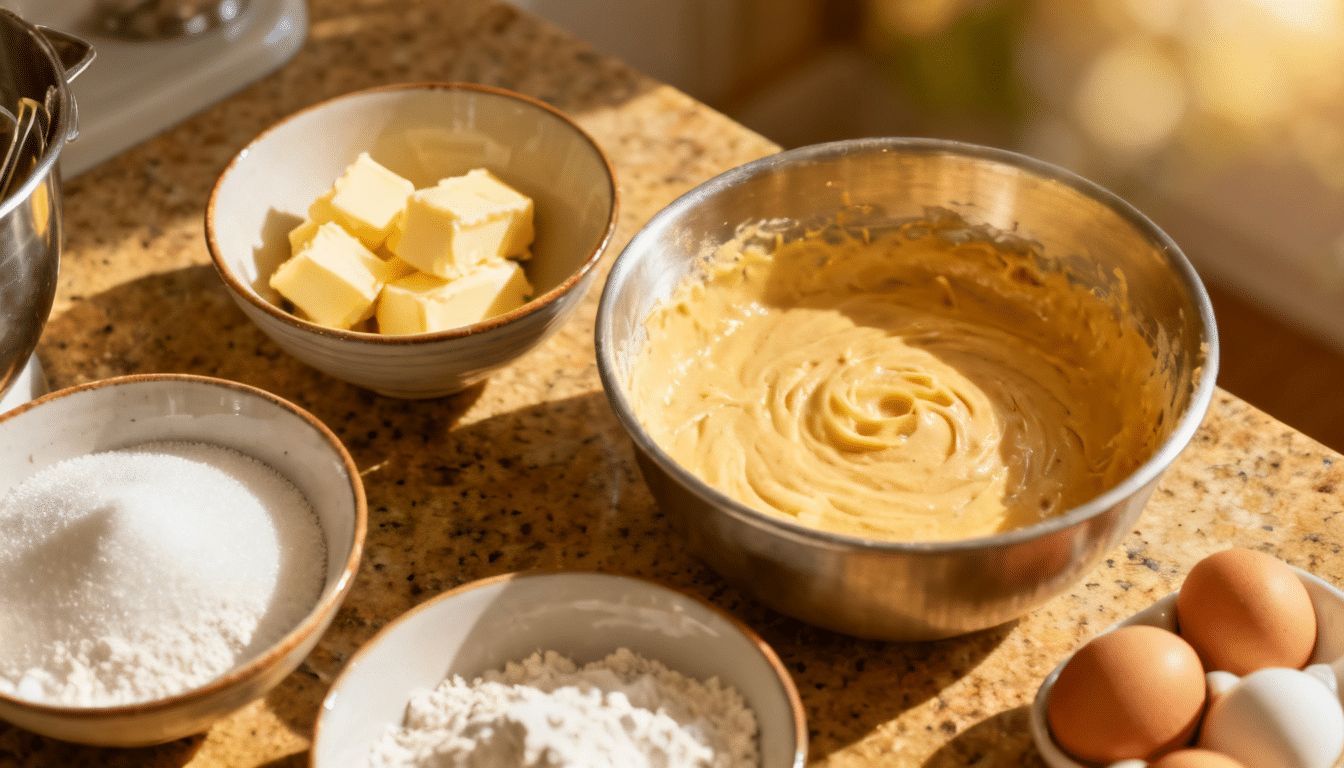
In a medium bowl, whisk together 1½ cups all-purpose flour, 1½ teaspoons baking powder, and ¼ teaspoon salt.
In a separate large bowl, beat 1/2 cup softened butter with 3/4 cup granulated sugar until the mixture becomes light and creamy. Add 2 large eggs one at a time, mixing well after each addition. Stir in 1 teaspoon vanilla extract.
Gradually add the dry ingredients to the butter mixture, alternating with 1/2 cup milk. Continue mixing until a smooth batter forms, taking care not to overmix.
Step 3: Assemble the Cake
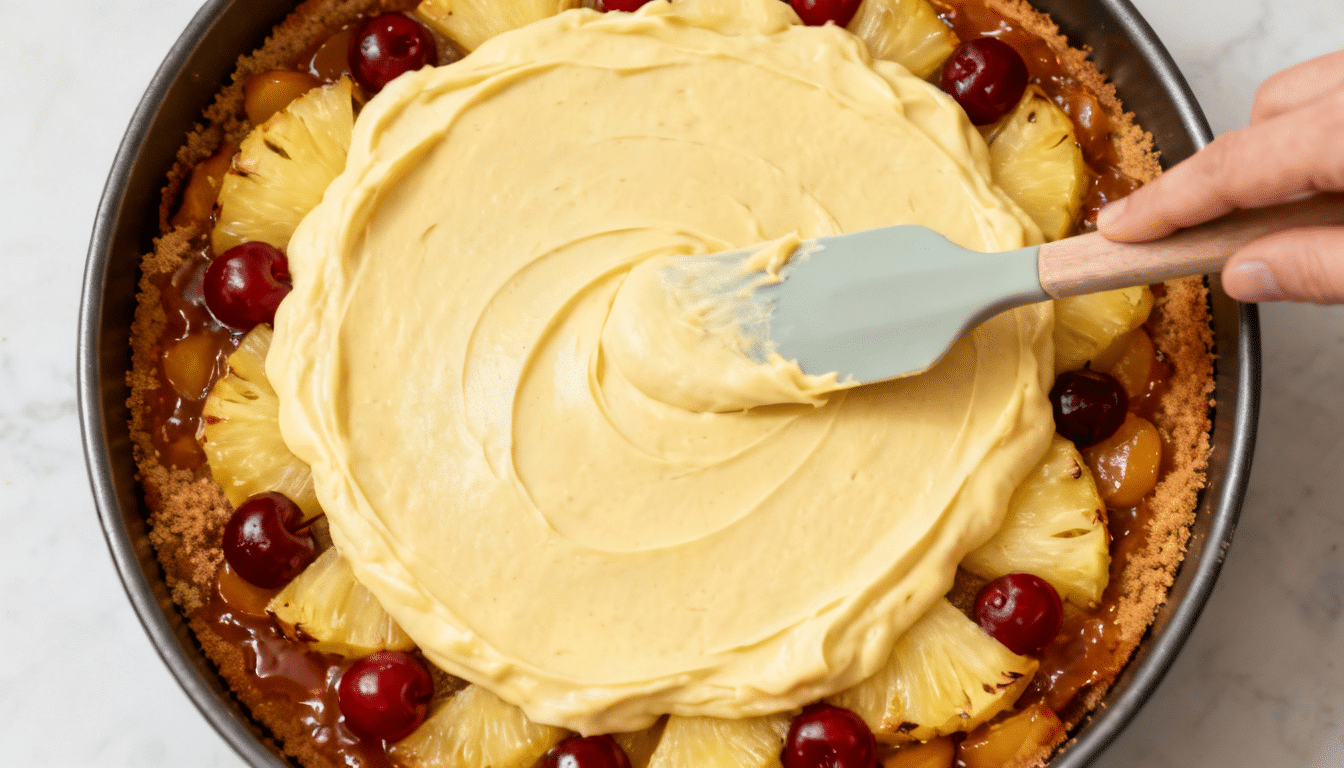
Carefully spoon the batter over the pineapple layer. Use a spatula to spread it evenly across the pan, making sure the fruit remains in place underneath.
A smooth, even batter layer helps the cake bake consistently and creates a level surface when the cake is turned out after baking.
Step 4: Bake the Cake
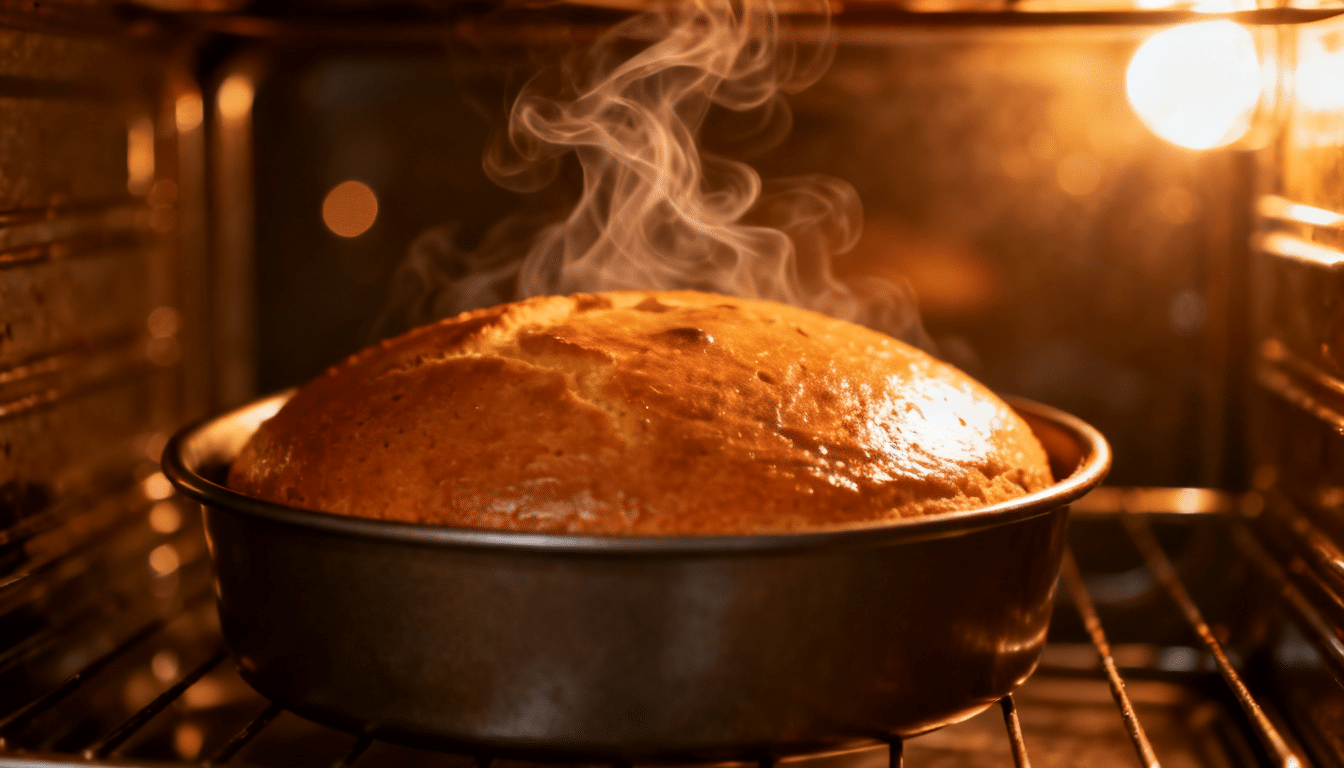
Place the pan on the center rack of the oven and bake for 35 to 45 minutes. The cake is ready when the top is lightly golden and a toothpick inserted into the center comes out clean.
Baking times can vary slightly depending on the oven and pan used, so begin checking for doneness near the end of the recommended baking time.
Step 5: Cool and Invert
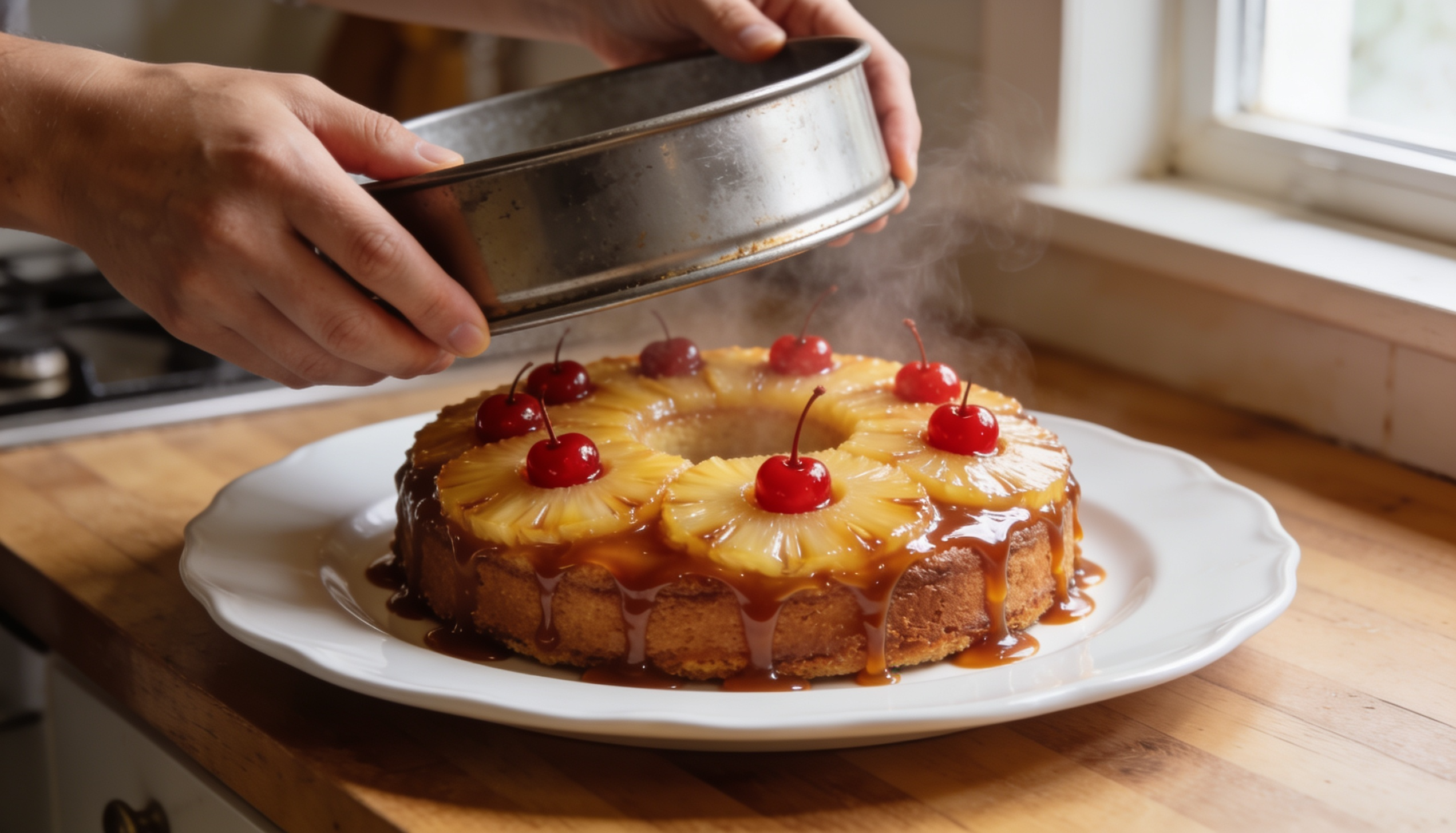
Remove the cake from the oven and let it cool in the pan for 10 to 15 minutes. This gives the topping time to settle while still remaining soft enough to release easily.
Run a knife around the edges of the pan. Place a serving plate over the pan and carefully invert the cake in one smooth motion. Allow the pan to rest for a few seconds before lifting it away.
Tip: Place your serving plate over the pan before the cake has completely cooled. Flipping the cake while the topping is still warm helps prevent the caramelized sugar from sticking to the pan.
Step 6: Serve the Cake
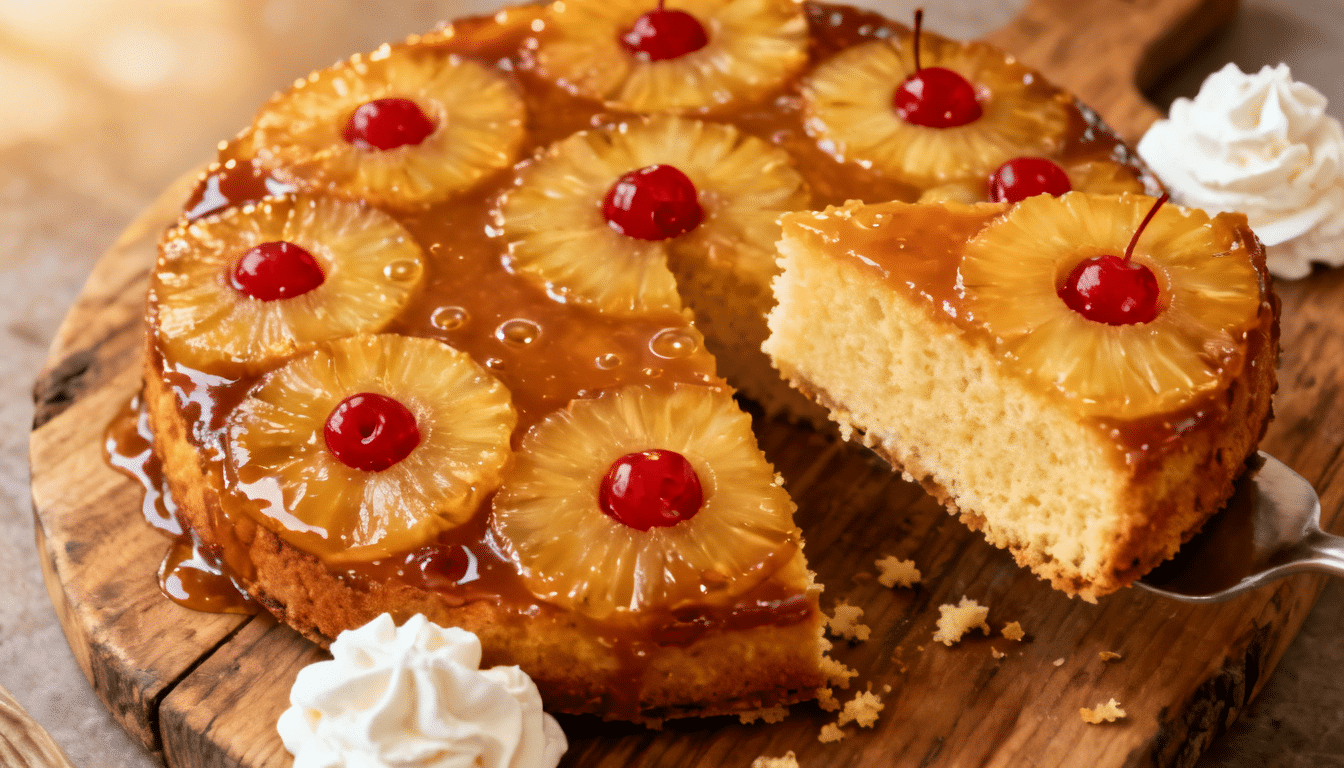
Let the cake cool slightly before slicing. The warm pineapple topping and soft cake create the best texture shortly after baking.
Pineapple upside-down cake can also be served at room temperature and pairs well with freshly whipped cream or a scoop of vanilla ice cream.
Common Mistakes and How to Avoid Them
Even a simple pineapple upside-down cake can run into problems if a few key steps are overlooked. Here are the most common mistakes and how to prevent them.
- The cake sticks to the pan: Grease the pan thoroughly, then invert the cake after it has cooled for 10 to 15 minutes. Waiting too long can cause the caramelized sugar to harden and stick.
- Topping becomes too wet: Pat the pineapple slices dry before arranging them in the pan. Excess moisture can make the topping soggy and affect the cake’s texture.
- The center is undercooked: Test the cake with a toothpick before removing it from the oven. If wet batter remains, continue baking and check again after a few minutes.
- Cake turns out dense: Mix the batter only until the ingredients are combined. Overmixing can create a heavier texture.
- Fruit shifts during baking: Spoon the batter gently over the pineapple layer and spread it carefully to keep the fruit in place.
- The topping breaks apart when flipped: Invert the cake while the topping is still warm. If any pineapple pieces remain in the pan, place them back onto the cake before serving.
How to Store and Serve Pineapple Upside-Down Cake
To keep pineapple upside-down cake fresh, cover it tightly and store it at room temperature for up to 2 days.
If you need to keep it longer, refrigerate it in an airtight container for up to 5 days. Before serving, let the cake sit at room temperature for 20 to 30 minutes for the best texture.
For longer storage, wrap the cake tightly in plastic wrap and aluminum foil before freezing. It can be frozen for up to 3 months and thawed overnight in the refrigerator when needed.
Pineapple upside-down cake can be served slightly warm, at room temperature, or chilled. It tastes great on its own and pairs well with freshly whipped cream or vanilla ice cream.
Tips for the Best Old-Fashioned Results
A few simple baking habits can help you create a pineapple upside-down cake with better texture, flavor, and presentation every time.
- Use room-temperature butter, eggs, and milk to create a smoother batter and a softer cake texture.
- Pat the pineapple slices dry before arranging them in the pan to prevent excess moisture in the topping.
- Mix the batter only until the ingredients are combined, as overmixing can make the cake dense.
- Let the cake cool for 10 to 15 minutes before inverting it to help the topping release cleanly.
- Serve the cake slightly warm or at room temperature to enjoy the best flavor and texture.
Tip: For a richer topping, reserve a tablespoon or two of the pineapple juice and stir it into the brown sugar mixture before arranging the fruit. This can add extra flavor without making the topping overly wet.
Why This Classic Recipe Still Stands the Test of Time
Pineapple upside-down cake has remained a favorite for generations because it transforms simple, everyday ingredients into a dessert that feels special.
The combination of sweet pineapple, rich brown sugar, and soft cake creates a flavor that never goes out of style.
Its lasting appeal also comes from its simplicity. With a straightforward baking process and familiar ingredients, it’s a recipe that both new and experienced bakers can make with confidence.
Whether served at a holiday gathering, family dinner, or weekend get-together, this classic cake continues to earn a place on dessert tables across America.
Final Thoughts
Classic pineapple upside-down cake has earned its place as a beloved dessert for good reason.
With its caramelized fruit topping, moist cake, and simple preparation, it offers a combination of flavor and presentation that continues to appeal to home bakers of all skill levels.
By following the traditional techniques and tips shared in this guide, you can create a homemade cake that looks impressive and tastes just as good as the versions many families have enjoyed for generations.
Whether you’re baking it for a special occasion or simply craving a nostalgic dessert, this timeless recipe is one you’ll want to make again and again.
Frequently Asked Questions
Can I Make Pineapple Upside-Down Cake Into Cupcakes?
Yes. You can divide the topping and batter among a muffin tin to create individual portions. Be sure to reduce the baking time since cupcakes cook faster than a full-sized cake.
Why is My Brown Sugar Topping Grainy?
A grainy topping can occur when the brown sugar doesn’t fully melt during baking. Using fresh brown sugar and spreading it evenly over the butter can help create a smoother finish.
Can I Use Pineapple Chunks Instead of Slices?
Yes. Pineapple chunks can be arranged across the bottom of the pan and will provide the same sweet flavor, though the finished cake will have a different appearance.
What Type of Brown Sugar Works Best?
Both light and dark brown sugar can be used. Light brown sugar offers a milder caramel flavor, while dark brown sugar creates a richer and deeper taste.
Can I Make Pineapple Upside-Down Cake Without Cherries?
Yes. Maraschino cherries are a traditional garnish, but the cake can be made without them. The pineapple topping will still provide plenty of flavor and visual appeal.